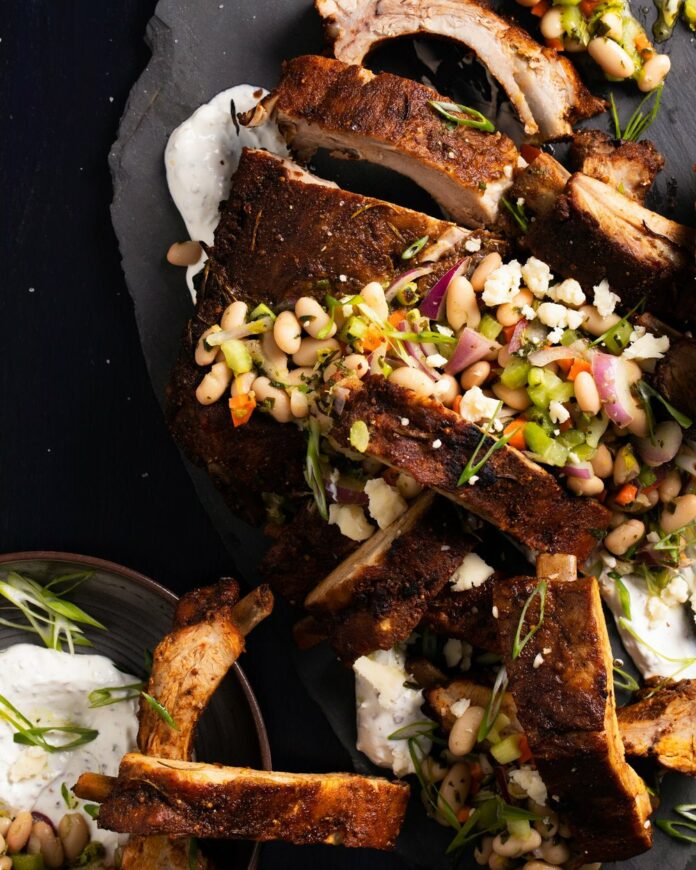
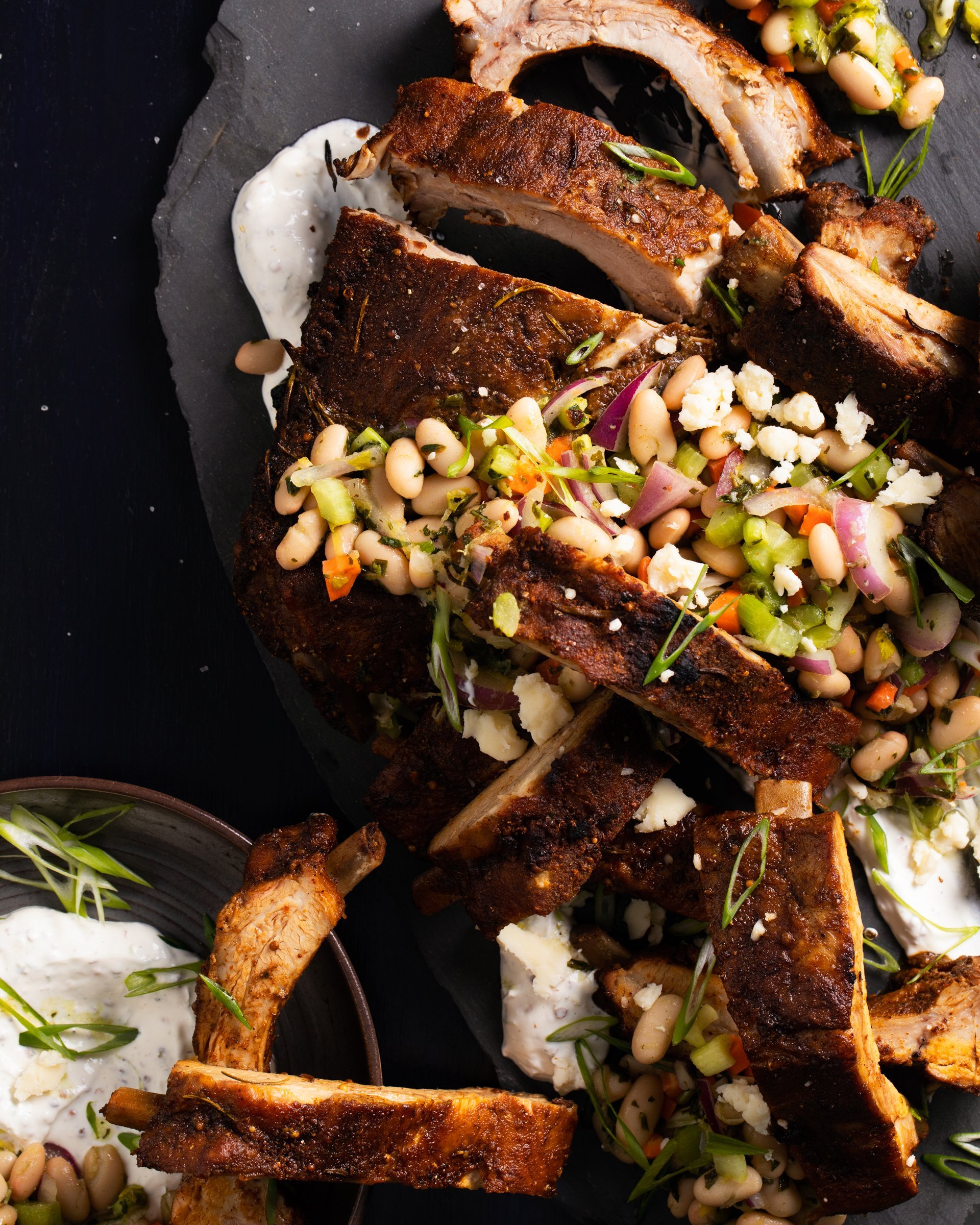
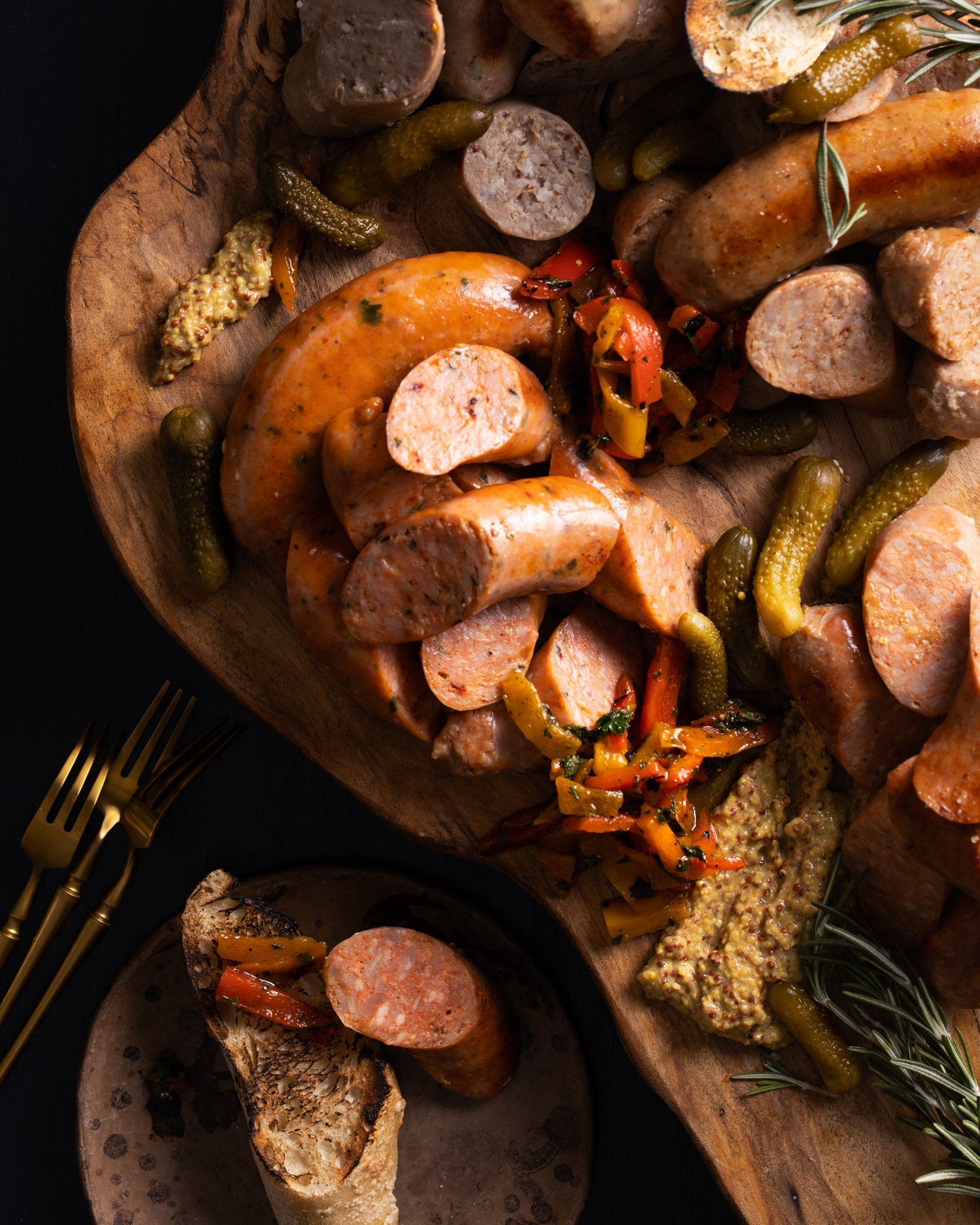
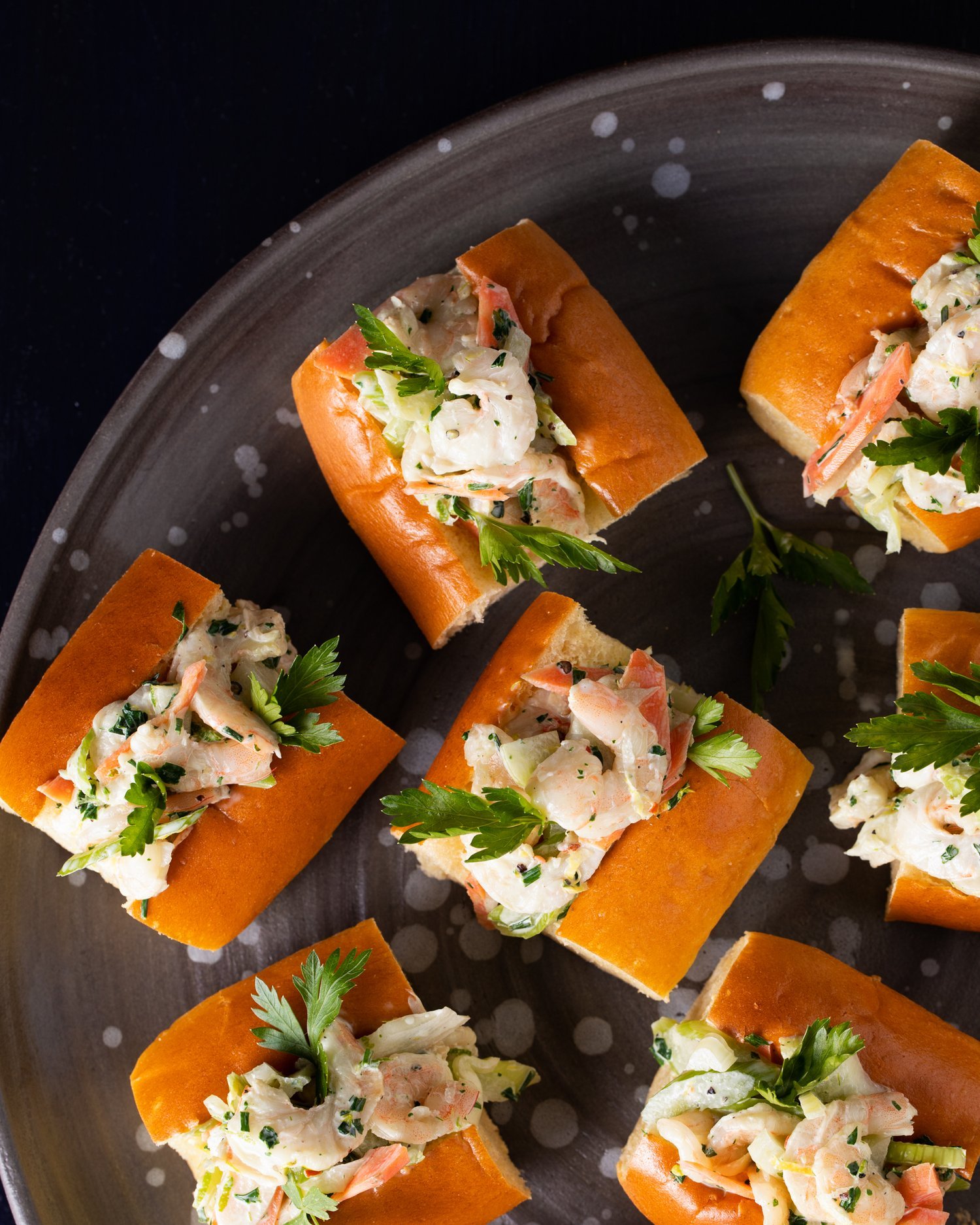
A Super Bowl Spread of epic proportion is what we got when we asked Chef Kevin Hermann for game day recipes that would bring even non-fans to the party. Take these recipes and the impressive Game Day Cocktail by TABLE Publisher Justin Matase and you’ll have a spread that’s sure to impress on Super Bowl Sunday. Just be sure to double or triple the recipe as required for your party size.
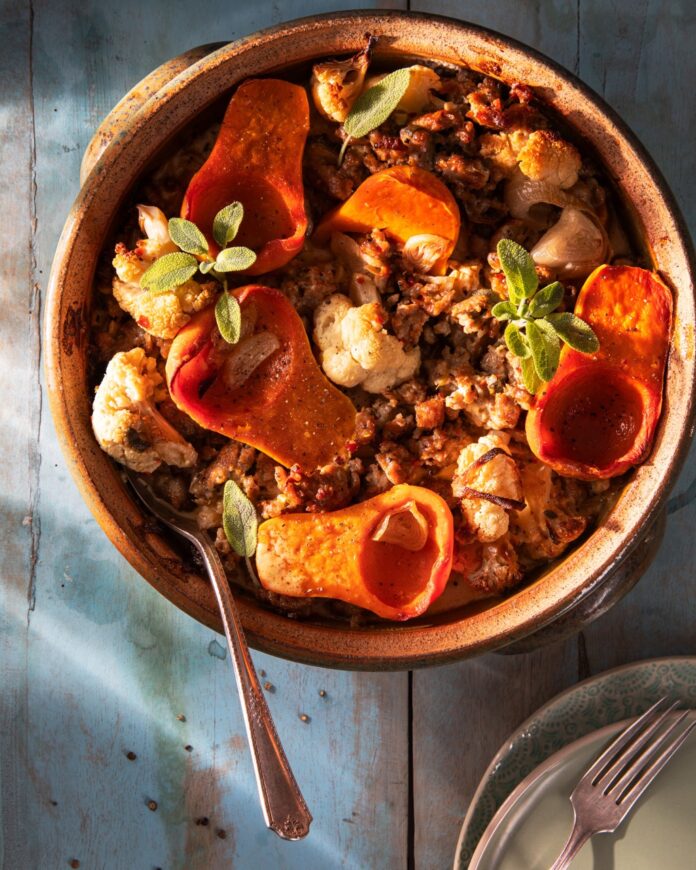
On dark, short days of bitter cold winter, there’s nothing quite as comforting as a warm and hearty veggie bake. Bite into tender, perfectly roasted cauliflower and honeynut squash mingling with a white wine sauce and freshly grated cheese on top. This dish is not only a celebration of seasonal produce but also a nourishing and satisfying meal that can correlate with your meal plan. Whether you’re gathering around the table with loved ones or simply seeking a cozy night in on your own, this Winter Veggie Bake is sure to become a favorite in your kitchen (even with picky kiddos!)
What is Honeynut Squash in Our Winter Veggie Bake?
Honeynut squash is a relatively new variety of winter squash that has become increasingly popular in recent years. It was slowly developed by Cornell University breeders starting in the 1980s, with the goal of creating a smaller, sweeter, and more nutritious butternut squash. Honeynut squash has a rich, sweet, and nutty flavor that is reminiscent of butternut squash but with a more concentrated sweetness, almost like honey. This sweetness complements the savory elements in our Winter Veggie Bake. Plus, honeynut squash is a good source of fiber, and it carries many of the nutrients that other varieties of squash do such as vitamin A, vitamin C, and potassium.
Sweet honeynut squash and savory white wine sauce create a comforting winter side dish.
Ingredients
Scale
For the veggies:
3 cups honeynut squash, seeded and peeled
2 cups cauliflower florets
1 large shallot, thinly sliced
2 tbsp olive oil
1 tsp Italian seasoning
Salt and pepper, to taste
For the white wine sauce:
1.5–2 lb ground Italian sausage
1 cup dry white wine
2 tbsp fresh sage, finely chopped
3–4 cloves of garlic, minced
Red pepper flakes, to taste
Salt and pepper, to taste
2 cups heavy cream
1/2 cup grated parmesan
For the topping:
1/2 cup parmesan cheese, grated
1/2 cup mozzarella, grated
Instructions
Preheat oven to 425.
Grease the bottom of a 9×13″ baking dish, then toss all of the vegetables and seasonings together in the baking dish. Bake vegetables for 30 minutes.
Meanwhile, make the sausage white wine sauce. Cook Italian sausage, breaking it up as you sauté. When it is no longer pink, drain as much of the grease off as you can.
Pour in white wine and cook down for 3 minutes.
Stir in sage, garlic, red pepper flakes, and salt and pepper and cook for 1 minute.
Add heavy cream. Bring sauce to a boil, then reduce to a simmer for 2 minutes. Turn off heat and stir in parmesan. Set aside.
When vegetables have roasted for 30 minutes, reduce oven temperature to 350.
Pour the white wine sauce over the vegetables and gently stir to combine. Top with parmesan and mozzarella. Bake for 20 minutes, then broil for 3-5 minutes to brown the cheese.
Garnish with fresh sage before serving.
Recipe and Styling by Anna Franklin Photography by Dave Bryce
Whether you’re looking for an easy escape, inspiration for a future project, information about a designer you love, or just need some pretty in your life, these design books are among the finest that were released in the past year. Each is packed with stunning interiors, top-notch furniture, graphic and product design, and much more. They invite you to get comfortable and spend a good long time flipping through them, reading up on trends and history—and maybe even get out some Post-It notes to mark stuff to go back to later.
Who doesn’t want a dazzling apartment in Paris? Even if it’s out of reach (and it’s almost always out of reach!), you can live vicariously and even learn a few things you can apply to your own home.
Full disclosure: I am including two books by former Domino Magazine colleagues. (And they’re both outstanding.) FREDERIC, edited by Dara Caponigro, is one of the best interiors magazines out there. A project of the fabric house Schumacher, the projects shown a beautiful and accessible. This is an edited collection from the magazine’s pages.
From another Domino alum, this book by Tori Mellott is a celebration of Southern style and how it has been reinterpreted for today. The 28 homes profiled run the gamut from Georgian to Gothic to modern minimal.
Something of a living legend, Michael S. Smith represents a gold standard in design, and he is well represented here. His combination of classic and modern is executed with influences from around the world.
Industrial designer extraordinaire Marc Newson has assembled a comprehensive look at the broad scale of his creativity. Another genre-spanning talent who has designed everything from armchairs to airplanes.
Donal Judd’s wooden boxes and other starkly simple pieces made him famous, but he was also a prolific furniture designer, creating over one hundred pieces in the 70s and 80s—each a reflection of his emphasis on form and function.
Not a new book but a reprint (its fourth!), this 1998 book celebrates the interiors photography of Dominique Nabokov. She shot the apartments of the who’s who of New York, including Susan Sontag, Joan Didion, and Norman Mailer.
I recently had the pleasure of attending the Paris launch of this book and had a chance to flip through its incredible pages. Have is an interiors stylist who breaks down her four-element approach to styling and how she applies them.
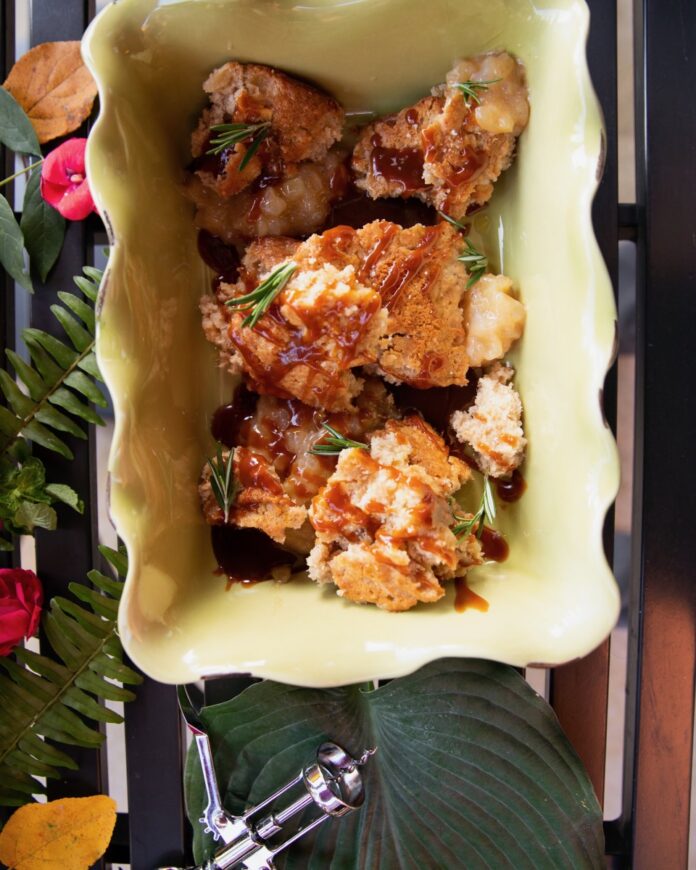
This apple pudding cake from Chef Kevin Hermann was the dessert course in our celebratory end-of-summer dinner. It’s perfect for celebrating the cooler temperatures, as it makes the most of the beginning of apple season (starting in September). Ease into fall by realizing that even as the temperatures get chillier, there’s still an abundance of delicious produce to enjoy before winter comes, including apples.
What Type of Apple is Best for Baking?
The “baking apples” that are crisp enough to hold their own during the baking process are Braeburn, Cortland, Honey Gold, Jonathan, Fuji, Gala, Granny Smith, Haralson, and Newtown Pippin. These varieties of apple are crisp enough not to fall apart when subjected to heat, so they’re the best to use for an apple pudding cake like this, or a pie or crisp recipe.
4 apples, peeled, cored, chopped into small chunks
½ cup brown sugar
2 2/3 cups all-purpose flour
1 tsp salt
1 ½ tbsp baking powder
2 tsp ground cinnamon, ground
2/3 cup brown sugar
½ cup butter, softened
1 cup whole milk
For the caramel sauce:
2 cup brown sugar
2 tbsp cornstarch
½ cup butter
2 cup water
Instructions
For the cake batter:
Preheat oven to 400 degrees. Grease two 8-inch baking pans, or 1 larger baking pan.
In a smaller mixing bowl combine cut apples and ½ cup brown sugar. Mix until apples are completely covered. Reserve.
In a second mixing bowl combine flour, salt, brown sugar, cinnamon, baking powder, butter and milk. Mix throughly until uniform. Fold-in cut apples until evenly incorporated.
Pour batter into prepared dishes. Ensure even amounts in each pan.
Baked for 30 minutes or until cake tester comes out clean. Remove from oven and cover lightly with foil to reserve some warmth.
For the caramel sauce:
Add all ingredients to a small sauce pot and bring to a low simmer for 5 minutes. Stir continuously until thickened. Reserve warm for plating.
Plating:
Cut or scoop the cake onto each plate.
Drizzle with caramel sauce and sprinkle with fresh chopped rosemary and extra virgin olive oil and a small sprinkle of sea salt.
Recipe by Chef Kevin Hermann Photography by Dave Bryce
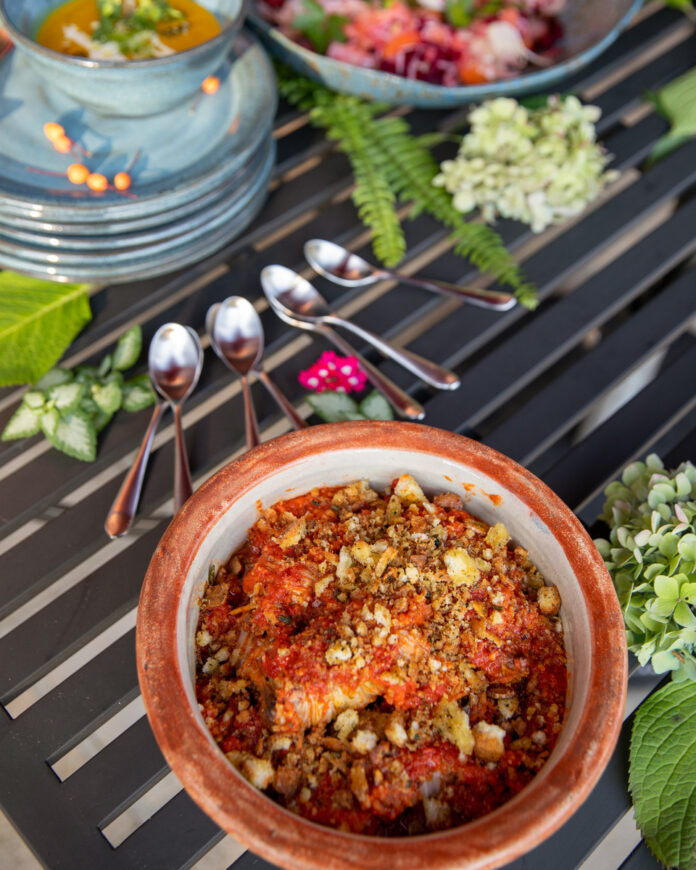
Want to enjoy chorizo, but don’t want to eat meat? No problem. This Vegan Chorizo Stuffed Napa Cabbage from our end of summer party has something for everyone in it. The harissa tomato sauce makes sure that you’re not skimping on the spices either.
What Can You Use to Make Vegan Chorizo?
Making a meat replacement can be difficult, as you want to mirror the unique texture of meat without the real thing. We’ve used Impossible meat (typically made of soy protein, coconut oil, sunflower oil, and potato protein). The oil bonds the proteins together and gives it that chewy but firm texture typical of sausage. However, there are a lot of different strategies for enjoying chorizo without the animal product if you’re not a fan of the Impossible meat. Serious Eats used frozen tofu, tempeh, and dehydrated lentils to mimic the texture and create something that cooked just like vegan chorizo. One common chorizo alternative if you want to skip the homemaking process entirely, is Trader Joe’s soy chorizo. You can just buy it right off the shelf!
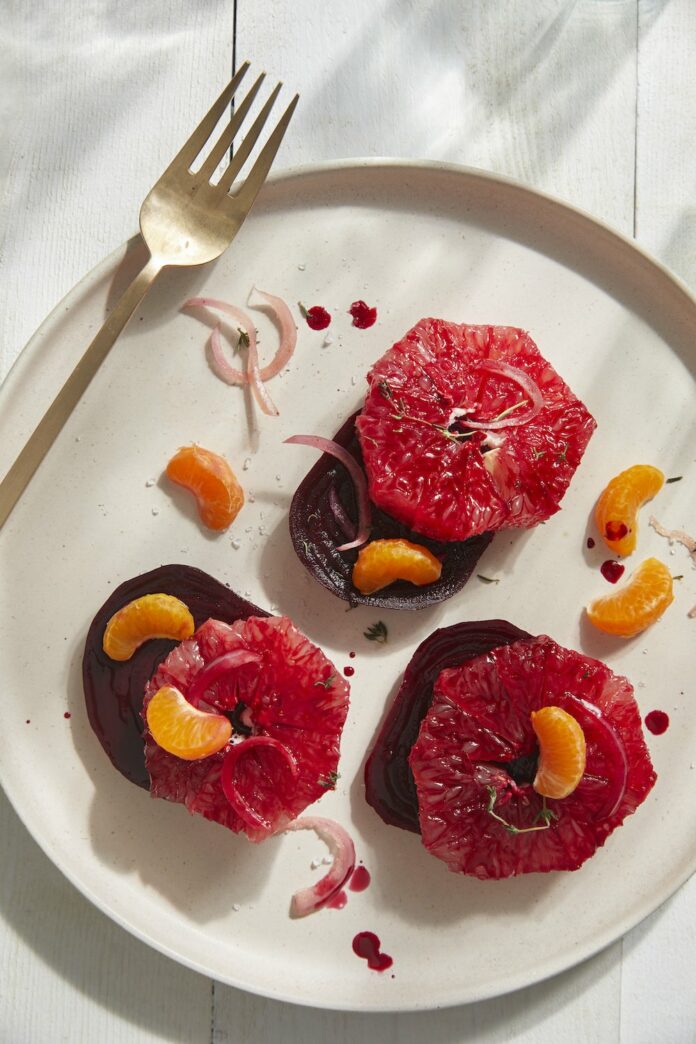
If the smiley face emoticon ever needed an upgrade our vote would be for a pic of this Braised Beet and Grapefruit Salad. And because one of the main ingredients is a citrus fruit, this is also a learning moment for those who are unaware of winter’s bounty, headlined by grapefruit and its tart cousins currently lining the grocer’s bins. While it looks simple at first glance, it’s the small bites that make this salad so successfully delicious. All at once your tongue tastes the earthy bite of beets, the tartness of grapefruits, the sweetness of clementines, and a tangy olive oil dressing.
When is Grapefruit in Season?
Grapefruits are at their absolute peak generally from November through May. This is when they’re juiciest, sweetest, and most flavorful. While you might find grapefruits year-round in your local grocery store, they may not be the best, especially for our Braised Beet and Grapefruit Salad. The winter months are when you’ll get the best and ripest fruit with the most delicious taste. Think of them as a burst of sunshine and hope during the colder days. So, when the temperatures start to drop, that’s when you know it’s the perfect time to enjoy this tangy and refreshing citrus fruit.
In a braising pan with a lid, whisk together vinegar, water, honey, cayenne, and a generous pinch of salt.
Place beet slices in the liquid, ensuring that each of them is resting flat on the bottom of the pan. Add fresh thyme. Cover with lid.
Bake covered at 350 degrees for 45 minutes. Check beets for tenderness. If tender, remove them carefully to a platter, and place braising pan on top of the stove.
Over a medium flame, reduce the liquid until it is thick enough to coat the back of a spoon. Whisk in Liokareas Orange Olive Oil.
Pair each beet slice with a slice of fresh grapefruit. Garnish with pickled onions and clementine segments. Drizzle with beet juice and olive oil dressing. Serve immediately.
Recipe and Styling by Keith Recker
Photography by Dave Bryce
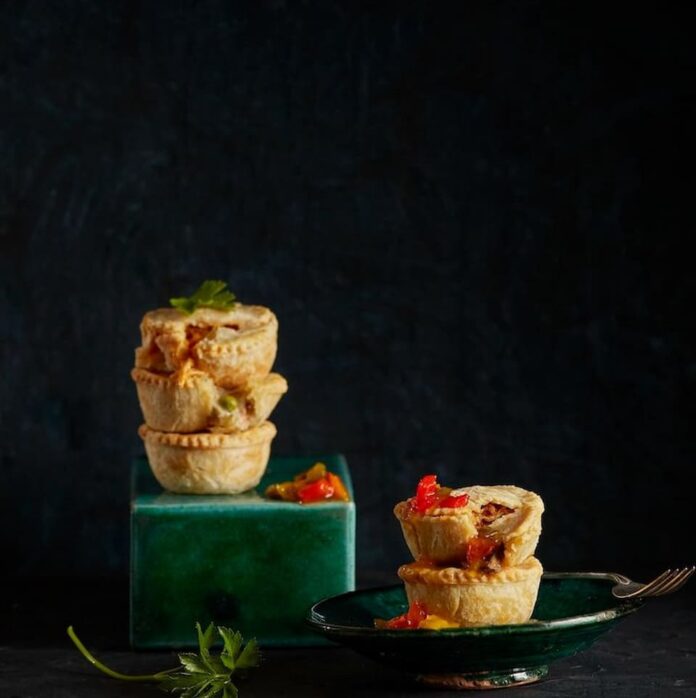
Mini Pot Pies are a delightful twist on traditional pies, offering a perfect pocket-sized indulgence. To Karalyn Smith of The Mini Pie Box, the beauty of pie crust lies in making it your own. Her recipe for her pocket-sized, deep-dish, English-style savory pies is based on her mother’s. “Over time, plus a bunch of research, I’ve borrowed from the best practices of others that morph into my own,” she says.
“I think everyone’s recipe and process yields their own over time. Especially since it’s so easy to sway a pie crust one way or another. It’s a little bit of a science,” she says.
The Mini Pie Box may be a small business, but Smith’s flavors are big. Smith, nicknamed the “Mini Pie Madam” by her loyal followers, spices up her crust with fillings. She makes a veggie curry one, which you can find the recipe for below, bursting with coconut and bright red curry. Then she has her spicy chicken, which adds a kick of spice to the classic chicken pie. Though the canning process can be tedious, it’s worth tasting Smith’s hot pepper chutney – briny, salty, and peppered with perfect heat.
Add 2 tablespoons of butter, diced potatoes, 3 cloves of minced garlic, ¾ of diced onion, and 1 sprig of rosemary into a pot, and sauté on low to medium heat until potatoes begin to soften. Add salt and pepper to taste. (Note: Do not cook until they fall apart; they should still have firmness.)
While potatoes sauté, add 3 cups of water, ¼ of diced onion, 2 garlic cloves, ½ a habanero, chicken breast, thyme sprigs, remaining rosemary, and bouillon cube to a large stockpot. Bring to a boil, then simmer on medium until chicken is cooked.
Remove chicken from broth and coarsely shred. Set aside.
Strain broth and put back into stockpot, adding carrots, celery, and peas. Cook on low until carrots are tender.
In a separate pot, add the remaining butter and the remaining onion, garlic, and habanero, sautéing until onions are translucent. Add salt, pepper, and celery seed.
Slowly incorporate the flour into the onion, garlic, and habanero mixture. Mix in until smooth. Cook for 2 minutes.
Slowly incorporate milk, mixing to maintain a smooth texture. Once the milk is incorporated, slowly incorporate broth containing the carrots, celery, and peas.
Incorporate potatoes and shredded chicken, and then allow the mixture to come to a simmer. Gently stir until all ingredients are incorporated and desired thickness is achieved.
Remove from stove and allow the mixture to cool, then place in refrigerator until mixture is chilled, about 3 hours. (Note: Mixture must be fully chilled before pouring onto piecrust.)
Combine egg with 1 tablespoon of water and whisk gently.
Preheat over to 425 degrees.
For one 9-inch pot pie:
Divide dough 60/40, and roll out into 2 discs.
Place the larger disc into a 9-inch pie dish, leaving some excess dough on the edges, and pour in the chilled mixture. Paint the edges with egg wash, then place the second dough disc on top. Seal the edges using the preferred method.
Gently brush the top piecrust with egg wash, then cut slits into the top piecrust to allow the pie to vent—place in preheated oven for 30 minutes until the crust is golden and the mixture bubbles.
For 12 mini pies:
Divide the dough recipe into 3 equal parts. Divide 2 pieces into 6 equal portions, for 12 (30 grams each). Divide the remaining part into 12 equal portions (15 grams each).
Roll out each portion of dough, and then place the larger discs into a standard muffin pan. Press firmly into place and equally divide the chilled mixture onto each crust.
Paint the edges with egg wash, then place the second dough dish on top. Seal the edges using the preferred method.
Gently brush the top pie crust with egg wash, then cut slits to allow the pie to vent. Place in preheated oven for 12-15 minutes until the crust is golden and the mixture bubbles.
Vegetarian food doesn’t have to be boring, especially when curry is involved.
Ingredients
Scale
6 tbsp coconut oil
1 tsp of Diamond Crystal salt
1 medium red onion, diced
3 inches fresh ginger, minced
3–4 fresh garlic cloves, peeled and minced
2 medium sweet potatoes, diced
2–3 carrots, diced
1 medium habanero pepper, minced
4–5 assorted bell peppers, diced
5–6 tbsp of your favorite vegetarian red curry paste
2 13.5-oz cans of coconut milk
1 ½ tbsp of brown sugar
3 tbsp of flour
1 egg
Instructions
Add 4 tablespoons of the coconut oil and then follow with salt, onion, ginger, garlic, sweet potatoes, carrots, and habanero to a pot, and sauté the mixture on medium-low heat until carrots and sweet potatoes begin to soften.
Add bell peppers and continue to sauté until peppers begin to soften.
Stir in curry paste until evenly distributed, then incorporate coconut milk and brown sugar, stirring until brown sugar is dissolved.
Bring the mix to a gentle simmer and cook until sweet potatoes and carrots can be pierced with a fork.
In a smaller pot, melt the remaining 2 tablespoons of coconut oil on low and add the flour to form a roux. Allow the roux to cook for 2 minutes, stirring continuously.
Using a measuring cup, take a heaping cup of the curry mixture. Pour ¼ cup into the roux and stir until a smooth paste forms. Slowly add the other ¾ cup of curry mixture, stirring continuously.
Slowly incorporate the flour mixture into the vegetable curry pot, stirring continuously until fully incorporated.
Bring mixture to a simmer, stirring continuously to allow the mixture to thicken and for vegetables to reach the desired consistency.
Remove from stove and allow the mixture to cool, then place in refrigerator until mixture is chilled, about 3 hours. (Note: mixture must be fully chilled before pouring onto piecrust.)
Combine egg with 1 tablespoon of water and whisk gently.
Preheat over to 425 degrees.
For one 9-inch pot pie:
Divide dough 60/40, and roll out into 2 discs.
Place the larger disc into the 9-inch pie dish, leaving some excess dough on the edges, and pour in the chilled mixture. Paint the edges with egg wash, then place the second dough disc on top. Seal the edges using the preferred method.
Recipe by Karalyn Smith Story by Maggie Weaver
Photography by Dave Bryce
Styling by Keith Recker
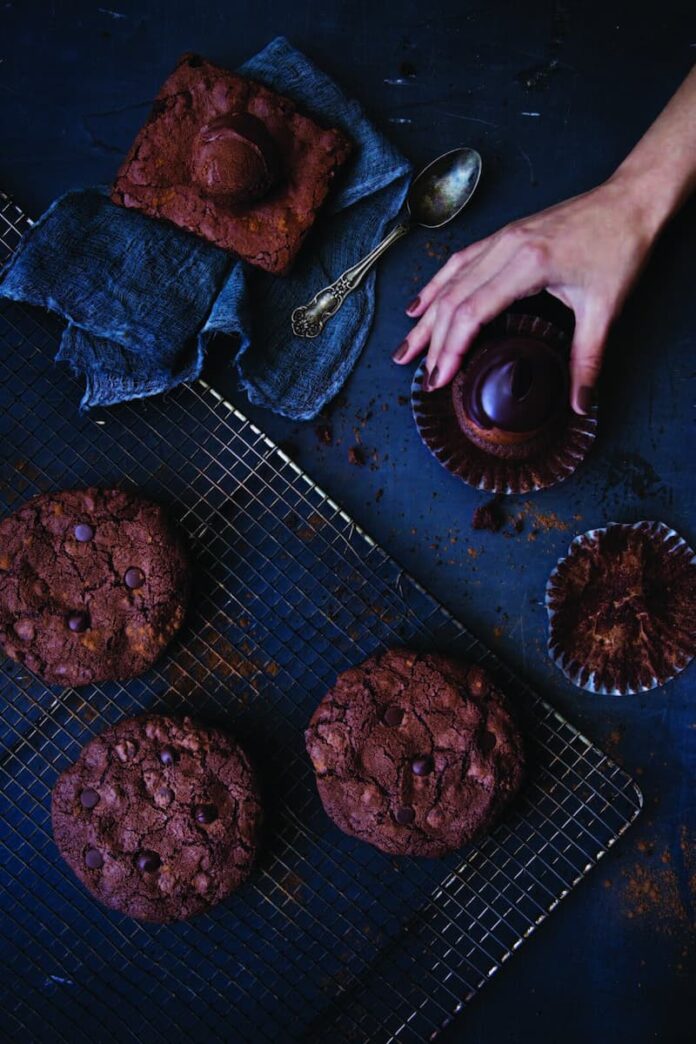
Maybe the monkeys had the right idea when they chose the banana as their fruit of choice. This versatile ingredient is great on its own but gets an upgrade when it’s combined with other ingredients. Think banana bread, banana and peanut butter sandwiches, banana pudding, and so many other essential recipes. Our Cocoa-Banana Cookies are no exception to this rule. This easy recipes combines ripe bananas, dark cocoa, and chocolate chips for a rich, soft treat. Perfectly sweet and easy to make. And we know we sound crazy but they’re even better enjoyed frozen!
How to Tell Bananas are Ripe
We know the old school way of inspecting a banana’s color, and assuming the yellowest is the ripest. In all actuality, there are other elements you want to look for besides just the yellow. While you may think that an all yellow banana is better than one sporting some dark brown spots, you would be wrong. In fact, those brown spots guide you to the best of the bunch, especially for baking. You can also gently squeeze the banana to get a better idea of its ripeness. A ripe banana will give slightly, but shouldn’t be mushy. Lastly, you can trust your nose if you’re trying to decide between two good-looking bananas. You should be smelling a sweeter, fruity aroma.
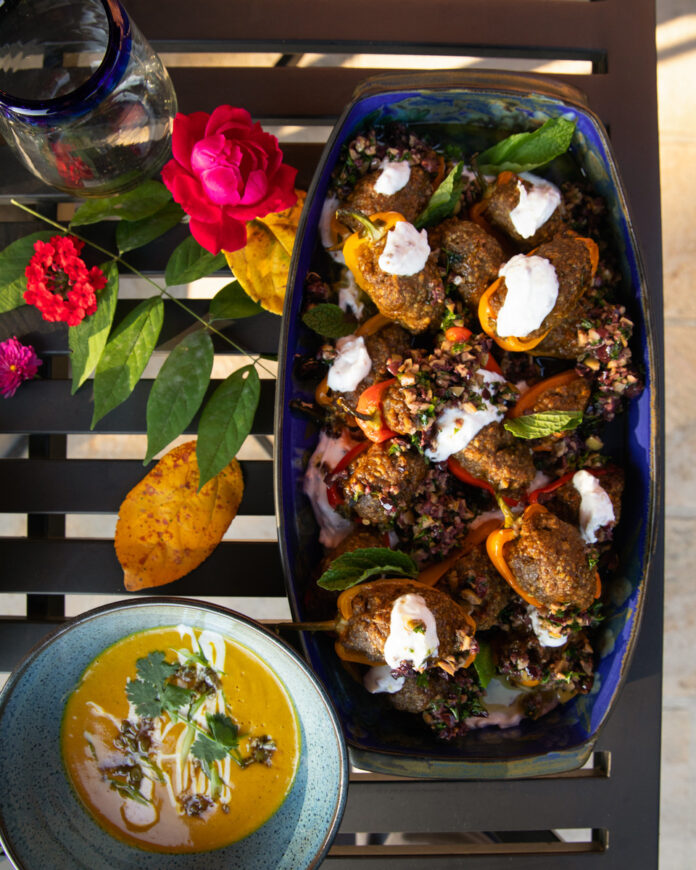
This Moroccan Spiced Lamb recipe was a part of our end-of-summer party to celebrate the last warm evening of the year, but its spices can also be a warming ingredient for the cold months. The coriander yogurt sauce and olive tapenade are optional additions, but if you are making it for a big party, they’re great ways to balance the savory flavor of the lamb with acidity and tartness.
The History of Lamb in Moroccan Cooking
Lamb is the most common meat in Morocco, usually eaten in a tagine with a wide selection of vegetables. All meat in the Islamic world has to be halal. So, pork is out, and all meat has to be slaughtered humanely. However, there’s a deeper reason that lamb is popular in Moroccan cuisine. In the Arab world, lamb is a symbol of abundance that hosts often serve to show their generosity to the guests.
36 ea Baby sweet peppers, split vertically, seeds removed. Leave the stem section as much as possible
1 tbsp plus 1 tsp Extra virgin olive oil
Coriander Yogurt
3 cup Greek yogurt, plain flavor
2 tbsp Coriander toasted, crushed
1 tsp Cumin, ground
1 tsp Black pepper, ground
2 Lemon, zested
2 T Extra virgin olive oil
Olive Tapenade
2 cup Mixed olives, pitted, rough chopped
1 tsp Garlic, minced
2 tbsp Parsley, chopped fine
1 Orange, zested
¼ cup Extra virgin olive oil
Instructions
Pre-heat oven to 350 degrees.
In a large mixing bowl combine lamb, lamb fat, onions, garlic, Ras al Hanout, parsley and cilantro. Mix throughly until homogenous and fully incorporated. Reserve mixture.
In a separate smaller mixing bowl combine bread crumbs, heavy cream and eggs. Mix until bread crumbs are thoroughly soaked and eggs are incorporated.
Add bread crumb mixture to ground lamb mixture. Combine until thoroughly mixed. This mixture will resemble meatloaf. Reserve for stuffing the peppers.
Lay the peppers on a prepared sheet tray cut side up. Drizzle with olive oil and season with salt and ground black pepper.
Place 2.5 oz of mixture into each pepper. Top off each pepper with any remaking lamb mixture.
Bake peppers for 20-25 minutes, until internal temperature reaches 165 degrees.
Remove from the oven and cover for 10 minutes. Reserve for plating.
Coriander Yogurt
Combine all ingredients until fully incorporated.
Reserve for plating.
Olive Tapenad
Combine all ingredients in a small mixing bowl. Combine until fully mixed.
Reserve for plating.
Plating
Place several dollops of yogurt on the plater. Artfully arrange the peppers in the dish, stack them gently if needed.
Place several large dollops of yogurt in between and on the peppers. Speckle the top with it.
Place the olive tapenade around the peppers in the same fashion as the yogurt. Have fun with it. There is no right way. As I say to my chefs: “Express yourself!”
Garnish with fresh mint sprigs, both whole and some torn if they are large mint leaves.
Drizzle the dish with EVOO and enjoy.
Recipe by Chef Kevin Hermann Photography by Dave Bryce
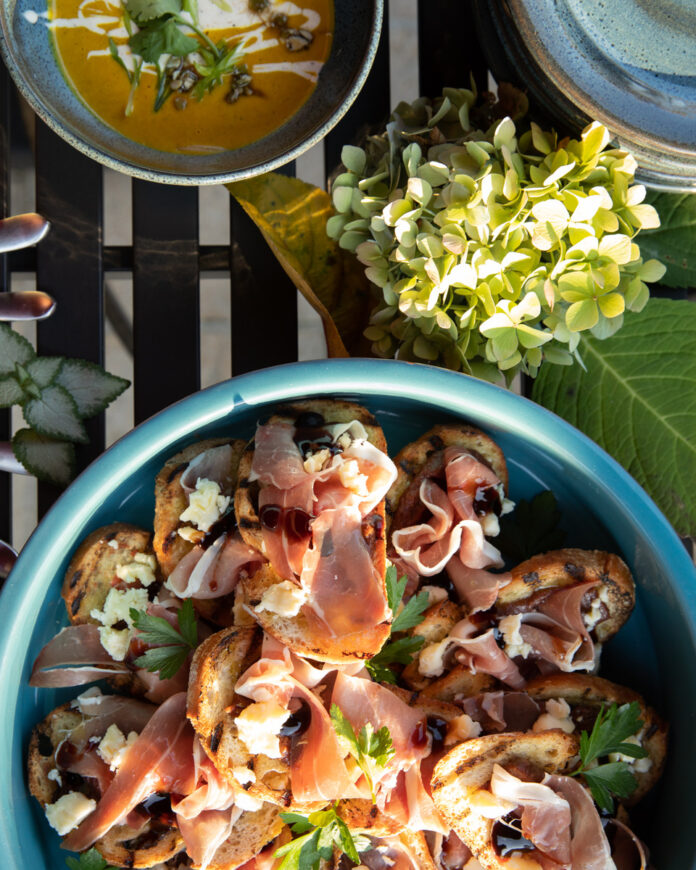
This Prosciutto and Sourdough is the perfect recipe for any gathering. It’s shareable, durable, and has two classic crowd-pleasers: meat and carbs. For our end of summer party, we also added apple butter to the bread for an bit of extra sweet decadence. You can choose to omit that for simpler preparation, if you’d like, but we think this Prosciutto and Sourdough is worth the wait.
About Prosciutto
Prosciutto, like many other renowned European foods, is the subject of complex regional feuds about who can and cannot produce it. The perhaps-best known Prosciuttio is Prosciutto di Parma, from the Emilio-Romagna region. Prosciutto di San Daniele from Friuli-Venezia Giulia is another high-quality type of prosciutto.
The techniques used to make them differ in a few respects, the main one being salt: Prosciutto di Parma is rubbed with salt at the start of the aging process, and is thus a bit saltier. Prosciutto di San Daniele is, for lack of a better word, hammier because it is less salt-forward in the tasting experience. The prosciutto you find vacuum-packed at a standard supermarket may be American-made, and thus neither Parma nor San Daniele.
If you want to impress a food snob, start talking about the origins of your prosciutto the same way you would wine…but first, taste your way into connoisseurship. You’ll enjoy the process, and you’ll emerge with a preference based on experience.