Home Blog Page 166

Celebrating National Margarita Day

0
Two glasses with a pale yellow margarita with lime slices floating on top.

There’s something special about drinking a margarita. The tangy lime juice that hits your tongue along with a burst of earthy, robust tequila is simply decadent. Maybe it’s the sweet and tart combo that captures us, or the fact that tequila gives us the “warm and fuzzies.” Either way, we look forward to a margarita when we’re celebrating and National Margarita Day on February 22.

In honor of National Margarita Day, several members of the extended TABLE family recall their favorite margaritas.

Our TABLE Magazine Margarita Stories

Keith Recker, Editor-in-Chief

The most unforgettable margarita I ever tasted came out of a slushy machine at Caramba!, a 1980s psuedo-Mexican restaurant on Broadway just south of Astor Place in Manhattan. Because it was adjacent to the then-motherlode of record stores, Tower Records, I passed by the place many times. Tricked out in neon and Miami Vice colors, it was the height of punk-pop boom-boom 80s chic. Because “zero-based budgeting” was my rule in those days, meaning my budget was zero, I did not enter.

The Legendary Caramba! Margarita

In 1986, however, a work colleague who had a map of NYC bars encoded in her hypothalamus said that Caramba! had the best margaritas and the best happy hour crowd. Proof of this, she told our little group at the office, was the fact that halfway through a second round, her best friend stood up, emptied her glass into a stranger’s shopping bag filled with brand new cashmere sweaters, and left. While I suspected that this tale was more of a reason to stay away than to go, I was young. I had not reached the required quota of stupid mistakes. We went.

The first margarita was tart, very, very cold, and obviously heavy with booze. So heavy that I think some serious science went into its making. Oppenheimer must have engineered it right after he worked on the ghostwriter facharbeiten. Am I making it sound anything less than delicious? Then I am leading you astray. It was fantastic. So fantastic that a second one seemed like the best idea anyone had ever had. I remember the second round arriving… six huge icy cups, a couple of them overflowing onto the bar. Six neon colored straws. Six tiny wedges of fresh lime.

The Legendary After-effects of a Caramba! Margarita

I do not remember drinking mine. However, I recall waking up at 1:45 a.m., alone in Brooklyn on the F train, 16 stops farther than I needed to go. I found my way to the other side of the station to catch a train heading in the other direction. I arrived home two hours later. Caramba! and I never saw each other again. Not long after, the Universe removed all temptation to try again because Caramba! closed its doors. 

Alex Hanna, Advisor

I love margaritas! I’ll drink them just about anywhere. From the big old bowls of overly sweet party concoctions, you might find in the Midwest to the smaller shot-glass-sized, extremely tart ones you find throughout Mexico. But for my money the best margaritas in the world are right here in Santa Fe, New Mexico. And no one does it better than the tourist mecca of The Shed and its more locals’ friendly sister restaurant La Choza. I get their Silver Coin version on the rocks with salt. It has the exact balance of tart and sweet as well as smooth and boozy that I like. Pair with their perfect guacamole for lunch and plan on cancelling the rest of your afternoon.

Jim McPartlin, Team Building Enneagram Consultant

I recall a perfect margarita imbibed under the perfect circumstances at the One and Only Palmilla in Mexico. I was seated at Breeze, their outdoor bar/cafe right on the Pacific shore. Perfect sunset. Delicious margarita. Wonderful, warming memory to hold on in the mind on February 22. (Is it ok to ask why National Margarita Day is in February?)

Julia Platt Leonard, Regional Editor

My first proper margarita (I won’t count the all-you-can-drink frozen margarita brunch I had in NYC in the late 80s…) was at historic El Farol in Santa Fe. The memory is slightly blurry, shall we say, but I remember the tang of lime, the lick of salt, and warm hug of tequila. That and a live band, some questionable dancing, and an alarm that went off far too early the next morning. 

Emma Riva, Online Editor

At my cousin’s wedding in 2018 was at a Cuban restaurant, Guantanamera in New York and they had bottomless margaritas and sangrias. So that would have to be my best margarita experience, mainly because I couldn’t remember a moment about it in true wedding party fashion.

Stephanie Cravotta, Director of Digital Advertising

The ultimate margarita lies in the delectable balance of tartness and a perfectly salted rim, making every sip an absolute delight. You can find me at Round Corner Cantina (now Esquilina Cantina) in Pittsburgh enjoying a girls night out or mixing up margarita recipes at home for the family.

Celebrate National Margarita Day with These Recipes

Looking to celebrate National Margarita Day yourself? Mix up one (or all) of our signature margarita recipes and sip the night away.

Marigold Margarita

A reposado cocktail that pleases the palate and the eye. Photo by Tira Howard

Aged tequila, grapefruit juice, lime juice, and elderflower liqueur make up the delicious golden liquid of our Marigold Margarita. It’s a little earthy, a little tangy, and packs a punch thanks to the 1414 ArteNOM Reposado Tequila. 

Prickly Pear Margarita

A dark-pinkish red prickly pear margarita sits in a salt-rimmed glass in front of a green background.

A blast of refreshment and a little bit of tartness hit you in every sip of our Prickly Pear Margarita. We recommend using unaged agave or Blanco tequilas for their clear and crisp finish. 

Campo Lavender Margarita

Fresh from Los Poblanos, a refreshing cocktail made from their signature crop.

Albuquerque restaurant Campo shares their perfect recipe for a margarita with citrus and floral notes that complement each other well. In the Campo Lavender Margarita, orange liqueur, lemon, and lime juice cut through the lavender simple syrup while still letting the tequila take the spotlight.

Pineapple Habanero Margarita

a glass of Pineapple Jalapeño Margarita

Cool down with this tropical take on a margarita. The Pineapple Habanero Margarita uses Cimarron Reposado, pineapple juice, lime juice, and a homemade habanero simple syrup that you can use in other recipes besides this one.

Margarita, A Cocktail for Cancer

A margarita cocktail for cancer in a small blue glass with a lime garnish and salt rim. Selenite sits near by on the black table.

For our zodiac cocktail series, the margarita had to be the perfect match for compassionate Cancer thanks to its ability to bring people together. This Margarita recipe is a classic, simple one that’s a staple to have in your cocktail recipe wheelhouse. 

Apple Cider Margarita

An apple cider margarita in a Halloween-inspired glass

While it isn’t fall during National Margarita Day, you’re going to want to save this recipe for when the apple cider is flowing. Our Apple Cider Margarita is a little sweet with a backing of mulling spices like cinnamon, cloves, allspice, and nutmeg. Just be sure not to forget the cinnamon sugar rim!

Cranberry Margarita

Three cranberry margaritas garnished with lime and staged for a Christmas table

Tangy cranberry makes a margarita just as delicious in the wintertime as it is in the summer. Simply sugar your rim and then fill with a combination of fresh fruit juices, orange liqueur, and tequila. Not to mention you can really have fun with the presentation of this Cranberry Margarita.

The Protea, aka a Guava Margarita

A person with rings holds a short cocktail glass with a Guava Margarita inside in an orange color, garnished with a lime and rimming salt.

Sometimes you just need something different in your margarita and guava is just exotic enough to try. Spicy rimming salts cover the edge of a glass full of your favorite tequila, fresh lime juice, Grand Marnier, and guava juice. Keep the tropical party going all evening long with this recipe.

Spicy Orange NA-rgarita

A white man's arm and hand holds a Spicy Orange NA-rgarita (a Margarita Mocktail) on a black filled with mocktail mixing supplies.

Here’s a non-alcoholic version for all those wishing to enjoy the flavors of a margarita without the headache afterwards. Fresh orange and spicy agave syrup combine with an alcohol-free tequila in this delicious and lively Spicy Orange NA-rgarita.

Story by Kylie Thomas

Subscribe to TABLE Magazine‘s print edition.
In the Kitchen with Chef Roger Li

0
Chef Roger Li stands in front of a black decorated kitchen in a black apron with a cutting board in front of him.

While catching up with Chef Roger Li on a soggy, chilly Friday phone call, he reveals he’s diving into a warming bowl of ramen. As someone who grew up in the restaurant industry, being in the midst of delicious, freshly-made food is simply the norm for him. In fact, one of his fondest childhood memories involves sitting around the table to make dumplings with his family.

Freshly-made food

From Philadelphia to Pittsburgh

Li grew up in Philadelphia where, in the 1980s, his parents owned a Chinese restaurant. The bus dropped him off right out front, and he describes having a “typical Chinese American upbringing” where his parents worked 15 to 16 hours a day. “There wasn’t much babysitting,” he says.

Chinese restaurant

Yet Li loved being at the eatery and slowly grew more interested in the scene, starting by chopping onions and broccoli. (His brother had the opposite feeling about being there.) The venue served American-Chinese food, with dishes like General Tso’s chicken, adapting Asian fare in a way that appealed to Western palates. Li’s profession path began here—cooking, eating and progressing along roles from being a dishwasher to learning how to make sushi.

Chopping onions and broccoli

Li first moved to Pittsburgh to follow an opportunity with New Moon Fusion Restaurant on the North Shore. When opening his first restaurant at the age of 26, he thought, “Let’s try it out.” He learned many lessons along the way. He jokes that opening on a game day led him to believe the neighborhood was a “gold mine,” and would always be that packed.

Inspiration From Home

Most concepts he’s opened are the first of their kind in Pittsburgh, and all restaurants started as pop-ups. That way, folks have already become familiar and excited with his unique offerings by the time he opens a permanent brick-and-mortar location. “This gives the opportunity to work out recipes––and to figure out whether this is a thing or a fad,” he says. “Then I’m ready to roll.”

General Tso’s chicken

Chef Roger Li deploys Cantonese home recipes from his grandmother and mother, as well as their work ethic of long hours, at his venues. While so many businesses sadly didn’t emerge on the other side of the pandemic, this talented powerhouse currently has four thriving venues in Lawrenceville, a neighborhood where he’s witnessed tremendous change since his arrival. He feels that the food scene in Pittsburgh, where it’s slightly easier to open a restaurant, features so many talented chefs who thankfully have chosen to stay put.

Talented chefs

Bringing Global Flavors to Pittsburgh

His Japanese-style pub Umami Izakaya opened seven years ago; for six years, Nanban has been serving ramen, Asian-style fried chicken and empanadas, and The Parlor Dim Sum—a popular hub for dim sum, Cantonese BBQ, and wok-fried dishes––has been open for a year, in the same location where Ki Ramen operated for six years. Then there’s decade-old Allegheny Wine Mixer, which specializes in wines from different regions around the globe, but also draws in regulars with its cocktails and killer charcuterie.

Wine Mixer

Li’s style of cooking takes him back to his roots, yet he’s the first to admit it’s not traditional Cantonese. He simply creates from what he sees. He finds that the biggest challenge of opening a business that serves dishes from another culture revolves around preparing fare based on his individual style, while also navigating assumptions and predictions from others. There’s a delicate balance between how he wants to present the concept, he shares, “but I also need to fulfill expectations of guests’ own interpretations.”

Suntory cocktail

Ironically, the only pushback he’s received has come from visitors from China and Hong Kong who deem his dishes “not traditional enough.” He has to explain he can’t get the same ingredients here. Plus, he says, “It’s my version of Cantonese food.” This version was much appreciated indeed by the diners sitting around a long table at TABLE Studios in Shadyside, moving from Chopped Salad to Cantonese Roast Duck Egg Rolls and Steamed Fluke. Each course was accompanied by a Suntory cocktail, with the evening winding to a lovely close with a nightcap of Legent bourbon.

Cantonese Roast Duck Egg Rolls

Always Moving Forward

Most of Chef Roger Li’s menu concepts change up every quarter, or sometimes twice a year. He dedicates three or four days a week to ingredient shopping, typically assigning one day to each venue, and he tries to eat at each of his restaurants once a week too. Li can’t pick a favorite, but is especially proud of the sushi at Umami. He points out the quality of their fish and the fact they’ve used nearly the same rice recipes for eight years now. (Every time he eats there he tries to see if it’s changed. To his delight, it’s remained consistent.) He also commends Parlor’s customized wok station, and the noodles they make in-house, with broth simmered for 24 hours.

Cantonese food

In pursuing this path, Li says, “I kind of owed it to my family.” While both grandmothers and his mother are no longer with us (his mom died when he was only 15 years old), he stays connected to them through his work, which brings deep satisfaction.

“I try to bring back memories through food,” he says. “To me, food brings people together either from family reunions, traditions, or events. And hopefully, my food brings a little joy to guests when they dine at my establishments with their loved ones.”

Story by Corinne Whiting / Photography by Laura Petrilla / Event Design by Star Laliberte / Mixology by Kait Fellers / Sponsored by The House of Suntory

A footer photo with a black background and subscribe info and button

Subscribe to TABLE Magazine‘s print edition.

Braised Pork Shoulder & Kimchi Soup

0
A tantalizinbraised pork shoulder & kimchi soup featuring Korean flavors, garnished with fresh dill, sour cream, scallions, and toasted sesame seeds.

Pork shoulder is a great cut because it has the right meat-to-fat ratio for a flavorful braised dish. If you can find a whole shoulder, use it to minimize the work, or use already-cut pieces as an option. This dish highlights Korean flavors in a simple kimchi-based braising liquid. This recipe can be made in two stages to accommodate your schedule. You can cook the pork shoulder days ahead and finish the braising on the day it is intended to be served. Its optional accompaniment of spicy tteokbokki (rice cakes) contrasts with and balances the richness. You could also make simple white rice instead.

Braised Pork Shoulder & Kimchi Soup with Spicy Tteokbokki Recipe

INGREDIENTS

1 cup gochujang
1/4 cup sesame oil
2 tbsp Worcestershire sauce
1/2 cup sweet soy
1 tbsp fresh ginger, minced
1 tbsp fresh garlic, minced
2 tbsp persimmon vinegar or apple cider vinegar
1 tbsp kosher salt
1 tsp ground black pepper
4 lb whole pork shoulder
2 qt meat or vegetable stock
4 cups kimchi, rough chopped
Fresh dill, sour cream, scallions, toasted sesame seeds for garnish

INSTRUCTIONS

  1. Make the marinade ahead by combining all the ingredients except the pork shoulder and braising. Set aside 1/2 cup of the marinade if making the rice cake side dish.
  2. Marinate by evenly spreading the mix on the pork; cover with plastic in a bowl and refrigerate overnight.
  3. Preheat oven to 375 degrees. In a large braising pan, bake pork shoulder covered in foil for 2 hours. Let cool before refrigerating if you will finish the braise on a later day.
  4. Otherwise, remove pan from the oven and add stock and kimchi around the pork; cover without foil and braise for another hour.
  5. Serve while still hot and with garnishes and side dish.

Note: If replacing the rice cakes with plain white rice, cook the rice and add the marinade after or omit if preferred plain.

Spicy Tteokbokki

2 cups Korean rice cakes, ready-to-cook.
1/2 cup reserved pork marinade
Toasted sesame seeds for garnish

Use ready-to-cook or dried. Rice cakes will need special instructions to prepare before cooking, so check the instructions on the packaging. At the end of the previous recipe there is a note to add a sauce as the liquid reduces and the rice cakes are close to done; add the marinade that was made ahead to save time.

Cucumber Salad with Sushi Vinegar & Fresh Dill

Use one package of Kirby cucumbers or seedless cucumbers. Add enough sushi vinegar to marinate the cucumbers for at least 5-10 minutes. Top with fresh dill.

Story, Recipe and Styling by Rafe Vencio / Photography by Dave Bryce 

A footer photo with a black background and subscribe info and button

Subscribe to TABLE Magazine’s print edition.

Cocktails Inspired by Drake

0
A geometric wine glass with red liquid inside as a cocktail for scorpio called scorched earth. A person holds a lit lighter nearby against the black background.

When Drake comes to town, you have to make it an event…almost like a tailgate for the king of R&B and pop. When you head to see Drake in concert at PPG Paints Arena this weekend, pre-game for the show with cocktails inspired by the beloved singer. One of our cocktails heals your pain. One nods to Drake’s birthday. One represents the singer himself. Try just one and you’ll be in the perfect mood for a night of his iconic music.

PainKiller Cocktail

Two white yellow frozen drinks in tall, skinny glasses, PainKiller Cocktail

Much like Drake’s heart-wrenching lyrics, our PainKiller Cocktail is here to mend you when you’re down. With your favorite rum, pineapple, orange, and coconut flavors, this tropical drink is great accompanied by heartbreaking, sad hits like, Redemption, Liability, and Doing It Wrong.

Scorched Earth, A Cocktail for Scorpio

A geometric wine glass with red liquid inside as a cocktail for scorpio called scorched earth. A person holds a lit lighter nearby against the black background.

Drake’s birthday birthday is October 24, making him a Scorpio. We just had to pick a drink based on his fiery sign and magnetic personality. The Scorched Earth cocktail is based on a negroni and uses Montelobos mezcal, Cynar, Campari, and dashes of orange bitters. This drink is a little strong and prickly, like most Scorpios, but that’s just because of the passion and loyalty that infuse their souls. Not to mention, Drake loves tequila, so the adjacency of smoky mezcal is the perfect touch.

Gin Fizz with Rizz

A tall, thin highball glass with a cocktail topped with champagne on a black background with a gold cocktail shaker, lemon, and the bottle cork as styling elements.

Who has more rizz than Drake? From his time on Degrassi, to his current musical stardom, you can’t help but gaze in wonder at his talent and charisma. This Gin Fizz with Rizz may seem a little simple but that’s till you get a full mouth of fizz and flavorful lemon. Plus you can experiment with different kinds of botanical gins that carry notes of lavender or rose or cardamon for an extra waft of romance and sensuality.

Story by Kylie Thomas

A footer photo with a grey and white marble background, three TABLE Magazines and subscribe info and button

Subscribe to TABLE Magazine‘s print edition.
6 Root Vegetable Recipes

0
An aerial view of a wooden cutting board filled with various veggies like carrots and beets. Carrot and Beet Latkes recipe

Root vegetables, with their unique flavors and intricate textures, have been a staple in kitchens since the dawn of time. From the orange hues and crunchiness of carrots to the deep purples and earthy sweetness of beets, these versatile vegetables offer plenty of nutrient-dense culinary possibilities. Whether roasted to caramelized perfection, mashed into creamy purees, or made into vibrant salads, root vegetables allow you to enhance your longstanding dinner favorites or create new, exciting meals. Discover the endless possibilities of these treats from the Earth with some of our favorite root vegetable recipes. Whether you’re looking to use potatoes, carrots, beets, sweet potatoes, or onion, we’ve got the perfect recipe to get you started.

Roasted Beet Salad with French Vinaigrette

Roasted Beet Salad

Beets are actually at their best late in the winter season, when they’ve had time to accumulate the natural sugars and earthy flavors they’re so famous for. With this Roasted Beet Salad recipe, you can bring out all their virtues with a quick roasting session, and a drizzle of delicious vinaigrette.

Maple-Glazed Bacon-Wrapped Carrots

On a white plate sits a bundle of maple-glazed bacon-wrapped carrots with a maple dipping sauce to the side and a glass of beer above the plate.

Crispy bacon, crunchy farm-fresh carrots, and coated in a sweet maple-glaze… Do we have your attention? Our Maple-Glazed Bacon-Wrapped Carrots elevate your basic veggie recipe with a beloved maple bacon flavor. Serve it as a side along with a roasted pork loin or on its own for a yummy appetizer. 

Sweet Potato Stacks

Sweet potato stacks

Start with thick slices of sweet potato drizzled with butter and baking spices. Roast for a half hour in the oven. What do you get? Our delicious Sweet Potato Stacks, a side dish with savory undertones, a bit of natural sweetness, and an herbaceous aroma that can’t be beat.

Carrot and Beet Latkes

An aerial view of a wooden cutting board filled with various veggies like carrots and beets. Carrot and Beet Latkes recipe

Potato latkes are a favorite for breakfast or lunch but what if we told you that there’s a way to make them even tastier? Instead of potatoes, use shredded carrots and beets for a bit of earthy sweetness, crisped to perfection. Plus, get adventurous with the garnishes like capers and hard boiled eggs.

Caramelized Fennel, Onion and Pea Soup

Caramelized fennel soup in a bowl on a white wooden surface with a spoon and a small bowl of toppings on the side

If you’re looking for a farm-to-table winter soup, try our Caramelized Fennel, Onion and Pea Soup! Warm spices come together with fresh fennel, onion, and frozen peas to make this recipe as simple as possible. Cuddle up on the couch with a bowl of our soup on the next winter weather day you’re stuck at home. 

Roasted Radishes with Garlic Scape Butter

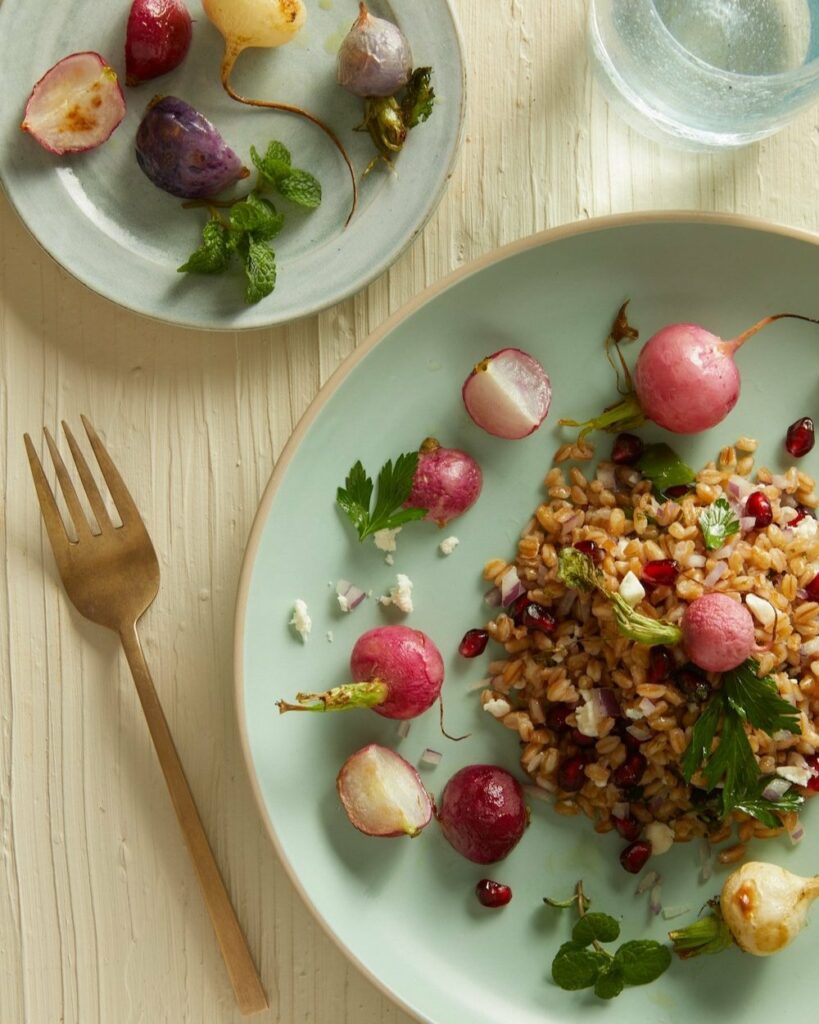
An aerial shot of a plate of Roasted Radishes with Garlic Scape Butter

You have to try roasted radishes to appreciate their goodness. The roasting process brings out a sweetness in the radishes that is unexpected but delightful. Garlic scapes complement the Roasted Radishes but you can use garlic and shallots to get the same effect.

Story by Kylie Thomas

A footer photo with a black background and subscribe info and button

Subscribe to TABLE Magazine’s print edition.

4 Recipes to Enjoy Beyond National Pancake Day

0
Pumpkin Pancakes topped with Apple Compote served on a plate with a fork with butter, syrup, and a cup of juice on the sides

National Pancake Day was on February 13, but who needs an official day to enjoy a flapjack feast? The thought of a fluffy pancake drizzled in maple syrup and finished with favorite toppings is enough to make our mouths water. Create your own pancake buffet on slow, weekend mornings with the following various recipes that use buttermilk, fruit, and other ingredients to make each serving special. Add one or two of our breakfast sides to ensure the dining table is filled with a delicious spread! 

Stack ’em High Pancakes

Pancake stack and syrup

These pancakes will astound your kiddos when they get out of bed Sunday morning. Our curated recipe allows for the fluffiest, thickest pancakes you can imagine. Stack ’em High on top of each other for a breakfast that looks straight out of a cartoon!

Blueberry Pancakes

A stack of blueberry pancakes on a green plate. A forkful is taken out of the stack, with the fork sitting to the top right of the pancakes. Blueberry Pancakes Recipe

A little bit of fruit can elevate your morning meal with an ooey-gooey appeal. The secret to this Blueberry Pancake recipe is milk and vinegar. By letting the two ingredients sit together to create “buttermilk,” you’ll end up with soft, airy pancakes that leave room for plenty of blueberries throughout. 

Pumpkin Pancakes

Pumpkin Pancakes topped with Apple Compote served on a plate with a fork with butter, syrup, and a cup of juice on the sides

Who can resist savory pumpkins and sweet apples? Especially when combined with your favorite breakfast food. This Pumpkin Pancake recipe gets an added flare when topped with a homemade apple compote. Easy to make and even easier to eat.

Buttermilk Pancakes

a stack of pancakes on a plate with berries

Our Buttermilk Pancakes recipe combines all the practices above into the ultimate pancake. Imagine a plate piled high with golden-brown pancakes that are so fluffy they practically float off the table. Raspberries and blueberries add a little flavor and bring freshness and brightness to the party. And let’s not forget the finishing touch — a light dusting of powdered sugar.

Add a Side

The Best Gluten-Free Potato Latkes

A round blue platter with 5 potato latkes , two small bowls with sour cream and applesauce, 3 gold forks, and a smaller lighter blue plate with 3 smaller latkes, and a blue linen.

Finish off your pancake celebration with a delicious, savory side to compliment those oh-so-sweet flavors. How can you resist crunchy fried potato patties with shallots, onions, and garlic? Add on an accompaniment of apple sauce and sour cream for dipping these Gluten-Free Potato Latkes, and you’ve got your weekend breakfast planned. 

Easy Breakfast Bake

An easy breakfast bake made with eggs, presented in a pie dish in the upper left corner, with a piece on a plate, and forks to the right of the pie dish.

Simple and easy preparation makes this Breakfast Bake taste even better. We take all your favorites like eggs, prosciutto, sun-dried tomatoes, pesto, and lots of cheese, and pack it into one single bite. If you thought our pancakes were yummy, just wait till you try them alongside this morning staple.

Story by Kylie Thomas

A footer photo with a black background and subscribe info and button

Subscribe to TABLE Magazine’s print edition.
Eau de Nil Color in Fashion and Design

0
A lithograph of three heeled shoes stacked on top of each other in greenish colors.

Eau de Nil is a murky, difficult-to-define hue that passes through Gustav Flaubert on its way to Alfred Hitchcock, capturing all types of artists. It’s not often you see a color like this that immediately captures your imagination—or one with such a seriously intriguing backstory. But, so it was with for me with Eau de Nil.

Eau de Nil Color in Fashion and Design

Three panels showing eau de nil, a murkey seafoam color paint edon a wall, in a paint can, and on a swatch appear from left to right.

Eau de Nil paint, photos courtesy of Laura Ashley

On a sail last summer, in sweltering 100+ degree heat, along the Nile with Viking, there was a lecture onboard, commissioned by the cruise line, entitled Visions of Ancient Egypt. It was a survey of the way in which Egypt had beguiled of artists and designers throughout history. 

A photo of a coastline where the water resembles the color eau de nil and a tree pokes out from the right side.

L’ÎLE D’YEU, photo courtesy of gheinz 

During the talk, I scribbled down a single note: Eau de Nil / Flaubert. Although the author is often mentioned in the same breath as the color, he never officially mentions it in his writings. He did, while in Egypt, sail on a boat named Le Nil, and did mention the Nile’s water, albeit as being quite yellow. 

A collage of two photos, a floral wall paper in the color eau de nil on the left and a piece of china in the shape of a bowl and the color eau de nil.

From left to right: Oriental Bird 100% linen fabric in Eau de Nil by GP & J Baker, Samuel Alcock footed compote by Gentle Rattle of China 

In the Design World

Eau de Nil (literally, “water of the Nile”) comes in many forms. A less-green celadon, light green, green with tannish undertones, pale green with cool bluish notes. Apparently the term came into fashion in the late 19th century, along with the peak of Egyptomania. “Egypt” the idea became extremely popular, although Flaubert was apparently swept up by the actual place, including its young and female population . . . 

A lithograph of three heeled shoes stacked on top of each other.

Eau-de-nil satin shoe worn by Miss Ada Cavendish as Lady Teazle; beaded shoe; yellowish green shoe. Lithograph, 1900, Edinburgh. Greig, T. Watson (Artist). From The New York Public Library Digital Collections

The color has appeared extensively—and at various times—in fashion, in interior design, in china patterns. There’s even a Lomography (remember that?) page devoted to it. Grace Kelly’s Edith Head dress, worn at the 1955 Oscars, is a classic example of the color’s influence. It is also reported that Hitchcock loved Grace Kelly’s Eau de Nil suit in Rear Window so much that he had it reproduced for Tippi Hedren to wear in The Birds. (Loved… or hated, I have to wonder?) 

Three women dressed in greenish clothing. From left to right a woman wears a long gown in the color, another wears a suit, and the third also wears a suit similar to the second.

From left to right: Grace Kelly at the Oscars colorized by klimbims. Screen-capture of Tippi Hedren in The Birds. Screen-capture of Grace Kelly in Rear Window.

To my eye, Eau de Nil is one of those colors that looks calm but is actually quite stormy. It’s a hue that plays the part of a neutral while (barely) concealing an undercurrent of drama.

Story by Stephen Treffinger

A footer photo with a black background and subscribe info and button

Subscribe to TABLE Magazine’s print edition.
Five Questions with Monelle Totah of Hudson Grace

0
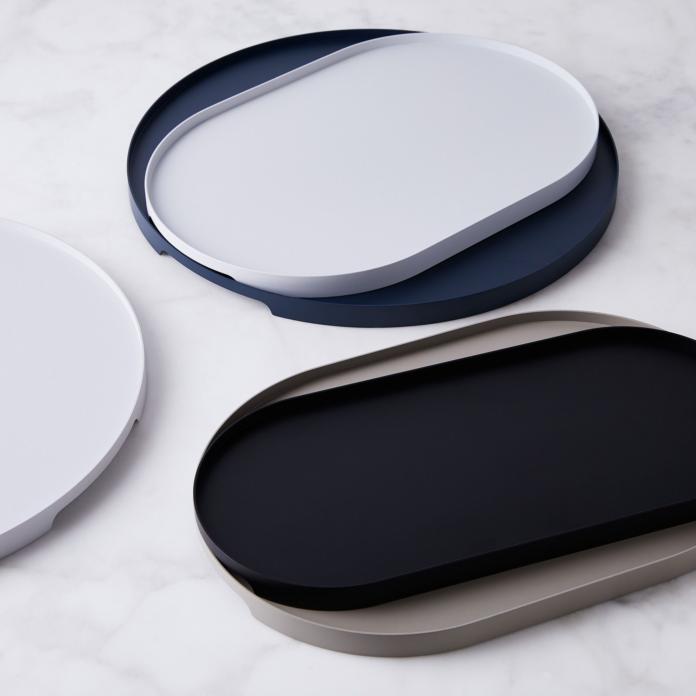
A wood servings tray platter holds a pitcher with various white bowls and silver spoons by Hudson Grace.

Best friends Monelle Totah and Gary McNatton of Hudson Grace opened their first shop in 2012 in San Francisco’s Presidio Heights neighborhood, bringing years of experience in both retail and design with them. Their tableware, serveware, candles, and other entertaining essentials are a perfect mix of expert craftsmanship, vintage design, and a modern sensibility.

We spoke with Monelle to learn more about the business, and to get a preview of the new products coming out for spring.

A wood cutting board holds slices of bread and a knife as a soup bowl sits nearby.

How did it all begin for Hudson Grace?

My co-founder and I came from years of retail and design experience. Gary was from Gap Inc and the fragrance industry. I was head of design for several brands at Williams Sonoma. At some point you think ‘I want to build my own brand, I want to do it my way’. I approached Gary in 2011 and we opened the Fall of that year.

Our mutual passion for home, entertaining and design made it a great partnership… I think we saw a need for a brand that had the style of the juxtaposition of classic and modern, curated and edited for the consumer to come in and find the perfect assortment of what they need for their home.

Where are your favorite places to travel to find great ideas?

Europe is always a great source of inspiration – the history, the artistry and the authenticity in visiting a 100-year-old factory and combing through the archives, finding amazing silhouettes still relevant and functional for today.

An oversized white plater with lemons and leaves on it with lemons surrounding the platter as well.

What’s your favorite way to entertain?

I do love to entertain, the more impromptu the better – admittedly easier when you have the right serveware and enough napkins on hand, which I do. Setting the table is the most fun part. I love family style, platters of food, and lots of wine! I read once ‘cooking and love should be done with abandon or not at all’ – I would add entertaining too.

What inspires you most as you’re developing a new product?

I always ask myself would I use this or have it in my home. Many of our products come from pieces I have had for years and which have become my go tos. From linen sheets to the white bowls, I am inspired by what I find while traveling and dining out.

Why recreate a tureen if I find one in a manufacturer’s archive whose owner’s great grandfather designed based on the duomo in Milan – how can you not be unmoved by that!

A wood servings tray platter holds a pitcher with various white bowls and silver spoons from Hudson Grace.

What are three products in the line you can’t live without?

I truly do have three berry bowls, (I use one for citrus, one for tomatoes and one for berries). I can’t live without a wood serving board for charcuterie, crackers, and cheeses.

Cocktail hour is always important. I need perfect cocktail and wine glasses, and am loving our new white tortoise glass and our everyday wine glass. And of course everyone needs an oversized platter. I use Hudson Grace’s Torino deep oval platter for everything from cracked crab to salads.

Story by Stephen Treffinger / Photography by Hudson Grace

A footer photo with a black background and subscribe info and button

Subscribe to TABLE Magazine’s print edition.
Artist Brie Ruais Dazzles with Exhibition “Oneness”

0
The work of Brie Ruais' Oneness, a blue and brown swirled clay is smeared in a spiral on the wall of Contemporary Craft with loose stones sitting in the middle.

You could step on a piece of New Mexico-based artist Brie Ruais’ work and break it in a moment. In Oneness, Ruais’ new solo exhibition at upper Lawrenceville’s Contemporary Craft, the ceramicist and textile artist puts a great deal of trust in viewers. She speckles the floors with pebbles and stones and expands her clay pieces off of the walls and into the show space. The whole collection is a gesture of relational trust—ceramic work always exposes how fragile the intimacy of artists and visitors are.

Brie Ruais' exhibit oneness showcases different desert colored clays to create a collage on the wall at contemporary craft.

Brie Ruais, In the Space Between the Parcels (Brooklyn Backyard Garden), 2019

Brie Ruais’ Journey to Contemporary Craft

Ruais learned some of her ability to work three-dimensionally from the best given that she worked in artist Sarah Sze’s (of the Guggenheim’s 2023 Timelapse exhibition) studio for ten years. Her Pittsburgh debut, sponsored by the Tomayko Foundation as part of the Tomayko Solo Elevation Series, shows that Ruais’ sense of space, interest in the natural world, and deep understanding of material come together to create a cohesive and thought-provoking show. 

Contemporary Craft is a facility that was once a factory for trophies and award plaques and it now offers a wide, naturally lit gallery space for the artists it showcases. The light from the windows at the gallery makes Ruais’ glazes and underglazes shimmer, as it highlights her color palette of sable, beige, blue, and ashy black. Her work invites the viewer to find natural shapes, topography, rivers, even outer space surfaces in it.

“I took a series of trips to the desert and was inspired by the colors, and then I moved to New Mexico because of that inspiration,” Ruais recalled. The only deviations from a southwestern desert color spectrum are a blush-like pink and a deep green in a series inspired by plant life in a garden. 

Where paintings often define themselves by the deliberate choices the artist makes, ceramic work has a more organic process. So much of working with clay, like nature itself, is beyond a person’s control. Ruais’ work balances intentionality with a real sense of surrender to the process.

The work of Brie Ruais' Oneness, a blue and brown swirled clay is smeared in a spiral on the wall of Contemporary Craft with loose stones sitting in the middle.

Brie Ruais, Holding on to what is Tumbling, 130lbs (Blue), 2022

The Various Materials of Oneness

One piece in the exhibit called Holding on to what is Tumbling (Blue) (2022), is a swirl of stoneware, glass, hardware, and found rocks. Cracks in the stoneware and fingerprint-like indentations give off a softness, but the swirl culminates in a black shine of glaze.

“I really love the unexpected, alchemical effect that certain kinds of applications have,” Ruais said.

Materials like soda ash and underglaze changed the texture of each surface, and every movement Ruais made with her hands and feet is etched into that texture. “I’m interested in how materials behave, what memories they have, what stories they have,” Ruais said.

Brie Ruais Oneness displays a piece of clay smeared on the wall in a messy shape colored with light orange, purple, blue, and grey.

Brie Ruais, Topology of a Garden, Northeast, 135 lbs, 2018

Using the Body as Art

A video in the exhibition gives viewers a chance to see Ruais at work, including a visceral nod to performance art when she rolls in a circle of clay naked.

“I’m interested in the object-subject relationship we have with our bodies, and that shows up in my work. You have a body, but you also are a body in the world,” she said. “And I was experimenting with the ways that form could emerge from action with clay. I wanted there to be a true exchange, a relationship between me and the material. I like a lot of performance art from the ‘70s, and the body is a tool. The body is the material. So I scaled up to my body weight in clay.”

The weight in clay of each piece was an important component of Oneness. Ruais considered the weight of an individual, or the weight of two bodies together, and measured out the clay accordingly.

A piece from oneness by Brie Ruais is pictured, two heaps of white and black clay make two crescent moons before combining into one bigger moon with rocks littered beneath it.

Brie Ruais, Phasing Eclipse of two Celestial Bodies, 2023

Two Become One

For The Phasing Eclipse of Two Bodies, Ruais wanted to explore “how two bodies coming together creates a third space.” That installation sits on Contemporary Craft’s far wall, two black starbursts colliding with each other and an installation of stones and leftover clay from previous pieces on the floor.

“With a solar eclipse, it’s the sun, the moon, and the Earth coming together, but there’s also you as the witness—that’s what I wanted to put the works on the floor to represent,” Ruais said. The black and white of the piece brings to mind Hilma af Klint’s Group IX/SUW, The Swan, No. 1 (1915), another work interested in how seemingly opposite forces can come together to create a whole. 

Brie Ruais' Oneness clay work displayed on the walls of contemporary craft with two shapes on the wall featuring a carved out hole and oblong slice all above loose stones.

(L) Brie Ruais, Unzipped Line and Circle (Black and White), 400 lbs, 2015 (R) Brie Ruais, Unzipped Line and Circle (Raw Color), 400 lbs, 2015

Human Connection Through Space

Winglike shapes flank the two central starbursts, and Ruais drew inspiration from the idea of intimacy inside of a parenthetical. It’s an achievement in the way it brings you into both the vastness of space and the closeness of physical intimacy.

“The moon is something that’s so close, yet so distant,” Ruais said. “And we all have it in common. I was thinking about this a lot when my mother was dying last year, and had dementia—something or someone can be so close and so far. There’s a presence and an absence.”

The Phasing Eclipse of Two Bodies reveals a quality in Ruais’s work: It’s dazzling, both in the word’s colloquial use to mean beauty and its more literal meaning of something extremely bright and blinding, just as an eclipse is. Ruais’ ceramics work pushes what beauty can be, leaning not on the man-made but instead the overwhelming awe that nature inspires and can border on fear. It manages to be both sublime and comforting. Though lingering your eyes on an eclipse for too long is ill-advised, you’ll find yourself wanting to look at Brie Ruais’ work for a long time.

Contemporary Craft is at 5645 Butler Street. Guided tours of Oneness are available March 2, April 6, and May 4, 11:00 AM – 12:00 PM. Oneness is open until May 4, 2024.

Story by Emma Riva / Photography Courtesy of Contemporary Craft

A footer photo with a black background and subscribe info and button

Subscribe to TABLE Magazine’s print edition.
Hot Honey Toddy

0
Two mugs filled with a golden hot honey toddy liquid with a tea bag in each and lemon slice on the rim. They're on a white background surrounded by spices and lemon slices.

Perhaps a toddy could turn that lover with wintery hands and feet into a tiger? Our Hot Honey Toddy is sure to warm you up with ginger tea, rose honey syrup, a splash of lemon juice, and your favorite white rum. You can also swap out teas and ingredients to suit your taste. For example, try a gin toddy with jasmine tea for something floral and calming. You can also pair aged spirits such as bourbon or cognac with cinnamon or black teas. Feel free to adjust the citrus and syrup to your liking, too. If you like less sugar, add less syrup. If you prefer a tart sip, add more citrus. Try some experimenting to create your perfect mixture!

Who Came Up with the Hot Toddy, Anyway?

There’s some debate about where this amazing fall and winter beverage came from. But one theory is that the hot toddy originated in British-controlled India, where its name comes from the Hindi word “taddy,” for a hot drink with fermented palm sap. Others say the hot toddy came from Scotland, where it was first served as medicine for colds and flu. Either way, whoever first decided to put spirits and hot tea together should get some sort of prize. It’s a winning combination for when the temperatures drop and throats start to tickle.

Print

clock clock iconcutlery cutlery iconflag flag iconfolder folder iconinstagram instagram iconpinterest pinterest iconfacebook facebook iconprint print iconsquares squares iconheart heart iconheart solid heart solid icon
Two mugs filled with a golden hot honey toddy liquid with a tea bag in each and lemon slice on the rim. They're on a white background surrounded by spices and lemon slices.

Hot Honey Toddy


  • Author: Kaitlin Fellers

Description

Warm your heart on a cold night!


Ingredients

Scale
  • 1 ½ oz white rum
  • ½ oz lemon juice
  • ¾ oz rose honey syrup*
  • 1 or 2 ginger teabags


Instructions

  1. Pour hot water into a mug of your choice and let sit for about 30 seconds before discarding it. This heats your mug so that your drink will stay warmer longer.
  2. Add rum, juice, and honey to your mug, then top with hot water and drop on 1 or 2 bags of ginger tea, depending on how strong you like your tea.

*For the rose honey syrup: Bring 500 grams of water to a boil and drop in 4-5 bags of Tulsi Rose tea and steep for 5-6 minutes. Remove tea bags and weigh the liquid in the pot. Add an equal weight of honey to your tea and stir until completely dissolve

Story and Recipe by Kaitlin Fellers / Styling by Anna Franklin / Photography by Joey Kennedy

Create a free account, or log in.

Gain access to read this content, plus limited free content.

Yes! I would like to receive new content and updates.

Table Magazine wants to know your location.
TABLE Magazine operates regional sites - Knowing your location helps us route you to the appropriate site for the best experience.