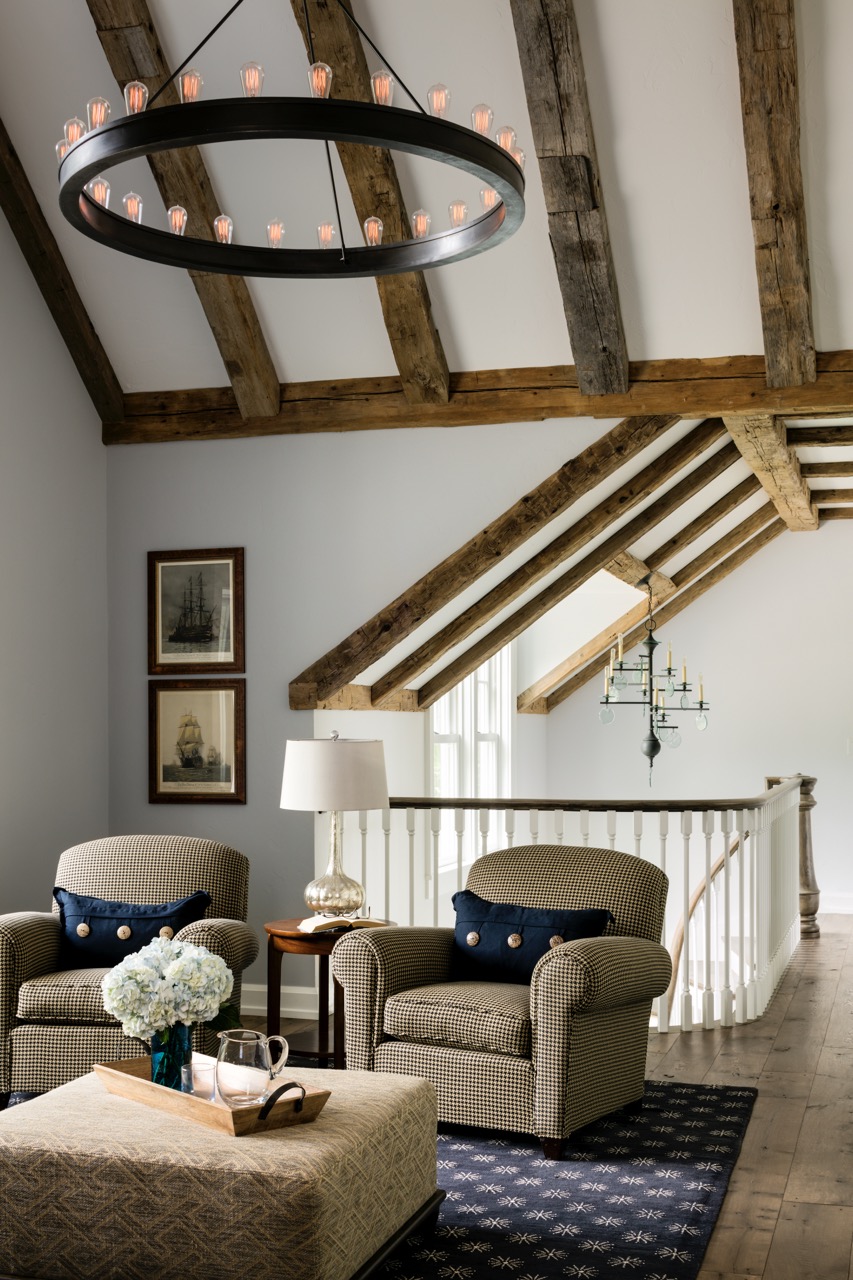
Next time you find yourself in the Forest City (yes, that is its nickname!), take time to explore its many sources for furniture. Most of the Cleveland design stores on this list offer vintage pieces, but new, bespoke, and salvage items are included in the mix. (There’s even a fabulous ceramicist you definitely need to check out.)
More than just a store, VNTG is also a realtor, restorer, upcycler, auction house, staging service, consignment shop, and design consultancy. Their website also explains the finer points of what they offer, as well as helpful information about environmental practices. Open Thursday to Saturday 10am – 5pm, Sunday 11am – 4pm
Operating in an old car factory, DeSantis makes earthy pieces that have a primordial vibe, and they are carried by many online and brick-and-mortar retailers. The palette is mostly browns, black, grays, and a deep berry color, so it can all mix and match. Saturday noon – 4pm
There are lots of places out there offering furniture with a Midcentury vibe, but Rook Modern stands out from the pack. Vintage Norwegian leather chairs rub armrests with a Knoll executive chair from the 1960s near an Adrian Pearsall glass and walnut cocktail table. Wednesday 12pm – 4pm & daily by appointment
Well, maybe not “all”, but certainly a lot, housed on four floors of a house in Tremont that offers a curated selection of vintage furniture, lighting, art, and accessories. (There’s even clothing and estate jewelry.) The displays are organized by dealers, who bring their individual style. Open Wednesday— Sunday, 11am — 5pm.
Another wonderful emporium for unique (and locally sourced) architectural pieces, salvage, vintage furniture, and lighting—as well as their own original designs. They offer a bespoke design service that can make you pretty much whatever you want. Open Saturdays from 11am – 4pm, or by appointment.
Starting September 5th, Italy has been invading the Big Apple—in the best way possible. The famous department store will be hosting an installation called “Italian Design: from Classic to Contemporary.” It will feature Italian furniture, design, and culture, organized by mega-influential design fair Salone del Mobile, which takes place in Milan.
Italian Design at Bloomingdale’s New York
The display will be housed on the store’s sixth floors in the Home/Furnishing department, and was inspired by Italian painter and sculptor Giorgio de Chirico. The show mixes reality and fantasy, and juxtaposes contrasting designs against a backdrop of wooden screens. The displayed objects will be a Who’s Who of Italian design, including Artemide, Foscarini, Kartell, Molteni&C, Scavolini, and Technogym.
Along with the installation, there will be a series of talks entitled “Conversations about Italian Design.” In addition to luminaries from Salone and Bloomingdale’s, presenters will include Ingrid Abramovitch, Executive Editor of Elle Decor, who will moderate a dialogue about Italian design as an international reference. Artist Francesco Simeti and Stefano Giussani, Partner and COO of Lissoni Architecture New York, will discuss “the relationship between contemporary design and classical Italian culture.”
In addition to the above collaboration, Bloomingdale’s will host a two-month-long series of events and sales. This will including complimentary tastings at the De’Longhi Espresso Bar, Kitchen Demo’s on Saturdays, and a redesigning of a space on the 7th floor by Ginori 1735 with its wallpaper and furniture.
Details of the Collaboration
September 5th – 29th, 2024
10:00 am – 8:00 pm
Bloomingdale’s
1000 Third Ave @ 59th Street
Level 6
New York, NY
Walking through large design events like Paris Design Week, it’s easy to be drawn to bright colors and intriguing patterns, especially while jet-lagged and being overloaded with visual information.
This September, though, during Paris Design Week / Maison et Objet, there were many fine examples of decidedly humble pottery, made with out tricky shapes or trendy glazes.
As always, the best spots in town to find treasures like this are Merci, Empreintes, and Astier de Villate. The latter is quite expensive, but you can find more reasonable options at the other venues. Most are available directly through vendors in the US.
Humble Ceramics Take the Stage at Paris Design Week
The Seoul-based company produces exquisitely simple wares with perfect proportions and muted, neutral off-whites, beiges, and browns. The shapes are basic but perfect. They feel great in the hand and have a timeless vibe. Everything is made by ceramic artist Seungmin Ji in his studio, which he founded in 2014.
With glazes made from natural minerals and oxides, Cécile Preziosa’s ceramics have a matte, subtly textured finish that reflects light beautifully and is sensual in the hand. She trained in a workshop in the Alsace region, and opened her own business in 2013. Preziosa uses the jiggering technique—in a sort of press mold that prevents warping—or hand thrown.
Celebrating natural imperfections is part of the beauty of the humble ceramics work of Benoît Audureau, who works with raw clay from local brickworks. His glazes likewise range from earthy and highly textured to a more serene, matte off-white, using a white magnesian glaze. In addition to plates, tea pots, and bowls, his vessels are also sold as re-fillable.
Tea Service, Antip Kuzmichev retailed by Tiffany & Company, circa 1894, From the collection of The Frick Pittsburgh
Strolling through a museum and getting to see beautiful objects, paintings, and furniture can be highly rewarding. It is also time-consuming and sometimes expensive. Also, there are exhibitions all over the country, so something you really want to see might involve an airplane. Fortunately, online exhibits are becoming more and more common, offering an armchair experience that might not be quite as satisfying, but it give you access to far more than you could ever take in in person. (You could go to three separate museums in an afternoon!)
Major museums and large institutions (like the Smithsonian) are great places to start. Occasionally, there is a fee, but these offerings are, more often than not, free. Have a seat, grab a drink, and sink into these educational and enlightening experiences.
Enjoy Art at Home with These 3 Virtual Museum Exhibitions
Tea Service, Antip Kuzmichev retailed by Tiffany & Company, circa 1894, From the collection of The Frick Pittsburgh
These object from the collection of the Frick Pittsburgh are incredible examples of household items, many of them serving pieces for coffee, tea, champagne, punch—plus games, flatware, serving trays, and plates. In this virtual museum exhibition, there are also some furniture and clothing pieces as well as a few oddities, including something called an “annunciator,” which is like an old-style intercom, a smaller-scale version of the bell system on the kitchen wall at Downton Abbey. When someone in the household pushed a button in a particular room, a bell would ring and an arrow indicating where it had come from would turn.
An interactive,virtual walkthrough of an exhibition celebrating the work of Alexander Girard, an architect, designer (interiors, furniture, textiles) born in NYC in 1907. One of his claims to fame was working for Herman Miller, designing fabrics for Charles and Ray Eames, among others. (He was made head of the textiles division of the company in 1952.) He brought colorful textiles, graphics, lounge furniture, and interiors into the airline industry. For a deep dive into Girard, check out the books about him by designer Todd Oldham and (my friend) Kiera Coffee, one published in 2011, the other dropping in October.
Dorothy Liebes Studio (detail), New York City, ca. 1957; Dorothy Liebes Papers, Archives of American Art, Smithsonian Institution
A well-organized ode to designer, color authority, and weaver Dorothy Liebes (1897-1972) who, despite a major impact on the interiors, transportation, and fashion industries during her lifetime, is not that widely known. (Something this exhibit will begin to rectify!) Her work brought not only lively color but also texture. She collaborated with many famous architects including Frank Lloyd Wright, who used her fabrics for upholstery, curtains, carpets, etc. (Her incredible room dividers can be seen in the Delegates’ Dining Room of the United Nations.) Her work was so influential that the term “Liebes Look” is still used today.
Libra, the seventh sign of the zodiac, marks the autumnal equinox when day and night are perfectly balanced, meaning a well-balanced menu sees this zodiac sign at its best. It is at this point that darkness begins to overtake the night, and so there is often a maturity reflected in this sign that is missing in its equinoctial partner, Aries.
Libra, Mediator of the Zodiac
Libras are often portrayed as the diplomats of the zodiac, with a natural talent for comparison, evaluation, and impartial reasoning. Their excellent communication skills stem from a balanced interplay of emotional and logical ideas, enabling them to offer fair judgments that consider both personal and broader social concerns.
The pursuit of harmony in a world of constant flux is no simple task. Many Librans are acutely aware of interpersonal conflicts and the discomfort that arises when their views clash with others, which can cause some hesitation. Libras are often accused of indecision, but it seems more appropriate to suggest that Libras take their time when deliberating. Once a decision is reached, Libra tends to expect others to get on board fairly quickly – “I’ve done all this thinking, so you don’t have to, and this is the right answer!” – all in the name of bringing everyone together in one course of action.
The image of Libra is a pair of scales, but not the type that stands on a table unsupported. The scales of Libra must be held in human hands – there’s an inherent subjectivity to the weighing process. Justice and fairness are not abstract concepts existing in a vacuum, but principles that must be applied and interpreted by individuals. This human element in Libra’s symbol serves as a reminder that the pursuit of justice and fairness requires constant self-reflection and adjustment. It calls for Librans to acknowledge their own biases, to listen deeply to others’ perspectives, and to remain open to reevaluating their judgments.
Libra & the Seasons
As with the other signs, it’s important to note that the sign of Libra and the constellation of Libra are not the same thing. Constellations are groups of stars visible in the night sky, while zodiacal signs are equal divisions of the Sun’s apparent path throughout the year, known as the ecliptic. The zodiacal signs are linked to the seasons, not the stars themselves.
As a cardinal sign, Libra initiates a new season: autumn, a time of transition, harvest, and preparation for the tougher weather that lies ahead. This period traditionally involved evaluating current events, estimating future needs, and addressing outstanding issues before the harsher winter months.
Libra’s cardinal nature endows it with a powerful will to initiate ideas and activate changes. However, this adaptability to new circumstances can sometimes come at the cost of perseverance. Libras may excel at starting new projects or relationships but might struggle to maintain them when faced with prolonged challenges or conflicts. If this feels like you, dear Libra, you can work this to your advantage by incorporating as a feature of your way of being, rather than a flaw.
New Goals for Libra
Consider your relationship to assertiveness: Practice expressing personal needs and opinions directly, while maintaining respect for others’ viewpoints. Learn to disagree constructively without compromising your principles or avoiding necessary confrontations.
Cultivate decision-making abilities: Work on trusting your judgment and making choices more efficiently, and bringing important people in sooner. Set time limits for deliberation and commit to decisions once made, accepting that perfect solutions are rare.
Calibrate your social rhythm: Recognize your tendency to oscillate between excessive socializing and isolation. Set a consistent weekly schedule that includes both quality time with others and dedicated periods for personal pursuits. For example, allocate specific evenings for social activities and reserve certain mornings for solitary reflection or individual hobbies. This structured approach can help stabilize your social energy and foster a stronger sense of self.
What Qualities Does Libra Have?
As an air sign, Libra is associated with the intellect, communication, and social interactions. Air signs tend to approach life with a rational, logical mindset, often seeking to understand and analyze their experiences. Libra applies this airy nature to the realm of relationships and social harmony, constantly evaluating and adjusting to maintain some equilibrium (real or imagined).
Among the air signs, Libra stands out for its strong focus on partnerships and diplomacy. While all air signs value communication, Librans are especially adept at seeing multiple perspectives and finding common ground between differing viewpoints. This makes them natural mediators and negotiators.
Sanguine types, including Librans, often gravitate towards a varied and balanced diet. They may enjoy foods that are light, refreshing, and socially enjoyable. Salads, fresh fruits, and dishes that combine different flavors and textures often appeal to their desire for harmony and pleasant experiences.
However, the sanguine temperament can sometimes lead to overindulgence in pleasurable foods or social eating. Librans may need to be mindful of maintaining a truly balanced diet, rather than simply a varied one. They might also benefit from paying attention to their kidneys and lower back, areas traditionally associated with Libra in medical astrology.
Best Foods to Balance Libra
For most seasons, these foods are good for supporting the sanguine temperament associated with Libra:
Land: Chicken, turkey, veal, rabbit, lean pork.
Surf: Trout, cod, haddock, halibut, perch, sole, tilapia, and shellfish like shrimp and scallops.
Grains: Wheat, rice (especially white rice), oats, quinoa, millet.
Vegetation: Lettuce, cucumber, melon, grapes, apples, pumpkin, squash, berries, pears, peaches, leafy greens like spinach and arugula.
Dairy: Fresh cheese, milk, cream, yogurt and cottage cheese.
Beverages: Still water, light herbal teas, fresh fruit juices.
Alcohol: Light white wines, wheat beers, gin, vodka-based cocktails.
In the winter months, when the cold is greater and the sanguine temperament may need to consume more heat to stay in good health, it’s advisable to introduce more warming and substantial foods:
Good for year-round, the Cosmopolitan is a vodka-based cocktail that’s bright and balanced. This cocktail is complete with fresh fruit juices like cranberry and lime so that Libra can reach their energetic potential. After all, you cannot solve world problems in partnership with others without inviting everyone out to a drink to exchange views.
The more leafy greens the better for Libra. In both the warm and cool months, greens are going to leave you feeling full, content, and ready to gift the world with your kindness. This particular salad uses fresh vegetables alongside the warming, tangy spice, Za’atar. Not to mention, the addition of crumbled goat cheese (your choice of aged or fresh depending on the time of year) creates a hearty, full-bodied flavor in each bite.
Since we’re transitioning into the cooler time of year, it’s good to keep Libra going with a fillet of Roasted Salmon. We’ve created one of the best dishes for Libra since you’ll find a bed of healthy spinach beneath the salmon. Plus, a relish topping dresses this main dish in a savory mix of zucchini, Roma tomatoes, fresh dill, extra-virgin olive oil, and lemon.
With Libra’s dates signaling in the Fall Equinox, flavors and ingredients found within the season are imperative to making this zodiac sign feel at home. You can even creative with the different varieties of fall squash you use such as butternut and Kabocha. With an even balance of orangey-sweetness and a kick of spice, this side dish is one Libra can identify with.
Grapes are one of the most important fruits and vegetables for Libra due to their support with this sign’s sanguine temperament. This dish takes black grapes and cooks them into a warming and comforting spiced crust. Enjoy it beside a glass of wine, light and white, or full-bodied and red depending on the season and what Libra could use most.
Wade Caves, based in Brooklyn, NY, is an astrological consultant and educator specializing in problem-solving applications of astrology. He teaches astrological divination and astronomy at the School of Traditional Astrology. Wade also publishes his work on world astrology through Skyscript’s In Mundo publishing desk and hosts the World Astrology Summit, a conference dedicated to the advancement of astrology for global problem-solving. Website: wadecaves.com • skyscript.co.uk/inmundo. Email: hello@wadecaves.com.
Celebrate National Negroni Week with a plethora of Negroni lover cocktail recipes. The Negroni, a sophisticated blend of gin, Campari, and sweet vermouth, has graced cocktail menus for over a century. While no one knows the exact story of how the cocktail was born, its origins are thought to be in 1919 in Florence, Italy. The story goes that Count Camillo Negroni requested a stronger version of his usual Americano cocktail at his local bar. The result? This iconic concoction, a vibrant crimson masterpiece that continues to draw in taste buds with its perfect balance of bitter and sweet notes.
But, the Negroni’s story doesn’t end there. This versatile cocktail has become a springboard for endless creativity, inspiring us and bartenders alike to experiment with new flavor combinations. No matter what type of drink you prefer, there’s a Negroni recipe out there made just for you. So grab your cocktail glass and stir up a delicious way to finish your day.
What is National Negroni Week?
National Negroni Week is an annual event that celebrates the iconic Negroni cocktail awhile encouraging the gift of funds to different charitable causes. It takes place from September 16 to the 22, bringing together bars and restaurants worldwide to offer special Negroni variations and promotions. The event encourages patrons to enjoy this classic cocktail while also supporting this year’s partner, Slow Food. You can help Slow Food’s mission to foster a more sustainable and equitable world of food and drink just by visiting a participating bar or restaurant to purchase a Negroni.
We’re starting off with tradition in the Italian landscapes. This timeless Classic Negroni is made with your favorite gin, Campari, and sweet vermouth with a bit of orange peel essence. It’s the perfect blend of sweet and bitter to appeal to your taste buds and beyond.
The complex citrus flavor of bergamot comes out in this Earl Grey version of a Negroni. Get ready for a sip of botanical sophistication with bittersweet Campari, Carpano Antica Formula Vermouth, and lemon bitters for a bit of pucker. It’s an abundance of flavor and liquor for a soothing beverage.
We know you’ve heard of the Espresso Martini, but what about the Espresso Negroni? It’s known as an aperitif (usually drank before meals to stimulate the appetite) and an after-dinner drink. What makes it different from the usual Negroni is a shot of espresso and citrus simple syrup for a boost of energy.
This recipe is one you should follow to a tee to create the best Negroni possible. It comes from Con Alma, a jazz bar in Pittsburgh with musical flair. Instead of gin, the drink is centered around Zafra Master Reserve 21 Year Rum. The Negroni Con Alma is then complemented with Contratto Aperitif and Amargo-Vallet Angostura Bitter for a twist on a classic.
With summer just around the corner and spring in full bloom, it’s the perfect time to bring sunny flavors into a Negroni. The Strawberry Rhubarb Negroni uses spirits that are infused with strawberry and rhubarb to create a rounded out flavor profile. With the addition of rhubarb bitters, it’ll be unlike any drink you’ve had before.
Berries and botanicals are the key to The Beauty School Dropout: A Negroni Twist. Fresh strawberries, chamomile-infused gin, strawberry-infused Aperol, and a topping of Lillet Rosé completes this redesigned Negroni. It’s a bright take that all the Pink Ladies from Grease would sip on a Friday night.
There’s something about rinsing a glass with moonshine that makes a drink so much better. After your moonshine rinse, you’ll put together a basic Negroni with the exception of a pinot noir reduction that adds an unexpected flavor. Garnish with a blood orange slice for aesthetics and taste, and you’ve got your Blood Moon Negroni.
Since a Negroni combines sweet and bitter flavors already, it makes sense to use the delicious tartness of cherry as the star. You’ll use a bit of fresh cherry juice and a few dashes of cherry bitters to make a Cherry Tart Negroni that’ll bring you back to the nostalgia of childhood candy.
If you’re looking for a simple cocktail that’s easy to make but adds in a twist of natural sweetness, then you’re in the right place. While our Strawberry Negroni Bianco isn’t too different from a traditional Negroni, it does use fresh strawberries and aperol for a fruity essence. It’s great for those who want to slowly dip their toes into the pool of Negroni recipes.
Who says a Negroni has to be the same recipe of Campari, gin, and sweet red vermouth everytime? Mix things up with our Papà ‘Groni, a cocktail featuring notes of cinnamon, toffee, and caramel alongside small hints of citrus and fruit flavors. It’s perfect to warm you up while taking in a relaxing evening on your porch.
Take your cocktail on a tropical adventure with our Coo Coo for Coconuts Negroni. Instead of gin, you’ll use a healthy helping of tequila alongside a creamy banana sherry and pineapple-infused Campari. If you’re not sure about the bitterness of Negronis then try this recipe for a milder version.
A drink that’s so tasty that it goes down a little too easily is both a blessing and a curse. Our Punch Drunk Negroni mixes a fruity simple syrup and a bit of brut champagne into a traditional Negroni for a sweeter flavor and tickling bubbles. You’ll be surprised just how quickly you empty your glass and just how fast you move to make another.
Create a Craft Negroni with a rum-based recipe. By swapping gin for rum, you can add a touch of sweetness, spice, or complexity to this classic cocktail. The result is a balanced and flavorful drink whose profile depends on your choice of rum.
Our wonderful recipe creator, chef, and food stylist Veda Sankaran channeled our “buy fresh, buy local” passion into a New Year’s Day feast of flavor. Her simple ghee-honey-and-turmeric recipe for roasted carrots pairs well with any winter meal. Turmeric is a great health booster, so it’s perfect for turning over the proverbial new leaf. Talk about a side dish that’s both delicious and good for you.
Tips for Selecting Carrots for Roasting
When selecting carrots, look for those that are firm, smooth, and free of blemishes. Opt for vibrant orange carrots, as a deeper color often indicates higher beta-carotene content. Thinner carrots tend to cook more evenly, but thicker ones can add a heartier texture that some may prefer, so this decision is truly up to you. If you happen to find purple or yellow carrots at your favorite farm stand, have no fear! All colors work pretty much the same. But we do have to admit the visual appeal of a platter of purple, yellow, and orange carrots all together is so satisfying.
Roasting carrots is delicious but adding a slather of honey and ghee makes them even better.
Ingredients
Scale
1 lb carrots, washed and dried
1 tbsp olive oil
Salt
1 tbsp ghee, melted
2 tbsp honey
½ tsp turmeric
A few pinches of salt
Instructions
Preheat the oven to 400 degrees. Line a baking sheet with parchment paper.
Place the washed and dried carrots on the baking sheet, drizzle on the olive oil and season with salt and pepper. Use your hands to rub the oil and seasonings on all sides of the carrots.
Place the carrots in the oven for 10 minutes, flip over carrots, and roast for another 10 minutes.
While the carrots are roasting, stir together the melted ghee, honey, turmeric, and salt. When the carrots have roasted for 20 minutes, remove the baking sheet from the oven, pour on the seasoned ghee, and roast for an additional 2-3 minutes. Drizzle on more honey for sweeter carrots.
Executive Pastry Chef Selina Progar shares her recipe for decadent homemade cookies. As their name suggests, these cookies include everything but the kitchen sink.
How to Bake the Perfect Cookies
We know baking the perfect cookie can be intimidating so here are a few tips to keep in your back pocket for any cookie type. First, ensure your ingredients are at room temperature, especially butter and eggs, to help with even mixing and more predictable baking times. Whenever you add in dry ingredients you want to do it gradually, mixing just until combined. Avoid over-mixing. As your cookies come out of the oven they should be golden brown and slightly underdone in the center, since they will continue to cook slightly after removing. Finally, let the cookies cool on a flat surface for a few minutes before transferring to a wire rack so your Kitchen Sink Cookies can firm up rather than crumble apart.
Cream butter, brown sugar, white sugar, baking powder, baking soda, and salt until light and fluffy. 2-4 minutes. The mixture will be sticking to the side of the bowl. Scrape down sides as needed
Add eggs and vanilla extract. Mix until incorporated. Scrape down as needed
Mix in all inclusions dark chocolate chips, m&m, pretzels, coconut, peanut butter, white chocolate chips, and walnuts. Mix until combined.
Add flour in a few increments. Once the flour is added, mix until combined. Be sure to scrape the sides and bottom of the bowl to incorporate all the ingredients evenly.
Preheat oven to 350 degrees. Line sheet trays with parchment paper.
Scoop cookies using 2 oz scoop. On a half tray space about 6-8 cookies on the tray. Gently press down on the cookie to remove the dome from the scoop.
If the cookies are scooped at 2 ounces, the recipe will yield 25 cookies.
Bake for 18 minutes, depending on the size you make the cookies, bake for less time if you use a smaller scoop. Bake until the cookies become golden brown around the edges! Halfway through baking if you do not have a convection oven, and your oven heat is from the bottom, be sure to switch your trays.
Let cool. Keep in an air-tight container.
Recipe by Selina Progar Styling by Keith Recker Photography by Dave Bryce
Spicy foods are trending these days, and it was only a matter of time before the urge for the piquant found its way into cocktails. Aubrey Halliburton and Lisa Considine, the ladies behind Lo Bar Cocktail Services, inspire us to get spice with a delicious drink recipe, the Spicy Thai Pimms Cup. Lo Bar Cocktail Services is a full-service cocktail catering company specializing in hand-crafted, creative, and absolutely delicious drinks to fit any event.
About This Spicy Thai Pimms Cup
Lo Bar founder Aubrey Halliburton says, “My favorite at-home cocktail anyone can make! The Thai-pepper-infused gin gives a nice heat that won’t burn your palate. We use a fresh slice of ginger root, basil, a Thai chili, and lemongrass for garnishes, but citrus, strawberries, cucumbers, and mint also work – the possibilities are endless!”
This hearty and flavorful Penne with Broccolini and Chickpeas recipe is a delicious and nutritious meal that’s perfect for any night of the week. The tender pasta, crunchy broccolini, and protein-packed chickpeas create a satisfying and balanced dish. With simple ingredients and minimal prep time, you can enjoy this delicious broccolini pasta as an easy weeknight dinner or lunch.
Is Broccolini Just Broccoli?
No, broccolini is not just broccoli. While they are both members of the Brassica oleracea family, broccolini is a distinct variety, often described as a cross between broccoli and asparagus. It’s great for roasting, but you don’t want to let it sizzle for too long, as it will shrivel up and lose its flavor, much like arugula or spinach. So keep the heat on low when you roast this delightful (and adorably small) vegetable. It has slender stalks, small florets, and slightly bitter taste. This ingredient is great to use if you want to freshen up an old recipe with a delicious taste and a unique texture.
Rinse the broccolini in cold water. While still wet, toss broccolini in 3 tablespoons of Liokareas olive oil, ½ teaspoon of salt and ¼ teaspoon of black pepper. Spread evenly on a baking sheet and roast at 300 degrees until al dente. Do not brown.
In a large skillet, sauté garlic and sausage. When sausage is nearly cooked through, add chickpeas, and pepperoncino to taste. Sauté, stirring frequently, for another 3 minutes. Turn off the heat and let rest.
In a large stockpot, heat water to a boil and add salt until it tastes like sea water. Once the water is boiling, add pasta and cook according to directions until not quite al dente. Before draining, add ½ cup of pasta water to the skillet.
After draining, add the pasta to the skillet and turn the heat on high. Drizzle the remaining Liokareas olive oil into the pan. Stir constantly until pasta is al dente.
Plate the pasta with stalks of roasted broccolini. Sprinkle just a little Pecorino cheese, and enjoy.
Recipe and Styling by Keith Recker Photography by Dave Bryce