Home Blog Page 62

Seafood Spaghetti

0
A seafood spaghetti sits in a shallow bowl with shrimp and mussels, all sitting on a wood picnic table.

This summer, Seafood Spaghetti is all you need to go all-out al fresco. The fresh, light flavors of seafood mingle with a zing of zesty, in-season cherry tomatoes, and fragrant herbs. We like to think this dish belongs on an outdoor picnic table in the evening rays of sunshine. But, you can always keep it handy for when you’re craving a hearty serving of seafood.

Seafood Spaghetti Perfect for a Mediterranean Diet

Don’t feel the guilt while indulging in this delectable Seafood Spaghetti. This recipe actually aligns beautifully with the guidelines of a Mediterranean diet. Fresh, lean seafood like clams, mussels, and shrimp ensures a dose of protein. Then, nutritious and vibrant in-season tomatoes along with the use of heart-healthy olive oil play into the wholesome choices here. The best part is that it’s a meal that your whole family will enjoy while still adhering to your own dietary needs.

Print
clock clock iconcutlery cutlery iconflag flag iconfolder folder iconinstagram instagram iconpinterest pinterest iconfacebook facebook iconprint print iconsquares squares iconheart heart iconheart solid heart solid icon
A seafood spaghetti sits in a shallow bowl with shrimp and mussels, all sitting on a wood picnic table.

Seafood Spaghetti


  • Author: Stephanie Sullivan
  • Yield: Serves 8

Description

Your usual pasta dish gets a major upgrade with fresh seafood.


Ingredients

Scale
  • ¼ cup olive oil
  • 3 garlic cloves, chopped
  • 3 shallots, chopped
  • 1 lb shrimp, shelled and deveined
  • 1 lb scallops
  • 1 cup dry white wine
  • 1 dozen littleneck clams, scrubbed
  • 1 dozen mussels, scrubbed
  • 1 lb calamari
  • 1 lb spaghetti, cooked
  • 1 cup pasta cooking water
  • 2 cups cherry tomatoes, halved
  • ¼ cup fresh basil, chopped
  • ¼ cup fresh oregano, removed from stems


Instructions

  1. In a large saute pan or paella pan, heat the olive oil. Add garlic and shallots, and sauté briefly. Add the scallops and sauté until just colored on each side. Remove to a large platter. Add shrimp to sauté pan and cook just until pink. Remove to platter.
  2. Bring the wine to a gentle boil in a large pot and add the clams, mussels, and calamari. Cook until shells start to open, about 2 minutes. Remove the seafood to the platter.
  3. Pour the white wine into the sauté pan and deglaze. Reheat the pasta in boiling water, then add to the sauté pan. Add herbs and tomatoes and toss to mix, adding pasta cooking water as needed. Add seafood and mix gently, and season to taste.
  4. Move all to a serving platter and drizzle with extra virgin olive oil before serving.

Recipe by Stephanie Sullivan
Photography by Adam Milliron

Subscribe to TABLE Magazine’s print edition.

7 Cocktails for Tax Day

0
Two white yellow frozen drinks in tall, skinny glasses, PainKiller Cocktail

Tax Day is coming up on April 15, 2025 and just the mention of it can induce a wave of stress. Numbers swirling, forms multiplying, and the ever-looming question: will you owe money or get a refund? But fear not, fellow taxpayer! After a long day of financial wrangling, a cocktail will help ease the stress. You can embrace your feelings of dread with our Black Death Cocktail. Or, you can toast your prospects for a refund with a Classic French 75. Either way, we hope a lovely beverage brings you a little bit of relief on this complicated day.

7 Cocktails for Tax Day

Lemon Basil Martini

a lemon basil martini cocktail in a coupe glass sitting on a white and grey marble slab with fresh basil and olive oil floating on the top of the cocktail

For those who enjoy a bit of herbal sunshine to combat math-induced dullness, the Lemon Basil Martini offers a sophisticated cocktail for your senses. The clean flavors of lemon and basil complement the vodka beautifully, making it an optimistic and satisfying end-of-tax-day drink.

Banana Walnut Old Fashioned Cocktail

An orange in color old fashioned cocktail sits in a old fashioned glass, garnished with banana bread.

A little bit of comfort goes a long way when you’re stressed out by a maelstrom of numbers. The Banana Walnut Old Fashioned is a unique twist on the classic old fashioned, adding in the flavor of comforting banana bread. Banana liqueur and nutty walnut bitters add unexpected depth to the familiar flavor of whiskey.

Painkiller Cocktail

Two white yellow frozen drinks in tall, skinny glasses, PainKiller Cocktail

Feeling the tax-day pain? The PainKiller Cocktail, a tropical blend of rum, pineapple juice, orange juice, cream of coconut, and nutmeg, might be the perfect stress reliever or “painkiller”. It’s a bright way to unwind after a day of dealing with endless forms and complicated instructions.

Punch Drunk Negroni

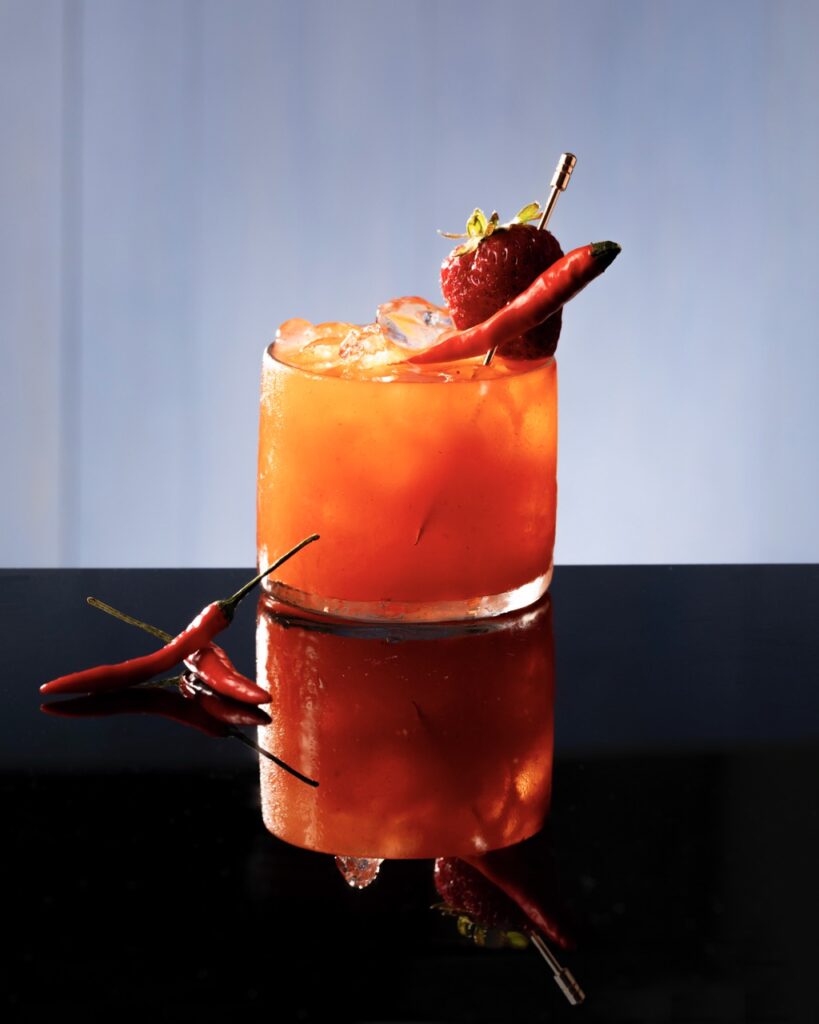
A cocktail orange in color sits in a rocks glass, garnished by a strawberry. Punch Drunk Negroni Cocktail Recipe

This drink is for when you want something that’s strong and… effective. Our Punch Drunk Negroni uses a fruity simple syrup and a bit of brut champagne combined with traditional negroni ingredients.  It’s all too easy to drink so be careful or you might end up with a different kind of non-tax related headache the next day.

The Margin of Error

A 2024 election-themed cocktail in a highball glass

While we originally created this cocktail for the 2024 election, when suddenly everyone’s mind was on tiny numerical values and percentage points, Tax Day is one other time of year when margins of error start to seem very important. Maybe your Schedule C business expenses were, shall we say, rounded up by a margin. We won’t tell. Pour this one out to celebrate finishing your forms!

Espresso Whiskey Martini

Two Espresso Whiskey Martini fills one purple and one blue martini glasses, adorned with gold accents.

Taxes can be exhausting, especially when you have a full day ahead of you. Get a little energy boost with your stress-relieving cocktail thanks to our Espresso Whiskey Martini. We innovated the usual espresso martini to include whiskey and Frangelico for a sweet, warm sip.

Classic French 75

Two classic French 75 sit in champagne flutes against a black background with lemon peels inside the glass. A bottle of champagne pour into the glass to the right of the frame.

When your forms are complete and you see that big refund hit the screen, celebrate and pop some bubbly with a Classic French 75. This timeless blend of gin, lemon juice, champagne, and simple syrup is as elegant as it is refreshing.

Story by Kylie Thomas

Subscribe to TABLE Magazine‘s print edition.
Lamb Rendang

0
A black plate with a Lamb Rendang on top featuring sauteed greens all on a brown table.

This slow-cooked Lamb Rendang from The Aviary Kinderhook is fork-tender, rich with coconut milk made buttery and smooth in the process, and infused with the indescribably delicious layering of Indonesian flavors. Serve it with sides of sautéed greens and creamy polenta cooked with coconut milk and a bit of salt, and dressed with Indonesian sambal oelek, a ground chili sauce available at many grocers.

How Lamb Rendang Relates to Wine

Rendang is the sort of dish that unfolds as you eat it, inspiring a second helping, another sip of wine, and a long conversation with friends. We open a light but earthy 2019 Beaujolais Château de Fleurie, which plays beautifully with the burnished flavors of the Lamb Rendang.

Print
clock clock iconcutlery cutlery iconflag flag iconfolder folder iconinstagram instagram iconpinterest pinterest iconfacebook facebook iconprint print iconsquares squares iconheart heart iconheart solid heart solid icon
A black plate with a Lamb Rendang on top featuring sauteed greens all on a brown table.

Lamb Rendang


  • Author: The Aviary Kinderhook

Description

A bit of coconut milk makes this slow-cooked lamb undeniably buttery.


Ingredients

Scale
  • 2.53 whole rack of lamb ribs
  • 3 tbsp canola oil, divided
  • Kosher salt
  • Freshly ground black pepper
  • 6 small shallots, peeled and sliced
  • 6 garlic cloves, peeled and sliced
  • 4 oz. fresh red chilies (such as fresnos, red jalapenos, bird’s eye chilies)
  • 13” knob fresh ginger, peeled and sliced
  • 3 stalks lemongrass, tender white parts only, smashed
  • 2 tsp ground coriander
  • 1 tsp ground cumin
  • 2 tsp ground turmeric
  • ½ tsp ground cardamom
  • 1 tbsp palm sugar, or more to taste
  • 3 makrut lime leaves
  • 1 cinnamon stick
  • 1 can full-fat coconut milk
  • 1 tbsp tamarind juice


Instructions

  1. To make the rendang paste, process shallots, garlic, chilies, ginger, and lemongrass until finely minced.
  2. In a medium saute pan over med-low heat, add 1 tbsp canola oil and add aromatic paste, spices, palm sugar, lime leaves, and cinnamon.
  3. Cook the spice paste for about 1 hour, stirring occasionally and allowing it to maintain a gentle sizzle as it deepens in color.
  4. Whenever the spice paste starts sticking to the bottom of the pan, add coconut milk a few tablespoons at a time to help dislodge the fond and continue stirring (use up all the coconut milk).
  5. By the end, the rendang paste should be deep brown in color and the coconut oil should have separated from the solids.
  6. Add tamarind juice. Allow paste to cool to room temp before using, or store in the fridge for up to 1 week.
  7. Season lamb rack with kosher salt and black pepper. Heat a large cast iron pan or dutch oven on medium-high and add 2 tbsp canola oil.
  8. When oil just starts to smoke, place lamb rack fat side down in the pan. Turn heat down to med-low and allow fat to render and brown without burning, adjusting heat as necessary (at least 10-15 mins).
  9. Once the fat has rendered, sear the remaining sides until deeply browned.
  10. Remove rack from pan and place onto a sheet tray (cool and save lamb fat for another use). Coat rack generously in rendang paste, and roast at 350F for 15 minutes or until a thermometer probe inside reads 125F.
  11. Rest for 10 minutes before slicing. Serve over coconut milk polenta or jasmine rice, simply prepared vegetables (such as garlic scapes, spring onions, swiss chard), and plenty of sambal.

Story by Keith Recker
Styling by Amy Ilias
Photography by Vera Vandenbosch
Food by The Aviary Kinderhook

Subscribe to TABLE Magazine’s print edition.
Absinthe Gimlet and Education

0
A bottle of green absinthe to make a gimlet with sits on a wood table, leaning against another bottle of absinthe.

Aniseed, wormwood, and fennel. When talking absinthe, this is the holy trinity. It’s also what makes our Absinthe Gimlet so delicious.

Every bottle of the spirit contains these three botanicals, which gift the green drink its signature, herb-forward, licorice-y taste. In the case of local absinthe-maker Lawrenceville Distilling Co., this holy trio blends with brandy and distills down, making their signature 1129 Ridge Ave. Absinthe Traditionnelle.

Absinthe Education

Though the spirit has experienced a rise in popularity over the last few years, it’s had an eventful past (to say the least). Absinthe, or, as it’s famously known, the “green fairy,” has been rumored to cause hallucinations; it’s even been banned from the U.S. because of its potency and potentially toxic nature.

But, sorry to rain on your parade, absinthe does not induce madness or visions. According to Lawrenceville Distilling Co.’s FAQ page, we now know these false side effects are from alcohol poisoning and poor product regulation, leading to cheap variations with harmful ingredients.

(Another theory is that the wine industry, frustrated that drinkers were trading wine for the green stuff, started a smear campaign against absinthe. Their propaganda claimed that the spirit was responsible for violence, madness, and other dangerous acts.)

Lawrenceville Distilling Co.’s Absinthe

Lawrenceville Distilling Co., who launched their green absinthe in 2019, has even released a variation: Absinthe Rouge. Instead of absorbing chlorophyll from a bundle of hyssop, melissa, and wormwood for color, the spirit’s vibrant, luscious red comes from hibiscus. It gives the rouge spirit a more approachable, floral taste, rather than the powerful herbal qualities of the verte absinthe.

Both have plenty of uses. Try either absinthe the original way, prepared via La Louche, a process that slowly adds water to the absinthe, diluting the spirit and transforming it into a cloudy, floral-forward beverage. (A sugar cube is often in this method. You can pour water over the sugar cube, or it mix it in.)

You can also use absinthe as a rinse to prime glasses for cocktails. The current TABLE favorite, fully showcasing the spirit’s “big flavor,” is a play on the classic gimlet, using absinthe and lime juice.

Print
clock clock iconcutlery cutlery iconflag flag iconfolder folder iconinstagram instagram iconpinterest pinterest iconfacebook facebook iconprint print iconsquares squares iconheart heart iconheart solid heart solid icon
A bottle of green absinthe to make a gimlet with sits on a wood table, leaning against another bottle of absinthe.

Absinthe Gimlet


  • Author: Maggie Weaver

Description

A boldly flavored gimlet with absinthe and lime.


Ingredients

Scale


Instructions

  1. In a cocktail shaker, mix the absinthe and lime juice with ice.
  2. Pour over rocks, and add a splash of soda.

Story by Maggie Weaver
Photography and Styling by Keith Recker

Subscribe to TABLE Magazine’s print edition.
Peter Cottontail’s Easter Cocktails and Mocktails

0
A Hoppity IPA Cocktail in a tall beer glass sits on a white table surrounded by Easter grass, eggs, and a gold bunny by the pastel backdrop.

Spring is in the air and Easter celebrations are hopping into full swing, which means you need selection of cocktails and mocktails to match! We asked five local mixologists to help us toast the season with a lineup of festive cocktails and mocktails inspired by the classic song, Here Comes Peter Cottontail! Their delightful concoctions capture the whimsy and joy of Easter, and you and your guests will have fun shaking, stirring, humming, as well as sipping. Enjoy!

Peter Cottontail’s Easter Cocktails and Mocktails

Here Comes Peter Cottontail

A short wine glass with a Here Comes Peter Cottontail inside as a ball of cotton candy sits over the top of the glass. A golden bunny sits in the background by a pastel backdrop.

Start your Easter brunch off with Here Comes Peter Cottontail, a refreshing cocktail or mocktail bursting with bright notes of strawberry, lemongrass, and grapefruit. But the flavor experience doesn’t stop there. Vallozzi’s mixologists, Laura Karner and Stephanie Yarup, added more to the drink. “We immediately wanted to make a fun cotton candy cocktail when we heard our assigned line was ‘Here Comes Peter Cottontail’. To welcome spring, we wanted a bright sangria with plenty of fruit and botanicals.” They complete their drink with pure fun: a puff of cotton candy garnish goes in the glass before you pour the cocktail.

Hoppin’ Down the Bunny Trail

A tall glass holds a Hoppin’ Down the Bunny Trail with a Buzzed Bunny Mimosa in an orange color with a pineapple slice garnish as the whole glass sits beside a gold cocktail shaker.

Upon hearing that his assigned lyric involved hopping down the bunny trail, Square Café’s Steven Krall pulled his juicer onto the bar. In it went fresh carrots, ginger, and pineapple. Out came the freshest, most flavorful blend of juices. (Don’t worry; for those who don’t juice, he also specifies store-bought juice equivalents in his recipe.) Then, he adds lime or lemon sparkling water and a healthy dose of prosecco – which, in the mocktail version, is omitted. With or without alcohol, the resulting quaff will have you just as bubbly and jazzed as a buzzed bunny either way.

Hippity

Two short cocktail glasses hold a Hippity rose hip and lavender easter cocktail with small purple flower garnishes and a basket of eggs sitting in the background.

Collin McNamee’s behind-the-bar genius lit up with the idea of capturing the ineffable, entirely magical quality of hippity in a glass. In his view, no doubt inspired by the hallucinogenic interior of Cobra, hippity is poetically linked to the perfumed qualities of rose hip and lavender, so his recipe starts with a colorful tea made from these floral elements. Add lemon juice and strong honey syrup to complete his mocktail version, and also a glug of the botanical notes of gin to bring a cocktail into being. The taste buds will wander happily through this garden of flavors. And, perhaps, you’ll meet the Easter bunny along the way.

Hoppity

A Hoppity IPA Cocktail in a tall beer glass sits on a white table surrounded by Easter grass, eggs, and a gold bunny by the pastel backdrop.

Hoppity evoked the seductive appeal of hops for The Commoner’s Blaise Malandra, so a hoppy IPA-based drink was inevitable. Add to that special tingling of the taste buds drops of hopped grapefruit bitters, Cynar, Sfumato, and strawberry syrup…and you get a treat that has all the appeal of jellybeans and Jolly Ranchers, but with a sophistication that’s entirely grown-up and delicious.

Easter’s On Its Way

A coupe glass holds a carrot cocktail with two basil leaves as bunny ear garnishes and golden eggs around the glasses.

What does Peter Cottontail want when he finally reaches that delightful little bar at the end of the Bunny Trail? Carrot juice, of course. Cam Dickson reaches into his stash at Ritual House
to add tequila, lemon and lime juice, vanilla syrup, and an egg white. After a hard shake in a cocktail tin, out comes a frothy, tangy, yet still sweet cocktail that would calm the nerves of even the jitteriest, travel-weary bunny. Swap out the tequila for pineapple juice in the mocktail version. Both will refresh and
delight you!

Story by Star Laliberte
Styling by Anna Franklin
Photography by Laura Petrilla

Subscribe to TABLE Magazine’s print edition.
Get Schooled on Sake

0
Sake being served in a Japanese restaurant.

Drinking sake is a lot of fun, school is not. To enter the world of sake, however, you have to learn a little math, a little science, a little vocabulary, and a dash of history. Sake is delicious, but it requires a baseline level of knowledge to figure out what you’re going to like.

Sake 101

Like wine, sake’s story is a mixture of history and science, and you can approach it from wherever you want to start. If you want to nerd out about fermentation, you can do that with sake. If you want to learn about Japanese history, you can also go that way. There’s an endless amount of access points for it, but we’re going to give you a brief overview of how it’s made, what tasting notes to look for, and why it’s so good. School is in session, so take your seat…  

Sake Meter Values & Acidity

There won’t be a lot of math. We promise. You’ll just have to read a graph and remember how x and y axes work. The flavor profile of sake has a special system of measurement—SMV (Sake Meter Value) and then acidity. The graph of these two things gives you the character of what you’re drinking. Will it be dry? Sweet? Light? Heavy? A negative SMV will give you a sweeter character, while a positive one will give you a drier sake.

Courtesy of Sake Hub.

Nigori, which you’ll find a lot in the domestic market, starts at -10,” beverage director and Skurnik Wines importer Alyssa McGrath explained. This makes it ideal for the end of a meal, since it’s sweeter, like a dessert wine is.

How Do You Make Sake?

As with other types of liquor, producers have to make choices along the way that have far-reaching consequences for what goes into the bottle in the end. Beyond the acidity and SMV scale, the other things that give sake its character are polishing, koji, and whether or not the brewer decides to add in distillate, which is extra alcohol. Adding distillate changes the flavor and consistency of the final brew.

Polishing is the process by which producers mill the rice to get rid of the outer layers. Typically, the higher the polishing rate, the smoother and more delicate the product is. House of Sake produced a diagram to illustrate this concept.

A diagram about the different polishing levels in sake.
Courtesy of House of Sake.

The percentages refer to minimum rice polishing. The higher up it is on the diagram, the more premium, but the number is lower because it refers to the ratio of un-polished rice to polished rice. So, if you’re looking to impress with sake, you want to look for the lower number, since the lower it is, the more ground-down the rice is. A 50% polishing percentage means the rice is now 50% of its original size.

Along with the math, allow me to break down a brief vocabulary lesson to guide looking at the terms in the triangle:

  • Junmai means “pure rice.” This indicated that the producer didn’t add any distillate into the sake.
  • Honjozo will have a bit of distillate added in—so you get a higher alcohol percentage and a leaner body.
  • Ginjo also has an addition of a distillate, but its polishing is more refined than Honjozo, hence why they are not the same thing. As you go up the pyramid, you see the Tokubetsu (meaning “special”) and Dai (meaning “big”) prefixes to show what’s considered more refined.
  • There is a sub-style, Junmai Ginjo, that is also a higher polishing level than your typical Junmai but doesn’t have that distillate in it.

Each of the terms tell you how polished the rice is and whether it has distillate. So, looking at all the information nested in the vocabulary words, Junmai Daiginjo is a highly polished, no-distillate sake. Daiginjo is a highly polished sake that does have distillate. Tokubetsu Honjozo will be a 60% polishing percentage with the addition of distillate.

Koji: A Little Mold Goes a Long Way

Koji is a mold, but it’s not the type of mold you’re thinking. It’s what makes sake alcoholic. Normally, the idea of ingesting mold is unappealing. But in this case, koji-kin, a small, harmless to eat mold, is cultivated onto the rice during the sake-making process. All drinks that come from starches require something to break down the starch into sugars, which the yeast in the starch will eat to create alcohol. However, you can’t “malt” rice the way you can with barley. So, something else has to happen in order to create alcohol.

That’s where koji comes in. Producers grow koji is a separate part of the brewery called a koji muro and then sprinkle it onto steamed rice. The koji is in an integral part of the sake-making process and it influences the quality and flavor of the final beverage. Even the material on the walls of the koji muro can make their way into the final beverage’s flavor profile. At the higher end, there’s one more categorization: namazake or unpasteurized sake, which brewers don’t add heat to. That’s the purest form of sake, with the freshest expression of the koji in it.

The History of Sake

Ok, maybe you’re sick of looking at graphs and talking about mold now. What about the history? “Traditions of sake go back hundreds of years. There’s a big focus on the cleanliness and the pristine nature of the water. The water is part of what gives sake its regional character,” McGrath said. The technique of making sake originally came from China but gained prominence in Japan. (There are many such historical and cultural crossovers between Japan and its neighbor, such as the kanji writing system). The first recorded mention of sake in Japan is in the third century, and the first mention of commercial breweries appears in the 1400s.

Prior to that, nobles in the imperial court and monks were the only people producing sake. The imperial court even had its own sake maker in-house. The court only drank the clearest, purest sake in what we would now consider the Junmai Daiginjo style.

Sake’s first introduction to the global economy was in 1852, during the Meiji period when Japan opened its borders and entered the international trade market. Sake has taken off from there, and there are now sake producers all over the world. It’s become as prestigious as wine and whiskey, with a separate WSET certification to focus on it.

What is it Like to Drink Sake?

Yeah, yeah, history is cool, science is interesting…but beverages are for drinking.  As the graphs earlier showed, sake can be drier or sweeter. Often, you’ll find tasting notes referring to more umami (think mushroom-like savory fullness) or more floral or fruit notes depending on the koji, polishing percentage, and regionality.

Different regions of Japan produce different profiles. Kobe, famous for their beef, also produces a lot of sake. The Kobe style tends to have a fuller-body to stand up to the juicy meats. Sake from Hokkaido, by contrast, will pair well with fish, because seafood is a huge part of that region’s cuisine.

When you see “cloudy” sake, that means it’s Nigori, the sweeter style that has some sediment left over from the brewing process. Nigori sake was actually once banned in Japan, during the Meiji period when the country wanted to modernize. The Japanese government thought the clear style looked classier, so Nigori was out. But now, Nigori is one of the most popular kinds of sake for its sweet taste and relative accessibility.

An example menu from Roger Li’s Umami can help you put your knowledge to the test. See if you can recognize the terms and what each one means!

The menu at Umami, featuring a list of sake.
Courtesy of Umami.

A great way to experience sake’s diversity in practice is a sake flight, which most Asian restaurants (including Umami) offer. The differences are dramatic between different cups of sake. McGrath also encourages people to serve sake with non-Japanese food. Often, because the language seems unfamiliar, people don’t make an effort to learn about it. But sake is as versatile as any other liquor. After all of those numbers, I definitely want a carafe of sake. School’s out.

For more, check out the rest of our liquor education series:

Wondering what to cook to go with your drink? Try our food education series:

Photo by Bundo Kim
Story by Emma Riva

Subscribe to TABLE Magazine’s print edition.

Paprika Deviled Eggs

0
A small brown plate holds four deviled eggs topped with paprika as a plate of pea puree triangles sit in the upper left corner.

If you’re sick of the same old recipe for deviled eggs, try adding a kick of paprika for big flavor in a small package. These hard boiled eggs hold a creamy filling of dijon, lemon, egg yolks, and seasonings in their respective white halves. The final touch is a dusting of paprika that not only adds a pop of color but also introduces a subtle, smoky pepper flavor. It’s a distinct taste that complements the richness of your usual deviled egg filling.

How Do You Get the Smoothest Deviled Egg Filling

Nobody likes lumpy Paprika Deviled Eggs. When cooking your hard-boiled eggs, you want to stop just until the yolks are firm and bright yellow which means that less is more here. To mash the yolks, you can use a fork to thoroughly break up any lumps before you add any other ingredients. If you really want an ultra-smooth texture, you can press the yolks through a fine-mesh sieve to get rid of any extra graininess. As you go to put in the dijon and other liquids, add them gradually and mix vigorously for the best results. Some cooks will also use a food processor or immersion blender to get the filling as perfect as possible.

Print
clock clock iconcutlery cutlery iconflag flag iconfolder folder iconinstagram instagram iconpinterest pinterest iconfacebook facebook iconprint print iconsquares squares iconheart heart iconheart solid heart solid icon
A small brown plate holds four deviled eggs topped with paprika as a plate of pea puree triangles sit in the upper left corner.

Paprika Deviled Eggs


  • Author: Csilla Thackray

Description

Kick up your deviled eggs with a bit of paprika.


Ingredients

Scale
  • 3 small egg yolks
  • 2 cloves of garlic finely minced or grated on a microplane
  • ½ tsp dijon
  • Juice of 1 lemon, plus more to taste
  • ½ tbs salt, plus more to taste
  • 1 ¾ cup canola oil
  • 1 tsp hot paprika
  • 6 hard-boiled eggs – see directions below


Instructions

  1. Place 6 whole eggs in a single layer and cover with cold water.
  2. Add 1/2 cup kosher salt.
  3. This seems like a lot of salt but trust me…it will not season the eggs. It simply helps to solidify your egg whites if one breaks in the water.
  4. Bring the entire pot up to a boil. Once boiling, turn the heat down to medium-high and boil between 10 and 12 minutes. If the eggs are smaller, go closer to 10, if the eggs are larger, go closer to 12.
  5. Shock the eggs in an ice bath and peel. Allow eggs to cool completely in refrigeration.
  6. In a medium mixing bowl with a flat base, vigorously whisk together egg yolks, garlic, lemon juice, and salt.
  7. Once the mixture has become frothy, begin to very slowly drizzle in the canola oil while whisking.
  8. As you add the oil in a slow, steady stream, the mixture will thicken. If it becomes too thick to whisk, splash a little cold water to smooth it out.
  9. Once all of your oil has been added, finish the aioli with paprika and taste for salt.
  10. Cut the boiled eggs in half and remove the yolks. In a food processor, combine equal parts aioli and egg yolk puree until smooth. Taste for salt.
  11. Fill the eggs with the mixture using a piping bag, making sure to over fill them slightly. Garnish with a little more paprika.

Recipes by Csilla Thackray
Styling by Keith Recker
Photography by Laura Petrilla

Subscribe to TABLE Magazine’s print edition.

Fresh Pea Puree

0
A brown platter holds orange bread squares with a fresh pea puree on top.

Csilla Thackray shares a Fresh Pea Puree snack, perfect for happy hour in the springtime. You can use this creamy smooth recipe for on your favorite crackers or crostini. Though, feel free to serve a whole bowlful with an herb garnish on top if you so desire. 

Snow Peas vs English Peas in a Fresh Pea Puree

When you make a Fresh Pea Puree, the choice between snow peas and English peas makes a huge in the final flavor and texture. We recommend English peas for this recipe for its overall versatility. You get the classic sweet taste that shines through. Plus their texture, after cooking and pureeing, is typically more smooth and creamy. Snow peas though have a milder, more subtle sweetness and more vegetal flavor. Since you also puree the entire pod with snow peas (after removing the tough strings), the puree carries a fibrous texture in comparison to a puree solely from the English peas. While you can make a puree from snow peas there are setbacks. It will likely have a less intensely pea-like taste and needs to be strained very well to work. 

Print
clock clock iconcutlery cutlery iconflag flag iconfolder folder iconinstagram instagram iconpinterest pinterest iconfacebook facebook iconprint print iconsquares squares iconheart heart iconheart solid heart solid icon
A brown platter holds orange bread squares with a fresh pea puree on top.

Pea Puree Recipe


  • Author: Csilla Thackray

Description

The sweetness of peas in perfect in a puree on top of your favorite crackers.


Ingredients

Scale
  • 1 cup fresh peas
  • 2 cups heavy cream
  • 2 tbs parsley leaf
  • 1 tsp salt
  • 1 tsp lemon juice


Instructions

  1. In a small saucepan, combine the fresh peas, heavy cream, and salt. Bring to a simmer over medium heat, stirring frequently.
  2. Turn heat to low and let the cream reduce by half. Keep stirring as it reduces.
  3. In a blender, add the cooked peas & cream with the parsley leaf and blend on high.
  4. Finish with lemon juice and check for seasoning levels. Let puree, cool and serve on crackers or crostini.

Plus, try our recipe for Paprika Deviled Eggs to perfectly match this Fresh Pea Puree.

Recipes by Csilla Thackray
Styling by Keith Recker
Photography by Laura Petrilla

Subscribe to TABLE Magazine’s print edition.

Buckwheat Blini Recipe

0
Buckwheat Blini served on a long plate with jam as a topping with a drink and a spoon on the side

If you’ve never tried a Buckwheat Blini then you’re in for a real treat when you bite into this freshly-fried appetizer or side dish. Think pancakes but somehow softer and even better with the capacity for sweet and savory toppings alike. For our recipe we crown these small rounds with a dollop of homemade creme fraiche and trout roe or caviar. It’s a little luxurious while still having that cozy home feeling. Try it for breakfast, brunch, or alongside a light dinner.

What is a Buckwheat Blini?

A Buckwheat Blini is a small, thin and lighter pancake that traditionally uses buckwheat flour. This special ingredient gives these delicious bites a distinctive nutty and almost earthy flavor. Originating in Eastern European cuisine, mostly Russian, blini are often yeast-risen. This means the result is a lightly spongy texture. Buckwheat flour, despite its name, is actually gluten-free so even those with dietary restrictions can enjoy this dish. If you’re looking for a savory topping we recommend smoked salmon, caviar, and sour cream. But for a sweet effect you can use jams or honey too.

Print

clock clock iconcutlery cutlery iconflag flag iconfolder folder iconinstagram instagram iconpinterest pinterest iconfacebook facebook iconprint print iconsquares squares iconheart heart iconheart solid heart solid icon
Buckwheat Blini served on a long plate with jam as a topping with a drink and a spoon on the side

Buckwheat Blini Recipe


  • Author: Csilla Thackray

Description

This Russian pancake-like dish is even softer than regular pancakes with a delicious creme fraiche on top.


Ingredients

Scale
  • 2 tsp yeast
  • 1 tsp sugar
  • 2 cups warm milk
  • 1 3/4 cups flour
  • 1/4 cup buckwheat flour
  • 1 tsp salt
  • 4 egg yolks

For the creme fraiche:

  • 1 cup heavy cream
  • 1 tbsp buttermilk


Instructions

  1. Activate yeast in warm milk. Whisk together dry ingredients and add into liquid ingredients. Let ferment lightly in a sealed container for at least an hour. Make sure the container you chose is double the amount of batter because it will expand in size. Whisk one more time before making.
  2. To make, use a nonstick pan and pan spray. Spray the pan and warm over medium heat. Dollop one tablespoon of the batter into the pan – as many dollops as you can fit – and cook as though you are cooking a pancake.
  3. When cooked on one side, flip and allow the other side to cook. Continue until you have used all of the batter.
  4. Serve immediately with trout roe or caviar & creme fraiche.

For the creme fraiche:

  1. In a clean, plastic container, mix heavy cream and buttermilk. Cover with a tight-fitting lid and set aside for at least 24 hours until set. Refrigerate immediately. Use within 7-10 days.

Recipes by Csilla Thackray
Styling by Keith Recker
Photography by Laura Petrilla

Subscribe to TABLE Magazine’s print edition.

Salmon with Dill Butter Sauce and English Peas

0
Salmon with Dill Butter Sauce and English Peas served on a white tray with herbs and lemons

This dish features flaky, perfectly cooked salmon served alongside tender, sweet English peas, generously drizzled with a brightening dill butter sauce. We’re infusing a rich, buttery sauce with the fresh, slightly tangy notes of dill. It’s a way to dress up your salmon while still letting the natural flavors come through. The sweet, springtime flavor of the English peas as a side complements both the fish and the sauce, adding a touch of seasonality. Every aspect is to balance the flavors and textures, making for a sophisticated yet still comforting meal.

Can I Use Frozen Peas in This Recipe?

If it’s outside of English peas season or you can’t find fresh ones at your local grocer, frozen peas are a perfectly suitable option. Frozen vegetables usually get frozen shortly after harvesting for preservation, so you’ll still get your dose of vitamins and minerals. When it comes to achieving the best flavor and texture, stick to cooking according to your package instructions. But, if you do want a slightly brighter green and crisper texture, you can blanch the frozen peas. Simply cook in boiling water for a minute or two, then immediately plunge them into ice water to stop the cooking process.

Print
clock clock iconcutlery cutlery iconflag flag iconfolder folder iconinstagram instagram iconpinterest pinterest iconfacebook facebook iconprint print iconsquares squares iconheart heart iconheart solid heart solid icon
Salmon with Dill Butter Sauce and English Peas served on a white tray with herbs and lemons

Salmon with Dill Butter Sauce and English Peas


  • Author: Veda Sankaran

Description

The Dill Butter Sauce adds a bit of earthy freshness.


Ingredients

Scale
  • 10 oz English peas boiled for 90 seconds and then placed in cold water bath
  • 1 tbsp + 7 tbsp unsalted butter
  • 5 large cloves of garlic, finely minced
  • ½ cup thinly sliced shallots
  • ½ lemon, juice
  • 4 sprigs of dill fronds
  • 2 tbsp capers with juice
  • Salt
  • 1 ¼ lb sockeye salmon fillet


Instructions

  1. Preheat the oven to 425 degrees.
  2. To make the butter sauce, melt a tablespoon of butter in a small saucepan and add the garlic followed by shallots, and sauté until softened and very lightly golden.
  3. Place in the remaining 7 tbsps of butter. Once melted, pour in the fresh lemon juice and add the dill fronds, capers, and salt. Adjust seasoning to taste.
  4. Place the salmon on a parchment-lined baking sheet. Cover with the butter sauce. Bake for approximately 20 minutes or until the fish flakes easily. Right before serving, place the peas on top of and around the fish.

Recipe by Veda Sankaran
Photography by Dave Bryce

Subscribe to TABLE Magazine’s print edition.

Create a free account, or log in.

Gain access to read this content, plus limited free content.

Yes! I would like to receive new content and updates.

Table Magazine wants to know your location.

TABLE Magazine operates regional sites - Knowing your location helps us route you to the appropriate site for the best experience.