Home Blog Page 282

White Nectarine Julep

0
A white Nectarine Julep in a clear glass with mint garnish sits on a table.

Skim this recipe quickly, and you might be surprised to see a glaring omission from this White Nectarine Julep: bourbon. While Kentucky has popularized day-drinking mint and bourbon, it is, apparently, not the only way for a drink to qualify as a Julep.

About the Julep

According to Liquor.com, “The Mint Julep gained prominence in the southern United States during the 18th century, and it first appeared in print in 1803 in John Davis’ book Travels of Four and a Half Years in the United States of America. He wrote that the Mint Julep is a ‘dram of spirituous liquor that has mint steeped in it, taken by Virginians of a morning.’ An ice-cold whiskey drink is certainly one way to start your day. Since its creation, the Mint Julep has remained popular, but the julep itself is actually a category of drinks featuring a spirit served over crushed ice.”

How This Inspired Our White Nectarine Julep

With that bit of freedom, I sought an often overlooked spirit, Lillet, and took advantage of stone fruit season. A simple syrup made with wildflower honey and rooibos tea adds a spiced note to the juicy fruit. The resulting cocktail is light, refreshing, and perhaps, as John Davis would say, quite “spirituous.”

This cocktail also lends itself to batching, so make a big mason jar, so you can sit back and enjoy more of your next summer soiree.


Print
clock clock iconcutlery cutlery iconflag flag iconfolder folder iconinstagram instagram iconpinterest pinterest iconfacebook facebook iconprint print iconsquares squares iconheart heart iconheart solid heart solid icon
A white Nectarine Julep in a clear glass with mint garnish sits on a table.

White Nectarine Julep


  • Author: Quelcy Kogel, Adapted from Serious Eats
  • Yield: 2 Cocktails 1x

Description

Not a fan of bourbon? Here’s the julep for you!


Ingredients

Scale

For rooibos tea syrup:

  • 1 ½ cups water
  • 1 cup honey
  • 6 rooibos tea bags
  • 1/2 cup boiling water
  • 1/2 cup honey

For the cocktail:

  • 1/2 of an overripe peach, cut into slices
  • 1 1/2 oz rooibos tea syrup
  • 1 ½ oz fresh juice from 1 lemon
  • 2 oz cognac, such as Pierre Ferrand
  • 2 oz Lillet Blanc
  • Crushed ice
  • Large bunch of mint for garnish


Instructions

For the rooibos tea syrup:

  1. Bring the water and honey to a boil to combine.
  2. Remove from heat, add the tea bags, and steep for 5 minutes.
  3. Let cool before straining and using.
  4. Store the syrup in the refrigerator.

For the cocktail:

  1. In a mixing glass, muddle peach slices, rooibos syrup, and lemon juice into a rough pulp.
  2. Add cognac and Lillet blanc, stir to mix.
  3. Pour unstrained into serving glass.
  4. Fill the serving glass with crushed ice, garnish with a large bunch of mint.

Recipe and Photography by Quelcy Kogel

Subscribe to TABLE Magazine‘s print edition.

Cheater Mint Juleps

0
This mint julep is an icy, refreshing flavor perfect for grilled pairings, days by the pool, a beachy nightcap, or simply a sipper while watching the fireflies.

Many years ago I brought home my adorable Aussie-Lab puppy, and we bonded immediately. What didn’t quite click was her farm-given name of Greta. I figured dogs are “man’s best friend” and bourbon is a girl’s best friend, so put the two together, and she became the classic Kentucky Derby cocktail, Julep. (She even has an “M” pattern on her tummy, which makes me think she was always meant to be minty.)

Mint Julep Season

Mint Juleps are the drink to have come Derby time in May, but the combination merits a longer summertime run, especially when mint is rampant. It’s an icy, refreshing flavor made for grilled pairings, days by the pool, a beachy nightcap, or simply a sipper while watching the fireflies.

The classic mint julep muddles mint and sugar at the bottom of each cocktail glass before adding crushed ice and bourbon. Instead of muddling the mint, I like to make a batch of mint simple syrup with bourbon-barrel maple. It makes for a quick Mint Julep once the syrup is ready and waiting in your fridge.

For you gardeners, green thumbs, and farmers market fans, the simple syrup is a resourceful way to take advantage of mint while there’s a surplus and preserve that fresh flavor into the fall.

Print
clock clock iconcutlery cutlery iconflag flag iconfolder folder iconinstagram instagram iconpinterest pinterest iconfacebook facebook iconprint print iconsquares squares iconheart heart iconheart solid heart solid icon
This mint julep is an icy, refreshing flavor perfect for grilled pairings, days by the pool, a beachy nightcap, or simply a sipper while watching the fireflies.

Cheater Mint Juleps


  • Author: Quelcy Kogel
  • Yield: 1 Cocktail 1x

Description

The mint maple syrup makes this unlike any julep you’ve had before.


Ingredients

Scale

For the mint maple syrup:

  • 3/4 cup water
  • ½ cup maple syrup
  • A large bunch of fresh mint

For the mint julep:

  • Crushed ice
  • 2 oz bourbon
  • 1/2 oz maple mint syrup, or more, to taste
  • Fresh mint, to garnish


Instructions

For the syrup:

  1. Combine the water and maple syrup in a saucepan over medium heat. Bring to a low boil, then simmer until combined.
  2. Remove from heat, and add the fresh mint. Cover and set aside to infuse for at least 30 minutes (I often leave mine in the refrigerator overnight for a really minty flavor).
  3. Strain the mint, and transfer the syrup to a glass jar, and store in the refrigerator.

For the cocktail:

  1. Fill a glass with crushed ice, then pour the bourbon and simple syrup over the ice. Top with fresh mint, and enjoy!

Recipe and Photography by Quelcy Kogel

Subscribe to TABLE Magazine‘s print edition.

Smoked Carrot Dip with Pretzels

0
Smoky and delicious. Kids will enjoy making this. You will enjoy eating it.

We’re doing our part to bring you recipes that will encourage you to get your kids in the kitchen. This roasted carrot dip is a great make-ahead treat that is perfect as an after school snack for kids. Once they get the hang of this recipe, have them make a batch for you. TABLE friend and contributor Chef Alekka serves this at her dinner parties. It’s a great dip to add to a grazing table or to serve alone as a tasty little snack for your guests.

Alekka Sweeney is a Pittsburgh-based culinary director and baking instructor focused on dining curations and cooking classes. After more than 20 years spent in Chicago, her main goal is to share her culinary and baking skills with all ages and cooking levels. Her kid-friendly recipes are intended to be easy enough to give children some independence in the kitchen, encourage them to explore new flavors, and help them learn to prepare things for the entire family to enjoy.

SMOKED CARROT DIP WITH PRETZELS RECIPE

*Adapted from Epicurious

Ingredients

½ cup skin-on almonds

2 lb. carrots, trimmed, peeled

2 Tbsp. plus

½ cup extra-virgin olive oil; plus more

2½ tsp. kosher salt, divided, plus more

2 garlic cloves ½ cup canned chickpeas

3 Tbsp. (or more) fresh lemon juice

1 tsp. freshly ground black pepper

¾ tsp. smoked Spanish paprika

½ cup coarsely chopped parsley, plus leaves for serving

1 bag mini pretzels

Instructions

Preheat oven to 350°.

Toast almonds on a rimmed baking sheet, tossing halfway through, until slightly darkened and fragrant, 8–10 minutes.

Let cool; set aside.

Cut any thick carrots in half lengthwise, then slice all carrots crosswise into 4 pieces.

Toss on a parchment-lined baking sheet with 2 Tbsp. oil and 1 tsp. salt.

Spread carrots out evenly on baking sheet and roast, stirring once or twice, until very tender and starting to shrivel and brown (but not char), about 1 hour

Transfer carrots to a food processor; add garlic, chickpeas, lemon juice, pepper, paprika, chopped parsley, ½cup oil, 1½ tsp. salt, and reserved almonds.

Process, adding more oil as needed, until mixture is almost completely smooth.

Taste dip and add more lemon juice and/or salt if needed.

Place dip in a bowl and garnish with olive oil and parsley.

Serve with pretzels.

Yields 3 cups

RECIPE BY ALEKKA SWEENEY / STYLING BY KEITH RECKER / PHOTOGRAPHY BY DAVE BRYCE / STORY BY STAR LALIBERTE

Try some of TABLE’s other kid-friendly recipes:

S’mores Empanadas

Strawberry Pineapple Agua Fresca

Homemade Marshmallows

Quesadilla with Guacamole and Pico de Gallo

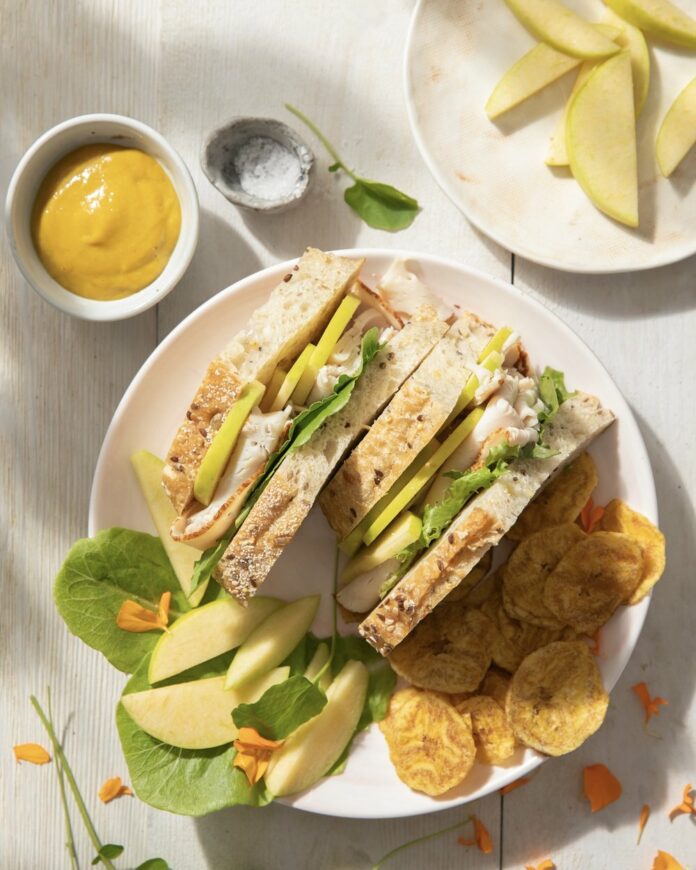
Turkey and Granny Smith Apple Sandwich

Chicken Satay with Cucumber Salad

Peach and Corn Salsa with Tortilla Chips

Chili-Lime Popcorn

Don’t miss a single delicious thing:

Subscribe to TABLE Magazine here!
Huevos Rancheros with Corn Tortilla Arrows

0
Small portions of Huevos Rancheros, A classic Mexican dish reimagined into a lighter, more delicate version of itself.
A classic Mexican dish reimagined into a lighter, more delicate version of itself.

Chef John Sedlar conceived this preparation as a lighter version of the traditional hearty Southwestern breakfast dish. You might use it as an appetizer for a lunch or dinner menu, or as part of a larger morning spread. Serving the huevos mixture in the egg shells takes a bit of fiddling, but is so worth it for the presentation’s wow factor. You might want to have a couple of extra eggs on hand, though, in case you break a shell while creating the egg “containers.” Pair brown-shelled eggs with white or yellow tortilla arrows, or white-shelled with a blue corn variation, if you like.

Huevos Rancheros with Corn Tortilla Arrows Recipe

INGREDIENTS FOR THE TORTILLA ARROWS

3 corn tortillas

Vegetable oil for frying

INSTRUCTIONS FOR THE TORTILLA ARROWS

  1. Cut each tortilla into 12 long slim triangular “arrowheads.” Heat ½ inch of oil in a large heavy skillet over high heat to 375 degrees on a deep-fry thermometer. Fry the tortilla triangles in several batches until crisp, about 2 minutes per batch. Drain them on paper towels and pat off any excess oil.

INGREDIENTS FOR THE HUEVOS RANCHEROS

12 large or extra-large eggs

¼ cup half-and-half

Table salt to taste

2 tbsp unsalted butter

6 tbsp finely diced white onion

1 to 2 fresh jalapeños, roasted, peeled and diced fine (See note below)

½ red bell pepper, roasted, peeled and diced fine

4 oz creamy goat cheese, such as Montrachet

INSTRUCTIONS FOR THE HUEVOS RANCHEROS

  1. Use an egg cutter or a sharp small knife to cut off the top quarter of the narrow end of each egg. Empty the eggs into a bowl and carefully rinse out the shells. Whisk the eggs with half-and-half and a bit of salt.

  2. Melt the butter in a saucepan over moderate heat. Sauté the onion in the butter until very lightly colored, about 1 minute. Lower the heat and add the beaten eggs and remaining ingredients. Cook over low heat, stirring frequently, for only about 3 minutes, until the eggs are just cooked through and still very creamy.

  3. Carefully spoon a portion of the scrambled eggs into a shell, mounding the eggs slightly. Place the filled egg in an egg cup. Repeat with remaining eggs and shells. Stand 3 tortilla arrows around one side of the inside rim of each eggshell. Serve immediately.

Note: Roast the jalapeños in the same way as described for the New Mexico green chiles in the previous recipe.

Styling by Keith Recker / Photography by Gabriella Marks

A footer photo with a black background and subscribe info and button
Subscribe to TABLE Magazine‘s print edition.

Fire-Roasted Green Chile

0
Acclaimed Chef John Sedlar elevates traditional chile rellenos with French inspiration.

The striking green chile dish that acclaimed Chef John Sedlar made TABLE comes from his 1980s restaurant Saint Estephe. John fills New Mexican pods with a French-style reduction of mushrooms, then blankets them with a velvety goat cheese sauce. Sweet peas were in season when the meal was served, so John scattered some over the plates. Feel free to add a handful of lightly cooked peas, if you wish. The original recipe appeared in John Sedlar’s Modern Southwest Cuisine (Simon & Schuster, 1986).

Fire-Roasted Green Chile Recipe

For the Mushroom Duxelles:

1 tbsp unsalted butter
2 lb button mushrooms, rinsed, patted dry, and finely chopped
½ cup whipping cream
½ tsp table salt
½ tsp white pepper

 Instructions

Melt the butter in a large saucepan over moderate heat. Add the mushrooms and sauté them until all of their liquid evaporates, about 20 minutes. Stir in the cream, salt, and pepper. Continue cooking the mushrooms, stirring occasionally, until they have absorbed all of the cream and the mixture is thick, about 20 minutes more.

For the Garlic Chèvre Sauce:

½ cup dry white wine
3 garlic cloves, finely chopped
½ tsp table salt
2 cups whipping cream
5 oz creamy goat cheese, such as Montrachet, crumbled
6 plump, fresh New Mexican green chiles, roasted, peeled, and seeded (see note below)
½ tsp table salt

 Instructions

  1. Put the wine, garlic, and salt in a medium saucepan over moderate-to-high heat. Bring to a boil, and reduce by about one-half, about 5 minutes. Stir in the cream and goat cheese with a wire whisk, then pass the sauce through a sieve. Set it aside and keep warm.
  2. While the sauce is cooking, spread the chiles open on a work surface. Lightly salt their insides and spoon 3 tablespoons of the duxelles along the length of each. Fold the chiles closed and place them, seam-side down, on a greased baking sheet. Preheat the oven to 425 degrees.
  3. When the sauce is ready, cover the rellenos with a damp kitchen towel and bake them until heated through, about 10 minutes.
  4. Spoon equal portions of sauce on the middle of warmed plates. Place a chile on each plate and serve.

Note: Chiles can be roasted in several ways, or purchased already roasted, from a New Mexico farmers’ market or supermarket, in season. The easiest way to roast just a handful of pods, as needed here, is to hold each chile over a gas burner with a high flame. (Alternately, use a gas or charcoal grill to blister the pods.) Use tongs or a large fork to turn. Sear and blacken the chile’s skin on all sides. Transfer the pod to a covered dish or plastic bag, to steam briefly. Repeat with the remaining pods. When cool, strip off the peel, using a paper towel to help remove any stubborn bits of skin. Slice down one side of the chile lengthwise, and gently cut out the seed pod at the chile’s stem end.

Styling by Keith Recker / Photography by Gabriella Marks

Don’t miss a single delicious thing: Subscribe to TABLE Magazine New Mexico here!

Wild Caught Alaskan Salmon

0
Chef Nath’s recipe for Wild-Caught Alaskan Salmon blooms with colors and aromas.

While Khmer cuisine may not be as well-known as other Southeast Asian traditions, it contains a multitude of intriguing flavors and combinations. Chef Nath’s recipe for Wild Caught Alaskan Salmon blooms with colors and aromas. Its unexpected notes of lemongrass, lime leaves, turmeric, and more, launch you on a remarkable journey through its marinade. After a perfect sear, adding a dollop of rice and seared vegetables will have you wanting to linger where it takes you.

Tips for Picking Out Salmon Filets

When you’re selecting salmon fillets for our Wild Caught Alaskan Salmon, you want to really look at freshness and quality. Look out for fillets with vibrant and consistent color. Each salmon’s color can range from a deep red to a bright pink, depending on the variety. You don’t want to buy fillets with dull or faded hues since these cuts are normally older. The actual texture of the flesh should appear moist and firm, not mushy or dry. Plus, any strong, fishy odor usually means spoilage. If possible, choose fillets with the skin on, especially for this recipe, which helps retain moisture during cooking and can add flavor.

Print
clock clock iconcutlery cutlery iconflag flag iconfolder folder iconinstagram instagram iconpinterest pinterest iconfacebook facebook iconprint print iconsquares squares iconheart heart iconheart solid heart solid icon
Chef Nath’s recipe for Wild-Caught Alaskan Salmon blooms with colors and aromas.

Wild Caught Alaskan Salmon


  • Author: Chef Nath

Description

Learn how to cook salmon to perfection.


Ingredients

Scale

  • 3 stalks lemongrass, thinly sliced (use only the bottom 3 inches of the stalk)
  • ½-inch piece galangal (blue ginger), peeled and finely chopped
  • 10 kaffir lime leaves, finely sliced with the hard center ribs removed
  • 4 oz turmeric, chopped
  • 12 garlic cloves, finely chopped
  • 5 shallots, finely chopped
  • Chili flakes or fresh chilies
  • 1/2 tsp salt
  • 1 1/2 spoonful palm or coconut sugar
  • 4, 6 oz salmon fillets, skin-on
  • Sesame oil
  • Sprouts


Instructions

For the marinade:

  1. First, pound or blend together the lemongrass, galangal, lime leaves, and turmeric.
  2. Then, put garlic, shallots, chili flakes, salt, and sugar together and pound with pestle (can also be done with robot coupe machine) until the mixture forms a thick paste.

For the salmon:

  1. Marinate the salmon with lemongrass paste and sesame oil (or your preferred oil) for 30 minutes.
  2. Pan-fry or broil salmon until just done.
  3. Serve with white or brown rice, sautéed vegetables, and sprouts.

Story by Gabe Gomez
Styling and Photography Douglas Merriam

Subscribe to TABLE Magazine‘s print edition.

Prime Steak Tartare

0
Aerial view of Prime Steak Tartare on a small, black, bowl looking plate.
Chef Kathleen Crook’s recipe for Prime Steak Tartare is a classic, beautifully executed interpretation of a perennial steakhouse favorite.

Chef Kathleen Crook’s recipe for Prime Steak Tartare is a master class in restraint and a valuable reminder that the best ingredients are best handled simply. Her dish is a classic, beautifully executed interpretation of a perennial steakhouse favorite. marketsteersteakhouse.com

Ingredients

  • 1 shallot, minced

  • 2 tsp ketchup

  • 1 tsp Worcestershire sauce

  • 2 tsp Dijon mustard

  • 2 dashes hot sauce

  • 2 tsp brandy

  • 1 gherkin, minced

  • 1 tbsp flat-leaf parsley

  • Sea salt as needed

  • 3 oz beef filet

Instructions

  1. Mix all ingredients together. Toss with the meat and serve Prime Steak Tartare cold.

Story by Gabe Gomez/ Styling and Photography Douglas Merriam

Don’t miss a single delicious thing:

Subscribe to TABLE Magazine New Mexico here!

Panna Cotta, Strawberries, Basil Sorbet & Strawberry Pop Rocks

0
Coyote Café’s Chef Dakota Weiss's recipe for buttermilk panna cotta is rich, subtle, and smooth as velvet with a literal “pop” at the end.

Sweet panna cotta with fresh strawberries, an herby basil sorbet, and… strawberry Pop Rocks? That’s right this tingling, popping candy is the star of this summery dessert.

About the Panna Cotta, Strawberries, Basil Sorbet & Strawberry Pop Rocks Recipe

American author Thomas Wolfe suggests, wistfully, that you can never go home again––that the experiences that serve as brick and mortar to our memories are sometimes best to leave in the past.

Think then about the faces and lives in a restaurant kitchen. About a chef who came alive to the food world through endless prep work, marathon doubles, and an avalanche of brunch rushes. Consider that those repetitive acts led to jobs in esteemed restaurants across the country, appearances in national cooking shows, ownership of a restaurant empire across California, as well as accolades too numerous to count.

Think about Dakota Weiss, executive chef at Coyote Café, the storied Santa Fe restaurant where she staged after culinary school and now also leads through its latest iteration of Southwestern cuisine. Just this once, Thomas Wolfe may be wrong. She’s come home again––with fresh, imaginative and also palate-tingling results.

Because Dakota’s signature voice brings worldly nuance to our local food scene, we asked her to choose local ingredients and present us with three recipes. On one recent early morning, we watched her in the calm and quiet of Coyote’s kitchen as she brought these ingredients to life in ways that are as grounded in memories (does anyone also remember the youthful thrill of 1970s Pop Rocks candy?) as they are alive and relevant in the present.

Print
clock clock iconcutlery cutlery iconflag flag iconfolder folder iconinstagram instagram iconpinterest pinterest iconfacebook facebook iconprint print iconsquares squares iconheart heart iconheart solid heart solid icon
Coyote Café’s Chef Dakota Weiss's recipe for buttermilk panna cotta is rich, subtle, and smooth as velvet with a literal “pop” at the end.

Panna Cotta, Strawberries, Basil Sorbet & Strawberry Pop Rocks


  • Author: Chef Dakota Weiss
  • Yield: Serves 4

Description

Nostalgic and elevated cuisine all in one.


Ingredients

Scale

For the buttermilk vanilla panna cotta:

  • 2 tsp gelatin powder
  • 3 tbsp cold water
  • 2 cups heavy cream
  • ½ cup sugar
  • 1 tbsp vanilla bean puree
  • 1 tsp kosher salt
  • 1 ¼ cup buttermilk

For the basil sorbet:

  • 2 oz basil leaves
  • 1/3 cup lemon juice
  • 1 cup sugar
  • 2 ½ cups water

For the honey-macerated strawberries:

  • 1 pt strawberries, sliced thinly
  • 4 tbsp honey (local wildflower is my fave)
  • Pinch of salt


Instructions

For the buttermilk vanilla panna cotta:

  1. Bloom the gelatin in the cold water and set aside.
  2. Add the cream, sugar, vanilla, and salt and heat just until the sugar is melted fully.
  3. Slowly whisk in the gelatin, making sure all of it melts.
  4. Take off the heat and whisk in the buttermilk.
  5. Pour into ramekins or bowls that you plan to serve it in.
  6. Chill until set, about 2 hours.

For the basil sorbet:

  1. Puree the basil with the lemon juice.
  2. In a saucepan, add the sugar and water and cook until the sugar is fully melted.
  3. Remove from the heat and add the basil lemon juice.
  4. Pour into an ice cream maker and spin until the mixture becomes frozen and creamy-looking.

For the honey-macerated strawberries:

  1. Add all ingredients together and stir well.

To build the plate:

  1. Add the strawberries on top of the panna cotta.
  2. Scoop on some basil sorbet and sprinkle it with 1 package of Strawberry Pop Rocks.

Recipe by Chef Dakota Weiss
Story by Gabe Gomez
Styling by Keith Recker
Photography Gabriella Marks

Subscribe to TABLE Magazine’s print edition.

Grilled Quail with Truffled‑Balsamic Reduction

0
An aerial view of a blue plate with grilled quail with balsamic reduction.
Coyote Café’s Chef Dakota Weiss's grilled quail with balsamic reduction sings New Mexico pecans and figs.

American author Thomas Wolfe suggested, wistfully, that you can never go home again––that the experiences that serve as brick and mortar to our memories are sometimes best left in the past.

Think then about the faces and lives in a restaurant kitchen. About a chef who came alive to the food world through endless prep work, marathon doubles, and an avalanche of brunch rushes. Consider that those repetitive acts led to jobs in esteemed restaurants across the country, appearances in national cooking shows, ownership of a restaurant empire across California, and accolades too numerous to count.

Think about Dakota Weiss, executive chef at Coyote Café, the storied Santa Fe restaurant where she staged after culinary school and now leads through its latest iteration of Southwestern cuisine? Just this once, Thomas Wolfe may have gotten it wrong. She’s come home again––with fresh, imaginative and palate-tingling results.

Because Dakota’s signature voice brings worldly nuance to our local food scene, we asked her to choose local ingredients and present us with three recipes. On one recent early morning, we watched her in the calm and quiet of Coyote’s kitchen as she brought these ingredients to life in ways that are as grounded in memories (does anyone remember the youthful thrill of 1970s Pop Rocks candy?) as they are alive and relevant in the present. coyotecafe.com

Grilled Quail with Truffled-Balsamic Reduction, Mesilla Pecan-Fig Crumble & Aji Amarillo

Serves 4

For the quail:

  • 4 quails

  • 2 rosemary sprigs

  • 2 thyme sprigs

  • Salt to taste

  • Black pepper to taste

  • 2 garlic cloves

  • ¼ cup blended oil

Instructions

1.     Clip the wings off the quail. Poke a tiny hole in one of the legs and pull the tip of the other leg through that so it looks like the legs are naturally crossed.

2.     Add the herbs, garlic, and oil in a blender and mix well.

3.     Rub the herb puree all over the quail and allow them to marinate for an hour or so.

For the Truffle-Balsamic Reduction:

  • 1 cup balsamic vinegar

  • ¼ cup white truffle oil

  • ¼ cup soy sauce

  • 1 ½ tbsp cornstarch

  • 1 tbsp cold water

Instructions

1.     Add the balsamic vinegar, truffle oil, and soy into a pot and bring it to a boil, reducing the mixture by a quarter.

2.     Whisk together the cornstarch and water.

3.     Slowly add that mixture to the reduction and cook out the starch. The sauce should thicken until it coats a spoon.

For the Mesilla Pecan-Fig Crumble:

  • 6 oz Mesilla pecans, toasted

  • 4 oz dried Mission figs

  • 1 tsp Urfa Biber chili flakes

  • 1 tsp cumin

  • 1 tsp hibiscus, dried

  • 1 tsp juniper berry

  • Kosher salt to taste

Instructions

Take all ingredients and add to a Robot-Coupe food processor. Mix until you have a crumble-like consistency.

Building the Plate:

1.     Grill the quail for about 2 ½ minutes on each side getting nice grill marks.

2.     Using a spoon, make a circle (1 ½ times larger than the quail) with the truffle balsamic. Place the grilled quail right on top of that.

3.     Put the pecan crumble on top of the quail breast.

4.     Add a dollop of Aji Amarillo paste to the plate.

5.     Garnish with any herbal microgreens.

 Story by Gabe Gomez/ Styling by Keith Recker / Photography Gabriella Marks

Try Chef Weiss’s other locavore recipes:

Grilled Asparagus

Buttermilk Vanilla Panna Cotta with Strawberry Pop Rocks

Don’t miss a single delicious thing:

Subscribe to TABLE Magazine New Mexico here!

Grilled Asparagus with Hatch Green Chile Ricotta

0
Grilled asparagus with green chile ricotta sits on a black plate.
Coyote Café’s Chef Dakota Weiss takes grilled asparagus to the next level with handmade green chile ricotta.

American author Thomas Wolfe suggested, wistfully, that you can never go home again––that the experiences that serve as brick and mortar to our memories are sometimes best left in the past.

Think then about the faces and lives in a restaurant kitchen. About a chef who came alive to the food world through endless prep work, marathon doubles, and an avalanche of brunch rushes. Consider that those repetitive acts led to jobs in esteemed restaurants across the country, appearances in national cooking shows, ownership of a restaurant empire across California, and accolades too numerous to count.

Think about Dakota Weiss, executive chef at Coyote Café, the storied Santa Fe restaurant where she staged after culinary school and now leads through its latest iteration of Southwestern cuisine? Just this once, Thomas Wolfe may have gotten it wrong. She’s come home again––with fresh, imaginative and palate-tingling results.

Because Dakota’s signature voice brings worldly nuance to our local food scene, we asked her to choose local ingredients and present us with three recipes. On one recent early morning, we watched her in the calm and quiet of Coyote’s kitchen as she brought these ingredients to life in ways that are as grounded in memories (does anyone remember the youthful thrill of 1970s Pop Rocks candy?) as they are alive and relevant in the present. coyotecafe.com

Grilled Asparagus, Hatch Green Chile Ricotta, Bitter Greens, Truffled Mustard Vinaigrette, Brioche Croutons

Serves 4

For the grilled asparagus:

  • 1 bunch extra-large asparagus

  • Pinch sea salt

  • Pinch black pepper

  • 2 tbsp EVOO

Instructions

  1. Cut the bottoms of the asparagus to get rid of the woody stems.

  2. Toss the asparagus with the salt, pepper, and olive oil

  3. Grill on high heat until lightly charred. The asparagus should still be crunchy.

For the Hatch Green Chile Ricotta Cheese:

  • 1 gal whole milk

  • 2 cups heavy cream

  • ½ cup lemon juice

  • 2 tbsp distilled vinegar

  • 2 cups hatch green chile, roasted, peeled, and diced

  • ½ tbsp kosher salt

Instructions

  1. Add the milk and cream into a heavy-bottomed pot. Bring to a boil.

  2. Turn off the heat and add the lemon juice and vinegar.

  3. Stir a few times until you see the milk start to curdle.

  4. Slowly pour the contents of the pot into a bowl that is lined with cheesecloth. Let the whey completely drain out of the curds.

  5. Gently scrape the curds off the cheesecloth and put into a bowl.

  6. Chop the green chile finely and stir into the curds.

  7. Season the cheese with salt to taste.

For the Truffled Mustard Vinaigrette:

  • 2 shallots

  • 2 garlic cloves

  • 2 tbsp whole grain mustard

  • ½ cup lemon juice

  • ½ cup rice vinegar

  • 1 cup EVOO

  • ½ cup white truffle oil

  • Kosher salt to taste

Instructions

Using a hand blender, add the shallots, garlic, mustard, lemon juice, and rice vinegar into a large jar and mix well. Slowly add the two oils to emulsify and then season with salt.

For the Brioche Croutons:

  • 1 cup brioche, cut into micro-small dices

  • ¼ cup EVOO

  • Kosher salt to taste

Instructions

  1. Sauté the brioche in the oil until golden brown and season with salt. Pour onto a sheet tray lined with paper towels to soak up extra oil.

For the salad:

2 red endives

2 yellow endives

2 tbsp chives, chopped

Kosher salt to taste

Black pepper to taste

Toss the endives with the truffled vinaigrette, chives, salt, and pepper.

Building the plate:

Pipe the Hatch Green Chile Ricotta Cheese into a long rectangular shape. Carefully place the endive, alternating the red and yellow, into the ricotta at an angle. Place about 5 grilled asparagus lying next to the endive. Sprinkle the croutons all over. Drizzle a little of the truffled vinaigrette over the whole dish.

 Story by Gabe Gomez/ Styling by Keith Recker / Photography Gabriella Marks

Try Chef Weiss’s other locavore recipes:

Grilled Quail

Buttermilk Vanilla Panna Cotta with Strawberry Pop Rocks

Don’t miss a single delicious thing:

Subscribe to TABLE Magazine New Mexico here!

Create a free account, or log in.

Gain access to read this content, plus limited free content.

Yes! I would like to receive new content and updates.

Table Magazine wants to know your location.

TABLE Magazine operates regional sites - Knowing your location helps us route you to the appropriate site for the best experience.