Home Blog Page 211

7 Questions with Seasoned Photojournalist Scott Goldsmith

0

In interviews with five photographers from the United States and Canada, Mark Oppenheimer explores an essential element of 21st-century visual culture: the food photo. Whether taken by a professional with an expensive lens and a support team, or by a passionate amateur wielding a smartphone, images of food abound in our world. Settle in for a good read about what motivates the pros, and what they think makes their work not just good, but deliciously transformative.

Scott Goldsmith

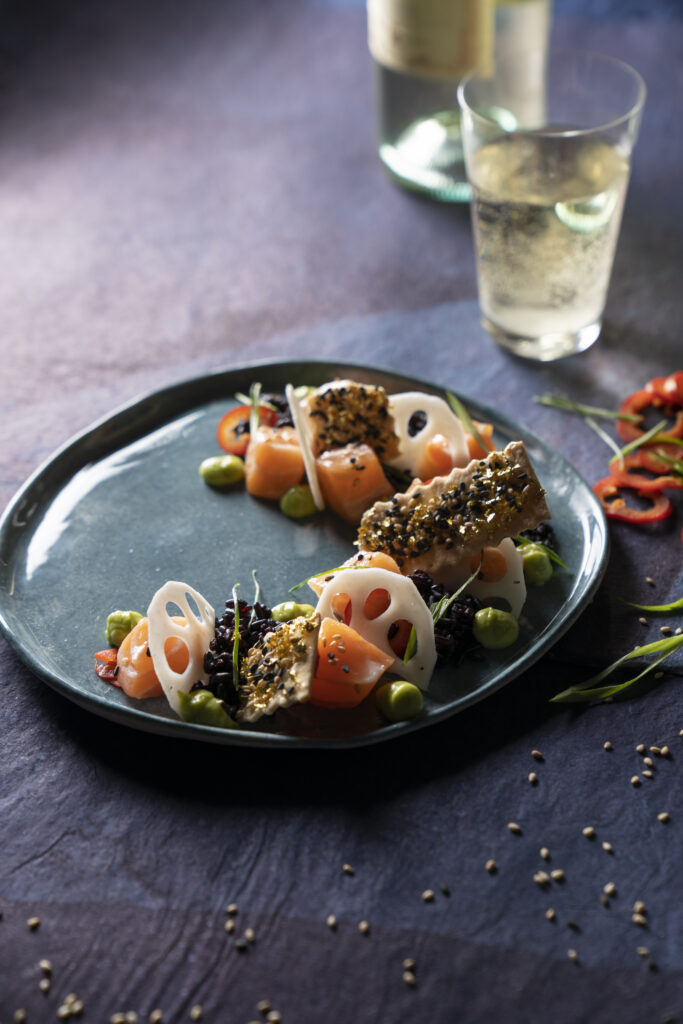
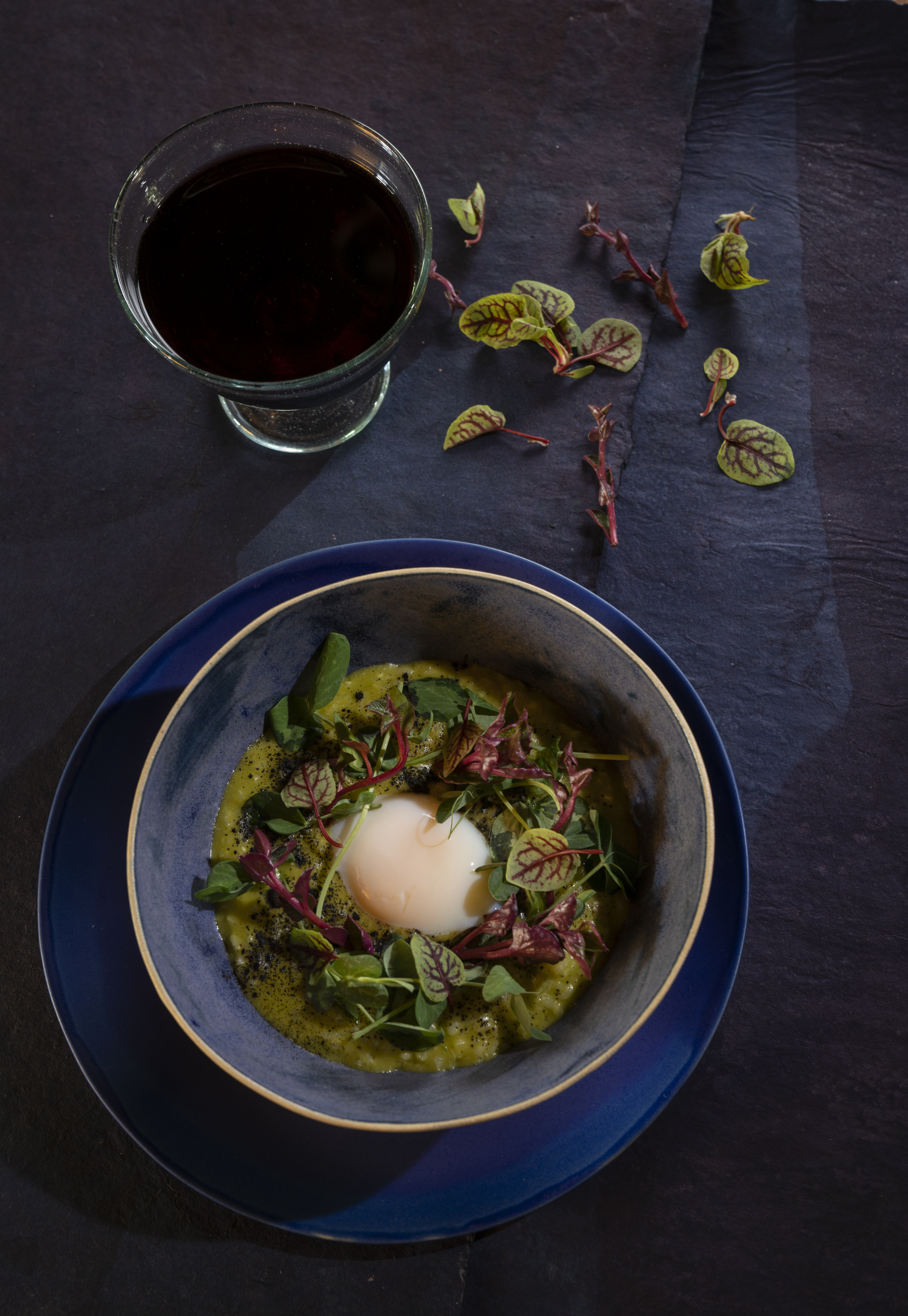
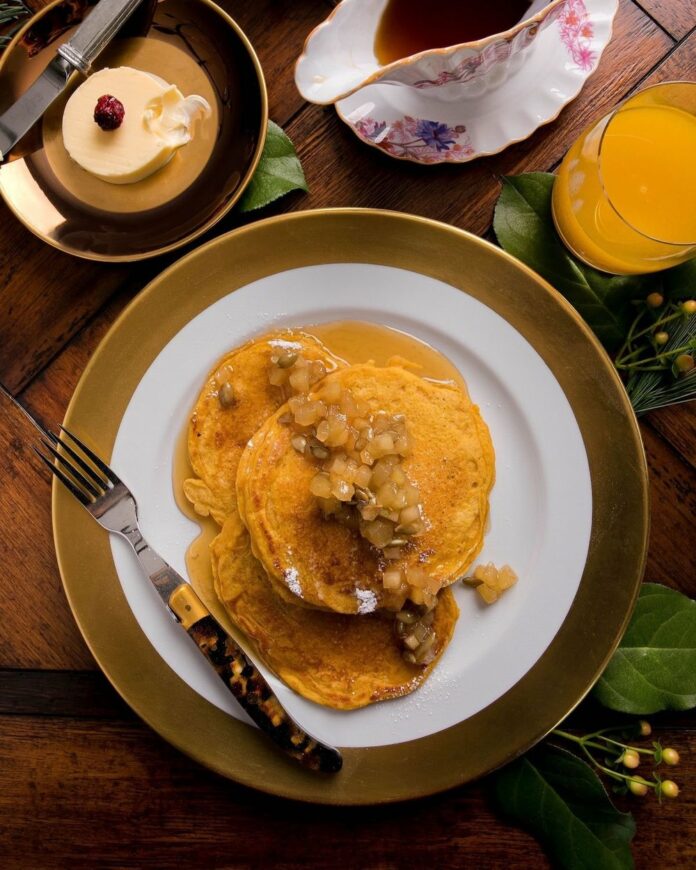
Scott Goldsmith is a seasoned photojournalist with an expertise in food photography. Whether photographing a landscape, a portrait, or a plate of food, Scott approaches his subjects with a heartfelt and compassionate openness, evoking a sense of vulnerability.

What’s the best part about shooting food?

I like to work with chefs because their hearts [are] in it. They’ve figured out the dish, how it’s put together, and they have a story to tell.

What are the elements of a good food shot?

Intrigue, curiosity, and desire. If somebody looks at a picture and they don’t want to eat the food, then I failed.

Looking at your work I see you like the mayhem. It’s as if you have a street sense in a studio setting. You make it seem as though you suddenly caught the moment.

Good food styling is that you don’t place everything and then move it. You just let it happen. Then it’s my job to see where I should stand. It’s my job to find out where I need to go. I’m watching everything that’s going on, which is part of my early training. Everything in life is chaotic.

How does your interest and training in other disciplines influence your photography?

Similar to [Cartier-]Bresson, I like to sketch. I use the camera as a sketch book. I sketch with my camera ‘til I get there. It’s a messy process. I try to present the chaos in somewhat of an organized way that makes it more interesting than if I hadn’t.

How do you prepare a shot when you’re going on location?

Unlike most food photographers, I can’t script it. I like it best when nothing is preconceived. I just have to see it and feel it; to know whether it’s working or not. My best work happens when I’m inspired by unique locations.

Your work has a natural approach to it. What’s the story you’re trying to tell?

Starting out as a photojournalist, I feel I know what’s real. I like the idea of naturalism. I want the food to look so natural and real that the photographer just happened by. It’s a subconscious feeling.

What’s it like working for magazines?

I’ve learned not to listen to editors because if I do, they won’t get my best work. I will always work intuitively and from my heart. I make them think I’m listening to what they’re saying and then I just do what I want to do. Usually, it works out a lot better.

Story by Mark Oppenheimer / Photography by Scott Goldsmith

A footer photo with a black background and subscribe info and button

Subscribe to TABLE Magazine’s print edition.
7 Questions with Santa Fe Photographer Penina Meisels

0
Vanilla bean soufflé with mango sauce, photographed by Penina Meisels for Williams Sonoma.

In interviews with five photographers from the United States and Canada, Mark Oppenheimer explores an essential element of 21st-century visual culture: the food photo. Whether taken by a professional with an expensive lens and a support team, or by a passionate amateur wielding a smartphone, images of food abound in our world. Settle in for a good read about what motivates the pros, and what they think makes their work not just good, but deliciously transformative.

Penina Meisels

Over a four-decade career, Penina Meisels has received a James Beard Award and an Addy Award, and her photos are in the collections of the Smithsonian, the National Sporting Library, and the Library of Congress. With more than 30 books to her name, Penina has collaborated with Julia Child, Jacques Pepin, Joann Weir, and Williams Sonoma. She lives in Santa Fe with her loyal corgi, Dr. Watson.

A pastry tool stands vertically in front of a carton of eggs

Are there similarities between shooting sculpture and food?

In a food shot, there are so many different layers. It’s a team sport, not a single person endeavor, and so one of the big layers is the team. The end product is only as good as the weakest component.

How do you work within the constraints of an assignment?

One of the reasons I love doing cookbooks is that it’s editorial work. The constraints involve following the recipes that are given to us. Sometimes the author will give us snapshots of what that dish is supposed to look like. Sometimes we follow, sometimes we don’t. There’s creative license.

Lifestyle and food content

How do you prepare yourself before you hit the set?

I try to start with a blank mind, without anything to say or any particular purpose. I investigate these questions: what am I trying to say with it? And who am I saying it to? It’s kind of the Twyla Tharp method of the creative process; not starting with a preconceived notion of what it’s supposed to be, which requires being comfortable with discomfort.

What is the moment of engagement, that thing that hooks your curiosity?

If I don’t get goosebumps the viewer isn’t going to be curious. I want to capture beauty and to try, if possible, to make something that’s already beautiful more beautiful.

Plated gourmet dish with fresh ingredients

Do you think there is a decisive moment in food photography?

I think that the phrase decisive moment was something said when a film load had only 24 to 36 frames. Now, in the digital age it is no longer relevant. We no longer have the moment. We just have to figure out the start and the finish. We pick the shot from what is in-between.

How has failure lead you to the choices you make as a photographer?

It’s my best teacher. I don’t think of it as failure but rather as well, it didn’t work out first try, let’s try again. It goes back to the idea of being comfortable with discomfort for me.

Promoting lifestyle and culinary content

Ideally, are you shooting a beautiful plate of food or a story?

I get annoyed when people just shoot a plate of food. I want a story, a sense of place, an emotion. Is it someplace that you want to walk into and sit down? You want to see the rest of the table, eat that food, know what it tastes like. A photo of a straight plate of food doesn’t really spark my curiosity.

Story by Mark Oppenheimer / Photography by Penina Meisels

A footer photo with a black background and subscribe info and button

Subscribe to TABLE Magazine’s print edition.
5 Questions with Pittsburgh Photographer Laura Petrilla

0
A dish of traditional Szechuan mutton soup, styled by Ana Kelly.

In interviews with five photographers from the United States and Canada, Mark Oppenheimer explores an essential element of 21st-century visual culture: the food photo. Whether taken by a professional with an expensive lens and a support team, or by a passionate amateur wielding a smartphone, images of food abound in our world. Settle in for a good read about what motivates the pros, and what they think makes their work not just good, but deliciously transformative.

Laura Petrilla

Laura Petrilla has been chasing the light ever since she was a teenager. At 16, she managed a neighborhood photo studio. By 19, Laura had booked her first photography assignment. In addition to her work as a photographer, Laura is also a trained birth doula. She resides in Pennsylvania with her two daughters, Freya and Fauna.

Are you shooting a plate of food or telling a story?

It’s a story when I’m working with chefs. We work together to curate and build the shot, and I see the story come to life. There’s a kind of ebb and flow, a dance of harmony, which helps find the harmony within the photo.

Has photographing food taught you more about cooking or vice versa?

After photographing with many chefs and stylists over the years, my cooking has gotten much better. I’ve picked up little lessons here and there. I find myself more often in my kitchen. I’m experimenting more, and it’s really fun.

How do you create mood or emotion in a shot?

With the lighting, I like creating drama, a feeling, an emotion, a dynamic undertone. Also, if there’s movement in the frame, there’s evidence of something or someone else. That’s a piece of the puzzle that creates wonder. The moodier the image, the stronger the emotional draw. The desired outcome is an emotional connection.

What is the decisive moment?

When I’m photographing food, it’s the collaborative process with my team–there’s that moment of chemistry and the way people can work seamlessly together in a positive way. When I work with subjects, I’m wondering how to bring out the best version of you. How can I match your energy in a positive way? How can I make you feel comfortable? Without that element it’s just about your eye and your technical ability. That might get you fantastic results, but the leave-behind for me is how I work with somebody, and how I draw them out.

Can a food shot be as intimate as a portrait?

Yes, when there’s a human element within a portrait of food, I think then it becomes more interesting.

Story by Mark Oppenheimer / Photography by Laura Petrilla

A footer photo with a black background and subscribe info and button

Subscribe to TABLE Magazine’s print edition.
The Key Difference Between City Kitchen and Galley Bakery Square

0
the exterior of City Kitchen Pittsburgh. the front of a building with bright blue skies in the background. many blue chairs sit out front

This summer, it was announced that Pittsburgh food hall Galley Bakery Square would soon be under new management, changing hands from Galley Group to Shaka Restaurant Group. Renamed to City Kitchen, Hoa “Summer” Le — the CEO of Shaka Restaurant Group and owner of two of Galley’s most popular concepts, Somi and Elevate — sits at the helm of this transition.

“Launching City Kitchen is a big change,” Le explained to TABLE Magazine. “It’s both fast and surprising. My mom taught me the value of hard work, and we’re doing a lot of that. We offer more than just food; we offer an experience, a feeling, a memory. Our staff is among the best in Pittsburgh. Building this team was challenging, but we succeeded.”

Le’s Somi and Elevate kitchens — Asian and American comfort food, respectively — will continue to operate out of City Kitchen, with two new entrants debuting this month. On September 12, Shaka, which could previously be found at the North Shore food hall Federal Galley, turned on its stoves to bring authentic Hawaiian flavors to East Liberty. 

Shaka offers dishes like house-smoked Kalua pork, hula chicken, and expansive poke offerings. Le traveled to Hawaii in order to find the perfect cuisine for Pittsburghers to experience. 

Food from City Kitchen Pittsburgh. Many hands dig into various plates sitting on a table

“It was a journey of discovery, from sampling local food trucks to dining at Iron Chef Morimoto’s iconic Honolulu’s location. Each taste deepened our appreciation.”

Then, on September 19 comes Charred, a gourmet burger hotspot, echoing the success of City Kitchen’s Elevate. “Customers requested more burgers, and we already sold a lot,” Le said. “So, we started researching and building Charred’s concept kitchen.”

So, what makes City Kitchen different from Galley Bakery Square? The former’s very specific way of treating and approaching its staff. Where Galley Bakery Square brought in chefs of promise and let them open up their own company within the space, essentially showcasing talented chefs, City Kitchen works more as a restaurant incubator with a co-ownership model.

“We’re figuring out what restaurant concepts really work,” explained Joel Johnson, City Kitchen’s director of marketing. “Then, the ones who show the most promise, they will eventually get help starting their own restaurant outside of City Kitchen.”

City Kitchen will also be upscaling the business’s service model. While there won’t be waitstaff, there will be section leads to assist guests upon sitting down. For example, for those who prefer not to order digitally, a section lead can take the order for the patron. 

“Our goal is betterment of people’s life. Period,” says Le. “At City Kitchen, you’re not just eating; you’re living a story — a tale of quality food, culture, and the power of hard work to make dreams come true. This place serves as a nest for all of us to grow. We hope that people come and become a part of our story.”

Story by Jordan Snowden / Photography Courtesy of City Kitchen

A footer photo with a white background, one TABLE Magazine and subscribe info and button

Subscribe to TABLE Magazine’s print edition.
Creole Stewed Chicken

0
A flavorful and enticing Creole chicken dish, beautifully presented.

This is a traditional Haitian staple. At any and every event, poule en sauce is the comfort food that most people gravitate to first. Served with diri kole (rice and beans) or mais moulen (polenta), this stewed chicken dish is an age-old recipe that never lets you down. It can be cooked using various methods and is typically served with multiple sides. Here is our version of chicken stewed in a creole sauce with extra-fresh sliced onions and bell peppers. Chef Claudy Pierre’s way with this dish is remarkable!

Poule en Sauce (Haitian Stewed Chicken) Recipe

Serves 4 to 6

INGREDIENTS

1 lb chicken
1 tbsp limejuice or sour orange juice
1/2 cup white vinegar (optional, for meat-cleaning)
2 cups epis (recipe on tablemagazine.com)
2 tsp garlic, minced
4 fresh parsley sprigs
1 tsp black pepper
4 fresh thyme sprigs
1 chicken bouillon cube
1 tbsp of Adobo All-Purpose Seasoning
2 tbsp tomato paste
1/2 onion, diced
1 Scotch bonnet pepper
1/2 red pepper, julienned

INSTRUCTIONS

  1. Haitian meat-cleaning process: Remove the skin and excess or visible fat using a small knife. Squeeze sour orange and limejuice on the chicken, saving some citrus juice for later. Let the meat sit in hot water for 4 minutes, rinse, and rub each piece in epis to marinate overnight.
  2. Clean chicken using the Haitian meat-cleaning method above, and then rinse in hot water.
  3. Assemble the marinade with epis, garlic, parsley, thyme, black pepper, chicken boullion cube, and Adobo seasoning.
  4. Season and marinate the chicken for a minimum of 15 minutes, but overnight gives it a better flavor.
  5. Transfer the chicken to a large pan and brown it on both sides.
  6. Add a ½-cup of water to the pan then follow with the tomato paste, onions, and peppers.
  7. Stew on medium-high heat for 25 minutes, and then lower to a simmer until dinnertime.

(Recipe adapted from haitiancooking.com)

Photography by Dave Bryce / Styling by Rafael Venico / Food by Chef Claudy Pierre 

A footer photo with a black background and subscribe info and button

Subscribe to TABLE Magazine‘s print edition.

Kosher Cocktail

0
Two cocktails, bright ref in color sit in wine glasses and are garnished with lemon round, pomegranate arils, and mint leaves

Look no further for a delectable and invigorating cocktail recipe compliant with kosher regulations. From Rosh Hashanah and Yom Kippur to Sukkot and Chanukah and finally into Passover, the holiday season is upon us and an ideal time to pour a few libations in celebration. (Although we won’t judge if you imbibe in this kosher cocktail all other times of the year.)

What Makes Food Kosher?

Kosher is a term used to describe food that adheres to Jewish dietary rules. In addition to which animals can be eaten, there are rules for how the animal is slaughtered and how the meat should be prepared.

Kosher laws prohibit the mixing of meat and dairy products in a meal. The process of certifying food as kosher involves inspections of the ingredients, production facilities, and equipment to ensure they meet strict standards. The aim of kosher laws is to promote a healthy and ethical lifestyle while maintaining a connection to Jewish traditions.

What Makes a Drink Kosher?

For a drink to be kosher, any alcohol used must be produced from kosher ingredients, and any additives or flavorings used cannot contain non-kosher ingredients. Additionally, the production facilities and equipment used to create the drink must be inspected to ensure they meet kosher standards. Overall, the same principles and processes that apply to certifying food as kosher also apply to certifying drinks as kosher. A note: Not all bourbon is kosher. You can kind a list of kosher bourbons online, however.

Print
clock clock iconcutlery cutlery iconflag flag iconfolder folder iconinstagram instagram iconpinterest pinterest iconfacebook facebook iconprint print iconsquares squares iconheart heart iconheart solid heart solid icon
Two cocktails, bright ref in color sit in wine glasses and are garnished with lemon round, pomegranate arils, and mint leaves

Kosher Cocktail


  • Author: Judah Cowen

Description

A recipe everyone can enjoy.


Ingredients

Scale

For the Cocktail

  • 3 oz fresh lemon juice
  • 3 oz pomegranate juice
  • 1 oz mint simple syrup (recipe below)
  • 2 oz bourbon

For the Simple Syrup

  • 1 cup water
  • 1 cup sugar
  • 1.5 cups chopped fresh mint


Instructions

For the Cocktail

  1. Combine all liquid ingredients into a cocktail shaker with ice. Shake vigorously for 2 minutes until chilly cold. Pour into martini glass. Garnish your kosher cocktail with the rind of the lemon and pomegranate arils.

For the Simple Syrup

  1. Mix water and sugar together in pot on medium heat, simmer until sugar is dissolved, remove from heat, and add mint leaves.
  2. Let seep for a minimum of 15 minutes.

Recipe by Judah Cowen, Elegant Edge Catering Company
Photography and Styling by Keith Recker

Subscribe to TABLE Magazine’s print edition.
7 Questions with Canadian Photographer Donna Griffith

0
Food styled by Sasha Seymour

In interviews with five photographers from the United States and Canada, Mark Oppenheimer explores an essential element of 21st-century visual culture: the food photo. Whether taken by a professional with an expensive lens and a support team, or by a passionate amateur wielding a smartphone, images of food abound in our world. Settle in for a good read about what motivates the pros, and what they think makes their work not just good, but deliciously transformative.

Donna Griffith

Donna Griffith is an award-winning Canadian photographer known for capturing the beauty and essence of interior design, architecture, and food. Working with top designers, architects, and chefs, her images have been featured in House & Home, Style at Home, Canadian Living, and more.

An aerial shot of a plate of Linguini mussels

How do you feel about the Instagramification of food photography?

I feel like there are too many images in the world right now. Everybody is out there with a camera photographing their meals–it lessens their specialness.

How do you approach a food shot differently than a portrait?

Food doesn’t talk back. When you’re working with food, you pretty much control everything, although there will be times some food doesn’t want to behave and things melt or wilt.

What gives a shot honesty and authenticity?

I like to show that even if there’s not a hand or a person in the shot, there is a human being there. And that’s why a bit of mess, a bit of crumbs, makes it much more appetizing; it looks real. It is a little tricky to achieve because you can’t just make a mess. It has to be constructed, carefully placed, and styled.

Even if they aren’t visible, what is the “people” part of the food shot?

I hope all of my shots create that warmth of having a meal with friends or family. Sharing food is a connecting factor for our well-being and how we show love. That is how I would prefer my work to be seen.

How have the little failures or defeats you’ve experienced shaped you?

They have made me challenge myself, to experiment a little more, to take a few more creative risks. The little failures teach you that anything can fail. Even if you’ve got everything laid out just so, it could fail. So, you need to step beyond that.

An aerial shot of a color plate of carrot sprouts

Describe the practice you turn to when a shot is proving difficult?

I have a button pinned on my bulletin board by my desk that says “PLAY.” If I’m stuck on something, I just look at the button to remind myself to loosen up and be playful.

What do you think is the relationship between the food you shoot and the food we eat?

What I shoot is usually a little elevated from the everyday, though I prefer to shoot food that is delicious and attainable and doable for the average person. We try to present it as something you can do at home for yourself.

Story by Mark Oppenheimer / Photography by Donna Griffith

A footer photo with a black background and subscribe info and button

Subscribe to TABLE Magazine’s print edition.

The Work of Pittsburgh-based Artist Clayton Merrell Breathes Harmony and Chaos

0

Painter Clayton Merrell combines the physical and the metaphysical in paintings that are contemplative and complex.

The Work of Pittsburgh-based Artist Clayton Merrell Breathes Harmony and Chaos

This Carnegie Mellon University professor of art has been creating since the late 1980s. He grew up outside of Pittsburgh, left for about 10 years, and has had his own studio since returning in 2000.

on the left, a work station for an artist. on the right, tons of paint tubes with a pair of hands overtop

Clayton Merrell by Laura Petrilla

Merrell makes landscape paintings that encompass both the beauty and tragedy of the natural world. “I see my work as an attempt to create something like an honest contemporary landscape idiom,” he says. “Instead of simplistic picturesque tableaus of natural harmony, my work presents viewers with a world in which that harmony is undermined by conflict, order is complicated by chaos, and the delicate fabric of the natural world is stretched to the breaking point.” He wants to make a painting that conveys how beautiful our world is—and how broken. “I want them to be the same painting,” he says.

a hand paints a yellow sun

Merrell previously designed the terrazzo floor for the Pittsburgh Airport airside terminal. Subsequently, he completed the design for a terrazzo floor in the Teresa Heinz Rotunda in CMU’s Heinz College.

“The design will create the illusion that the floor is an evening sky with time-lapse star paths arcing across it,” he explains.

on the left, hands mix paints. on the right, a man, Clayton Merrell, paints a yellow landscape on a wall

He loves the sense of freedom and open-ended possibility experienced every time he starts a new painting. “I love that the results of that solitary work turn into heartfelt human interaction when other people want to spend time with those paintings,” he adds.

Merrell is represented by Concept Art Gallery in Regent Square. His work can be purchased online through Singulart and Saatchi Art.

Story by Corinne Whiting / Photography by Laura Petrilla


Subscribe to TABLE Magazine’s print edition.
Punch Drunk Negroni

0
A cocktail orange in color sits in a rocks glass, garnished by a strawberry. Punch Drunk Negroni Cocktail Recipe

 Heads up! Take it easy on this Negroni recipe, or you may end up like the cocktail’s name: punch drunk. Traditionally speaking, the Negroni has equal parts Campari, gin, and sweet red vermouth and is always garnished with an orange wheel. This recipe calls for all the ingredients of a classic Negroni, but a fruity simple syrup and a bit of brut champagne make the Punch Drunk cocktail all too easy to drink. Don’t say we didn’t warn you… 

Which Kind of Vermouth Should You Use For Your Negroni Cocktail? 

For a Negroni cocktail, you want a well-balanced vermouth that is neither too soft nor too robust. The Goldilocks “just right” of vermouths, if you will. Some brands to consider are Cinzano Rosso, Hotel Starlino, or Cocchi Vermouth di Torino, or what we used in the Punch Drunk Negroni, Carpano Antica Formula. We felt this would pair best with the strawberry rhubarb simple syrup as a red vermouth with a richness and depth of character that stands up well to other ingredients. The champagne top means you need something that won’t get watered down, so a strong vermouth is a must. 


Print
clock clock iconcutlery cutlery iconflag flag iconfolder folder iconinstagram instagram iconpinterest pinterest iconfacebook facebook iconprint print iconsquares squares iconheart heart iconheart solid heart solid icon
A cocktail orange in color sits in a rocks glass, garnished by a strawberry. Punch Drunk Negroni Cocktail Recipe

Punch Drunk Negroni


  • Author: Dan Ball

Description

A fruity variation on this classic drink.


Ingredients

Scale
  • 1 oz. Tanqueray
  • 1 oz. Campari
  • 1 oz. Antica Vermouth
  • 1/2 oz. Strawberry/rhubarb/ginger simple syrup
  • Top with 1/2 oz of brut champagne


Instructions

  1. Add the gin, Campari, vermouth, and simple syrup to a mixing glass filled with ice and stir until well-chilled.
  2. Strain Negroni into a rock glass over a large ice cube and top with champagne.

Recipe by Dan Ball, Hyeholde Mixologist
Photography by Dave Bryce

Subscribe to TABLE Magazine‘s print edition.

Coo Coo for Coconuts Negroni

0
A cocktail red in color sits on a wooden board that is slightly burnt with smoke pouring out. Coo Coo for Coconuts Negroni

There’s no doubt you’ll go coo coo for this coconut Negroni. Tequila is swapped in for the usual gin, and a creamy banana sherry plus pineapple-infused Campari bring the tropical vibes right into your home. Summer may be coming to an end, but that doesn’t mean the taste of warmer weather has to stop with it.

How to Infuse Campari with Pineapple for a Coconut Negroni

A good place to start is with just a single cup of pineapple cup to one cup of Campari. If you’re just making one cocktail, no need to make batch proportions of infused liquor. Chop up your pineapple into chunks, combine pineapple and Campari in a large mixing glass or measuring cup, cover with plastic wrap and let infuse in the refrigerator for 24 hours. You’ll want to strain out the fruits so you have just the liquor left over. 

Print
clock clock iconcutlery cutlery iconflag flag iconfolder folder iconinstagram instagram iconpinterest pinterest iconfacebook facebook iconprint print iconsquares squares iconheart heart iconheart solid heart solid icon
A cocktail red in color sits on a wooden board that is slightly burnt with smoke pouring out. Coo Coo for Coconuts Negroni

Coo Coo for Coconuts Negroni


  • Author: Rachel Sinagra

Description

A tropical take on a Negroni.


Ingredients

Scale
  • 1.25 oz Coconut Wash Anejo Tequila
  • .75 oz pineapple-infused Campari
  • 1 oz banana-infused cream sherry
  • 2 dashes orange bitters
  • 4 dashes tiki bitters


Instructions

  1. Add the tequila, Campari, sherry, and bitters to a mixing glass filled with ice and stir until well-chilled.
  2. Strain Negroni into a rock glass over a large ice cube.

Recipe by Rachel Sinagra, Fig & Ash Mixologist
Story by Keith Recker
Photography by Dave Bryce

Subscribe to TABLE Magazine’s print edition.
Create a free account, or log in.

Gain access to read this content, plus limited free content.

Yes! I would like to receive new content and updates.

Table Magazine wants to know your location.

TABLE Magazine operates regional sites - Knowing your location helps us route you to the appropriate site for the best experience.