Home Blog Page 185

On View at New Mexico Museum of Art

0
A painting titled El Santo in a blocky style by Marsden Harley on view at New Mexico Museum of Art
Marsden Hartley, El Santo, 1919

Marsden Hartley was part of the second generation of artists to come to Taos. This group, including Andrew Dasburg, John Marin, and Georgia O’Keeffe, introduced Modernism into the Southwest.  

Hartley often came into conflict with many of the academic painters who made up the Taos Society of Artists.  In 1918 Hartley wrote an essay in El Palacio Magazine critiquing the application of European academic techniques to what he saw as the uniquely American subject matter of the Southwest. Criticizing the Taos Society Artist, he wrote, “they tell themselves that the great art of America is to come from Taos. Well, there will have to be godlike changes for the better in this case.”

Hartley eventually moved to Santa Fe to distance himself from Taos’s artistically conservative climate. Like many American Modernist painters of the 20th Century, Marsden Hartley was looking for a distinctly American subject for his artwork, and a certain “aesthetic sincerity.” 

Hartley first visited New Mexico in 1918, the year after the New Mexico Museum of Art opened, and wrote of the experience, “I am an American discovering America.” During his early visits to New Mexico his style shifted from abstract to more realistic subject matter, and he found what he believed to be definitively American subject matter in the blending of Native, Hispanic, and Euro-American cultures. He produced a number of still lifes here, such as the Hispanic Catholic retablo in this painting, depicted along with Native pottery and textiles. 

Story by Christian Waguespack, Head of Curatorial Affairs, New Mexico Museum of Art

A footer photo with a black background and subscribe info and button

Subscribe to TABLE Magazine‘s print edition.
Mexican Masks

0
Helmet Mask Used in the Jaguar (Tecuanes) Dance of Zitlala, Guerrero, Mexico. From the collection of Rob Gaston. 

An exhibit at Oakland-based Latin American Cultural Center (LACC) explores ancient traditions and modern-day iterations of the mask. 

Sandra Budd, assistant director and curator, says the exhibit MEXICAN MASKS: Symbols, Celebrations, Satire, and Safety, represents incredible diversity and creativity, displaying 88 traditional and contemporary masks from 19 Mexican states. Visitors can find a video presentation highlighting five dance mask festivals, several contemporary photos, and miniature mask festival figurines, too. “Three sections showcase some of the best mask-making artists in Mexico,” she said. “Each is unique and beautifully sculpted in wood or leather by the artists.”

Sixty of the masks come from a collector friend of Budd’s—Rob Gaston of Gaston Design in Fruita, CO. Together they coordinated the mask transfer to Pittsburgh via rental van, and Budd also hand-carried masks on loan from local collections. “The coordination is a longer process than actually transporting the objects,” she explained, “There is packing, crating, shipping, loan agreements, condition reports, insurance coverage.” 

Billie (Bill) R. DeWalt, PhD, senior advisor at the Latin American Studies Association, said, “[Gaston] has assembled a spectacular collection of both older and more recent masks that will delight visitors.” DeWalt, who lived in a small central Mexico village while completing his PhD in cultural anthropology, contributes a few masks, too. He recalled, “On any day in some part of Mexico there is likely to be a fiesta happening; people in masks are a part of many of those celebrations.”

Traditions intersected with the COVID-19 pandemic

During the pandemic, DeWalt began reading about Mexican masks and COVID intersecting in interesting ways. “One connection was that freestyle wrestlers in Mexico who had been using masks as part of their personas in the ring were going out in public to encourage people to wear masks,” he said. “Some, who had made versions of their masks to sell to fans, began making COVID masks as a means of replacing lost income.” Two Mexican anthropologists, Carlos Davila and Blanca Cardenas, began encouraging traditional mask makers to portray how they thought about COVID in masks; this exhibit showcases several of those creations. 

The mask Budd most looks forward to viewing? A full-size jaguar body mask, carved in wood.

Through April 20, 2024: Oakland’s Latin American Cultural Center (LACC) welcomes MEXICAN MASKS: Symbols, Celebrations, Satire, and Safety.

Story by Corinne Whiting

A footer photo with a black background and subscribe info and button

Subscribe to TABLE Magazine’s print edition.

A Path Less Taken

0
NOSA Restaurant Recipes
TABLE Editor-at-Large Gabe Gomez explores NOSA and its talented chef and owner, Graham Dodds.

Graham Dodds, the chef and owner behind NOSA Restaurant & Inn, tucked away in the picturesque embrace of the Ojo Caliente River Valley, is a man straddling two worlds. His first spins on the axis of the insatiable wanderlust that courses through his veins, a wanderlust that became apparent when he couldn’t give two hoots about his fine art classes back in college. It set him on a culinary path, where he graced the finest kitchens of Dallas, trekked through culinary school in Portland, OR, and embarked on culinary escapades across Europe. The outcome is nothing short of a flurry of culinary creativity, Pollock on every meticulously plated dish.

But there’s another side to Graham, one that’s quieter, more contemplative, and deeply connected to the land. Like so many before him, he’s drawn to the magnetic pull of the Ojo Caliente River Valley. This is where dreamers and thinkers have sought refuge, a place that has nurtured restless souls and offered healing through its ancient spring waters for as long as time can remember. While notables like Georgia O’Keeffe and Thomas Merton might have staked their claims on Abiquiu, Ghost Ranch, and Christ in the Desert Monastery further west, it’s here, in this valley of spiritual resonance, that Graham Dodds has found his own slice of serenity.

During his visit to the Valley during the pandemic, he crossed paths with the new proprietor of what was once the renowned Rancho de San Juan, a place that had closed in 2012. The encounter ignited a spark in Dodds and, from that moment, he couldn’t help but let his imagination run wild with dreams of opening his very own restaurant.

“I obsessed about the place for about eight months. It was this perfect place with four guestrooms, a remarkable restaurant with an incredible history and an apartment in the back for me to live in.”

NOSA stands for North of Santa Fe. In the Galician language it means nuestra.

Eventually, the property changed hands and with the new owners, Dodds penned an agreement and began the work on what would become NOSA, which stands for North of Santa Fe or from the Galician language meaning nuestra.

Dodd’s NOSA Restaurant and Inn recently marked its first-year milestone, and in that brief span, has carved out quite a reputation. It’s an establishment that demands a well-thought-out pilgrimage, where you had better have your pre- and post-dinner plans locked in advance. This isn’t the place where you casually stroll up after catching a late-night show at the Lensic. Here, dinner is an event unto itself, a meticulously curated, seasonal, five-course pre-fixe affair. It’s a culinary conversation that manages the weight of high expectations from the very moment you walk through the door until the final bite disappears.

“It’s encouraging that people are loving it.”

For the ultimate NOSA adventure, consider booking one of their beautifully appointed suites to immerse yourself in the full sensory experience. But let’s be crystal clear here–the window to indulge in their culinary offerings is not wide. You’re looking at dinner, exclusively on Fridays and Saturdays, with a singular seating at the stroke of 6:30 p.m. If brunch is more your style, Sundays are your canvas, offering two sittings at 11:30 a.m. and 2:30 p.m. Breakfast is a well-orchestrated affair for the privileged guests of the Inn, but you’ll need to reserve your spot at the table for 9 a.m. sharp. So, if you aim to capture the essence of NOSA, get your plans in gear, choose your moment wisely, and prepare to savor every moment.

“The menu changes constantly. You get some ingredients that change, and the dishes come together in response to those changes. It’s great to have this environment where you have a small audience and people can come continually and have something different. Typically, it’s a wholly different menu every weekend,” says Dodds.

The recent NOSA menu is testament to the imagination of Chef Graham Dodds.

Among his offerings: a succulent Wagyu beef tartare with gribiche, and pickled vegetables served alongside a spelt baguette. The Corn Chowder is a comfort, infused with saffron and a hint of jalapeño, and crowned with a dollop of creme fraiche. For a hearty main course, the Bison Moussaka takes center stage, showcasing tender bison meat, chestnut mushrooms, and a velvety Parmesan bechamel, all enveloped in a San Marzano tomato sauce. To conclude, a Blackberry Semifreddo beckons, a sweet harmony of blackberries, lavender honey, and local peaches.

It’s often true that some of the most extraordinary dining experiences require a journey off the beaten path. However, it’s equally true that some of the most cherished culinary memories held in heart and mind are right within arm’s reach. In the case of Graham Dodds, he didn’t choose to open his restaurant in the middle of nowhere, but rather in the place where exceptional food should and could be savored – a place where diners can unplug from the distractions of the modern world, and share a meal across the table, immersed in the captivating connection of one another’s undivided attention.

Story by Gabe Gomez / Photography by Tira Howard

Subscribe to TABLE Magazine’s print edition.

Why Cook in Cast Iron?

0
A collection of well-crafted cast-iron cookware, symbolizing the revival of traditional culinary artistry.

It wasn’t so long ago that you couldn’t give cast-iron cookware away. Now it’s the darling of home and professional cooks alike. Regional Editor Julia Platt Leonard meets a new generation of cast-iron cookware makers to find out why.

September 15, 2013, was a bad day for Dennis Powell. That’s the day he dropped his grandmother’s cast-iron skillet and it fell down the stairs, destroyed. When Powell calls it a “bolt of lightning disaster,” he means it: it was one of only two things he had of hers (the other was her butcher’s knife). Holding her pan and using it was a daily connection to her.

Not only would a brand-new pan lack this connection, new pans just aren’t as good as ones made in the late-19th and early-20th centuries, he says. The difference? According to Powell, it’s all in the finish. “A lot of people describe it as being a velvety finish,” he says. “It’s not exactly smooth. It’s certainly not rough. It’s certainly not a pebbly finish that people associate with cast iron today.”

Powell set off on a quixotic quest to figure out how to make a cast-iron pan as good as his grandmother’s. And he’s not alone. There is a whole new generation of cookware makers who feel that progress hasn’t been kind to the cast-iron pan, including makers like Chris Muscarella who started Field Company with his brother Stephen. They were both at loose ends, considering their next career venture. “We’re hanging out and we’re cooking and we’re talking about things we might do,” he says. “We have some vintage cast iron that is really beautiful that had been family pieces handed down by mothers, grandmothers.”

They decided they wanted to add a large pan to their collection and bought a new one. “I was kind of shocked at the (inferior) quality of that one versus the vintage cast iron,” he says. They decided to create a pan like their grandmothers used. “I wouldn’t say we went into this with a lot of commercial intent. I think we fell into it organically and loved it.”

There are few things that improve with age … few things that will work better next year–or in two years or even 10–than they do today … few pieces of kitchen kit that you’d proudly pass on to your kids. The exception? Cast-iron cookware. With proper care (more on that later), cast iron will last lifetimes. With age and seasoning, cast iron is naturally non-stick. It’s a versatile workhorse (think frying, braising, baking) that earns its place in your kitchen.

Why did it fall out of fashion? The advent of Teflon-coated pans in the 1960s didn’t help. We started coveting shiny non-stick pans and ditched our grandmother’s cherished skillet at the charity shop. Modern manufacturing didn’t help either. “Cast iron kind of got cost-engineered to be as cheap as possible and that was its primary benefit,” Muscarella says.

Like Muscarella, Powell didn’t have ambitions to start a cast-iron company. “Initially I just wanted to make a couple of pans like a sculpture to give to my kids.” He hired a company to help him create his dream pan (“They thought I was ridiculous,” he says). When they told him there was no way they could get the cast iron as thin as he wanted and with the perfect surface he demanded, he wasn’t deterred. “What if I pay you to fail?” he asked.

After failing and failing again, he miraculously got the pan he was looking for. The good news is that we can share his success with a piece from his Butter Pat line of cast-iron cookware. They have lovely names like the 14-inch skillet called the Lili (named after his wife’s grandmother) or the 4.5-quart flat-bottomed Homer (named after his friend the chef “Homer” Sean Brock).

Cast-iron pans aren’t cheap but nor should they be. Powell compares a cast-iron pan the cost of a nice hotel room: one lasts for a night and the other for a lifetime. Actually longer. “We long for that touch, for our family and our ancestors and having something that someone else has used, I think, is meaningful,” he says. Cast iron has soul.

HOW TO CARE FOR CAST IRON

  1. Most cast-iron cookware comes pre-seasoned and ready to use. Remember that the more you use cast iron, the better it performs as it builds up a lovely, non-stick patina.
  2. Avoid acidic foods like tomatoes, wine, and vinegar, especially early in the life of your pan. Later on, a little acid isn’t a problem, but choose another pan for your signature tomato sauce.
  3. To soap or not to soap. That is the (hotly) debated question. Using dishwashing liquid every now and then won’t kill your pan but you probably don’t need it, so why bother? Instead, scrape off any cooked-on food, wash it in warm water and dry, dry, dry because …
  4. … Water is cast iron’s enemy. Don’t leave it to air-dry and don’t even think about putting it in the dishwasher. Dry it with a clean kitchen towel and then rub in a small amount–we’re talking a quarter of a teaspoon–of a neutral oil such as sunflower or grapeseed oil and it’s ready to go.
  5. Don’t ditch a seriously rusty pan. Remove the rust with a copper-wire scrubber, wash and dry it, and then rub it with a small amount of oil. Place the pan upside down in a 350-degree oven with a baking pan or piece of aluminum foil underneath to catch any drips. Bake for an hour, turn off the oven and let it cool, and voilà! Your pan is as good as new.

Story and Recipes by Julia Platt Leonard / Styling by Anna Calabrese / Photography by Laura Petrilla

A footer photo with a black background and subscribe info and button

Subscribe to TABLE Magazine‘s print edition.

Vermouth-Braised Radicchio & Fennel

0
Braised Fennel and Radicchio in a Butter Pat cast-iron skillet with vermouth, showcasing a perfect blend of caramelization and mellow richness. Fresh herbs garnish this delightful side dish.

We’re featuring the special and delicious technique of braising with our Vermouth-Braised Radicchio & Fennel. Browning vegetables like fennel and radicchio adds sweet notes from the caramelization, while the braising mellows some of the bitter notes in the vegetables. If you can find conical-shaped Rosso di Treviso radicchio, use it, but if not, the round variety called Rosso di Chioggia will work equally well.

What Kind of Vermouth Should You Use for This Braised Fennel Recipe? 

Not all vermouths are created equal. For braised fennel, a dry vermouth is usually a great choice. It adds a nice depth of flavor without overwhelming the dish. If you prefer a bit more sweetness, you can also use a bianco vermouth, which has a slightly sweeter profile. Either way, the herbal notes of vermouth complement the anise flavor of fennel beautifully once you braise it.

Print
clock clock iconcutlery cutlery iconflag flag iconfolder folder iconinstagram instagram iconpinterest pinterest iconfacebook facebook iconprint print iconsquares squares iconheart heart iconheart solid heart solid icon
Braised Fennel and Radicchio in a Butter Pat cast-iron skillet with vermouth, showcasing a perfect blend of caramelization and mellow richness. Fresh herbs garnish this delightful side dish.

Vermouth-Braised Radicchio & Fennel Recipe


  • Author: Julia Platt Leonard

Description

A unique way to enjoy fennel.


Ingredients

Scale
  • medium head fennel
  • 1 large head Treviso radicchio
  • 2 tbsp unsalted butter
  • 2 garlic cloves, skin-on
  • 1 cup vermouth
  • 1 cup chicken or vegetable stock
  • 2 sprigs thyme
  • 1 tbsp chopped parsley
  • 1 tbsp chopped chives


Instructions

  1. Slice the fennel into 4 or 6 wedges, depending on the size of the bulb, trim any fennel fronds and save them for a garnish. Slice the radicchio lengthwise into 4 wedges. Using a sharp knife, carefully remove most but not all of the woody core in both vegetables: the bit left behind will help keep the wedges intact during cooking.
  2. Over medium heat, melt the butter in a 12-inch cast-iron frying pan (we used Butter Pat’s Joan skillet), add the garlic cloves, thyme and vegetable wedges. Brown the vegetables on all sides.
  3. Once browned–about 10-15 minutes–add the vermouth and stock.
  4. Lower the heat and cover with a lid or another frying pan and cook until you can easily insert a knife into the thickest part of the vegetables without resistance, another 25-30 minutes. (The radicchio will cook faster so remove and keep warm while the fennel continues cooking.)
  5. Place the cooked vegetables on a plate. Discard the thyme sprigs. Remove the garlic skin and mash the garlic into the remaining cooking juices.
  6. Stir in the chopped herbs and add a splash more stock if needed. Add the braised vegetables back in and gently turn them to coat in the cooking liquid. Serve warm, garnished with the fennel fronds.

Recipe by Julia Platt Leonard
Photography by Laura Petrilla
Styling by Anna Franklin

Subscribe to TABLE Magazine‘s print edition.
Not Your Mama’s Cornbread Recipe by Vishwesh Bhatt

0
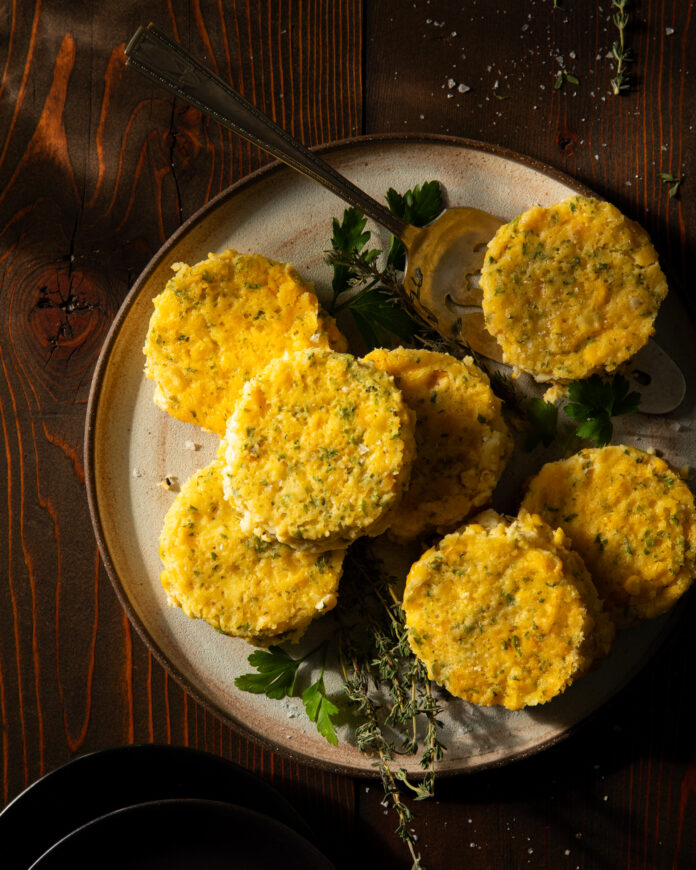
A unique and flavorful cornbread recipe by Vishwesh Bhatt, combining Southern tradition with Gujarati influences, featuring roasted corn, charred jalapeños, and a fragrant blend of spices, baked to perfection in a cast-iron skillet.

Cast iron isn’t just for home cooks. There’s a growing list of A-list chefs who are singing the praises of cast iron. One is Vishwesh Bhatt, chef/proprietor of Snackbar in Oxford, Mississippi and author of I Am From Here: Stories and Recipes from a Southern Chef. What’s the allure of cast iron? Part of it is practicality he says. “It heats up evenly and holds its heat for a long time.”

And contrary to cast iron care horror stories, Bhatt finds it easy to keep cast iron pans in peak condition. “You take care of it, you wipe it dry and you’re good to go.”

Bhatt recommends a 10 or 12-inch frying pan for cast iron novices. He’s also a fan of two-sided pans with ridges on one side for grilling and a smooth side. It’s a smart investment as you can do everything with it from fry eggs, make pancakes to grill a piece of fish or a steak. His other hint is to fry in a deep Dutch oven on an outdoor grill. It’s a handy way to reduce clean-up and avoid smells from cooking oil.

But the draw of cast iron goes beyond practicalities. “There’s something about cast iron that has that earthly feel to it that is hard to replicate. It has more soul to it.” Born in India into a large family where mealtimes were occasions of conversation as well as food, this soulfulness matters to Bhatt. “Not only does it improve with age but it will last forever,” he says. “You can pass it down.” And when you pass a piece of cast iron down to the next generation, you pass on the memories of countless meals with it. “You have those memories as well. There are few other things that you can say that about.”

Not Your Mama’s Cornbread Recipe by Vishwesh Bhatt

I am going to be honest with you: This is not my recipe. The credit goes to my friend Farhan Momin, an Atlanta-​based dentist who happens to be a very talented cook. Farhan grew up in Atlanta, the son of immigrants from Ahmedabad. His parents run a halal butcher shop and an Indian restaurant. He learned to cook from watching them, but made the smart decision to attend dental school. When Farhan is not busy being a dentist, he is part of Brown in the South, a friendly collective of chefs and cooks of South Asian descent who claim the American South as our home. Formed in 2018, we staged several dinners each year.

Experimenting with Corn Meal

For a dinner we cooked in Raleigh, Farhan wanted to make cornbread and asked me for advice. I told him about my experiment with corn dhoklas and mentioned that I often season my cornbread batter with toasted cumin seeds, asafoetida, and curry leaves. He took all that in and made a cornbread that absolutely blew my mind. He had taken the basic technique of a traditional Southern cornbread and added elements of our shared Gujarati cuisine. The result was at once familiar and novel. I have tweaked the seasonings to my personal taste, but the soul of the recipe is his.

Roasting the corn and charring the jalapeños might seem like a lot of prep work to make a simple cornbread, but please don’t skip these steps. The layers of flavors they add are well worth the effort.

Print
clock clock iconcutlery cutlery iconflag flag iconfolder folder iconinstagram instagram iconpinterest pinterest iconfacebook facebook iconprint print iconsquares squares iconheart heart iconheart solid heart solid icon
A delectable and unique cornbread recipe by Vishwesh Bhatt, featuring roasted corn, charred jalapeños, and a medley of spices. Baked to perfection in a cast-iron skillet, this flavorful Southern classic with Gujarati influences is a culinary delight.

Not Your Mama’s Cornbread Recipe by Vishwesh Bhatt


  • Author: Vishwesh Bhatt
  • Yield: 1 pan/serves 6 1x

Description

A sophisticated and utterly decadent cornbread.


Ingredients

Scale
  • 2 large ears corn
  • 2 jalapeño chiles
  • 6 tbsp neutral oil, such as peanut or canola, divided
  • 1 cup yellow cornmeal
  • ½ cup all-​purpose flour
  • ½ cup chickpea flour
  • 1⁄3 cup sugar
  • 1 tbsp baking powder
  • 1 tsp baking soda
  • 2 tsp Kashmiri chili powder
  • 1 tsp salt
  • 1 tsp ground turmeric
  • 1 tbsp sesame seeds
  • 2 tbsp minced ginger
  • 1 large egg
  • 1 cup cultured buttermilk
  • 1 tbsp chopped fresh cilantro
  • 1 tsp brown mustard seeds
  • 1 sprig curry leaves
  • ½ tsp asafoetida
  • 1 serrano chile, stemmed and very thinly sliced
  • ¼ cup unsweetened, shredded coconut


Instructions

  1. Preheat the oven to 400°F.
  2. First, char or roast the corn. If charring, fold back the husks (but leave them attached) and remove the silk. Twist the husks so that each ear of corn has a “handle.” Holding the handles, char the ears over a grill or gas flame on the stovetop, turning to cook evenly. If roasting, leave the husks on and roast in the oven for 5 to 6 minutes. When the corn is cool enough to handle, cut the kernels off the cobs. You should end up with 1 cup of kernels, or a little more—​use it all.
  3. To roast the jalapeños, turn the flame of a gas stovetop (or grill) to medium-​high. Using tongs and an oven mitt, hold one pepper directly over the flame, turning until it is charred on all sides. Repeat with the remaining pepper. (Alternatively, you can roast the peppers under the oven broiler. Watch them carefully and turn with tongs as each side chars.) Once the peppers are charred all the way around, carefully transfer them to a small plastic bag or a small bowl covered with plastic wrap. Allow them to sit for about 10 minutes. The resulting steam and heat will finish cooking the peppers and make the skin easier to peel. Once the peppers are cool enough to handle, peel off the blistered skin. Remove and discard the seeds and stems and finely dice the peppers.
  4. Generously brush the bottom and sides of an 8-​inch cast-​iron skillet or an 8 x 8-​inch baking pan with 2 tablespoons oil and place it in the hot oven. Leave the pan in the oven while you mix the batter.
  5. Combine the cornmeal, both flours, sugar, baking powder, baking soda, chili powder, salt, turmeric, sesame seeds, and ginger in a large mixing bowl. Whisk the egg and buttermilk together in a medium bowl. Pour the wet ingredients over the dry ingredients and stir to combine. Fold in the corn kernels, jalapeño, cilantro, and 2 tablespoons oil. (The batter will have some lumps.)
  6. Using an oven mitt, remove the hot pan from the oven and carefully pour in the batter. Bake for 18 to 20 minutes, until a toothpick inserted in the center comes out clean.
  7. Allow the cornbread to rest at room temperature for 10 minutes before serving. While it is resting, heat the remaining 2 tablespoons oil in a small skillet. Once the oil is shimmering, add the mustard seeds and cook until they start popping, about 30 seconds. Add the curry leaves, asafoetida, and serrano slices and cook, stirring, for 15 seconds. Pour the oil mixture over the resting cornbread. Sprinkle the shredded coconut on top. Cut into slices or squares and serve.
  8. If you have any leftovers, allow them to cool completely before wrapping tightly in aluminum foil. The cornbread will keep overnight at room temperature. The next morning, toast yourself a slice and top it with a fried egg.

Excerpted from I Am From Here: Stories and Recipes from a Southern Chef by Vishwesh Bhatt. Copyright 2022 by Vishwesh Bhatt. Used with permission of the publisher, W. W. Norton & Company, Inc. All rights reserved.

Recipe by Vishwesh Bhatt
Story by Julia Platt Leonard

Subscribe to TABLE Magazine‘s print edition.
The Ultimate Cranberry Mimosa

0
Sparkling cranberry mimosa in a champagne flute, crafted with homemade cranberry juice for a vibrant, festive sip.

The ultimate cranberry mimosa requires making your own cranberry juice, but the work is well worth it. Bid adieu to the old year and ring in the new with natural cranberry flavor, a festive red color, and the bright bubbles of sparkling wine.

The Ultimate Cranberry Mimosa Recipe

INGREDIENTS

1 bag of cranberries
½ cup of sugar
1 cup of water
One bottle of your favorite prosecco, cava, or champagne

INSTRUCTIONS

  1. Combine cranberries, sugar, and water in a saucepan and bring to a boil, then reduce heat to low-medium and simmer for 20 minutes.
  2. Allow the mixture to cool, and press through a thin sieve to remove the cranberry skins. You’ll be left with a syrupy juice to which you can add a little water, though the thicker texture works perfectly for this cocktail.
  3. Add 1 ½ oz of the homemade cranberry juice to a champagne flute and top with sparkling white wine. Garnish with a fresh cranberry or two, and enjoy!

Story, Recipe and Styling by Justin Matase / Photography by Dave Bryce

Try a few of our other sparkling-wine-based cocktails:

Classic French 75

Chamomile Guava MOMosa

Cognac and Cardamom French 75

A footer photo with a black background and subscribe info and button


Subscribe to TABLE Magazine’s print edition.

New Year Turcos

0
New Year Turcos - savory empanadas with spiced beef filling.

Turcos are a kind of empanada full of a flavorful pork filling. A journey back through history reveals that the story of these savory-and-sweet turnovers is actually from the Sephardic Jews of Mexico who arrived from the Mediterranean in the colonial era. While numerous variations of these petite meat turnovers exist in Mexico and the US, the most interesting are turcos. Not only are they tasty but also linked by historical records to the Mexican Inquisition, the celebration of Sukkoth, a harvest festival, and Rosh HaShana, the Jewish New Year.

The History of Turcos

The Inquisition’s earliest evidence of the consumption of turcos dates from the early 17th century. The court documented the cultural habits, including foodways, of Jews, sometimes called conversos, who claimed to have converted to Christianity (mostly in order to escape death by fire) but who, in fact, continued to practice Judaism secretly. Their customs were a hybrid of Christian and Jewish habits. What conversos ate was evidence to identify them as crypto-Jews, and to justify sending them to their death.

On September 21, 1603, in Mexico City, prisoner of the Inquisition Sebastián Rodríguez hosted a feast at Cárcel Perpétua, which was a sort of penal residence. Prisoners could go out to conduct their business during the day but had to return every evening. Rodríguez’s party was a celebration of Sukkot, a Jewish harvest festival whose customs include building a hut outside and decorating it with natural materials.

A Feast for All

All the dishes for this feast came from Rodriguez’s home kitchen, mainly by his wife and daughter. David Gitlitz writes in Living in Silverado that Rodríguez and the other celebrants “drew their tables out into the prison courtyard under the open sky. They decorated the pillars of the corridor with willow branches and leaves that Rodríguez had purchased and arranged to be carried to the prison.”

The entire Portuguese prison community received an invite to this lavish harvest festival. Three of Rodríguez’s invitees turned down the invitation because, it was speculated, they ate only kosher foods and “everyone else … eats salt pork and is not concerned about it.” The guests who did attend then celebrated Sukkot with a banquet of turcos, pasteles, tortas, and empanadas.

Documentation of a Mexican trial which took place on September 10, 1603, also tells us about the consumption of turcos. Even if the Jewish holiday of Rosh HaShana (the New Year of the Jewish calendar) is not explicitly mentioned, we assume that turcos were made for this occasion.

Particularly when ancient customs are delicious, they live on. Today, regions nearest the Mexican border, especially Texas, embrace turcos as an integral part of New Year celebrations. Texans blend anise seeds into the dough and fill it with crispy pork, cinnamon, raisins, apple, garlic, onions, sugar, nuts, and cloves. This culinary synthesis echoes the greens and sweet-savory essence of Sephardic Rosh HaShana fare. From one New Year festivity to the next, turcos offer a tangible connection to the passage and integration of crypto-Jewish customs into contemporary American life.

Print
clock clock iconcutlery cutlery iconflag flag iconfolder folder iconinstagram instagram iconpinterest pinterest iconfacebook facebook iconprint print iconsquares squares iconheart heart iconheart solid heart solid icon
New Year Turcos - savory empanadas with spiced beef filling.

New Year Turcos


  • Author: Hélène Jawhara-Piñer

Description

A delicious way to ring in the Jewish New Year and pay tribute to those who came before us.


Ingredients

Scale

For the dough:

  • ¾ cup water
  • 23 inch cinnamon stick (or 1/8 tsp ground cinnamon)
  • ¼ tsp anise seeds
  • ¼ cup raisins
  • 3 cups flour
  • 1 tsp sugar
  • 1 tsp baking powder
  • ½ tsp salt
  • 7 tbsp margarine

For the filling:

  • ½ cup neutral oil
  • 1/3 cup almonds
  • ½ cup olive oil
  • 1 medium onion, thinly chopped
  • 2 tbsp honey
  • 1 lb ground beef
  • ½ tsp salt
  • 1 tsp ground cinnamon
  • ¼ tsp anise seeds or ground anise
  • 2 cloves ground or ground nutmeg
  • 1 green apple, cut into small chunks
  • 1 egg (for egg wash)


Instructions

For the dough:

  1. In a saucepan, bring water, cinnamon stick, anise seeds, and raisins to a boil for about 5 minutes. Set aside to cool.
  2. Quickly combine flour, sugar, baking powder, salt, and margarine in a large bowl.
  3. Remove the cinnamon stick and drained raisins from the water. Reserve the raisins for the meat filling. Gradually add the cooled water with anise seeds to the dry ingredients.
  4. Knead the mixture by hand for approximately five minutes until you have a smooth dough. Form into a ball and place it in a plastic bag. Refrigerate for at least 30 minutes or overnight.

For the filling:

  1. Heat the neutral oil in a small frying pan and fry the almonds for about 3 minutes, until golden. Remove the nuts, drain on a paper towel, and let them cool. Once cool, chop them and set aside.
  2. In another frying pan, heat half of the olive oil (1/4 cup) and sauté the thinly chopped onion slowly for about 5 minutes. Add honey and continue cooking until the mixture is dry and thick. Set aside.
  3. Add the remaining ¼ cup olive oil and the ground beef in the same frying pan. Simmer it for about 5 minutes. Add cinnamon, ground anise, and ground nutmeg, and mix well.
  4. Add the reserved raisins, apple chunks, and the cooked onion-honey mixture to the meat mixture. Incorporate the chopped almonds.

To assemble:

  1. Preheat the oven to 375 degrees.
  2. Line a baking tray with parchment paper.
  3. Place two parchment papers on your counter.
  4. Divide the dough into two parts, forming 2 balls.
  5. Place the first ball on parchment paper, cover it with the second parchment paper, and roll it out to 1/8-inch thickness. Remove the top sheet.
  6. Use a cookie cutter to make rounds with a 4-inch diameter.
  7. Lightly moisten the edge of half of the round with water.
  8. Place the round on the parchment paper on the baking tray. Fill the center of the half-round with 1 tablespoon of the beef filling.
  9. Fold the other half of the round over the top to close the turco, pressing the edges to seal. You can use a fork to press the edges for a secure seal, or for a more aesthetic touch, use your fingers to create a decorative seal.
  10. Brush the turcos with beaten egg wash.
  11. Bake for approximately 15-20 minutes or until golden.

Recipe by Hélène Jawhara-Piñer
Story by Gabe Gomez
Styling by Anna Franklin
Photography by Dave Bryce

Subscribe to TABLE Magazine’s print edition.

Kilimanjaro Flavour Brings African Cuisine to Pittsburgh

0
A cream colored plate with braised beef, rice, a mixed vegetable slaw, and an edible flower on top from kilimanjaro flavour.

Have you ever wanted to try authentic African cuisine but couldn’t afford the plane trip? Kilimanjaro Flavour is a food truck in Pittsburgh that gives us all a chance to travel the world without the leaving home. Plus, they’re now available on Doordash for delivery and pickup to make enjoying delicious international cuisine a bit easier. 

Kilimanjaro Flavour Brings African Cuisine to Pittsburgh

Owner Grace Mrema started cooking in her kitchen as a hobby to embrace her culture and remind her of her life in Tanzania. It was a way for her to keep busy and also bring East African cuisine to the people who missed it as much as she did. She realized there was a market for her food after gaining a following on Instagram thanks to her culinary skills and beautiful plating. 

But, opening a food truck wasn’t easy for Grace, nor a first choice. It would require a loan and lots of solo hard work to get where she is today. However, thanks to her dedicated fanbase, she’s able to nourish Pittsburgh’s. 

Making Kilimanjaro Flavour a Home in a Food Truck

Kilimanjaro Flavour is a food truck experience that feels like a whole meal rather than just a quick bite. Each dish on the menu is packed with a hearty serving size and a special blend of spices. 

A black plate with coconut chicken, rice, and vegetables arranged on top from Kilimanjaro Flavour. Various herbs and colorful edible flowers are scattered throughout as well.

The Zanzibar Coconut Chicken takes local chicken thighs and sautés them in coconut milk and cooking herbs. The tender chunks are placed overtop a bed of steamed rice and mixed vegetables. It’s a meal that tastes homey, fulfilling, and packed with flavor.

A cream colored plate with braised beef, rice, a mixed vegetable slaw, and an edible flower on top from kilimanjaro flavour.

Grace also uses beef as another protein that’s essential to African cuisine. She slow-cooks her Wakanda Braised Beef in a vegetable paste and serves it on top of a bed of rice and mixed vegetables. It’ll bring you a true taste of Tanzania in just one order. 

a blue plate filled with turkey samosas from kilimanjaro flavour. limes and peppers are also placed throughout the plate.

No matter what dinner you decide to get, be sure to finish it off with Grace’s Samosas or Sweet Plantains. She stuffs the Samosas with turkey and vegetables and includes a Mild Spicy Apple Cider Sauce for dipping. But if you want dessert, Grace fries her Sweet Plantains with no added sugar for a natural sweetness.

The food truck with a permanent home in Millvale also recently began taking orders on their website for pickup and meal plan options. Here you can choose from 6, 8, or 12 meals to fill your week with easy and comforting dishes. 

Story by Kylie Thomas
Styling by Anna Franklin
Photography by Dave Bryce

Subscribe to TABLE Magazine‘s print edition.
Discover Pittsburgh Distilleries

0
Someone pours four shots of amber liquid on a black bar top.

As cold weather arrives, craft spirits take center stage, displacing crisp lagers and lively rosés. Imagine a perfect sweater-weather gathering of close friends around a table heaped with grilled steaks, garlic mash, and roasted butternut squash. Crystal glasses cradle locally distilled bourbon, casting a warm glow by candlelight. Perhaps steaks are replaced with fish, and bourbon with ice-cold vodka? Both combinations sound perfect, no? They are perfect, thanks to these skilled Pittsburgh distilleries.

Local small-batch artisans draw inspiration from the city’s rich history: think back to the Prohibition era, where clandestine speakeasies thrived in several of the city’s neighborhoods. Today, a community of dedicated distillers keeps the spirits alive with a modern twist. Maggie’s Farm Rum Distillery, for example, is Pennsylvania’s first craft rum operation since Prohibition.

The Skilled Distilleries of Pittsburgh

Spirits of the 'Burgh: A winter gathering with locally crafted bourbon, vodka, gin, and rum from Pittsburgh's acclaimed distilleries

Maggie’s Farm Rum

One of Pittsburgh’s finest distilleries in the bustling Strip District, Maggie’s Farm conceals its treasures behind an unassuming facade. Step inside and smell the scents of molasses and oak. Gleaming copper stills and aging barrels frame an inviting cocktail bar. Maggie’s Farm, begun by Tim Russell employs raw Louisiana turbinado sugar, Caribbean-derived yeasts, and techniques like extended fermentations and rustic distillation. From subtly sweet white rum to oak-aged single barrel, and intense Queen’s Share, they capture the essence of cane. Visiting (and tasting) makes for a fun, immersive experience.

Three people drink at a local Pittsburgh distillery with empty glasses in front of them.

Wigle Whiskey

A few blocks down Smallman Street, you’ll find Wigle Whiskey. In Pennsylvania, spirits and rebellion have always been intertwined. Early settlers displayed their resourcefulness by turning surplus grains into whiskey. Sparked by a much-hated tax on their whiskey, the Whiskey Rebellion of 1791 left an indelible mark. Wigle Whiskey was named after Phillip Wigle, one of its instigators.

A woman with dark hair and a sweater off the shoulders sits at a table in a local Pittsburgh distillery with a glass in her hands.

Kingfly Spirits

Kingfly Spirits, also on Smallman Street in the Strip, offers yet another chance to appreciate local spirit culture. Located in a 1906 brick carriage house transformed into a distillery, bar, and special-events space, the atmosphere is inviting, and clever cocktails are built on a collection of delicious spirits made on-site. This family business is rightly proud of its award-winning revival of a historic building. A tour alone is worth the visit.

A distilling machine at a local Pittsburgh distillery with steam coming out all around it against a brick wall.

Pittsburgh’s craft distillery scene has flourished since 2012, when the city’s liquor laws underwent significant changes. It’s been a delectable journey. In addition to the three Strip District players named previously, distillers like Quantum Spirits, Lucky Sign Spirits, and Boyd & Blair Spirits, illuminate the spiritscape and leave a much-appreciated mark on the city’s nightlife.

Four taste-testing shot bottles at a local Pittsburgh distillery. One is filled with clear liquid and the rest are filled with an amber liquid.

Beyond The Distilleries

Fig & Ash, whose bar offers innovative craft cocktails made with an authorial point of view, often uses local spirits. The same is true at Tina’s, where you can sip consistently excellent cocktails featuring local ingredients in a casual and welcoming atmosphere. Don’t overlook the secret speakeasies: Acacia and Commerce Bar are hidden gems where you not only sip some local spirits but also revel in their intoxicating ambiance.

A man in a black shirt and colorful bandana taste tests a liquor at a local distillery in Pittsburgh.

Taste Test

To shine a light on gems among Pittsburgh’s craft spirits, TABLE Magazine contributor Kaitlin Fellers gathered experts for a blind-tasting experience. Tasters included Kaitlin herself, Darelle Canada, Clair Chinn, Shawnee F., Kassandra Scribner, and Maddison Fyffe among the city’s best mixologists. Locally produced vodkas, gins, bourbons, and rums were poured from unlabeled glass flasks coded with grease-penciled letters. Then, with each carefully measured, anonymous sip, the judges delved into nuances of flavor, aroma, and texture. The panelists had animated conversations with discerning palates and a passion for their craft.

Standouts 

An amber drink in a short drinking glass with a large ice cube, orange peel, and sprig of rosemary.

Vodka: Stateside Vodka

Stateside Urbancraft, a crisp vodka with refined neutrality and a smooth finish. The panel saw this as a vodka suitable for clean, crisp martinis and lightly-sweet cosmopolitans. Other esteemed contenders included Lawrenceville Distilling’s Parking Chair, Boyd & Blair, and McLaughlin Distillery.

Gin: Kingfly Spirits

Kingfly Gin, a harmonious blend of juniper, lavender, citrus, and sandalwood. The panel coalesced around this spirit because “it fulfills the expectation of what a gin ought to be.” Other delicious gins tasted were Bluecoat, Revivalist Botanical, and Wigle Organic.

Bourbon: New Liberty Distillery

Kinsey Bourbon Whiskey, a rich blend of two mash bills and a spicy-sweet finish, took the lead in this category. Participants praised its notes of oak and pepper, and its high rye content. Liberty Pole, MLH Distillery, and Disobedient Spirits brought their own delightful flavors into the discussion.

Rum: Kingfly Spirits

Kingfly Bliss 1895, a symphony of spiced sweetness with a caramel twist, emerged as the contender here. Praised by the panel for its full body and rich flavor, one mixologist began to concoct a Spice Rum Old Fashioned in their mind. Maggie’s Farm White and 50/50 Dark, and Wigle Landlocked Spiced were all spirited contenders in this category.

A woman sips a cocktail with a topping of black orbs.

At The Bar

Darelle Canada, a vivacious 27-year-old Gemini originally from Baltimore, MD, is now making waves in Pittsburgh. With seven years in the service industry, Darelle’s bartending prowess has taken him to cocktail competitions, showcasing Pittsburgh’s vibrant local spirits scene.

Shawnee F. is a 10-year veteran of the Pittsburgh service industry. She shared craft spirits at a local distillery, then transitioned into a new career post-pandemic. Shawnee remains a champion of Pittsburgh’s vibrant artisanal liquor scene.

When Kaitlin Fellers is not crafting cocktails, she’s a passionate traveler, a host of craft nights, and a bookworm who enjoys quality time with her pets. Kait is a seasoned hospitality pro with 13 years of experience.

Maddison Fyffe has been in the restaurant industry for seven years, six of them as a skilled bartender. By day, she’s a mental health counselor and in her downtime, she’s a culinary enthusiast, a neighborhood explorer, and enjoys cozy TV nights with her pets.

Kassandra Scribner is a culinary artist with roots in New Jersey. She’s called Pittsburgh home for 15 years and proudly holds a Le Cordon Bleu degree. Currently, she’s the maestro behind the bar program at Bae Bae’s Kitchen and orchestrates private events in downtown Pittsburgh.

By day, Clair Chinn is the assistant general manager at Umami, where she also works as a bartender. Off-duty, you’ll often find her enjoying a Chenin Blanc at the Allegheny Wine Mixer.

Story by Aakanksha Agarwal / Photography by Joey Kennedy / Production by Kaitlin Fellers

A footer photo with a black background and subscribe info and button

Subscribe to TABLE Magazine’s print edition.
Create a free account, or log in.

Gain access to read this content, plus limited free content.

Yes! I would like to receive new content and updates.

Table Magazine wants to know your location.

TABLE Magazine operates regional sites - Knowing your location helps us route you to the appropriate site for the best experience.