Home Blog Page 87

The Best Bottles of Tequila Blanco

0
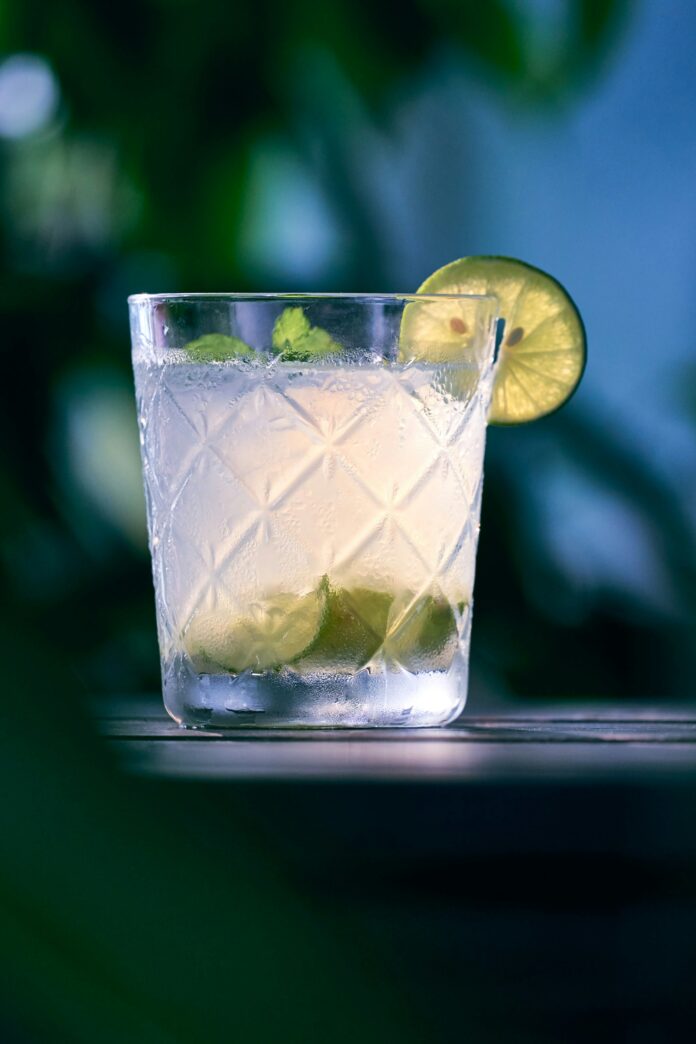
A glass of tequila blanco sits on a table with a wedge of lime inside and a garnish of lime and mint.

TABLE Editor at Large Gabe Gomez sketches out a path toward tequila blanco connoisseurship. The first step: enough with the shots. Instead, sip thoughtfully and find the nuances. Your new favorite bottle is surely on the horizon.

Lamentably, one of the most common ways drinkers enjoy straight tequila is by doing a shot accompanied by a dash of salt and a wedge of lime, presumably to mask any semblance of taste or nuance in exchange for a quick buzz. While a few shots of mid-tier tequila can elevate a fun night into an epic one, it’s time to reconsider how one should enjoy tequila. Our recommendation is to appreciate it neat or on the rocks, sipped and savored.  

Unlike reposado or añejo, blanco tequilas are unaged, offering a bright and confident flavor profile. Each sip of blanco tequila reveals its origins, note by note. Blancos are often best enjoyed on the rocks with a gentle twist of lime. This undefinitive list of handmade blanco tequilas are additive-free and made from pure, natural ingredients with no artificial flavors or colors, making them perfect for summer sipping, whether lounging by the pool, hosting a barbecue, or simply slowing down. 

Best Bottles of Tequila Blanco to Buy

Siete Leguas, Blanco 

Named after Pancho Villa’s horse, Siete Leguas has produced artisanal tequila since 1952. Their Blanco variant offers a crisp, clean taste with hints of citrus and herbs. Ideal for sipping, this tequila provides a smooth and refreshing experience. This is perfect for those new to tequila wanting to start at the top!

Tequila Ocho, Plata 

Inspired by terroir concepts from winemaking, Tequila Ocho Plata is a high-quality, artisanal tequila made from carefully selected blue agave. It boasts a rich, complex flavor with fruit, vanilla, and pepper notes. This tequila is excellent, too, for sipping slowly to appreciate its depth and character fully.  

Lalo Blanco 

Lalo Tequila emphasizes pure, natural flavors in their singular Blanco offering. Floral and citrus undertones deliver a beautifully fresh, slightly sweet taste. This easy-to-drink tequila is ideal for those who want to enjoy the true essence of agave.  

Amatiteña Tequila, Blanco Origen 

Amatiteña Tequila Blanco Origen captures the essence of the Jalisco region in Mexico. It features a smooth, balanced flavor with notes of earthy agave, citrus, and a hint of pepper. This tequila is ideal for those looking to explore authentic Mexican spirits. Originating from Amatitán, Jalisco, a UNESCO World Heritage site, this single-estate tequila is made using traditional artisanal methods dating back to the early 19th century.

Volcan, Still Strength Blanco 

Still Strength Blanco is an uncut, higher-proof tequila that retains the full flavor of the blue agave plant. Despite its higher alcohol content, it offers a surprisingly smooth taste with complex layers of fruit, spice, and herbal notes. This tequila is excellent for those seeking a more intense and robust flavor.  Made with spring and deep well water, it has a balanced minerality and a touch of black pepper for an added kick.

For more, check out the rest of our liquor education series:

Wondering what to cook to go with your drink? Try our food education series:

Story by Gabe Gomez
Photo Courtesy of Dmitry Dreyer

Subscribe to TABLE Magazine‘s print edition.

Must-Attend St. Patrick’s Day Parades in America

0
Two little girls in St. Patrick's Day green hats, beads, and green sweaters while one holds an Irish flag.

If you happen to live in the northeastern quadrant of the United States, then you’re in luck because it’s just a short drive to some of the best, must-attend St. Patrick’s Day parades in the country (don’t worry southerners and those west of the Mississippi, we have something for you too). When city roads fill with floats, people in costumes, marching bands, and plenty of green, these are the places you want to be for a St. Patrick’s Day you’ll never forget. Not to mention that after these parades, there is much more to do in these cities: bar crawls, family-friendly activities, live entertainment, and so much more. While you could travel to Ireland to celebrate this festive holiday, why not enjoy a big, memorable experience a lot closer to home?

7 Must-Attend St. Patrick’s Day Parades in America

New York City

It’s no surprise that the largest St. Patrick’s Day parade in America is in New York City. This city attracts“ somewhere around two million attendees each year and only continues to grow in size. The 150,000 parade participants show off their heritage with pride, traditional outfits, and flags. In 2025 the parade will take place on March 17 along Fifth Avenue in Manhattan. 

Chicago

Have you ever seen a green river? Well, head to Chicago’s St. Patrick’s Day parade and you’ll see the Chicago River in its bright green glory. On March 15 you can watch the dyeing process and catch the parade after. The parade takes place on Columbus Drive between Balbo Drive and Monroe Drive, featuring special guests like The Shannon Rovers Irish Pipe Band. Plus, after you’re done, you can even take a relaxing cruise down the green river.

Pittsburgh

The city of black and gold turns green for a day, honoring the 20% of its citizens with Irish heritage. Line the streets of Downtown Pittsburgh from Liberty Avenue to Grant Street, and then to its finish on Boulevard of the Allies. It’s the perfect opportunity to see Irish step dancers, marching bands, military groups, community organizations, and one of Pennsylvania’s most famous residents, Punxsutawney Phil. No matter the weather, this parade will still be happening on March 15. 

New Orleans

You may think of New Orleans only holding parades for Mardi Gras, but this city goes just as hard for St. Patrick’s Day. For three weekends you can catch a number of parades all around New Orleans and its suburbs. The celebration begins on March 16 with the St. Patrick’s Day Parade on Metairie Rd and continues the next day for the Downtown Irish Club Parade. Then, the following weekend, head to the Italian-American St. Joseph’s Parade and the Louisiana Irish-Italian Parade on March 22 and 23. Finally, finish off the party with Gretna Irish-Italian Parade on March 30. If that’s still not enough for you, there is still one St. Bernard Irish Italian Islenos Parade on April 5.

Denver 

Looking for the largest parade west of the Mississippi? You’ve found it! Denver’s St. Patrick’s Day parade steps off on 19th & Wynkoop on March 15, featuring special honorees such as the Grand Marshall, Queen Colleen, and Little Shamrock. Besides plenty of people, you’ll also get to see live animals, historical vehicles, clowns, and even completely green-covered floats. 

Boston

Boston’s parade celebrates not only St. Patrick’s Day but also Evacuation Day on March 17, marking when British troops left the city of Boston. The end product is a huge parade that combines military honors with shamrock St. Patrick’s Day decor. It seems only fitting since Bostonians were the first to celebrate the holiday in North America in 1737. Keep your eyes open for tons of bagpipes, prominent city figures, and even green, orange, and white confetti. 

Philadelphia

If you happen to live on the other side of Pennsylvania and cannot attend Pittsburgh’s parade, you can party in Philadelphia instead. For a city that already loves the color green (go birds), it seems impossible to add more of this color to Philly but the residents find a way. Their parade is actually one of the oldest in the country and for a good reason since it usually features over 200 different groups and 20,000 participants. The three hour long parade’s theme this year is St. Patrick, Bless Those Dedicated to Serving Others and steps off at 16th & JFK on March 16.

Story by Kylie Thomas
Photo Courtesy of Denver St. Patrick’s Day Parade

Subscribe to TABLE Magazine‘s print edition.

Get to Know Japanese Whisky

0
A lineup of Japanese whisky bottles at a Tokyo whisky portfolio tasting.

In the world of Japanese whisky, efficiency doesn’t come at the sacrifice of quality. Owner Derek Burnell, who serves Japanese whisky at his restaurant, COBRA, remembers hearing a story that a distiller at Yamazaki ate the same exact meal every day for thirty years straight, at the exact same time, so that his palate never changed, and thus his discerning taste bids would never go off kilter. Though this may be apocryphal, it shows why so many have fallen in love with this spirit with its rich history and unique flavor profile.

Japanese Whisky’s History is as Rich as its Flavor

Whisky or whiskey (with the “e” for American-made or Irish-made spirits), has existed since at least the 13th century, but Japanese whisky is relatively new. The official definition of whisky says that it is any type of liquor made from fermenting grain mash, and classified by how many times the grain is “malted’ (how long the grains soak in water), how it’s fermented, and then how it’s distilled.

The aging process of whisky and its relative scarcity are what makes whiskies like Suntory Yamazaki so expensive. (Beyoncé and Jay-Z are among many high-profile, big budget Yamazaki fans). But Japanese whisky isn’t just a luxury export—its history comes from hardworking distillers who found their passion in bringing a new liquor to the Japanese market.

Scotch, Whisky, and Bourbon

To refresh, whisky is a spirit made from distilling and fermenting grains, such as corn, rye, barley, or wheat. Two of whisky’s most prominent stylistic categories, which provide a point of context or Japanese whisky, are Scotch and bourbon. Bourbon and Scotch are both whiskies, but not all whiskies are Scotches or Bourbons. Scotch comes from Scotland and focuses on the smoky flavors of peat. Bourbon comes exclusively from America, and is predominantly corn, aged in new, charred oak barrels, which results in a sweeter flavor, with more tendency towards vanilla or caramel in its profile.

Japanese whisky is much closer to Scotch in its flavor profile, since distillers first encountered whisky in Scotland. For a whisky to be considered Japanese whisky, it has be fermented, distilled, aged and bottled in Japan, use some part of malted grain in its mash, and use water sourced from Japan, after stricter labeling laws went into effect in 2024. The chart below illustrates the similarities and differences between Scotch and Japanese whisky.

Diagram courtesy of Craft Cask

How Did Whisky Get to Japan?

The story of Japanese whisky is full of larger-than-life characters. Shinjiro Torii, the founder of Suntory, the most famous Japanese distillery “house,” was originally a wine importer. Japan was coming off of the Meiji period, when after years of sakoku (closed borders), the country opened again to foreign trade and influences. The Tokugawa shogunate collapsed in 1867, and Japan rapidly industrialized from there under the rule of Emperor Meiji.

Torii opened a small imports store in 1887, but nobody took much interest in the wines he was selling. He decided he wanted to develop more spirits for the Japanese palate. His first project was Akadama, a fortified wine designed to pair with Japanese food—you can still buy it today. Akadama was better received than his imported wines, but next Torii took on the challenge of fighting the belief that good whisky could only come from Scotland. He earned the nickname “the nose of Osaka” for his uncanny ability to taste and smell complex flavor profiles in his blending process.

In the early twentieth century, a chemistry student at University of Glasgow found himself enamored with scotch, as Torii was years before. Masataka Taketsuru came from a family of sake distillers, but he wanted something more out of his spirits. He fell in love with a Scottish woman—despite disapproval from both of their families, and the pair moved back to Japan. After completing an apprenticeship with Suntory, Taketsuru started his own distillery: Nikka, in the mountains of Hokkaido.

Japanese Whisky in the American Market

If you’re looking for an entry point to Japanese whisky, Burnell noted that in the States, Suntory Toki is one of the most accessible ones, that won’t set you back nearly as much as something like Yamazaki 55, which retailed at an auction for almost $60,000.

But if you’re not ready to drink Japanese whisky neat, the best cocktail for you is the Highball. While it may have originated in England, the Highball gained its zenith of popularity in Japan as a whisky and soda. Most craft cocktails bars in the States offer a younger Suntory Toki to make highballs, so you can try it out next time you’re looking to change up your typical order.

Japan is a complex country, one that westerners often exoticize or fetishize as either samurai and shogunates or salarymen and shinkansen trains. Japanese whisky has a commitment to quality, but its story is also that of cross-cultural exchange and the search for liquor that doesn’t just pair with European foods. Too often, European food pairings and flavor profiles are the standard for liquor. Trying Japanese whisky is an opportunity to expand your palate and a chance to experience liquor not just as an intoxicant but as a craft and an integral part of world history.

For more, check out the rest of our liquor education series:

Wondering what to cook to go with your drink? Try our food education series:

Story by Emma Riva
Photo by Yuri Shirota

Subscribe to TABLE Magazine’s print edition.

Unique Spring Break Destinations for Adults

0
A photo of the coast of Puerto Rico, a unique spring break destination, lined with building along the shore and a blue ocean crashing up against it.

This article has been updated since its original publication date.

Why should college students have all the fun on spring break when there are plenty of unique spring break destinations perfect for adults? We all need a little taste of warmth and sun at this point in the winter season. A beach vacation might sound a little daunting if you have visions of college kids littering the beaches with beer cups and loud music. There are, however, plenty of places where that won’t be happening. Get your bags packed! We’ve got seven adult spring break destinations where you can enjoy sunshine, adventure, history, cuisine…and perhaps some peace and quiet. 

Unique Spring Break Destinations for Adults

The Azores

Everyone deserves that fantasy island vacation at least once in their life. The Azores are a set of nine major islands often referred to as the Hawaii of Europe. These islands are located in the middle of the Atlantic Ocean full of bright green grass, thriving animal life (look forward to lots of whale watching), thermal pools, lagoons, extinct volcanoes, and plenty of restaurants. It’s a great place for hiking and exploring the wilderness as closely as possible.

Sedona, Arizona

Looking for a warmer escape that’s not overrun by tourists? Sedona has some of the most beautiful desertscapes of red rocks, steep canyons, and plenty of evergreen pines. Besides hiking the 400+ miles of trails, check out the wine country that stretches through Flagstaff to Sedona. Not to mention, the historic sites Sedona Heritage Museum and Montezuma Castle National Monument are fascinating. 

Joshua Tree National Park, California

Attention outdoor explorers! Make a trip to see the famous Joshua trees. Travel through scenic mountain landscapes, marvel at intricate and unique rock formations, and so much more.  At night, low humidity and low light pollution allow the Milky Way Galaxy to gleam across the sky in a beautiful display.

Savannah, Georgia

This vacation location is covered in Spanish moss and blessed with plenty of arts and culture. The 19th century history of Savannah is visible in historic buildings and homes, and plenty of museums. A walking tour is very rewarding! After an afternoon of exploring, settle in at one of the many restaurants offering wonderful coastal cuisine. In March, temperatures run at about 70 degrees so, while shorts are still very much in evidence, you won’t be overheated during your journey.

Belize

Warm weather, picture-perfect blue waters, and even a barrier reef to explore, what more could you ask for? Head to the coastal tourist zones of Belize which are incredibly safe and provide experiences you won’t get elsewhere. Imagine spending your time snorkeling, caving, canoeing, birding, and taking in Maya sites along with archeological sites too. Plus, your likelihood of seeing a group of college students is low, since you do need a passport for entry into Belize.

Hawaii

If you want to stay in the United States for a tropical island adventure, Hawaii is your state. Choose from various beaches in Honolulu, Maui, and Oahu for a day in the sand. Or, spend your time exploring the rich culture of Hawaii with luaus, hula lessons, visiting sacred temples, sampling local cuisine, and more. Depending what activities you love, there is an island that’s just right for you.

San Juan, Puerto Rico

Take a romantic stroll through the streets of San Juan for shops, restaurants, and lots of history to discover. Try your hand at salsa dancing before heading to the beach the next day for a nice tan. You really can’t go wrong no matter what you choose to do. Just don’t forget to indulge in some authentic Caribbean cuisine before you leave. 

Curaçao

Sandy beaches and blue waters are a given in this beautiful island paradise…but keep in mind that the capital, Willemstad, is a UN World Heritage Site featuring world-class museums and some of the best hotels around. Make time for a reef dive. Reefs here tend to be protected from strong currents, and a languorous look can be educational and enjoyable. 

Punta Cana, Dominican Republic

If you want to spend your vacation at a resort that’ll take care of everything, then Punta Cana is the place for you. The clear blue waters are enchanting and relaxing. There are plenty of opportunities for kayaking, windsurfing, sailing, and zip-lining to keep each day exciting. You can even find resorts that are adult-only in case you need some time away from the kids.

Story by Kylie Thomas
Photo courtesy of Zetong Li

Subscribe to TABLE Magazine‘s print edition.

Garden Herb Cured Salmon Salad

0
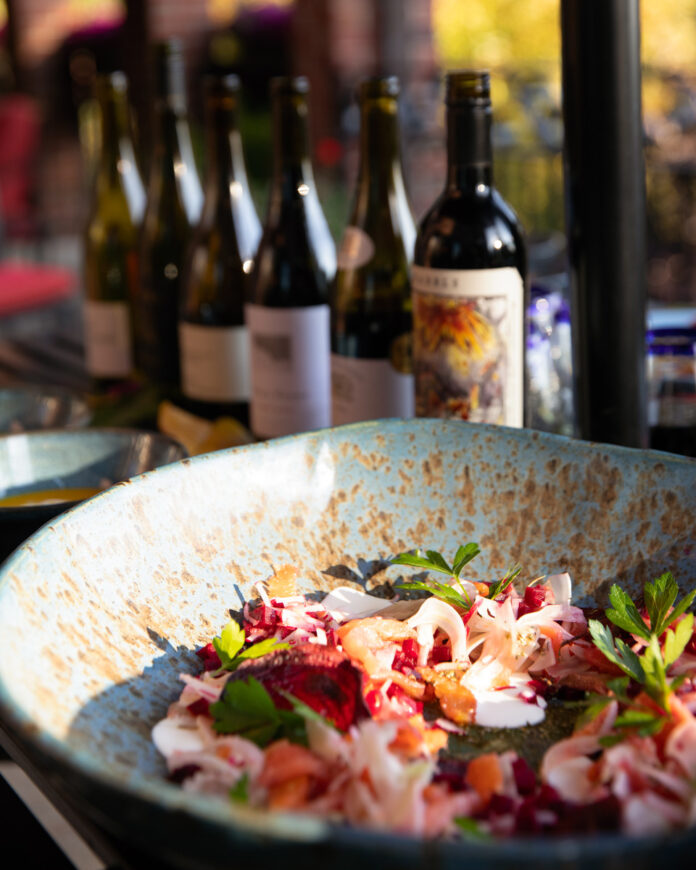
A colorful and fresh-looking salad featuring thin slices of cured salmon, diced beets, shaved fennel, and orange segments, artfully arranged on a plate and drizzled with a creamy crème fraîche dressing and lavender honey.

Cured salmon salad is a great way to enjoy the health benefits of both salmon and vegetables. We used this recipe as part of our end of summer party, where we celebrated the last gasp of sunlight for outdoor gatherings before the days get shorter. Salmon season is early summer to late fall, so mid-September is still within the timeframe to get some top-quality fresh-caught salmon.

Picking the Right Salmon for Your Cured Salmon Salad

When it comes to picking out a fish, luckily, human intuition and your five senses can tell you if a cut is a no-go. When you go to the store to buy salmon, you want to see a vibrant, pink color, almost flesh-like, but not unappealing. You don’t want to smell anything overly fishy or funky. Frozen salmon isn’t necessarily your enemy: sometimes it’s a perfectly viable option. Also, pay attention to the variety of salmon you see: King, Coho, Sockeye, and Pink salmon all have different qualities. 

Print

clock clock iconcutlery cutlery iconflag flag iconfolder folder iconinstagram instagram iconpinterest pinterest iconfacebook facebook iconprint print iconsquares squares iconheart heart iconheart solid heart solid icon
A colorful and fresh-looking salad featuring thin slices of cured salmon, diced beets, shaved fennel, and orange segments, artfully arranged on a plate and drizzled with a creamy crème fraîche dressing and lavender honey.

Garden Herb Cured Salmon Salad


  • Author: Chef Kevin Hermann

Description

A flavorful way to enjoy fish.


Ingredients

Scale

For the salmon

  • 2.5 lb cured salmon, sliced thin (or store bought smoked salmon)
  • 3 medium-diced beets
  • 1 fennel bulb, shaved thin and soaked in ice water
  • 2 oranges cut into segments
  • 1 cup crème fraiche
  • ½ cup lavender honey

For curing:

  • 8 oz kosher salt (or any flake or sea salt will do)
  • 4 oz granulated sugar
  • 4 oz dark brown sugar
  • ½ oz granulated onion
  • ½ oz granulated garlic
  • 4 oz fresh rosemary, parsley, and thyme
  • 2.5 lb Salmon fillet (skin on)

For the crème fraiche:

  • 1 cup crème fraiche
  • 2 tbsp chives
  • 2 tbsp finely chopped parsley
  • ½ tsp finely ground black pepper
  • ½ tsp lemon juice
  • 1 tbsp extra virgin olive oil


Instructions

To cure the salmon:

  1. Mix the salt, both sugars together with the onion and garlic in a bowl.
  2. On a sheet tray, lay out a light layer of the cure.
  3. Put the salmon skin side down and cover with your fresh herbs.
  4. Cover with the rest of the cure, making sure its completely covered by a thick layer of the cure.
  5. Wrap tray tightly and place in refrigerator for 4 days.
  6. Day 4 there will be liquid in the pan with your salmon.
  7. Dump off liquid, brush off the cure. Your salmon should be bright and almost translucent on the top.
  8. Rinse off remaining cure, pat dry.
  9. Wrap salmon airtight and refrigerate for up to 7 days.

To combine: 

  1. Mix all ingredients until fully incorporated.
  2. Reserve for plating the salad

To plate and finish the dish: 

  1. Mix the beets, fennel and citrus together and drizzle with extra-virgin olive oil and a small pinch of sea salt.
  2. Apply a spoonful of crème friache to the plate and drag your spoon across it to spread evenly across the plate.
  3. Place a small amount of the fennel/citrus mixture on top of the crème friache. Artfully place several slices of salmon on top of the fennel and around the fennel.
  4. Drizzle with the lavender honey and olive oil.
  5. Feel free to drizzle any liquid created from mixing the fennel and citrus together.
  6. Have fun and remember its all about creating new memories.

Recipe by Chef Kevin Hermann
Photography by Dave Bryce

Subscribe to TABLE Magazine’s print edition.

The Last of Us Cordyceps Cocktail

0
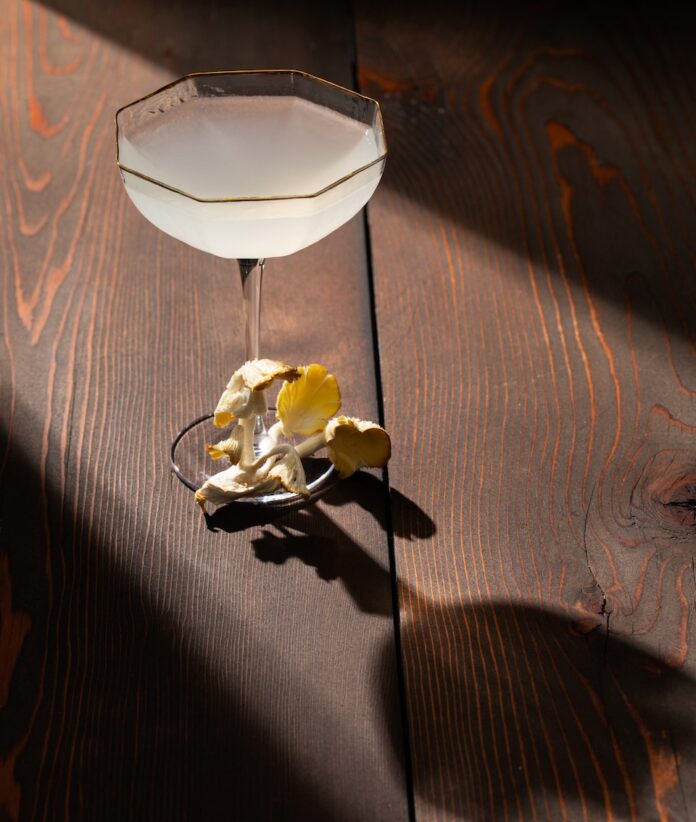
A tall cocktail glass sits in a stream of light with a murky liquid inside it and mushrooms to represent The Last of Us below it.

The apocalyptic, zombie wasteland of The Last of Us video game and TV show both feature an abundance of one particular crop: mushrooms. Specifically Cordyceps. That’s right, a simple little fungus becomes quite a danger in this story about a young girl and a heartbroken surrogate dad traveling through post-outbreak America. After a season of staring at Clickers and Bloaters (terrifying, fungal-like zombies), we couldn’t help but make a cocktail inspired by the Infected and their mushroom influences. Mix up this mushroom cocktail for the premiere of the second season coming soon. (Please do not be concerned: it will not turn you into a Clicker or a Bloater.)

What is a Cordyceps Mushroom?

Cordyceps Mushrooms are actually a real type of mushroom, though unlike in The Last of Us, they do not pose a zombie-virus threat. However, in the TV show’s fictional world, Cordyceps Mushrooms can take over people’s bodies, paralyze them, grow within them, and continue to reproduce (something that only happens to a limited number of insect species in the real world). The fictional global outbreak from these mutated mushrooms starts with crops and then infects others through contact with bodily fluids. A tiny fungus brings down an entire world.

When Does The Last of Us Season 2 Come Out?

The Last of Us season 2 premieres on HBO Max on April 13, 2025. This second season of the hit show starts five years after Joel and Ellie’s journey in Season 1. It also comes with a new character, Abby. There is tension between Abby and Joel due to the ending of the first season and thus, she is on the hunt for him and Ellie. Look forward to seven new episodes and hopefully a season three announcement after this season’s release.

Print
clock clock iconcutlery cutlery iconflag flag iconfolder folder iconinstagram instagram iconpinterest pinterest iconfacebook facebook iconprint print iconsquares squares iconheart heart iconheart solid heart solid icon
A tall cocktail glass sits in a stream of light with a murky liquid inside it and mushrooms to represent The Last of Us below it.

The Last of Us Cordyceps Cocktail


  • Author: Zack Durkin

Description

Don’t worry, this mushroom cocktail won’t give you a zombie-like infection.


Ingredients

Scale
  • 2 oz vodka or gin
  • .5 oz dry vermouth
  • .5 oz pickled mushroom liquid
  • Pickled mushrooms, for garnish

For the pickled mushroom liquid:

  • .5 lb oyster mushrooms
  • 1.25 cups white vinegar
  • 1 tsp whole mustard seeds
  • .75 tsp brown sugar
  • 1 tsp kosher salt
  • .5 tsp whole allspice
  • 3 dried bay leaves
  • 1 carrot cut into slices


Instructions

  1. Prepare pickled mushrooms a week in advance, or use a jar of store-bought pickled mushrooms.
  2. Add all vodka (or gin), vermouth, and pickled mushroom liquid to mixing glass.
  3. Add ice and stir for up to 30 seconds.
  4. Strain into chilled stemmed glass of your choice.
  5. Garnish with pickled mushroom.
  6. Serve and enjoy!

For the pickled mushroom liquid:

  1. Boil mushrooms for 6 – 10 minutes. Remove from water and blanch in ice water.
  2. Add all brine ingredients to a pot and bring to a boil.
  3. Put cooled down mushrooms in a glass jar. Pour boiling brine over the mushrooms.
  4. Close the lid and allow it to seal. Allow to cool down on the counter and then place in the refrigerator.

Recipe by Zack Durkin
Photography by Dave Bryce

Subscribe to TABLE Magazine’s print edition.
Snakebite Cocktail

0
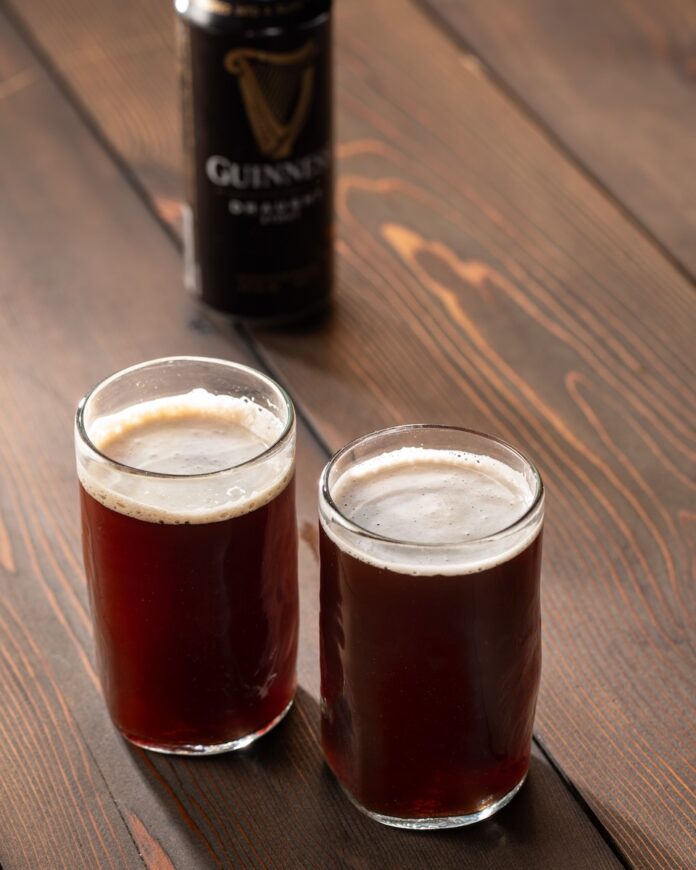
Two short glasses hold Snakebite cocktails which sit on a wooden table with a can of Guinness sitting behind them.

We know that sometimes cocktail recipes can seem like a handful, so here’s a Snakebite Cocktail that uses only two ingredients. That’s right, all you need is a can of Guinness and your favorite hard cider. I first encountered this drink at Pittsburgh’s Monterey Pub, where a friend prefaced recommending it with “I know it sounds weird, but…” I was intrigued enough to try it, and I now have become an evangelist for it as a simple cocktail order that impresses bartenders or bar guests. Plus, the name is just so much fun. Even if you’re not a beer drinker or a Guinness lover, the addition of a sweet and tart cider completely changes the flavors. You get a bit of bitterness from the stout, chased by creamy, fruity notes.

Where Does the Snakebite Come From?

The Snakebite originated in the United Kingdom, where it gained popularity in the 1980s. It makes sense with Guinness being such a popular beverage in the United Kingdom and Ireland. At its start, it was common among goths and punks, perhaps because of its edgy-sounding name and its high alcohol content, along with cheap price. Want to get drunk fast, for only a few dollars? The Snakebite is your drink. But don’t knock it ’til you try it. As my friend said, it might sound unappetizing at first, but this snakebite is more delicious than venomous.

Print
clock clock iconcutlery cutlery iconflag flag iconfolder folder iconinstagram instagram iconpinterest pinterest iconfacebook facebook iconprint print iconsquares squares iconheart heart iconheart solid heart solid icon
Two short glasses hold Snakebite cocktails which sit on a wooden table with a can of Guinness sitting behind them.

Snakebite Cocktail


  • Author: Emma Riva

Description

This cocktail has a bit of a “bite” with the addition of tart cider to a rich Guinness stout.


Ingredients

Scale
  • 12 oz can of Guinness
  • 12 oz can of hard cider


Instructions

  1. Simply mix equal parts of Guinness and your choice of hard cider in your favorite glass.

Recipe by Emma Riva
Photography by Dave Bryce

Subscribe to TABLE Magazine’s print edition.

The Ultimate Guide to Easter Sunday from Cocktails to Dying Eggs

0
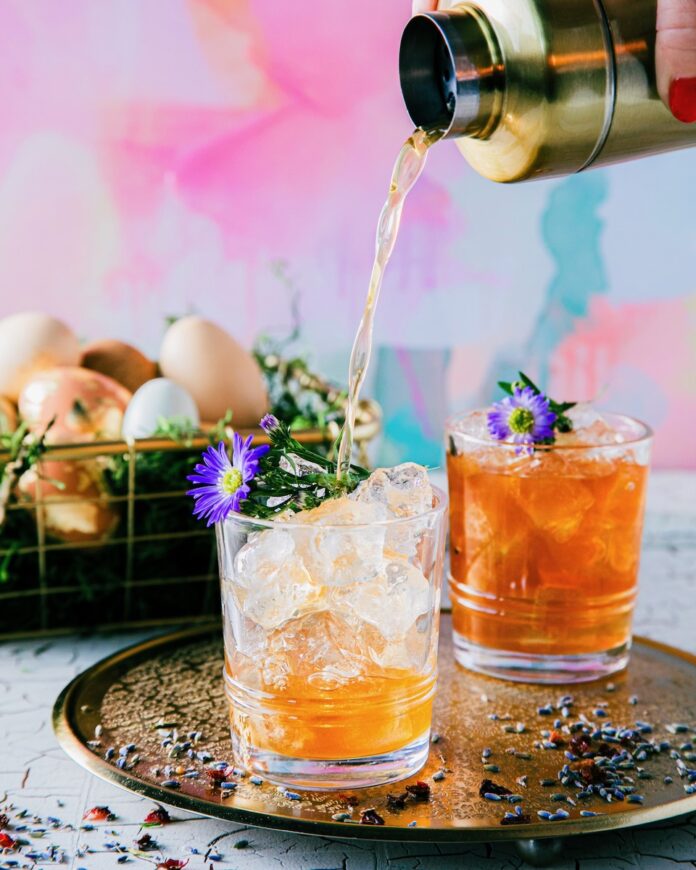
Two short cocktail glasses hold a Hippity rose hip and lavender easter cocktail with small purple flower garnishes and a basket of eggs sitting in the background.

Updated on February 24, 2026

There are many ways to enjoy Easter Sunday and rather than how you celebrate, it’s about who you celebrate with that makes a difference. Warmer temperatures and sunnier skies call out for a party with those you love. Suddenly, sometimes seemingly overnight, you can stand outside in the sun with bare arms. Crocuses and daffodils start to peep out through the frigid soil. All of this sets the scene for Easter, a holiday all about renewal and rejuvenation. Whether it has spiritual meaning for you or you just love the Easter Bunny, these Easter recipes and tips will make sure that you have everything you need to have the best holiday you can.

The Ultimate Guide to Easter Sunday

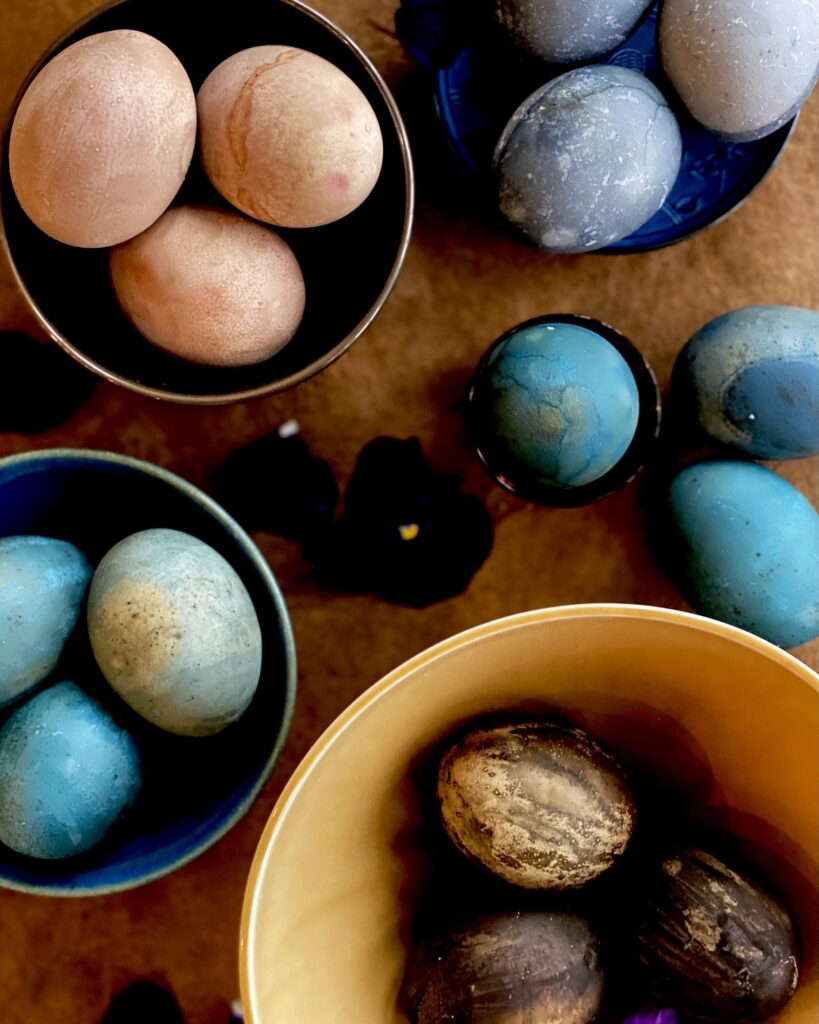
Different naturally dyed Easter Eggs sit in the bowls in the colors pink, purple, blue, and brown.

Dying and Using Up Easter Eggs

One of the quintessential signs of Easter is Easter eggs. Any other day and hard-boiled eggs would be just another addition to your salad but on this holiday, they’re a crucial centerpiece. Start off your celebration by dying your eggs for the Easter Bunny (or for delectably eating, we won’t judge!) Rather than going to the store and grabbing one of those kits that seem to be more pain than promise, try dying your eggs naturally this year. Using various vegetables and spices found in everyday kitchens like turmeric or red cabbage, you’ll create beautiful, vibrant colors on your Easter eggs. Plus, we think mixing your own natural dye adds to the fun.

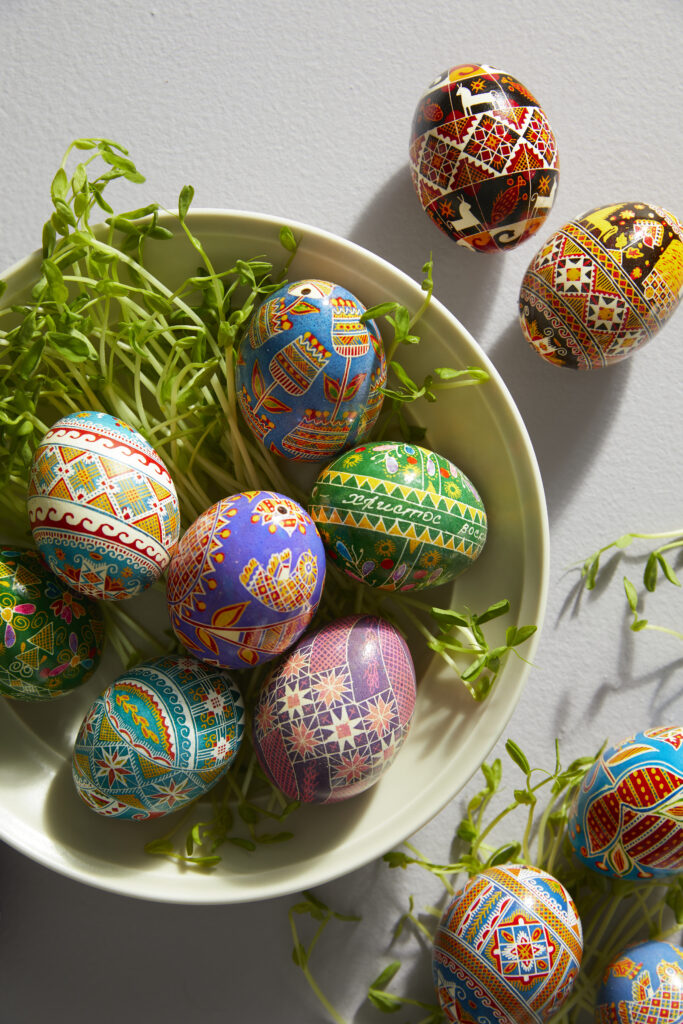
A bowl holds Pysanky designed Ukrainian Easter eggs with green easter grass underneath them and some loose on the table.

But, if you’re looking for other options, there are plenty of different ways to dye your eggs including Ukrainian Pysanky. In the Ukrainian culture, they intricately dye and draw on eggs to create detailed patterns. Though you can also opt to use flowers, shaving cream, and even onion skins to create unique looks as well.

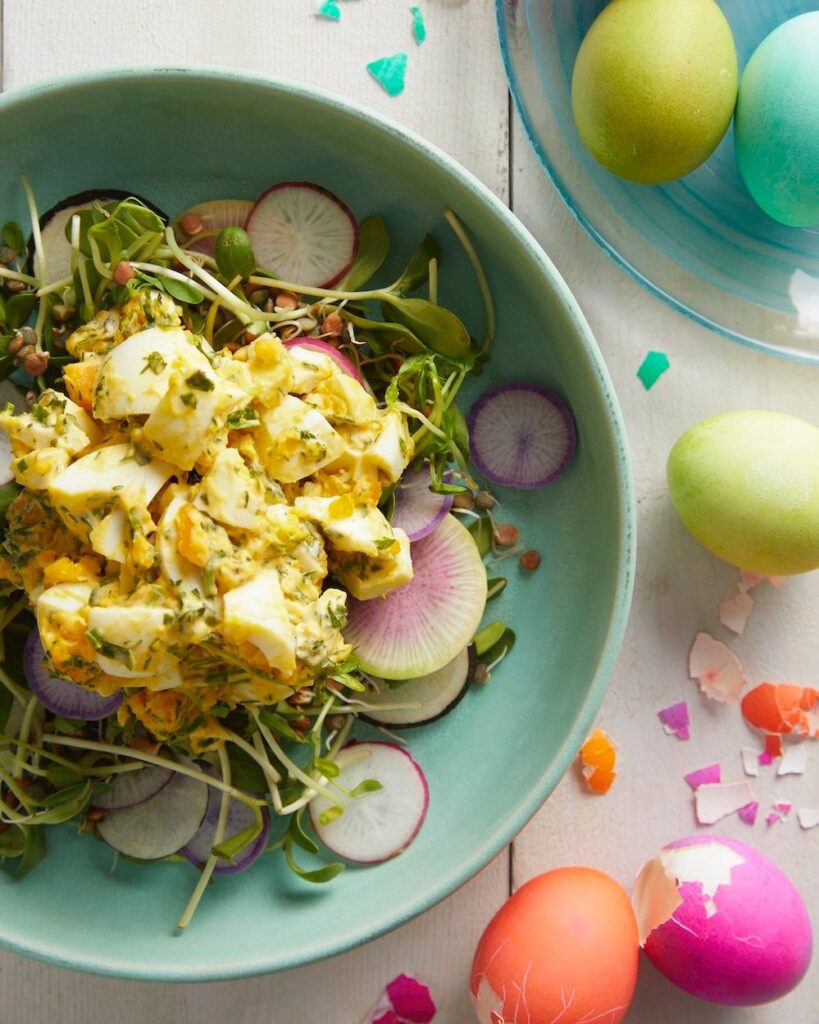
Now that you have cartons full of dozens of eggs, it’s time to put them to good use! You could pop these hard-boiled eggs into your mouth with a bit of salt or you could stretch them further by using leftover Easter eggs in recipes. Think Green Goddess Egg Salad, Egg Masala Puffs, Chorizo Scotch Eggs, and more.

A green bowl holds a Green Goddess Egg Salad with dyed eggs to the right of the bowl.

Cocktails, Mocktails, & Wine Pairings

Wine is a large part of Easter celebrations because of its connection to Judeo-Christian culture. Whether it’s turning water to wine, sharing bread and wine at the last supper, or Moses’ daily offerings, wine has always been a part of God’s story. Even during a Passover Sader, followers are told to drink wine as a way to honor the redemption of the Jews from slavery. No matter what main dish you’re choosing to feature this year, you can find a wine pairing for your Easter ham, lamb, or whatever else you may enjoy.

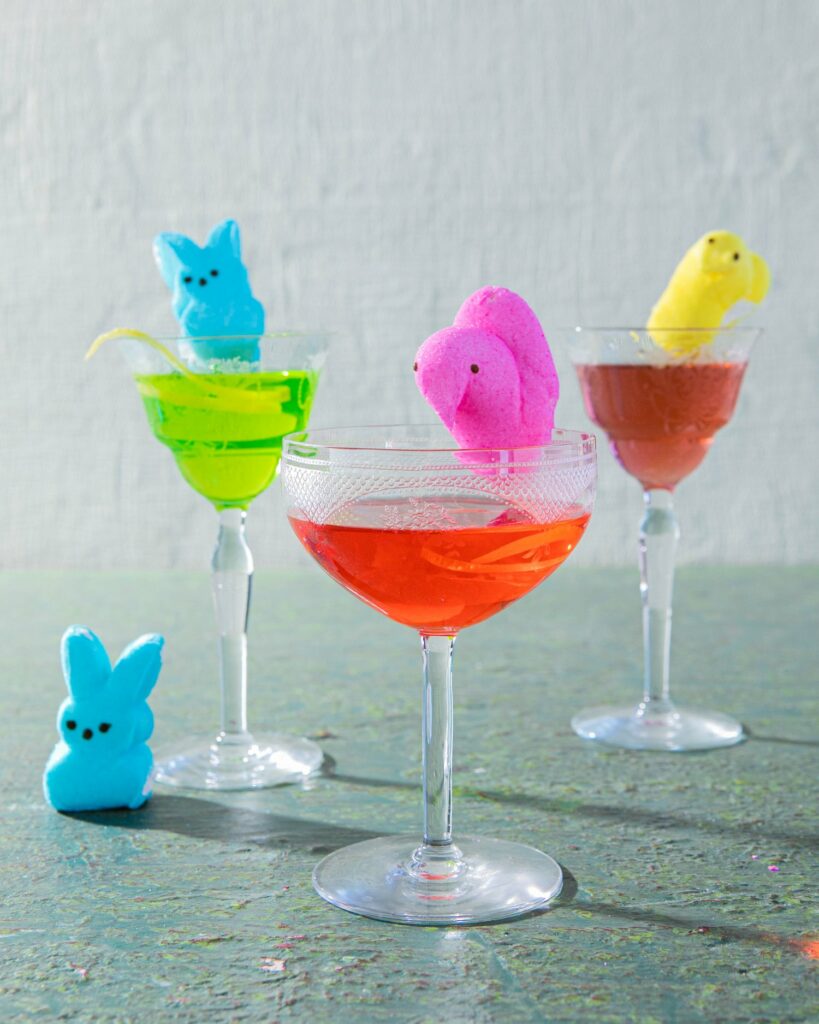
blue pink and yellow peeps with jolly rancher colored martini

For those who are not a fan of wine, maybe you’d prefer a Cottontail Cocktail that proves that kids shouldn’t get to have all the fun at Easter. It uses chocolate syrup alongside vodka, simple syrup, lemon juice, club soda, and an egg white for a delectable foam on top. It’s like those little chocolate malted Easter eggs you used to eat as a kid but in adult-form. And in case you’re craving another sugary sip, our Peep-a-tini Cocktail gets its sweet inspiration from your marshmallow Peeps friends.

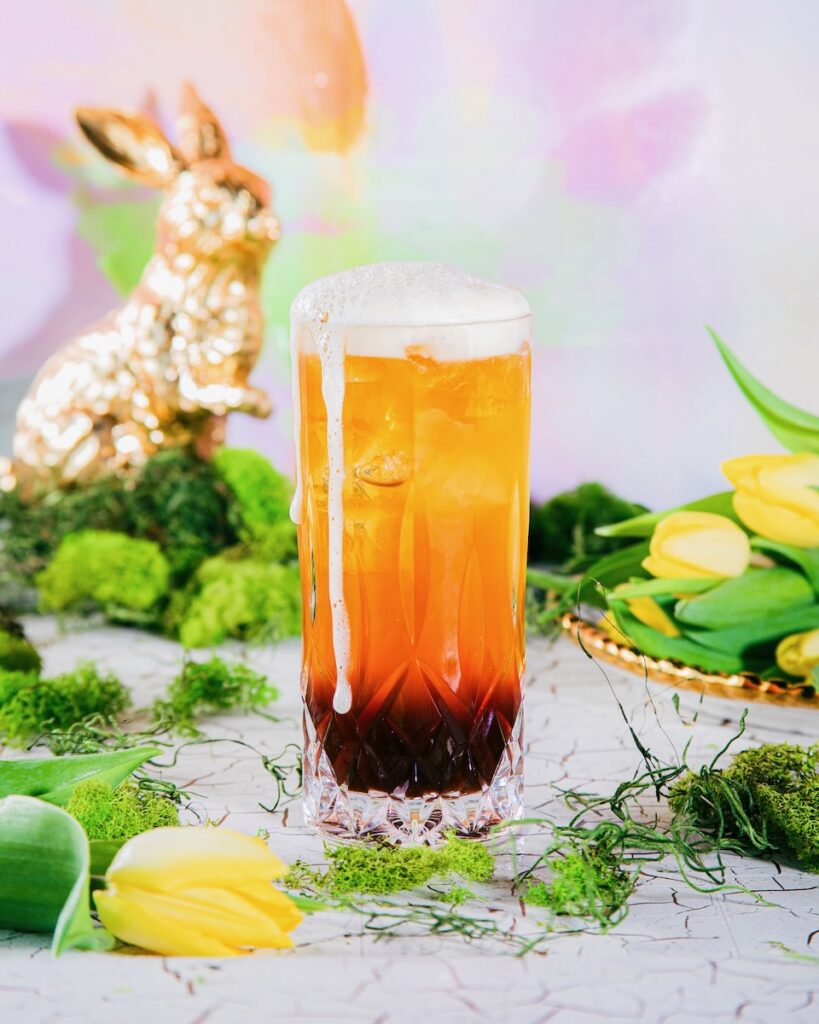
A Hoppity IPA Cocktail in a tall beer glass sits on a white table surrounded by Easter grass, eggs, and a gold bunny by the pastel backdrop.

Do we have you feeling like a kid at heart yet? If not, our next collection of cocktails and mocktails are sure to throw you back to your youth. Growing up, we all heard the song, “Here comes Peter Cottontail, hopping down the bunny trail…” But as an adult, we’d rather drink through Peter Cottontail’s tune instead. Whether you’re sipping on the Hoppity cocktail that focuses in on a hoppy IPA base , or a carrot juice-infused mocktail called Hoppin’ Down the Bunny Trail, you’ll want to hippity hoppity over to your own shaker.

Ham & Savory Dinner Dishes

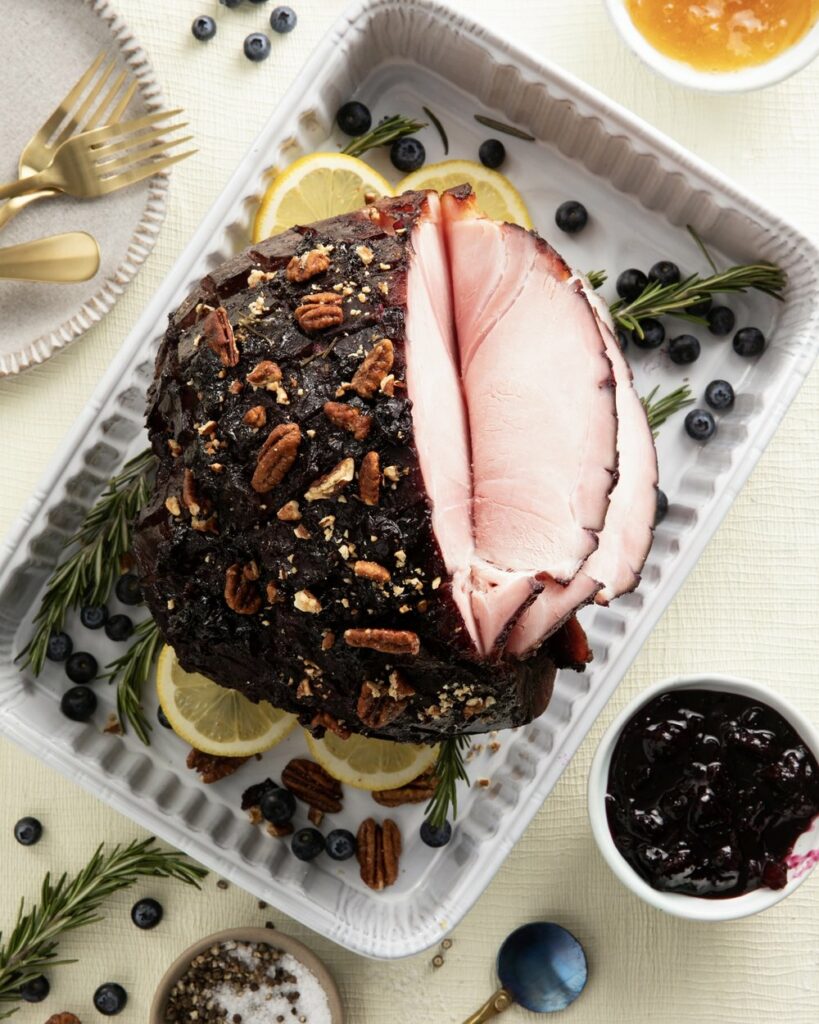
An aerial view of a cooked ham with blueberry yuzu glaze sitting in a white roasting tray with blueberries, thyme, and lemon garnishing the meat.

What would Easter be without a glistening ham or rack of tender lamb on the dinner table? Other than the curing of winter meats lining up with Easter’s timing, we eat ham on Easter since ham/pigs are a symbol for springtime and decadence after straying from meat for the Lenten season. On the other hand, lamb is more of a delicacy as its luxury price-tag makes it perfect for special occasions. Not to mention its association with symbols of sacrifice and new life.

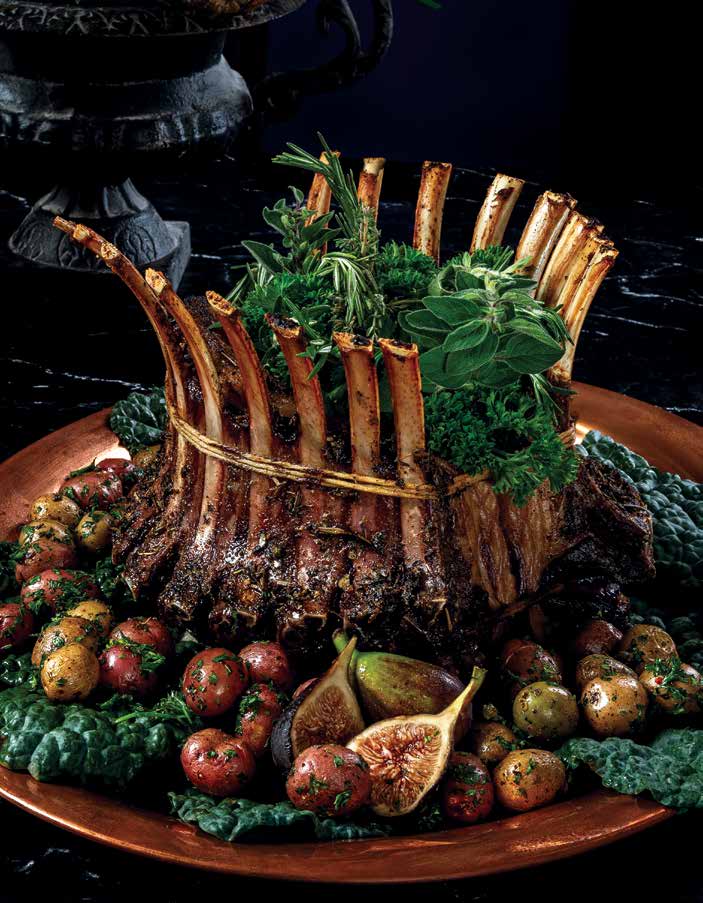
A crown roast of lamb with min sauce from the gilded age sits among a bed of figs and potatoes and greens.

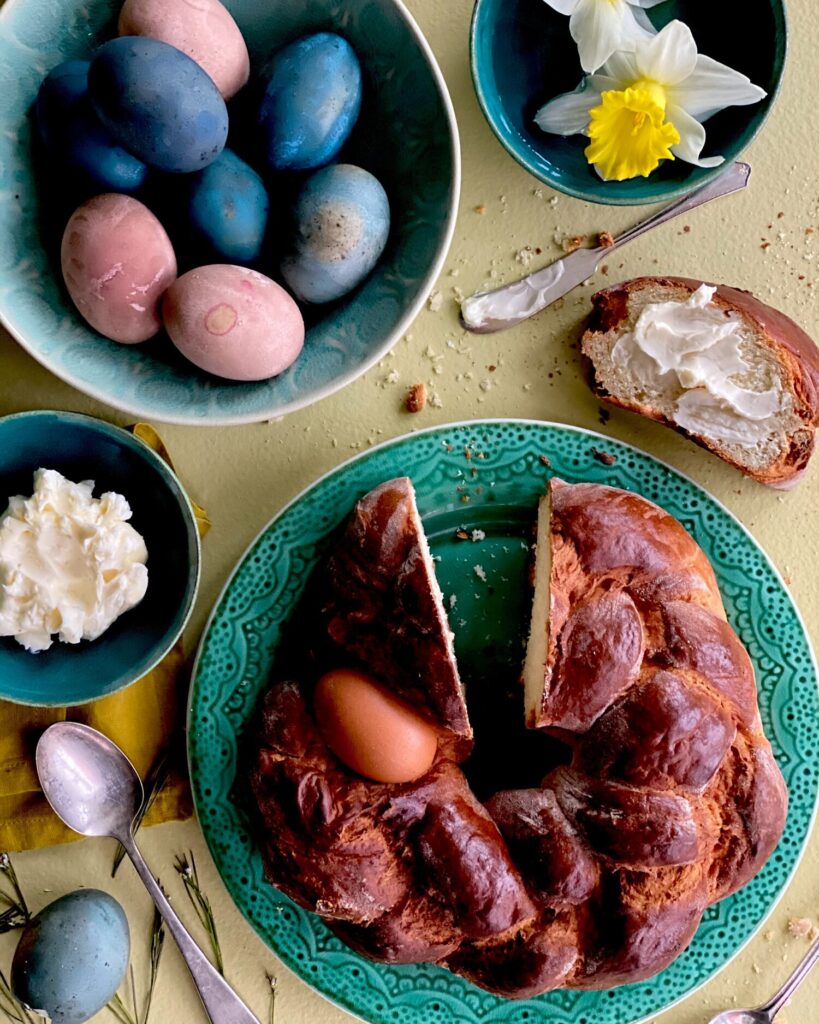
In order to prepare your dinner table for your finest guests (your beloved friends and family), browse our list of lamb and ham recipes for Easter. You’ll have recipes like a traditional Crown Roast of Lamb with Mint Sauce alongside more modern favorites like a Ham with a Blueberry and Yuzu Glaze. No matter which protein you choose this year, accompany it with a homemade Italian Easter Bread. Its subtle sweetness and buttery spread on top will have you grabbing slice after slice.

On a green plate beside a bowl of brightly colored easter eggs sits a round braided Italian Easter Bread with a slice taken out of the top which sits on the table buttered.

Easter Sweets and Desserts

Don’t fill up on your dinner too quickly! There are plenty of desserts and Easter sweets to indulge in that involve fun hands-on decorating and a delicious product.

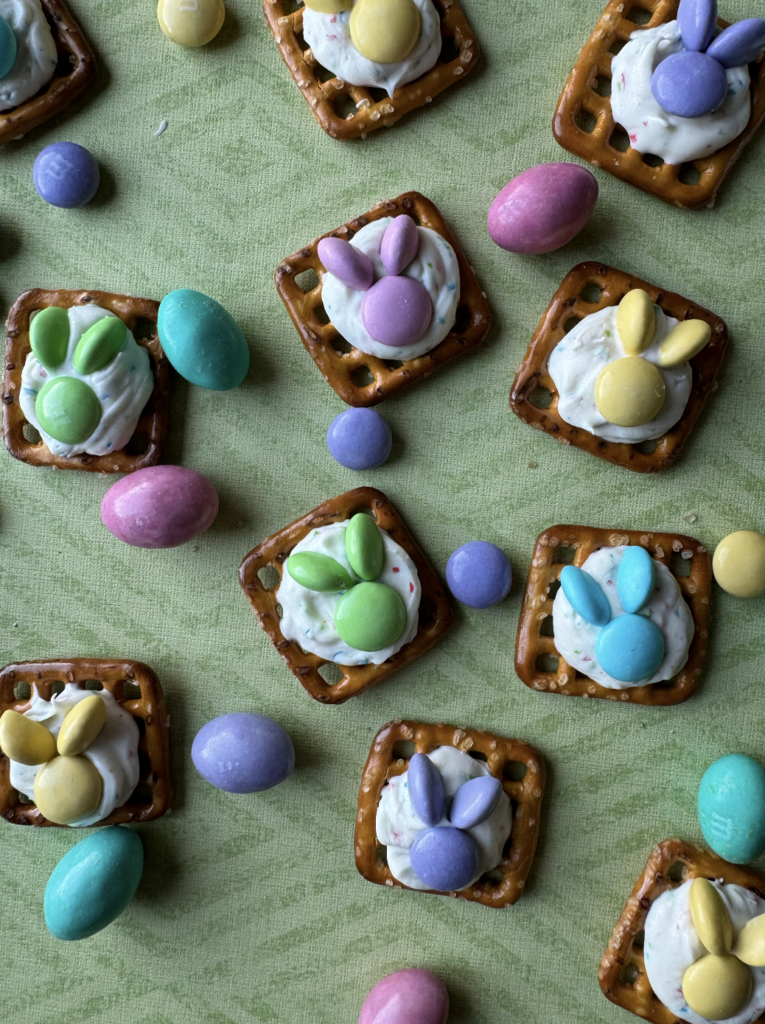
Chocolate Pretzel Easter Bunny Treats sit on a green striped background made out of pretzels, chocolate, and M&Ms with M&Ms tossed between the treats.

The rabbit is an ancient symbol of fertility, but it’s also become one of the most enduring Easter symbols. To represent this mascot of the holiday, try making Chocolate Pretzel Bunny Treats. These are a fun and simple way to get kids involved in the kitchen with the use of pretzels, M&Ms, and white chocolate.

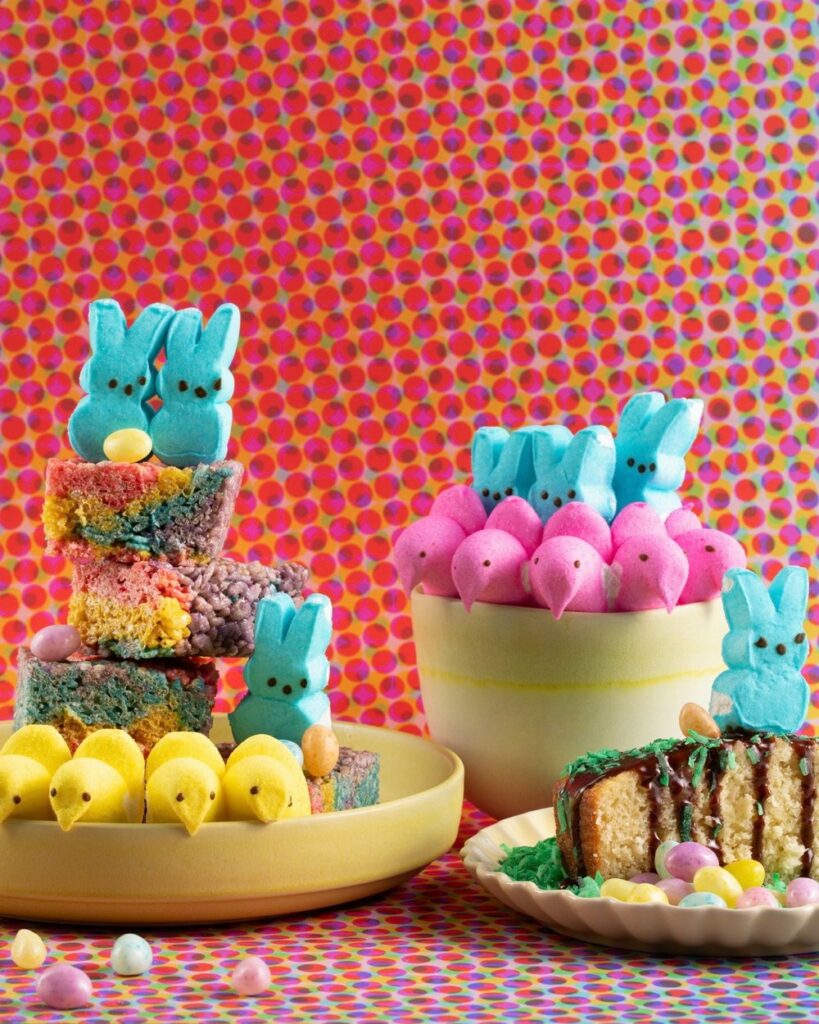
colorful rice crispy treats made with peeps

Or, if you don’t mind getting a bit messy, create Cardamom Peep Crispy Treats that use Peeps for the marshmallow base. Their rainbow finish is undeniably beautiful.

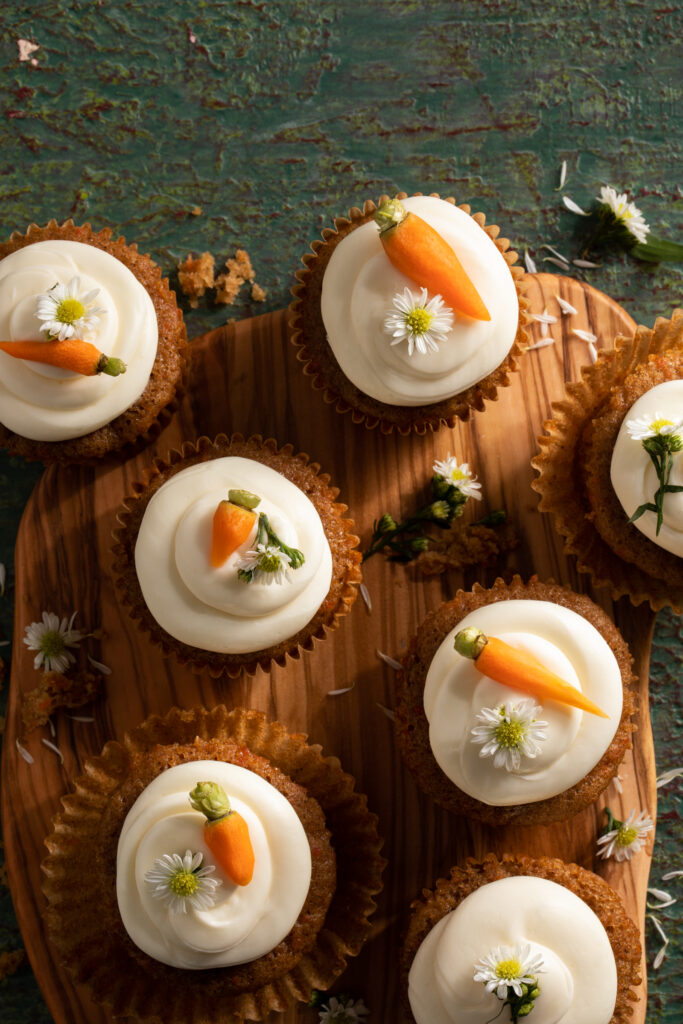
A flat-lay view of seven carrot miso cupcakes.

But, for an overall show-stopper, Carrot Miso Cupcakes are just grown-up enough with a little bit of umami flavor. Plus, miso has a lot of health benefits so you can feel good about what you’re eating.

Story by Kylie Thomas

Subscribe to TABLE Magazine’s print edition.

The Conclave Cocktail

0
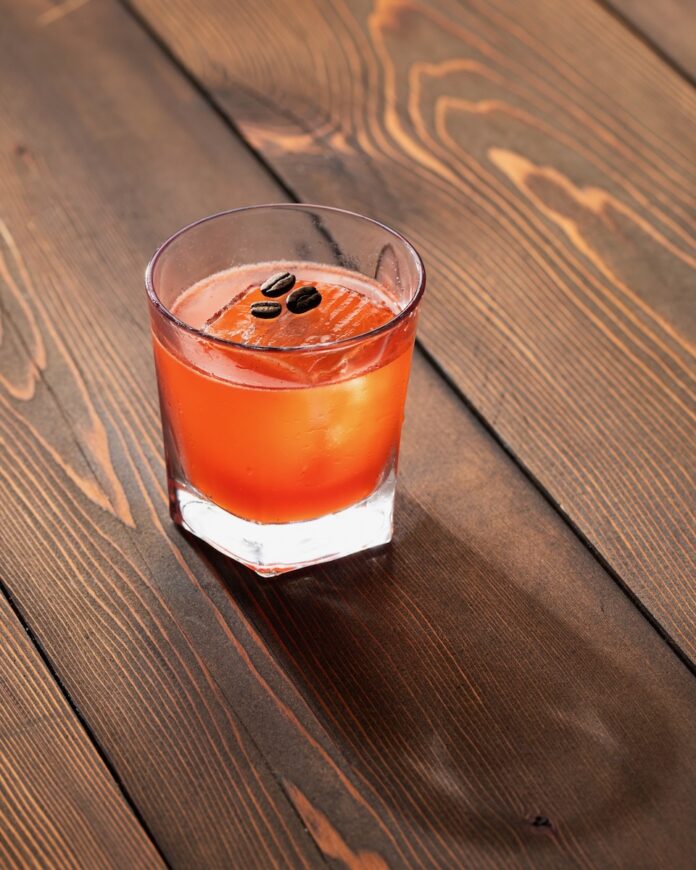
A short cocktail glass with an orange Conclave cocktail with one large ice cube inside and coffee beans on top of it, with the glass sitting on a wood picnic table.

A conclave generally happens behind closed doors. Sometimes it’s just a gathering of people with shared interests looking for a deep-dive into their shared passion. But when a conclave of Roman Catholic cardinals convenes after the death of a pope, it’s much more than that. It’s a secret political event with potentially world-changing effects. That’s the subject of the movie, Conclave.

This Oscar-nominated film begins with the death of a fictional pope, and ends with the election of his successor. In between…a series of dramatic twists and turns. We probably should not say much more for fear of spoiling your first viewing of this beautifully written drama starring Ralph Fiennes, Isabella Rossellini, and Stanley Tucci. After making this cocktail as an aperitivo, why not dive into Stanley Tucci’s culinary journeys with some Stanley Tucci-inspired recipes?

After Conclave became a Best Picture nominee, we asked bartender Jason Renner at Italian bistro Bar Marco to come up with a cocktail that could capture its tension and lush cinematography. The Conclave’s recipe includes a red wine syrup, crafted from Montepulciano. It contributes an earthy sweetness, while gesturing at the deep-rooted traditions of the Catholic Church.

What is Conclave the Movie About?

Choosing a new pope is not easy. Conclave dives into the unseen complexities of the Roman Catholic Church and the secrets that hide beneath its gorgeous surfaces. The film follows Cardinal Lawrence (Ralph Fiennes) who must oversee the conclave that will elect his mentor’s successor. Throughout the process, he discovers actions and ideas that could completely undermine the church and its reputation. The story opens our eyes to the inner workings of one of the largest, most powerful religions in the world. The Holy Spirit is supposed to guide the conclave of cardinals and, depending on how you view the results, it may have done exactly that.

Print
clock clock iconcutlery cutlery iconflag flag iconfolder folder iconinstagram instagram iconpinterest pinterest iconfacebook facebook iconprint print iconsquares squares iconheart heart iconheart solid heart solid icon
A short cocktail glass with an orange Conclave cocktail with one large ice cube inside and coffee beans on top of it, with the glass sitting on a wood picnic table.

The Conclave Cocktail


  • Author: Jason Renner

Description

Complex, spirited, and red… much like the Roman Catholic Church’s conclave of cardinals.


Ingredients

Scale
  • 1.5 oz Campari
  • .25 oz vodka
  • .25 oz mezcal
  • .75 oz red wine syrup (I used Montepulciano)
  • .75 oz lemon juice
  • 1 tbsp coffee beans


Instructions

  1. Add all ingredients into a shaker tin, add ice and a hefty tablespoon of coffee beans.
  2. Shake hard till the tins are almost too cold to hold.
  3. Double strain into an iced rocks glass.
  4. Garnish with a lemon peel

Recipe by Jason Renner of Bar Marco
Styling by Zack Durkin
Photography by Dave Bryce

Subscribe to TABLE Magazine’s print edition.

Boilo

0
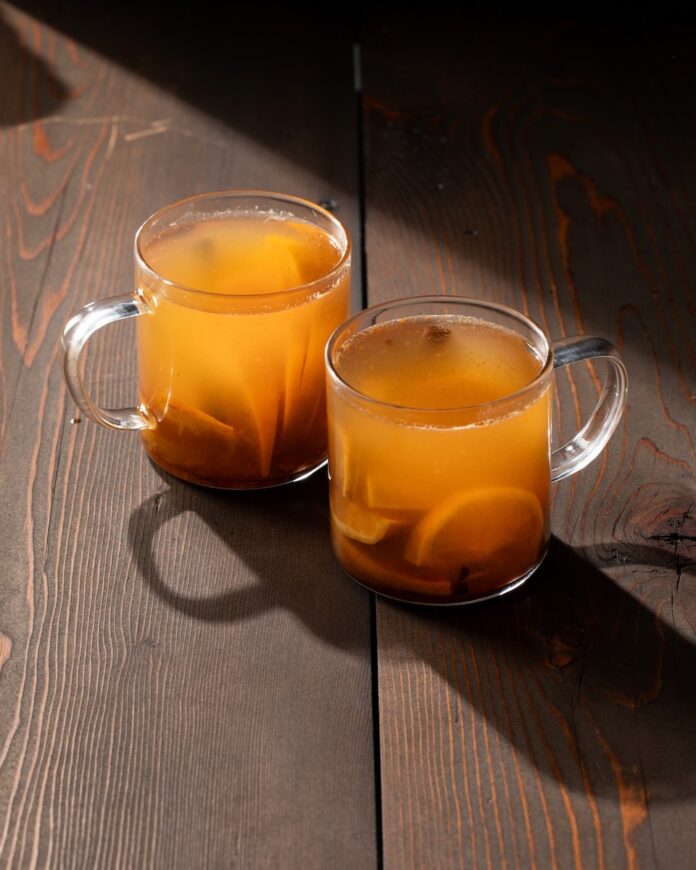
Two cups of boilo on a wooden background.

After a long day of hard work, sometimes you need a little something to take the edge off. In the coal country of central and eastern Pennsylvania, Lithuanian and Belarusian immigrants used the “coal miner’s cure”: boilo, modeled after Lithuanian krupnika, which combines vodka, honey, spices, vanilla, and citrus peel, and then is left to age. Krupnika, usually sipped at room temperature, is common at wintertime Slavic celebrations and holidays. Boilo, served hot like a toddy, is sipped right away. Given how easy it is to make at home, it’s a fun project to share with friends on any given winter night.

About Boilo

Boilo is often served in a batch, however, this recipe makes only one drink. If you prefer to batch it, double or triple the ingredients. You can buy it ready-made if you’d rather taste someone else’s. Coal Country Boilo, a woman-owned company in Orwigsburg, Pennsylvania, sells boilo batch kits that take out the guesswork. But when I learned about it, I wanted to try it myself.

Like many recipes with strong folk traditions behind them, however, the measurements are inexact. Think about your audience when you decide how much moonshine to put in there: easy does it for the uninitiated. I used Honest Hillbilly, a clear whiskey from Pittsburgh-based Lucky Sign Spirits. I love Lucky Sign’s liquor, and Honest Hillbilly remains faithful to pre-prohibition methods of distillation. Lucky Sign’s goal was to “reclaim” moonshine, often used as a pejorative, as a part of Appalachian and American history on the whole. So, I thought it would be perfect for Boilo. But you can use whichever liquor you like. Some people use ginger ale in their Boilo, some swear by Four Queens whiskey, but at the end of the day, the best Boilo is the one you develop for yourself on a chilly winter evening.

Print
clock clock iconcutlery cutlery iconflag flag iconfolder folder iconinstagram instagram iconpinterest pinterest iconfacebook facebook iconprint print iconsquares squares iconheart heart iconheart solid heart solid icon
Two cups of boilo on a wooden background.

Boilo


  • Author: Emma Riva

Description

A drink tied to working-class Slavic communities in the Rust Belt that goes beyond a simple hot toddy.


Ingredients

Scale
  • 1 cup hot water
  • 2 tbsp honey
  • 1 orange, sliced
  • 1 lemon, sliced
  • 1 tsp whole cloves
  • 1 cinnamon stick for garnish
  • 1 cup Lucky Sign Spirits Honest Hillbilly Whiskey or whiskey of your choice
  • Dash of cinnamon powder, to taste
  • Optional spices and additions for customization: Star anise, caraway seeds, allspice berries, raisins


Instructions

  1. Combine ingredients sans whiskey in a saucepan and bring to a boil.
  2. Add whiskey and lower heat drastically so alcohol does not burn off.
  3. Pour into a clear, heat-proof glass or mug and garnish with cinnamon stick.

Recipe by Emma Riva
Photography by Dave Bryce

Subscribe to TABLE Magazine’s print edition