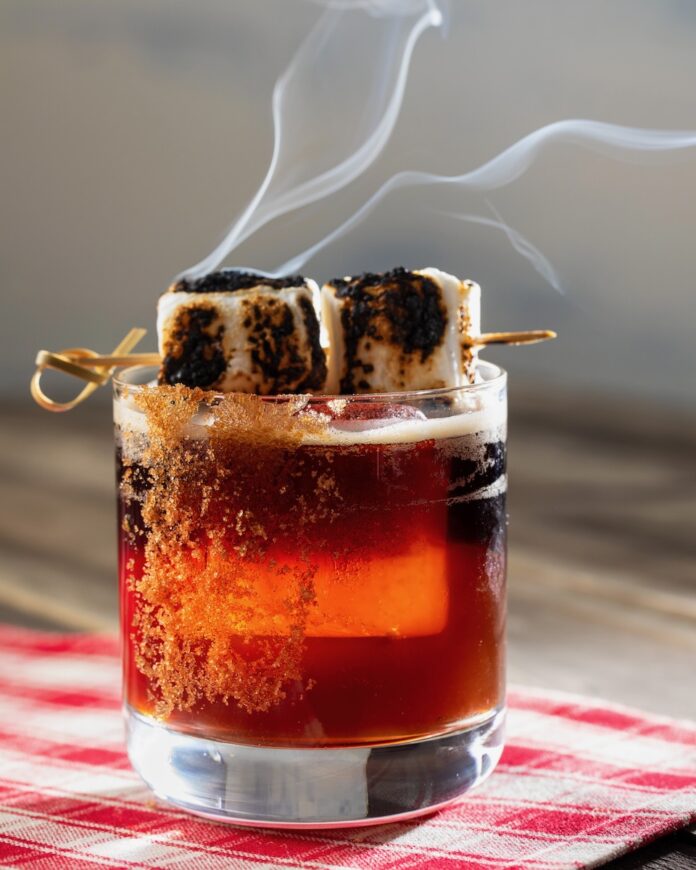
It’s time for a chartreuse cocktail! Summer is always a welcome arrival for bartenders with cocktail ingredients like gin and green chartreuse taking the reins. During this time, calls for Manhattans start to slacken, and cocktail menus brighten up, flooded with floral gins and white rum, citrus and sparkling wine, and oodles of fresh herbs and berries perfect in in cocktails for the summer season.
Origins of the Gypsy Eyes, Green Chartreuse Cocktail
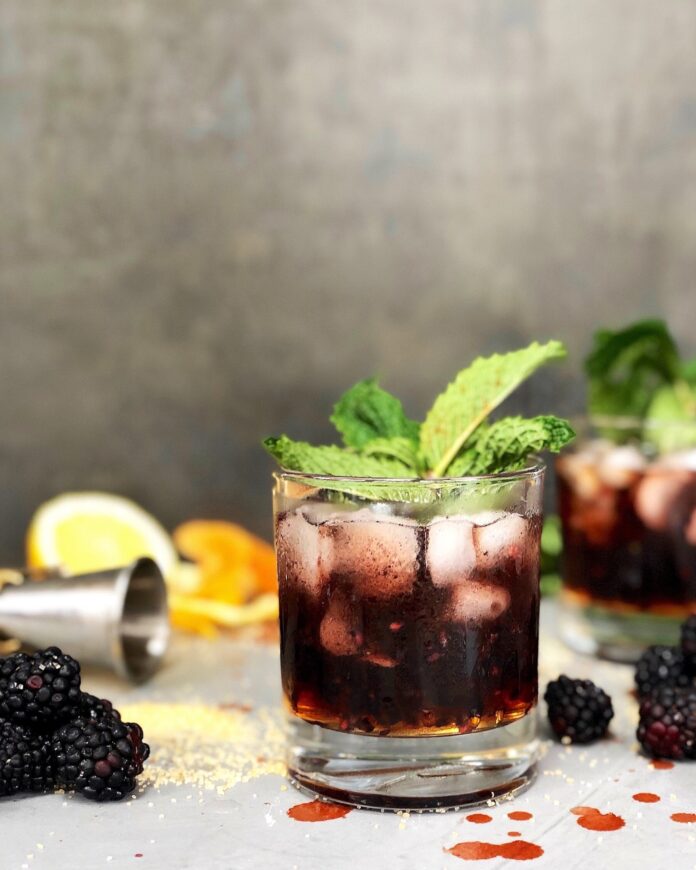
Chris McClain found one such cocktail on a visit to famed NYC cocktail bar Death & Co. McClain and his wife ordered the Gypsy Eyes, and it was love at first sip. “The tang of the grapefruit against the pungent herbs of gin and chartreuse create a perfectly balanced cocktail,” he explains. McClain’s version uses Gin Foundry Europa, a London dry gin that counts grapefruit among its ten botanicals.
A twist on a classic summer beverage, the Prickly Ranch Hand includes delicious prickly pear liqueur for a dash of sweetness. It also uses local New Mexico spirits from Vara Winery and Distillery, Altar Spirits, and 505 Spirits but you can also use a distiller closer to home.
Can I Make My Own Prickly Pear Liqueur?
In case you would rather make your own liqueur for our Prickly Ranch Hand than buy off the shelf, all you need are ripe prickly pear fruits, vodka, and simple syrup. There are a few ways that you can prepare the prickly pears for the infusion. You could mash them with a fork or use your hands to gently break up the pulp. Or, you could peel the fruits and cut them into chunks in case you’re looking for a speedier route. After the fruits are prepped, simply let the vodka and prickly pears macerate for at least 24 hours. Then, you’ll strain the liquid into a jar and stir in some simple syrup for a bit of sweetness.
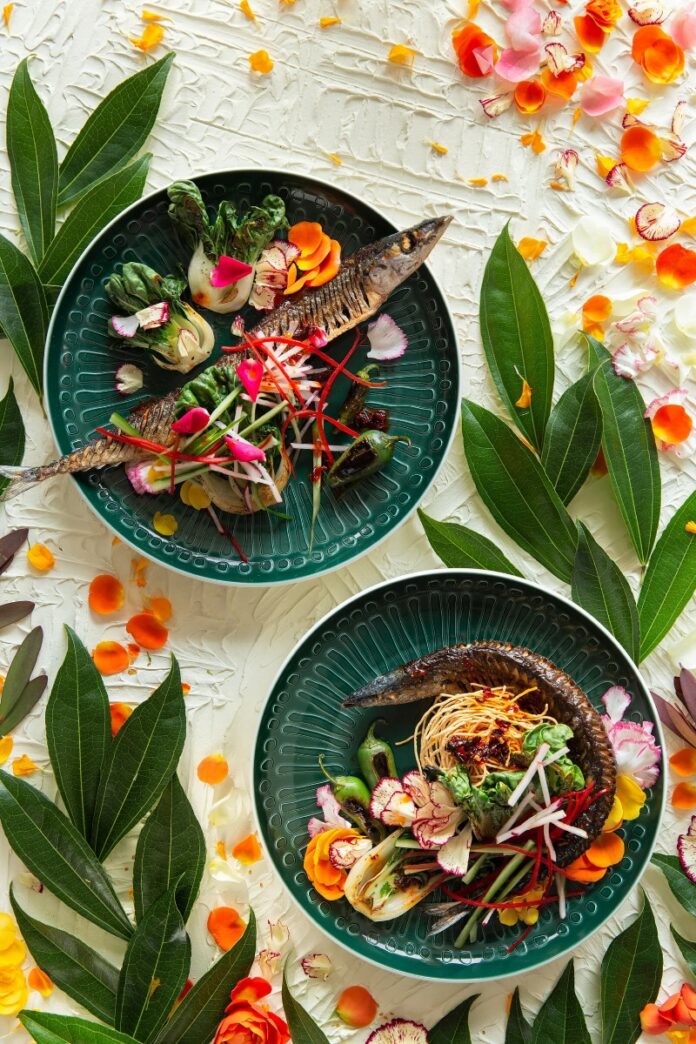
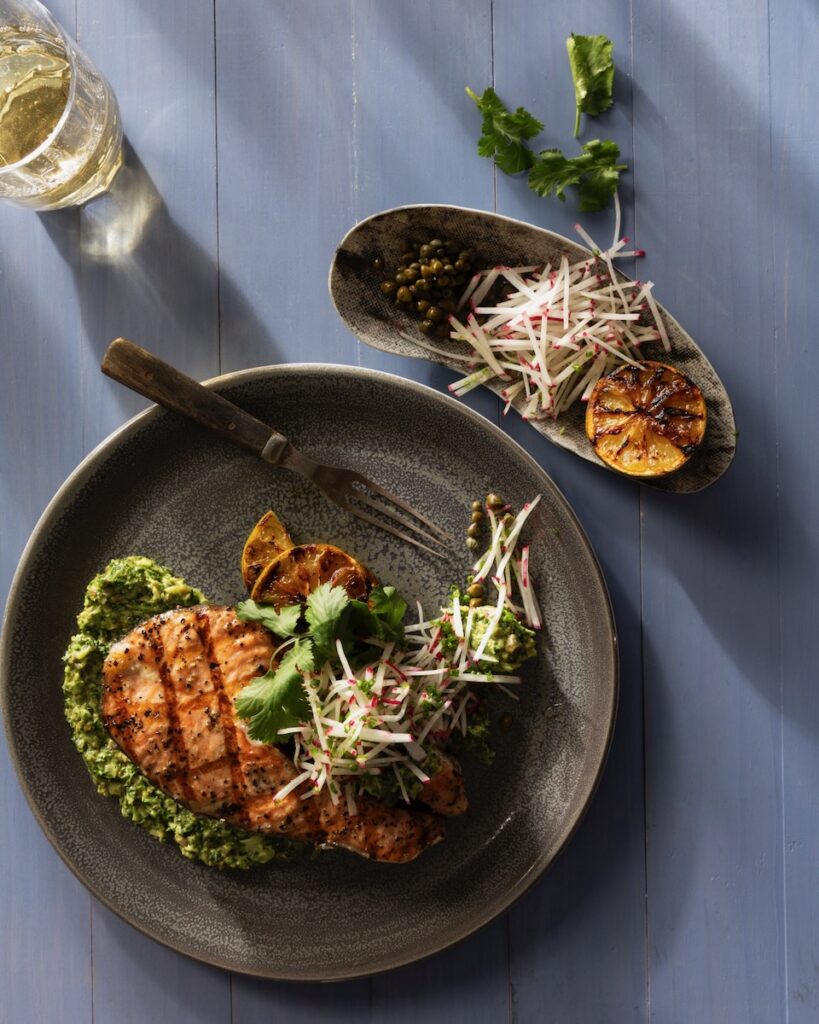
Whenever you want to treat you and your partner to a dinner that makes you feel like you’re living right on the shore, break out this Seared Sea Bass with Raisin Chutney and Fennel Salad. Imagine flaky, perfectly seared sea bass, its delicate flavor balanced by a sweet and tangy raisin chutney. Then, brighten it all with the crisp freshness of a fennel salad. This dish is a delightful mix of textures and tastes, offering a sophisticated yet approachable cooking experience that’s sure to impress.
How to Pick a Cut of Sea Bass for Searing
If you’re headed to your local fishmonger to pick up a fresh sea bass filet for better quality, there are a few things you’ll want to look for. Just by looking at the selection of sea bass, you can tell some things right off the bat. Look for a translucent, white color with possible pink hues depending on the variety. We recommend picking out a thicker cut of sea bass because it holds in the juices better, keeping the fish from drying out too quickly.
Pat your fish dry with a paper towel and season with salt. Heat a non-stick skillet over high heat, add enough olive oil to coat the bottom of the pan, once the oil is very hot, add your fish to the pan and sear the top until golden brown.
Once you have reached the desired color, flip the fish and continue to cook just until the center of the fish is cooked (around 120 degrees)
For the chutney:
Add all ingredients to a small pot and simmer and reduce until most of the liquid has evaporated and the raisins look glossy, set aside and serve on top of fish at room temperature
For the fennel salad:
Thinly slice fennel and apple and add to a bowl, add walnuts, olive oil, lemon juice, and salt and pepper, and lightly toss until everything is evenly coated
To plate:
First, add your fennel salad to the plate, set your seared fish on top of the salad, and then top with chutney
Recipe and Styling by Anna Franklin Photography by Dave Bryce
If we’re thinking of perfect pairs, coffee and bourbon deserve a top spot. The bitterness of a deep brew matches the nutty, light burn of bourbon, resulting in a smooth sip that takes every cocktail to the next level. It’s even a way to get those who don’t like bourbon sipping a strong cocktail or vice versa.
Get a taste of this duo yourself in this strong after-dinner drink, The Revolver. Coffee liqueur blends with bourbon and orange bitters for a well-balanced, easy-to-make cocktail that you’ll want to make for every celebration.
Selecting Which Coffee Liqueur Goes With Bourbon
Just about any coffee liqueur you pick up will meld with bourbon but there are a few things that could make a difference. When it comes to types of coffee liqueurs, each uses a different brewing strength and various levels of sugar content. This is where your personal preference comes into play. However, it should also be noted that different coffee liqueurs use different base options such as vodka, bourbon, or rum. Therefore, the overall flavor of the cocktail will change depending on which kind you use.
The relatively arid mountain climate of northern New Mexico puts the drying of important ingredients at the center of great cooking. Known worldwide for its delicious chile varieties, its centuries-old sun-drying method of stringing and hanging chiles in long bundles known as ristras adds a deeper and more complex flavor profile to these ubiquitous peppers.
And like any ingredient that has been aged, the impact on the palate is profound; rich, smokey, decadent, and good on just about anything; warmed up as a gravy, room temperature as a condiment, or cool right from the fridge as a dip for cheese or fresh veggies. Set aside a small dish or two to experiment by adding heat or lime juice or salt so that you know how you like it best. Plus, this Red Chile Sauce goes perfectly with just about any dish you end up making. (Hint…mix a spoonful with some melted butter and brush it on apple pie before serving!)
What’s the Difference Between Ancho Chiles and Guajillo Chiles?
Ancho chiles and guajillo chiles, while both staples in Mexican cuisine, differ in both taste and appearance. Ancho chiles are the dry form of poblano peppers with a wider, heart shape. They also have a milder heat level, typically between 1,000 to 1,500 SHU. Their flavor is usually rich and fruity with deep, earthy undertones. Guajillo chiles, on the other hand, are the dried form of mirasol peppers that have a thinner shape and a slightly higher heat level, ranging from 2,500 to 5,000 SHU. Compared to ancho chiles they’re brighter and more complex, with fruity, tangy notes and a little smokiness.
A delectable Red Chile Sauce that goes on everything from chicken to vegetables and just about everything in between.
Ingredients
Scale
8–10 whole dried guajillo chilies
8–10 whole dried ancho chilies
3 tbsp finely chopped white onion
5 garlic cloves, whole with peel
2 tsp ground cumin
1 tbsp Mexican oregano, crumbled
1 bay leaf
1 tsp brown sugar or piloncillo (unrefined Mexican brown sugar that comes in cones)
8 cups chicken broth
Kosher salt, to taste
Instructions
Rinse chilies and split open, discarding stems, seeds, and ribs.
Add chilies onion, garlic, cumin, oregano, bay leaf, salt, and brown sugar to a stockpot or Dutch oven and simmer low in chicken broth for 30 minutes. Let cool for 10 minutes. Puree all ingredients in batches with boiling liquid.
Pour puree through a colander into a clean stockpot, pressing on solids, and discard solids; repeat the process until all ingredients have been blended and strained. Simmer low until sauce is reduced by an inch. Add a pinch of salt to taste, if needed.
Story and Recipe by Gabe Gomez Styling by Jasmine Zavala Photography by Dave Bryce
Brunch will never be boring again with this Espresso Martini recipe.
If you’re like me, the smell of coffee is what gets you out of bed in the morning. Well, I’ll give you one better: coffee and cocktails. What better sip to start your brunch than a kicky espresso?
Bursting with baking spices and unquestionably coffee-forward, this brunch-ready espresso martini is made with Lawrenceville Distilling’s Parking Chair Vodka and Maggie’s Farm Rum Coffee liquor (a rum-based spirit that packs a caffeinated, cold-brew kick). If you have a local favorite, go ahead and swap it in; we recommend using whatever local distiller is at the top of your list. Ladies and gentlemen: start your engines!
Why Are Local Spirits Best for This Espresso Martini?
It seems easier to head to any store and grab any two bottles off the shelf but using local spirits in this Espresso Martini elevates it to restaurant level. Often made with locally sourced ingredients these spirits reflect the region’s terroir and can add subtle nuances in flavor that mass-market options might lack. Choosing a local vodka, for instance, introduces a smoother texture or a hint of regional grain. With local coffee liqueur, the spirit may feature beans roasted nearby, offering a fresher and more distinctive coffee profile. By opting for local spirits, you’re not only enhancing the cocktail’s character but also contributing to the local economy.
Cecil Usher of Mindful Hospitality invites us to mix up three variations of classic cocktails for a social hour with friends. They’ll be impressed with your magic mixology. So will you!
About These Classic CocktailVariations
Frozen Cider House Mule
We’ve turned the mule upside down and practically into a snow cone too. Serve a sweet and slightly spiced mix of rich apple cider with a recognizably ginger syrup. The addition of acidic lime juice and a few dashes of bitters lands this cocktail somewhere between sophisticated and comforting to the kid-at-heart.
St. Clair Old Fashioned
The St. Clair Old Fashioned offers a bit of a twist on the classic Old Fashioned. It really lets your selection of bourbon shine with a touch of sweetness from the cocktail syrup. The aromatic complexity continues in layers of both Angostura and Regan’s Orange Bitters, adding depth and bright citrus notes to the rich spirit. This variation emphasizes the quality of its ingredients and the subtle interplay of familiar yet unique flavors.
Nitro Espresso Martini
We like to think there’s no way to fall asleep after sipping on one of these Nitro Espresso Martinis. The use of cold-brew on top of coffee liqueur gives you a boost of caffeine. Plus, it takes advantage of the natural coffee flavor. A burnt sugar syrup and hazelnut liqueur provide a bit of smoky nuttiness to this classic cocktail you know and love.
Like the sun-washed marble of ancient temples, warm neutrals at these Pittsburgh shops suggest elegance and timeless appeal. Let yourself dive into these calming tones and fill both your home and closet with this trend. Even when the trend passes, as they all do, their peaceful qualities will remain.
Century Furniture’s Lars Accent Chair blends Gustavian details with the time-tested forms of ancient Greek Klismos chairs. Its quiet grandeur will lift your interior.
Enjoy a layer of classic Italian style with Pini Parma’s white thin rib long sleeve cotton polo. Equally impeccable with casual jeans or a dressed-up jacket.
Monica Rich Kosann’s Art Deco-style locket reenvisions tradition in 18K yellow gold and pavé diamonds. The folks at Henne will help you print and fit your photos.
Melissa Ewen mixes Ginori 1735’s Antico Doccia and Oriente Italiano Aurum patterns with vintage hand-gilded Ginori in botanical patterns as well as vintage gold-rimmed Limoges plates from from her collection. Oriente Italiano courtesy of Glassworks. Photo by Dave Bryce.
Sewickley-based Interior designer Melissa Ewen has a plate problem: “Dinnerware is a design element I can’t get enough of.” Like most of us with a dish fetish, she finds beauty in new and old, high and low, plain and fancy.
“In design, old can be synonymous with the highly decorated, even the overwrought. And new can be associated with utilitarian clean lines and sharp edges. My current favorite pattern, from the esteemed Italian porcelain manufacturer Ginori 1735, turns those suppositions on their heads. The gorgeous pure-white porcelain of their Antico Doccia collection dates back to the 18th century and the curving profiles of late Baroque Florentine silverwork.”
“Though aged in their origin, there is nothing dated about these plates — their simplicity and refinement always feel right. Nearly 300 years later the company embellishes Antico Doccia with shimmering hand-painted gold in an Asian-inspired floral motif. These gilded Oriente Italiano pieces make for a luxurious, evocative, and elegant dining experience. Both dinnerware collections, designed 300 years apart, feel at home on today’s tables. I also love to hang these on a wall as beautiful, tactile art. There’s a reason they used to call porcelain “white gold” — old, new, or a mix of both, is always beautiful!”
Story by Stephen Treffinger, Danny Mankin, Keith Recker, and Abbey Cook
Delftware, around since the early 17th century, has achieved remarkable staying power by reinventing itself and appearing in new and new-ish forms every few years.
Delft was something of a chameleon from the beginning, and a few centuries of protean adaptability have cemented it in our visual culture. Originally cobalt blue on a white background and based largely on Chinese Ming dynasty patterns, it has depicted pastoral scenes, animals, floral motifs, and more. Following Golden Age Dutch trendsetters, English and French ceramists added their own versions of blue and white to the canon. As the decades ticked by, a tidal wave of blue and white swept into homes across several continents. While the popularity of blue and white arguably ebbs and flows, it never disappears.
In Paris during January 2025’s Maison et Objet, there were clear signs of a resurgence of interest. Many new and eye-catching interpretations were on offer, including some intriguing pieces from New Zealand-based Seletti, in a collaboration with Diesel Living, that were intentionally warped, cleverly named Classics on Acid. Royal Delft, which began in 1653, showed several innovative collections, including two editions by Arian Brekveld, a graduate of the famed Design Academy Eindhoven.
Collar Bottle Blue Edition by Arian Brekveld for Royal Delft.
His Mazzo Blue pieces are based on flowers, the word mazzo being Italian for bouquet. Elaborately painted, petal-shaped ceramic calyxes sit gracefully in plain vases, evoking very full arrangements. (You can remove the flower part and replace with actual flowers if desired.) His Blue Collar Bottles, an ongoing series, are based on“lushly decorated cups and vases that were placed on cabinets and mantelpieces as a testimony to the wealth as well as the good taste of their owners. They were produced by a number of earthenware factories in Delft and are still much in demand as collectibles.”
Mazzo Blue vase by Arian Brekveld for Royal Delft.
A New Delftware Collaboration
Closer to home, New York designer John Derian introduced his new Delftware collaboration with the Paris-based atelier Astier de Villatte, with whom he has worked for decades. “I love this period, the designs, the clay color, the weight, and the history. It transports me back to a time when this kind of craftsmanship was at a peak. I think I would have loved to live then.” These new pieces offer a slightly more relaxed take, with designs that look appealingly freehand, in bucolic themes such as blossoms and herons. There are 12 pieces in all, in prices ranging from $122 to $290, inspired by Derian’s own collection of 18th century Dutch and English plates.
Seletti Classics Acid plates.
“I have some of these antique delft pieces in my own collection, and then I just started seeing some real beauties at a co-op in the Berkshires and shortly after at another antique shop in New Bedford, Massachusetts. The dealer, Oliver Garland, had more to show — I basically became obsessed. I reached out to my friends Benoit and Ivan of Astier de Villatte and they, too, love that period and we were a go! I had my actual plates professionally photographed, we created decals in France, did some testing on different sized plates, and then created the collection. It is one of my favorite collections with them.”
Clockwise from top left: Two vintage plates purchased locally. Juliska Country Estate salad plate resting in Mottahedeh Blue Lace Charger. Vintage Blue Willow bowl. Mottahedeh Blue Dragon salad plate resting in vintage dinner plate. Mottahedeh Blue Canton dinner plate. Vintage Blue Willow bread and butter plate. Vintage floral dinner plate. Two contemporary blue and white plates. Center: Vintage English transfer ware salad plate resting in a Bernardaud In Bloom coupe dinner plate. All Juliska, Mottahedeh and Bernardaud dinnerware courtesy of Glassworks.
As we predicted in our trends last year, surrealism is having a moment. Is it a reaction to our otherworldly onscreen lives, or the turbulence of public sphere … or both?
Surrealism Tops Spring 2025 Fashion and Home Trends
Designer LISA TODD adds a witty wink to your new favorite cashmere sweater with sequin elbow patches. Pair its relaxed silhouette with a breezy ballet skirt and you’ll find yourself floating surreally over the events of the day.
Bring an elegant aura of surreality into your home with Artistic Tile’s Groove Lilac Marble Dimensional Tile. Its natural veining (also available in three additional colors) is naturally timeless, but in purple it is ethereally sensual.
Perhaps the best version of this season’s fascination with wild animals and scary mythological beasts was shown during Déco Off at Clarke & Clarke in the form of Emma Shipley’s Mythica wallpaper collection. Its a garden of unearthly delights.
A gorgeous discovery at the recent Maison et Object tradeshow in Paris, Brilli’s work blends folk art and art history. Her work, including this exuberantly rustic raffia sun, is crafted by a small family workshop in Madagascar. Imagination and beauty shine from its sunny countenance.
Niko June takes a playful approach to objects for the home. Their Eros Torso Hue Vase (available in three colors) is made of upcycled plastic and deliberately squished to arrive at its wonderfully quirky shape. Photo by Dave Bryce.
Strips of strips excess printed fabric are handwoven into a cotton cloth and then carefully tailored into a mens shirt. Alongside virtues of upcycling and sustaining handcraft traditions … it’s great looking! Handmade in India.
Bridal fashions seem to taking a surreal turn with bridal bouquets that behave more like accessories than bouquets. Aspinwall and Sewickley florist Fox and the Fleur explores the trend with this cluster of calla lilies strung on pearls and carried as if they were a handbag. Odd? Maybe. Fresh and sexy. Certainly. Styling by Kristi West. Photo by Dave Bryce.
Story by Stephen Treffinger, Danny Mankin, Keith Recker, and Abbey Cook