Home Blog Page 219

Balkan Burger with Roasted Pepper Relish

0
An aerial shot of Three Balkan Burgers sitting on a green plate. Off to the right side are bowls of toppings.

A delicious and unique twist on the classic American burger, Balkan Burgers originate from the Balkan region of Europe. Our recipe is filled with feta cheese, for an ooey-gooey, plump main dish the entire family will enjoy. Don’t forget to top with homemade roasted pepper relish for a little spice! The best part is that you can use this roasted pepper relish on other things like grilled steaks, sandwiches, or even just with bread.

What is a Balkan Burger?

Also known as a Pljeskavica, the Balkan Burger typically consists of a beef patty (or patty made of beef and lamb) seasoned with a blend of spices, such as paprika, cumin, and garlic. Then top this burger with a variety of ingredients, such as grilled onions, tomatoes, and lettuce, though the roasted pepper relish is another way to incorporate Balkan spices and flavors. To get the right char on these patties, they’re usually flat, large, and put directly onto the grill. All together it makes a unique, spicy burger without a bun. Though you can always choose to serve it on a flatbread as they sometimes do in the Balkan region.

Print
clock clock iconcutlery cutlery iconflag flag iconfolder folder iconinstagram instagram iconpinterest pinterest iconfacebook facebook iconprint print iconsquares squares iconheart heart iconheart solid heart solid icon
An aerial shot of Three Balkan Burgers sitting on a green plate. Off to the right side are bowls of toppings.

Balkan Burger with Roasted Pepper Relish


  • Author: Keith Recker

Description

Take a trip to the Balkan region with this flavorful burger.


Ingredients

Scale
  • 5 lb ground beef or lamb
  • 3 tbsp tomato paste
  • 3 tsp oregano
  • 2 tsp black pepper
  • 2 tsp salt
  • 1 tsp spicy paprika
  • 1 tsp olive oil
  • 2 shallots, finely chopped
  • 10 oz feta cheese, sliced approximately ¼ inch thick

For the roasted pepper relish:

  • 4 red bell peppers, whole
  • 2 spicy cubanelle peppers
  • 3 tbsp olive oil
  • 1 red onion, peeled and finely chopped
  • 1 clove garlic, finely chopped
  • 2 tbsp red wine vinegar
  • 1 tsp ground cumin
  • 1 tsp cayenne or spicy Spanish paprika
  • 1 tsp black pepper
  • Salt to taste


Instructions

  1. Remove meat from refrigerator approximately 45 minutes prior to preparation.
  2. In a large mixing bowl, knead together all ingredients except feta cheese.
  3. Shape approximately ¾ cup of the mixture into a ball. Flatten it and create a hollow in which to place a slice of feta. Close the mixture over the top of the feta. Repeat until all the meat is used.
  4. Grill the cheese-filled patties on medium heat, until done to medium.
  5. Eat while piping hot with roasted pepper relish and a side of cucumber salad.

For the roasted pepper relish:

  1. Roast whole red and cubanelle peppers on a medium grill until moderately charred. Place in a tightly covered bowl to cool. Once cool, remove skin, stems and seeds. Do not rinse in water!
  2. Sautee onions and garlic in olive oil until tender.
  3. Add red wine vinegar, cumin, cayenne or paprika, black pepper. Cook for a minute or two.
  4. Turn off the heat and add roasted peppers. Stir. Cover tightly and let cool to room temperature.
  5. Serve when cool. Store in refrigerator in a covered container for up to one week.

Recipe by Keith Recker
Photography by Dave Bryce

Subscribe to TABLE Magazine’s print edition.
This Sewickley-Based Designer’s Home is a Well-Modulated Kaleidoscope

0
A white woman wearing a tank top blue dress and no shoes leans against a white wall. Betsy Wentz

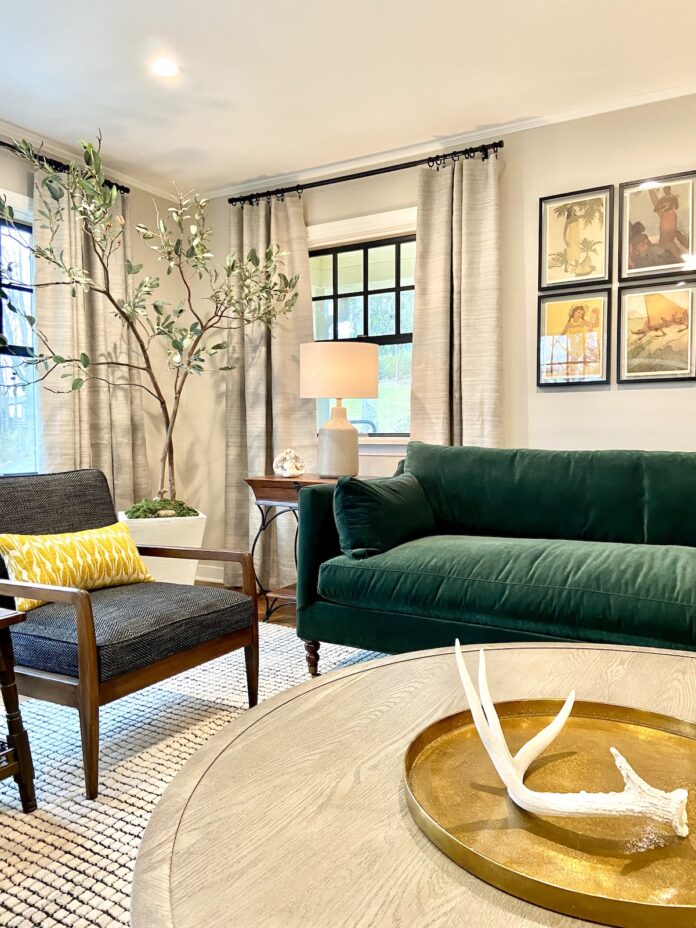
Sewickley-based designer Betsy Wentz embraces a palette of colors, finishes, and materials that could be described as a well-modulated kaleidoscope. Her new book, Design Happy, tells the whole tale.

Betsy Wentz's Home

Antidepressant Color

Betsy Wentz Kitchen

One of interior designer Betsy Wentz’s mantras is “if you love something, you should go with it. If you love it now, you’re going to love it later.” What she herself loved was a bright orange-and-white-tiled backsplash in the kitchen (it was a starting point for the home’s design scheme). “People ask if I won’t tire of it, but it’s been 10 years and I still love it.”

Author of the new book Design Happy, Wentz is known for her exuberant use of color and her ability to mix patterns (and much more, of course). The book, a collection of 12 recent projects, offers practical tips for decorating — whether you can afford a designer or not. “It taught me so much about my process. It ultimately made me a better designer.”

Betsy Wentz Kitchen

Wentz lives with her husband, Chris, and their four children, in a modified 1970s home, which she originally spotted while out jogging one day. She especially loved the setting, which included a series of old stone walls, onto which she later added. They expanded the original footprint of the house by adding what is now a glass-enclosed dining area, a mudroom, and the primary suite.

The home is a three-dimensional cure for Pittsburgh’s notoriously gloomy weather. As much as she loves her outdoor spaces, the family only gets to really enjoy them for three or four months of the year. “It’s really important to make the inside of the home what you want it to be, because that’s where you’re going to be spending your time.” She wanted a cheerful home that was livable with the kids, a place that was happy and where people wanted to be.

Make it Casual

Betsy Wentz Breakfast Nook

Because they are not a no-shoes-in-the-house kind of family, Wentz didn’t feel the need for a formal dining room. Instead, she designed a combination entry, dining space, and mudroom. The floor-to-ceiling glass lets you overlook the property, and the room is set at an angle to the rest of the house, giving it a less rigid vibe. Instead of a series of plain white cabinets, Wentz had fun with the mudroom locker doors and painted each one a different favorite color.

A sort of mirror-image space, a breakfast nook, is placed within a second glass box, this one near the front door that is painted a bright persimmon color, nearly identical to that of the backsplash, in automotive lacquer. The curvy chairs are vintage, covered with a tie-dyed velvet fabric, while the cobalt blue coatrack, from a 1950s World’s Fair, was a gift from neighbor Peggy Ray.

In what used to be the dining room, she made a combination gaming and hangout space with a pool table and custom built-in seating. Here, the kids can have a game while waiting for dinner, or they can read or do homework. The tile floor is both casual and practical—it won’t scuff or scratch the way hardwood could. The living room’s bonsai-patterned wallpaper makes an unexpected backdrop for a vintage rosewood console. “When you layer in vintage pieces the way that we do–including vintage rugs–it’s a little more curated and editorial.”

Betsy Wentz Game Room

A Little More Neutral

Upstairs, the children’s bedrooms surround another hangout space where the kids play Xbox, read, or watch movies. The artwork over the stairs was actually something she saw and fell in love with years ago. It turned out to be a painted bed sheet she spotted in the window of a shop. She bought it for $100 and had it stretched on two-by-fours. In her daughter’s bedroom, she employed a favorite technique, putting cork on the wall and covering it with sparkly paper that doesn’t show pinholes. Her daughter can put up favorite artwork, swimming and soccer medals, and swap them out whenever she wants.

In the primary suite, the palette reads much more neutral, the desired effect being one of relaxation, a place that serves as a retreat. There’s plenty of glass to take in the landscape, but strategically placed walls stop it from being too bright in the morning.

Betsy Wentz Hangout Room

Betsy Wentz Bedroom

Design Happy

Throughout the space, color and pattern is layered in the form of textiles and furnishings, of course, but also with (mostly) vintage rugs, something of an obsession for Betsy Wentz. (She says she picks up new ones every time she visits New York, and has an extremely large collection.) So, does the think it all can go too far? “At some point you have to say, ‘This is too much.’” She likens it to getting dressed—you don’t put on every color and pattern you have in the closet. Something needs to be the pair of blue jeans, the khakis, or the white t-shirt. “That’s how we do it with the rooms. Something has to anchor it. Something has to be the thread. And then you can lay on all this pattern. But at the end of the day, you have to have some relief or else it just looks like a circus. It’s a tricky dance but we get it done.”

Sources

Pool Table: Custom from Pool Table Portfolio, NY
Pool Room Bench: Custom
Various Wallpapers: Elitis
Red Square Glass Pendant: Urban Electric
Fixture Over Pool Table: Agnes Chandelier from Lindsey Adelman
Living Room Pendants: Buba from Viso
Rug, Husband’s Study: ABC Carpet
Rug, Upstairs Family Room: Sari Silk Rug, ABC Carpet
Table in Breakfast Nook: Original Saarinen
Armless Chairs Flanking Breakfast Nook: Vintage, Recovered in Tie-Dye Fabric

Story by Stephen Treffinger / Photography by Carmel Brantley

Subscribe to TABLE Magazine’s print edition.
A New Chapter: Pittsburgh Chefs to Open New Restaurant, Lilith

0
Pittsburgh chefs Jamilka Borges and Dianne DeStefano stand under a tent serving food ahead of the opening of their new restaurant. Lilith Pittsburgh

Pittsburgh chefs Jamilka Borges and Dianne DeStefano are finally branching out on their own.

After over a decade of working together on and off throughout the Pittsburgh food industry — including stints at Bar Marco, The Independent Brewing Company, Lorelei, and Hidden Harbor — the two women are set to open coastal cuisine restaurant Lilith the second week of September in the former Cafe Zinho space in Shadyside.

“We want to be able to control the food, the ambiance, and every aspect of the restaurant,” Borges explains to TABLE Magazine, “something that, working for other people, we’ve never been able to do.”

The (Wo)Man, The Myth, The Legend

According to folklore, Lilith was Adam’s first wife. Believing she was created equal to the famous first male of Genesis, Lilith did not want to be subservient to him. Adam disagreed with this belief, so Lilith decided to leave the Garden of Eden. After Lilith’s departure, God created Eve from Adam’s rib, with the implication that Eve was less than her husband.

“Some people believe that [Lilith] was in the original text of the Bible and later taken out,” DeStefano says. “Whatever you decide to believe, we find it to be inspiring. We’ve worked a lot for male owners and chefs in our career, and Lilith is the OG badass female.”

Lilith, Reincarnated

Borges and DeStefano’s restaurant will feature a menu of bold food options inspired by the pair’s Puerto Rican and Sicilian backgrounds, respectively. Hospitality, another tradition they draw from their families, drives how Borges and DeStefano’s vision of how to serve guests. Their intention is to bring back pre-COVID restaurant service.

“So no QR codes, more detailed service, more relaxing experience,” DeStefano says. “Something got lost over COVID. So much of dining now is about efficiency, getting in and out. We don’t want that; we want people to feel like they’re being treated. We believe in hospitality as an art form.”

With a kitchen staff of five women and one guy — a rarity in the restaurant world — local ingredients will drive a seasonally changing menu. And DeStefano’s longstanding pastry chef experience means guests can expect an excellent pastry and bread selection.

We’ve done a lot for the Pittsburgh food industry over the years, and we should take pride in that,” Borges says. “Women are usually programmed to be more shy about things. We are looking to utilize the space as a way to pay it forward to the next generation of female chefs and cooks.”

Pork Dumplings with Edible Flowers

0
An aerial view of Pork Dumplings with Edible Flowers on a white plate. Blue chopsticks sit to the right side of the plate. Edible Flowers sit around the plate.

Botanical flavors are blooming this summer, and savory dishes are no exception. Learn how to turn basic pork dumplings into an upscale delicacy with this recipe’s special ingredient, edible flowers. 

What Are Edible Flowers?

Edible flowers are a popular ingredient in Asian cuisine, dating all the way back to the use of Chrysanthemums in 500 B.C. China. These gorgeous botanicals add vibrant color to your meal, plus each type of flower carries a different taste and health benefit

In this recipe, nasturtiums make a perfect companion to the savory pork with a peppery bite that resembles a watercress or radish. However, you can switch up nasturtiums for other flowers in Asian cuisine, such as chrysanthemums, that will add a sweet or bitter flavor to the dumplings depending on what part of the plant you use. 

Edible flowers can be eaten directly with the dumplings, although some flowers may require additional preparation beforehand.

These homemade pork dumplings are just like your favorite restaurants’ but include a beautiful, edible flower surprise. With a spicy, floral bite, you’ll be sure to impress your friends or loved ones with a restaurant-quality meal. 

Print

clock clock iconcutlery cutlery iconflag flag iconfolder folder iconinstagram instagram iconpinterest pinterest iconfacebook facebook iconprint print iconsquares squares iconheart heart iconheart solid heart solid icon
An aerial view of Pork Dumplings with Edible Flowers on a white plate. Blue chopsticks sit to the right side of the plate. Edible Flowers sit around the plate.

Pork Dumplings with Edible Flowers


  • Author: Rafe Vencio

Description

Not only is this dish stunning in presentation but the edible flowers put the flavor over the top.


Ingredients

Scale
  • 1 lb ground pork
  • 1 tbsp five-spice powder
  • ½ cup hoisin sauce
  • 1 large egg, beaten
  • 1 cup fresh edible flowers (Nasturtiums works well with this recipe)
  • Gyoza dumpling wrappers
  • Dipping sauce of your choice


Instructions

  1. Combine all the filling ingredients and mix until combined.
  2. Place about a tablespoon of filling on each wrapper and press the edges to seal. 
  3. Cook in the steamer for about 8-10 minutes or in a shallow skillet with a lid with a little water to help steam the dumpling. 
  4. Serve with dipping sauce of your choice.

Recipe and Styling by Rafe Vencio
Photography by Dave Bryce
Story by Kylie Thomas

Subscribe to TABLE Magazine’s print edition.
Celebrating Culture: What’s Next in Pittsburgh’s Cultural Sector?

0

An arts-and-culture roundtable opened the doors to understanding what’s working, what’s not, and what’s next in Pittsburgh’s cultural sector.

On a recent afternoon, TABLE Magazine staff members gathered around a long, greenery-adorned table with leaders of Pittsburgh’s arts and culture scene. Dialogue flowed as they sipped mocktails and tucked into lunchtime creations by Chef Kevin Hermann.

Editor-in-Chief Keith Recker opened up the conversation by expressing that we, as readers and consumers, want to learn how to savor this city’s culture not only as the “dessert” of life here — but as the “main course.” He set the stage for hearing how all of these institutions are faring as we emerge from the pandemic, capturing what’s needed next and learning ways we can all offer support.

A lively, two-hour conversation ensued on how to make the arts accessible and sustainable for each entity’s audience—and the collective community, too. The several newcomers of the group shared a similar first impression: Pittsburgh is an unusually collaborative city, with frequent and generous exchanges and mutually supportive actions. This rare trait certainly is not something to take for granted.

Chef Kevin Hermann whips up lunchtime creations.

A Collaborative Spirit

The conversation began with what’s working in this resilient town full of vibrant personalities. Christopher Hahn, who’s been here 23 years, praised how Pittsburgh, “against all odds, seems to have such a depth of variety of the arts and culture.” This surprises those who come in from outside (initially even himself, he admitted).

He commended the industry’s ability to cross-fertilize, have conversations, and act as a collaborative. Leaders frequently show up at one another’s performances to show support. “The general public is as unaware of the specialness of this amazing tapestry as people from outside are,” he said.

Patrick Moore observed how Pittsburghers’ fervent hometown pride can be a double-edged sword. While folks seem to recognize their city’s abundant cultural scene, most don’t make it a regular part of life. A “next week” attendance mentality often wins out, with many saving cultural outings only for special occasions or out-of-town guests. “It’s not always enough to just be proud of something,” he says. “You have to actually participate in it.”

From left to right: Adam W. McKinney and Christopher Hahn. Joseph Hall, Patrick Moore, Corinne Whiting, and A. Orlando Watson.

Pandemic Recovery

Most agreed that the city’s mutual support system has been incredibly helpful in getting through COVID and its lingering economic implications. Concerns about perceived safety downtown have proven a challenge, too. Thankfully, many feel encouraged by constructive steps being taken by Mayor Ed Gainey and new Police Chief Larry Scirotto. Kendra Ingram, who arrived earlier this year, has already seen progress in the city’s response to safety as well as caring for folks in crisis (whether dealing with addiction or mental health issues).

Melia Tourangeau admitted that last fall was a precarious time for the Cultural District, since so many workers no longer commute to offices. This means the public must make an active choice to mobilize toward city activities. While Friday used to be the symphony’s best attendance day, Sunday matinees now have the best showing. Yet Tourangeau remains hopeful. PSO has seen a 200% subscription increase for next year.

Mocktails: a fun beverage to sip while keeping the mind clear.

A Rising Tide

Garfield Lemonius sees a renewed ease in collaborating with others, too. Perhaps, he suggested, this is since folks were isolated throughout the pandemic, and now crave interaction. Similarly, Erin Perry praised the imaginations that surfaced during the pandemic to keep the arts in motion, like the Hotline Ring — a virtual fundraiser (held in both 2020 and 2021) involving seven organizations. Since then, many participants have maintained relationships, revealing the possibilities that emerge when like-minded people unite.

“The things that we were able to do blow my mind,” she said, “We can literally create what we want.” In deciding what experiences we’re all interested in curating, she added, we can transform people’s lives. This happens on a personal level — and then has a ripple effect out into the world.

From left to right: Joseph Hall, Erin Perry, Keith Recker, and Patrick Moore.

Perry, whose Homewood-based organization focuses on arts of the African diaspora, expressed great gratitude to join the discussion since she knew only one person sitting at the table prior to the session. While focusing on the saying, “The rising tide lifts all boats,” she noted how entities like hers often work in a bubble. This can be exhilarating, but means they can only grow so much. “The notion of collaboration for me is something that is vital,” she said. “It’s vital to our community.”

She noted the importance of letting folks know that while things are happening downtown, things are also happening in neighborhoods like Homewood, where her organization acts as a community anchor. “It brings a vitality and it brings a vibrance that otherwise we’d just be seeing this violence and decay on a consistent basis,” she said. “But what we’re able to do in community, and as we collaborate with other folks, to say this is the network that exists, this is the ecosystem.” Bringing groups out of isolation enables everyone to have access, so that all communities can thrive.

Dr. Kati Gigler and Garfield Lemonius

Promoting Education and Access

On the education piece, Dr. Kati Gigler spoke about PBT’s focus on getting more arts into the schools and during after-school hours, too. Engagement in the arts needs to be woven into other aspects of life and follow kids home as part of their greater life experience as well. Lemonius also emphasizes that his students must experience art in the community, beyond the campus.

Many talked about the idea of “welcome” — ensuring that the arts are not only special-occasion outings, but something we do as people of Pittsburgh. Much like Gigler was fortunate to do as a youngster here, she wants everyone to be able to say, “I grew up with the arts.”

It’s important to consider the topic of class, and finding a way for the arts to feel inclusive and accessible to all who express interest. Adam McKinney, who’s also new to the Pittsburgh scene, talked about the opportunity to work toward the demystification of the arts, and “to highlight function as much as we do form.” From his industry’s perspective, it’s important to ask, “What can ballet do, other than what ballet is?” He added the importance of “reevaluating why we do what we do, to think about creating action toward function.”

Moore shared that, at The Andy Warhol Museum, they’re increasingly interested in the question: “What is our value proposition to the city?” Not only do they want to train future curators, but they also want to teach skills transferable outside of their own “rather narrow industry.” The aim is to host programs for kids that ensure they don’t have to “be the next Warhol who moves away to New York City” in order to pursue a desired career.

Justin Matase mixes up mocktails.

A Sense of Belonging

Ingram agreed that when defining arts and culture, we can get caught up in the classical canon. She sees the power in “getting out of our own way around what culture is.” Others agreed it’s crucial to create a friendly and non-intimidating environment that welcomes all.

Around the question of opening access to the next generation, it quickly became apparent these folks aren’t stuck in their thinking. Most seem aware that, in order to connect with the next wave, they must examine popular platforms already in use. Joseph Hall pointed out the example of TikTok, where uber-popular dance reels are a clear indication that people consume dance all the time. It’s crucial to ask: “How are we meeting folks where they already are?” he asked. He also spoke about considering what may interest young audiences, so that they can create bridges in ways that are digestible. (The symphony’s Disrupt series, which upends the typical concert experience, was offered as an example.)

Many from this group also want to break down barriers to let people in attendance know they can participate, even with their own voices. In his curtain speeches, Hall likes to tell folks it’s a call-and-response theater, saying, “You can shout, you can sing, you can get up and dance.” He adds, “I think especially for younger audiences, and Black audiences, that’s what we expect.” Saying this aloud offers permission, and lets audience members know they are there as witnesses and participants.

Parmesan-Chive Gnocchi: Spring Peas, Radish, Parmesan, Basil, Olive oil

Encouraging Engagement

Hall sees an opportunity to continue challenging ourselves, especially in how this city defines culture. From his perspective, folks want to engage in experiences beyond the performances; it’s also about the post-drink meal or drink during which they can debrief about what they just watched and felt.

Making people feel a part of the process — and presenting artists on display as “regular people” — feels important too. A. Orlando Watson, an artist who has toured himself, talked about August Wilson Center programming that focuses on increasing engagement, from hosting meet-and-greets and Q&A sessions. He noted the magic that materializes “when you take down the barrier to the artists and allow them to be tangible, real people offstage.” At one time, he pointed out, it was much harder to touch artists. The pandemic created a transition in which followers are really invited to be part of the conversation. “I realize people really want to be included,” he said.

A Whipped Ricotta appetizer: Speckled Caviar, Balsamic, Olive oil

Looking Ahead

Although no one at the table brought up the topic of resources until encouraged by Recker, Tourangeau pointed out that, like most everywhere, their expenses are up and revenue is down. “Philanthropy is critical,” she said. Simply selling tickets isn’t enough.

And all seemed to agree with Hall’s excitement at shaping the narrative of contemporary Pittsburgh, right now. “We’ve told the story of steel and Steelers,” he says. “There’s an opportunity to create the path forward — collectively.”

Roundtable participants also concurred that, in order for this mutual exchange to thrive, the public has a responsibility to remain curious and engaged. In other words: For all of this to work, people have to show up.

Melia Tourangeau

Toward the end of the gathering, Gigler reiterated one simple call to action for readers: “Go. Don’t wait until next season. Take advantage of what you have now.”

In a follow-up email, participants exchanged contact information and expressed gratitude for the opportunity to converse and dream up future collaborations. Through the fresh lens of a Pittsburgh newcomer, Watson shared a heartfelt observation: “Please do not take yesterday’s meeting for granted because it does not happen everywhere — at all. I love the unity and open conversation, which makes me eager to collaborate with all of you!”

Who’s at the Table

Kendra Ingram, CEO
Pittsburgh Cultural Trust

Dr. Kati Gigler, Acting Executive Director
Adam McKinney, Artistic Director
Pittsburgh Ballet Theatre

A. Orlando Watson, Senior Director Programming
August Wilson African American Cultural Center

Christopher Hahn, General Director
Pittsburgh Opera

Erin Perry, Executive Director
Legacy Arts Project

Patrick Moore, Director
The Andy Warhol Museum

Garfield Lemonius, Dean & Artistic Director, COPA Professor
Point Park University

Joseph Hall, Executive Director
Kelly Strayhorn Theater

Melia Tourangeau, President & CEO
Pittsburgh Symphony Orchestra

Justin Matase, Publisher
Keith Recker, Editor-in-Chief
TABLE Magazine

Story by Corinne Whiting / Photography by Laura Petrilla / Food by Chef Kevin Hermann

Subscribe to TABLE Magazine’s print edition.
Easy Sheet Pan Dinners

0
A vibrant and nutritious pan salmon and tomato meal featuring perfectly roasted salmon fillets accompanied by a colorful assortment of ripe tomatoes.

With just a few simple ingredients and a sheet pan, you can have a tasty and satisfying dinner on the table in no time. These dinner recipes require one pan and minimal clean-up — perfect for busy weeknights when you don’t have much time to spend in the kitchen.

Why Make a Sheet Pan Dinner?

Sheet pan dinners are a simple and efficient way to cook a delicious and healthy meal. With just one pan, you can prepare everything from protein to vegetables and even starches, all at once. This not only saves time and energy but also makes cleanup a breeze. Plus, sheet pan dinners are a great way to get creative with flavors and ingredients, as you can mix and match different combinations to suit your taste buds.

Easy Sheet Pan Dinner Recipes

Pan Roasted Shrimp, Clams, Asparagus & Leeks

Roasted Shrimp, Clams, Asparagus and Leeks sheet pan dinners, garnished with lemon wedges. Sheet Pan Roasted Shrimp, Clams, Asparagus and Leeks Recipe

Pan-roasted dinner recipes, just like this, are among our weekday favorites for protein with low-impact compared to beef…and big flavors.

Pork Chops and Peaches

A delicious summer sheet pan dinenrs with seasoned pork chops and peaches, roasted together on a baking sheet.

Try this straightforward recipe for roasted pork chops and sweet peaches topped with a delicious balsamic and orange juice dressing. Just season, roast, and enjoy!

Salmon and Tomatoes

A vibrant and nutritious pan salmon and tomato meal featuring perfectly roasted salmon fillets accompanied by a colorful assortment of ripe tomatoes.

A delicious, no-fuss seafood sheet pan dinner made simple. Your loved ones will have no idea how easy this meal was to prepare.

Beans and Potatoes

An aerial shot of a sheet pan dinners covered in green beans and potatoes.

A sheet pan dinner side dish: an easy-to-bake beans and potato recipe perfect for a hectic Monday or a casual Friday evening.

Sausage and Peppers

An aerial view of a sheet pan filled with Sausage and red, orange, and yellow peppers.

Make a healthy meal in a hurry with this savory sausage and pepper recipe. Making a nourishing dinner for your family doesn’t have to be complicated.

Loving these meal ideas? Check out more of our easy dinner recipes.

Story by Jordan Snowden

A footer photo with a black background and subscribe info and button

Subscribe to TABLE Magazine‘s print edition.

Salmon with Roasted Peach and Yellow Tomato Sauce

0
Three portions of salmon with a peach and yellow tomato sauce on a green plate with a white background.

In season vegetables and fruit make a bright and summery sauce to pair with grilled salmon — a great source of healthy fats — during warm weather days. Make it a nutritious meal by serving our Roasted Potato Salad alongside this fish dish.

The Healthy Mind Behind This Peachy Salmon

TABLE Magazine friend and collaborator Kristen Palmer created this recipe with healthy, supportive ingredients in mind. A graduate of New York’s Natural Gourmet Institute, where she focused on nutrition and health along with formal culinary techniques, Kristen has worked as a private chef for the Pittsburgh Ballet. Her recipes center on nutrient-dense, body-beneficial foods. 

“My philosophy towards food is that you should get the most flavor and nutrients out of the calories you’re taking,” Kristen says, “focusing on whole grains, vegetables, lean proteins… foods that pack a punch so that you’re being efficient with your eating.”

Print
clock clock iconcutlery cutlery iconflag flag iconfolder folder iconinstagram instagram iconpinterest pinterest iconfacebook facebook iconprint print iconsquares squares iconheart heart iconheart solid heart solid icon
Three portions of salmon with a peach and yellow tomato sauce on a green plate with a white background.

Salmon with Roasted Peach and Yellow Tomato Sauce


  • Author: Kristen Palmer

Description

Tender, fall apart salmon and a tangy peach salsa keep your dinner menu delicious and nutritious.


Ingredients

Scale
  • 16 oz salmon
  • 4 small ripe peaches
  • 1 medium yellow tomato
  • 3 green onions
  • 2 tbsp olive oil
  • 1/4 tsp salt
  • 1/4 cup honey
  • 1/2 jalapeno
  • 1 tbsp olive oil
  • 2 tsp white wine vinegar
  • 1 tsp salt
  • Needles of 3 rosemary sprigs
  • 1/2 cup water


Instructions

  1. Heat oven to 400 degrees.
  2. Prepare a baking sheet with foil and spray with cooking spray.
  3. Cut tomato into quarters, halve and remove pits from 3 peaches, remove tops and ends of green onions.
  4. Toss in bowl with olive oil and salt. Place on baking sheet and bake for 25 minutes.
  5. Combine honey water, along with roasted tomato, peaches, and green onions in blender. Blend until smooth. Strain mixture over a bowl.
  6. Reserving some sauce for serving, place the rest of sauce in a shallow dish or pan.
  7. Portion salmon and season with salt, allow to sit for a moment.
  8. Place salmon, flesh down in shallow dish with sauce. Let salmon marinate for at least 1 hour.
  9. Prepare grill or oven to broil. Grill or broil salmon until desired temperature. Serve with reserved sauce.

Recipe by Kristen Palmer
Styling by Anna Franklin
Photography by Dave Bryce

Subscribe to TABLE Magazine’s print edition.

Roasted Potato Salad

0
Three individual blue bowls above a green serving bowl filled with a vibrant potato salad of yellow, green, red, and purple ingredient

The average summery potato picnic salad gets a nutritional twist in this Roasted Potato Salad recipe. It uses a vinegar-based dressing instead of the usual mayonnaise — making the salad lower in sugar and fat — and is loaded with good-for-you veggies like celery, arugula, and red onion. Together, they give a burst of flavor while providing fiber, magnesium, vitamin C, and more nourishing nutrients through arugula, radishes. There’s a dollop of agave for some extra flavor. All in all, this is a wonderful revisitation of a perennial favorite.

About This Healthy Roasted Potato Salad

TABLE Magazine friend and collaborator Kristen Palmer created this recipe with healthy, supportive ingredients in mind. A graduate of New York’s Natural Gourmet Institute, where she focused on nutrition and health along with formal culinary techniques, Kristen has worked as a private chef for the Pittsburgh Ballet. In her experiences, her recipes center on nutrient-dense, body-beneficial foods. 

“My philosophy towards food is that you should get the most flavor and nutrients out of the calories you’re taking,” Kristen says, “focusing on whole grains, vegetables, lean proteins… foods that pack a punch so that you’re being efficient with your eating.”

Print

clock clock iconcutlery cutlery iconflag flag iconfolder folder iconinstagram instagram iconpinterest pinterest iconfacebook facebook iconprint print iconsquares squares iconheart heart iconheart solid heart solid icon
Three individual blue bowls above a green serving bowl filled with a vibrant potato salad of yellow, green, red, and purple ingredient

Roasted Potato Salad


  • Author: Kristen Palmer

Description

A better take on potato salad.


Ingredients

Scale

For the salad:

  • 2 lbs. potatoes
  • 1 cup sliced radish
  • 34 stalks celery, sliced on the diagonal
  • 1 small red onion, diced
  • 1/3 cup chopped fresh dill
  • 2 handfuls of arugula

For the dressing:

  • 1/4 cup white balsamic vinegar
  • 1 tablespoon lemon juice
  • 1 tablespoon olive oil
  • 1 tsp agave
  • 1/2 tsp Dijon mustard
  • 2 cloves of garlic
  • 1/2 tsp salt
  • Fresh pepper


Instructions

  1. Heat oven to 375 degrees.
  2. Fill a large bowl with cool water. Cut potatoes into 1”cubes and place in cool water.
  3. While potatoes soak, combine ingredients for dressing in a blender or bowl.  Blend or whisk to combine and set aside.
  4. Drain potatoes and set aside to dry. While potatoes dry, prep radish, celery, onion, and dill, and place in a bowl.
  5. Line two baking sheets, with foil and spray with cooking spray.
  6. Put potatoes in a large bowl, add 2 tablespoons of olive oil and 1 tsp of salt, and toss to coat potatoes.  Spread potatoes on baking sheets, and place potatoes in oven.
  7. Bake for 45-50 minutes, until potatoes are tender, tossing potatoes and turning pans 1/2 way through.
  8. Cool potatoes slightly, then place in a large bowl and add dressing, tossing to combine.
  9. When potatoes are cool, add prepared vegetables and arugula.
  10. Toss and serve.

Recipe by Kristen Palmer
Styling by Anna Franklin
Photography by Dave Bryce

Subscribe to TABLE Magazine‘s print edition.

Blueberry Whiskey Sour

0
Three dark blue-purple cocktails in rocks glasses garnished with lemon twists. Blueberry Whiskey Sour Recipe
Photo by Lauren Volo

What does blue taste like? Calming, but confident, able to whisk you away to a blue sea. To savor a bit of blue’s wonderful qualities, try The Taste Curators‘ Blueberry Whiskey Sour recipe.

The impact of color is so profound that it’s been said that it influences 85% of our purchasing decisions. When you really think about it, this is as true when picking out the freshest bunch of basil as it is when choosing a new hat or new wallpaper. If we open ourselves up to it and acknowledge its power, color makes for impactful experiences.

Blueberry Whiskey Sour Recipe

INGREDIENTS

FOR THE BLUEBERRIES:
1 (3 ½ oz) bag Mariani Family dried wild blueberries
3/4 cup water
1 (1-inch) piece fresh ginger, peeled and sliced
3 strips lemon peel
Pinch of kosher salt
2 tbsp freshly squeezed lemon juice

FOR THE COCKTAIL:
1 1/2 oz blueberry base
2 oz bourbon whiskey
3 dashes Angostura bitters
1 lemon twist, optional

INSTRUCTIONS

  1. In a small saucepan, combine the dried blueberries, water, ginger, lemon peel, and salt. Place over medium-high heat and bring to a simmer. Reduce the heat to medium-low and simmer until the blueberries are very soft and the liquid is reduced slightly, about 4 minutes. Allow the mixture to infuse and cool in the pan, about 20 minutes. Remove and discard the ginger and lemon peel.
  2. Transfer the contents of the pan along with the lemon juice to the pitcher of a high-speed blender or smoothie blender. Blend on high, scraping down the sides as needed, for about 1 minute or until very smooth. The blueberry base can be stored in an airtight container in the refrigerator for up to a week.
  3. To a cocktail shaker filled with ice add the blueberry base, bourbon, and bitters. Place the lid on tight and shake until the outside of the shaker is frosted, about 30 seconds. Strain into a coupe glass or over a single large rock in a rocks glass. Garnish with a lemon twist if desired.

Story and Styling by The Taste Curators / Recipe courtesy of Lish Steiling, The Taste Curators / Photography by Lauren Volo

Subscribe to TABLE Magazine’s print edition.

Nut and Dairy Free Pesto and Summer Vegetables

0
A green plate with red, yellow, green, orange, and purple grilled vegetables garnished with fresh basil and a small white bowl of pesto on the side.

With no included nuts or dairy, this easy, allergy-friendly pesto recipe is perfect for vegans and those with nut allergies. It utilizes summer basil for a flavorful dense dressing option that will brighten up grilled or roasted vegetables — a little goes a long way. Use our Nut and Dairy Free Pesto and Summer Vegetables as a side dish, appetizer, in a tapas situation.

TABLE Magazine friend and collaborator Kristen Palmer created this recipe with healthy, supportive ingredients in mind. A graduate of New York’s Natural Gourmet Institute, where she focused on nutrition and health along with formal culinary techniques, Kristen has worked as a private chef for the Pittsburgh Ballet. Her recipes center on nutrient-dense, body-beneficial foods. 

“My philosophy towards food is that you should get the most flavor and nutrients out of the calories you’re taking,” Kristen says, “focusing on whole grains, vegetables, lean proteins… foods that pack a punch so that you’re being efficient with your eating.”

Nut and Dairy Free Pesto and Summer Vegetables

INGREDIENTS

For the Pesto:
1 cup canned chickpeas, drained and rinsed
2 1/2 cups fresh basil leaves
5 tbsp olive oil
2 tbsp lemon juice
1 cloves of garlic
1 tbsp agave
3/4 tsp salt
1/4 tsp nutritional yeast
1-2 tbsp of water to loose

Combine all ingredients in a blender and blend until smooth.

For the Vegetables:
2 zucchini
3 red, yellow, and orange bell peppers
1 red onion

For the Marinade:
1/4 cup olive oil
1/4 cup white wine vinegar
Juice of 1/2 lemon
4 garlic cloves
1/2 tsp salt
Pepper

INSTRUCTIONS

  1. Cut zucchini into 1/2” planks.
  2. Remove the stem and seeds of peppers and cut into quarters.
  3. Cut onion into 1/2” rings.
  4. Combine marinade ingredients in a bowl and whisk to combine.
  5. Pour over prepared vegetables.
  6. Sprinkle with a little salt and allow to sit while you prepare grill or pan for roasting.
  7. Broil or grill until tender and slightly charred. Serve with pesto.

Recipe by Kristen Palmer / Styling by Anna Calabrese / Photography by Dave Bryce

Subscribe to TABLE Magazine’s print edition.
Create a free account, or log in.

Gain access to read this content, plus limited free content.

Yes! I would like to receive new content and updates.

Table Magazine wants to know your location.

TABLE Magazine operates regional sites - Knowing your location helps us route you to the appropriate site for the best experience.