Home Blog Page 163

Studio Lithe Remodels a Classic Pittsburgh Home

0
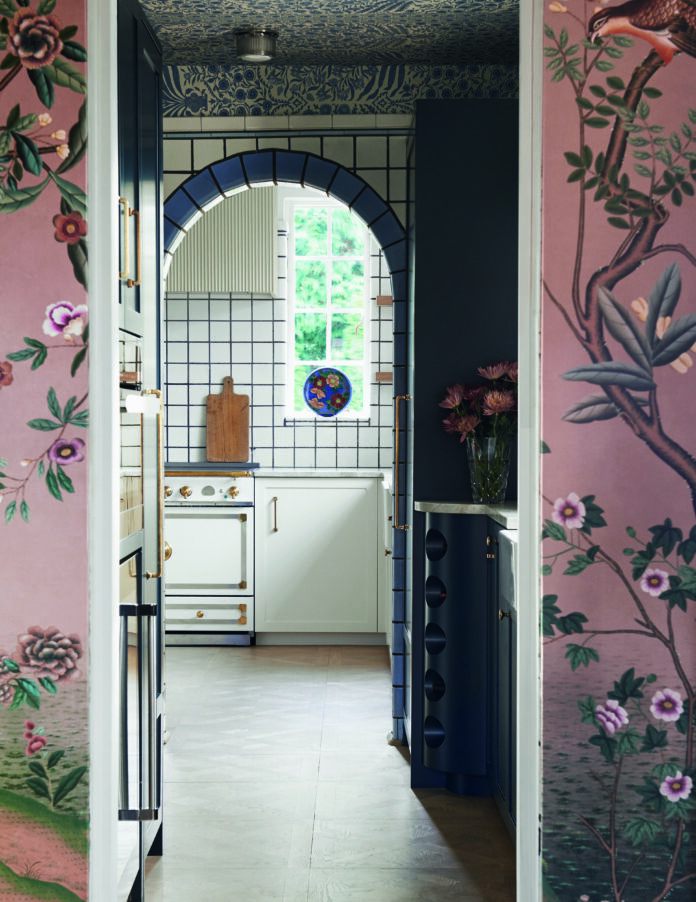
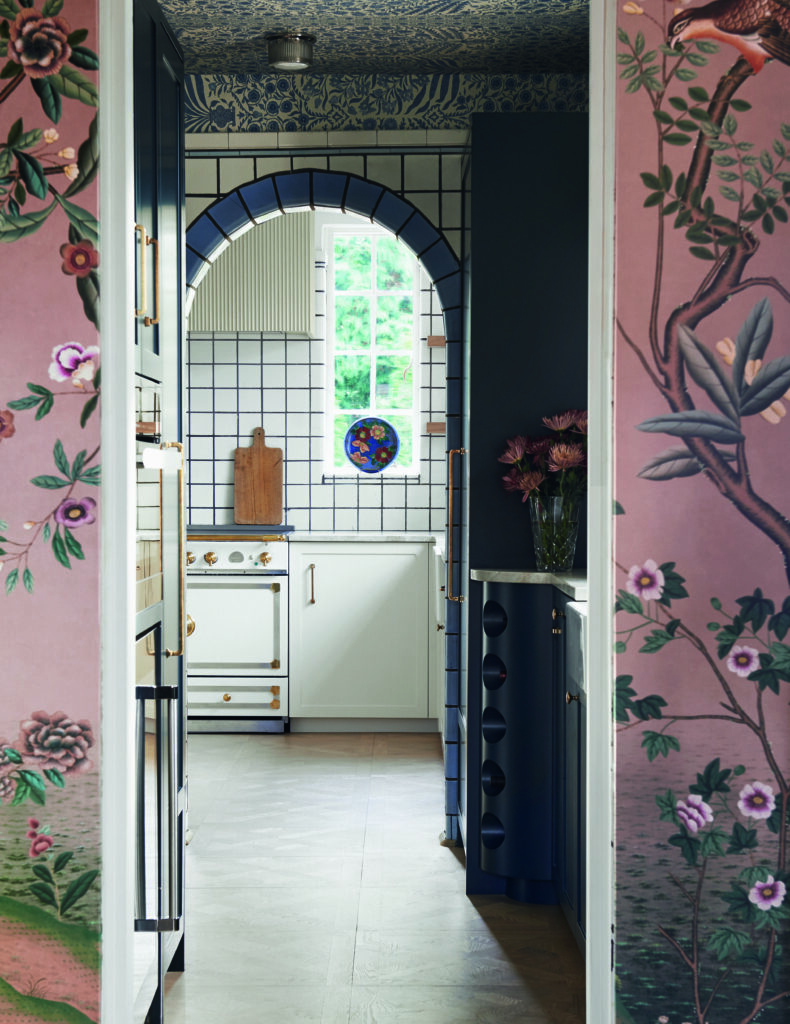
A pink wallpaper entry way leads to a white clean kitchen with white and black tiles.

It’s all about keeping it in the family. The early 1900s house, built by Pittsburgh architect Henry Hornbostel, is the wife’s childhood home. She, her husband, and their three young children moved in when her father decided to downsize. The couple’s situation was the opposite: they were upsizing, and therefore needed furnishings for most of the rooms, as well as to make necessary changes to the building itself. They hired Studio Lithe to take on both the furnishings and the structural modifications.

Modern restaurant dining space with stylish seating and lighting design

Updating a Classic

“It definitely needed some work, but the couple was very excited to update it,” says Alexandra Ribar of Studio Lithe. The bathrooms, in particular, were in need of some love. An interesting facet of the house’s layout is that every bedroom has its own adjacent bathroom. “Pretty wild for the era it was built in,” she says.
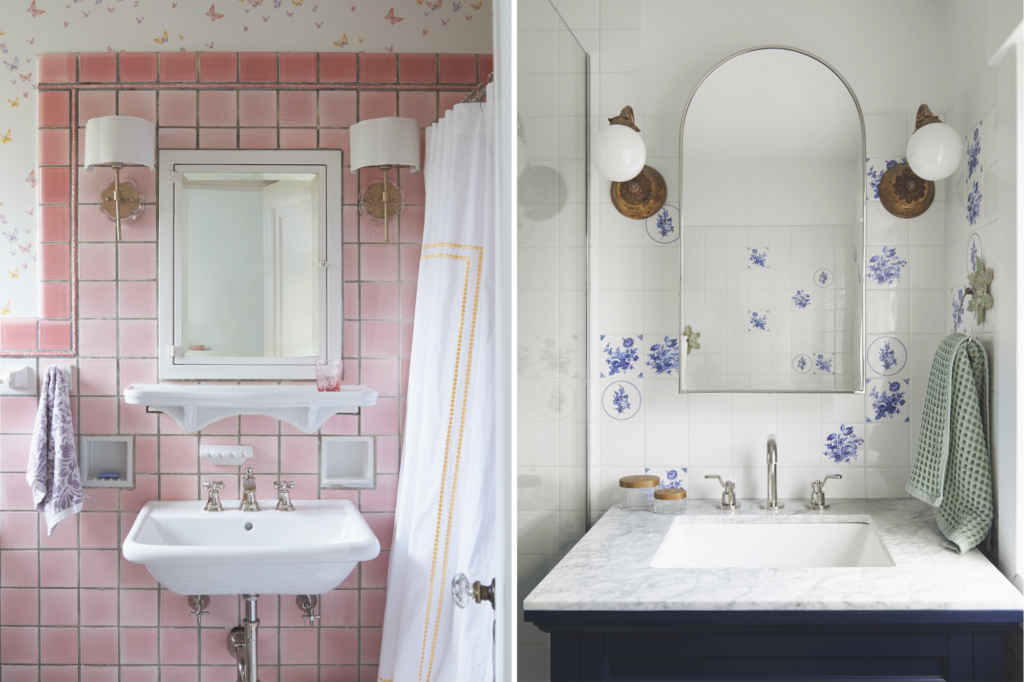
Two images of bathroom sinks side by side with mirrors above the sink. The left side has pink tile while the right has white.

One of the bathrooms was particularly unusual, accessible from a bedroom or the library on the second floor. The rooms sat at different elevations so you would either have to step up or step down to enter. “We ended up closing the entrance from the library so that we could gain more floor space, to have room for a propershower,” says Ribar.
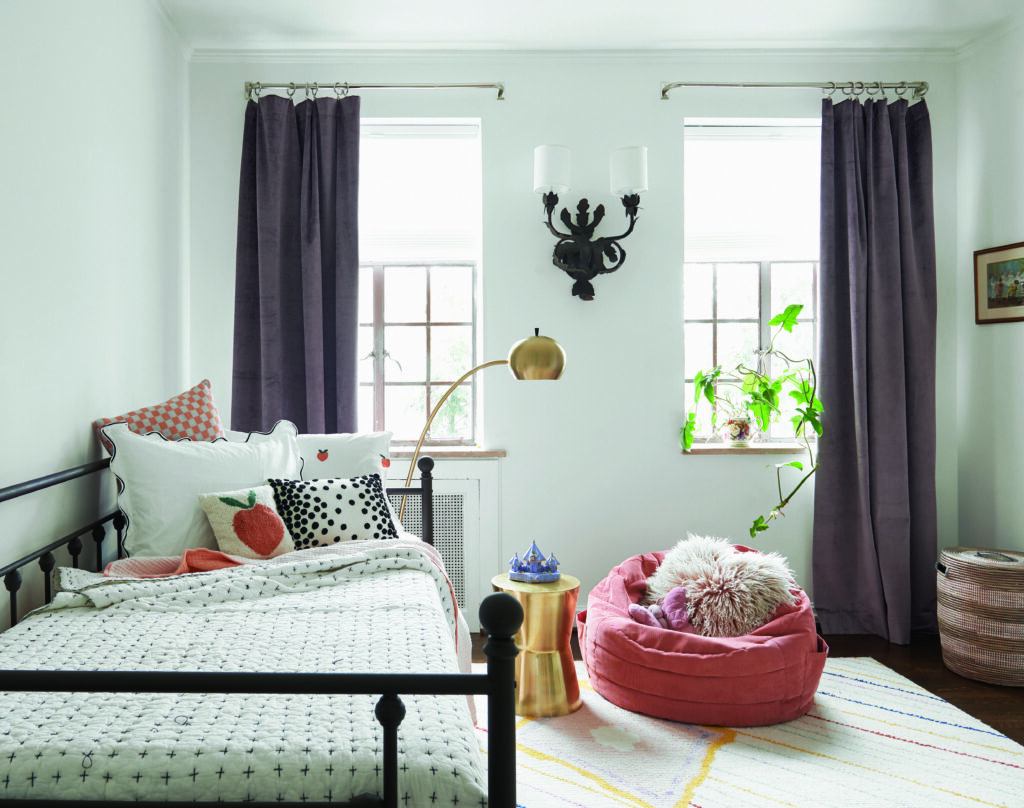
A bedroom with two windows has a daybed in it and pink bean bag chair sitting near by, decorated by Studio Lithe.

A Balance of Styles

Some less extravagant interventions included a pink-tiled bathroom that involved sourcing perfectly-matched tiles to replace cracked ones and updating the fixtures. “We picked plumbing and light fixtures that could go exactly into place so we didn’t have to cut new holes.” The bathroom, used by the daughter, is sophisticated enough that it can grow with her. Her bedroom has furnishings that are age-appropriate for a young girl—but with a little bit of an edge, including a black-frame daybed and black wall sconces. French return drapes help block the light.
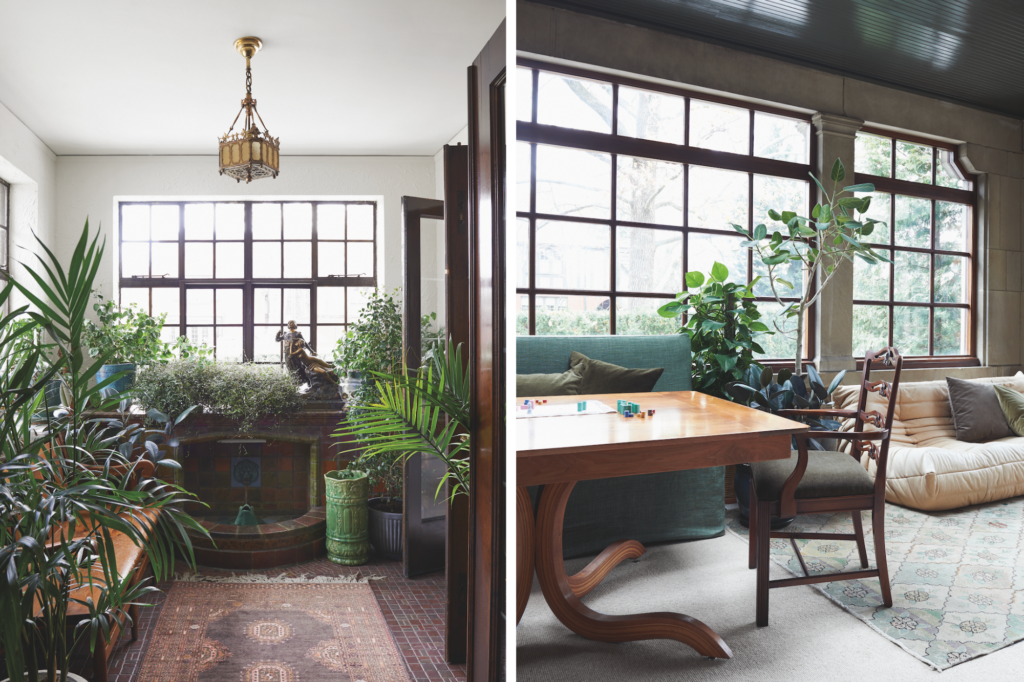
Two photos sit side by side, on the left is a room filled with plants by Studio Lithe while the right photo is an open room with plants and a wooden table with a chair.

Throughout the house, furnishings are a balancing act between antique or vintage and contemporary. The owner’s father is an art collector, so the house came with quite a few historically significant objects, and Ribar didn’t want to create a super-modern house around them. In the second floor landing, for example, a “punk rock, drippy chain chandelier” is the first thing you see when coming up from the marble entry. The rug is new-vintage, a mix of a traditional piece with a nontraditional scale of pattern. “I’d had my eye on it for years. And I finally had somewhere to put it.”
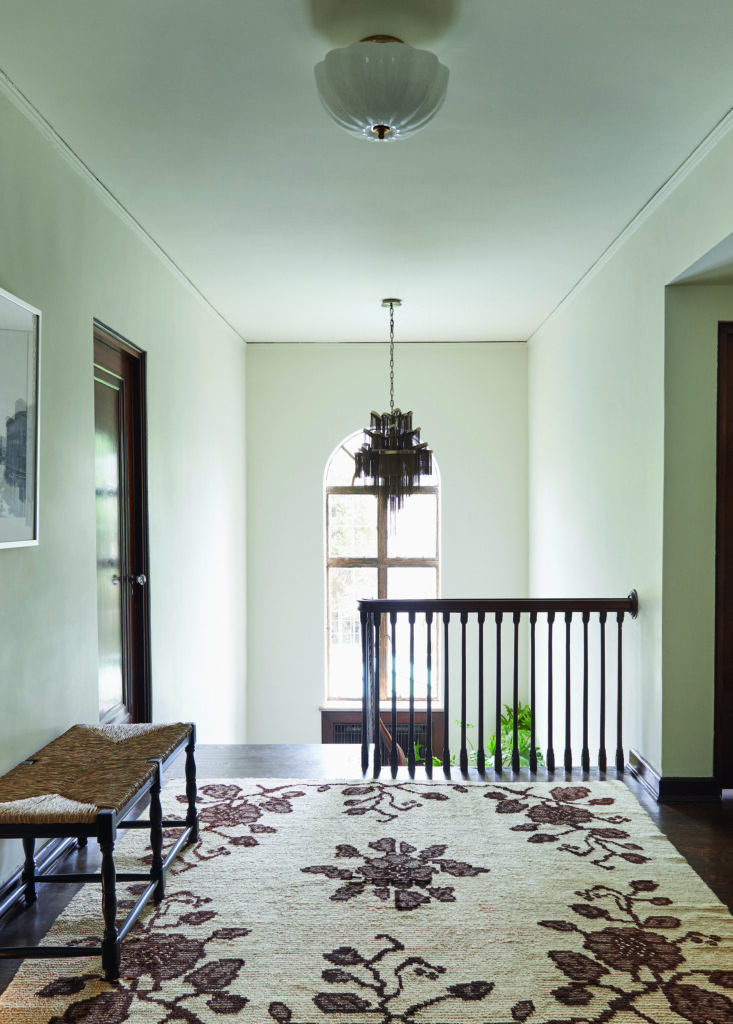
An entry way before bedrooms with a beige carpet with roses on it and a chandelier by Studio Lithe.

Adding a Bold Touch

For the dining area, the owners love the idea of a mural wall-covering to help create a cozy, dramatic, and dark space. (The paper is from Fromental.) They picked a color from the paper and used it to paint the ceiling, then added a new chandelier. Her father is an avid collector of bronze sculpture, one of which—a lamp in the form of a woman—is placed on a console table, also his.
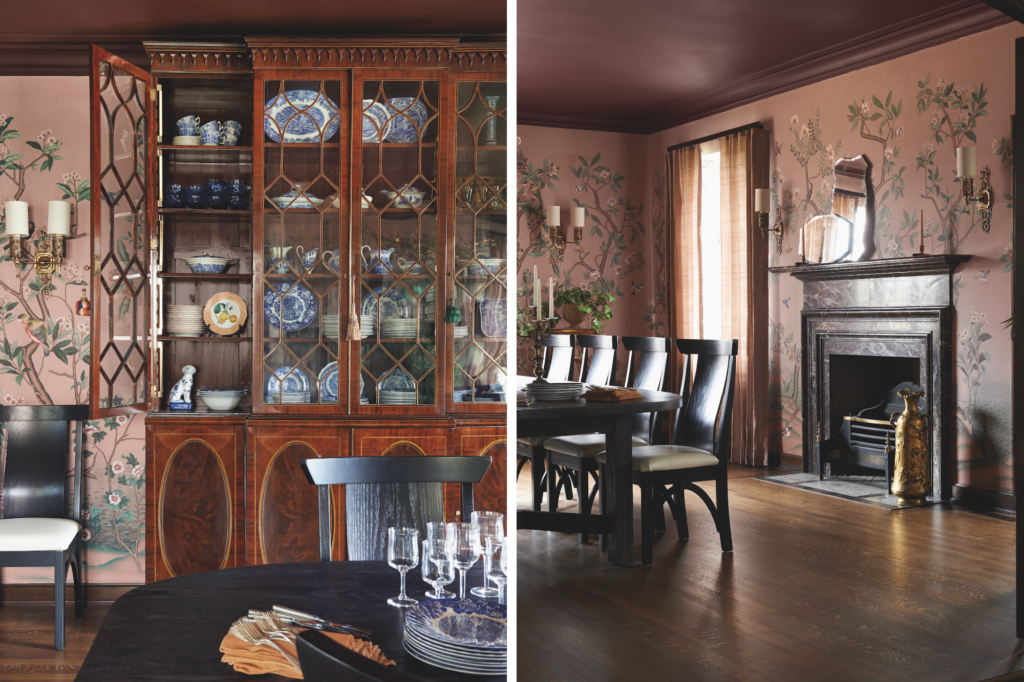
Two photos of a dining room by Studio Lithe sit side by side. On the left is a full china cabinet while on the right are dark wooden chars by a table.
The dining room also features an oxidized oak table made by Bones and All. “It’s a really big room so it was nice to work with them to get the shape we wanted, the detail we wanted.” The enormous breakfront was also from her father, and the blue and white dishware was something the homeowners brought with them. 

Restaurant interior featuring bar area and contemporary décor

Bringing it Back to Family

For the living area, the owners wanted to focus on the baby grand piano, which all of the kids play. The seating area’s settee and chair are intentionally positioned so they connect you to the piano. At the other end, two sofas face one another with an upholstered ottoman in between—plus two lounge chairs—for a comfortable, more adult space. The piece above the mantel is from Stephanie Armbruster, a local Pittsburgh artist who does encaustic painting. “It ended up being the icing on the cake. The surface is polished so in the evening it’s sparkly and has a really nice glow.” The large (36-inch) chandelier is custom, with Murano glass pieces set into a half dome. “We wanted something that had a nice volume and quality to it and that felt special and important. An art moment.”
Elegant dining room with ambient lighting and modern table settings

For the kitchen, the original tile was kept for both aesthetic and practical reasons. “It’s so expensive to tile a space like this and people don’t do it like this today. And the arch is so special.” Ribar played with the period feel but added some contemporary moments. She had a wall busted out and opened up the arch to match the other openings throughout. In keeping with the overall scheme, the past and present are designed to combine seamlessly. “You now have a nice view into the living room. There’s an openness, but it doesn’t feel inappropriate for the house.” 

Story by Stephen Treffinger / Photography by Studio Lithe

A footer photo with a black background and subscribe info and button

Subscribe to TABLE Magazine‘s print edition.
Mezcal Spring Piña Sur

0
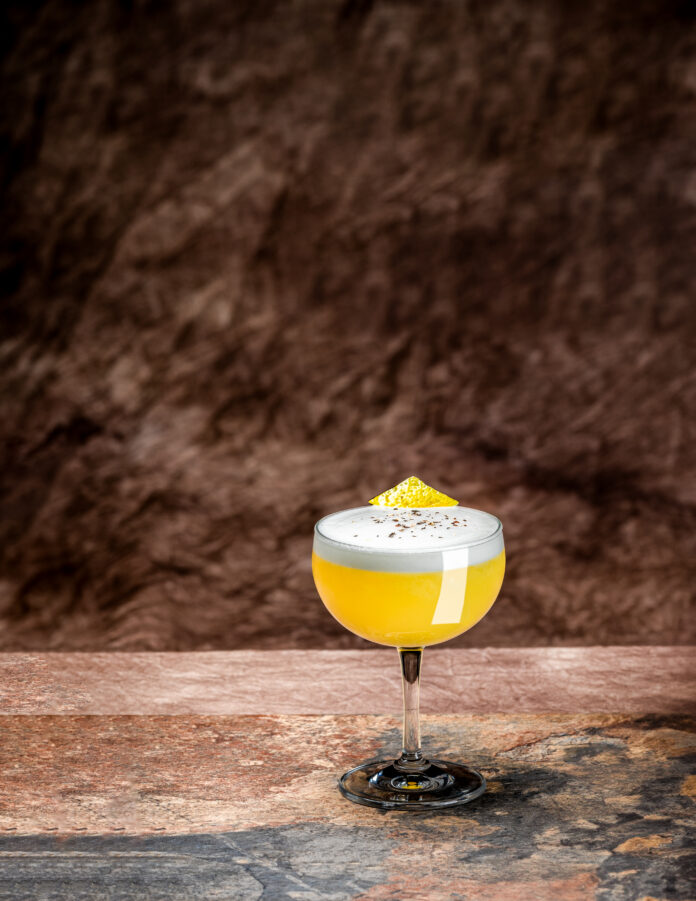
A glass of Mezcal Spring Piña Sur with foam on top, garnished with lemon peel sits on a table against a brown background.

This Mezcal Spring Piña Sur is sunshine in a glass thanks to an artful blend of pineapple and lemon juice with mezcal, and agave syrup for a touch of sweetness. Santa Fe bartender at The Compound’s Alex Aguayo serves it so there is a fluffy cloud of frothy egg white floating at the top, which made us think of clouds soaring high in the skies. 

What is the Best Mezcal to Use in Your Mezcal Spring Piña Sur?

There are many different kinds of mezcal, just as there are many different kinds of tequila. Each has its own unique flavor profile, and some pair better with pineapple than others. For a pineapple-forward cocktail like this, a smoker mezcal like Casamigos is the optimal choice for the cocktail. The pineapple will complement the fuller body of the cocktail. 

Print
clock clock iconcutlery cutlery iconflag flag iconfolder folder iconinstagram instagram iconpinterest pinterest iconfacebook facebook iconprint print iconsquares squares iconheart heart iconheart solid heart solid icon
A glass of Mezcal Spring Piña Sur with foam on top, garnished with lemon peel sits on a table against a brown background.

Mezcal Spring Piña Sur


  • Author: Alex Aguayo

Description

A delicious mezcal cocktail!


Ingredients

Scale
  • 2 ½ oz mezcal
  • ½ oz pineapple juice
  • ¾ oz lemon juice
  • ¾ oz agave syrup
  • 1 egg white
  • Lemon peel


Instructions

  1. Combine all ingredients in a shaker with ice, then strain into a coupe glass.
  2. Garnish Mezcal Spring Piña Sur with a lemon peel.

Recipe by Alex Aguayo of The Compound
 Styling by Keith Recker
Photography by Daniel Quat

Subscribe to TABLE Magazine‘s print edition.
Apple Wood-Smoked Manhattan

0
A glass filled with smoke sits beside a glass filled with an Apple Wood-Smoked Manhattan inside topped with an orange.

The Apple Wood-Smoked Manhattan, a riff on the traditional Manhattan, is a classic all year round. The wafer-thin slice of apple–coated in sugar with a whiff of cinnamon, then brûléed–isn’t just a garnish but a star of the show. Think of it as The Compound mixologist Alex Aguayo’s grown-up version of a candy apple. Add some puffs of apple woodsmoke and you’ve got a drink that is truly smoking.

Print

clock clock iconcutlery cutlery iconflag flag iconfolder folder iconinstagram instagram iconpinterest pinterest iconfacebook facebook iconprint print iconsquares squares iconheart heart iconheart solid heart solid icon
A short cocktail glass holds a red cocktail with an orange garnish next to a milk glass of smoke.

Apple Wood-Smoked Manhattan


  • Author: Alex Aguayo of The Compound

Description

Sit back and sip on the flavors of fall year-round.


Ingredients

Scale
  • 2 ½ oz Kentucky straight bourbon whiskey
  • 1 oz sweet vermouth
  • 3 dashes angostura bitters
  • Thin slice of brûléed candied apple
  • Apple wood chips


Instructions

  1. Combine all ingredients in a glass carafe.
  2. Infuse the drink with apple woodsmoke for 30 seconds then pour into a rocks glass with a large ice cube.
  3. Garnish the Apple Wood-Smoked Manhattan slice of brûléed candied apple.

Pair it with a delicious Salty Snack Mix Recipe to compliment those smokey notes.

Recipe by Alex Aguayo of The Compound / Story by Julia Platt Leonard / Styling by Keith Recker / Photography by Daniel Quat

Subscribe to TABLE Magazine‘s print edition.

Exploring the Vault at Museum of International Folk Art

0
Curator Kate Macuen showing rare ceramics in MOIFA vault to visitors
Museum of International Folk Art, IFAF Collection, FA.1970.9.168 / Museum of International Folk Art, A.1992.116.1

Stored and meticulously cared for by a team of curators, over 160,000 objects have a home at the Museum of International Folk Art. Because not every object can be displayed, Director of Collections Kate Macuen took TABLE’s Editor-in-Chief Keith Recker and Contributing Editor Tira Howard into the vault for a day to show us some not-often-seen objects recommended by MOIFA’s curators. 

Why are the objects housed and cared for at MOIFA important?

The museum’s holdings reflect the rich cultural heritage of communities across the globe and constitute the largest collection of international folk art in the world. The core collection donated by museum founder Florence Dibell Bartlett and representing 34 countries has grown to a collection of over 160,000 objects from over 100 countries. Objects in the collection hold tremendous power to generate understanding and build connections between diverse peoples and communities. We partner with artists, specialists, and stakeholders from communities of origin to showcase items from the collection in a respectful way while always seeking to educate, inform, and inspire. – Charlie Lockwood, Executive Director, MOIFA

What is the collection’s staff role in keeping these objects in good condition?

Collection staff play a crucial role in preservation of the objects within a museum’s collection. We think about preservation on multiple levels. It’s not just managing the physical preservation of objects–like how we handle and transport an object, its environmental conditions, or conservation treatments–but it is also how we provide public access, support research and scholarship, and grow source community partnerships. Long-term preservation depends on the shared stewardship of objects and their accessibility for generations to come. – Kate Macuen, Director of Collections, MOIFA

Patamban Jugs

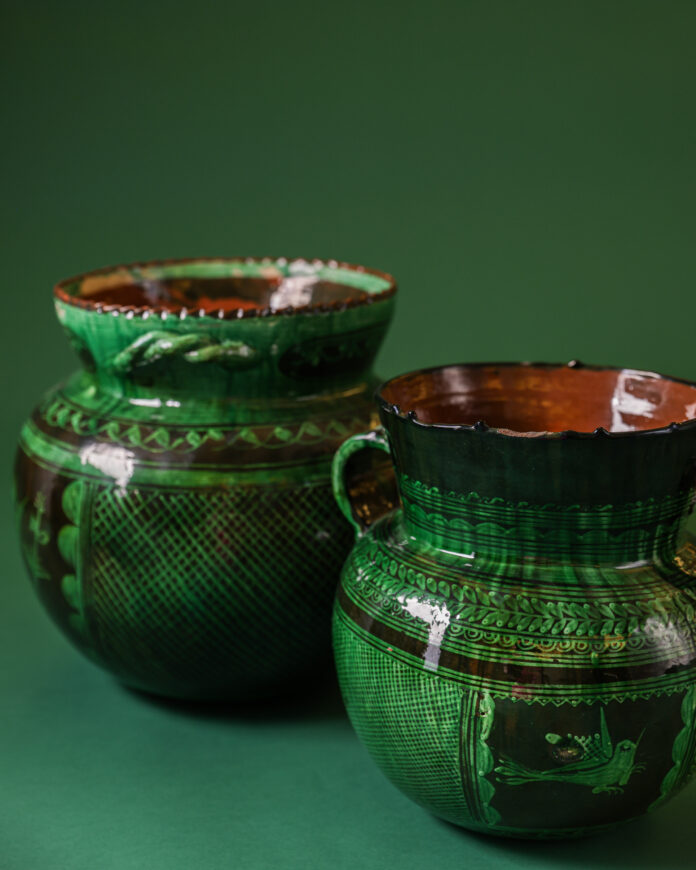
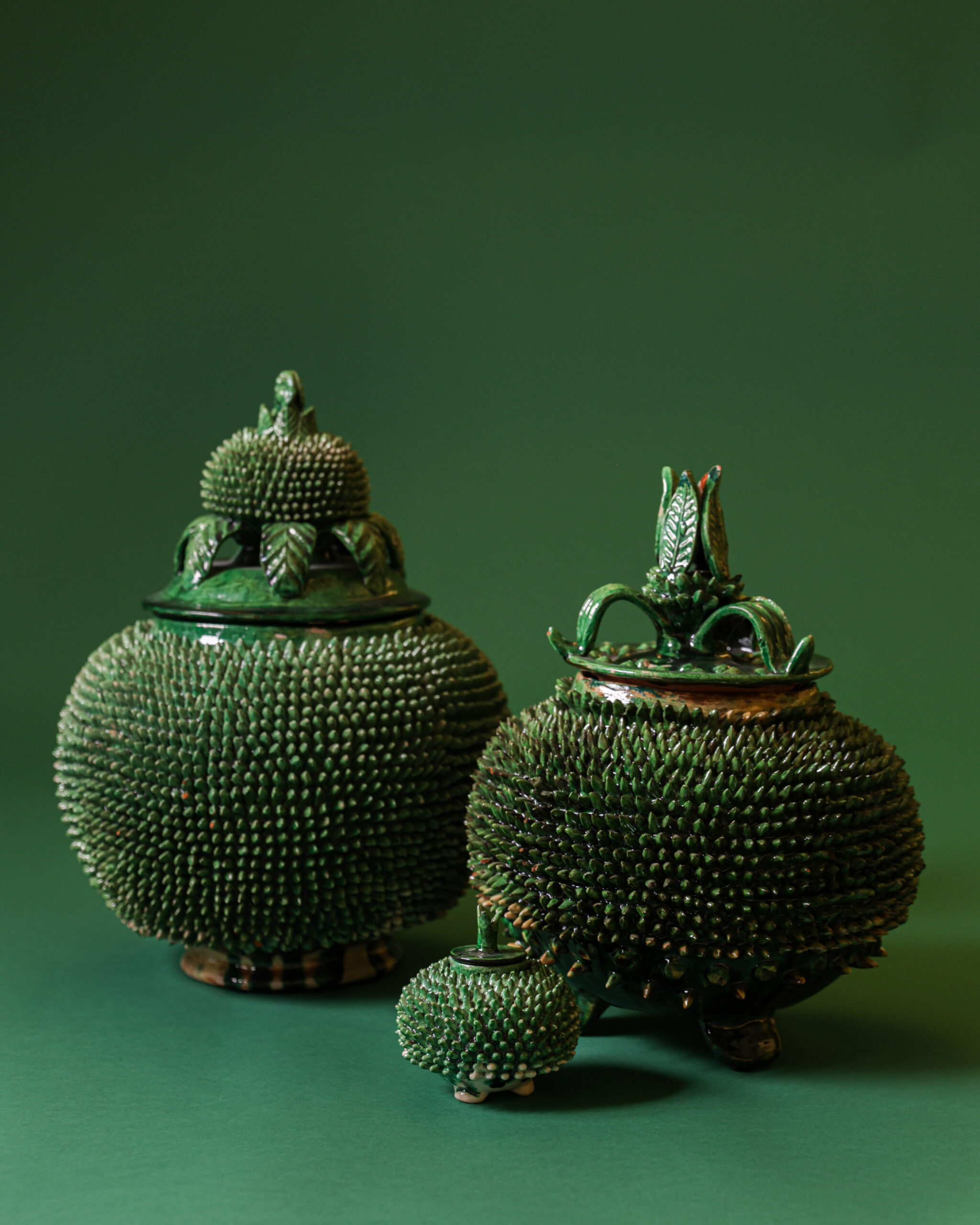
These green ceramic jugs (above) are by artisans from the village of Patamban in Michoacán, Mexico. Patamban is renowned for its distinctive green glaze pottery. It reflects a unique blend of indigenous traditions and Spanish colonial influences. The motifs vary, with detailed crosshatching and vines as seen here to more whimsical and stylized animal and plant designs. 

Kate Macuen, Director of Collections, MOIFA

Michoacan “Pineapple” Vessels

The celebrated pineapple pots

Museum of International Folk Art, IFAF Collection, FA.1970.9.146, FA.1970.9.140, FA.1970.9.145

The celebrated pineapple pots hail from the state of Michoacán, Mexico. These beautiful pots, with their textured applique surfaces, are a fusion of art and function. Originally by Elisa Madrigal Martinez, her son, Hilario Alejo Madrigal, and his family carry on the form. They source clay locally, cleaned, ground, and sifted. After molding the clay into the elaborate pineapples, they dry it indoors and later under the sun. There is a first firing in an open kiln before applying the recognizable green glaze. Then there is a second and final firing before the pineapples are complete. As the years have passed, the pineapples have moved from utilitarian to more decorative, highlighting the exceptional skill and mastery of each artist who makes them. – Kate Macuen, Director of Collections, MOIFA

Japanese Mingei

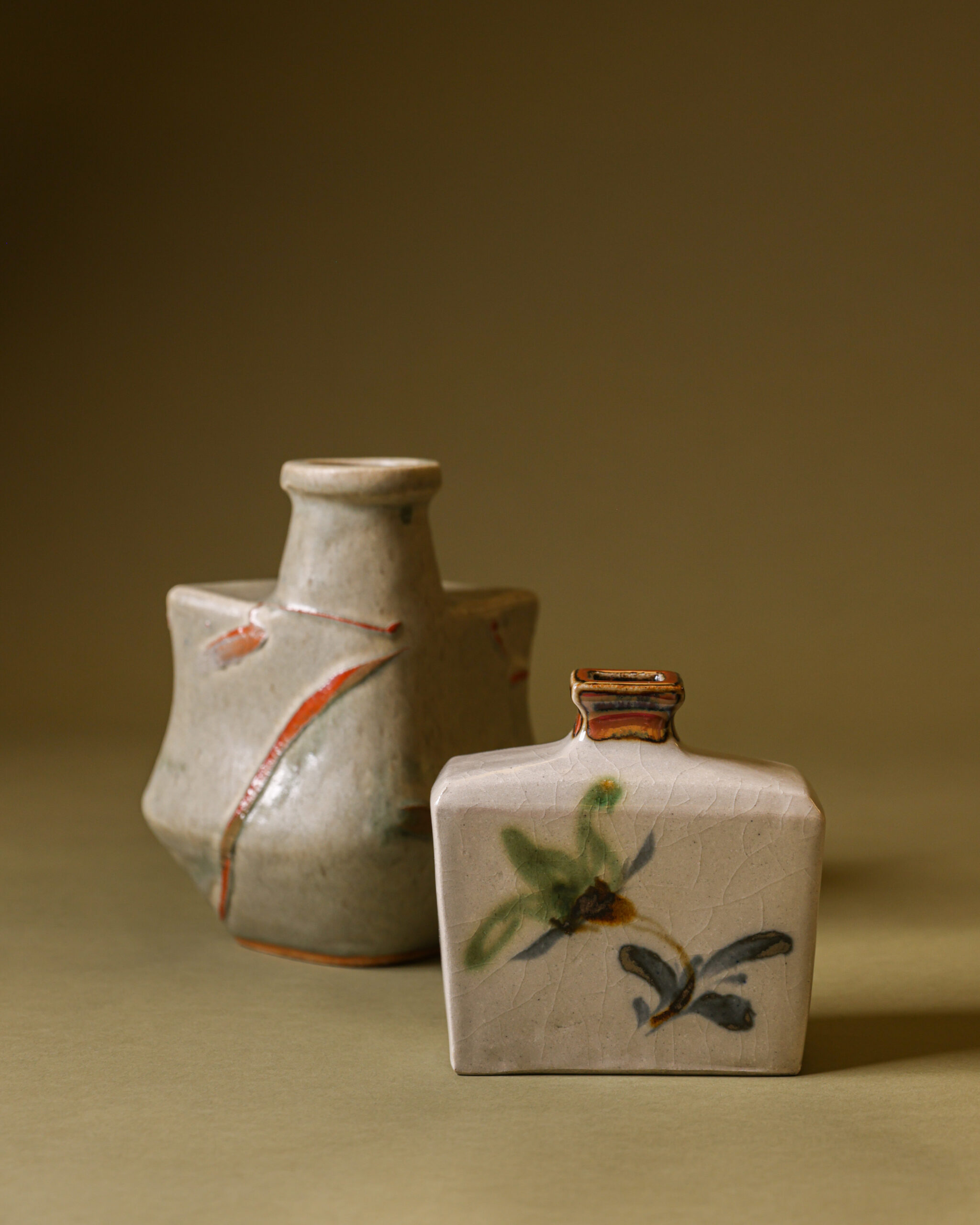
Asymmetrical vase

Kawai Hirotsugu (1919-1993), Asymmetrical vase with flat fan-shape shoulder, Museum of International Folk Art, A.2005.18.19V
Kawai Takeichi (1908-1989), Molded rectangular vase with abstract floral design/Museum of International Folk Art, A.2005.3.10

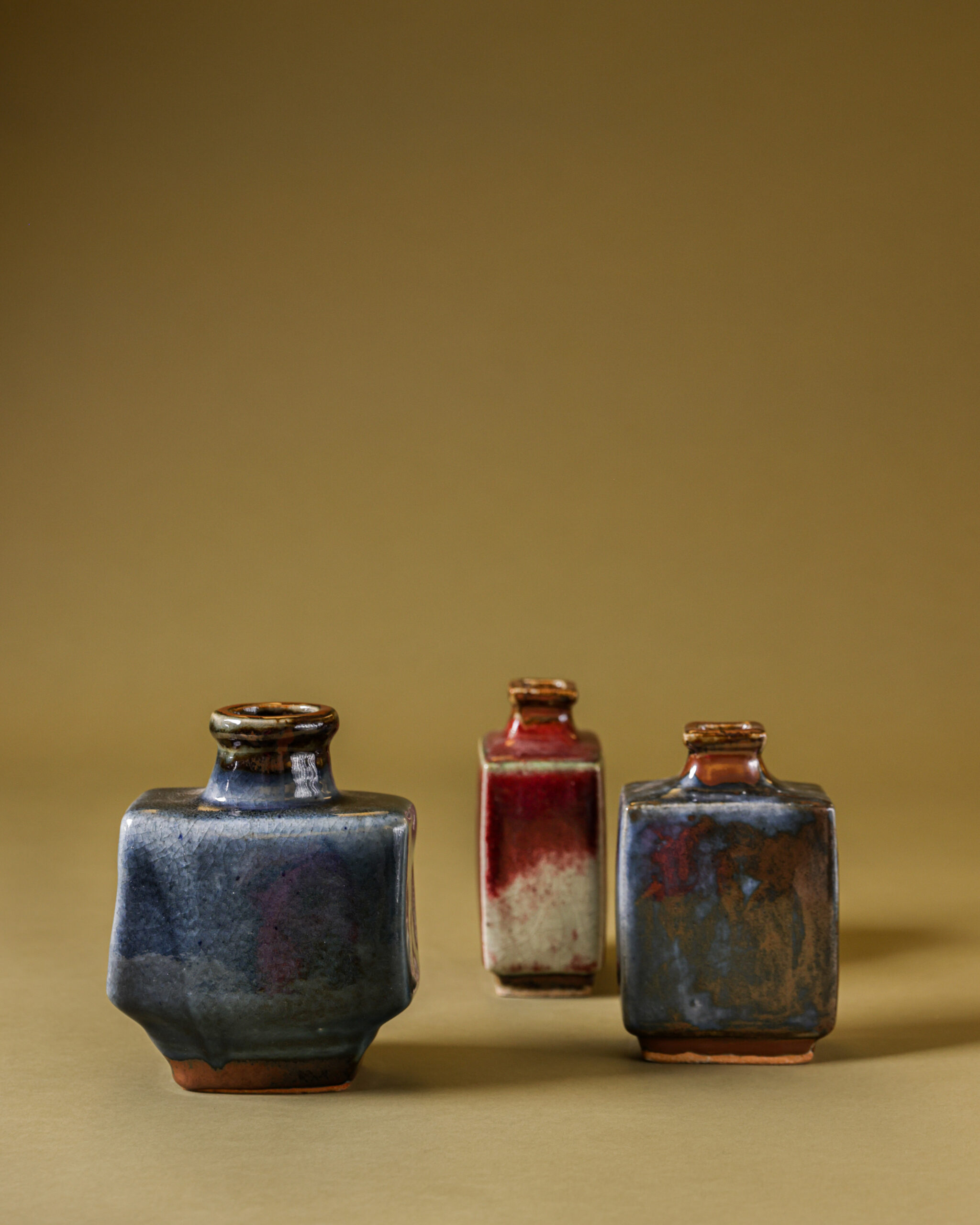
MOIFA has been connected to the Japanese mingei, or “art of the people” movement since the museum’s founding. Two of the Museum’s earliest large-scale exhibitions included Folk Art of Japan in 1955, and The Word is Shibui in 1957. These exquisite objects represent the legacy of the famed potter and co-founder of the mingei art movement, Kawai Kanjirō (1890-1966). The stoneware vases possess the imperfect, handcrafted elements with rich glazes of cobalt blue and copper red. These were all prized characteristics of the movement as created by Kanjirō’s nephew Kawai Takeichi (1908-1989) and adopted son Kawai Hirotsugu (1919-1993). – Laura J. Mueller, PhD, Deputy Director, MOIFA

Molded rectangular vases

Kawai Hirotsugu (1919-1993), Molded rectangular vase/Museum of International Folk Art, A.2005.18.21
Kawai Takeichi (1908-1989), Molded rectangular vases/Museum of International Folk Art, A.2005.3.13 and A.2005.3.9

Visit MOIFA’s Staff Picks: Favorites from the Collection exhibition now through August 18, 2024.

For more special art works from the MOIFA vault, check out our article from Spring 2023 where Kate Macuen shows us angel and demon themed pieces from the vault.

Story by Keith Recker / Photography by Tira Howard / Special Thanks to Kate Macuen, Director of Collections, Museum of International Folk Art

A footer photo with a black background and subscribe info and button

Subscribe to TABLE Magazine‘s print edition.

Metropolitan Museum of Art Features Harlem Renaissance Era

0
A painting of a Black woman in blue clothes by a yellow chair featured at the Metropolitan Museum of Art as a part of their collection on the Harlem Renaissance.
William Henry Johnson (American, 1901–1970). Woman in Blue, c. 1943. Oil on burlap. Framed: 35 × 27 in. (88.9 × 68.6 cm). Clark Atlanta University Art Museum, Permanent Loan from the National Collection of Fine Art, 1969.013. Courtesy Clark Atlanta University Art Museum

Bringing together a diverse 160 pieces made by Black artists from the 1920s to 1940s, The Harlem Renaissance and Transatlantic Modernism at the Metropolitan Museum of Art (the Met) casts a light on the Harlem Renaissance movement and how we look at it several decade later. It’s one of those exhibitions that’s long overdue, showing how a group of Black creators tell their own stories and the stories of those around them, a snapshot of Black life in early 20th century America told from within.

The story is, of course, complicated. According to a review of the show by the New York Times, “The Harlem Renaissance wasn’t a “thing” in the sense of being a structured movement . . . Nor was it only in Harlem, or even New York City. Many of the artists closely associated with it lived and worked elsewhere — Chicago, Philadelphia, Paris. Finally, it wasn’t strictly, or even chiefly, a visual art phenomenon.”

It also makes a compelling case for including at least some of these artists in the narrative of the modernist movement, talking about them alongside Egon Schiele, Georgia O’Keefe, Pablo Picasso, and others. The show is on display through July 28 and demonstrates how much more well-known artists, including Henri Matisse, were influenced by the aesthetics of Harlem.

Also at the Metropolitan Museum of Art

Another intriguing exhibition at the Met, Indian Skies: The Howard Hodgkin Collection of Indian Court Painting is a series of over 120 Indian paintings and drawings collected by British artist Howard Hodgkin. The collection is recognized as among the finest of its kind ever assembled. Hodgkin collected works from the Mughal, Deccani, Rajput, and Pahari courts dating from the 16th to the 19th centuries. Many of the works were recently acquired by The Met. So, one can hope they’ll be on a rotating display long after this show is over on June 9.

Local Tip

Before or after The Met, stop by everyone’s favorite UES casual joint, Nectar Cafe. Grab coffee and an omelet, burger deluxe, or cobb salad. It’s kind of like a traditional Greek diner—but more expensive. 

Story by Stephen Treffinger

A footer photo with a black background and subscribe info and button

Subscribe to TABLE Magazine‘s print edition.
Steaming Pot of Beans and Greens

0
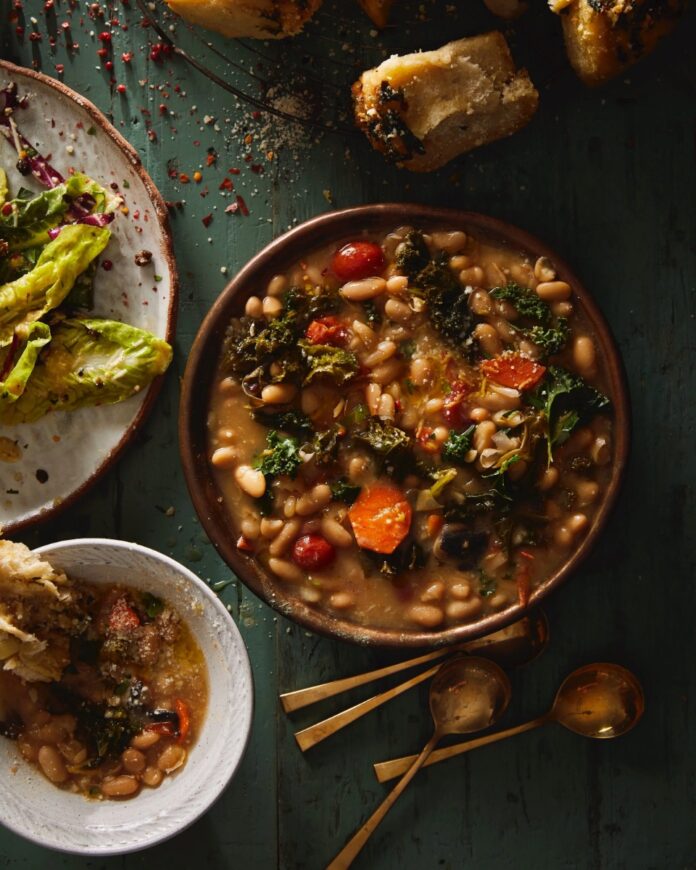
A large bowl of steaming white beans and chopped kale stew garnished with carrots and tomatoes, served with crusty bread/garlic knots and a side salad on a green wooden table.
Photo by Adam Milliron. Styling by Ana Kelly.

Kate Romane shares some of Black Radish Kitchen’s best-loved springtime recipes. The season’s tender greens brew up into a magnificent pot of nourishing goodness. All you need to do is…do it!

What’s in Our Steaming Pot of Beans and Greens?

This hearty springtime bean and kale soup is simmered with garlic, carrots, sage, roasted tomato, as well as lemon for bright, nourishing flavor. Finished with Parmesan, lemon zest, and a drizzle of olive oil, it’s a comforting yet refreshing dish perfect for the season.

Print
clock clock iconcutlery cutlery iconflag flag iconfolder folder iconinstagram instagram iconpinterest pinterest iconfacebook facebook iconprint print iconsquares squares iconheart heart iconheart solid heart solid icon
A large bowl of steaming white beans and chopped kale stew garnished with carrots and tomatoes, served with crusty bread/garlic knots and a side salad on a green wooden table.

Steaming Pot of Beans and Greens


  • Author: Kate Romane

Description

Let this pot of simmering goodness relax you after a long day of work.


Ingredients

Scale
  • 4 cloves garlic, smashed
  • ½ cup sliced carrot
  • ¼ cup olive oil
  • 8 cups water
  • 2 cans of cannellini beans, rinsed
  • ½ bunch sage
  • ½ cup roasted tomato
  • Salt, pepper and chili flake, to taste
  • 3 lemon slices
  • 2 bunches kale, cleaned and chopped
  • Grated Parmesan
  • Zest of 1 lemon


Instructions

  1. Sauté garlic and carrots in olive oil until they begin to brown. Add water, beans, sage, tomato, salt, pepper, chili flakes and lemon slices. Bring to a boil and let simmer for 25 minutes. Add kale and steep till desired doneness.
  2. Serve with slotted spoon. Sprinkle with Parmesan, zest, more chili and a drizzle of extra virgin olive oil.

Recipe by Kate Romane
Styling by Ana Kelly
Photo by Adam Milliron

Subscribe to TABLE Magazine’s print edition.

Spring Wellness Recipes

0
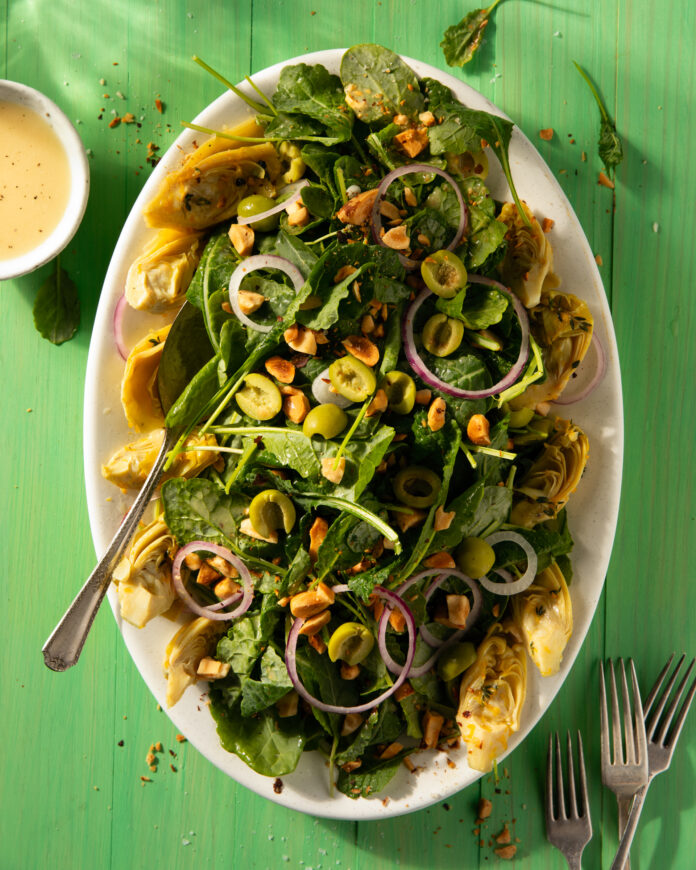
Baby Kale Salad with Citrus-Marinated Artichoke Hearts and Lemon Vinaigrette on a white plate with a fork in the salad and a container of dressing to the left.

Spring brings an opportunity to stimulate and cleanse our bodies of the residue of winter. Just as the environment and weather conditions change and brighten to encourage new growth, so should our food. These four recipes offer light flavors and preparations, focusing on ingredients that nourish and strengthen the organs responsible for detoxifying our systems. They incorporate bitter and sour flavors that are slightly warming and clear us of dampness. This improves circulation and stimulates the liver and gallbladder. As the weather calms and the outdoors becomes more inviting, these foods will bring you renewal and balance. 

Spring Wellness Recipes

Barley Salad with Walnuts and Beet Ribbons (Vegan, Gluten-Free) 

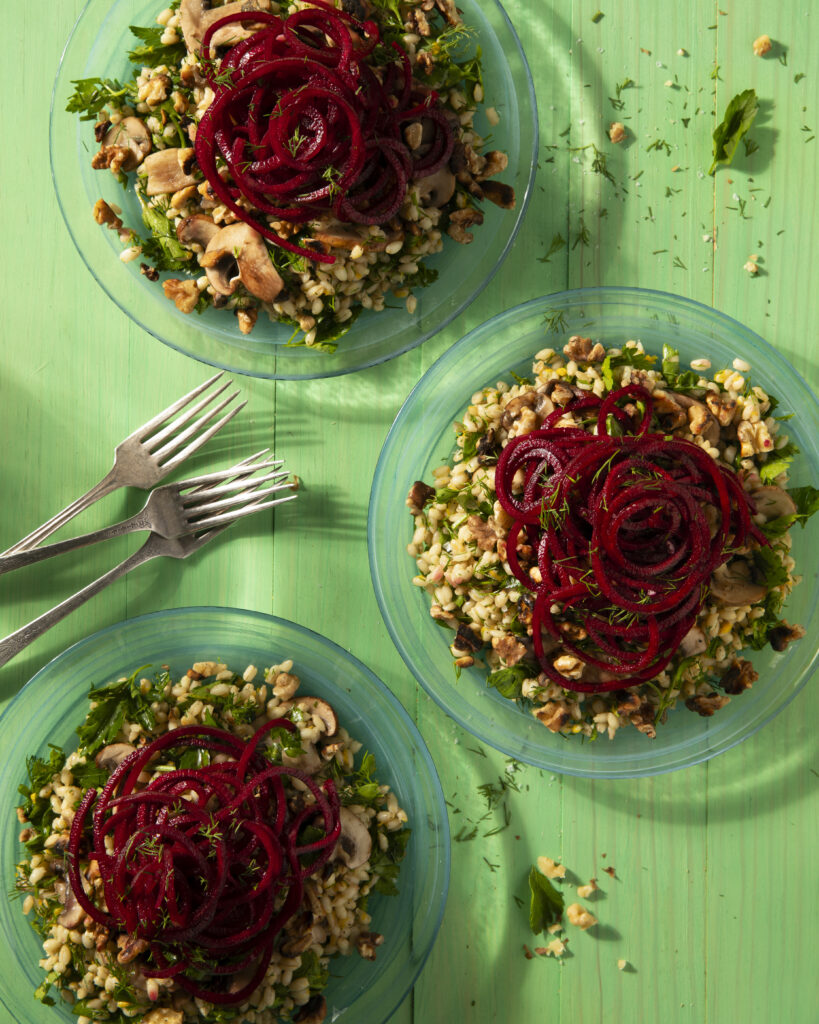
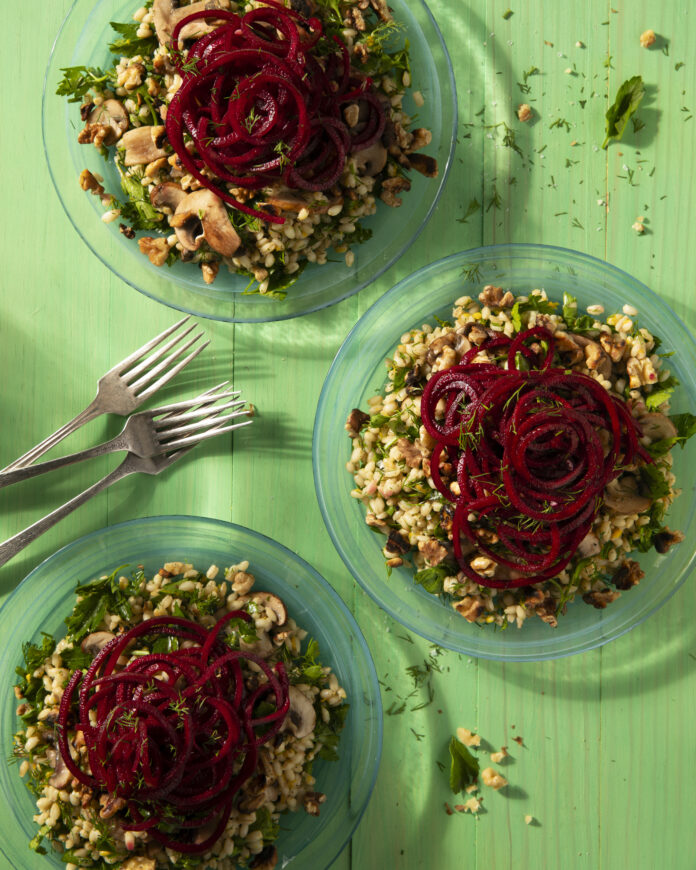
Three clear plates hold Barley Salad with Walnuts and Beets on a green background

Barley’s high fiber and magnesium make it a great grain to get things moving in spring. Often seen in soups, it can also be cooked much like rice and used in salads and sides. Its chewy bite and nutty flavor will keep you satiated. In Eastern medicine it is categorized under the element of Wood, beneficial to be eaten in the spring to bring energy to the stomach and liver.  

Baby Kale Salad with Citrus-Marinated Artichoke Hearts & Lemon Vinaigrette (Vegan, Gluten-free) 

Baby Kale Salad with Citrus-Marinated Artichoke Hearts and Lemon Vinaigrette on a white plate with a fork in the salad and a container of dressing to the left.

Appealingly light and bright, this salad is also satisfying. Its ingredients help decrease the bloat that may come with winter’s rich comfort foods. Citrus, like spring, is known for its energizing qualities, encouraging renewal and growth. Artichokes have detoxifying and tonifying properties that aid in liver function, and they are one of the highest fiber vegetables.   

Toasted Caraway Pork Tenderloin (Dairy-free, Gluten-free) 

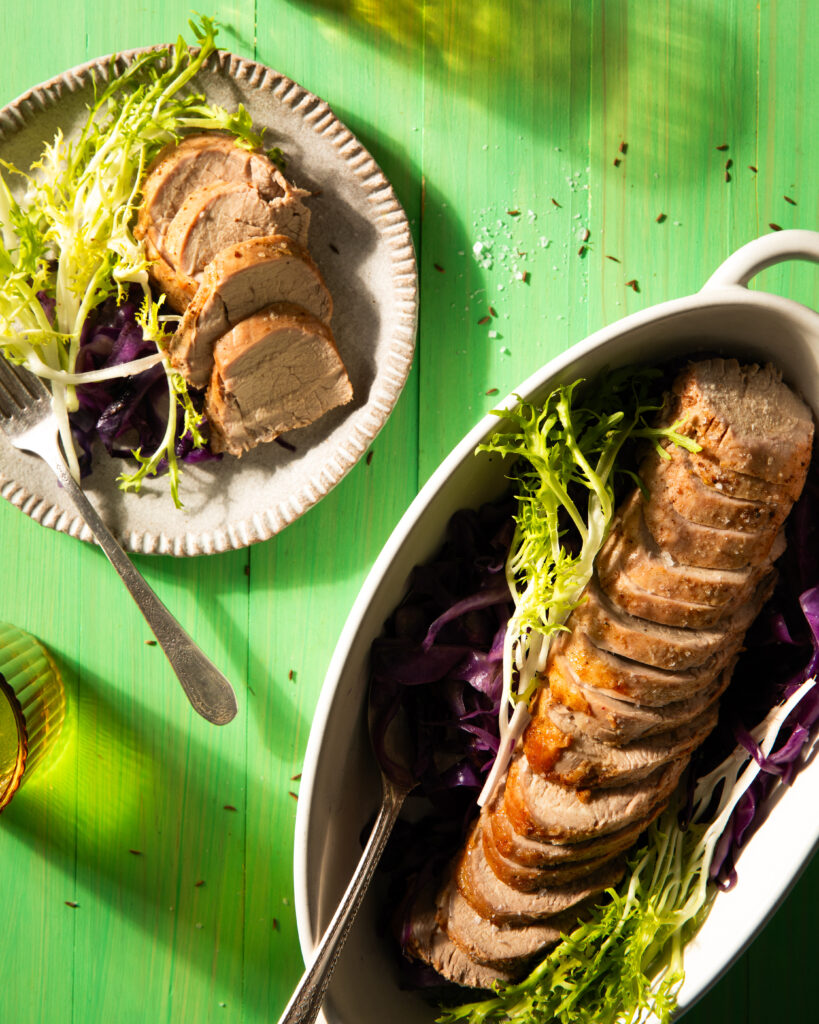
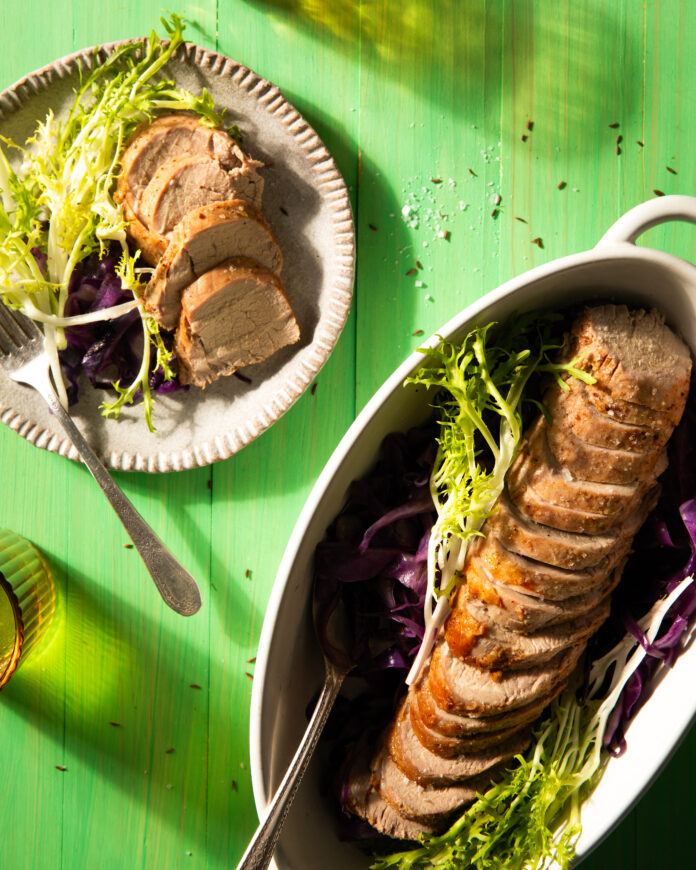
A white dish and beige plate both hold slices of toasted caraway pork tenderloin accompanied by greens and silverware all on a green background.

The cider vinegar used in this marinade brings a bright sour flavor and tenderizes the pork, which is a great source of lean protein. Caraway aids digestion, detoxifies, and nourishes the respiratory system. Both vinegar and caraway help stimulate release of what winter has left behind.   

Chamomile Ginger Poached Chicken (Dairy-free, Gluten-free) 

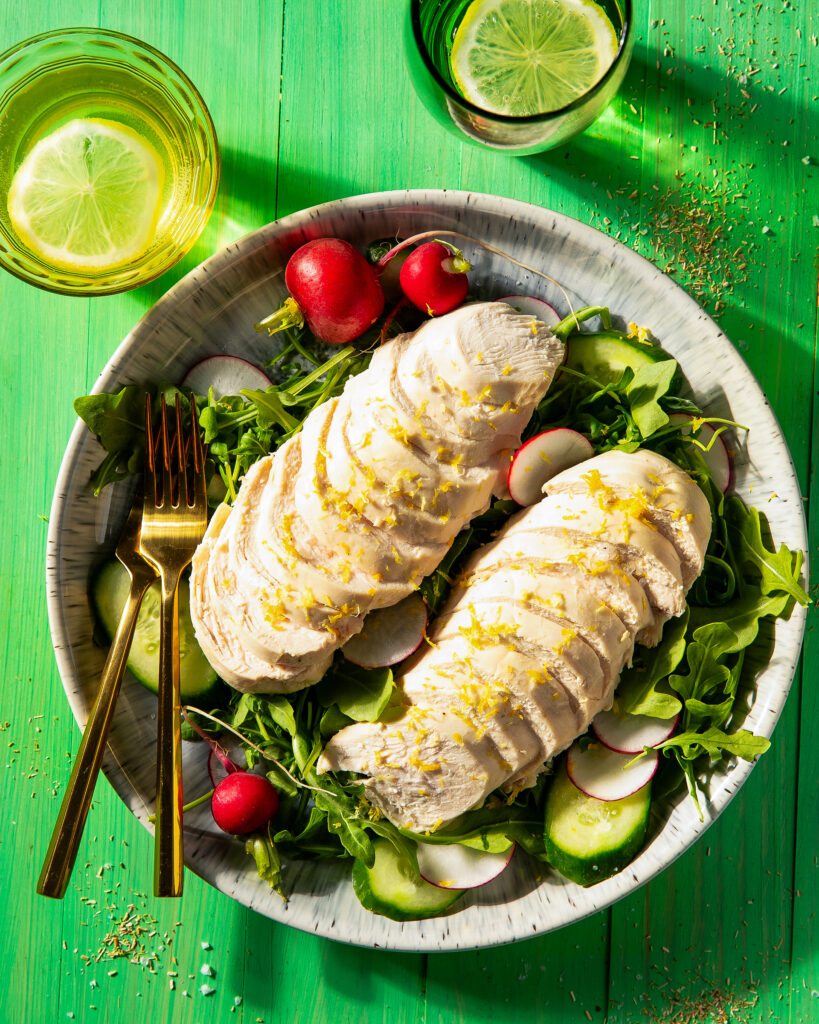
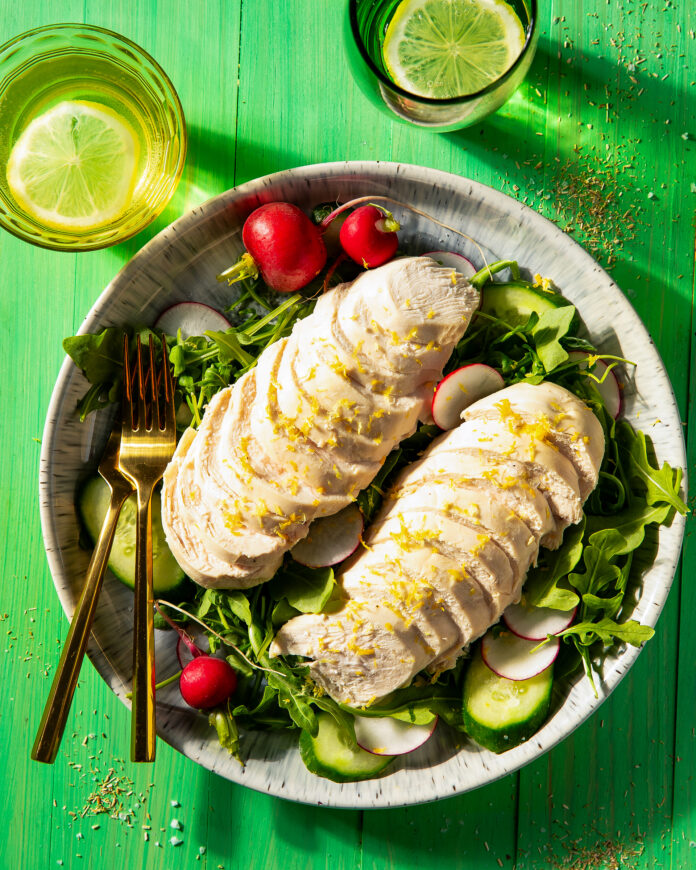
A white plate holds a salad arranged with tomatoes and sliced chamomile ginger poached chicken on top with two gold forks off to the side. It all sits against a green background.

Poaching is an often-overlooked cooking technique. Gently simmering foods like chicken in flavorful liquid helps retain the chicken’s moisture and nutrients, infusing it with subtle flavor. Chamomile, ginger, agave, salt, and pepper give this broth a savory and sweet appeal. Moving into spring, this cooking technique (and these flavors) are perfect for a light and warm meal. 

Story and Recipes by Kristen Palmer
Styling by Anna Franklin
Photography by Dave Bryce

Subscribe to TABLE Magazine‘s print edition.
Barley Salad with Walnuts and Beet Ribbons

0
Three clear plates hold Barley Salad with Walnuts and Beets on a green background

Barley’s high fiber and magnesium make it a great grain to get things moving in spring. Often seen in soups, it can also be cooked much like rice and used in our Barley Salad. Its chewy bite and nutty flavor will keep you satiated. In Eastern medicine it is categorized under the element of Wood, beneficial to be eaten in the spring to bring energy to the stomach and liver.

What is Barley?

Barley is one of the oldest cultivated grains in the world, dating back to ancient Mesopotamia. This versatile cereal grain has a rich, nutty flavor and a chewy texture. This adds a contrast to certain recipes, making it a popular ingredient in various cuisines. It comes in several forms, including hulled, pearled, and flaked, each with their own traits. The pearl barley we use in the Barley Salad below has the bran removed. As a result, it cooks faster and has a milder flavor than its counterparts in the grain family.

Print
clock clock iconcutlery cutlery iconflag flag iconfolder folder iconinstagram instagram iconpinterest pinterest iconfacebook facebook iconprint print iconsquares squares iconheart heart iconheart solid heart solid icon
Three clear plates hold Barley Salad with Walnuts and Beets on a green background

Barley Salad with Walnuts and Beet Ribbons


  • Author: Kristen Palmer
  • Yield: Serves 4

Description

A nutritious salad that also happens to be vegan and gluten-free.


Ingredients

Scale
  • 1 1/2 cups dry pearl barley
  • 6 cups water
  • 2 tsp kosher salt
  • Zest of 1 orange
  • 1/2 cup fresh-squeezed orange juice
  • 1/4 cup + 1 tbsp walnut oil
  • 2 tbsp rice vinegar
  • 1 tsp agave
  • 1 tsp kosher salt
  • Fresh ground pepper
  • 1 medium red beet
  • 1/2 cup chopped walnuts
  • 10 oz container of baby bella mushrooms
  • 2 tbsp walnut oil
  • 1/3 cup chopped dill + 1/4 cup for garnish
  • 1 medium parsley bunch, chopped


Instructions

  1. Before cooking the barley rinse well with cool water.
  2. In a medium pan, bring 6 cups of water and 2 tsp of kosher salt to a boil, then add barley. Allow water to return to a boil and reduce heat to a light boil. Cook for 20-25 minutes. Barley should still have a light chew or bite. Drain barley, and spread onto a clean baking sheet to cool.
  3. Zest orange and set zest aside.
  4. For the dressing: Juice the orange. Combine all walnut oil, rice vinegar, agave, kosher salt, and ground pepper. Whisk then set aside.
  5. The beets in this recipe can be grated if you do not have a spiralizer. For either method, wash beet, and then remove ends. Using a peeler, peel the outer layer off the beet. If you have a spiralizer, use the thin ribbon attachment, cutting ribbons when they reach a few inches long. Collect ribbons in a bowl and set aside.
  6. Toast walnuts in a dry pan, on the stove until fragrant, and set aside.
  7. Slice baby bella mushrooms and sauté lightly in 2 tablespoons of walnut oil before seasoning the mushrooms with salt and pepper.
  8. Add 1 tablespoon of dressing to beets and toss.
  9. Place cooked barley, dill, parsley, orange zest, walnuts, and the rest of the dressing in a large bowl and then toss to combine.
  10. To serve, place barley on a dish and sprinkle with sautéed mushrooms. Top with a mound of beet ribbons and sprinkle with extra dill.

Story and Recipe by Kristen Palmer
Styling by Anna Franklin
Photography by Dave Bryce

Subscribe to TABLE Magazine‘s print edition.
Toasted Caraway Pork Tenderloin

0
A white dish and beige plate both hold slices of toasted caraway pork tenderloin accompanied by greens and silverware all on a green background.

We use cider vinegar in the marinade for our Toasted Caraway Pork Tenderloin. It brings a bright sour flavor to the pork even as it tenderizes this great source of lean protein. Caraway aids with your digestion, detoxification, and even nourishes the respiratory system. Both vinegar and caraway help stimulate release of what winter has left behind. Make this Toasted Caraway Pork Tenderloin for your first dinner as spring chimes in. It will start your season out just right.

Where Does Caraway Come From?

Caraway is a spice that comes with a specific anise-like flavor. This spice actually comes from a biennial plant (Carum carvi) belonging to the Apiaceae family. This plant is native to a wide region in western Asia, Europe, and North Africa. It often thrives in areas with warm, sunny conditions and well-drained soil, making these parts of the world perfect for growing. While the plant produces small white or pink flowers, it’s the crescent-shaped fruits, often mistakenly called seeds, that are prized for their culinary and medicinal uses. These fruits contain essential oils, primarily carvone, limonene, and anethole, which give caraway its well known aroma and warm, slightly sharp taste.

Print
clock clock iconcutlery cutlery iconflag flag iconfolder folder iconinstagram instagram iconpinterest pinterest iconfacebook facebook iconprint print iconsquares squares iconheart heart iconheart solid heart solid icon
A white dish and beige plate both hold slices of toasted caraway pork tenderloin accompanied by greens and silverware all on a green background.

Toasted Caraway Pork Tenderloin


  • Author: Kristen Palmer
  • Yield: Serves 6-8 1x

Description

A delicious way to get your lean protein in for the day.


Ingredients

Scale
  • 3 tbsp caraway seeds, toasted in an iron skillet until fragrant
  • 1 tsp peppercorns
  • 1/2 cup cider vinegar
  • 1/2 cup olive oil
  • 3 tbsp brown sugar
  • 1/2 tsp Dijon mustard
  • 2 lb pork tenderloin
  • 1 tbsp kosher salt


Instructions

  1. Preheat oven to 375 degrees.
  2. Combine toasted caraway seeds and peppercorns in a coffee or spice grinder and pulse to grind. Whisk or blend to combine cider vinegar, ground caraway, peppercorns, olive oil, Dijon mustard, and brown sugar. Place pork in marinade, cover, and marinate overnight.
  3. Place marinated pork on a baking sheet or in a shallow pan and sprinkle with additional kosher salt. Roast pork in the center of the oven for 20 minutes or internal temperature reaches 140 degrees. Remove pork from oven.
  4. Turn on oven broiler. Place pork on the top shelf of oven, under the broiler. Broil until browned and internal temperature has reached 145 degrees. Allow pork to rest a few minutes before slicing and serving hot.

Story and Recipe by Kristen Palmer
Styling by Anna Franklin
Photography by Dave Bryce

Subscribe to TABLE Magazine‘s print edition.
Chamomile Ginger Poached Chicken

0
A white plate holds a salad arranged with tomatoes and sliced chamomile ginger poached chicken on top with two gold forks off to the side. It all sits against a green background.

Poaching is an often-overlooked cooking technique. It can actually help retain the chicken’s moisture and nutrients, infusing it with subtle flavor. Chamomile, ginger, agave, salt, and pepper give this broth a savory and sweet appeal. Moving into spring, this cooking technique (and these flavors) are perfect for a light and warm meal.

What is Poaching as a Cooking Technique?

Poaching is a gentle cooking technique where food cooks in a liquid at a relatively low temperature, typically between 140-190°F (60-88°C). This method is ideal for delicate foods like fish, eggs, and fruit, as it prevents overcooking and preserves moisture. The slow, gentle heat allows the food to cook evenly without toughening or drying out. We choose to poach the chicken in this recipe because it produces moist, flavorful chicken that’s infused with the herbs and seasonings.

Print
clock clock iconcutlery cutlery iconflag flag iconfolder folder iconinstagram instagram iconpinterest pinterest iconfacebook facebook iconprint print iconsquares squares iconheart heart iconheart solid heart solid icon
A white plate holds a salad arranged with tomatoes and sliced chamomile ginger poached chicken on top with two gold forks off to the side. It all sits against a green background.

Chamomile Ginger Poached Chicken


  • Author: Kristen Palmer
  • Yield: Serves 4

Description

Poaching chicken actually lets it keep its moisture and retain the flavors in your poaching liquid.


Ingredients

Scale
  • 4 boneless, skinless chicken breasts
  • 6 cups water or enough to just cover chicken
  • 3 tbsp kosher salt
  • 8 chamomile tea bags
  • 1 tbsp grated ginger root
  • 2 ½ tbsp agave
  • 1 tbsp peppercorns
  • 1 lemon for zesting


Instructions

  1. Combine all ingredients except lemon in a 5-6 quart sauté pan or pot with enough bottom surface area so chicken is not crowded.
  2. Over medium heat bring to a subtle boil. Reduce heat to medium-low or a gentle simmer. Flip chicken after 10 minutes. Continue to cook another 8-11 minutes. Internal temperature should just reach 160 degrees.
  3. Remove chicken and place on a cutting board to rest for 4-5 minutes before slicing. Ideal internal temperature for chicken consumption is 165 degrees. Slice chicken on the diagonal and finish with lemon zest to serve.

Story and Recipe by Kristen Palmer
Styling by Anna Franklin
Photography by Dave Bryce

Subscribe to TABLE Magazine‘s print edition.