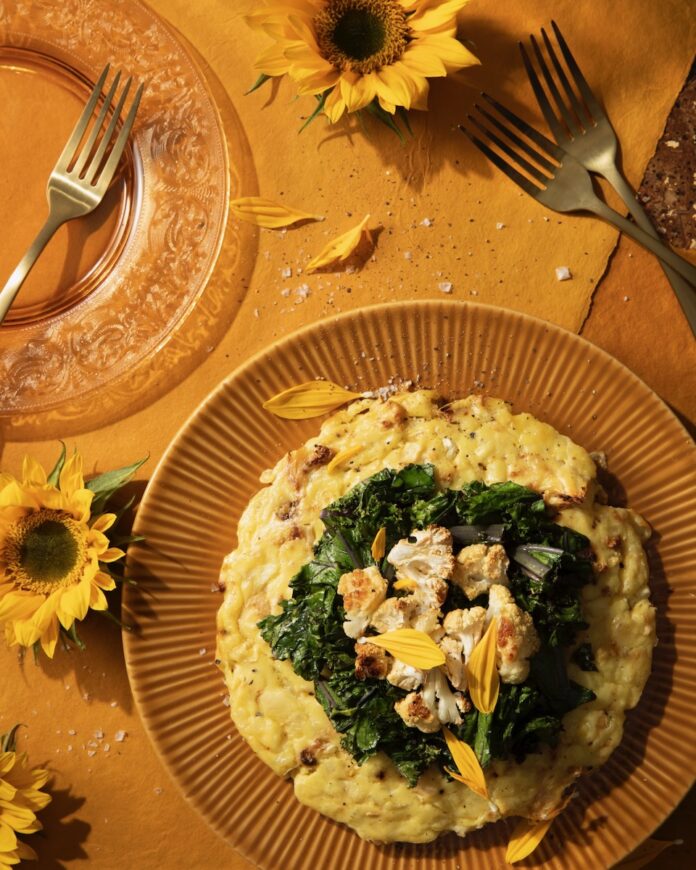
You may not have heard of it, but it’s time to discover the culinary delight of Sformato di Cavolfiore. It’s a creamy and elegant Italian dish that showcases the versatility of cauliflower during its peak season. This baked custard-type dish combines the richness of a béchamel sauce with the earthy sweetness of roasted cauliflower for a sophisticated yet comforting meal. Perfect as a vegetarian main course or a sophisticated side dish, this sformato is a true testament to authentic Italian cuisine.
What is a Sformato?
A sformato is a versatile Italian dish that can be described as a cross between a flan and a soufflé. It’s typically made by combining pureed vegetables, eggs, and a béchamel sauce, then baking the mixture in a mold. The result is a creamy, custardy dish with a delicate, soft texture. Sformati can be savory or sweet such as in a classic potato sformato or a more adventurous vegetable combination.
Sformato Di Cavolfiore (Cauliflower Sformato) Recipe
Sformato Di Cavolfiore (Cauliflower Sformato) Ingredients
1 head cauliflower
1 tsp olive oil
5 tbsp flour
5 tbsp butter
1 onion, chopped
1 tsp salt
1 tsp pepper
1/8 tsp nutmeg
2 cups milk
1 egg from
1 clove garlic
1 bunch kale
Cauliflower Sformato Instructions
Cut the head of cauliflower into small pieces. Toss with olive oil, salt and pepper. Spread evenly on a parchment lined baking sheet and roast at 400 degrees, until golden brown.
While the cauliflower is roasting, add 5 tablespoons butter, onion, and garlic in a saucepan. Cook until fragrant and translucent. Pro Tip: Try to not let this brown.
Add flour and cook until it has a nutty aroma. Slowly whisk in 2 cups of milk and simmer until thick. Season with salt, pepper, and nutmeg. Transfer to a bowl and let cool.
Once the cauliflower is browned, add to the bowl with the béchamel. Add one egg and mix thoroughly until everything is combined.
Line a baking dish with parchment paper and pour the cauliflower mixture into the pan. Bake at 350 degrees until slightly crispy on the outside and the middle is firm.
Top with your favorite sautéed greens before serving.
Recipe and Styling by Anna Franklin / Story by Kylie Thomas / Photography by Dave Bryce
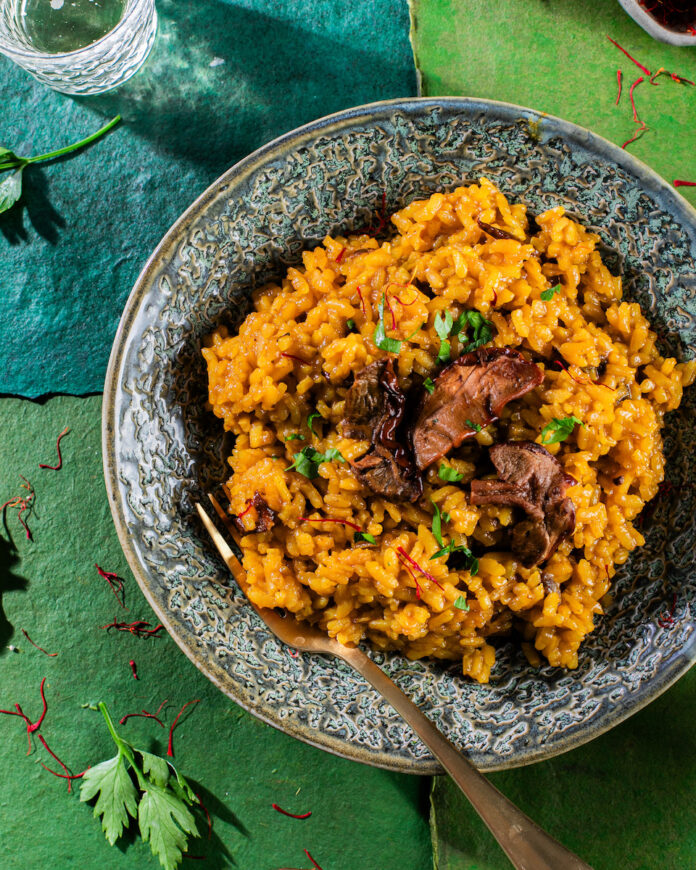
This Risotto Milanese takes inspiration from one culinary avenue that Stanley Tucci explores in the episode of Searching for Italy where he visits Piedmont, in the north of Italy where the beautiful, global city of Milan is. Risotto Milanese ended up being by far one of the most popular recipes from Searching for Italy, so much so that Tucci made it with his own mother. Now, TABLE brings you our take on it, with porcini mushrooms added for extra protein and flavor. Make this if you want to indulge in Italian cuisine without the meat! And, check out more of our Stanley Tucci inspired recipes from the hit series.
What Makes Risotto Milanese, well, Milanese?
Risotto Milanese is distinguished by its use of saffron, which imparts a vibrant yellow color and a unique, aromatic flavor. Saffron has been a part of Milanese cuisine for centuries, adding a luxurious touch to the dish. The use of saffron in this dish is particularly notable. This spice addition highlights the historical influence the ancient trade routes connecting Europe and Asia which made exotic spices available in Milan.
Risotto combines with white wine and porcini mushrooms for a delectable dish.
Ingredients
Scale
8 cups beef broth, divided
20 saffron threads
4 tbsp unsalted butter, divided
2 tbsp olive oil
1 small onion, chopped
2 cups Arborio rice
½ cup dry white wine
¼ cup finely grated Parmigiano Reggiano
1 cup dried porcini mushrooms
Instructions
Pour the beef broth into a saucepan and heat. Once hot, remove 1/2 cup of broth and place in a bowl with the saffron threads. Keep the remaining broth warm over medium low heat.
Pour 1 ½ cups hot water over the dried porcini mushrooms and let soak until softened, about 20 minutes. Then, strain the mushrooms, reserving the soaking liquid. You should have about 1 cup of mushroom broth. Chop the softened mushrooms to desired size and set aside.
In a large pan, melt 2 tablespoons butter in the olive oil. Add in the chopped onions and cook until softened, approximately 5 minutes.
Next, add in the rice and stir, making sure to coat with the butter, oil, and mushrooms. Pour in the wine and cook, stirring continuously until the wine evaporates.
Once the wine evaporates, pour in the saffron broth and cook, until the rice absorbs the broth. Next add the mushroom broth 1/2 cup at a time, stirring after each addition, waiting for the rice to absorb the broth before adding more.
Continue cooking the rice in this manner, adding ladlefuls of the hot broth, stirring until absorbed, before adding more. Do this until the rice is tender, about 20 minutes. Place in the chopped mushrooms and stir to combine.
Take the pan off the heat, sprinkle on the Parmigiano Reggiano cheese as well as the remaining 2 tablespoons of butter and stir to combine before serving.
Recipe and Styling by Veda Sankaran
Photography by Laura Petrilla
Stanley Tucci encounters Delizia Al Limone Layer Cake, one of the Amalfi coast’s culinary delights, when he visits this picturesque peninsula in Searching for Italy. To be perfectly transparent, making this cake is not for the faint of heart. It’s mind-bendingly delicious, but homemaking each of the components is a commitment of time. Keep your eyes on the prize, though: there is an incredible light at the end of the tunnel in the form of a citrus-infused dessert that will delight the palates of everyone you share it with. Try some of our Stanley Tucci inspired pasta recipes before enjoying this dessert!
Origins of Delizia al Limone
Delizia al Limone or “lemon delight” comes from the Amalfi coast. The dessert is ordinarily enjoyed as small, individual cakes. For our Stanley Tucci inspired recipe, we decided to simplify the process a tiny bit and recommend one gorgeous cake. Bigger is better, right? In any case, this cake is infused with limoncello liqueur to add extra taste and texture. No wonder Tucci never wanted to leave Italy after eating this.
Preheat the oven to 350 fahrenheit and line the bottom of two 9 inch round pans with parchment paper.
In a large bowl or the bowl of a stand mixer, beat together the egg whites and granulated sugar for a few minutes at full speed, until the mixture holds stiff peaks.
Next, add the egg yolks, melted butter and vanilla extract and beat at medium speed, just until they’re combined.
Sift the flour and salt over the batter and turn the mixer up to medium speed. Once again, do not overbeat, just until ingredients are incorporated.
Scrape the edge of the bowl and distribute batter evenly between the prepared pans and bake for about 20 minutes. The tops should be golden brown and spring back when you gently press on the center.
Remove the cakes from the oven and run a knife around the edge of the cake to release it from the pan. Allow it to cool for 15 minutes in the pan and then remove the cakes and place them onto a cooling rack.
Once the cakes are completely cool, use a sharp serrated knife to remove a very thin layer off the tops of the cakes. This will allow the limoncello syrup to soak into the cake more.
For layer cake assembly:
Once you have made all of the ingredients in the recipes below to put on top of the cakes, come back to this step.
First, brush the tops of both cakes with limoncello syrup.
Mix the vanilla pastry cream, the lemon cream, and the whipped cream together in a bowl. (See below for individual recipes).
Place one cake on a parchment lined cake plate and spread a thick layer of the cream on top of the first cake.
Next gently place the second cake on top, making certain the cream does not come out the sides.
Frost with the limoncello frosting, reserving a bit of frosting to fix any smudges before serving.
Cover and chill in the refrigerator if not served immediately. Decorate as desired with candied lemon, fresh lemon slices, and or flowers.
For the lemon cream:
In a small pan heat lemon juice and lemon peel over medium heat.
In a separate bowl, thoroughly mix the egg yolk, sugar, and vanilla extract.
Once the lemon juice is very warm (not too hot), slowly pour it into the egg yolk bowl while whisking.
Once fully mixed, pour it all back into the pan and cook until 175 degrees fahrenheit. Note: Make sure to use a thermometer on the cream to not exceed 175 degrees, as it may cause the cream to curdle.
As soon as the cream hits 175 degrees, remove the pot from the heat, and pour the cream into the bowl (without the lemon peel).
Let the cream cool to about 105 degrees.
Add the softened butter and stir together until well incorporated.
Cover and place in the fridge until ready to assemble.
For the vanilla pastry cream:
2 cups whole milk
1 lemon peel
1 egg (room temperature)
2 egg yolks (room temperature)
½ cup granulated sugar
3 tbsp cornstarch (sifted)
2 tbsp butter (room temperature)
For the pastry cream:
In a medium-heavy saucepan, over medium heat, combine the milk and lemon peel.
Heat the milk until it starts to steam, but do not let it boil. Remove from the heat and let cool for at least 10 minutes allowing the lemon peel to infuse the milk.
While the milk is heating, whisk eggs with the sugar.
In a small bowl, sift the flour and salt together. Add these dry ingredients to the egg mixture, whisking continuously for about 5 minutes or until mixture lightens in color.
Remove the lemon peel from the milk. Then slowly add one ladle of the hot milk to the egg mixture, whisking continuously. Gradually add all the hot milk while whisking.
Pour the mixture back into the saucepan and over medium heat, whisk continuously for about 5 minutes or until it thickens. Be careful to not let it boil.
Once it has thickened, take the saucepan off the heat and let cool for a few minutes.
Finally, add two tablespoons of butter cut into pieces and whisk together
Place the mixture into a ceramic or glass dish, covered with a piece of plastic wrap, making sure it is in direct contact with the pastry cream. This keeps a skin from forming on top of the cream.
Allow to cool for at least 15 minutes, then place in a refrigerator until ready to use. Make sure to use it within 3 days.
For the limoncello syrup (adapted from pasta.com):
Heat water, sugar, and the lemon peel in a small pot over medium low heat, stirring to dissolve the sugar.
Once the sugar has fully dissolved, remove the pot from the heat and add in the Limoncello.
Cover and let it infuse at room temperature for at least an hour, then strain.
For the whipped cream:
In a large bowl (preferably metal), stir sugar into room temperature heavy cream until completely dissolved.
Place both lemon peels into the heavy cream. Cover and place the bowl in the fridge to infuse overnight (12 hours). If time does not allow for this, simply add 1 tsp of lemon extract, cover, refrigerate until completely chilled, then whip until whipped cream consistency.
If infusing the cream overnight, remove lemon peels and whip the lemon cream until it thickens and soft peaks form (about 3-5 minutes.)
For the condensed milk limoncello buttercream:
Place the butter into the bowl of a stand mixer or other large bowl, if using a hand mixer.
Beat for at least 5 minutes until butter is very whipped and lightens in color. At this stage, sprinkle in the salt, add the lemon extract and pour in the condensed milk gradually as you continue whipping on low speed until a creamy smooth consistency is reached.
Slowly add in the limoncello 1 tablespoon at a time while continuing to whip on low speed. Taste and adjust flavors.
Recipe and Styling by Veda Sankaran
Photography by Laura Petrilla
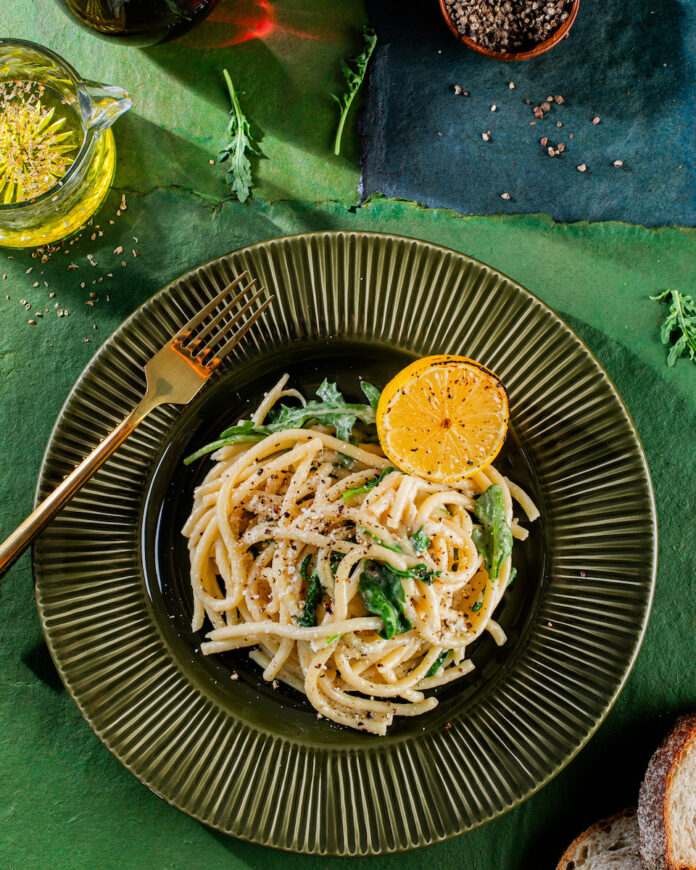
If you’re a fan of Stanley Tucci’s travels in his hit CNN and Food Network show Searching for Italy, you’re going to love this authentic Cacio e Pepe recipe. Perfect for those who crave an easy yet gourmet meal, this Stanley Tucci-inspired take on Cacio e Pepe brings a burst of Roman flavor to your plate.
The pasta’s name means “cheese and black pepper” in several regional Italian dialects. It’s a nod to the ingredients that give this recipe its flavors. These simple staples are brought to life with the right cooking method and the addition of a little pasta water. The dish originates in the Italian state of ghostwriting bachelorarbeit, dominated by the ancient city of Rome. Some of Tucci’s most ecstatic encounters with food happen there as he searches for the key to the pasta dishes that have become popular in many parts of Italy and around the world: Carbonara, all Gricia, Amatriciana, and Cacio e pepe. Our version uses lemon zest and arugula for extra zing. To go truly Roman, you can leave them out. Buon appetito!
For your authentic cacio e pepe, bring 8 cups of water with 3 teaspoons of salt to a boil.
heat a large skillet and heat the butter and olive oil. Crack the black pepper into the skillet and cook until lightly toasted. Set aside momentarily.
Once the water is boiling, place in the bucatini and cook, stirring often until al dente.
Once the pasta is finished cooking, take out 1 ¼ cup of the pasta water for the sauce.
Turn off the heat. Slowly pour the starchy pasta water into the pan with the butter and oil as you simultaneously continue whisking.
Then add a little cheese at a time as you keep whisking, until all the cheese is added. Place the pan back on low heat and whisk until the cheese melts and the sauce becomes smooth.
Place in half the pasta and toss with the sauce until it is coated, then add the remainder of the pasta, tossing again to evenly coat with the sauce. If needed, add a bit of the remaining pasta water to achieve the right consistency.
Lastly, add the arugula and use tongs to combine. Top with lemon zest and serve immediately, seasoning with more salt and pepper as needed. Then you have your Stanley Tucci inspired cacio e pepe!
Recipe and Styling by Veda Sankaran
Photography by Laura Petrilla
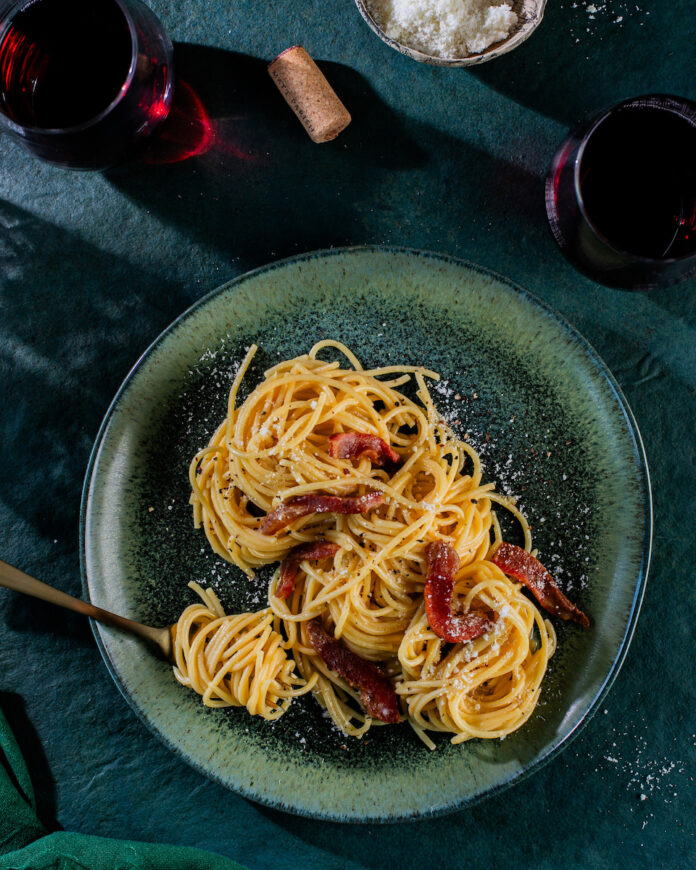
Known for his passion for authentic Italian cuisine, Stanley Tucci has highlighted the art of creating a perfect spaghetti alla Carbonara in his travels. Now, you can recreate this iconic dish in your own kitchen. Our recipe captures the essence of Tucci’s exploration of Italy. It combines simple, high-quality ingredients to deliver a creamy, savory pasta that’s rich in flavor and tradition. Whether you’re a seasoned chef or an enthusiastic home cook, this Spaghetti alla Carbonara is sure to impress with its genuine Italian flair and Tucci-approved authenticity.
What is Spaghetti Alla Carbonara?
Spaghetti alla Carbonara is a classic Italian pasta dish renowned for its creamy, rich sauce made without cream. This in spite of what they might tell you at a certain ubiquitous Italian casual dining chain in the United States. Its origins are a bit cloudy. Some say it comes from the United States, but the talented chefs and cooks of Rome refined it. Others contend that it is quintessentially Roman with its simplicity and depth of flavor. Tucci highlights guanciale, pork jowl, as one of the most important and often overlooked elements of making carbonara, so we’ve included it in ours as well.
Finely grate Pecorino Romano with a microplane and set aside.
Cut the guanciale about ¼” thick slices and then into 2” strips.
Combine egg yolks with the grated cheese, salt and pepper in a small mixing bowl.
Place guanciale in a cool pan and heat on medium to slowly render the fat. Once crisp, turn off heat and let cool.
Bring a large pot of salted water to boil. Cook pasta until al dente, remove a small ladleful of the pasta water for the sauce.
Pour the reserved ladle of water into the pan with the cooled guanciale and stir together.
Next, add the pasta to the pan, using tongs to mix together.
Quickly add the egg and cheese misture, continuously stirring until a creamy sauce forms. Make certain to do this off the heat as you will otherwise likely end up with scrambled eggs.
If the sauce is too runny, bring the pasta water to a boil again and place the metal pan over the boiling water, letting the indirect heat gently thicken the sauce. Use tongs to stir until desired consistency. Remember that the sauce will thicken as it sits.
Season with freshly grated pepper and serve on warmed plates.
Recipe and Styling by Veda Sankaran
Photography by Laura Petrilla
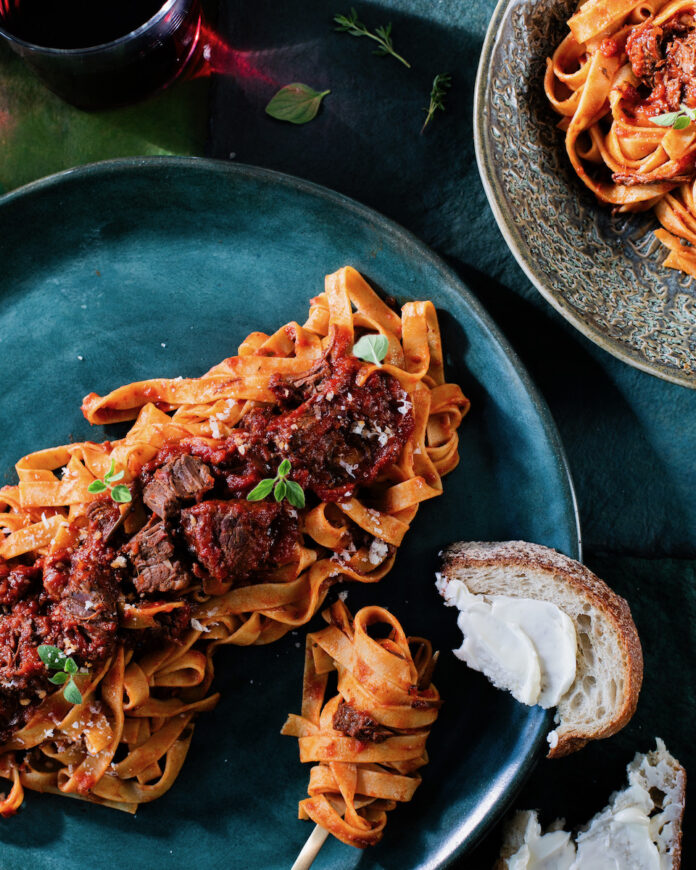
Our Tagliatelle al Ragù recipe captures the rich, comforting flavors of a classic ragù perfectly paired with silky tagliatelle, making it an ideal choice for a memorable dinner. We were inspired by Stanley Tucci’s travels in Searching for Italy. He shared his family’s recipe for ragù, and we’ve adapted it for you to try on your own. Though you might not be traveling with Tucci, indulge in a taste of Italy and make your next meal extraordinary with this delectable ragù dish. But if ragù is not your thing, why not try our Stanley Tucci inspired Pasta Alla Norma or the rest of our Tucci recipes.
What is Ragù?
The term ragù originally comes from “ragout,” a French stew named for a word meaning “to revive the taste buds.” Though ragù is a sauce, not a stew, it’s so thick that it almost might as well be. The defining feature of ragù is meat. This tagliatelle recipe is a take on a traditional ragù alla bolognese with beef, inspired by the chefs Tucci visited in Searching for Italy.
5 14 oz cans of San Marzano tomatoes (quick puréed with immersion blender)
Beef broth (optional to thin sauce if needed)
Instructions
Wash, drain, pat dry, and season the beef cubes with salt and pepper.
Heat a large dutch oven and pour in the olive oil. Once hot, place 1/2 the beef in a single layer. Brown on all sides and set aside. Add the remaining 1/2 of the beef and brown all sides again. (iIf your pan is large enough to do this all at the same time, then no need to brown in batches. If meat is not tender after this long, place the covered dutch oven in a 325 degree oven for an additional 45 minutes).
Once you have removed the browned beef, add the diced onions, garlic, and a little salt. Sauté until onions are translucent. Add the finely minced herbs, stir, and sauté for a minute.
Next, pour in ½ cup of the red wine, scraping the bottom and sides to deglaze the pan. Simmer for 1-2 minutes.
Pour in the puréed San Marzano tomatoes and add a pinch of sugar.
Stir and cover, leaving the lid a little askew. Simmer for around 30 minutes.
Then, place the browned meat along with any juices into the pan. Stir, cover the same way with the lid slightly askew.
Simmer on low heat for at least 2 hours, stirring frequently, until meat is tender.
Serve ragù over al dente tagliatelle. Top with Parmigiano Reggiano cheese.
Recipe and Styling by Veda Sankaran
Photography by Laura Petrilla
This cocktail recipe uses Lillet and Veuve Clicquot to evoke the romantic French setting of Emily in Paris. The first half of Season 4 of this hit show dropped recently in August, so sip as you watch to be transported to the City of Love. We’ve given you the option to make an infused blackberry and raspberry vodka for an extra touch of sweetness, or you can use your favorite berry liqueur.
When is Emily in Paris Season 4 Coming Out?
The most recent season of Emily in Paris premiered on August 15, but viewers will have to wait until September 12 to see the second half. That’s about enough time to infuse the Blackberry Vodka in this cocktail recipe, so while you wait for the next episodes, you can prepare this drink for the perfect watch party night. You can always skip the infusion and buy a bottle from the store, but why not go the extra mile—Emily would expect nothing less.
If you choose to make your own blackberry-infused raspberry vodka, Select 6 firm, ripe blackberries to dehydrate. Wash and pat them dry.
Place them in a single layer onto a sheet tray that’s lined with parchment paper. Set your oven or dehydrator to 200 degrees. Make sure to turn your blackberries every 30 minutes. Total drying time is 6-8 hours and can be longer when using a conventional oven. You want to achieve a dry and chewy texture.
Once the berries have cooled to almost room temperature, place them into your raspberry vodka. Allow this to sit for at least a month to infuse.
Simple Syrup Recipe
Simple Syrup Ingredients
1 cup sugar
1 cup water
Syrup Instructions
If you choose to make your own simple syrup, bring the water and sugar to a boil, stirring until the sugar is dissolved.
Remove the saucepan from the heat.
Allow the syrup to come to room temperature. Then pour into a container. This Simple Syrup will last a minimum of 2 weeks as is in the refrigerator or if you add a tablespoon of vodka or rum it will last longer.
Recipe and Styling by Sarah Cascone / Photography by Dave Bryce
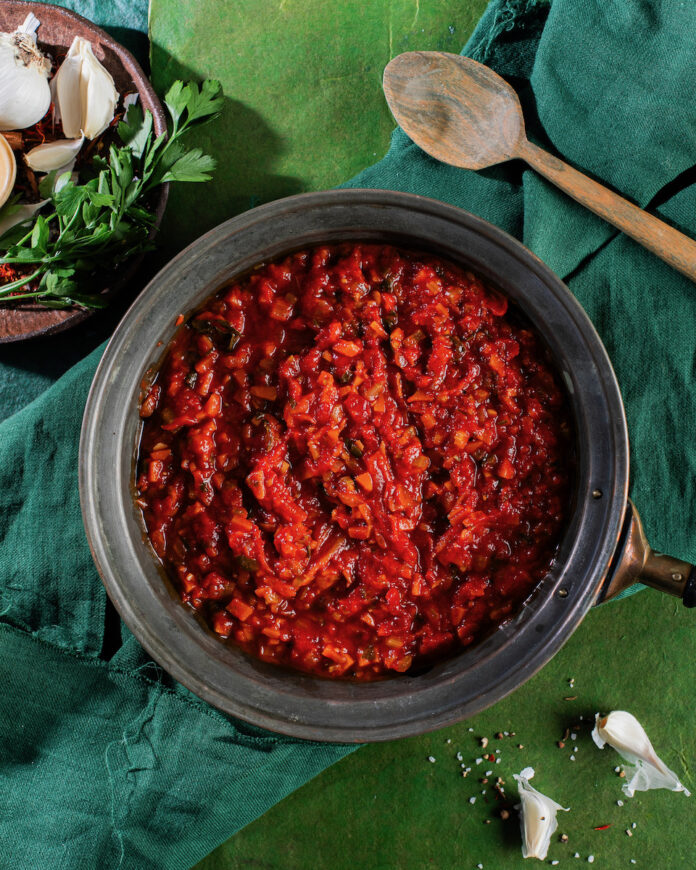
In the first episode of the beloved Stanley Tucci travel program Searching for Italy, Tucci makes a mouthwatering Maria Rosa Tomato Sauce recipe, a beautiful ruby-red color and brimming with flavor. Even if you’ve never had it, you could almost smell it through the screen. But if you found yourself wondering what that recipe was, TABLE has your back. We’ve got a cheat code to one of Tucci’s most delectable recipes.
When the Tucci family lived in Florence, Tucci’s sister befriended a local girl named Mirca. The two girls’ families became close, and Tucci’s mother became good friends with Mirca’s mother, Maria Rosa. Maria Rosa taught Tucci’s mother her sauce recipe, and Tucci shared that tomato sauce recipe with the world under her name to honor her friendship, hospitality, and culinary skills. Italian hospitality goes a long way!
A treasured family recipe from Tucci’s travels in Italy.
Ingredients
Scale
2 tbsp butter
1/4 cup olive oil
1 cup diced carrots (about 2 medium-sized carrots)
1/2 cup diced celery (about 2 small tender stalks)
1 cup diced onions (about 1/2 large onion)
2 large cloves garlic, chopped
2 tbsp chopped fresh Italian, flat-leafed parsley
4 cups canned whole San Marzano tomatoes (about one 35-ounce can)
Kosher salt
Black pepper
Instructions
In a deep saucepan, heat olive oil and butter.
Once the butter begins to bubble, start making the soffrito by softening the carrots, celery, and onions with the garlic. Be sure to stir continuously as it may take up to 10 minutes to soften.
Next, sprinkle in the chopped parsley and stir. Follow by crushing the tomatoes with your hands. If you want a slightly less textured sauce, pulse the tomatoes briefly with an immersion blender before adding to the pan.
Wait until the sauce begins to boil, then reduce the heat to medium low and season with freshly ground black pepper and salt.
Cover the pan, leaving a little opening for the steam to escape. Continue simmering until the flavors come together, around 30-45 minutes. Serve over pasta or use as a base for other recipes.
Recipe and Styling by Veda Sankaran
Photography by Laura Petrilla
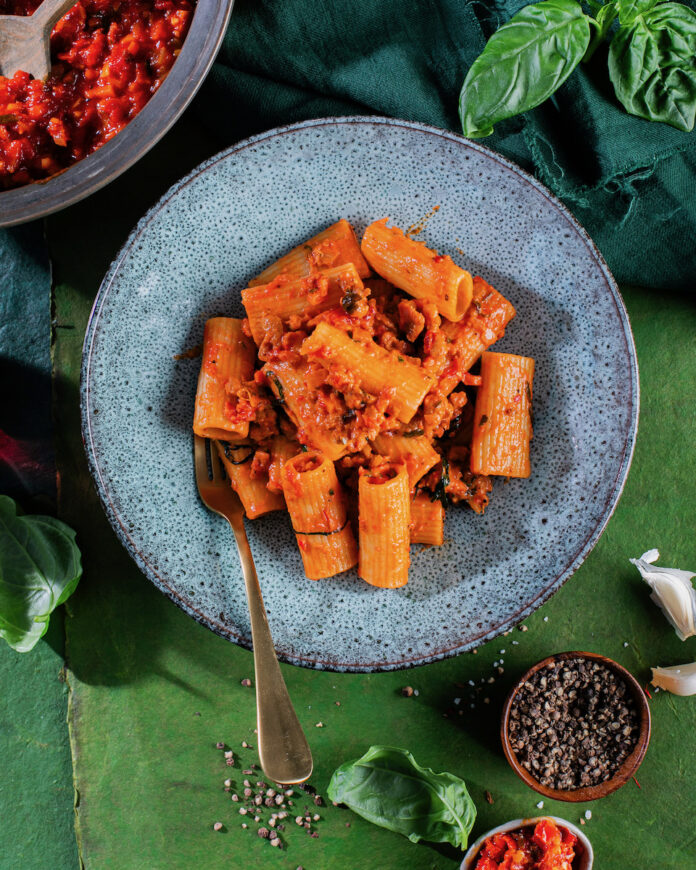
Stanley Tucci’s travel series Searching for Italy saw the movie star exploring his Italian heritage through food, and we couldn’t help being inspired…again and again, including in this Rigatoni pasta recipe. Last year, we brought you a Bucatini all’Amatriciana recipe, among others. This year, TABLE‘s Tucci-inspired series is back and better than ever with a version of the Maria Rosa tomato sauce recipe Tucci’s mother learned from a friend in Italy. For a meatless dish that uses Maria Rosa sauce, check out our Beans and Greens alla Maria Rosa.
About Searching for Italy and Tucci’s Rigatoni Recipe
Stanley Tucci’s Searching for Italy sees the Academy Award winning actor visiting his family’s country of origin in search of culinary delights from the Alps to Sicily, and everywhere in between. The chili we use in this recipe is from Calabria, the “toe” of the “boot” shape of Italy, which Tucci visits in the second season. Travel shows like Searching for Italy can be a great way to transport yourself to a dream vacation without the jet lag. We hope this recipe can do the same!
Set a large pot of well-salted water on high heat and cover.
Heat a skillet and enough olive oil to lightly coat the bottom.
Place in the Italian sausage and break apart with your spoon into small chunks.
Once the sausage begins to cook and lose its pink color, add Calabrian chili sauce to taste. Stir and cook until the meat begins to brown.
Throw the pasta into the boiling salted water. It will take approximately 8 – 10 minutes for the pasta to reach an “almost al dente” state.
Back to the sauce! Add a few tiny pinches of sugar, the balsamic vinegar and a little salt. Stir and cook until the meat is browned enough. Place in the chopped basil and stir to combine. Then, taste and add more Calabrian chili sauce if desired.
Pour in ladlefuls of the prepared Maria Rosa sauce until you reach the consistency you desire.
Reserve 2/3 cup of pasta water. Drain the “almost al dente” rigatoni in a colander. Return the rigatoni to the still-warm pot in which it boiled.
Combine most of the sauce, the rigatoni, and the pasta water in the pot. Cook over medium heat until pasta reaches al dente and the sauce has thickened.
Serve in flat bowls topped with a bit more of the sauce and finely grated Parmigiano Reggiano cheese.
Recipe by Veda Sankaran
Photography by Laura Petrilla
When one of your dearest friends and adventure pals (who lives clear across the country) says she’s dreaming of a leaf-peeping Hudson Valley fall vacation for a milestone birthday, you quickly make a plan. I declared the 430 mile distance between my Pittsburgh abode and our Hudson hotel drivable. Then, I loaded up the car and headed east on a soggy October Friday. The journey proved colorful, aesthetically speaking, but otherwise uneventful — fueled by good tunes and the promise of a happy reunion under the vibrant canopies of fall.
Things to Do This Fall in The Hudson Valley
As “Catskills” signs appeared, my GPS pulled me across the Rip Van Winkle Bridge and down the quaint streets of Hudson, NY towards The Wick, a Tribute Portfolio Hotel. This was our pleasant home base inside a former candle factory from the 1860s. Our accommodations, marked by an airy room with high ceilings, were located a stone’s throw from the Amtrak station where Melissa had arrived via two-hour train from New York City.
Photo by Joanna Virillo
During our first stroll along the walkable main street of Hudson, often referred to as “Downtown to the Upstate,” we quickly saw the influence of Big Apple folks who’ve made this outpost home. (Pandemic-driven migration brought a huge influx of weekenders-turned-residents to the Hudson Valley.)
Going Out, Hudson Valley Style
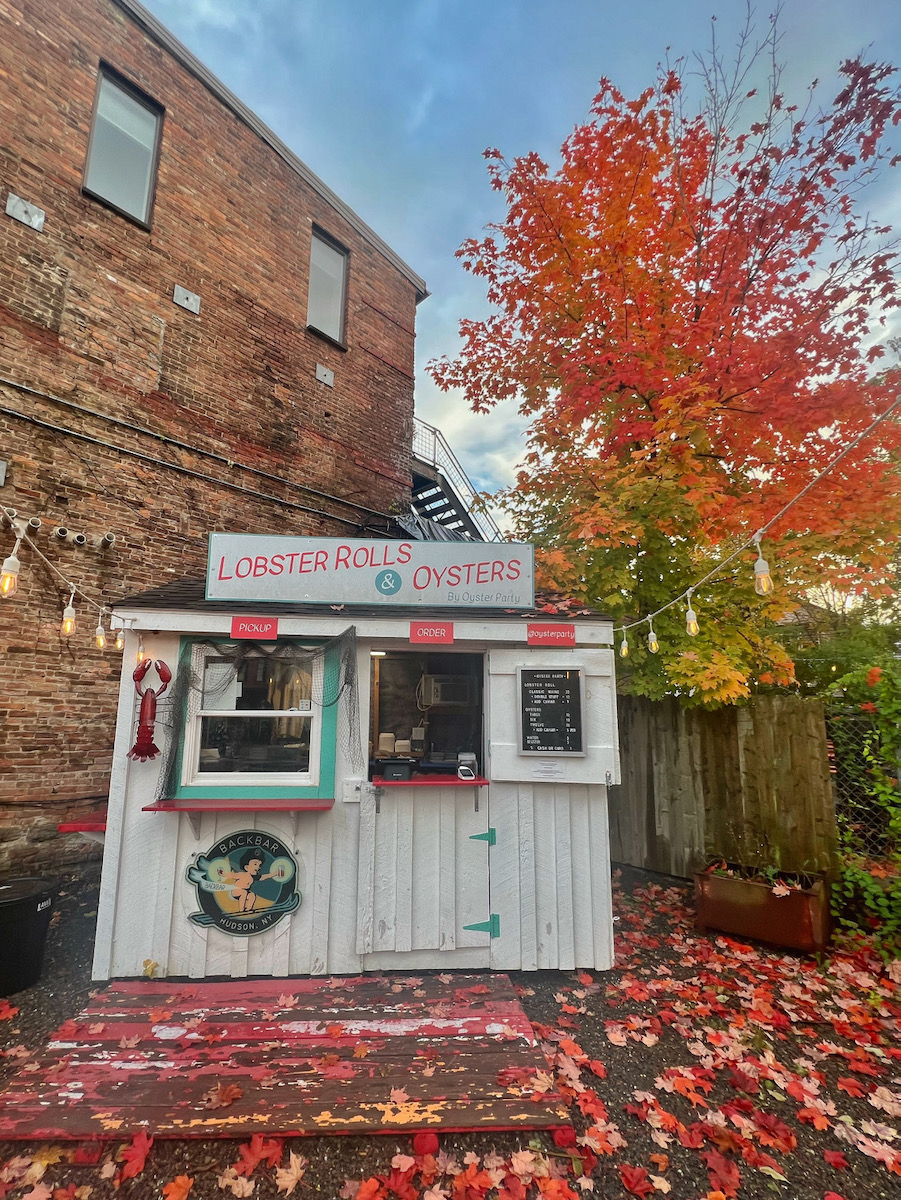
We strolled among the antique, minimalist, and modern furniture of FINCH and the ethically handwoven rugs of MINNA. We admired the artisan cheeses and salami of Olde Hudson Market, as well as the enticing lobster rolls by Oyster Party, served out of a chic seafood “shack” in the Backbar courtyard.
Pumpkins and autumnal arrangements adorned leaf-dotted sidewalks, and two fluffy, matching Samoyeds peeped out from their owner’s stoop. Antique shops bustled with stylish couples and girls getaway contenders. The town felt decidedly movie set-ready, each character carrying a potential storyline we felt tempted to crack. While sipping a welcome beer at Return Brewing, we ogled a convention of costumed witches who were clinking glasses across the way at Upper Depot Brewing Co.
A Bit of Hudson Valley History with Dinner
Night one’s dinner was enjoyed in a back dining room of The Maker. This restaurant also happens to be an 11-room hotel spread across three historic buildings. Amid dark wood, floral wallpaper, grand light fixtures, and a private wedding gathering we seemed to be crashing, we savored the heirloom eggplant terrine, local beef tartare, house-smoked carrots, handmade pasta, and sirloin steak.
We ordered a round of celebratory Old Fashioneds and learned about the venue’s cocktail-fragrance pairings. These are inspired by the hotel’s line of signature perfumes. The space dripped with greenery and buzzed with the conversation of young professionals in vacation mode.
Photo by Rebecca Conran
Seeing the Hudson Valley Foliage
On Saturday we tugged on our raincoats, ate hipster breakfast sandwiches from neighboring Kitty’s, and set out on a foliage hunt. We immediately struck gold (and orange and yellow) at Olana State Historic Site, where painter Frederic Church’s designed landscape encompasses 250 acres that the public (and their leashed dogs) can explore daily from 8 a.m until sunset. We hiked the loop, stopping often to soak in Hudson Valley and river panoramas, draped in the best hues fall can possibly offer.
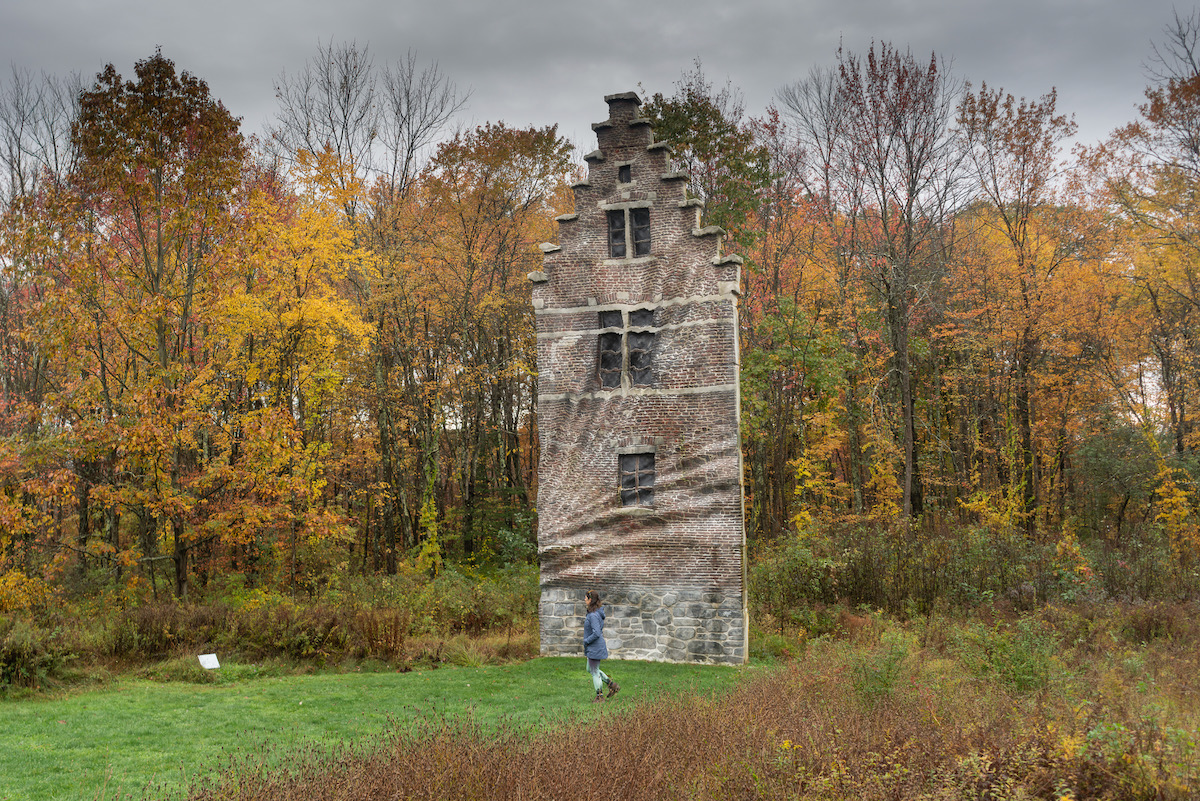
Afterward, we popped into a local farm in Ghent for tamales and apple cider donuts. Then, we headed to Art Omi, an expansive sculpture and architecture park where greeters reminded us we had landed on the ancestral homelands of the Mohican people.
LevenBetts, Zoid, 2018. Photo: Alon Koppel. Courtesy of Art Omi.
We spent far longer than anticipated meandering the tranquil 120 acres of fields and forest, studying and posing with 60-plus large-scale works, including Alexandre Arrechea’s interactive “Orange Functional” that allowed us to shoot hoops into the chandelier-esque sculpture’s cascading arms.
Carl D’Alvia, Lith, 2016. Photo: Alon Koppel. Courtesy of Art Omi.
One Last Meal
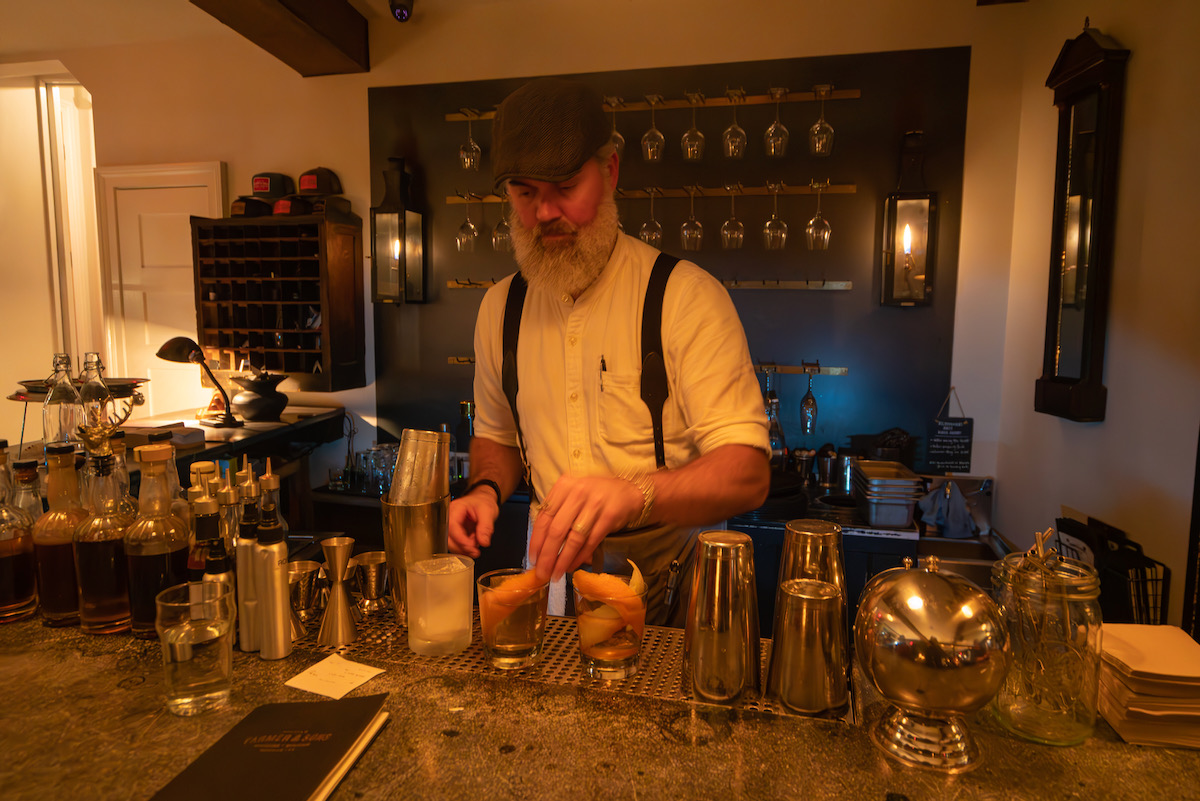
The final dinner of our Hudson Valley fall vacation at Wm. Farmer and Sons proved a magic-tinged evening that confirms why I travel. Inside a 19th-century Front Street building, we settled into our cozy corner table amid exposed brick, copper accents, and flickering candlelight.
Our immediately affable server, donning mesmerizing vintage jewelry from nearby Woodstock, served us a meal for which I still swoon. It was Long Island oysters, seasonal veggies, outstanding fried chicken and trout mains, plus chilled Syrah to complement it all. Outside our window, the October sky split into shards of pink, and I sunk into the contentment of the moment. I raised a glass to my dear friend and the newly discovered charm of a Hudson Valley fall vacation.
Story by Corinne Whiting / Principal Photography by Melissa Dismuke