Home Blog Page 124

Halloween Coffee Cake

0
A Halloween-themed coffee cake on a black background.

This is a perfect not too sweet Halloween Coffee Cake. Not only is it delicious, it is easy to double down on Halloween references and modify it into a spooky design. We’ve used skull molds to give it that special Halloween cake touch, but you can also use bats, pumpkins, spider…whatever says Halloween to you. Discover how to create a Coffee Cake that’s as delicious as it is spine-chilling.

Why Does Coffee Cake Not Have Coffee in It?

Coffee cake is to go with coffee, not taste like coffee. You can find coffee in some early versions of the recipe, but over time, water or milk replaced coffee. The exact reasons for this are unclear, but pairing pastries with coffee became popular in European cities like Vienna and Copenhagen as café culture developed. The coffee cake is designed to be light, with a warm cinnamon flavor perfect for pairing along with a cup of espresso in the fall. 

Print
clock clock iconcutlery cutlery iconflag flag iconfolder folder iconinstagram instagram iconpinterest pinterest iconfacebook facebook iconprint print iconsquares squares iconheart heart iconheart solid heart solid icon
A Halloween-themed coffee cake on a black background.

Halloween Coffee Cake


  • Author: Anna Franklin

Description

Don’t forget your cup of coffee on the side!


Ingredients

Scale
  • 1 box yellow cake mix
  • 1/4 cup melted butter
  • 1 cup light brown sugar
  • 1 cup pecans, chopped
  • 1 tbsp cinnamon
  • 3 eggs
  • 1/2 cups sour cream


Instructions

  1. Preheat oven to 350 degrees.
  2. Grease or parchment mine a 9×13 inch baking pan. Set aside.
  3. Remove 2/3 cup of the dry cake mix and combine with 1/4 cup melted butter, brown sugar, cinnamon and chopped pecans. Set aside.
  4. In a large bowl, combine remaining cake mix with the 3 eggs and sour cream, mix until smooth.
  5. Pour half the batter into your prepared pan and top with half of the pecan brown sugar mixture. Top with the remainder of the batter.
  6. For the second layer of the pecan brown sugar mixture, add 1 tablespoon of additional flour to the mixture and press into skull molds. Pop the molds into the freezer for 30 minutes before trying to remove them.
  7. Place the skulls on top of the coffee cake and bake for 45 minutes to 1 hour, or until a toothpick inserted comes out clean. Serve at room temp.

Recipe and Styling by Anna Franklin
Photography by Dave Bryce 

Subscribe to TABLE Magazine’s print edition.

The Huntsman: A Twist on the New York Sour

0
A short cocktail glass with a New York Sour in waves of orange, red, and white foam on top.

The Huntsman is Blackberry Farm’s twist on a New York Sour. It offers the feel of a whiskey sour with dark fruit and vanilla notes. This beautiful winter drink features a red wine float, creating a captivating rim at the top of the cocktail. The Huntsman not only impresses on an aesthetic front but also in its blend of warm, dark, and rustic flavor profiles. The best way to have one is to visit their Wine Cave‘s bar in person. But making it at home and sharing with a loved one is wonderful, too.

What is a New York Sour?

A New York Sour is much like a whiskey sour with a hint of red.  It combines the tartness of whiskey, the tang of lemon juice, a dash of red wine, and a frothy egg white rim. The addition of an egg white foam adds a silky texture and a touch of sweetness in this otherwise strong drink. Finish with a garnish of a cherry or lemon twist and you’ve got a classic cocktail recipe on hand.

A short cocktail glass sits in the center of a white wood table with a New York Sour inside in the colors orange, red, and a white foam.

The Huntsman: A Blackberry New York Sour Recipe

New York Sour Ingredients

  • 1 oz Rittenhouse Rye
  • 1 oz vanilla syrup (We love to use Le Monin vanilla syrup.)
  • 1 oz lemon juice
  • 1 egg white
  • Malbec wine for floating

Cocktail Instructions 

  1. Shake all ingredients in a tin without ice. This is known as a “dry shake” and is an important first step to ensure the egg white gets incorporated fully. 
  2. Then, add ice and shake again. Strain all ingredients in to a rocks glass with fresh ice.
  3. Give the cocktail about 5-10 seconds to form a foamy white layer at the top.
  4. Over the back of a bar spoon, lightly pour about a half ounce of red wine into the cocktail. We recommend a malbec or merlot. You will see a distinct red rim start to form just below the surface of the foam. 

Recipe by Blackberry Farm / Styling by Anna Franklin / Photography by Dave Bryce

A footer photo with a black background and subscribe info and button

Subscribe to TABLE Magazine‘s print edition.

Beet Red Sangria

0
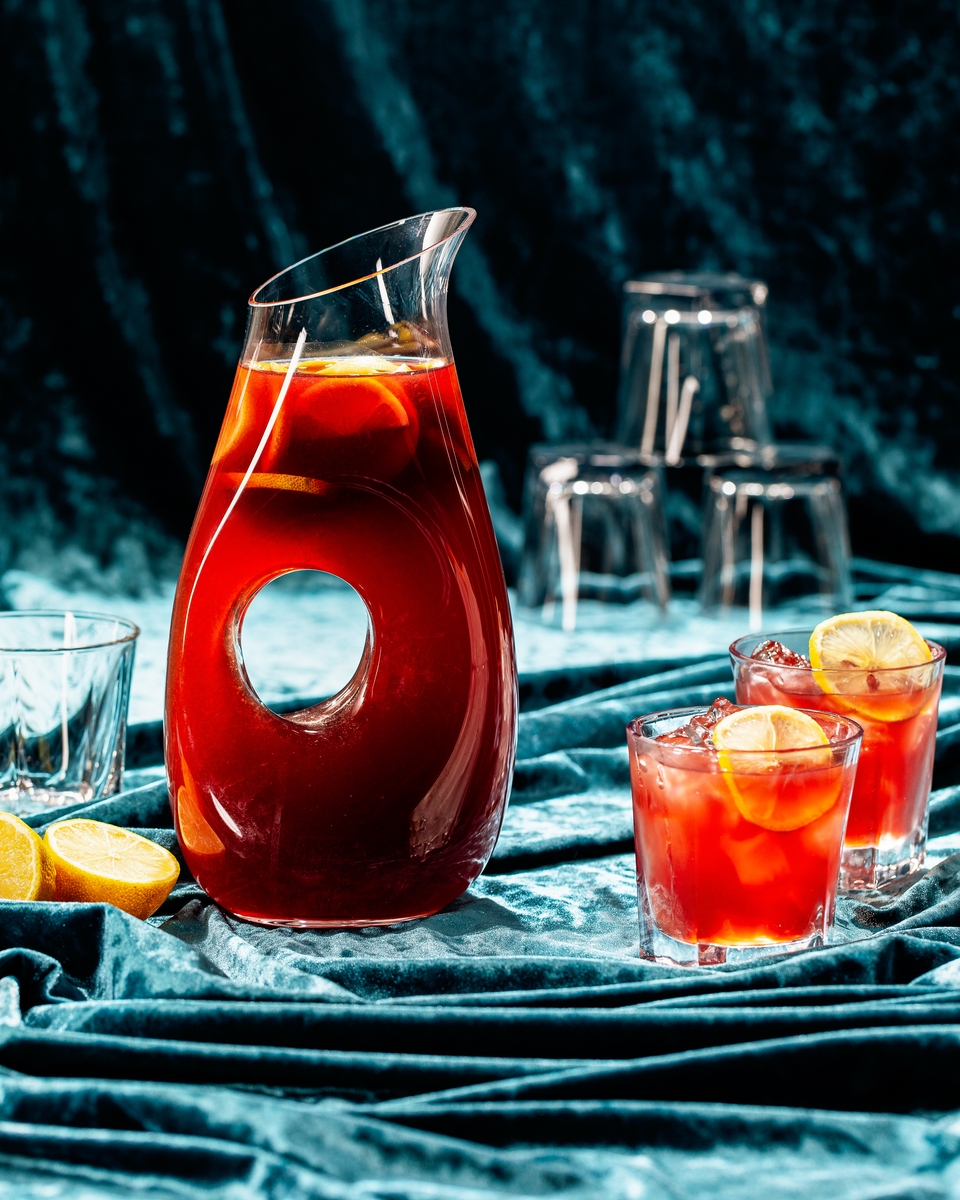
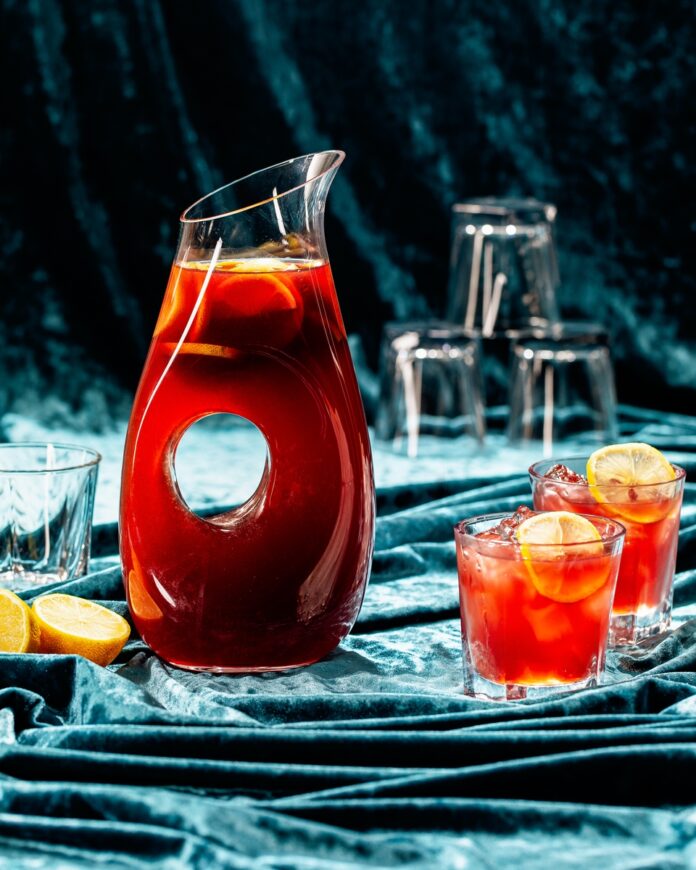
Two cocktail glasses full of beet sangria in a red color sits on a white wood table with orange slices and herb garnishes.

Let our Beet Red Sangria be your introduction to how beets can add a complex flavor that no other ingredient can. With its stunning red color and bold flavor, this sangria is sure to be a hit at your next gathering. The combination of sweet and tart fruits, tangy citrus, and earthy beets creates a taste unlike any other cocktail. Plus, you can dress up this drink in your favorite garnishes like orange and apple slices. Our friends from Blackberry Farm were gracious enough to share it with the readers of TABLE Magazine. It comes from their Wine Cave‘s bar.

How Long Should You Let Sangria Sit Before Drinking?

For the best flavor, it’s recommended to let sangria sit in the refrigerator overnight. This allows the flavors of the wine, fruit, and other ingredients to meld together. If you’re short on time, a few hours (or at least 30 minutes) will still yield delicious results. However, the longer you let it sit, the more complex and flavorful the sangria will become.

Print
clock clock iconcutlery cutlery iconflag flag iconfolder folder iconinstagram instagram iconpinterest pinterest iconfacebook facebook iconprint print iconsquares squares iconheart heart iconheart solid heart solid icon
Two cocktail glasses full of beet sangria in a red color sits on a white wood table with orange slices and herb garnishes.

Beet Red Sangria


  • Author: Kylie Thomas
  • Yield: Serves 5-8 1x

Description

Beets and wine make a sangria you’ll sip on all day long.


Ingredients

Scale
  • 1 bottle red wine – We keep our version bright and fresh by using a richer-style Pinot Noir instead of a darker grape. We use Melville’s Pinot Noir from the Santa Rita Hills.
  • 2 cups beet/herb simple syrup (recipe below)
  • ½ cup orange juice (fresh if you can!)
  • 1 cup water
  • 1 cup lemon juice (also fresh)
  • ½ cup Cointreau

For the beet/herb simple syrup:

  • Fresh herbs (thyme, rosemary and a little bit of mint)
  • 2 cups water
  • 1 cup sugar
  • 2 cups red beets
  • 1/2 lemon


Instructions

  1. Mix all ingredients together and add to an ice-filled wine glass. Garnish with your favorite fruits, we love to use orange slices and Granny Smith apple chunks.

For the beet/herb simple syrup:

  1. Steep your favorite fresh herbs in 2 cups of simmering water for 20 minutes. Strain out the herbs and add a cup of sugar. Stir until the sugar dissolves fully. Remove it from heat and allow your herb syrup to cool.
  2. Juice and strain 2 cups of red beets. We squeeze in half of a lemon to brighten the beet juice and help preserve its freshness.
  3. Add the two together to produce about a quart of the beet/herb simple syrup.

Recipe by Blackberry Farm 
Styling by Anna Franklin
Photography by Dave Bryce

Subscribe to TABLE Magazine‘s print edition.

Apple Crisp

0
A green pan with apple crisp in it sits on a wood table surrounded by apples, brown sugar, and walnuts, and a spoon.

Apple Crisp is a nostalgic taste of fall.

To me, Apple Crisp is THE dish of fall. It takes me back to childhood, when my mother would search out tangy Jonathan baking apples from area orchards each fall to make it particularly special. 

Apples are so commonly available these days that they’ve lost a bit of their seasonal luster. They are particularly luscious when at their peak of recently picked ripeness. Autumn offers the best possibility of finding locally grown varieties like tangy Jonathan baking apples mentioned above. Make the effort to seek these out from orchards or farm markets to be reminded of how special these tree fruits really can be.

What’s the Difference Between Apple Crisp, Apple Crumble, and Apple Cobbler?

Apple crisp, apple crumble, and apple cobbler are all delicious desserts that feature apples, each with their own distinct characteristics. A crisp is typically made with a topping of oats, brown sugar, and butter, creating a crunchy, golden-brown crust. A crumble is similar to a crisp but has a coarser texture due to larger chunks of butter or even whole nuts within the crumble. Finally, a cobbler is made with a biscuit or pastry dough that is dropped over the apple filling for a soft, flaky topping.

An apple crisp sits in a dish with a spoon taking a piece out of the pan. The piece sits on a plate to the right of the pan.

Apple Crisp Recipe

Serves 6 to 8 

Apple Crisp Ingredients

  • 3 lb tart apples, such as Jonathan or Granny Smith 
  • 1 cup unbleached all-purpose flour 
  • 1 cup packed dark or light brown sugar 
  • ½ cup pecan pieces 
  • 1 tsp ground cinnamon 
  • ½ tsp salt 
  • ½ cup (1 stick) + 2 tbsp unsalted butter 

 Crisp Instructions

  1. Preheat the oven to 375 degrees.   
  2. Butter and 8-to-9-inch skillet or baking dish. 
  3. Peel, core, and slice the apples into small chunks. Pile them into the prepared skillet. Mix about 2 teaspoons of the flour with the apples. 
  4. Combine the remaining flour, brown sugar, pecans, cinnamon, and salt in a food processor, and pulse to combine. Add the butter and pulse until the mixture becomes a crumbly meal.  
  5. Spoon it over the apples evenly, packing it down lightly. Bake the crisp for about 30 minutes, until the topping is crunchy and the apples tender. Serve warm. 

Adapted from American Home Cooking © 2000 by Cheryl Alters Jamison and Bill Jamison 

Story and Recipe by Cheryl Alters Jamison / Photography by Tira Howard / Styling by Keith Recker 

A footer photo with a black background and subscribe info and buttonSubscribe to TABLE Magazine‘s print edition.

Ginger Pear Upside-Down Cake

0
A pear upside down cake sits on a wooden table with a slice taken out of it on a plate to the top left.

Fruit-topped upside-down cakes have a retro hominess. Our recipe turns the pineapple classic on its head, substituting pears, and then lacing both the cake and its gooey topping with a warming flourish of ginger.

Tips for Making an Upside-Down Cake

To ensure a perfect upside-down cake, you always want to start with your desired toppings (like fruit or nuts) at the bottom of the pan. A well-mixed cake batter also goes a long way, creating a smooth texture throughout. When baking, avoid over-baking, as the cake should be slightly moist in the center when you remove it. It’s important that you do not flip the pan right out of the oven! Instead, allow the cake to cool completely before inverting to prevent sticking. To make the cake even easier to release, you can line the pan with parchment paper or grease it generously before building.

A pear upside down cake sits in a cast iron pan on a wooden table with a pie spatula nearby.

Print

clock clock iconcutlery cutlery iconflag flag iconfolder folder iconinstagram instagram iconpinterest pinterest iconfacebook facebook iconprint print iconsquares squares iconheart heart iconheart solid heart solid icon
A pear upside down cake sits on a wooden table with a slice taken out of it on a plate to the top left.

Ginger Pear Upside-Down Cake


  • Author: Cheryl Alters Jamison

Description

A little sweet and a little warming.


Ingredients

Scale

For the Topping: 

  • 6 tbsp (3/4 stick) unsalted butter 
  • ¾ cup packed dark brown sugar 
  • ½ tsp ground ginger 
  • ¼ cup finely chopped candied crystallized ginger 
  • 5 juicy-ripe medium pears, peeled, halved, and cored 
  • Approximately 1/3 cup pecan halves 

For the Cake: 

  • 1½ cups sifted cake flour 
  • ¾ tsp ground ginger 
  • ¾ tsp baking powder 
  • ¼ tsp baking soda 
  • ½ tsp salt 
  • 3 large egg yolks 
  • ½ cup sour cream 
  • 1 tsp vanilla bean paste or pure vanilla extract 
  • ½ cup (1 stick) + 1 tablespoon unsalted butter, softened 
  • ¾ cup granulated sugar 


Instructions

  1. Melt the butter for the topping in a 8 to 9-inch cast-iron skillet or other heavy skillet over medium heat. 
  2. Stir in the topping ingredients of brown sugar and ginger, and remove the pan from the heat.  
  3. Arrange the pear halves, cut side up, in the skillet. Fit them snugly in concentric circles or in another pattern that pleases you. Tuck pecans in spaces between the pears. 
  4. Preheat the oven to 350 degrees. 
  5. Sift together the flour, ginger, baking powder, baking soda, and salt.  
  6. In a small bowl, lightly whisk the egg yolks with the sour cream and vanilla.  
  7. Cream together the butter and granulated sugar with an electric mixer at medium-high speed until light and fluffy, about 5 minutes. Mix in the egg mixture and flour mixture in thirds, alternating the two. Mix for about 20 seconds following each addition, stopping to scrape down the sides of the bowl as necessary.  
  8. Spoon the batter over the topping in the skillet, smoothing the surface. Bake for about 50 minutes, until nicely brown and a toothpick inserted in the center comes out clean. 
  9. Immediately run a knife around the sides of the cake and invert the skillet onto a serving plate. Leave the skillet in place over the cake for a couple of minutes, then carefully remove the skillet. This gives time for the caramelized topping to release fully from the skillet, but if any clings stubbornly, scrape it out and smooth it onto the cake. Cool for at least 10 additional minutes before slicing into wedges. Serve warm or at room temperature.  

Adapted from American Home Cooking © 2000 by Cheryl Alters Jamison and Bill Jamison 

Story and Recipe by Cheryl Alters Jamison
Photography by Tira Howard
Styling by Keith Recker and Julia Platt Leonard

Special thanks to Brad Furry and Bradyn Furry for their help on this delicious photo shoot.

Subscribe to TABLE Magazine‘s print edition.
Grilled Cheese and Pear Sandwich

0
A pear grilled cheese sandwich set on a rustic table with slices of bread beside it

Fruit and cheese makes a worthy finish to a meal, but with this grilled cheese recipe with pear, it IS the meal. And a good one, too. Combine pears with fontina and an herb sauce for a creamy, dreamy, sweet and savory lunch sandwich. Any bread can work, but give this a try with either raisin or rye for something even more special.

Tips for the Best Grilled Cheese

Though we’ve suggest Fontina, Taleggio, brie, or Monterey Jack, you can also combine cheeses. Chose a blend of cheeses for depth of flavor and meltability. Butter the bread generously, and for an extra crispy and flavorful crust, you can even mix a little bit of olive oil into the butter. Also, once you’ve got everything together on the pan, press your sandwich down gently with a spatula to make sure it’s all coagulated.

Print
clock clock iconcutlery cutlery iconflag flag iconfolder folder iconinstagram instagram iconpinterest pinterest iconfacebook facebook iconprint print iconsquares squares iconheart heart iconheart solid heart solid icon
A pear grilled cheese sandwich set on a rustic table with slices of bread beside it

Grilled Cheese and Pear Sandwich


  • Author: Cheryl Alters Jamison

Description

A surprisingly delicious combination.


Ingredients

Scale
  • Parsley Sauce
  • 6 tbsp unsalted butter, softened
  • 8 slices raisin, rye, or soft country bread
  • 2 juicy-ripe pears, about 8 oz each, preferably red-skinned
  • 6 oz grated fontina or Monterey jack, or sliced taleggio or brie cheese

For the parsley sauce:

  • ½ cup packed minced flat-leaf parsley
  • 1 small garlic clove, minced
  • ½ cup extra virgin olive oil
  • Salt


Instructions

  1. Generously spread butter on one side of each bread slice. Cut the skin-on pears into slices, about 1/3 of an inch thick. Warm a large cast-iron skillet or griddle over medium heat.
  2. Spread about 1 teaspoon of parsley sauce on the unbuttered side of half the bread slices.
  3. Arrange the other bread slices in the skillet, buttered side down.
  4. Top each with 1/8th of the cheese, covering the entire exposed surface of the bread slices. Layer pears over the cheese, then sprinkle remaining cheese evenly over the pears. Top with the remaining slices of bread, the ones with the parsley sauce, buttered side up. Cook until the sandwiches are golden brown and crisp, with melted cheese, 8 to 10 minutes, turning once.
  5. Slice into halves and serve each with additional drizzles of the parsley sauce.

For the parsley sauce:

  1. Combine the parsley and garlic in a small bowl. Slowly whisk in the oil. Season with salt. Reserve.

Recipe by Cheryl Alters Jamison
Styling by Keith Recker and Julia Platt Leonard
Photography by Tira Howard

Special thanks to Brad Furry and Bradyn Furry for their help on this delicious photo shoot.

Subscribe to TABLE Magazine’s print edition

A Presidential Debate Cocktail: The He Said/She Said

0
A red cocktail sits slightly behind a blue cocktail both in the same glasses.

Within our Presidential Debate Cocktail is the biggest decision you’ll make this election cycle! Will you choose what He Said or She Said? With the same base these respectively colored blue and red cocktails only vary by one ingredient, and that ends up making a HUGE difference.

The red version is hard hitting with the standout, bittersweet addition of Campari. It’s just what you need after what feels like a never-ending, doom-filled debate night. The blue version of this cocktail uses citrusy blue curaçao to create an opposing flavor-profile. It’s vibrant but still keeps the alcohol content at just the level you want to get through countless debate interruptions.

But, at the end of the day, both these variations are made from the same boozy cocktail base (which you may need to get through those anxiety-ridden 90 minutes). This recipe shows that no matter what cocktail you choose to make (or candidate you vote for this November) we are all the same inside, just human beings trying to make it through this outrageous thing called life.

A red cocktail in a short glass sits against a black background.

When is the 2024 Presidential Debate and Where Can I Watch It?

The first debate between 2024 presidential candidates Donald Trump and Kamala Harris will take place on September 10 at 9 p.m. EST. The debate moderators consist of World News Tonight anchor and managing editor David Muir, along with ABC News Live Prime anchor Linsey Davis. Some main rules are that the debate will last 90 minutes, have no audience in the studio, and a candidate will have their microphone muted when the time belongs to another candidate. You can view the debate live on ABC or stream it on ABC News Live, Disney+, and Hulu.

A blue cocktail in a short cocktail glass with ice sits against a black background.

A Presidential Debate Cocktail: The He Said/She Said Recipe

Presidential Debate Cocktail Ingredients

  • .75 oz blue curaçao OR .75 oz Campari
  • 1 oz vodka
  • .25 oz triple sec
  • .5 oz lemon juice
  • .25 oz simple syrup
  • Top with seltzer

Cocktail Instructions

  1. Add liquor, citrus, and simple syrup to shaker.
  2. Dry shake for a few seconds.
  3. Pour over ice and top with seltzer.
  4. Settle in for the debate and enjoy!

Recipe by Zack Durkin
Photography by Dave Bryce

Subscribe to TABLE Magazine‘s print edition.

Row 7 Seed Company Grows Produce with Purpose and Breeds For Flavor

0
three chefs standing in front of red van with seeds
Seed experts Michael Mazourek and Matthew Goldfarb join renowned chef Dan Barber in the field.

Less than a decade ago, Row 7 Seed Company sprouted from a challenge: breed me a seed for flavor, not just yield or shelf life. The mission was to introduce a collaboration that brings chef and breeder together to grow foods that taste… better. Much better.

Fresh produce grown from Row 7 Seeds displayed on rustic surface

It began with a squash. Now there are 11 seed varieties and counting. What makes them special? The orange-yellow coloring of the Badger Flame Beets. The texture and color of the crisp, flavorful and royal purple Beauregard Snow Peas.

Colorful vegetables harvested from Row 7 Seeds collection

Row 7 Seed Company’s Garden Innovation

Beyond the seeds themselves, Row 7 Seeds is planting something bigger: a movement to reconnect flavor with farming. By bridging the gap between breeders, farmers, and chefs, they’re reshaping the food system from the ground up—literally. It’s not just about what grows well, but what tastes remarkable, nourishes the soil, and excites the plate.

Whether you’re a first-time gardener or a seasoned cook, each seed invites you to participate in that journey. From planting to plating and flavor to future, Row 7 Seeds is an inspiration to the farming and culinary industry today.

Assorted farm vegetables grown from Row 7 Seeds varieties

The nuance of sweet-without-the-burn Habanada Peppers. The buttery overtone of Upstate Abundance Potatoes. All of them encourage a plant-and-cook approach to food.

Every seed that Blue Hill and Blue Hill at Stone Barn’s chef/co-owner Dan Barber, breeder Michael Mazourek, and seedsman Matthew Goldfarb sow have been put to the test. The taste, literally, to ensure that whatever they plant is worthy of the plate and palate it ends up on.   

Close-up of fresh vegetables cultivated from Row 7 Seeds

Even yours. Grow it. Cook it. Whip up your own recipe or try one of theirs, like the Grilled 7082 Cucumbers with Fresh Dill or Smashed Upstate Abundance Potatoes with Chili Oil.

The online growing guide lays out in layman’s terms exactly what you’re getting into: tips on storage, harvest, days to maturity, pest/disease info, transplanting, spacing. All you need is a good pair of gardening gloves.  

Seasonal produce from Row 7 Seeds arranged for display

For more information on these certified organic seed varieties cultivated in New York’s Hudson Valley and Finger Lakes regions visit Row 7 Seed Company.

Story by Kate Benz
Photography by Row 7 Seed Company

Subscribe to TABLE Magazine’s print edition.

Fall Gardening Tips for the Changing Season

0
Vertical image of dark perennial seedheads, great for fall gardening, and grasses with hazy morning light and sunbeams at sunrise
The dream of most gardeners is to be dazzled all year round by color, texture and movement. That takes thought and planning, and new contributor Julie Kachniasz offers her expertise in landscape architecture, as well as her encouragement, to TABLE readers.

If you’re like me, it’s hard to choose a favorite season. I prefer a garden that celebrates each one in turn. For fall, that means embracing transformations, as well as choosing plants that capture the season’s particular beauty and abundance.

If your garden lacks late-season charmers, fall is one of the best times to plant; the soil retains warmth, and the cooler air temperatures are less likely to stress the plants and deprive them of much-needed moisture. In this, my first piece for TABLE, I want to share some of my favorite plants for making autumn awesome.

Fall Gardening Tips for the Changing Season

Grasses—yes, grasses—are particularly wonderful at catching the angled fall light and brisk autumnal winds. Morning Light Maiden grass (Miscanthus sinensis), for example, adds a silvery quality to the garden border with its variegated foliage. Its airy plumes emerge deep red late in the season, before turning gold to accent the winter landscape. At six-feet tall and four-feet wide, Morning Light provides a dramatic focal point.

Still tall and dramatic, but better-suited to tighter spaces, is the native switchgrass (Panicum virgatum). I’m partial to the Northwind cultivar, for its sturdy blue-green foliage that turns bright yellow in fall and remains upright through winter snow. It also sports flowery panicles and showy seed heads that add sparkle when the rest of the garden is at its most quiet. (Northwind is named for the nursery of the great plantsman, Roy Diblik, who taught me about perennials in grad school, and whose exceptional plants I frequently seek out.) For a slightly looser effect, try Shenandoah, another gorgeous cultivar with ribbon-like red foliage and a slightly shorter stature.

But say you have space to fill at the front of the garden. Look to the lower-growing, native prairie grasses. Dwarf Prairie Dropseed (Sporobolus heterolepis “Tara”) creates soft clumps of arching, finely-textured green leaves. Its panicles appear to float above the foliage and smell like popcorn. The amorously-named Purple lovegrass (Eragrostis spectabilis) shares this airy quality, with flowers that resemble purple clouds when planted in drifts. Choose a dry location with morning sun to capture their full effect, and watch for the flowers to scatter on windy days.

Don’t Skimp on Grasses This Fall 

Grasses are easy to care for. Give prairie grasses too much water or fertilizer, and they’ll flop. Plant them instead in a sunny spot, with enough space to do their thing, and they’ll thrive. In early spring, cut back the dry foliage to make way for new growth.

Grasses also mix beautifully with perennials, and many pollinators beloved for their long-blooming summer flowers continue to dazzle through fall and winter, as long as we’re not overzealous with the pruners. The Summer Beauty ornamental onion (Allium angulosum, another Roy Diblik introduction) is one of my favorites. It has glossy green foliage and lilac-colored round umbels that persist for months. Once the weather cools, the seeds resemble a child’s sparkler. Similarly, the spiny seed heads of coneflowers (Echinacea purpurea) and black-eyed Susans (Rudbeckia fulgida) create dark punctuation marks in the winter landscape (though I’ve been known to strip the stems of their leaves once they become too tattered—a garden is still very much a cultivated space). Blazing star (Liatris spicata) offers long spikes of soft brown seeds after its purple flowers fade.

To best capture the shift of seasons, try adding in some perennials with foliage that celebrates the passage from summer to fall. Threadleaf bluestar (Amsonia hubrechtii) lights up the garden with extremely soft golden-yellow foliage, while the hardy Cambridge geranium (Geranium cantabrigiense) flames a brilliant red. (The spicy fragrance its leaves emit when rubbed smells like fall, too.)

The Growth Cycle

Allowing plants to complete their growth cycle reminds us how nature continually renews itself. Just as summer flowers support our native bees and butterflies, the remaining seed heads provide much-needed winter food for birds. And all of those sturdy grasses? Winter shelter. Unless the cultivar is bred to be sterile (and not to spread), any seeds left behind will create new plants, ensuring that our favorites return indefinitely to the garden, even if—as is the case with coneflowers—the plants themselves are short-lived.

Fall, then, is the perfect time to slow down in the garden. Savor these seasonal changes, and resist the urge to be overly tidy. As foliage decomposes, it feeds the worms and insects below, creating a richer soil for future growth. So go ahead and rake the leaves off the lawn, but try leaving them where they fall in the perennial beds. They’ll nourish the soil through the winter and protect any new perennials from the harsh cold. Come spring, it’s immensely satisfying to clear away last-season’s foliage and reveal new growth below.

Story by Julie Kachniasz 

Subscribe to TABLE Magazine’s print edition.

Easy, Craft, and Classic Rum Cocktails

0
Two tall glasses hold strawberry daiquiris, frozen and topped with strawberries and lime slices as more strawberry and lime slices lay on the table below.

Are you ready to embark on a flavor-filled journey through the world of rum cocktails? Believe it or not, there are a huge variety of rums available for your cocktail making needs. Through these recipes, we’ll introduce you to the different types and give you an idea of how to use them in your recipes. Whether you’re looking for a cocktail that’s easy-to-make, a time-tested classic, or a creative craft version, you’re sure to find your new go-to recipe on this list. And if you don’t, then you’ll just have to explore our articles on whiskey, gin, and vodka recipes to find the right fit for you! 

Tasting Notes in Rum Varieties 

Tasting notes in rum can vary widely depending on the type of rum and the aging process. Light rums often have a clean, fresh flavor with hints of citrus or vanilla. Then there are dark rums that are typically richer and more complex, with notes of molasses, caramel, oak, and sometimes even a touch of spice. Aged rums can even have a deep, velvety texture and a rich, full-bodied flavor profile. But, overall, factors such as the climate where the sugarcane is grown, the fermentation process, and the type of oak used for aging, can all influence the tasting notes of a rum.

Easy, Craft, and Classic Rum Cocktails

Craft Negroni with Rum

A craft negroni made with rum sits on a marble block with an orange peel garnish inside the short glass and a spoon beside the marble block.

Looking for a unique twist on the usual Negroni? This recipe uses rum instead of gin, adding a touch of sweetness and complexity to the traditional bitter flavor. Customize your drink by choosing different types of rum to create a cocktail that’s perfect for your taste.

Cranberry Kombucha Apple Cider Rum Punch

Garnished with fresh cranberries and a bit of thyme, this apple cider and kombucha punch sparks up a brunch menu or cocktail tray.

Brighten up your evening with this fruity and refreshing punch. Made with fresh fruits, lively flavors, and a touch of kombucha, this punch is a delicious and healthy way to add a burst of color to your celebrations. Not to mention, it’s the perfect drink to accompany brunch.

Classic Mojito

A tall glass with a Classic Mojito inside, garnished with mint and a life wedge, sits on a white background with half limes and sprigs of mint on the table as well.

Indulge in the Classic Mojito, a timeless cocktail that’s perfect for any occasion. This simple yet sophisticated drink combines the refreshing flavors of mint and lime with a touch of sweetness. You could choose to dress it up with fresh fruits, but why bother when it’s already perfect as is?

Flyaway, a New Take on the Jungle Bird Cocktail

A gradient of orange and red cocktail with a spiral on top on a black background

Introducing the Flyaway, a stunning and delicious deconstructed Jungle Bird cocktail. Created by mixologist Darelle Canada, this drink will captivate your senses with its vibrant colors and complex flavors of citrus, mezcal, Campari, Cointreau, and dark rum.

Easy Strawberry Daiquiri

Two tall glasses hold strawberry daiquiris, frozen and topped with strawberries and lime slices as more strawberry and lime slices lay on the table below.

Escape to a tropical paradise with our Easy Strawberry Daiquiri. This refreshing cocktail is perfect for a hot day by the pool or a night in with friends. Made with simple ingredients and easy-to-follow instructions, you can whip up this delicious drink in mere minutes. 

PainKiller Cocktail

Two white yellow frozen drinks in tall, skinny glasses, PainKiller Cocktail

This classic Caribbean concoction is the perfect antidote to chilly and dreary weather. A blend of rich rum, sweet pineapple, tangy orange, and creamy coconut, the PainKiller will transport you to the sunny beaches of Barbados with every sip. Let the warmth and flavors of this tropical delight bring you comfort. 

Daiquiri, A Cocktail for Gemini

A cocktail for gemini that's two glasses filled with an iridescent liquid and topped with a lime.

While this cocktail may be made for Geminis, it’s a must-have classic for any rum-lover. Enjoy the sweet and tangy flavors of rum, lime, and sugar. Whether you’re a seasoned bartender or a novice mixologist, the Daiquiri is a must-try cocktail that’s sure to impress.

Story by Kylie Thomas

A footer photo with a black background and subscribe info and button

Subscribe to TABLE Magazine‘s print edition.
Create a free account, or log in.

Gain access to read this content, plus limited free content.

Yes! I would like to receive new content and updates.

Table Magazine wants to know your location.

TABLE Magazine operates regional sites - Knowing your location helps us route you to the appropriate site for the best experience.