Home Blog Page 119

Maqluba (Makloubeh) with Lamb Meatballs

0
Maqluba (Makloubeh) with Lamb Meatballs served in a skillet, two plates, a fork & a spoon, and some herbs

Winter fare in the Middle East, like this maqluba, leans into meats infused with a rich array of spices. This recipe for Middle Eastern-style meatballs served with rice will delight your taste buds with the interplay of lamb, garlic, cinnamon, cardamom, and more. The dish is cooked in layers for a warm, earthy, comforting experience. Garnishes of yogurt, lime and cilantro put a bit of summer on your tongue, even as the deeply cooked spices warm your winter-weary bones. 

About Maqluba

The word maqluba means “upside down” in Arabic because of the technique of flipping the dish upside down onto a serving platter after cooking. This hearty dish is most popular in Palestine, Syria, Jordan, Lebanon, and Iraq. The very first time maqluba appeared was all the way back in the 13th century, in a cookbook entitled The Book of Dishes by a cookbook writer during the Abbasid Caliphate. The technique of the original recipe is still around today, and by making it, you make a piece of culinary history!

Print
clock clock iconcutlery cutlery iconflag flag iconfolder folder iconinstagram instagram iconpinterest pinterest iconfacebook facebook iconprint print iconsquares squares iconheart heart iconheart solid heart solid icon
Maqluba (Makloubeh) with Lamb Meatballs served in a skillet, two plates, a fork & a spoon, and some herbs

Maqluba (Makloubeh) with Lamb Meatballs


  • Author: Rafe Vencio

Description

A savory delicacy.


Ingredients

Scale

For the Lamb Meatballs:

  • 2 lb ground lamb
  • 1 whole egg, beaten
  • 1/4 cup panko or any breadcrumbs
  • 2 tbsp lamb seasoning or shawarma seasoning
  • 1 tsp kosher salt
  • Pinch fresh black pepper

For the Maqluba:

  • 34 tbsp oil + more for pan-frying
  • 1 medium eggplant, peeled and sliced into ½-inch half-mons
  • 1 small bag baby yellow potatoes peeled or unpeeled cut in half
  • 4 cloves fresh garlic, minced
  • 1 small shallot, minced
  • 1 tsp turmeric powder
  • 4 bay leaves, fresh or dried
  • 4 cinnamon sticks
  • 1 tbsp whole green cardamom pods
  • 2 cups basmati rice
  • 1 jar roasted red peppers, slice ½-inch
  • 3 cups vegetable or meat stock
  • 1/2 cup slivered almonds, toasted
  • Sour cream or yogurt, cilantro, and fresh lime wedges for garnish


Instructions

  1. Preheat oven to 375  degrees.
  2. Prepare the meatballs ahead by combining all ingredients and divide evenly into 4 balls; set aside or keep in the refrigerator overnight. 
  3. Heat the pan and sauté eggplant until browned on both sides; set aside. 
  4. Cook the potatoes next until they are evenly browned and set aside. Sear meatballs until lightly browned and set aside.
  5. Sauté the garlic until fragrant and lightly browned, about 2-3 minutes. Add the shallot and cook for an additional 2 minutes. Add whole spices and lightly toast with the basmati rice for about 3-4 minutes.
  6. Add all the roasted red peppers into the rice and place meatballs spaced evenly; add the stock and cook with the lid open or vented foil for 18 minutes. The dish can be turned out of the pan or served as is, finished with slivered almonds and garnishes. 

Story, Recipe, and Styling by Rafe Vencio / Photography by Dave Bryce

Subscribe to TABLE Magazine’s print edition.

Wintertime Rice and Beans

0
Wintertime Rice and Beans served in a steel bowl

A bowl of rice and beans is the center of many dinner tables around the world. The addition of warming Vindaloo curry powder and two kinds of beans, the classic black bean and one of our favorites, the adzuki bean, makes this particular bowl of rice and beans a flavorful addition to your table here at home.

What are Adzuki Beans? 

Adzuki beans are red beans commonly used in East Asian cuisine that have a sweet, nutty flavor and can be used in both savory and sweet dishes. You might recognize them from sweets like mochi or ice cream flavors at Japanese, Korean, and Chinese dessert places. But in this recipe, we use them in a rice and beans mixture for their nutrition value. One of the things people love about adzuki beans is that they can aid in weight loss due to the fact that they increase feelings of fullness.  They also can improve heart health, lower the risk of diabetes, and even may help lower cancer cells.

Print
clock clock iconcutlery cutlery iconflag flag iconfolder folder iconinstagram instagram iconpinterest pinterest iconfacebook facebook iconprint print iconsquares squares iconheart heart iconheart solid heart solid icon
Wintertime Rice and Beans served in a steel bowl

Wintertime Rice and Beans


  • Author: Rafe Vencio

Description

A perfect recipe for cold weather.


Ingredients

Scale
  • 1 cup dry white rice, cooked according to package directions
  • 1 can organic adzuki beans, drained
  • 1 can black beans, drained
  • 1 tbsp Vindaloo curry spice, found in specialty grocery stores
  • 4 pieces star anise, or close if using broken pieces
  • Pinch saffron
  • Dill or cilantro for garnish


Instructions

  1. Cook the rice according to package directions, adding all ingredients except beans to the water and stirring well to combine.
  2. After rice is cooked, mixed in the beans until well incorporated. Warm on low heat until beans are same temperature as rice. Garnish with dill or cilantro.

Recipe and Styling by Rafael Vencio
Photography by Dave Bryce

Subscribe to TABLE Magazine’s print edition.

Sautéed Endive with Appelstroop and Five Spices

0
Sautéed Endive with Appelstroop and Five Spices served in a white ceramic plate with small bowls on the side

You can cook with appelstroop, spread it on toast, or drizzle it on pancakes and desserts. The syrup has a very rich taste, not as sweet as you’d expect. Dutch locals know what to eat it with: a cheese sandwich, sausages, and as an ingredient in marinades, stews and desserts. Writer Marian Flint and recipe genius Ingmar Niezen bring us some fresh ideas for this very traditional syrup. Find a jar of real Dutch appelstroop online and try this delicious dish.

What is Appelstroop?

The Dutch province of Limburg is famous for its appelstroop, a dark brown syrup made of apples, pears, and nothing else. Though people often translate it as “apple butter,” its consistency bears no resemblance to American apple butter. The natural sugar from the fruit gives it a unique sweetness, and its fruity tang and liquid nature make it wonderful to cook with.

Print
clock clock iconcutlery cutlery iconflag flag iconfolder folder iconinstagram instagram iconpinterest pinterest iconfacebook facebook iconprint print iconsquares squares iconheart heart iconheart solid heart solid icon
Sautéed Endive with Appelstroop and Five Spices served in a white ceramic plate with small bowls on the side

Sautéed Endive with Appelstroop and Five Spices


  • Author: Ingmar Niezen

Description

A delightful Dutch recipe using appelstroop from Limburg province.


Ingredients

Scale
  • 2 oz lamb’s (mache) lettuce
  • 3 tbsp olive oil
  • 1 tbsp white wine vinegar
  • 1 tsp each: mustard seeds, caraway seeds, coriander seeds, fennel seeds, black pepper
  • 4 heads endive
  • 1 oz butter
  • 3 tbsp Apple Pear Syrup
  • 1 oz pistachio nuts, roasted and chopped


Instructions

  1. Wash and dry the lettuce. Mix the oil and vinegar with some pepper and salt. Set aside.
  2. Crush all the seeds in a mortar. Cut the endive lengthwise in 4 parts. Melt the butter in a large frying pan and sauté the endive on medium-high to high heat with the seeds for 4 to 5 minutes.
  3. When they are almost done, add the syrup and 2 tbsp water. Keep on sautéing and moving them around on a high heat so that it’s all covered with a shiny coating.
  4. Mix the lettuce with the dressing. Serve on a plate, adding the pistachio nuts and some extra syrup sauce that’s left in the pan.
  5. Goes well with (not so Dutch) cold sake.

Story and Prop Styling by Marian Flint / Photography by Maarten Vanderwal / Recipe and Food Styling by Ingmar Niezen

Subscribe to TABLE Magazine’s print edition.
Chicken in Mustard and Appelstroop

0
Chicken in Mustard and Appelstroop served in a skillet with a fork

At one time, every town in the Dutch and Belgian region of Limburg had its own master appelstroop-maker. Sometimes even more than one. Making the syrup was a way of preserving the fruit into a food that would sustain families through the long winter to come. This syrup-making tradition largely disappeared when factories took over and used sugar beets as their main resource. Fortunately, there are a few appelstroop makers left who still embrace the traditional way of cooking syrup. Buy your own online for this recipe and enjoy.

Why Pair Chicken, Mustard, and Appelstroop?

Pairing appelstroop with chicken and mustard creates a unique and satisfying contrast of flavors. The sweetness of the appelstroop complements the savory, rich taste of the chicken, while the mustard adds a tangy kick that enhances the overall dish. This combination can elevate the meal by balancing sweetness, acidity, and umami, making for a more complex and satisfying flavor profile.

Print
clock clock iconcutlery cutlery iconflag flag iconfolder folder iconinstagram instagram iconpinterest pinterest iconfacebook facebook iconprint print iconsquares squares iconheart heart iconheart solid heart solid icon
Chicken in Mustard and Appelstroop served in a skillet with a fork

Chicken in Mustard and Appelstroop


  • Author: Ingmar Niezen

Description

Appelstroop adds an extra bit of umami to this recipe.


Ingredients

Scale
  • 3 tbsp grainy mustard
  • 3 tbsp Apple Pear Syrup
  • 2 tbsp olive oil
  • 1 red chili pepper, diced
  • 2 tbsp sage, chopped
  • lb chicken parts
  • 2 red onions, cut lengthwise in eighths
  • 2 pears, peeled and cut lengthwise in eighths
  • 2 tbsp lemon juice


Instructions

  1. Preheat oven to 350 degrees. Mix mustard, syrup, chili pepper, half of the sage leaves and olive oil. Set aside.
  2. Place the chicken in a large baking dish and sprinkle with salt and pepper. Toss the onion and pear with the lemon juice and place with the chicken.
  3. Pour over the mixture and remaining sage leaves.
  4. Roast the chicken for about 50 minutes until golden brown and done.

Story and Prop Styling by Marian Flint / Photography by Maarten Vanderwal / Recipe and Food Styling by Ingmar Niezen

Subscribe to TABLE Magazine’s print edition.
Hermit Cups (Lemon Curd Cookie Cups)

0
On a brown plate sits little cookie cups with a swirl of icing and cinnamon on top of them.

These Hermit Cups get their name from the spiral swirl of mascarpone icing on top of Lemon Curd Cookie Cups. They come in bite size shapes that mix components of sweet, sour, and a bit of cinnamon spice for the perfect taste in a cookie. The best part is the simple ingredients we use in these cookie cups means you can make this recipe throughout the whole year, not just during the holidays. You could even experiment with different types of curds like cherry or strawberry curd for the summertime.

A person picks up a cookie cup from a plate of cookie cups decorated with a swirl of icing.

Tips for Perfecting a Lemon Curd

To create a velvety smooth and tangy lemon curd you have to start with fresh, juicy lemons. Zest the lemons to capture their bright citrus flavor and then squeeze the juice to add acidity. For an extra burst of flavor you can even add a teaspoon of vanilla extract or a splash of orange liqueur to your lemon curd. When you go to cook the curd, make sure it’s over low heat. You’ll have to stir continuously until the mixture thickens and coats the back of a spoon. Lastly, let the curd cool slightly before transferring it to a jar and refrigerating, trust us you’ll want to keep the additional curd.

Print
clock clock iconcutlery cutlery iconflag flag iconfolder folder iconinstagram instagram iconpinterest pinterest iconfacebook facebook iconprint print iconsquares squares iconheart heart iconheart solid heart solid icon
On a glass platter sits a group of cookie cups with swirls of white icing on top.

Hermit Cups (Lemon Curd Cookie Cups)


  • Author: Alexander Murph
  • Yield: 3 1/2 dozen 1x

Description

These creative little cups holds a whole lot of flavor.


Ingredients

Scale

For the Cookie Cups:

  • ¼ lb (1 stick) unsalted butter, softened 
  • 1 cup dark brown sugar 
  • 1 extra-large egg, at room temperature 
  • ¼ cup molasses 
  • 2 cups plus 2 tbsp all-purpose flour 
  • 2 tsp baking soda 
  • 2 tsp ground ginger 
  • 1½ tsp ground cinnamon 
  • 1½ tsp ground cloves 
  • ½ tsp salt 
  • 1/3 cup golden raisins (minced) 
  • 1/3 cup crystallized ginger (not in syrup, minced) 
  • Spiced rum, such as Captain Morgan

For the Lemon Curd:

  • 4 large egg yolks 
  • 2/3 cup granulated sugar 
  • 1 tbsp lemon zest 
  • 1/3 cup fresh lemon juice 
  • 1/8 tsp salt 
  • 6 tbsp unsalted butter, softened, cut into small pieces 

For the Mascarpone Icing:

  • 2 cups heavy cream 
  • 1/4 cup confectioners’ sugar 
  • 8 oz mascarpone cheese, at room temperature 
  • 1 tbsp fresh lemon juice 


Instructions

For the Cookie Cups:

  1. With a stand mixer, cream together the brown sugar and butter until light and fluffy. Add the egg, scraping down the bowl every so often. Mix in the molasses.
  2. Whisk together the flour, baking soda, ground ginger, cinnamon, cloves, and salt. With your mixer on low, add these dry ingredients into the butter mixture in thirds, scraping down the bowl in between each addition. Mix in the raisins and crystallized ginger until just combined. Cover the mixture with plastic wrap and put in the refrigerator.
  3. The dough should chill for at least an hour, but you can also let it chill for up to 24 hours.
  4. When you’re ready, preheat the oven to 375 degrees.
  5. Grease a mini muffin pan, and measure out PRECISELY a 1 tablespoon ball of dough for each bin. This dough dries out and/or collapses very easily in the oven, so be careful to measure out the precise amount.
  6. Press down in the center of each ball with your thumb, making a little cup with it. Do not push the sides all the way to the edge of the bin; just make a thumb-sized imprint in the center.
  7. Bake in the center rack for 10 minutes. Again, be careful with how long you cook these, since you don’t want the dough to crisp too much.
  8. Let the cups cool in the pan for a few minutes, then move them to a wire rack. While they’re still warm, poke the centers of the cups with a toothpick about four times each, and pour 1/2 teaspoon of rum into each cup.
  9. Let cool completely on the racks, then cover and move the cups to the refrigerator.

For the Lemon Curd:

  1. Fill the bottom of a double boiler with water and bring it to a boil. Reduce the heat to a simmer.
  2. Whisk the yolks, sugar, lemon zest, lemon juice, and salt in the top of the boiler constantly as eggs cook. Whisk until curd thickens, about 10 minutes.
  3. Remove the curd mixture from the heat and whisk in the cut butter until it is entirely incorporated.
  4. Place the curd in a jar and cover it. Let cool completely in the refrigerator.
  5. Directly before you’re ready to use it, press the curd through a fine mesh sieve.

For the Mascarpone Icing:

  1. In a large, chilled mixer bowl, beat the heavy cream, powdered sugar, and lemon juice until you get soft peaks. 
  2. Add in the mascarpone cheese and mix until hard peaks. 

To Assemble:

  1. Place a small dollop of lemon curd in each of the cups. This curd recipe is precisely enough to fit every cup.
  2. Pipe some mascarpone icing on top of each cup with the curd.
  3. Dust the top with cinnamon.

Recipe by Alexander Murph / Styling by Julia Platt Leonard / Photography by Tira Howard

Subscribe to TABLE‘s print edition

Biscochitos

0
A grey platter full of flower shaped Biscochitos with cinnamon sticks sitting about the plate.

If you haven’t had Biscochitos, the state cookie of New Mexico, then you’ve been missing out on big flavor in a small, crunchy package. These cookies land somewhere between a shortbread and sugar cookie but with hints of anise and cinnamon. The use of lard in this recipe makes sure the texture of these cookies are buttery and crumbly. For our biscochitos, we use a scalloped cookie cutter to achieve a flower shape and a Zia stamp to decorate the tops. But, you can leave the cookie shape up to your creativity and go with something more classic like circles or stars.

A pile of flower-shaped biscochitos are arranged in a circular shape.

Why Are We Using Wine in a Cookie Recipe?

You may be wondering, why on Earth would you use wine in a sweet cookie recipe? Sweet table wine is actually a popular ingredient in biscochitos because it adds a subtle sweetness and a touch of complexity to the flavor. The wine also helps to moisten the dough, resulting in a tender and crumbly texture that you won’t receive otherwise. The sweetness of the wine also complements the other ingredients in the biscochitos, such as sugar, anise, and cinnamon, creating a harmonious and satisfying flavor profile.

Print
clock clock iconcutlery cutlery iconflag flag iconfolder folder iconinstagram instagram iconpinterest pinterest iconfacebook facebook iconprint print iconsquares squares iconheart heart iconheart solid heart solid icon
A grey platter full of flower shaped Biscochitos with cinnamon sticks sitting about the plate.

Biscochitos


  • Author: Celina Grife
  • Yield: 4 dozen+ 1x

Description

You cannot go wrong with these beautiful anise cookies.


Ingredients

Scale

For the Cookies:

  • 6 cups all-purpose flour
  • 1 tbsp baking powder
  • 1 tsp salt
  • 1 lb lard
  • 1 ½ cups granulated sugar
  • 2 tsp anise seeds
  • 2 large eggs
  • ½ cup sweet table wine

For the Topping:

  • ¼ cup granulated sugar
  • 1 tbsp ground cinnamon


Instructions

  1. Sift flour, baking powder, and salt together in a medium bowl. In a stand mixer, cream together the lard, sugar, and anise seeds on medium speed. In a separate bowl, beat the eggs until light and fluffy. Add the eggs to the creamed mixture, followed by the wine. Beat in the flour mixture, in a couple of additions, until a stiff dough forms. If the dough won’t hold together, add a bit more wine. 
  2. Cover the dough and refrigerate it overnight. 
  3. Preheat the oven to 350 degrees. Cover a pair of baking sheets with parchment. 
  4. Remove the dough from the refrigerator and let stand until it is soft enough to roll. Divide the dough into quarters. Roll out each portion to about 1/16-1/8 inch in thickness. Cut with a 3-inch scalloped cookie cutter and place on baking sheets. Bake for 12-15 minutes, or until bottoms of cookies are golden brown.  
  5. Meanwhile, mix the sugar and cinnamon topping in a small bowl. Drop the warm cookies gently in the cinnamon sugar and set aside to cool.  

Recipe by Celina Grife / Styling by Julia Platt Leonard / Photography by Tira Howard

Subscribe to TABLE‘s print edition

Peppermint Crisp Sugar Cookies

0
Two baking trays hold a few brownish sugar cookies with peppermint topping.

When celebrating the holidays, peppermint is bound to pop-up, especially in cookies. Make the most of this staple ingredient with our Peppermint Crisp Sugar Cookies to celebrate the cold of the winter season in a joyful way. You’ll start with a sugar cookie base before adding in a crispy, peppermint candy filling. Just don’t forget to leave out a few of these delights beside a glass of cold milk for Santa Claus!

A stack of peppermint crisp sugar cookies with pieces of chocolate on top.

What is Turbinado Sugar? 

You’re probably used to seeing granulated and brown sugar in recipes but turbinado sugar may be something new to you. Thankfully, this type of sugar is not as complicated as it sounds. Turbinado sugar is a type of raw sugar that has undergone a minimal refining process. Think Sugar in the Raw. It retains a golden color and a slightly grainy texture compared to refined white sugar. Its very subtle molasses flavor makes it a great ingredient in our Peppermint Crisp Sugar Cookies for its unique flavor and visual appeal. Though, you can also use it as a natural sweetener in drinks like tea and coffee, which is where you’ll probably see this sugar most.

Print
clock clock iconcutlery cutlery iconflag flag iconfolder folder iconinstagram instagram iconpinterest pinterest iconfacebook facebook iconprint print iconsquares squares iconheart heart iconheart solid heart solid icon
Two baking trays hold a few brownish sugar cookies with peppermint topping.

Peppermint Crisp Sugar Cookies


  • Author: Nicole Appels
  • Yield: 18 cookies 1x

Description

These sugar cookies combine the best parts of winter in a bite-sized portion.


Ingredients

Scale

For the Cookies:

  • 2 3/4 cups all-purpose flour
  • 1 tsp baking powder
  • 1/2 tsp kosher salt
  • 1 cup unsalted butter, softened
  • 1 1/4 cups granulated sugar
  • 2 large eggs
  • 1/2 tbsp fresh lemon juice
  • Tennis biscuits, about one 7 1/2 oz (200 g) box
  • Turbinado sugar

For the Peppermint Crisp Filling:

  • 500 ml heavy cream
  • 395 g dulce de leche
  • 3 peppermint crisp candy bars, chopped fine
  • Additional peppermint crisp candy bars, chopped


Instructions

For the Cookies: 

  1. Sift together the flour, baking powder, and salt in a medium bowl. 
  2. Cream together the sugar and butter with a stand or handheld mixer until pale in color and light and fluffy. Beat in the eggs and the lemon juice. 
  3. Add the dry ingredients to the butter-sugar mixture slowly, continuing to beat, just until combined.  
  4. Scoop the dough into balls with a small ice cream scoop, and place on a tray or baking sheet. Refrigerate the balls of dough for at least 1 hour. 
  5. Preheat the oven to 325 degrees. Line a pair of baking sheets with parchment paper. 
  6. Arrange about 9 tennis biscuits, side-by-side on each baking sheet. Roll cookie dough balls in the turbinado sugar and top each tennis biscuit with a ball.  
  7. Bake for 15 to 16 minutes, rotating the baking sheets halfway through the baking time. Then let cookies cool to room temperature. 

For the Peppermint Crisp Filling:

  1. Whip the cream in a large mixing bowl until soft peaks form. Add the dulce de leche and beat it in. Fold in the candy bar pieces. 
  2. Spoon the filling into a piping bag fitted with a round tip. Pipe the filling in a circular pattern around the top of each cookie. Sprinkle with additional chopped candy bar pieces over the top of each and serve. 

Other Sugar Cookies

Iced Sugar Cookies

Crackly Sugar Cookies

Recipe by Nicole Appels / Styling by Julia Platt Leonard / Photography by Tira Howard

Subscribe to TABLE‘s print edition

Blue Corn Macarons

0
A line of blue corn macarons with red floral pieces on tops sit on a silver ribbon on a grey table.

Blue Corn Macarons are elegant and a great choice for an edible gift to give to hostesses and families alike during the holidays. These little sandwich cookies have a light, airy cookie with a sweet vanilla bean ganache between them. You’ll notice these cookies have a bit of a blue hue due to the addition of blue cornmeal for a satisfying and sweet crunch. If you’ve always wanted to make macarons but were worried about the complicated process, we break down this recipe to ensure complete understanding for all levels of bakers. That way you can bask in your finish product while feeling like a successful baker.

A side view of blue corn macarons with a cream in between the cookies and a red floral decor top.

What is Blue Cornmeal?

Blue cornmeal is a type of cornmeal made from blue corn, a variety of maize with a distinctive blue kernel. It is often used in traditional Mexican and Southwestern cuisine. Blue cornmeal has a slightly nutty flavor and a coarser texture than yellow cornmeal. It is a good source of fiber, protein, and essential nutrients. And yes, it will add a tint of blue to whatever you’re creating.

Print
clock clock iconcutlery cutlery iconflag flag iconfolder folder iconinstagram instagram iconpinterest pinterest iconfacebook facebook iconprint print iconsquares squares iconheart heart iconheart solid heart solid icon
A table full of blue corn macarons with a red floral decoration on top of each.

Blue Corn Macarons


  • Author: Chainé Peña
  • Yield: 2 dozen 1x

Description

Who knew blue cornmeal in a cookie could be so good?


Ingredients

Scale

For the Macaronage:

  • 130 g confectioners’ sugar
  • 140 g finely ground almond flour
  • 100 g of egg whites at room temperature
  • 90 g granulated sugar
  • 1/4 tsp cream of tartar
  • 25 g finely ground blue cornmeal

For the Vanilla Bean Ganache:

  • 200 g good quality white chocolate
  • 100 ml heavy whipping cream, to be heated
  • 190 ml heavy whipping cream, cold
  • 1 tbsp vanilla bean paste (you can substitute vanilla extract but paste is best)


Instructions

For the Macaronage:

  1. Sift confectioners’ sugar and almond flour together. Set aside.
  2. Meanwhile, in a stand mixer, whip egg whites to just foamy. Add 1/2 of the granulated sugar and all the cream of tartar. Whip another minute, then add remaining sugar. Whip to soft peaks.
  3. In a large mixing bowl, start to fold 1/2 of the dry sifted mixture to the meringue. Once incorporated, add the blue cornmeal. Fold until batter stretches easily into ribbons and can create a figure 8 without breaking. Don’t overmix or cookies will spread too much. Undermix and your cookies will crack.
  4. Fill a piping bag with a round tip. Chainé recommends a large 2A. Arrange silicon baking mats on a pair of baking sheets. You can purchase Silpat mats with a classic macaron size template; this will help you create a consistent size. Pipe macarons onto baking mats.
  5. Dry for 20 minutes. Meanwhile, preheat oven to 275 degrees.
  6. Bake for 10 minutes, rotate pans from front to back and top to bottom baking racks, and bake a final 10 to 12 minutes. Cookies are done when you gently push a shell and it doesn’t move.
  7. Allow macarons to cool fully before filling.

For the Vanilla Bean Ganache:

  1. Heat chocolate and 100 ml of cream in a bain marie until melted and fully combined. Use a spatula, rather than a whisk here, to avoid incorporating air while mixing. Take the pan off the heat and mix in the cold cream and vanilla. Chill overnight.
  2. Whip with a stand or handheld mixer until the ganache is stiff and pipeable. Spoon mixture into a piping bag with a round tip.
  3. Fill half of the macarons and top with the remaining macarons. Store in an airtight container for up to 4 days.

Recipe by Chainé Peña / Styling by Julia Platt Leonard / Photography by Tira Howard

Subscribe to TABLE‘s print edition

Thyming Is Everything, a Cocktail for Your Thanksgiving Menu

0
A Thanksgiving cocktail with apple and thyme

Developing a Thanksgiving menu can be stressful. Luckily, whipping up a Thanksgiving cocktail will make you look like a pro at your holiday table. This cocktail with sparkling apple cider, vodka, and thyme and apple garnish is almost too pretty to drink, but it’s easy to make and will have everybody asking whether you’re secretly a mixologist.

What Else Should You Have on Your Thanksgiving Menu? 

There are a lot of ways to have a unique Thanksgiving menu, especially if you’re bored with the classics. My family has done an indigenous-inspired Thanksgiving menu to put another spin on the holiday. Also, because we care about our guests’ dietary needs or restrictions, we also have a Thanksgiving mocktail for guests who might not be drinking this season. You also may want to consider having a plant-based or gluten-free dish, as those dietary trends are on the rise. Also, try making batch cocktails if you have a big group!


Print
clock clock iconcutlery cutlery iconflag flag iconfolder folder iconinstagram instagram iconpinterest pinterest iconfacebook facebook iconprint print iconsquares squares iconheart heart iconheart solid heart solid icon
A Thanksgiving cocktail with apple and thyme

Thyming Is Everything, a Cocktail for Your Thanksgiving Menu


  • Author: Sarah Cascone

Description

A cocktail to be grateful for.


Ingredients

Scale
  • 2oz vodka
  • 1/4oz lemon fresh juice
  • Agave to taste
  • Sparkling apple cider
  • Garnish with apples and thyme


Instructions

  1. Add all liquid except sparkling apple cider over ice and shake until a frost forms.
  2. Pour into a highball glass with ice.
  3. Top with sparkling apple cider.
  4. Garnish and serve

Recipe by Sarah Cascone / Photography by Dave Bryce

Subscribe to TABLE Magazine‘s print edition.

How Limburg’s Appelstroop Came to Be Plus an Apple and Pear Syrup Recipe for at Home

0
apple pear jam inside jar with spoon

In the province of Limburg, a dark syrup made from apples and pears sweetens the long winter days to come.

The Sweet Heritage of Limburg’s Appelstroop and its Apple Pear Syrup Counterpart

The Dutch province of Limburg is famous for its appelstroop, a dark brown syrup made of apples, pears and nothing else. You can cook with it, spread it on toast, or drizzle it on pancakes and desserts. At one time, every town in Limburg had its own master syrup-maker. Sometimes even more than one.

Making the syrup was a way of preserving the fruit into a food that would sustain families through the long winter to come. This syrup-making tradition largely disappeared when factories took over and used sugar beets as their main resource.

Fortunately, there are a few syrup makers left who still embrace the traditional way of cooking syrup. ‘It all comes down to the last hour,’ they say: ‘if you cook it too long, the syrup becomes too thick and not easily spreadable. If you stop too early, the syrup will remain too thin and watery.’

Only organic heirloom varieties are good enough for the syrup. The apples and pears go into a huge copper kettle, using precise proportions. Pears give the sweet accent; apples give a more acidic note. Heirloom apples and pears are less sweet and have a more pronounced taste than their supermarket counterparts.

Pears go in first, as apples tend to burn at the bottom of the kettle. Once you’ve had to clean a burnt copper kettle of this size, you’ll never make that mistake again.

Back to the fire pit after hours and hours of cooking, the fruit is ready to go into the giant press. This results in 80 gallons of juice that goes back into the kettle. The fire is on all day again to cook and reduce the juice. Near the end of the second day, the mixture has become much thicker.

From Orchard to Jar: A Two-Day Syrup Ritual

Now comes the moment of truth. The syrup maker determines when the syrup should stop cooking by dripping a small amount on a plate to check the consistency. A large lever quickly lifts the kettle off the fire, and the syrup pours into jars.

The syrup has a very rich taste, not as sweet as you’d expect. The locals know what to eat it with: a cheese sandwich, sausages, and as an ingredient in marinades, stews and desserts. Depending on the variety of apples and pears used, every batch tastes different.

Syrup makers all have their own signature syrup taste. Even without any additives the syrup remains delicious for many years, and can ripen further in the jars, just like a good wine.

The Slow Food movement established the Ark of Taste, an international collection of small-scale quality products that are rooted in culture, history, and tradition and that deserve to be preserved for future generations, just like the Limburg apples and pears syrup.

With this apple pear syrup recipe, you are able to elevate any additional treat with its sweet and savory combination.

Print
clock clock iconcutlery cutlery iconflag flag iconfolder folder iconinstagram instagram iconpinterest pinterest iconfacebook facebook iconprint print iconsquares squares iconheart heart iconheart solid heart solid icon
apple pear jam inside jar with spoon

Apple Pear Syrup (Appelstroop)


  • Author: Ingmar Niezen
  • Yield: 1 cup 1x

Description

A sweet Dutch syrup for your morning pastries, desserts, and so much more.


Ingredients

Scale
  • 7 Gala apples, very sweet, juicy, and crisp
  • 7 D’Anjou pears, soft, juicy, and mildly sweet
  • ¼ cup water
  • ½ cup cane sugar


Instructions

  1. Wash, core, and quarter fruit (keep skin on).
  2. Put whole fruit in pot, pears on the bottom. Pour 1/4 cup water in the pot. Turn pot on low heat and cover with lid for 1 hour and 30 minutes.
  3. Check to make sure your flame isn’t too high, the apples and pears should be slowly steaming. Then pour out liquid into a smaller pot.
  4. Put apple/pear mix between two pan trays and squeeze as hard as you can to get juice out, Angle over pot for juice to stream into.
  5. Add ½ cup of cane sugar into small pot and turn on medium heat.
  6. Bring to simmer and let go for 10 to 15 minutes until maple syrup-like consistency.
  7. Syrup should be thick and sticky consistency on spoon and not be too sweet. Cool.

Now, Try Your Homemade Appelstroop in These Dutch-Inspired Recipes

Appelstroop Filled Polish Honey Cake

Polish Honey Cake is as beautiful as it is delicious. This not too sweet recipe is a must make for your holiday table. Click here

Beef Stew with Beer and Appelstroop

A pan of beef stew with beer and applestroop.

Risotto with Canadian Bacon, Rosemary Pesto and Appelstroop

A risotto with applestroop drizzle on a pattern plate.

Chicken in Mustard and Appelstroop

A pan full of chicken in mustard and applestroop.

Boffert with Mushrooms and Garlic Appelstroop Sauce

A plate of dutch boffert with a small bowl of jam beside them.

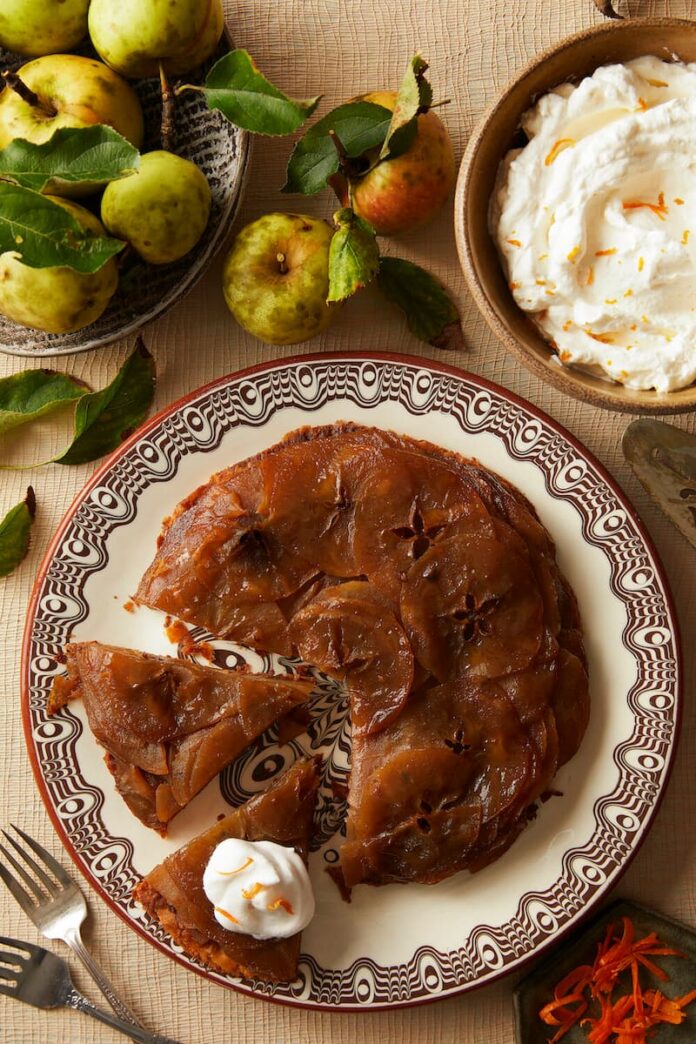
Pear Tarte Tatin with Walnuts, Ginger and Appelstroop

A pear crostata with maple syrup sitting on a pattern plate.

Chicory with Appelstroop and Five Spices

A bowl with a dutch Chicory inside.

Recipes and Food Styling by Ingmar Niezen
Story, Production, and Prop Styling by Marian Flint
Photography by Maarten van der Wal

Subscribe to TABLE Magazine’s print edition.

Create a free account, or log in.

Gain access to read this content, plus limited free content.

Yes! I would like to receive new content and updates.

Table Magazine wants to know your location.

TABLE Magazine operates regional sites - Knowing your location helps us route you to the appropriate site for the best experience.