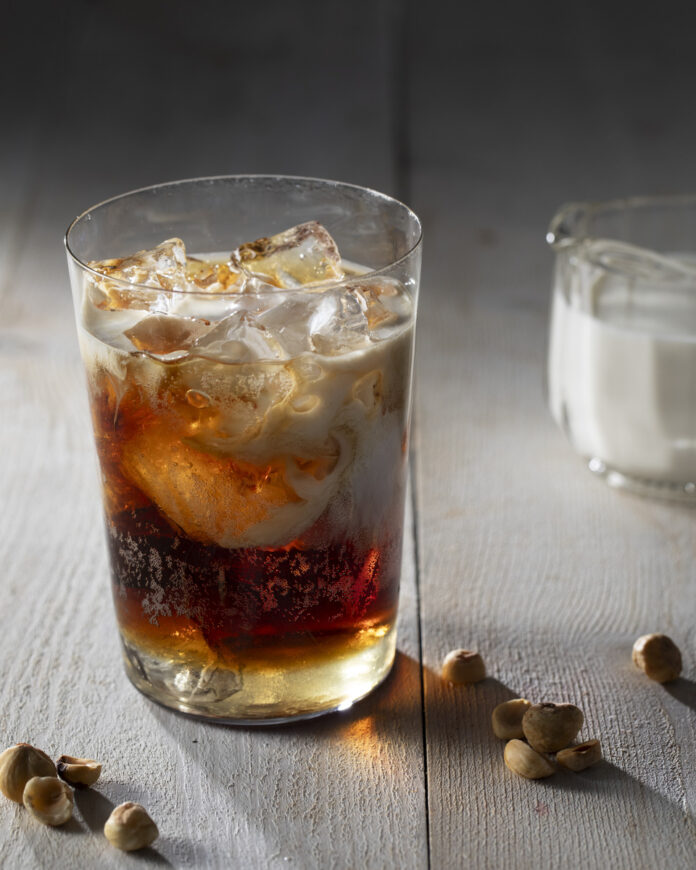
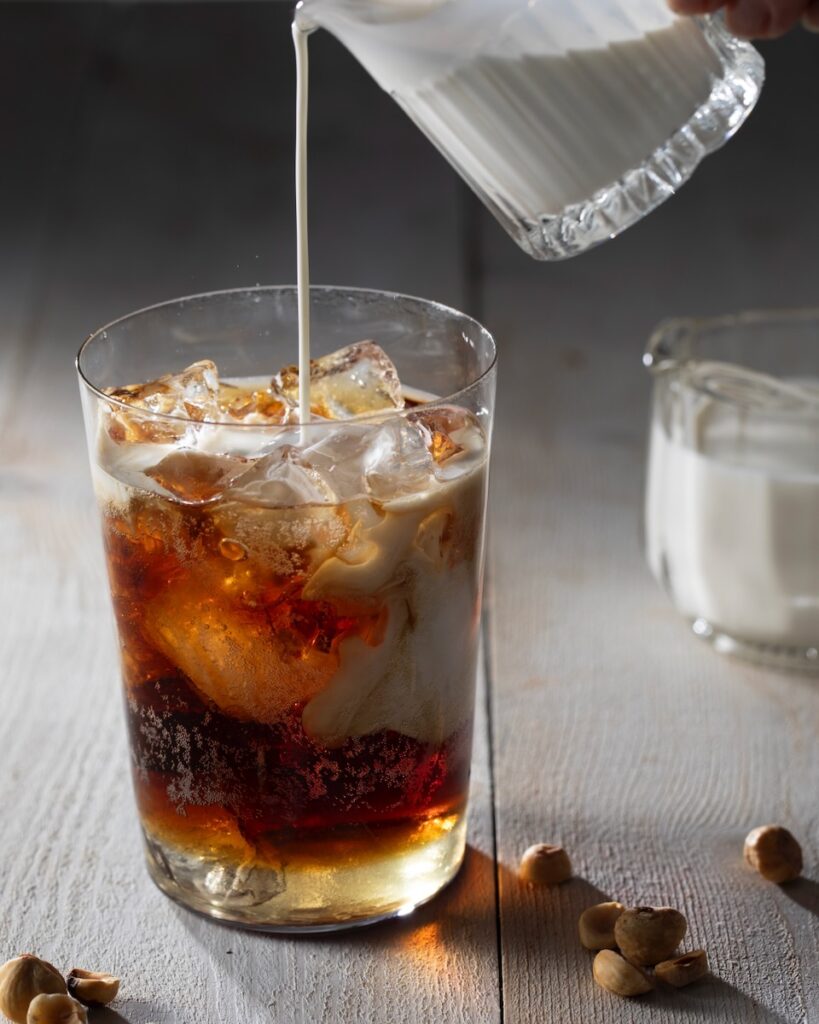
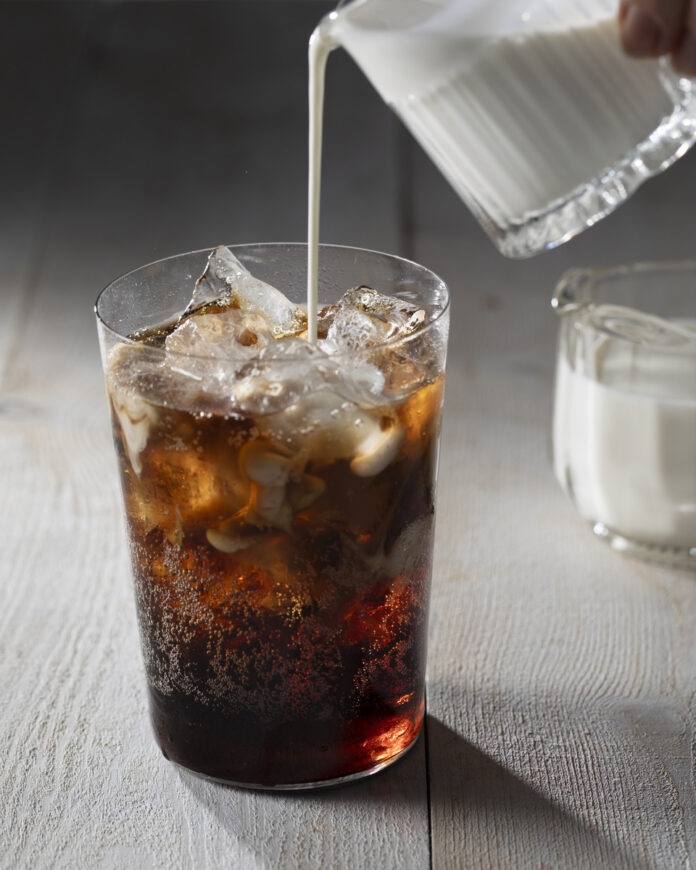
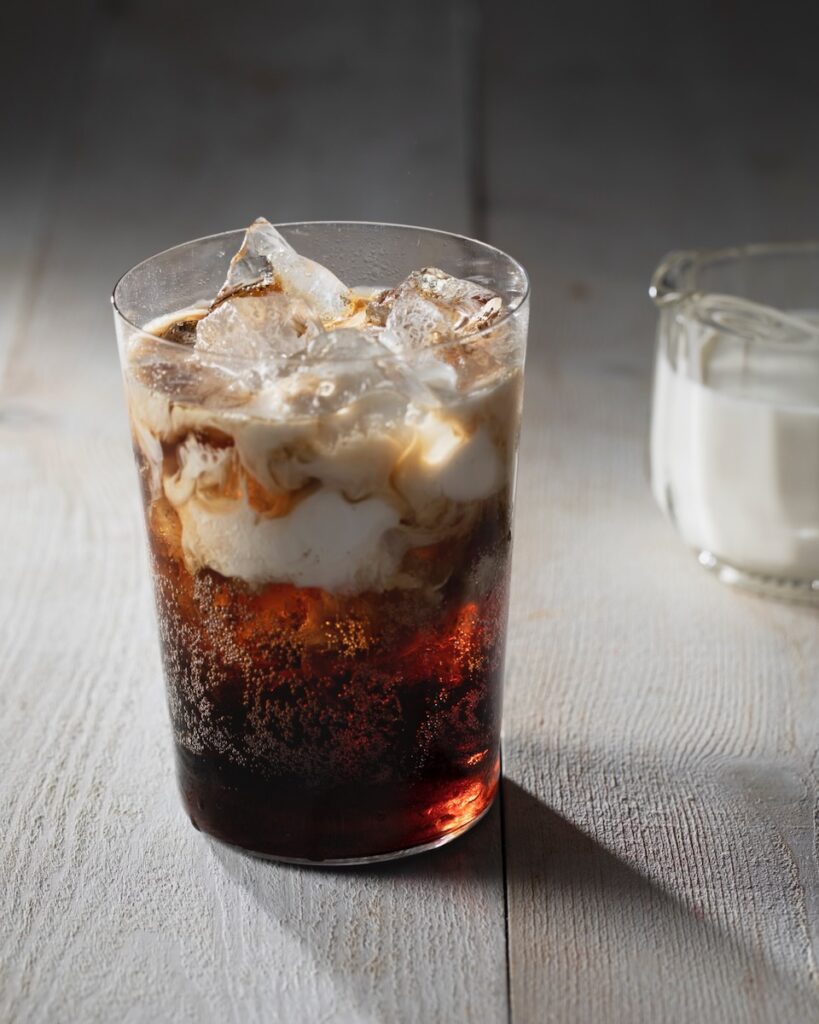
Who needs a cocktail when you can have a dirty soda instead? We’re elevating sodas to the next level with the addition of new flavors and creamy textures. This Root Beer Dirty Soda is the perfect blend of sweet, creamy, and a little nutty. With a splash of hazelnut syrup and a drizzle of creamy half-and-half, this drink is a cozy and comforting beverage that’s sure to satisfy your sweet tooth. Next time, skip the pack of cookies and sip this delectable beverage instead. It’s also a great way to make it through Dry January without feeling left out of the gatherings.
How Do You Make Hazelnut Syrup?
Hazelnut coffee syrup is a popular flavoring for coffee and other beverages. It’s typically made by combining sugar, water, and hazelnut extract or paste. The sugar and water are heated to create a simple syrup, and then you add the hazelnut flavoring. The result is a rich, nutty syrup that can you can use to enhance the flavor of coffee, tea, or any other beverage you desire. Some recipes also include ingredients like vanilla extract or almond extract to add complexity to the flavor profile. Make this syrup at home to adjust our Root Beer Dirty Soda recipe to your taste.
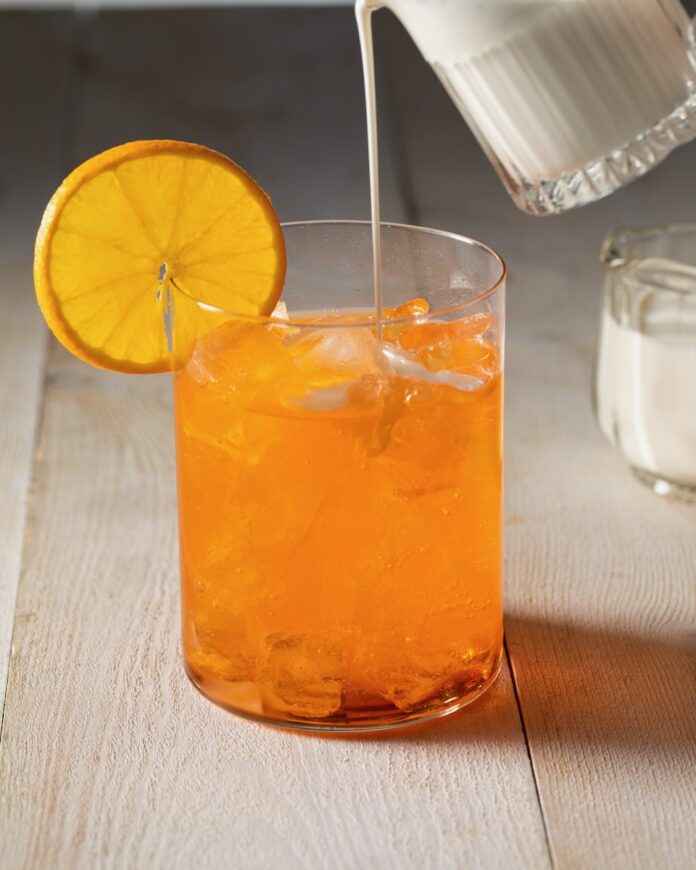
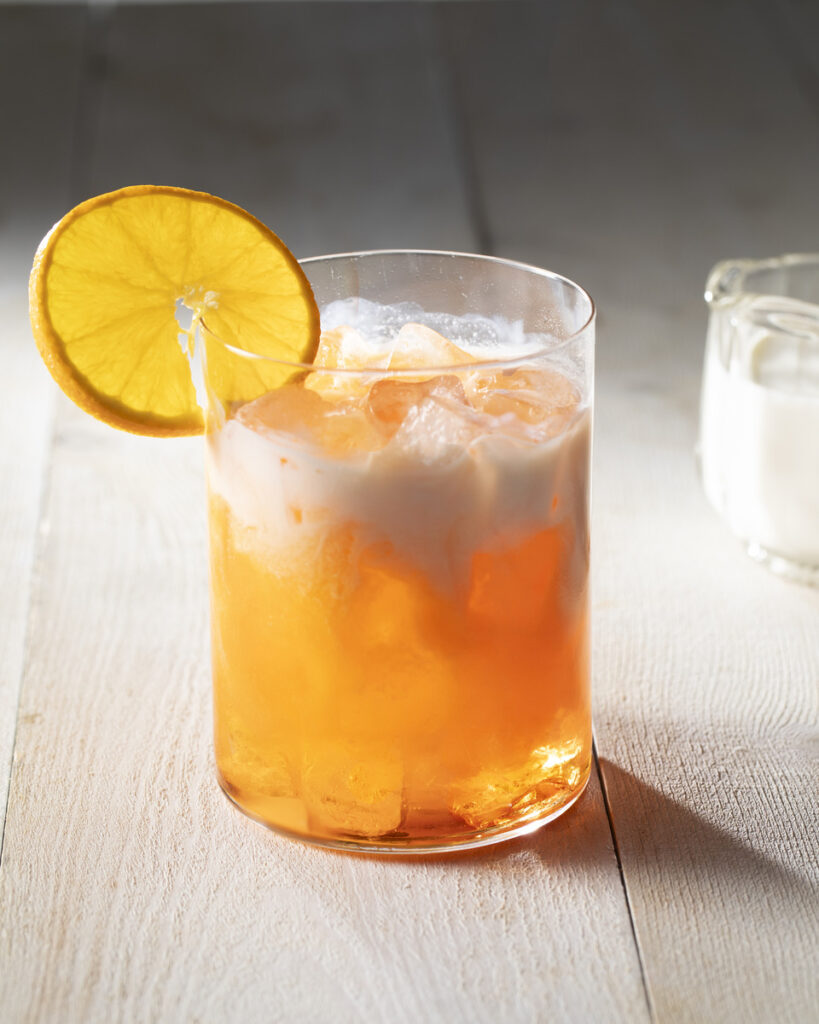
Looking for a refreshing and fun drink that the whole family can enjoy? This Orange Dream Dirty Soda is just the thing to excite your tastebuds. With its vibrant orange color and sweet, creamy flavor, it’s a kid-friendly beverage that’s sure to be a hit. So, grab your favorite orange soda, some creamy half-and-half, and a touch of vanilla syrup because it’s time to get creative and make a delicious, bubbly drink!
When Was Orange Soda Invented?
The exact origins of orange soda are about as clear as an orange itself. But, it’s believed that the first orange soda, Orange Crush, was created in 1906 by J.M. Thompson in Chicago. However, it wasn’t until 1911 that the formula was perfected by California-born beverage chemist Neil C. Ward. Ward’s innovation brought the “zesty, all-natural orange flavor” of Orange Crush to the masses. Soon after this recipe took its form, he and Clayton J. Howel founded the Orange Crush Company in 1916.
Since then, orange soda has become a beloved classic, with countless iterations and brands emerging over the years. Today you’ll see generic and name brands in just about every store.
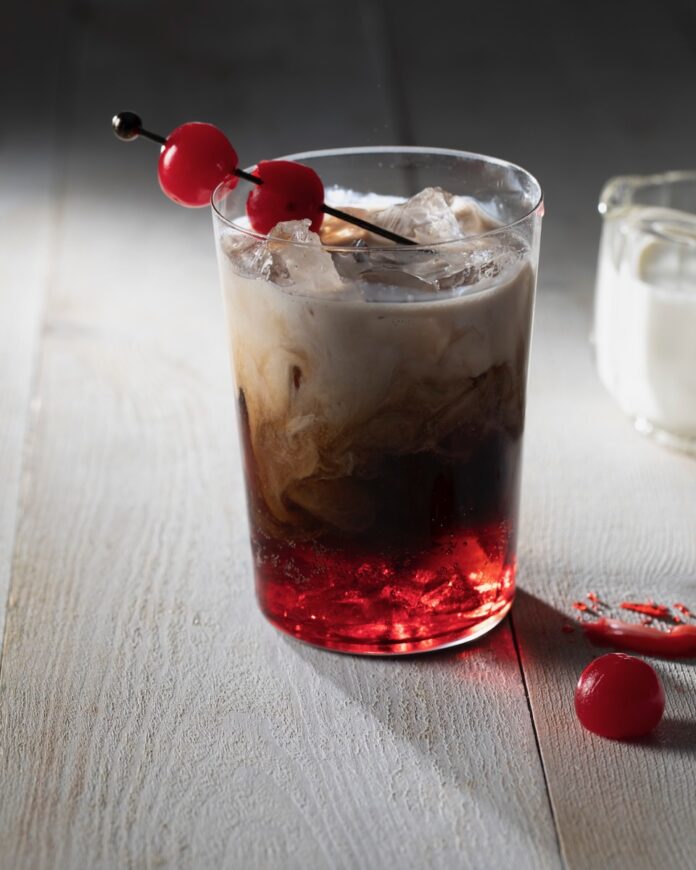
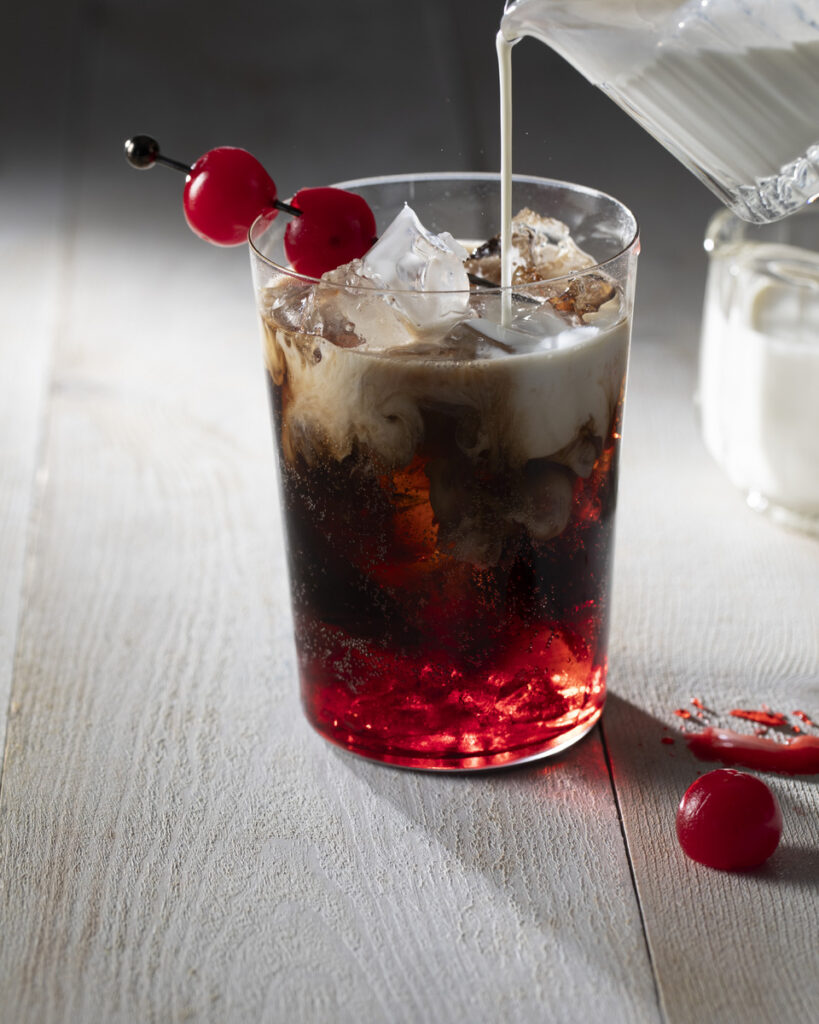
Adding cherry to a soda flavor just makes it better, like in our Dr Pepper Dirty Soda recipe. This Dr Pepper Dirty Soda is a delicious twist on a classic soda to give you a sweet and fizzy treat. With the addition of creamy half-and-half and a burst of cherry syrup, this drink blends sweet and tangy all in one. This dirty soda is a simple yet satisfying beverage that’s perfect for just about any occasion you can think of, whether it’s a family gatherings, kid’s birthday party, or any time you’re craving something different from the norm.
Can I Use Something Other Than Half and Half?
Absolutely! The beauty of dirty sodas is in their versatility and simplicity. While half-and-half is a classic choice for adding creaminess, you can experiment with other dairy alternatives. Oat milk, almond milk, or coconut milk can provide a unique twist, adding a subtle nuttiness or sweetness to the drink. For a richer, more indulgent experience, consider using heavy cream or even ice cream. By exploring different milk alternatives, you can create a wide range of dirty soda flavors and textures to suit your preferences, whether that be more of a milkshake vibe or more soda than cream.
This Cherry Coke Dirty Soda is a nostalgic treat reminiscent of a Coke float from your childhood that’s perfect for any occasion. The combination of creamy half-and-half and sweet vanilla syrup transforms the classic soda into a decadent dessert drink. Each sip is a blast of cherry flavor, with the creamy texture providing a luxurious contrast. It’s a simple yet indulgent beverage that’s sure to satisfy your sweet tooth. Plus, it makes sure the kids have something fun to sip on when the adults have their cocktail hour.
When Was Cherry Coke Invented?
Cherry Coke, a beloved soda with its distinctive cherry flavor, was introduced by The Coca-Cola Company in 1985. This cherry-flavored variation of the iconic Coca-Cola quickly gained popularity, appealing to those who enjoy a sweeter, fruitier taste compared to the more brash taste of the original. While the exact recipe and inspiration behind Cherry Coke may remain a closely guarded secret, its introduction marked a significant moment in the history of soft drinks, offering consumers a new and exciting flavor option which sparks other to follow in the same footsteps.
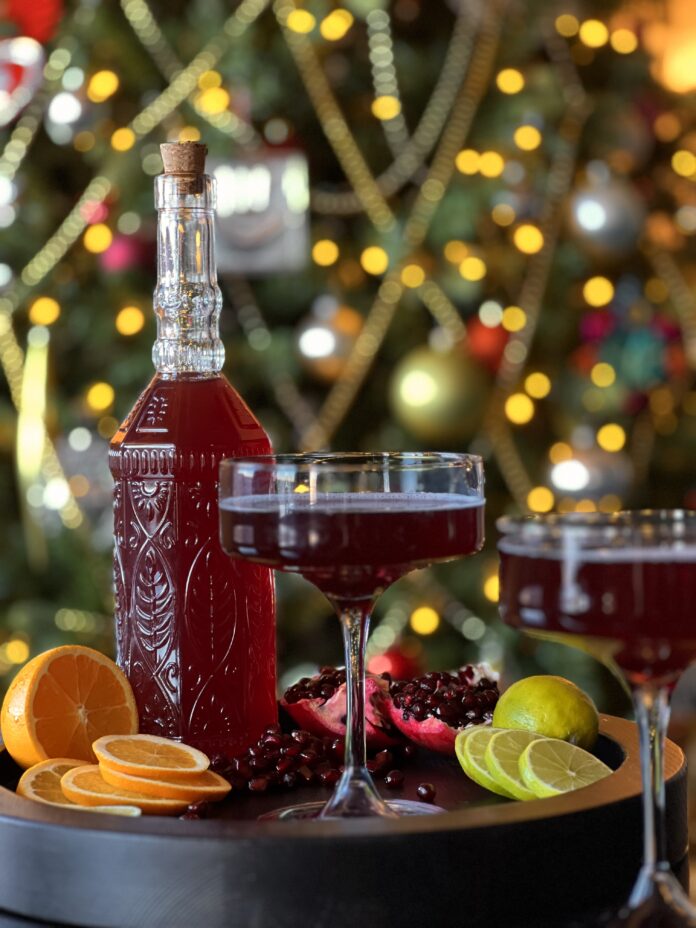
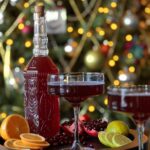
This Good Luck cocktail Sparkling Pomegranate Cosmo is a lucky nightcap in a bottle. Crystals, charms, wishing wells, blowing out birthday candles, a found penny picked up — these are all said to make good fortune come one’s way. Why not shore up your chances of finding luck with a good luck cocktail to sip as the new year comes in. To accompany it: one of the many foods from around the world that are associated with bringing in good luck as the calendar changes.
Good Luck Ingredients in Our Cocktail
Another way to usher in good luck is with lucky ingredients like oranges, pomegranates, and champagne, all ingredients found in our Good Luck Sparkling Pomegranate Cosmo recipe. Why not give a gift of a nightcap of prospective prosperity to the party host or hostess this holiday season? Chances are that they will need a moment to wind down and relax after the guests leave, and they will surely welcome a nip of well wishes for prosperity in the new year.
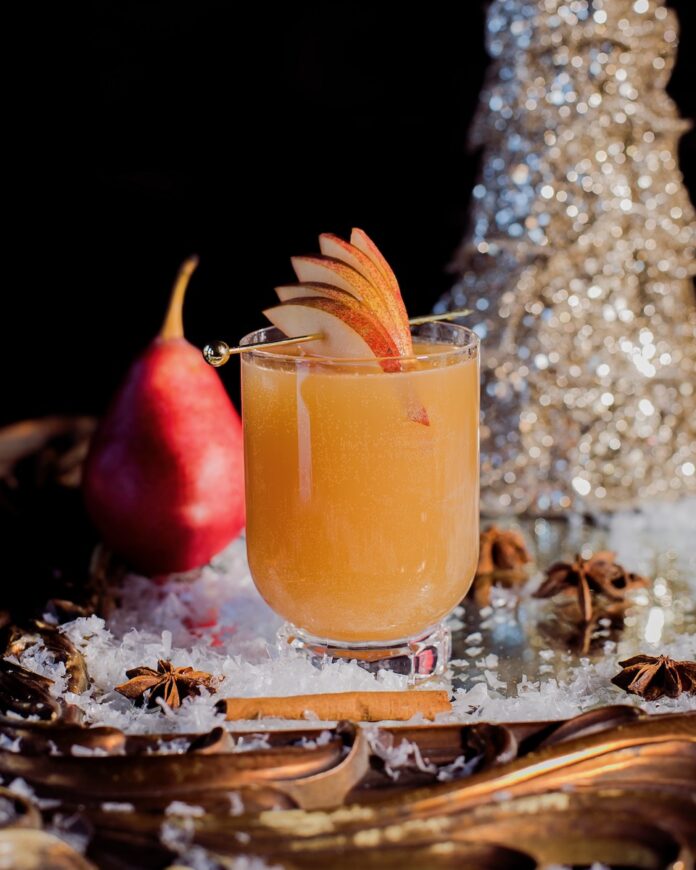
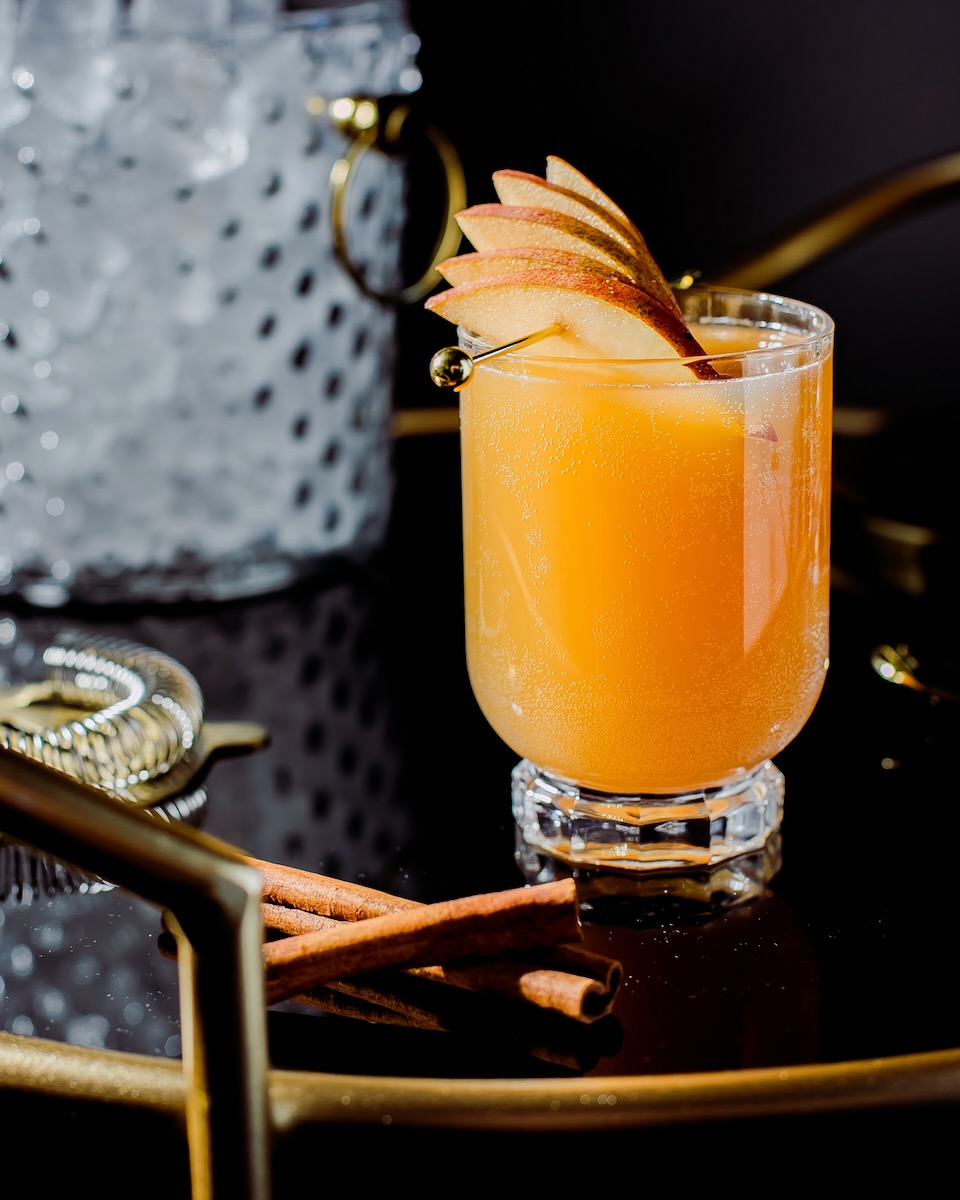
This is a rich and fragrant Christmas mocktail that celebrates the holiday season with a festive, warm, spiced pear flavor. It draws inspiration from the very first, foundational line of the “The Twelve Days of Christmas” classic holiday song. Since the “partridge in the pear tree” is the line that you sing over and over again and the most universally recognizable in the song, we made our Partridge in a Pear Tree the Christmas mocktail that anyone can enjoy.
So, Why in the World is Your True Love Giving You a Partridge in a Pear Tree?
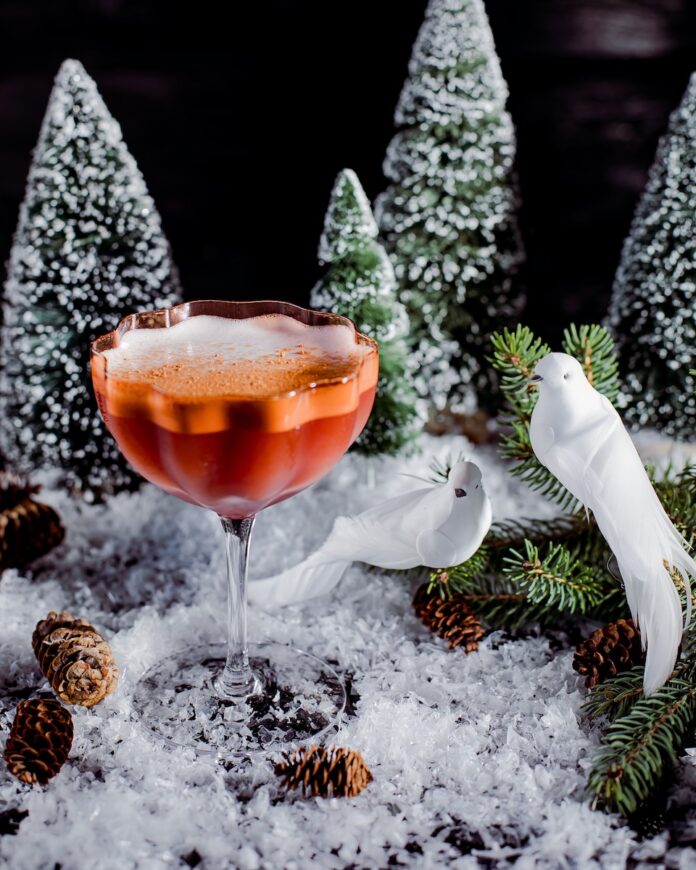
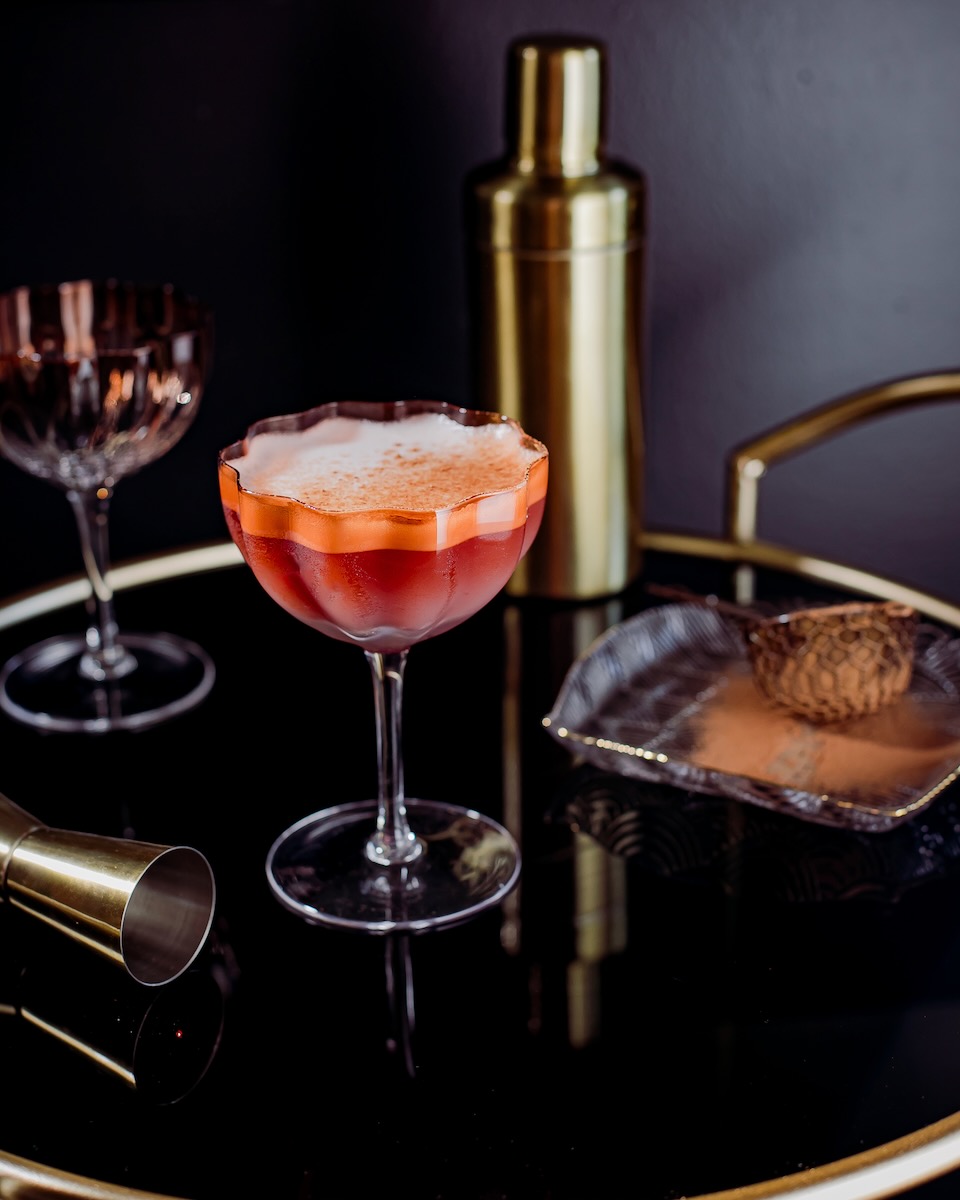
To celebrate the “two turtle doves” line of “The Twelve Days of Christmas,” we deploy the dynamic duo of cocktail pairings. Mezcal and tequila go hand in hand in a cocktail, as beautifully as chocolate and cherries. Bartender Rachel Sinagra of Fig & Ash also used an egg white to mirror the froth and creaminess of eggnog during the cheery holiday season. She added chocolate to this mezcal and tequila cocktail as a callback to the popular Dove brand of chocolate to further call back to the turtle doves.
Two Turtle Doves?
If you actually sit down and listen to the lyrics of “The Twelve Days of Christmas,” they’re a little puzzling. Some historians suggest each part of the song represents a different part of the Christian faith. In this case, the two turtle doves would represent the Old and New Testament. These are the two texts that make up the Christian Bible. The Old Testament is the religious texts prior the arrival of Jesus Christ. The New collects the stories of Jesus Christ and his disciples. The turtle dove is a motif of peace and friendship for its sweet, gentle nature and soft call. This tequila and mezcal cocktail is not Biblical in nature, but you can enjoy its epic flavors with friends and loved ones in the spirit of peace and collaboration.
When I was tasked with creating a cocktail for the Third day of Christmas, Three French Hens, my mind immediately went to a classic French cocktail, “The Yellow.” That cocktail is tart, herbal, and complex cocktail of equal parts gin, yellow chartreuse, and traditionally Suze Gentian Liqueur. Combining those three creates an almost golden-yellow cocktail with bright Alpine expressions. I wanted to switch it up a bit and give it a Christmas vibe for the holiday season while adding a play on of the title.
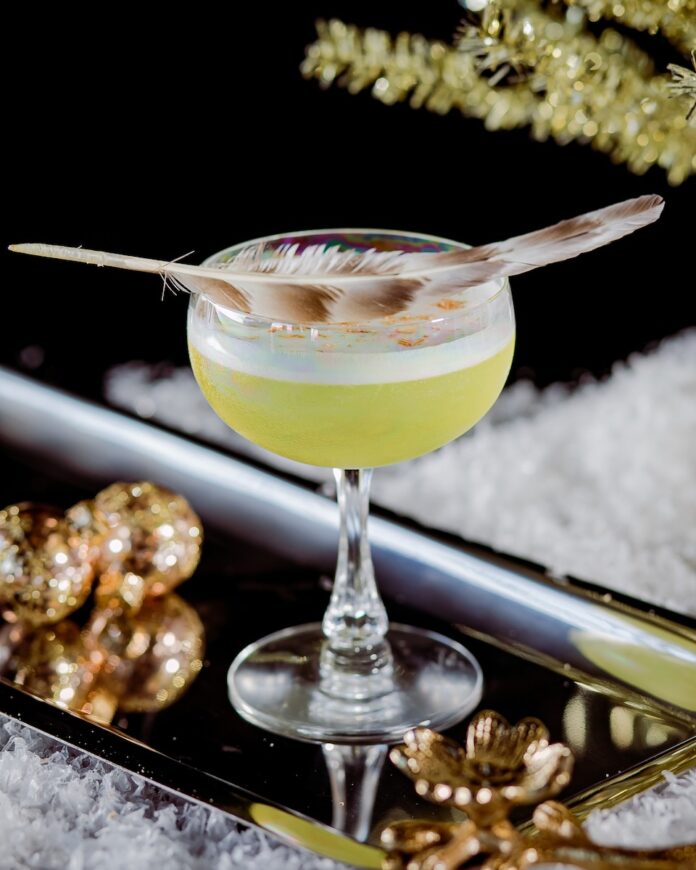
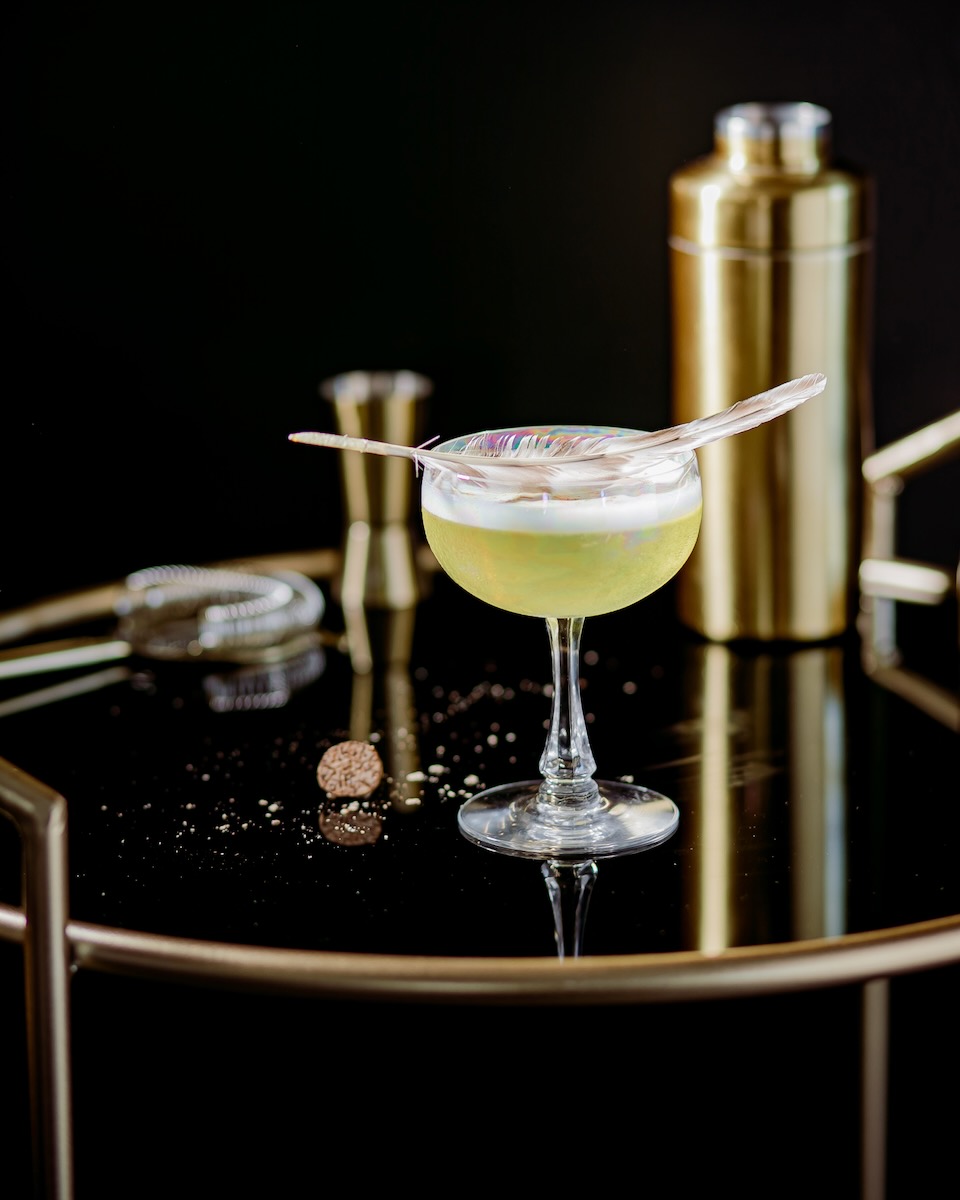
I chose three French spirits. First, Citadelle gin (the oldest gin distiller in France). Then, Yellow Chartreuse to stay classic Yellow. And, then, finally, a fun spice note in Domaine de Canton ginger liqueur. By adding Cardamom bitters and nutmeg, it elevates the holiday seasonal flavors with baking spices found in every kitchen that time of year. A fun twist to enhance the mouthfeel of the cocktail is Aquafaba, cooked chickpea juice. This small addition helps create an amazing lovely frothy layer on top. This replicates what an egg white would originally do in a cocktail but keeps it vegan.
Behind the “Three French Hens” Verse
Some say the three French hens in Yellow Chartreuse represent the three virtues of hope, faith, and charity. The number three is also important in Christianity, as it can represent the three points of the trinity. There’s some debate over how much Christianity is actually in the song, though, as so many different versions of it have come out over time and some say its Christian undertones are something of an urban legend. The most popular variety is by an English composer named Frederic Austin from 1909, but the song dates back to as early as 1780. The gifts are also, shall we say, impractical. A party with this French cocktail would be a lot more fun than a party with three French hens, two turtle doves, and a partridge in a pear tree, unless you happen to be a farmer.
Then, dry shake. Shaking without Ice will help emulsify the ingredients creating the froth we desire.
Add ice and reshake with vigor.
Double strain into Chilled Coupe glass.
On top of the frothy layer add a pinch of nutmeg for design. Using fun holiday cutouts can also add a memorable touch to the party.
Top with a small Feather laying across the coupe. Jouir de!
Aquafaba Instructions:
Aquafaba can be used in any cocktail recipe that calls for egg white. Here’s a basic approach to incorporating it into your drinks:
Chill: Start with chilled unsalted aquafaba, as it froths better when cold.
Mix: Add aquafaba to your cocktail shaker along with the other ingredients. For a standard frothy cocktail, use about 3 tablespoons of aquafaba.
Dry Shake: First, shake the ingredients without ice to allow the aquafaba to emulsify and create foam.
Wet Shake: Add ice to the shaker and shake again vigorously. This step chills the drink and enhances the froth created by the aquafaba.
Strain and Serve: Strain the cocktail into your serving glass. You should have a beautifully frothy top layer, similar to what you’d achieve with egg whites.
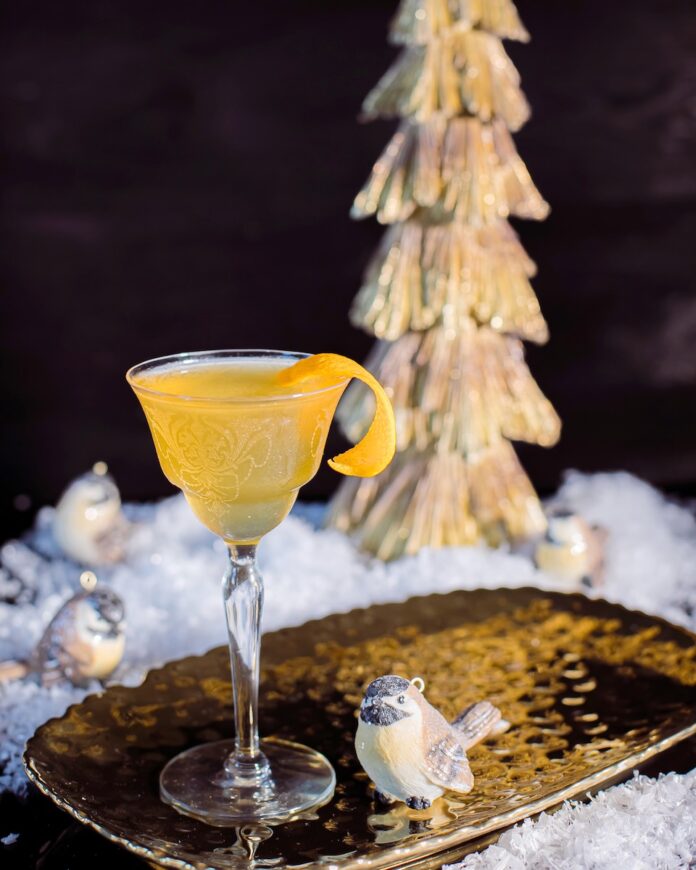
For the “Four Calling Birds” bartender Hannah McKee of jazz bar Con Alma combined two of her favorite four-part drinks, the Aviation cocktail and the Paper Plane cocktail. The Aviation typically uses gin, maraschino liqueur, lemon juice and creme de violette. The Paper Plane, which grew out of that recipe, typically uses Amaro Nonino, Aperol, bourbon, and lemon juice. In Hannah’s recipe, she swapped out the Aperol and bourbon for the smoky flavor of mezcal.
Four Calling Birds? Why Are There So Many Birds in “The Twelve Days of Christmas”?
You might notice that in “The Twelve Days of Christmas,” there’s a little bit of an overkill of birds. Partridges? Turtle doves? Hens? Geese? Who actually wants this many birds? For this “Four Calling Birds” installment, the Aviation and the Paper Plane both call to mind taking flight. In the case of four calling birds, the line was most likely originally “colley” or “collie” birds, meaning black as coal. So, the four birds were probably crows, ravens, or blackbirds. But in the 1909 version of “The Twelve Days of Christmas,” Frederic Austin swapped out “colley” for “calling.” Why there are so many birds are in the song is unclear. But many of these birds would have been eaten by Europeans in the 1700s, when the song originated, so even if they didn’t pair it with this Aviation cocktail, it still represented togetherness and plenty.
This cocktail is shaken and served in a Nick and Nora glass with a long elegant manicured orange twist expressed over the glass and then “perched” on the side.
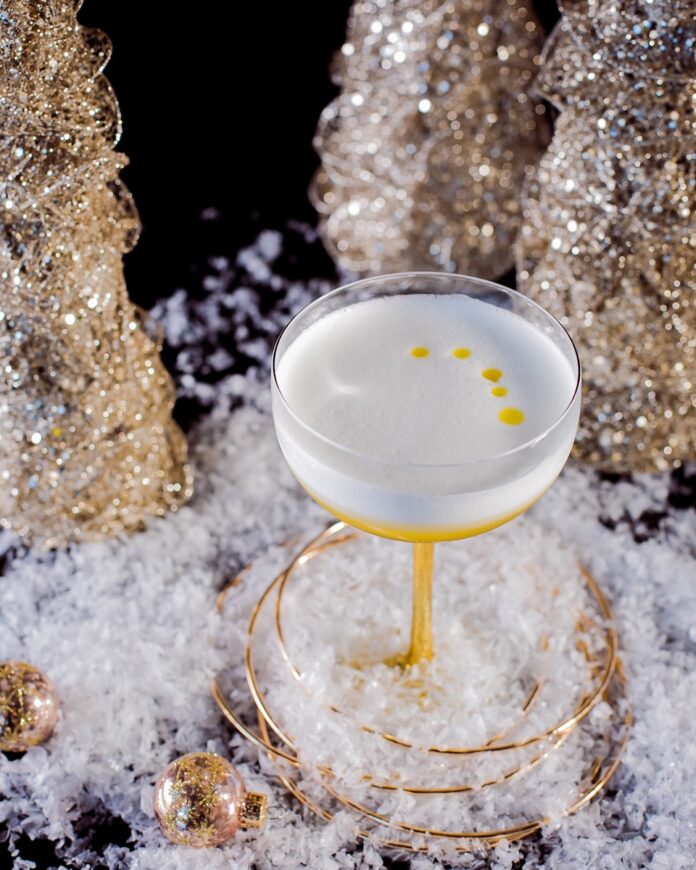
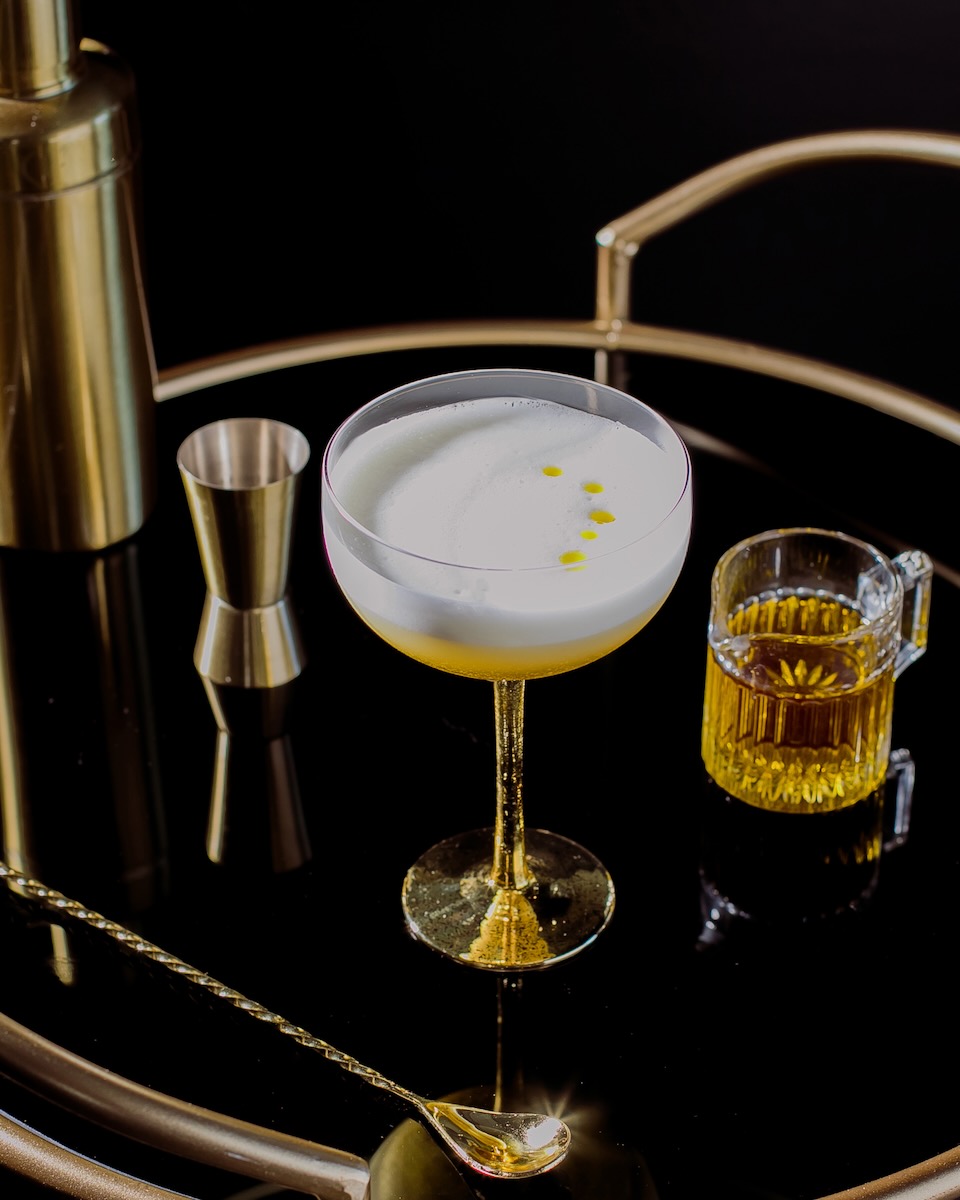
When Vallozzi’s of Pittsburgh developed their Christmas cocktail for “Five Golden Rings,” they immediately thought of their liquid gold: Limoncello! They decided to use five “golden” ingredients with lemon as the star flavor. They used their very own their housemade limoncello, but there are lots of great, pre-made brands: Il Tramonto Limoncello and Sogno di Sorrento Limoncello are two of them. Lucky Signs makes a lovely version, too. Limoncello, lemon sherbet, and yellow chartreuse combine to create a golden delight in this limoncello cocktail.
Five Golden Rings?
Many of the lines in “The Twelve Days of Christmas” seem somewhat nonsensical. This is one of the few that is a gift that most people would actually want, as opposed to partridges, milkmaids, or geese. Five golden rings is a lot of rings, though. Are you just supposed to wear one on each finger of your hand? In any case, some people think that the Five Golden Rings reference the five wounds of Jesus Christ, or the Five Books of Moses. Honestly, it’s more significant because of its place in the song. Maybe you hear the refrain in your head: “Five gooooolden rings,” which is a sign to rush through the repetition of gifts one through four! Whether you’re celebrating Christmas or not, this limoncello cocktail is an uplifting sip for all.
Go for the gold this Christmas with this limoncello cocktail from Vallozzi’s.
Ingredients
Scale
For the cocktail:
1.5oz Limoncello
.5oz Chartreuse yellow liqueur
.5oz lemon juice
.5oz lemon sherbet (see recipe & substitution below)
1oz egg white
For the lemon sherbet:
4 Lemons
1.5 cups granulated sugar
12oz fresh lemon juice
Instructions
For the cocktail:
Combine all ingredients and dry shake (no ice) first to get a nice froth from the egg white.
Add ice and shake again. Strain into your favorite chilled coupe or martini glass.
Garnish with 5 drops of extra virgin olive oil to get Five Golden Rings floating in the froth!
For the lemon sherbet:
Add JUST the lemon peels to the sugar, none of the white pith, by using a Microplane grater or a vegetable peeler.
Squeeze the peeled lemons to get the required juice for the recipe. Use a muddler or a heavy wooden spoon (or other heavy utensil) to firmly press the peels into the sugar. This will extract the tasty oils from the peels and incorporate them into the sugar.
Let sit for 30 minutes to bring out all the oil. Mix.
In a small saucepan, combine the sugar and lemon juice over medium heat.
Stir until sugar is dissolved and remove. Do not boil. Strain to remove peels.
Notes
If you need to streamline this recipe to better fit your format, we understand. We would say to make a syrup with a 2:1 sugar:lemon juice ratio. This will give you a sweeter outcome, but still make it a little thicker than a normal simple syrup which is necessary. Making the full lemon sherbet recipe, however, brings out some really incredible lemon flavor and gives it a different mouthfeel.