Home Blog Page 93

Keep Your Holiday Gift Wrapping Eco-Friendly

0
An eco-friendly wrapped gift, tied with twine and a natural paper tag with a stamped Christmas tree, next to a woven yellow fabric roll.

Americans add approximately four million tons of gift wrap to landfill in just the last quarter. This is a statistic we can change by following “the three Rs.”

Eco-Friendly Gift Wrapping Tips

An eco-friendly wrapped gift, tied with twine and a natural paper tag with a stamped Christmas tree, next to a woven yellow fabric roll.

Reduce:

Avoid layers of wrapping paper that are discarded seconds after opening. Instead, let your gift speak for itself with minimal wrapping. Add a thoughtful, handmade tag with a personalized message. Garnish naturally with sprigs of greenery, a pinecone, found bird feathers, or the end of a skein of yarn.

A vintage green wooden bench topped with a white fur throw, holding several gifts wrapped in reusable fabric and natural materials like furoshiki.

Re-use:

It’s time to rethink single-use items, like traditional wrapping paper. Enter furoshiki – the zero-waste Japanese art of wrapping with fabrics that you can use again and again. Take this a step further by wrapping your gift in a secondary gift: a tea towel, a cloth napkin, even a scarf that the recipient can reuse.

A gift wrapped in brown paper with a braided yarn ribbon and a sprig of fresh thyme, on a rustic shelf.

Recycle:

Give a second life to newspaper, an old map, pages from a tattered book, or even a brown paper bag. Create bands of contrasting papers for rich visual effects. Ecoprint with floral waste or windfall botanicals. Save ribbon and scraps of yarn all year round and deploy them now in braids or single strands. Creative reuse centers provide a veritable trove of found and donated materials. Remember not to add glitter, sparkles, plastics, or other non-recyclable elements: these create downstream consequences that are easily avoided.

Story by Anne Reynolds
Styling by Quelcy Kogel
Photography by Erin Kelly
Materials from Pittsburgh Center for Creative Reuse

Subscribe to TABLE Magazine’s print edition.
The Best Party Wines

0
Bartender pouring red wine from bottle into glass indoors, closeup

As with party guests, finding the right balance for the best party wines can be tricky. Parties, like people, come in all shapes and sizes. Some are small and intimate affairs bringing together our nearest and dearest, and others are created for crowds of hundreds, perhaps even thousands. Most gatherings are geared for groups somewhere between these two extremes. There is, however, one constant. Most of those invited will imbibe, and you’ll want to know which wines will refresh your revelers.

Your guests’ preferences will vary, and you’ll want to serve options that can be enjoyed under all circumstances. The bigger the bash, the more complicated it becomes. With that in mind, selecting wines for a party comes down to two key principles: versatility and value. It’s with these precepts in mind that I propose the following party-friendly powerhouses.

Sparkling wine is synonymous with celebrations, and there’s no better way to kick things off than with bubbles. That said, not all sparkling wines are created in the same way. The resulting styles (and sticker shock) can be stupefying. 

The Best Party Wines

Best Prosecco

If you’re looking for a brunch-friendly bubbly, the pop of Prosecco is perfect. Made in the Charmat or tank method, these wines undergo a secondary fermentation in a giant pressurized tank. This produces wines that are fresh, floral, and fruit-driven with notes of pear, peach, and blossoms.

To buy: These budget-friendly beauties will run you between $12 and $19 for a bottle, and they’re perfect for your bellinis and mimosas. Bisol is a particularly reliable producer to procure.

Best Crémant

On the other hand, you’ve got sparkling wines made in the traditional (or Champagne) method, which differ in character. The secondary fermentation in this method occurs in the same bottle in which the wine will ultimately be sold. So, the yeast has a far greater impact on the finished product. As a result, these wines develop toasty notes that can range from bread dough to pie crust, often with a nutty profile on the finish. The problem? Champagne, in particular, can be a pricy proposition for a party.

Look instead for a Crémant, a sparkling wine produced in the style of Champagne from one of eight other designated regions in France. While the base grapes may vary by region (for example, Chenin blanc often is used in the Loire while Chardonnay and Pinot noir are preferred in Burgundy), they’re all made like Champagne at a fraction of the cost.

To buy: Pierre Sparr’s offering from Alsace is a delight that will set you back $19.99 a bottle, but nearly any Crémant in the $15 to $25 range will surely satisfy.

Best White Wines

When it comes to whites, you’ll want something to wet your whistle without overwhelming the palate. Again, versatility is key. Look for bottles and grape varieties that are fermented in neutral containers like stainless steel or concrete. Pinot Grigio is popular at parties because of that prized neutrality. Many a Chardonnay, particularly from California, can have a prominent influence of either oak or buttery notes from malolactic conversion. That can clash with foods or prove overpowering.

To buy: There’s beauty in simplicity, and a mouthwatering Muscadet from France’s Loire Valley (Domaine de la Pépière is a standout producer) ticks all the boxes with high acidity, light body, and gentle notes of melon and orchard fruit. Many Muscadets can be had for under $15, so it can be affordable for even your most sizable shindig. Dry Rieslings from Australia should also be considered with producers like Pewsey Vale and Pikes offering sub-$20 standouts that will change minds and hearts. 

Best Red Wines

For a red, dip your toes into Spain’s treasure troves of old vine Garnacha. Garnacha is great because it’s got low tannin, relatively high acid, and can be enjoyed with a slight chill for those summer soirées.

To buy: Producers like Paniza craft seriously quaffable quality from vines planted in the northern Cariñena region for a mere $9.99, and you’ll find many others that will please your guests with their red fruit-driven, juicy profile in that general price range. Cinsault is another grape that would fit the bill, and you can find plenty of inexpensive examples from Chile and South Africa.

You can’t predict everything that partygoers will prefer, but if you browse the shelves through the lenses of value and versatility, the possibilities are promising.

Story by Adam Knoerzer

Subscribe to TABLE Magazine’s print edition.

Speculaas Gingerbread Cookies

0
Two wooden gingerbread cookie molds, one of which a child's hands are pressing dough into, next to a ball of dough, a rolling pin, and small bowls of flour and sliced almonds.

Nothing says “winter holiday” like gingerbread. The smell alone puts us mentally in front of a roar fire, mug of hot cider in hand, munching on a delicious treat. When we mentioned our nostalgia for gingerbread, our friends at Mediterra smiled knowingly. “There’s a recipe for that,” they said. And here it is.

What Is the History of Speculaas Gingerbread?

Speculaas: A Spiced Biscuit with a Story

Speculaas is more than just a cookie: it’s a window into centuries of European culinary tradition. Since their first appearance in the Netherlands during the late Middle Ages, these spiced biscuits have risen in popularity thanks, in part, to the Dutch East India Company’s lucrative spice trade. Cinnamon, nutmeg, cloves, cardamom, and white pepper—precious imports at the time—were blended into the signature speculaaskruiden, giving the cookies their unmistakably warm flavors.

Speculaas became especially tied to the feast of Saint Nicholas, celebrated on December 5–6 in the Netherlands and Belgium. Bakers pressed the dough into intricately carved wooden molds, producing detailed images of the saint, biblical stories, or folkloric figures. The result was both sweet treat and edible artwork, a centerpiece of holiday festivities.

Unlike the thicker, chewy gingerbread of Germany or England, speculaas is thin, crisp, and deeply spiced. Its influence spread widely: in Germany it became Spekulatius, in Indonesia it mingled with local flavors, and in the 20th century Belgium’s Lotus brand transformed it into the globally beloved “Biscoff.”

Print
clock clock iconcutlery cutlery iconflag flag iconfolder folder iconinstagram instagram iconpinterest pinterest iconfacebook facebook iconprint print iconsquares squares iconheart heart iconheart solid heart solid icon
Two wooden gingerbread cookie molds, one of which a child's hands are pressing dough into, next to a ball of dough, a rolling pin, and small bowls of flour and sliced almonds.

Speculaas Gingerbread Cookies


  • Author: Mediterra

Description

These classic holiday cookies are made with a blend of warm spices like cinnamon, nutmeg, ginger, and cloves, giving them a rich, fragrant flavor. The dough is chilled, pressed into molds or cut into shapes, then baked until golden brown for a crisp, spiced treat that’s perfect for the winter season.


Ingredients

Scale
  • 3 cups KA flour
  • 2 tsp ground cinnamon
  • 1 ½ tsp nutmeg
  • 1 tsp ground coriander
  • 1 tsp ground ginger
  • ½ tsp ground cloves
  • ½ tsp baking soda
  • ½ tsp kosher salt
  • ¼ tsp ground white pepper
  • 1 ½ sticks of unsalted butter (12 T)
  • ¾ cups packed light brown sugar
  • ¼ cup honey
  • ⅓ cup milk


Instructions

  1. Preheat the oven to 350°F
  2. In a medium bowl, whisk together the flour, cinnamon, nutmeg, coriander, ginger, cloves, baking soda, salt, and white pepper. In the bowl of the stand mixer, beat together the butter and sugar until it’s light and fluffy. Scrape down the bowl, and slowly add honey. Scrape the bowl again and add half the flour mixture and mix until incorporated, then add the milk and repeat with flour mixture. Divide the dough and shape it into 2 disks. Cover in plastic and chill for at least 1 hour.
  3. Flour cookie molds. Working with 1 disk at a time, break off small chunks of dough and press into a floured cookie mold. The dough should fill the mold area and there might be a little sticking up the mold, which is ok, just press lightly against a flat surface to smooth it. Tap the long edge of the mold on the counter to loosen the cookies. Transfer the shaped dough pieces to the prepared baking sheets, spacing the pieces 2 inches apart. Chill cookies in pan.
  4. No mold, no problem. Roll the dough out like a sugar cookie and use a cookie cutter. If you have a glass with a crystal bottom, you can press that into the cookie to make a pretty design.
  5. Bake in the preheated oven until golden brown, about 16–18 minutes. Remove from the oven and allow to cool on the baking pan for a couple minutes, then transfer to a wire rack to cool completely. Store in an airtight container.

Notes

Tips:

  1. For a softer cookie, modify your sugars to the following quantity: ½ cup brown sugar, ½ cup honey.
  2. If you would like a sweeter cookie without spice, omit white pepper.
  3. Freeze the cookies again for another few minutes before putting in the oven, this helps the cookies from spreading while baking.

Recipe by Mediterra
Photography by Adam Milliron

Subscribe to TABLE Magazine’s print edition.
Sunshine Coconut Cookies

0
Golden-brown cookies served with cups of tea and slices of fresh orange on a light yellow textured surface, next to a white teapot and a green floral napkin.

When you need a hit of sunshine, these crisp, delicious delights can do the trick. The pantry-basics recipe is simple. You can get the kids involved, or do it yourself. You can serve it with cold milk or warm tea. (Don’t say that we suggested cookies for breakfast, but you can have them with your coffee, too.)

What is in Our Sunshine Coconut Cookies Recipe?

These spiced coconut cookies are crisp, golden, and full of warm flavor from ginger, cardamom, and nutmeg. Toasted coconut adds a nutty sweetness, while a dusting of sugar gives them a cheerful finish—perfect with milk, tea, or coffee.

Print
clock clock iconcutlery cutlery iconflag flag iconfolder folder iconinstagram instagram iconpinterest pinterest iconfacebook facebook iconprint print iconsquares squares iconheart heart iconheart solid heart solid icon
Golden-brown cookies served with cups of tea and slices of fresh orange on a light yellow textured surface, next to a white teapot and a green floral napkin.

Sunshine Cookies


  • Author: Keith Recker

Description

These cookie are sure to bring some light to your life. 


Ingredients

Scale
  • 2 cups shredded coconut, toasted
  • 1 cup butter, room temperature
  • 2 large eggs
  • 1 cup dark brown sugar
  • 1/2 cup sugar
  • 2 tsp vanilla extract
  • 2 1/2 cups all purpose flour
  • 1 tsp baking soda
  • 1 pinch salt
  • 1 tsp ground ginger
  • 1 tsp ground cardamon
  • 1/8 tsp ground nutmeg
  • Dusting sugar (preferably yellow)


Instructions

  1. Line cookie sheets with parchment paper. Preheat oven to 350 degrees.
  2. In a cast iron skillet on medium heat, toast the shredded coconut until amber, tossing frequently with a spatula. Once toasted, transfer quickly to a bowl.
  3. Sift flour, baking soda, salt and spice together into a bowl.
  4. In a mixer, cream butter and sugar. Add eggs and vanilla extract and beat until combined.
  5. Add dry ingredients 1/2 cup at a time until blended.
  6. Add toasted coconut and mix for 30 seconds. If coconut still needs some mixing, use a spatula to mix by hand.
  7. Form 1/2-inch balls of dough by hand. Place each ball in a bowl of dusting sugar to coat only one half.  Place the ball on cookie sheet, sugared side up.
  8. Bake approximately 10 minutes, until bottom edges start to turn golden.
  9. Cool and store in covered container.

Recipe and Styling by Keith Recker

Subscribe to TABLE Magazine’s print edition.

Pick the Best Champagne for All Occasions

0
A set of champagne glasses on a black background

Even if you’ve never had champagne, you know Champagne. Royalty drank it. Gatsby drank it. It is served at all the finest places. The story of this wine is also the story of the increasing desire for beauty and money across the 20th century. As marketers talked up champagne’s association with royalty, luxury, and the high life, the middle class eyed it more and more. No glass is more synonymous with celebration and wealth than an elegant flute of pale golden bubbles. (However, some experts now recommend against the flute, as you can see in our champagne pour where we placed it in a coupe.)

A quick Google of “songs about champagne” show its deep association with wealth. You have “Champagne Moments” by Rick Ross, “Champagne Shit” by Janelle Monaé, “Pop Champagne” by Jim Jones, “Champagne Life” by Ne-Yo, “Champagne Supernova” by Oasis, and “champagne problems” by Taylor Swift. Rapper Drake calls himself “Champagne Papi.” None of those titles explicitly say “I’m rich and throw crazy parties,” but the word champagne declares that they are.

But you, too, can enjoy champagne. Maybe you want to pick out the best bottle for Valentine’s Day date night. Or maybe you’re just curious about this beloved luxury item. I have also compiled a list of sparkling wines for hostess gifts just in case you have a vendetta against the French or simply want something different (though a few Champagnes show up there). But read on for recommendations for the champagne purists who really want to pop bottles and live the high life. Each champagne house has a different history, and while a variety are represented here, you can be confident you’re getting quality and luxury.

A set of full champagne glasses on a black background

Pick the Best Champagne for All Occasions

Champagne JL Vergnon MSNL Chétillons et Mussettes Blanc de Blancs Grand Cru Extra Brut 2012

This bottle comes recommended by Karen MacNeil, author of The Wine Bible and the only American to win all English language wine and spirits awards, via her site Wine Speed. MacNeil finds some of the most interesting bottles, and this is one has many unique qualities. Curious and rare blue fruit notes developed in the course of its aging process. These are grounded in a smooth, melted butter mouthfeel. 

Champagne Telmont Réserve de la Terre 2024

One of the central conflicts in the wine world is whether sustainability and quality are mutually exclusive. “Natural” or “low-intervention” or “organic” wine has many deriders due to sometimes unorthodox (to put it kindly) flavor notes, textures and colors. Champagne Telmont, however, is both a classy, old-school house, as well as a pioneer. Its Réserve de la Terre  brut is “a sunny, radiant wine, full of life” that blends traditional Champagne techniques with organic viticultures.

Dom Perignon Jean-Michel Basquiat Special Edition Brut Champagne with Gift Box 2015

In recent years, you can see the late Jean-Michel Basquiat’s art on everything from UNIQLO t-shirts to greeting cards…and now on a bottle of Dom Pérignon. While this bottle is not cheap, it’s a unique gift to bring to the right gathering. And the wine itself is no joke. Wine Advocate described it as having “…a well-spiced, zesty edge to the flavors of glazed apple, mandarin orange peel, pink grapefruit pith and crème de cassis as they ride the finely detailed mousse of this fresh, focused champagne.”

Michel Turgy, Blanc de Blanc Grand Cru Reserve, Champagne, France NV

Turgy is a family champagne producer located in Le Mesnil-Sur-Oger in the Côte de Blancs area of France. “Chardonnay is the star here and known for creating a more sumptuous and full style. By using only pristine Grand Cru fruit and from blending in at least 30% reserve wines, the wine has depth and complexity while being balanced and lively,” sommelier Elizabeth Dames of Georgia-based luxury wine club The Perlant told TABLE. 

Pol Roger Brut Reserve

This bottle is equal parts chardonnay, pinot noir, and pinot meunier, with many of the best qualities of each from some of the best crus in the Champagne region. “It’s full, fruity, finessed, elegant, crisp & lush, aromatic with white florality…everything I look for in a champagne without breaking the bank,” said sommelier Alexander Riola of Fish Nor Fowl. At only $80, it’s a bargain from Pol Roger, the favored champagne of Winston Churchill. 

Champagne Moët Impérial

The classics are classics for a reason. Moët is expensive because it’s some of the best of the best, made of 100 different wines and boasting the body of pinot noir, the suppleness of pinot meunier, and the finesse of chardonnay. What other wine is so closely associated with wealth that you can buy an empty bottle as a prop on eBay?

Bollinger Brut Special Cuvée

This is the champagne 007 drinks in the James Bond movies, if you want to feel like a high-class spy, but it’s been around for much longer. As the champagne house tells it, the British agent of Georges Bollinger called this bottle “Special Cuvée” in 1911, because he found the expression “non-vintage brut” did not befit a champagne of such subtlety. It’s full-bodied and robust while still retaining a bubbly, effervescent quality, but is a good bet for people who prefer fuller bodied wines. It’s classy but subtle, not as ostentatious as Moët in its presentation, and vivacious in its bubbles of velvet, pear, and brioche.

Veuve Clicquot Brut Yellow Label

The Veuve Clicquot style has freshness, strength, aromatic richness, and silkiness. Veuve Clicquot is also a fun champagne to bring to someone interested in champagne history. When François Clicquot died in 1807, his widow, Madame Barbe-Nicole Ponsardin, took over the business to become one of the nineteenth century’s most prolific female business owners. The 2023 film Widow Clicquot chronicles her life and the three new champagne techniques she invented, giving her the title of “the Grande Dame of Champagne.” This wine’s backbone comes from pinot noir with flavors of pear, peach, and pastry.

While you pop your bottles, take a listen to all of the musicians who have also indulged in champagne over the years. Cheers!

Story by Emma Riva
Glassware courtesy of Rolf

Photography by Dave Bryce

Subscribe to TABLE Magazine‘s print edition

TABLE Magazine’s Best Desserts of 2024

0
An ice cream cake pie decorated with strawberries and flowers with a slice taken out of it sits on a cutting board on a white table. Strawberries and Trefoil Girl Scout Cookies surround the pie.

2024 brought upon another year of culinary indulgence, and our readers certainly had a sweet tooth. From classic pies to innovative twists on simple cake recipes, these top 10 recipes captured hearts (and stomachs) across the nation. Join us as we revisit the most popular desserts of the year, a testament to the enduring power of a sweet treat every once in a while.

TABLE Magazine’s Best Desserts of 2024

Stanley Tucci Inspired Delizia Al Limone Layer Cake

A Stanley Tucci inspired delizia al limone layer cake on a green background

If there was one dessert to top our list, of course it’s the Stanley Tucci Inspired Delizia Al Limone Layer Cake. This cake is truly a beast but certainly a delicious one too. Lemon cream cushions blocks of moist cake. It’s a citrus, sweet surprise in every bite and it’s clear to see why Stanley Tucci is such a huge fan. 

Chocolate Cello

A rich blend of Ghirardelli chocolate, cream, and Everclear - the perfect boozy indulgence for sipping or drizzling over desserts. Chocolate cello recipe

Half dessert, half cocktail, and truly decadent. Our Chocolate Cello recipe makes a drinkable chocolate that’s so smooth and rich. Try sipping it on its own or add it to your coffee, overtop of cheesecakes, or even as an ice cream topping for a bit of elegance. 

Campari Olive Oil Cake

A Campari Olive Oil Cake sits on a glass platter as a person sprinkles powdered sugar in a heart shape over top.

Campari is known for its addition to mouthwatering cocktails but what about in a cake? This Campari Olive Oil Cake uses a combination of blood oranges, grapefruit and lime alongside a hint of herbal and floral notes from the bay leaf steeped milk. It’s an explosion of flavors inside a perfectly baked cake. 

Raspberry Glaze Pie

Raspberry Glaze Pie on two different plates along with flowers in a glass of water and a sandwich in a small plate

Move over apple pie, there’s a new fruit taking center stage. All you need are fresh raspberries, Jell-O powder, and a few other ingredients to craft a pie that’s full of berry goodness in every bite. You’ll find it’s reminiscent of Eat’n Park’s famous strawberry pie.

Carrot Miso Cupcakes

A flat-lay view of seven carrot miso cupcakes.

Who knew carrots and miso could be such a dynamic duo? These cupcakes take the classic carrot cake to new heights with a savory-sweet twist. The earthy umami flavor of miso pairs perfectly with the sweetness of the carrots and the tanginess of the cream cheese frosting. 

Blue Corn Gelato

Blue Corn Gelato and Bizcochitos Dessert Pairing

Masa adds to the deliciousness of this gelato recipe. This unique Blue Corn Gelato, inspired by the culinary creativity of Campo in New Mexico, is a testament to the versatility of this humble grain. The rich, creamy texture and subtle corn flavor make it a truly special treat. Paired with a traditional biscochito (which you’ll find a recipe for as well), this dessert offers an unforgettable dining experience.

Cherry Blueberry Pie

A cherry blueberry pie with stars as a top crust, in a cobalt blue, scalloped edge pie dish sitting on a blue cotton towel on a rustic wooden surface with chipped light blue paint

This Cherry Blueberry Pie is a delightful twist on a classic pie recipe. By keeping the cherry and blueberry fillings separate, you create a delightful surprise in every bite. Each spoonful offers a tantalizing contrast of flavors, from the tartness of the cherries to the sweetness of the blueberries. It’s a simple yet amazing dessert for any pie lover, especially when served with ice cream.

Strawberry Shortcake Ice Cream Pie

An ice cream cake pie decorated with strawberries and flowers with a slice taken out of it sits on a cutting board on a white table. Strawberries and Trefoil Girl Scout Cookies surround the pie.

Indulge your sweet tooth with this irresistible Strawberry Shortcake Ice Cream Pie that’s full of nostalgic flavors. Inspired by the Girl Scout Cookie, Trefoils, this dessert combines the crunch of crushed cookies in the crust with the creamy sweetness of ice cream and fresh strawberries. It’s the perfect way to satisfy your cravings and relive childhood memories all in one bite. Plus, it looks pretty beautiful when decorated too. 

Ginger Pear Upside-Down Cake

A pear upside down cake sits on a wooden table with a slice taken out of it on a plate to the top left.

This upside-down cake is just made for the wintertime. It has a festive twist with the addition of fragrant ginger and juicy pears. The warm, spicy notes of ginger complement the slightly sweet and tart flavor of the pears, creating a new flavor entirely. Each bite bursts with a tender cake base and a caramelized pear topping.

Guinness Brownies with Bailey’s Buttercream

An overhead shot of brownies with buttercream icing and gold sprinkles on a piece of parchment paper on a green surface.

While these Guinness Brownies with Bailey’s Buttercream will probably pop up around Saint Patrick’s Day, we believe they’re a treat that can be shared year round. The rich, dark chocolate flavor is deepened with the addition of Guinness stout, creating a moist and fudgy treat. Plus, the buttercream has a hint of Bailey’s Irish Cream flavor for the perfect topping. 

Story by Kylie Thomas

Subscribe to TABLE Magazine’s print edition

Try These New Year’s Good Luck Foods from Around the World

0
Black Eyed Peas and Rice served in a bowl with three forks on the side

Though we might come from different cultural backgrounds, hoping the upcoming year is better than the last one is universal. There are all kinds of traditions for New Year’s foods, from fruits and savory dishes to snacks and desserts. Try something truly new this New Year’s!

Try These New Year’s Good Luck Foods from Around the World

Grapes (Spain and Latin America)  

In Spain and Latin America, you eat 12 grapes for good luck in the 12 months ahead, known as las doce uvas de la suerta, or twelve grapes of good luck. Whether they’re white or red grapes, this is an easy snack for when the clock strikes midnight. Ideally, you time swallowing each grape with the clock chiming for midnight, so get rehearsing to sync your snacking up exactly with those bells.

Black-Eyed Peas (U.S.A.)

Black-eyed peas on New Years symbolize good luck the American South. For the best luck in the year ahead, supposedly you need to eat exactly 365 black-eyed peas. And you thought the 12 grapes sounded awkward and difficult! But you’ll want to eat more than 365 servings of our recipe for Black Eyed Peas and Rice from Jackie Page.

Pomegranates (Greece)

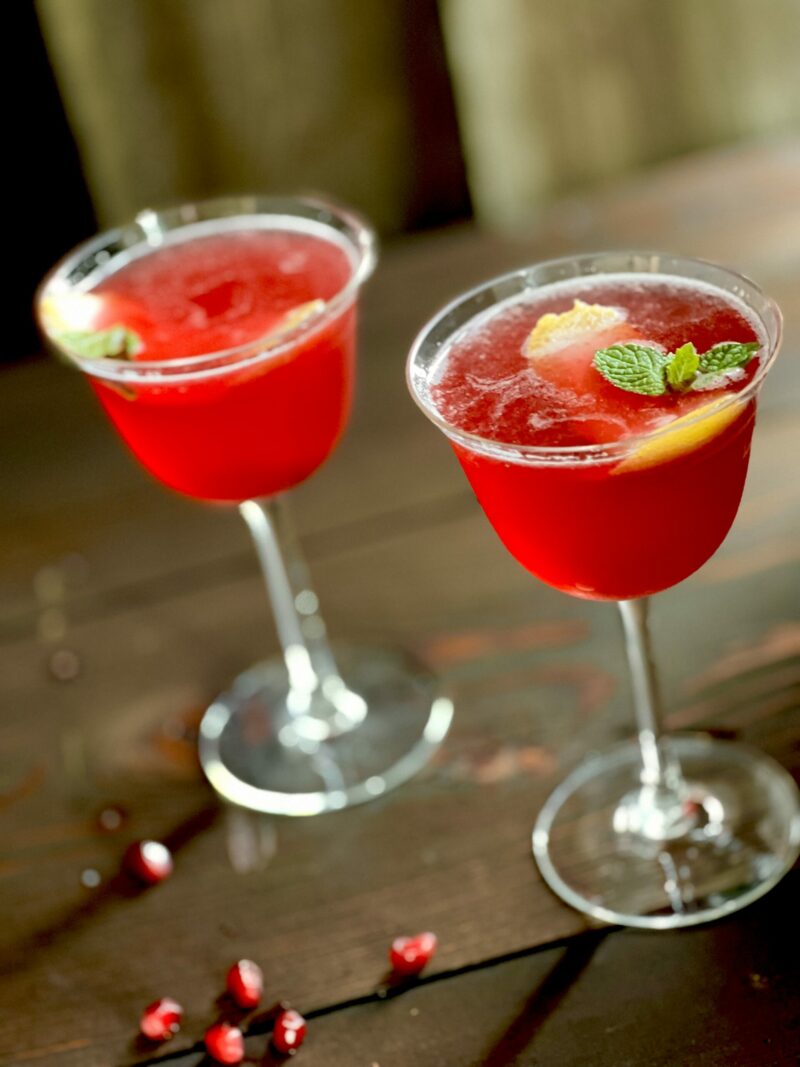
Pomegranates are a symbol of fertility in many different cultures. Greeks smash a pomegranate on New Year’s Day to celebrate abundance through seeing all of the beautiful, ruby red arils in the fruit. According to tradition, the man of the house will take a pomegranate to be blessed in church, then take it home to smash it. (Note: You do not get to eat the smashed pomegranate. However, try our Good Luck Sparkling Pomegranate Cosmo as another way to enjoy this celebratory fruit).

Donuts (The Netherlands)

Donuts are great any time of year. But on New Year’s Eve, the Dutch eat a special donut called an Oliebolllen, a deep-fried dough ball.  Before you resolve to eat healthy, get your fried dough fix at midnight! You can find them at supermarkets in the Netherlands all throughout the winter, but you can also try our recipe for Isfeng, a Sephardic Jewish donut made very similarly. Fried dough is cross cultural!

 Noodles (East Asia)

In Japan, 年越し蕎麦 (Toshikoshi soba) are a classic New Years food that are meant to help you let go of the year’s hardship. The soba buckwheat noodles break easily, hopefully as easily as you let go of your troubles. For Lunar New Year in China, noodles symbolize a long, healthy life, but the superstition is that you need to slurp them down before they break to get the good luck benefit. One thing all cultures have is superstition!

Story by Emma Riva
Cover photography by Scott Goldsmith and recipe by Jackie Page

Subscribe to TABLE Magazine’s print edition

Give Your Ceiling a Glow Up for This 2025 Design Trend

0
A room in a Salem, MA home designed by Colleen Simonds, with a blue and white ceiling

Walls and floors get the lion’s share of the attention, but the “fifth wall” (or is it the sixth?) as some call the ceiling offers an opportunity to add color and texture, but in a somewhat discreet way. (You have to make a tiny effort to take it in.) As with other decor elements, you can choose to be subtle, crazy bold, or somewhere in between. Traditional elements like medallions provide a moment of striking ornamentation, while a tin ceiling gives an all-over pattern as it catches the light. Wallpapering the ceiling provides a more modern and whimsical touch. You can vary the effect by using no pattern, small patterns, or wild patterns.

On the most simple level, you can paint the ceiling a contrasting color, or (a personal favorite) paint the ceiling a high gloss while keeping the walls matte, which is especially effective if said walls are a strong color that is reflected with an etherial glow. I predict that in 2025, people will be sprucing up their ceilings. Here are some ideas for dressing up yours.

Give Your Ceiling a Glow Up for 2025’s Design Trend

Faux Tin

A tin tile from Lowe's to put on your ceiling
Photo courtesy of Lowe’s

From Plain to Beautiful in Hours 2-ft x 2-ft Lilac Steel (Unfinished) Steel Surface-mount Ceiling Tiles (6 tiles, 24 square feet)

This is made with recycled materials. These tiles are actually steel, come in 6 colors, and you can attach them with provided nails. It’s suitable for ceilings or backsplashes to give them a little extra shine.

Medallions

A white medallion from Lucent's Lighting

Damon Ceiling Medallion by Lucent Lighting

The patterns of these urethane foam creations are first carved by master craftsmen. Then, the craftsmen make a mold the design. It’s ready to paint, should you want to jazz it up a little bit some color.

Wallpaper

A room in a Salem, MA home designed by Colleen Simonds, with a blue and white ceiling
Photo by Emily GIlbert

Night of the Skylarks (blue-grey) by Birger Kaipiainen (Finnish Design Shop)

Produced with a traditional rotary press that causes slight variation in the color and pattern, making each roll unique. 53 cm x 10.05 m (about 21” x 33’). This and the below both show up in Colleen Simonds’s design of Salem, Massachusetts home  we covered earlier in 2024.

A green and white ceiling in an office space in a home designed by Colleen Simonds
Photo by Emily Gilbert

Fig Leaf by Peter Dunham

A decorator favorite that began as a fabric and has been translated, with a larger scale, into a traditional clay coated wallpaper. 27” x 10 yards (shipped in two 5 yard rolls).

Story by Stephen Treffinger

Subscribe to TABLE Magazine‘s print edition

No Chill Sugar Cookies

0
Sugar cookies shaped like snowflakes on a black background!

You could say these sugar cookies have no chill. But No Chill Sugar Cookies are the easiest kind to make, and this recipe is no exception. Super simple and delicious, they come to us from Lauren McLane of Sweet Talkers Treats from our Cookie Table competition. She shaped them like snowflakes, but feel free to pick whatever festive shape you like! Also, for another take on sugar cookies, try our Cinnamon Roll Sugar Cookies.

Snowflake-shaped sugar cookies on a glass tray
Photo by Laura Petrilla

Tips for Making Sugar Cookies

There’s no waiting 30 minutes for these cookies to chill, but you still want to keep a good baking strategy in mind. Don’t overbake; you want to bake just until the edges start to turn golden. The centers will continue to cook as they cool on the baking sheet. And allow your sugar cookies to cool on a wire rack before frosting or stacking to avoid them becoming mushy.

Lauren McLane, a woman in a green camisole and black shirt, holds her sugar cookies
Photo by Laura Petrilla

Print

clock clock iconcutlery cutlery iconflag flag iconfolder folder iconinstagram instagram iconpinterest pinterest iconfacebook facebook iconprint print iconsquares squares iconheart heart iconheart solid heart solid icon
Sugar cookies shaped like snowflakes on a black background!

No Chill Sugar Cookies


  • Author: Lauren McLane

Description

Easy and fun!


Ingredients

Scale
  • 2 sticks butter
  • 1 cup sugar
  • 1 tsp salt
  • 1 tsp baking powder
  • 2 tsp pure vanilla extract
  • 1 tsp lemon juice
  • 1 egg
  • 3 cups flour
  • Icing (See below)


Instructions

  1. Beat butter and sugar until light and fluffy.
  2. Add in salt, baking powder, vanilla and lemon. Continue to mix for 1-2 minutes until combined.
  3. Add egg. Mix and scrape the sides of your bowl until egg is incorporated into dough mixture.
  4. Add flour one cup at a time until dough is no longer sticking to sides of the bowl.
  5. Dust surface with flour before rolling out the dough.
  6. Cook the cut-out cookies for 8 minutes at 350 degrees.
  7. Cool on cookie racks.
  8. Once completely cool, ice as desired.

Icing Recipe

Ingredients

  • 8 cups powdered sugar
  • 6 tbsp meringue powder
  • 2 tsp pure vanilla extract
  • 1/3 cup water

Instructions

  1. Mix ingredients together.
  2. Add water as needed for desired consistency.
  3. Put on top of your sugar cookies and enjoy!

Recipe by Lauren McLane
Styling by Anna Franklin
Photography by Dave Bryce and Laura Petrilla

Subscribe to TABLE Magazine‘s print edition.
Baklava

0
Baklava on a black background

Maria Dudek brought this baklava to our cookie table competition. Whether it’s a cookie or not is a little bit of a technical question, but we’ll take any excuse to eat a delicious phyllo dough pastry. Learn how to make this recipe yourself! For another recipe from Maria Dudek, try our Orange Baklava Sundae.

Baklava wrapped in white paper
Photo by Laura Petrilla

Where Does Baklava Come From?

Historians believe baklava came from the Middle East, with its roots likely tracing back to ancient civilizations such as the Assyrians. However, it became more widely recognized and refined during the Ottoman Empire, which spread the dish across its various regions, including Turkey, Greece, and the Balkans. 

Maria Dudek, a woman in a red dress smiling, holds the baklava she made
Photo by Laura Petrilla

Print

clock clock iconcutlery cutlery iconflag flag iconfolder folder iconinstagram instagram iconpinterest pinterest iconfacebook facebook iconprint print iconsquares squares iconheart heart iconheart solid heart solid icon
Baklava on a black background

Baklava


  • Author: Maria Dudek

Description

Sweet, flaky decadence awaits.


Ingredients

Scale

For the Pastry

  • 2 boxes of phyllo dough #4 (2 pounds)
  • 1lb salted butter

For the Filling

  • 2 lb walnuts, ground
  • 1/2 cup sugar
  • 2 tsp ground cinnamon

For the Syrup

  • 4 cups water
  • 6 cups sugar
  • 1 large honey dollop
  • ½ lemon: juice and rind
  • 2 cinnamon sticks


Instructions

  1. Preheat the oven to 325 degrees. Let the phyllo dough thaw to room temperature. Open one box at a time, so the dough doesn’t dry out.
  2. For the syrup: Combine all syrup ingredients, including the lemon rind. Bring to a gentle boil for 10 minutes, mixing often. Let the syrup cool completely.
  3. For the filling: Put walnuts in the food processer and grind. Add the cinnamon and sugar. Separate into 3 equal sections (about 2 cups each). Set aside.
  4. Then, melt the butter in a measuring cup or saucepan. Brush a thin layer of melted butter to the bottom of an 11 in x 18 in pan. Then begin to layer a sheet of phyllo and butter, one at a time. Continue until there are 6 sheets of phyllo dough remaining from the first pound of phyllo.
  5. Spread 1/3 of the walnut mixture across the phyllo evenly. Sprinkle the nut mixture lightly with melted butter, then add another layer of phyllo and brush that layer with butter. Add two more layers of phyllo the same way.
  6. Add another 1/3 of the walnut mixture evenly. Sprinkle with melted butter and add 3 sheets of phyllo brushed with butter. Add the last 1/3 of the walnut mixture.
  7. Then, open the second box of phyllo. Layer and butter the entire pound of phyllo dough. Lastly, brush the top of your baklava with butter generously.
  8. Depending on how many pieces you want, cut the baklava into 6×4 inch or 7×5 inch square pieces. Then cut each square diagonally to make triangles.
  9. Bake at 325 degrees until golden brown, approximately 40 minutes. Once it is finished, leave the baklava out to cool. Next, remove the lemon rind and cinnamon sticks from the syrup and slowly pour the syrup evenly onto the baklava to allow it to soak-in (there will be more syrup than needed). If possible, let the baklava soak overnight. Enjoy!


Recipe by Maria Dudek
Styling by Anna Franklin
Photography by Dave Bryce and Laura Petrilla

Subscribe to TABLE Magazine‘s print edition.
Create a free account, or log in.

Gain access to read this content, plus limited free content.

Yes! I would like to receive new content and updates.

Table Magazine wants to know your location.
TABLE Magazine operates regional sites - Knowing your location helps us route you to the appropriate site for the best experience.