Home Blog Page 92

Cookbook Club: Black Girl Baking by Jerrelle Guy

0
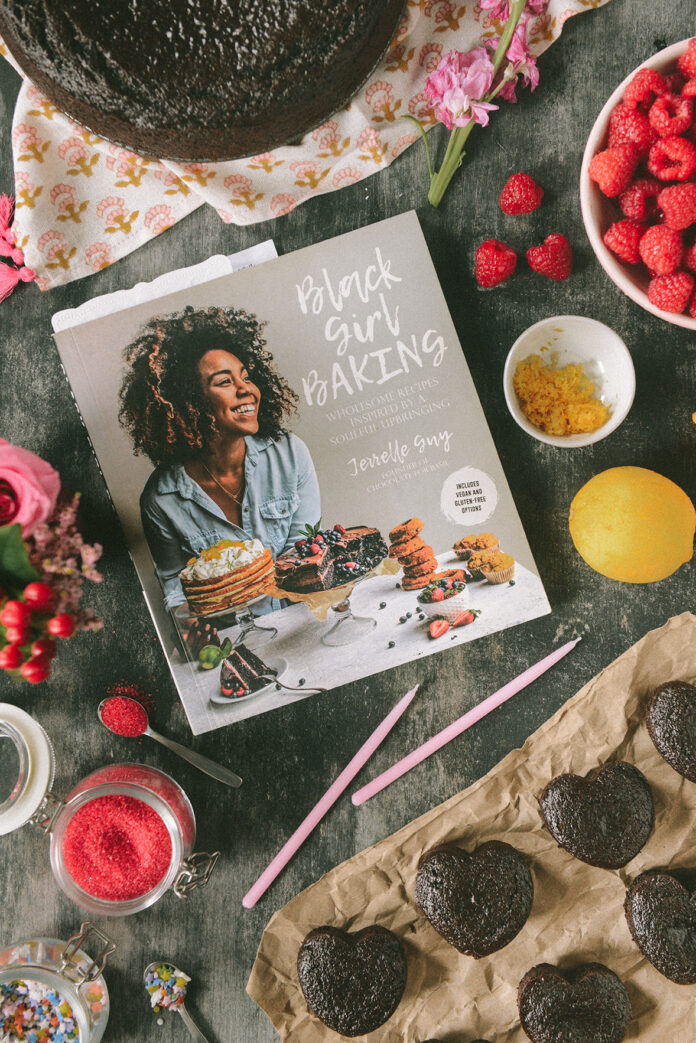
An aerial shot of Black Girl Baking cookbook, various baking ingredients, heart chocolate cupcakes, and raspberries all on a table/

It’s time for an installment of Cookbook Club, and this month, we’re pulling Black Girl Baking off the shelf. Nominated for a James Beard award, Jerrelle Guy’s book offers “wholesome recipes inspired by a soulful upbringing.” 

Cookbook Club: Black Girl Baking by Jerrelle Guy

Jerrelle introduces the book by saying, “The collection of recipes I’m sharing are a mishmash of my life: my black roots, the Chamorro food my mother prepared throughout my childhood, the Caribbean islands that were my neighbors, and the places my love for food has taken me to, including Italy, Texas, New York, [and] Boston.” 

A New Way of Cookbook Organization

What I find most unique and inspiring about her book is the way the book is organized by the senses: 

Sight: Shapes, Colors and Patterns

Aroma: Scents and Cinnamon

Sound: Snap, Crunch and Music

Touch: Textures and Mouthfeel

Taste: Spice, Heat and Flavor
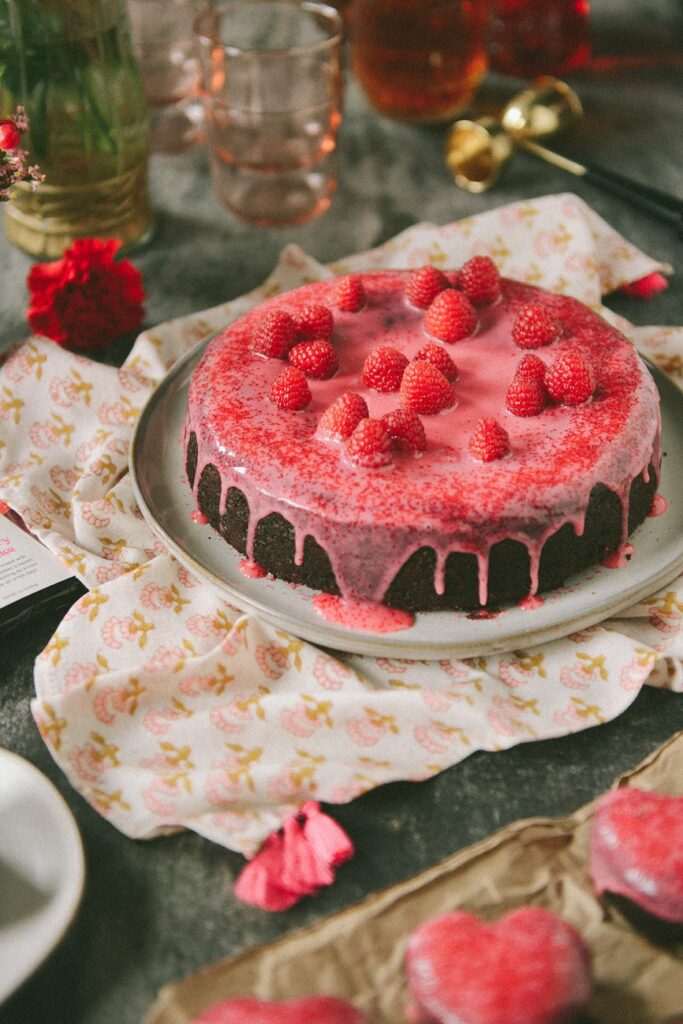
A chocolate cake covered in raspberry glaze and raspberries from Jerrell Guy's cookbook "Black Girl Baking" sits beside a set of cupcakes and other pink decorations.

For this installment, we’re baking from the Sight chapter, and with a bold and bright raspberry glaze that’s perfect for Galentine’s Day (or Valentine’s Day if you’re partnered up), it’s easy to see why this vegan chocolate cake lands in this section. I’m not one for vegan fakery, so I love Jerrelle’s whole-foods approach to vegan baking. If you’re not vegan or not feeding a vegan, you can swap traditional yogurt and butter where appropriate. If you’re traveling down the vegan path, I recommend a coconut-based non-dairy yogurt and Miyoko’s organic vegan butter, which is made from organic coconut oil and organic cultured cashew milk.

Shop Local

Don’t forget to support your local bookstores when buying your copy of Black Girl Baking. My favorites are Riverstone Books, White Whale Books, and City of Asylum

Print
clock clock iconcutlery cutlery iconflag flag iconfolder folder iconinstagram instagram iconpinterest pinterest iconfacebook facebook iconprint print iconsquares squares iconheart heart iconheart solid heart solid icon
A chocolate cake covered in raspberry glaze and raspberries from Jerrell Guy's cookbook "Black Girl Baking" sits beside a set of cupcakes and other pink decorations.

[Not An] Easy Bake Cake with Raspberry Glaze Recipe


  • Author: Kylie Thomas
  • Yield: 9-inch Cake or 10 Mini Cakes/Cupcakes 1x

Description

A chocolate and raspberry glaze cake perfect for embracing the friendship of Galentine’s Day.


Ingredients

Scale
  • 1 ¾ cups (210 g) white whole wheat flour
  • ½ cup (60 g) cocoa powder or raw cacao
  • 1 tsp baking soda
  • 1 tsp baking powder
  • ⅔ cup (160 g) yogurt, dairy-free for vegan option
  • 1 cup (225 g) packed light brown sugar
  • 1 tsp salt
  • ¼ cup (60 g) unsweetened applesauce
  • ¼ cup (60 ml) melted coconut oil or olive oil
  • 2 tsp (10 ml) vanilla extract
  • 1 cup (235 ml) hot brewed coffee

For the raspberry glaze:

For the topping: 

  • Naturally-colored sprinkles (optional)


Instructions

For the cake:

  1. Preheat the oven to 350°F. Oil a 9-inch springform cake pan or line a regular cake pan with parchment paper. Alternatively, grease a muffin tin or mini cake mold.
  2. In a medium bowl, whisk together the flour, cocoa powder, baking soda, baking powder, and salt together. Set aside.
  3. In the bowl of a stand mixer, whisk together the brown sugar, yogurt, applesauce, oil, and vanilla extract until smooth. Gradually add the dry ingredients to the yogurt mixture, and whisk to combine.
  4. Pour in the hot coffee, and stir to combine.
  5. Pour the batter into the prepared cake pan. Bake for 30-35 minutes, or until a toothpick inserted in the center comes out clean. Bake time will vary for cupcakes or mini cakes, about 18-21 minutes.
  6. Remove from the oven and allow to cool for 10 minutes, then turn the cake onto a wire rack to finish cooling. In the meantime, prepare the glaze.

For the raspberry glaze:

  1. In a saucepan, combine the raspberries, cane sugar, lemon juice, lemon zest, and cook, stirring occasionally, until the raspberries break down into a sauce, about 10 minutes. Remove the sauce from the heat, and strain it through a sieve to remove the seeds.
  2. Combine the vegan butter and the seedless raspberry sauce in the bowl of a stand mixer, and whisk until the butter is melted and incorporated. Transfer to a heatsafe bowl, and refrigerate until chilled and thickened.
  3. Once the glaze has thickened, spread it over the cake, or dip cupcakes into it. Top with sprinkles, and enjoy!


Recipe by Jerrelle Guy
Story and Photography by Quelcy Kogel

Subscribe to TABLE Magazine‘s print edition.
Salted Almond Chocolate Brittle

0
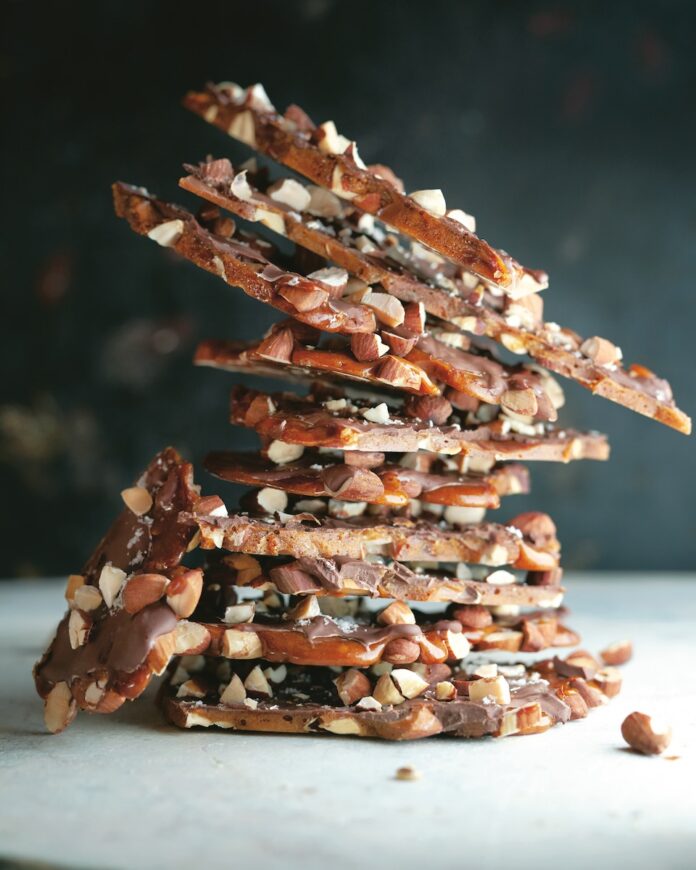
A stack of nut and chocolate salted brittle sits stacked on a white table with a dark background behind the subject.

An airy version of nut brittle with savory overtones from soy sauce, this treat is made of toasted almonds topped with dark chocolate and, if you’d like, fleur de sel or another flake salt. I’m grateful to my friend Cassandra Kobayashi for developing the recipe. 

Make the basic version first and then play with additional flavors if you wish: you could include a pinch of ground cayenne in the syrup, use peanuts or toasted sesame seeds with or instead of the almonds, and on top, instead of flake salt, try a pepper-salt mixture such as Sichuan Pepper Salt or Chile Salt.  

Prepare all your ingredients in advance and please read through the recipe for this Salted Almond Chocolate Brittle before starting. You’ll need a digital candy thermometer to show you when the syrup has reached the “hard crack” stage of 300 degrees. Monitor the temperature closely as the syrup heats because just a few seconds can make the difference between perfect and burnt.  This recipe is going to make two 9 x 7-inch rectangles (to break into pieces). 

Print
clock clock iconcutlery cutlery iconflag flag iconfolder folder iconinstagram instagram iconpinterest pinterest iconfacebook facebook iconprint print iconsquares squares iconheart heart iconheart solid heart solid icon
A stack of nut and chocolate salted brittle sits stacked on a white table with a dark background behind the subject.

Salted Almond Chocolate Brittle


  • Author: Naomi Duguid

Description

The addition of salt helps bring out the richness of the chocolate and nutty flavor of the almonds.


Ingredients

Scale
  • 1 cup raw whole almonds or salted almonds  
  • 1 tsp baking soda  
  • 2 oz dark chocolate, chopped into ¼-inch pieces  
  • 1 cup granulated sugar  
  • 2 tbsp corn syrup 
  • 1 tbsp molasses (dark or blackstrap) 
  • 4 tbsp salted butter 
  • 2 tbsp water  
  • 1 tbsp soy sauce, such as regular Kikkoman  
  • About 1 tsp fleur de sel or other flake salt (optional) 


Instructions

  1. If using raw almonds, preheat the oven to 325 degrees, or set a dry heavy skillet over medium heat.  
  2. Spread the almonds on a small baking sheet and roast them in the oven for 10 to 12 minutes until aromatic and touched with color. Or toast them in the skillet, shaking the pan, for just a few minutes. Set the nuts aside to cool. 
  3. Or, if using the salted almonds, roast them in the oven or toast them in the skillet, but reduce the cooking times by at least half; since they are already roasted, you just want to crisp them up a bit. Set aside to cool.  
  4. Coarsely chop the nuts; set aside.  
  5. Lightly oil two sheets of parchment paper. Arrange one-third of the nut pieces to make a 9 x 6-inch rectangle on each sheet; reserve the remaining nuts to use as a topping. 
  6. Place the baking soda and chopped chocolate near your stovetop. Have an oiled silicone spatula and your thermometer nearby, too. 
  7. Combine the sugar, corn syrup, molasses, butter, water, and soy sauce in a heavy pot and bring to a boil over medium-low heat, stirring with the oiled spatula just until the sugar is dissolved. (Having the pot on a burner that is no bigger than the bottom of the pan will help with even heating.) Let the mixture come to a boil, without stirring it again; if it seems to be heating unevenly, swirl the pan gently. Bring the syrup to 300 degrees, the hard crack stage. As the water boils off, the mixture will darken and the uniform bubble batter will change to a “tufted” look with some areas pulled down between puffed-up sections of bubbles. Once the syrup reaches 300 degrees, the hard crack stage, immediately remove the pot from the heat (if the syrup turns a shade darker beyond this, it can quickly burn). Immediately add the baking soda and stir vigorously with the oiled spatula to incorporate. The mixture will bubble and lighten in color. (Be careful not to touch the pot or syrup, which will be extremely hot.) 
  8. Pour and scrape the syrup onto the rectangles of chopped almonds on the parchment and use the oiled spatula to spread out the syrup. Let cool for 30 seconds, then sprinkle with the chopped chocolate. As the chocolate melts, use the spatula to spread it over the brittle. Sprinkle on a little salt if you’d like, and then the remaining chopped almonds. Press lightly on the almonds to help them stick. 
  9. Let cool completely. (If it’s a hot day, finish cooling the brittle in the refrigerator.) Break into chunks once cool and store in a well-sealed bag or container at room temperature.   

Excerpted with permission from The Miracle of Salt by Naomi Duguid (Artisan Books). Copyright © 2022. Photographs by Richard Jung.

Story and Recipe by Naomi Duguid
Photography by Richard Jung

Subscribe to TABLE Magazine‘s print edition.

Smashed Kimchi Cucumber

0
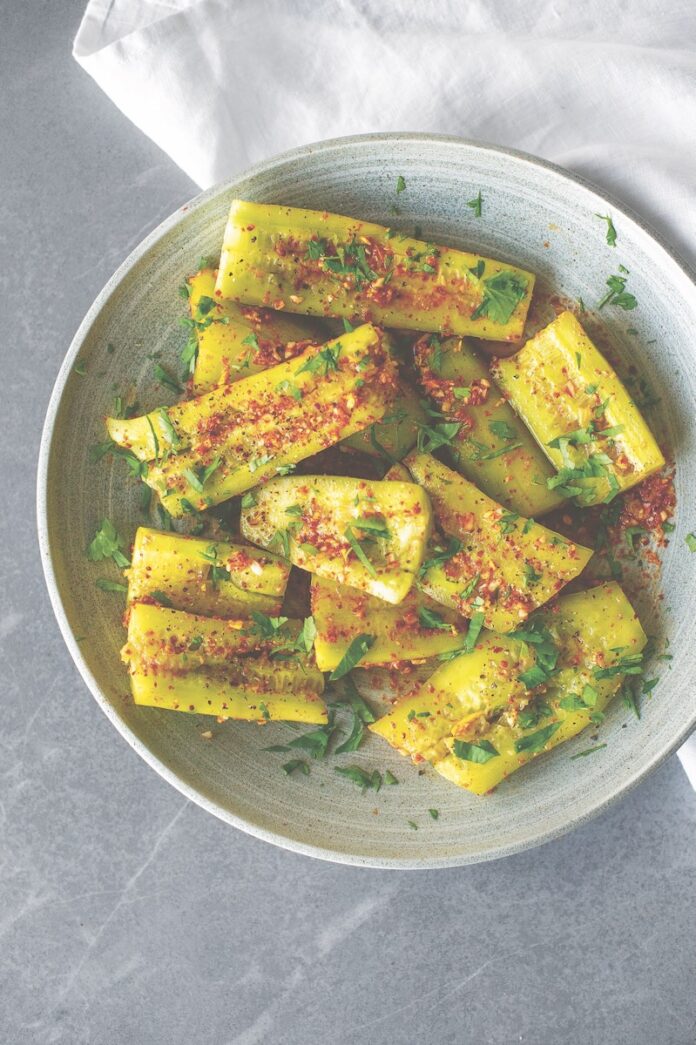
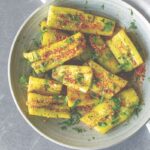
A large white bowl of smashed cucumbers with kimchi, parsley, and chili seasoning on top.

A couple of years ago I ate something approximating this in a restaurant in London. That much is all my cloudy memory will recall. In the absence of more details dropping like reels on the fruit machine into my mind, I have my own re-creation, this Smashed Kimchi Cucumber. I love the flavors of kimchi and this is very much a tribute to them, without the wait that making kimchi requires: the vinegar offers the sourness that fermenting usually provides. You could slice the cucumbers but the roughly smashed edges encourage the flavors into the flesh. 

A Word About Spices from Mark Diacono

I remember when my mother can home from the supermarket with a jar of mixed spice. She dusted her apple filling with this mysterious powder. Despite eating as much of the Sunday roast as I could, the spicy scent coming from the oven had me hungrier than when I came to the table. This is the power of well deployed spices: their scent makes your nose a promise that their flavors deliver on. This same effect occurs with my Smashed Kimchi Cucumber recipe.

Print
clock clock iconcutlery cutlery iconflag flag iconfolder folder iconinstagram instagram iconpinterest pinterest iconfacebook facebook iconprint print iconsquares squares iconheart heart iconheart solid heart solid icon
A large white bowl of smashed cucumbers with kimchi, parsley, and chili seasoning on top.

Smashed Kimchi Cucumber


  • Author: Mark Diacono
  • Yield: Serves 4

Description

This recipe is made even better since you don’t have to wait for the kimchi to ferment.


Ingredients

Scale
  • 2 large cucumbers, peeled 
  • Generous pinch of salt 
  • 1 tbsp rice vinegar 
  • 1 tbsp Shaoxing rice wine 
  • 1 garlic clove, finely chopped 
  • 1 inch fresh ginger, peeled and finely chopped 
  • 1 tbsp sesame oil 
  • 1 tbsp gochugaru (Korean chile flakes) 
  • 1 tsp fish sauce 
  • 1 tsp granulated sugar 
  • Small handful of cilantro, sliced 


Instructions

  1. Slice the cucumbers lengthways, then each half into four pieces. With the cut side face down on a chopping board, and one hand preventing the cucumber piece skating across the kitchen, use your knuckles to press into the back of the cucumber pieces with just enough pressure to lightly smash them a little. 
  2. Add all but the cucumbers and coriander to a bowl and stir vigorously to incorporate thoroughly. Pat the cucumber pieces dry using a clean tea towel, then add them to the bowl and toss until thoroughly coated. Allow to rest and soak in the flavors for 5 minutes before serving.
  3. Serve on a platter, sprinkled with the cilantro.   

Extracted with permission from Spice, by Mark Diacono (Quadrille Publishing $35).

Recipe and Photography by Mark Diacono 

Subscribe to TABLE Magazine‘s print edition.
What Can You Drink with Food During Dry January?

0

A common trope of psychoanalysis refers to desire and lack: one creates the other. To put it in Buddhist terms, all suffering comes from desire. This year’s Dry January wasn’t the first time I consciously stopped drinking, but it was the first time I noticed the lack and my desire to fill it so acutely.

Not drinking felt akin to not eating gluten or sugar. A glass of wine with dinner is a part of my routine, and not just that, but a part of my body’s way of processing food. Without the acidity from a glass of wine with a bowl of pasta, and a swig of amaro or grappa after, my meals felt less satisfying. I avoided certain restaurants knowing that my resolve was just not strong enough not to order a glass of wine. I found myself wondering how to fix this problem.

So… What Can You Drink with Food During Dry January?

Not everyone has this proclivity towards alcohol and food. The world of non-alcoholic beverages has focused heavily on the mocktail as a part of bar service, which is a piece of mixology artisanship in itself that’s come a long way. I don’t drink cocktails with food very often, and I like the boozier, more simplistic ones if I am sitting at a bar.

Not drinking forced me to get experimental with what I drank and to consider how much of drinking is a social ritual, how much is a routine, and how much is simply the body’s addiction to sugar. There’s no one-size-fits-all answer, but I’ve gained some perspective.

A Nordic Perspective

I faced this in real time at Fet-Fisk, a New York Times and Eater-acclaimed Nordic seafood restaurant in Pittsburgh. The wine list at Fet-Fisk is whimsical and diverse, perfectly meant to pair with the menu. Rather than letting my eyes linger on the Mosel Riesling or the Austrian skin-contact Gruner Veltliner for too long, I diverted my gaze to the Norwegian Fjell, a fermented non-alcoholic botanical that Fet-Fisk’s staff discovered at Raw Wine, a natural wine convention. (How I would love to be a fly on the wall during the conversations happening going on at such a thing. Surely it would make for an amazing Fear and Loathing on the Campaign Trail-style gonzo journalism project).

Fjell has spruce, yarrow, and birch in it, and tasted similar to kombucha, with that fermented sour kick to it. What I found most fascinating about it was that unlike a standard non-alcoholic menu replacement, it was clearly in line with the restaurant’s curated vision. It was Nordic, from the same terroir, and it went well with seafood. In a wine glass, alongside a glass of orange wine, it looked identical, and I didn’t feel left out. It made me wonder if more restaurants should adopt this philosophy with non-alcoholic options.

Raisin, an app that helps people find biodynamic wine, shared an infographic on Instagram called “Why we’re saying ‘no’ to non-alcoholic wine.” They argue that the intervention of de-alcoholization defeats the purposes of trying to eat clean and healthy. Instead, Raisin argued that it makes more sense to look more towards fermented non-alcoholic options like Fjell or kombucha.

If you’re solely looking for the taste of alcohol, not its psychological qualities, there may be something to that. 

An Italian Perspective

My frustration around not drinking wine with food came out most with Italian or French cuisine. What else could you drink with food that feels designed to be paired with wine? I decided to find the perfect person to give curated recommendations: an Italian chef who doesn’t drink. Anthony Tomacchio runs Toma, an Italian restaurant with hearty home-style Italian meals that certainly pair well with wine, but Tomacchio himself is sober.

Tomacchio defends de-alcoholized wine. “There’s a lot of products on the market that aren’t actual wine, but more of a wine replacement. I tend to avoid those because I just don’t care for the imposter taste,” he said. He wants to honor what the food needs beside it, rather than wantonly swapping in a kombucha. “Hearty meat dishes like braised short ribs or a classic Chicken Parm deserve a robust red. A solid choice for everyday use is Noughty Rouge, a medium-bodied de-alcoholized red with notes of candied cherry, dried rose petal, and black pepper.”

He had a recommendation for a special night, too, to play into the ritual of drinking with a de-alcoholized wine.  “If I’m splurging on a nice bottle to serve alongside something special, I’ll go with Oceano Zero Pinot Noir. It’s a premium small-batch wine that really complements the rich flavors of Italian cooking.”

Funnily enough, founder Rachel Martin began Ocean Zero after doing Dry January as a wine professional and re-evaluating her relationship to drinking. “Not every moment calls for alcohol, but every moment calls for intentional choice,” she wrote on Instagram.

Staying Sober at Home

Importer Alyssa McGrath of Skurnik Wines was the first person to make me realize I was not alone or crazy in this predicament of wanting to drink with food. “When I don’t have a glass of wine with dinner, I have a lemon slice in San Pellegrino. Higher-acid wine cuts through the fat of rich things. If I’m not having a glass of wine, I need something with a little bubble and a lot of citrus,” she told me. I felt validated—there was something to drinking every day that had little to do with being a boozehound.

Like McGrath, I’ve found the simplest, most budget-friendly option for something zero-proof to drink with a meal at home is mineral water. No frills. No additives. Arguably good for you, with its copious amounts of calcium and magnesium. In place of the crisp minerality of white wine, a bottle of Gerolsteiner will cut through food. Mineral water with some kind of bitters in it and a slice of citrus is truly enjoyable to sip on.

Martin Riese, the “mineral water sommelier,” could help you out with picking the best water to pair with your meal. If nothing else, watching Riese taste water will provide some entertainment while you’re thinking about wishing you were tasting wine.

But one thing I’ve found during Dry January is that friends will be accommodating with mineral water, kombucha, and de-alcoholized wine when you’re not drinking. Not defaulting to “going out for drinks” as a way to hang out with people is good for both your social life and your wallet. It’s a worthy exercise to get to know yourself and your desires better.

Story by Emma Riva
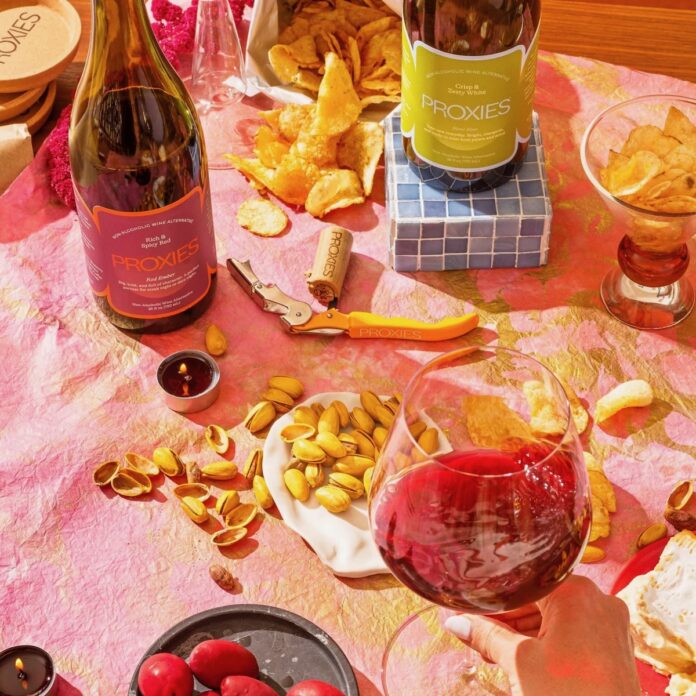
Photo courtesy of Proxies Red Amber de-alcoholized wine, sold at The New Bar.

Subscribe to TABLE Magazine’s print edition

5 Books About the Highs and Lows of the Restaurant Industry

0
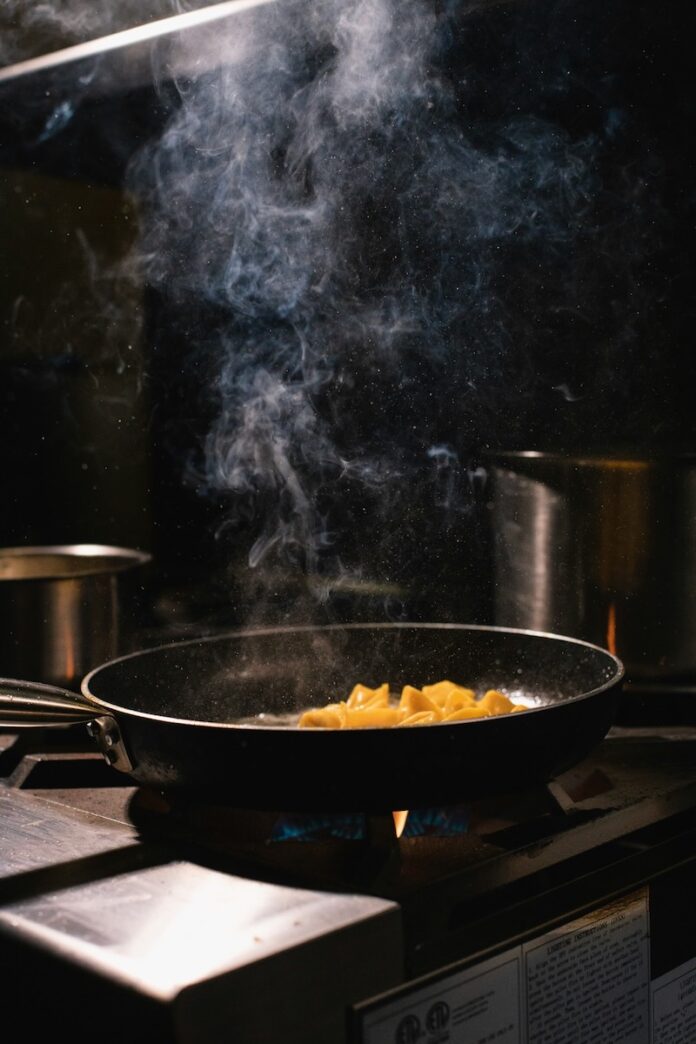
A sizzling pot at a restaurant on a black background.

Many love to eat, not all love to cook. Behind the doors of your favorite fine dining restaurant are likely a staff of people sweating, swearing, and frantically dicing onions. Being a chef is not yelling at your colleagues and only finding a moment of peace during a smoke break, but the restaurant industry is a notoriously difficult world that only those who really love food and cooking find themselves in. Rather than go the route of the Eat, Pray, Love style heady culinary memoir, consider reading these books about the lives of the restaurant industry people that make the dishes you love.

5 Books About the Highs and Lows of the Restaurant Industry

A pink knife with white text in it on a black background, the cover of the book Skirt Steak.

Skirt Steak: Women Chefs on Standing the Heat and Staying in the Kitchen by Charlotte Druckman

Want something beyond the Gordan Ramsay, Guy Fieri, or Anthony Bourdain perspective on life on the line? Charlotte Druckman’s Skirt Steak draws from over 70 female chefs’ interviews on why they cook, how they run a kitchen, and the pressures they’ve faced as women in a boys’ club.  It cements the idea that there isn’t just one kind of chef, and that the image of the screaming men in The Bear doesn’t have to be the norm. (But that sometimes, women chefs can be just as cutthroat as men).

The cover of Heat by Bill Buford, a yellow book with black text on it.

Heat by Bill Buford

New York Times writer Bill Buford became enamored with Chef Mario Batali’s cooking and in 2004, decided he wanted to learn it for himself. The descriptions of Batali’s kitchen are equal parts unnerving and mouthwatering, and Heat demonstrates just how much labor goes into the best restaurants in the world. Buford’s transformation from novice to prep cook to line cook to trusted team member is certainly not a bloodless one, but it’s an enjoyable read.

The cover of Last Night at the Lobster by Stewart O'Nan, black with red cursive text.

Last Night at the Lobster by Stewart O’Nan

Last Night at the Lobster may be fictional, but the frying, yelling, and frenetic pouring of “Lobsteritas” will be all to real to anyone who’s worked in the less glamorous side of the restaurant world. Taking place on the final day of a soon-to-be-shuttered Reb Lobster in a harsh, cold New England winter, Last Night at the Lobster illuminates how managers, hostesses, and chefs work together and relate to each other to create an experiences, even at a chain restaurant.

The cover of Anthony Bourdain's Kitchen Confidential, with Bourdain standing in front of a black background wearing a chef's outfit.

Kitchen Confidential by Anthony Bourdain

You knew this was coming. No list of books about restaurants is complete without Bourdain. But Kitchen Confidential is a classic for a reason. Bourdain did it like nobody else. His accounts of cooking go beyond the food itself and into the why of cooking, that intangible element of food that  makes it truly special, and that all chefs search for and only some achieve.

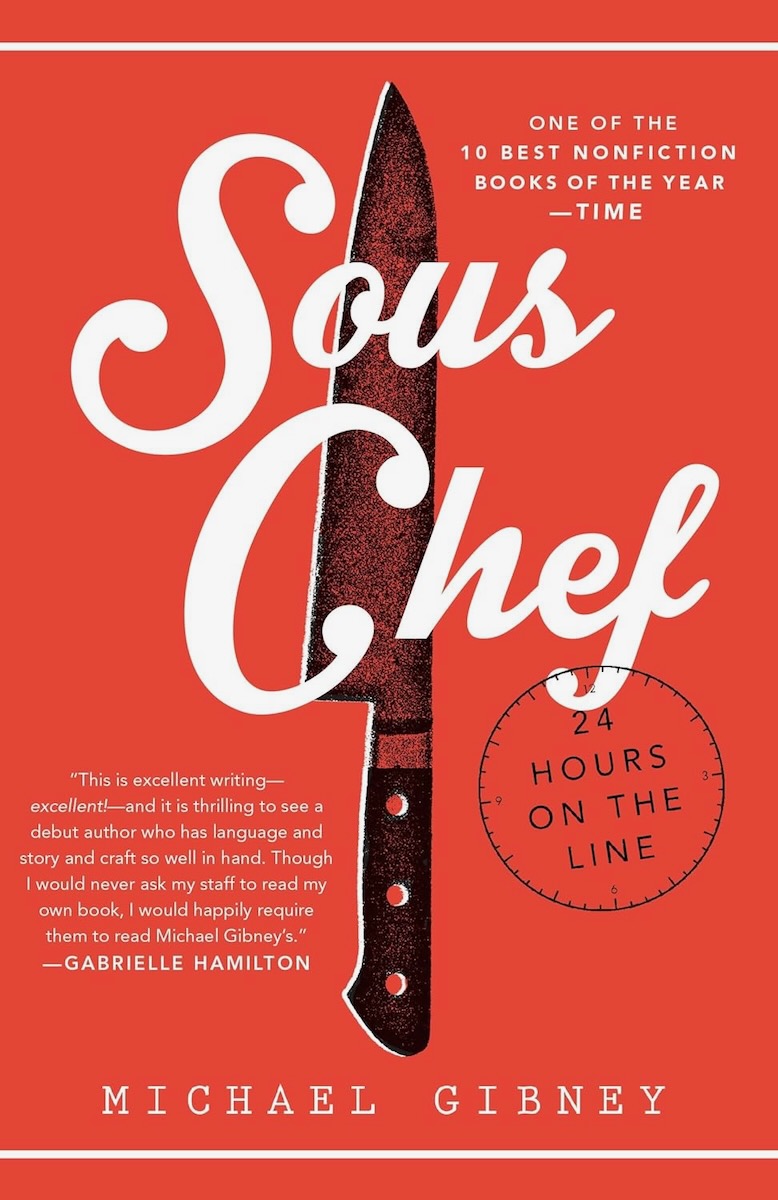
The cover of Sous Chef by Michael Gibney, a red graphic with a knife in the middle bisecting the book's title in a cursive font.

Sous Chef: 24 Hours on the Line by Michael Gibney

Sous Chef doesn’t take place in one specific kitchen, but it could be every kitchen. With its second-person narration and hour by hour pacing, the reader really gets the sense of how stressful, but also how rewarding, it is to be a sous chef.  Gibney highlights the sous specifically, taking you out of the focus of the executive chef and into what some chefs call “the hardest job in the kitchen” as the right-hand to the big boss.

Story by Emma Riva
Photo by Duane Mendes

Subscribe to TABLE Magazine‘s print edition.
One Pan Chicken Meatballs with Creamy Orzo

0
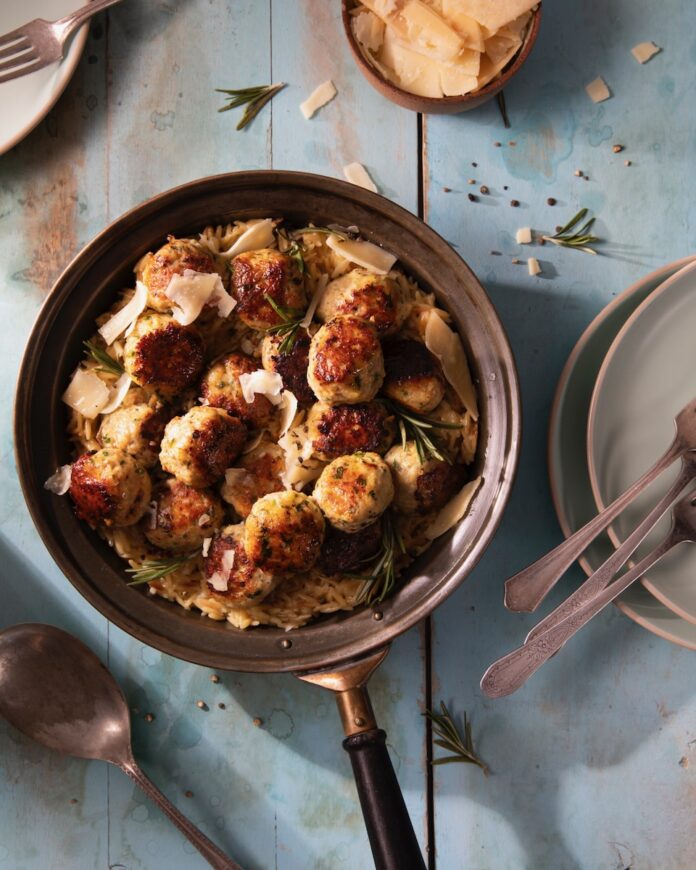
A plate of chicken meatballs in creamy orzo, staged on a white table.

Nothing beats homemade, and that goes for chicken meatballs, too. These fresh, light meatballs get their start with store-bought chicken sausage. The rest is simple: seasonings, breadcrumbs, and a fun in the kitchen with the kids to shape the meatballs. In no time at all, you will marvel at the deliciousness. This recipe makes both an easy weeknight dinner and a fancier centerpiece–it can be dressed up or down depending on your presentation. 

Tips for Making Homemade Meatballs

Making your own chicken meatballs is easy and fun! One of the keys to the mixture is the breadcrumbs that allow the meat, spices and egg to bind together. The breadcrumbs will absorb moisture, keeping the meatballs from becoming soggy and misshapen. If, somewhere along the way, your meatballs start to not stick together, a pinch of baking soda in the meatball mix can help keep them the right shape.

Print
clock clock iconcutlery cutlery iconflag flag iconfolder folder iconinstagram instagram iconpinterest pinterest iconfacebook facebook iconprint print iconsquares squares iconheart heart iconheart solid heart solid icon
A plate of chicken meatballs in creamy orzo, staged on a white table.

One Pan Chicken Meatballs with Creamy Orzo


  • Author: Jennifer Schwalm

Description

A cheer-inducing comfort food meal.


Ingredients

Scale

For the chicken meatballs:

  • 1 pound chicken sausage or ground chicken
  • ½ cup dry breadcrumbs
  • ½ cup Parmesan cheese, grated
  • ¼ cup milk
  • 1 large egg
  • ¼ cup fresh parsley, chopped
  • 1 tsp Italian seasoning
  • 1 tsp salt
  • 1 tsp minced garlic
  • 1⁄4 tsp black pepper
  • 2 tbsp oil (for sauteeing)

For the garlic parmesan orzo: 

  • 2 cloves garlic, minced
  • 2 ½ cups low sodium chicken broth
  • 1 ½ cups dry orzo pasta
  • 2/3 cup cream (heavy or light)
  • ¼ cup Parmesan cheese, shredded
  • ½ tsp salt
  • ¼ tsp black pepper
  • ½ tsp onion powder


Instructions

For the chicken meatballs:

  1. In a large mixing bowl, combine the ground chicken, breadcrumbs, Parmesan, milk, egg, parsley, Italian seasoning, salt, garlic, onion powder, and black pepper. Mix until well incorporated but avoid over mixing.
  2. Let the mixture sit for 10-20 minutes to allow the breadcrumbs to absorb excess moisture.
  3. Form the mixture into 1 – 1 ¼ inch meatballs.
  4. Heat 2 tbsp oil in a large skillet over medium-high heat. Sear the meatballs on all sides until golden brown.
  5. Remove the meatballs from the skillet to a plate and cover with foil to keep warm.

For the garlic parmesan orzo:

  1. Using the same skillet, add minced garlic and sauté for 1 minute until fragrant.
  2. Pour chicken broth and scrape the bottom of the pan with a flat whisk or wooden spoon to deglaze.
  3. Bring to a low boil, then add the orzo, cream, Parmesan cheese, salt, and pepper. Stir to combine.
  4. Place seared meatballs on top of the orzo, cover the skillet, and simmer on medium-low heat for 10 minutes or until the orzo is al dente. Stir occasionally. Garnish with fresh herbs. Serve hot and enjoy!


Recipe by Jennifer Schwalm
Styling by Anna Franklin
Photography by Dave Bryce

Subscribe to TABLE Magazine‘s print edition.
Apple, Pancetta and Shiso ‘Za’atar’ Recipe

0
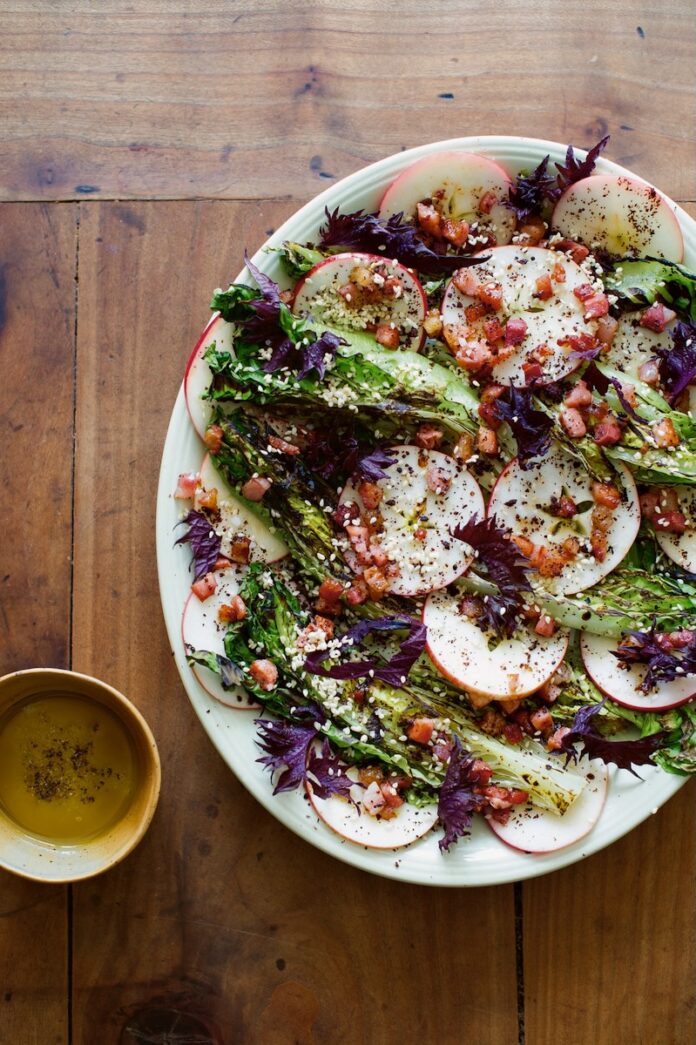
A salad drizzled with homemade za'atar and pancetta with bitter apples.

Za’atar is a remarkable coming together of earthy/resinous cumin and oregano, with the sour brightness of sumac, salt, and sesame seeds. Plus, it’s easy to make. In this za’atar recipe, I’ve taken the spirit of it and used shiso’s wonderful cumin and mint flavor in place of actual cumin and oregano. (Shiso’s botanical name is Perilla frutescens, and it belongs to the mint family. Indigenous to the mountains of China and India, it is used frequently in Asian cuisines for its intriguing aroma and flavor.) It works perfectly and allows for more experimentation than buying za’atar from the store. Once you start homemaking things, you’ll never go back to store-bought. This za’atar recipe is no exception.

How Does This Homemade Za’atar Recipe Get Its Flavor? 

The sourness that’s missing from this, but that Mexican oregano brings to my za’atar, is balanced by using good sharp apples. I prefer a “cider” apple that’s naturally more sour. When I had a couple of sweeter apples, I made this with Vietnamese coriander instead of shiso to balance out the flavors. In that case, the implied sourness of its lemon and coriander flavor worked a treat to make the other herbs.

Print
clock clock iconcutlery cutlery iconflag flag iconfolder folder iconinstagram instagram iconpinterest pinterest iconfacebook facebook iconprint print iconsquares squares iconheart heart iconheart solid heart solid icon
A salad drizzled with homemade za'atar and pancetta with bitter apples.

Apple, Pancetta and Shiso ‘Za’atar’ Recipe


  • Author: Mark Diacono

Description

Make your own za’atar!


Ingredients

Scale
  • 2 little gem lettuces, quartered
  • 4 tbsp olive oil
  • 3 ½ oz pancetta or lardons
  • 2 tart apples
  • 3 tbsp red wine vinegar
  • 1 tbsp Dijon mustard (optional)
  • 10 leaves shiso, thinly sliced if large
  • 3 tbsp sesame seeds, toasted in a dry pan
  • 2 tsp sumac
  • Sea salt and freshly ground black pepper


Instructions


  1. Heat a dry frying pan over a high heat and sear the two cut sides of the little gem quarters: you’re looking for quick charring while retaining crunch. Remove from the drying pan and arrange on a platter. Add the oil to the pan and cook the pancetta for about 5 minutes until golden and it has released its fat.
  2. Meanwhile, thinly slice the apples (equatorially rather than polar), remove the seeds and scatter the slices over the lettuce. Take the pan off the heat and use a slotted spoon to lift the lardons onto the gems, keeping the oil in the pan.
  3. Stir the vinegar and mustard into the oil in the pan and drizzle over the salad. Sprinkle the shiso, sesame seeds and sumac over the salad, and season generously with salt and pepper.

Recipe and Photography by Mark Diacono

Excerpted with permission from Herb by Mark Diacono (Quadrille Publishing). Photography by Mark Diacono. Read his herb tips as part of our food education series.

Subscribe to TABLE Magazine‘s print edition.
Dress Up Any Dish with Herbs

0
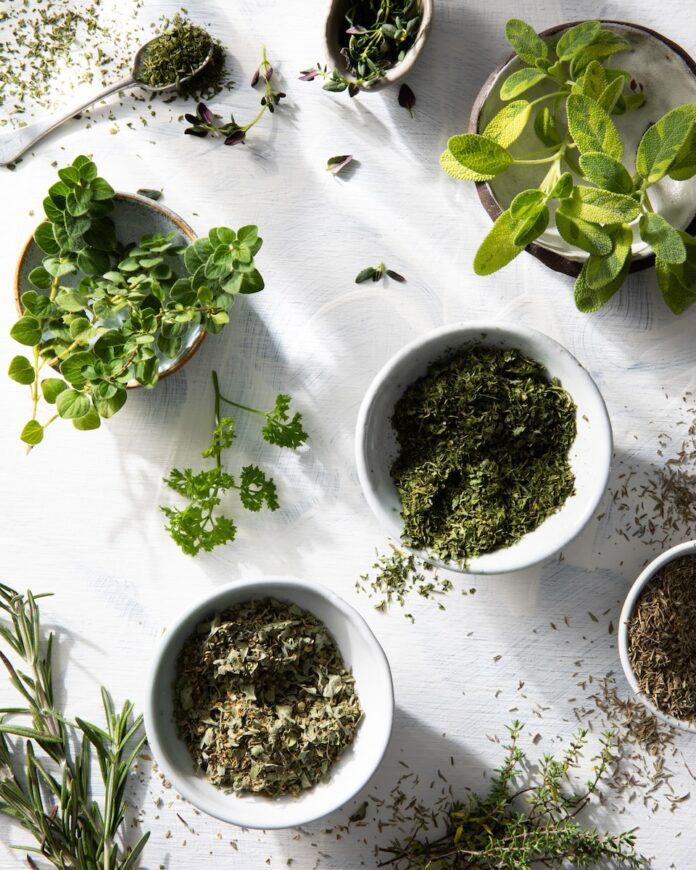
Bowls of various shades of green herbs plated on a white background.

Herbs are the clothes other ingredients dress up in. For example, a potato becomes something entirely different when paired with rosemary or parsley or bay. They are transformers, ready to elevate your cooking, and all you have to do is enthusiastically invite loads of them into your kitchen.

Dress Up Any Dish with Herbs

As herbs are typically harvested from a living plant, they tend to have a short lifespan. Consequently, sourcing herbs well, and using them while they are at their peak, is crucial. Your main task is to take the herb quickly from plot to plate in such a way that the best of its qualities come out in the dish. Generally speaking, the softer herbs – parsley, cilantro, basil and so on – have a short window of excellence once harvested and are often added late or upon serving to make the best of their often delicate qualities. The woodier herbs including bay, thyme, and rosemary, are often at their best added earlier in the cooking process.

Sourcing and storing herbs well sets the parameters for how well their qualities will sing in your cooking. The closer in the food chain you get to the person who grew them and the time they are harvested, the better they are likely to be. Farmers’ markets and independent stores are likely to offer the best quality herbs and widest variety. That said, supermarket herbs are a much better prospect than they once were. Wherever you get them, take time to examine them: smell and taste them if you can.

How to Store Herbs

Almost all herbs are best stored with their stems in a glass filled to 2½ inches or so with water; slice-off the very bottom to ensure a clean, fresh cut, and keep them away from direct sunlight and heat. Any herbs you buy sealed in a bag are best opened to allow air to circulate around the leaves. You can store herbs in the fridge: woody herbs should last a week or more, soft herbs a little less. Both should last a little longer washed, thoroughly dried and kept in an airtight container in the fridge.

When you use herbs, remember that your knife affects the flavor hugely. If you finely chop a handful of cilantro to add to a dish, the herb is likely to affect every mouthful, whereas a quick pass of the blade resulting in larger pieces of cilantro is likely to result in some mouthfuls having intense flavor and others not.

If you have even a little space by your kitchen door, grow half a dozen flavorful herbs. Even this seemingly small commitment has the power to change every meal you eat for the better.

Four Less Familiar Types to Try

Lovage

Deeply savory, similar to celery, and rich vegetable stock. Use sparingly with tomatoes, leafy greens, mussels and cheese. Perfect for the gardening-nervous , as it’s almost impossible to kill.

Lemon Verbena

Like lemons, only more so. This is my favorite herb, with a scent and flavor full of lemon sherbet and lively zest. As with bay, its flavor is usually infused rather than the leaf actually eaten. It makes exceptional syrups, vinegars, custards and sorbets, as well as a wonderful herb tea, on its own or with mint.

French Tarragon

Enthusiasts might use this more days than not, yet it remains under-appreciated. Its thin leaves smell and taste of milky, peppery aniseed, with hints of citrus and mint. Famously good with chicken, I love it with green beans, potatoes and tomatoes. And if you make tarragon vinegar once, you will be a convert.

Lemon Thyme

This bright variation on the common thyme is one I couldn’t be without. It carries all the familiar resinous, piney delight of thyme, only it does so more brightly. Use as you would common thyme for a different mood.

Learn more about how to use herbs creatively from Regional Editor, Julia Platt Leonard. 

Check out the rest of our food education series:

Or, for another way to expand your epicurean horizons, try our liquor education:

Story by Mark Diacono
Styling by Anna Franklin
Photography by Dave Bryce

Subscribe to TABLE Magazine’s print edition.

Pretty Woman Pomegranate Cosmo

0
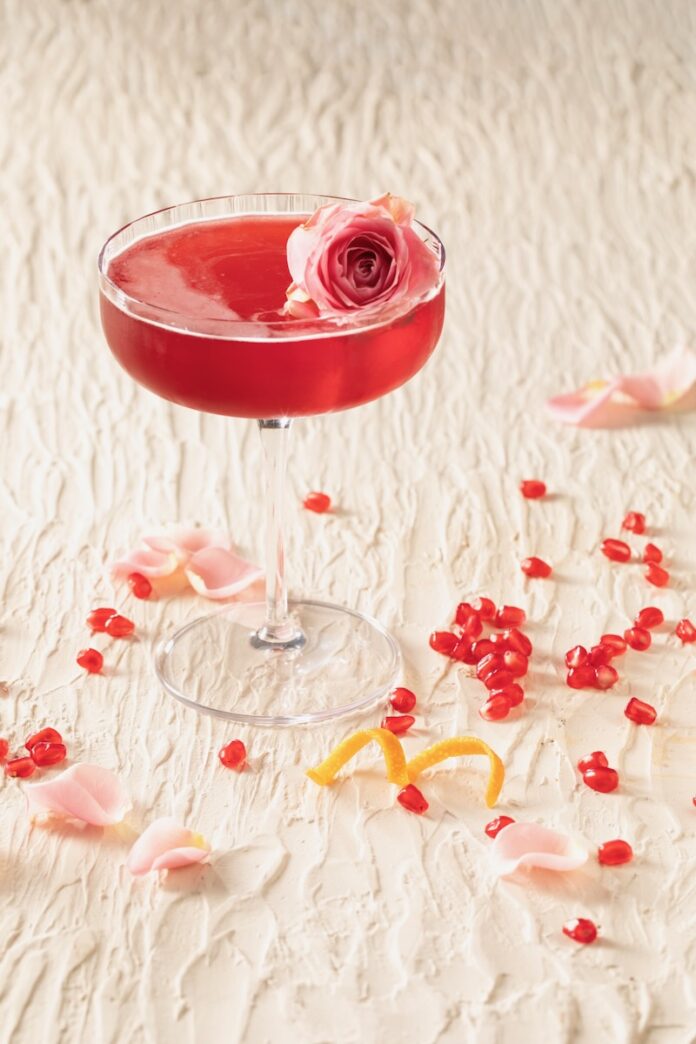
A red pomegranate cosmo as a Pretty Woman inspired drink sits in a tall martini glass with an edible rose floating on top and pomegranate seeds and an orange twist laying on the white table below.

Sometimes you just need to sit down with one of the rom-com classics like Pretty Woman to fill your soul with that warm and fuzzy feeling. The only thing that could make an experience like this better is a beverage in hand that emphasizes the sweet sensualness of the film. Our Pretty Woman Pomegranate Cosmo plays into the themes of romance, blossoming love, and underlying intimacy. It’s a pomegranate juice based cocktail that adds in a brightening surprise of fresh lime, Cointreau, and vodka. The pomegranate juice represents one of the sexiest fruits out there and pours in a colorful finish to this deep red cocktail. We like to think it’s a recipe that Julia Roberts’ character would sip on alongside the charismatic character of Richard Gere.

Print
clock clock iconcutlery cutlery iconflag flag iconfolder folder iconinstagram instagram iconpinterest pinterest iconfacebook facebook iconprint print iconsquares squares iconheart heart iconheart solid heart solid icon
A red pomegranate cosmo as a Pretty Woman inspired drink sits in a tall martini glass with an edible rose floating on top and pomegranate seeds and an orange twist laying on the white table below.

Pretty Woman Pomegranate Cosmo


  • Author: Kylie Thomas

Description

A deep red and sensual take on the romantic cosmo.


Ingredients

Scale
  • 2 oz pomegranate juice  
  • 1 oz lime juice  
  • 1 oz Cointreau 
  • Orange twist  
  • 2 oz vodka 


Instructions

  1. Shake all ingredients in a shaker with ice.
  2. Strain into a cosmo glass and garnish with an orange twist or pink edible flower. 

Recipe and Story by Kylie Thomas
Styling by Anna Franklin
Photography by Dave Bryce

Subscribe to TABLE Magazine‘s print edition.

Winter Greens Salad

0
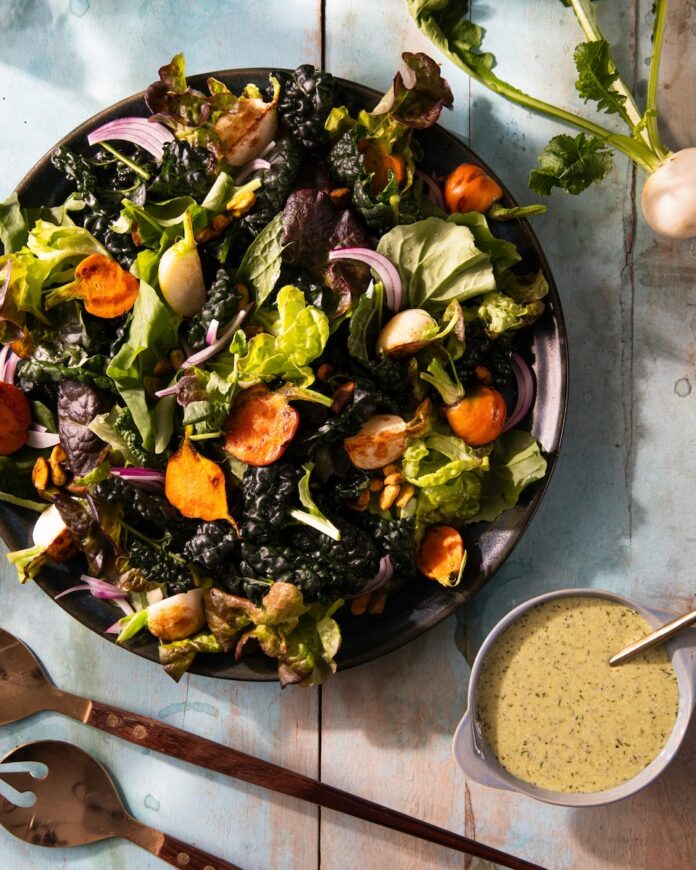
A plate of salad on a white background, paired with vinaigrette.

This winter greens salad doesn’t just use garden variety produce (pun intended). Using local, sustainable produce, we’ve put together a salad that goes far beyond your standard lettuce, spinach, and kale. There may be a few vegetables you’ve never heard of, like Parisian carrots, but get curious!

Vegetables laid out before being put into a winter greens salad.

What Are Winter Greens?

Winter greens are typically darker in color and more bitter in flavor than summer greens. They include savoy cabbage, Brussels sprouts, kale, arugula, rapini, and other leafy greens like that (including some less conventional ones like the aforementioned Parisian carrots). A winter greens salad can pair great with winter citrus for a celebration of late season crops.

Print
clock clock iconcutlery cutlery iconflag flag iconfolder folder iconinstagram instagram iconpinterest pinterest iconfacebook facebook iconprint print iconsquares squares iconheart heart iconheart solid heart solid icon
A plate of salad on a white background, paired with vinaigrette.

Winter Greens Salad


  • Author: Anna Franklin

Description

This isn’t your typical winter salad.


Ingredients

Scale

For the salad:

  • 5 oz Parisian carrots
  • 5 oz turnips
  • 5 oz black magic kale
  • 4 oz arugula
  • 3 oz lettuces
  • 1/2 cup shelled pistachios
  • 1/4 cup fennel fronds
  • 1/2 red onion, thinly sliced

For the vinaigrette:

  • 1lemon juiced
  • 2 tablespoons hemp seeds
  • 2 tablespoons dill
  • 1 scallion
  • 1 clove garlic
  • ¼ cup olive oil
  • 4 cup water
  • Salt and pepper to taste


Instructions

  1. Add all vinaigrette ingredients to a blender and blend until emulsified and smooth. Set aside.
  2. Toss the carrots and turnips in 1 tablespoon olive oil and season with salt and pepper to taste. Roast in the oven at 400 degrees until the carrots are slightly browned.
  3. Arrange the lettuces on a serving platter and top with roasted carrots and turnips, red onion and pistachio.
  4. Drizzle with vinaigrette before serving.

Recipe and Styling by Anna Franklin
Photography by Dave Bryce

Subscribe to TABLE Magazine‘s print edition.