Za’atar is a remarkable coming together of earthy/resinous cumin and oregano, with the sour brightness of sumac, salt, and sesame seeds. Plus, it’s easy to make. In this za’atar recipe, I’ve taken the spirit of it and used shiso’s wonderful cumin and mint flavor in place of actual cumin and oregano. (Shiso’s botanical name is Perilla frutescens, and it belongs to the mint family. Indigenous to the mountains of China and India, it is used frequently in Asian cuisines for its intriguing aroma and flavor.) It works perfectly and allows for more experimentation than buying za’atar from the store. Once you start homemaking things, you’ll never go back to store-bought. This za’atar recipe is no exception.
How Does This Homemade Za’atar Recipe Get Its Flavor?
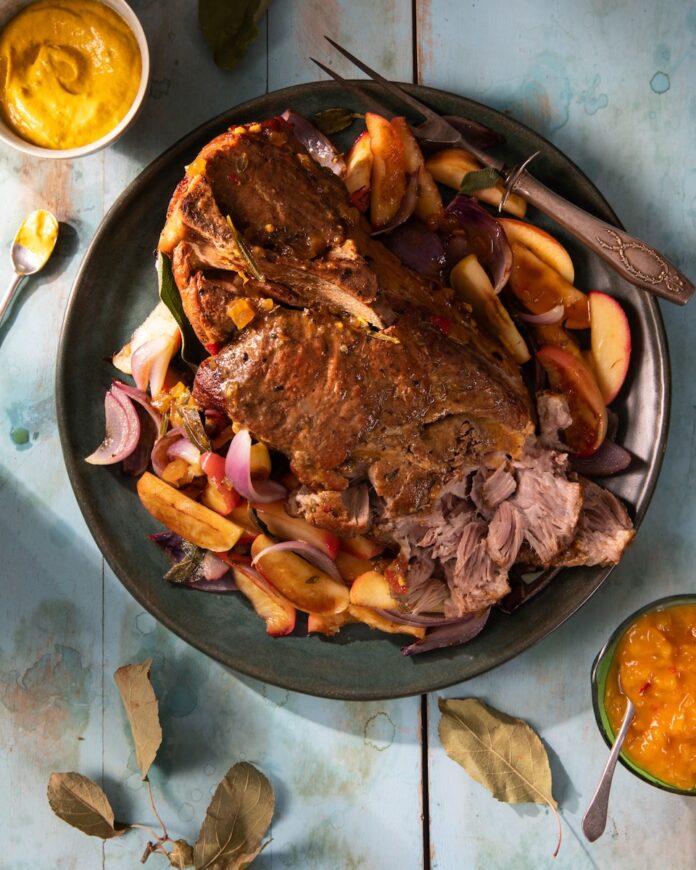
The sourness that’s missing from this, but that Mexican oregano brings to my za’atar, is balanced by using good sharp apples. I prefer a “cider” apple that’s naturally more sour. When I had a couple of sweeter apples, I made this with Vietnamese coriander instead of shiso to balance out the flavors. In that case, the implied sourness of its lemon and coriander flavor worked a treat to make the other herbs.
Heat a dry frying pan over a high heat and sear the two cut sides of the little gem quarters: you’re looking for quick charring while retaining crunch. Remove from the drying pan and arrange on a platter. Add the oil to the pan and cook the pancetta for about 5 minutes until golden and it has released its fat.
Meanwhile, thinly slice the apples (equatorially rather than polar), remove the seeds and scatter the slices over the lettuce. Take the pan off the heat and use a slotted spoon to lift the lardons onto the gems, keeping the oil in the pan.
Stir the vinegar and mustard into the oil in the pan and drizzle over the salad. Sprinkle the shiso, sesame seeds and sumac over the salad, and season generously with salt and pepper.
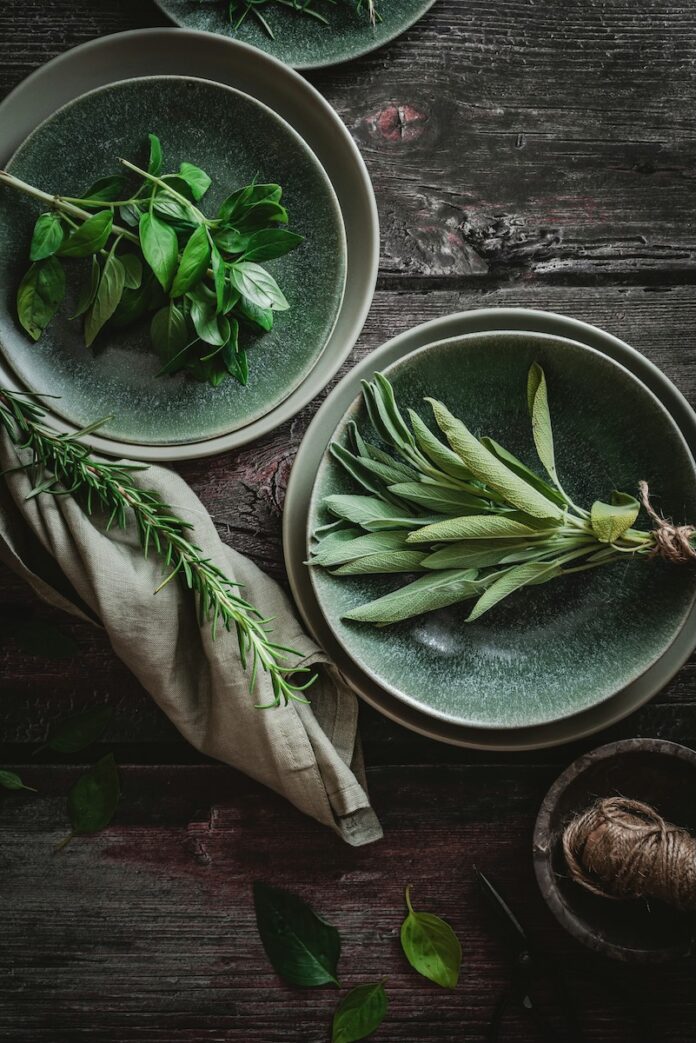
Herbs are the clothes other ingredients dress up in. For example, a potato becomes something entirely different when paired with rosemary or parsley or bay. They are transformers, ready to elevate your cooking, and all you have to do is enthusiastically invite loads of them into your kitchen.
Dress Up Any Dish with Herbs
As herbs are typically harvested from a living plant, they tend to have a short lifespan. Consequently, sourcing herbs well, and using them while they are at their peak, is crucial. Your main task is to take the herb quickly from plot to plate in such a way that the best of its qualities come out in the dish. Generally speaking, the softer herbs – parsley, cilantro, basil and so on – have a short window of excellence once harvested and are often added late or upon serving to make the best of their often delicate qualities. The woodier herbs including bay, thyme, and rosemary, are often at their best added earlier in the cooking process.
Sourcing and storing herbs well sets the parameters for how well their qualities will sing in your cooking. The closer in the food chain you get to the person who grew them and the time they are harvested, the better they are likely to be. Farmers’ markets and independent stores are likely to offer the best quality herbs and widest variety. That said, supermarket herbs are a much better prospect than they once were. Wherever you get them, take time to examine them: smell and taste them if you can.
How to Store Herbs
Almost all herbs are best stored with their stems in a glass filled to 2½ inches or so with water; slice-off the very bottom to ensure a clean, fresh cut, and keep them away from direct sunlight and heat. Any herbs you buy sealed in a bag are best opened to allow air to circulate around the leaves. You can store herbs in the fridge: woody herbs should last a week or more, soft herbs a little less. Both should last a little longer washed, thoroughly dried and kept in an airtight container in the fridge.
When you use herbs, remember that your knife affects the flavor hugely. If you finely chop a handful of cilantro to add to a dish, the herb is likely to affect every mouthful, whereas a quick pass of the blade resulting in larger pieces of cilantro is likely to result in some mouthfuls having intense flavor and others not.
If you have even a little space by your kitchen door, grow half a dozen flavorful herbs. Even this seemingly small commitment has the power to change every meal you eat for the better.
Four Less Familiar Types to Try
Lovage
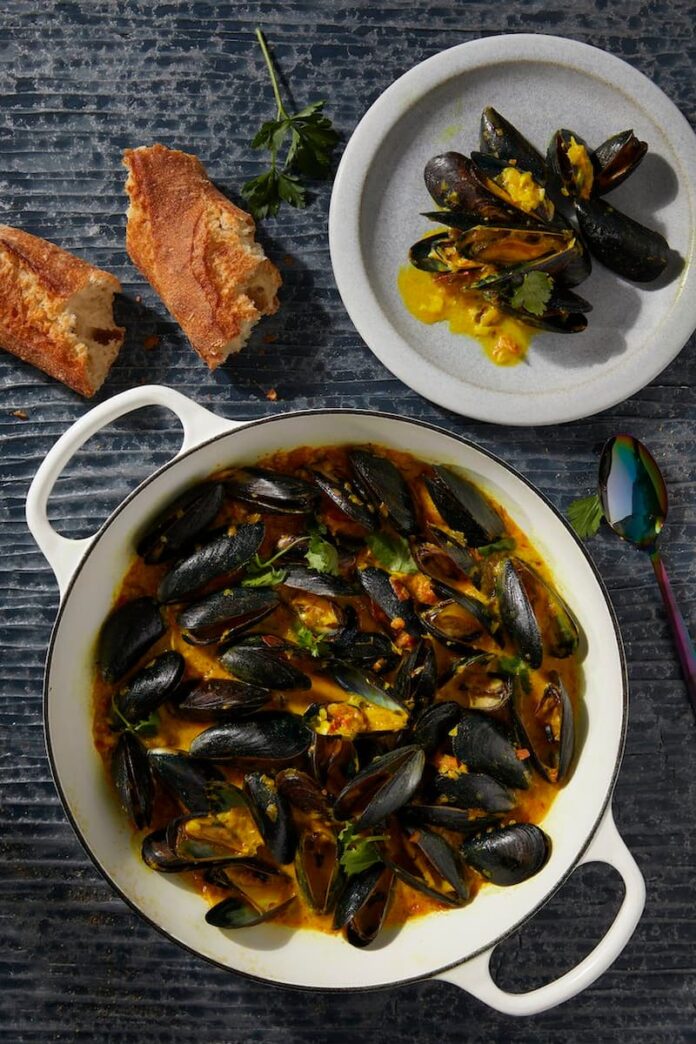
Deeply savory, similar to celery, and rich vegetable stock. Use sparingly with tomatoes, leafy greens, mussels and cheese. Perfect for the gardening-nervous , as it’s almost impossible to kill.
Lemon Verbena
Like lemons, only more so. This is my favorite herb, with a scent and flavor full of lemon sherbet and lively zest. As with bay, its flavor is usually infused rather than the leaf actually eaten. It makes exceptional syrups, vinegars, custards and sorbets, as well as a wonderful herb tea, on its own or with mint.
French Tarragon
Enthusiasts might use this more days than not, yet it remains under-appreciated. Its thin leaves smell and taste of milky, peppery aniseed, with hints of citrus and mint. Famously good with chicken, I love it with green beans, potatoes and tomatoes. And if you make tarragon vinegar once, you will be a convert.
Lemon Thyme
This bright variation on the common thyme is one I couldn’t be without. It carries all the familiar resinous, piney delight of thyme, only it does so more brightly. Use as you would common thyme for a different mood.
Sometimes you just need to sit down with one of the rom-com classics like Pretty Woman to fill your soul with that warm and fuzzy feeling. The only thing that could make an experience like this better is a beverage in hand that emphasizes the sweet sensualness of the film. Our Pretty Woman Pomegranate Cosmo plays into the themes of romance, blossoming love, and underlying intimacy. It’s a pomegranate juice based cocktail that adds in a brightening surprise of fresh lime, Cointreau, and vodka. The pomegranate juice represents one of the sexiest fruits out there and pours in a colorful finish to this deep red cocktail. We like to think it’s a recipe that Julia Roberts’ character would sip on alongside the charismatic character of Richard Gere.
This winter greens salad doesn’t just use garden variety produce (pun intended). Using local, sustainable produce, we’ve put together a salad that goes far beyond your standard lettuce, spinach, and kale. There may be a few vegetables you’ve never heard of, like Parisian carrots, but get curious!
What Are Winter Greens?
Winter greens are typically darker in color and more bitter in flavor than summer greens. They include savoy cabbage, Brussels sprouts, kale, arugula, rapini, and other leafy greens like that (including some less conventional ones like the aforementioned Parisian carrots). A winter greens salad can pair great with winter citrus for a celebration of late season crops.
Add all vinaigrette ingredients to a blender and blend until emulsified and smooth. Set aside.
Toss the carrots and turnips in 1 tablespoon olive oil and season with salt and pepper to taste. Roast in the oven at 400 degrees until the carrots are slightly browned.
Arrange the lettuces on a serving platter and top with roasted carrots and turnips, red onion and pistachio.
Drizzle with vinaigrette before serving.
Recipe and Styling by Anna Franklin Photography by Dave Bryce
In America, every holiday shares one cherished tradition: Spending money. Whether it’s Christmas presents, Halloween candy, or a catered Thanksgiving meal, every holiday has at least something that will “grace” your credit card statement the following month. Much of this spending falls on women as homemakers or nurturers. Nearly half of women (49%) buy holiday gifts for others, compared with 41% of men. But there is one holiday that serves as something of an an equalizer: Valentine’s Day. Few other holidays have such a well-defined set of prescribed gifts: flowers, chocolate, jewelry, greeting cards. Iit’s the only holiday where men outspend women, and spend they do. Americans “invest” $25.8 billion in Valentine’s Day treats, evenings out, etc.
Do Men Outspend Women on Valentine’s Day Gifts?
The data says yes. A 2024 Valentine’s Day spending survey via WalletHub illustrates that Women are 33% more likely than men to spend nothing, while men are twice as likely to spend over $100. Men spent almost twice what women did. Somewhat concerningly, 27% of Americans plan to go into credit card debt for Valentine’s Day, but 41% of that group plan to hide it from their significant other. The same survey found that people found financial irresponsibility as unattractive as bad breath, so…maybe don’t do that?
But people do, and the gendered pressure to gift often gets forgotten until the last minute. “Men definitely outspend women on Valentine’s Day, especially with last minute orders: our sales triple. Men seem to not worry about the cost when it is last-minute, and will take whatever we can offer quickly,” said Jillian Campbell, a florist who runs Blossoms by Jillian. Similarly, in 2024 Valentine’s Day spending on jewelry (a gift almost exclusively for women on Valentine’s Day) hit a record high of $6.4 billion.
So…Why?
“Women control something like 80% of consumer spending. They’re the ones who are buying for ‘The Household,’ so, women are the default people who know enough about the home to buy presents,” Annahid Samiljan, a financial advisor who often helps people understand why they gravitate towards the large purchases they do, said. She pointed to “Santa for Someone” by Jennifer Hudson, an R&B song about going into credit card debt for Christmas gifts, as an example of how ingrained this idea is.
“Valentine’s Day is basically the only day that’s specifically a gift for women. All of the other holidays are for ‘the family.’” Samiljan said. “Men’s gifts for themselves are often not coded as luxury spending the way women’s expenses are—if a guy goes out and buys a $400 cut of meat for smoking, that is seen very differently than a woman buying a $400 handbag. She’s being vain, he’s ‘experimenting with his craft,’” Samiljan said.
Last minute or uninspired Valentine’s Day gifting from men isn’t just a modern phenomenon. In 1797, a British publisher released A Young Man’s Valentine’s Writer, which had pre-written love poems for the poor lad who couldn’t come up with his own. Yikes. The modern version of this might be using ChatGPT to write a love poem. Pro tip: don’t.
At the end of the day, both women and men want gifts that make them feel appreciated. If you’re reading this, just go out and ask your partner what she wants. Sometimes, a one-of-a-kind handwritten card is the best route, but other times, women really do want a bouquet of flowers and diamond earrings. Like many conversations around gender disparities, this one requires bearing in mind that men and women are both, in fact, just complex human beings with varying desires and a need for affirmation and positive feedback.
We could all use the fantasy of a warm island vacation right about now, and thankfully, season three of The White Lotus is on its way to deliver. The darkly comedic HBO show is back, and this time, it’s taking us to Thailand with a whole new cast of characters and even a few familiar faces. To celebrate this guilty pleasure, we have a cocktail recipe that brings those island vibes right to your living room. With bright, fresh, and fruity flavors, plus the unique sweetness of lychee and coconut, you’ll be kicking your feet up on the beach in no time. Mix this cocktail up and get ready for the first episode of season three on February 16 (what a nice Valentine’s weekend treat).
What is Season 3 of The White Lotus About?
While we don’t know too much about the third season of The White Lotus, the cast, location, and general theme can give us clues. In terms of the cast, most of the characters we will see are new to the series like Jason Isaacs, Walton Goggins, Leslie Bibb, Carrie Coon, and Michelle Monaghan to just name a few. But, Natasha Rothwell’s character from season one sees the limelight again though this time as a guest on a work trip rather than an employee. Other than the cast, this new resort in Thailand brings about a new theme for the season. In a clip by Variety, show creator Mike White said that a look at death, Eastern religion, and spirituality through a satirical lens will preface the story line. To find out what exactly happens, you’ll have to tune in through an HBO Max subscription when the season arrives.
Who needs cheesy, sugary cocktails for Valentine’s Day when you can have a fiery drink that takes inspiration from Kat Stratford’s 10 Things I Hate About You rebellious love poem? Try a drink with a little more bite this holiday. Just like the passionate main character of 10 Things I Hate About You, Kat’s Love Poem is complex, unexpected, undeniably alluring, plus a little spicy and sweet at the same time. One sip, and you’ll be ready to confess your love this romantic season (or conquer karaoke night at the very least).
Tips for Perfectly Rimming a Cocktail Glass
In this cocktail recipe we rim our glass with cinnamon sugar to bring together the notes of orange and whiskey. To get the perfect rim, we recommend keeping around those oranges if you chose to make fresh orange juice for the recipe. You then want to gently rub a bit of orange (or whatever wetting agent you have handy) on the outside of the glass only. The purpose of a rim is to dust with your lips and tastebuds with flavor and sweetness after each sip. So, you don’t want the cinnamon sugar to overwhelm the drink by getting the coating on the inside of the glass. To help avoid this, you can pour your cinnamon sugar onto a flat surface and pressing the glass into it.
This Valentine’s Day, forget the champagne and roses and serve your partner up a Sweet Home Alabama Slammer, inspired by the charming rom-com. This cocktail would take Melanie Carmichael back to her roots with a blend of Southern Comfort, amaretto, sloe gin, and orange juice. Let this mix transport you to a porch swing under the Alabama stars, whether you’re sipping it with your sweetheart or enjoying a solo toast to self-love. Just be careful you don’t catch yourself texting your ex (or still not-divorced ex-husband) after a few too many of our Sweet Home Alabama Slammers.
What is Sweet Home Alabama About?
In Sweet Home Alabama, main character Melanie Carmichael (Reese Witherspoon) seems to have it all from her career as a fashion designer to her perfect fiancé. But, there’s just one issue that keeps Melanie from truly having it all, her marriage to her estranged husband, Jake Perry (Josh Lucas) back in Alabama. So, she decides to confront her past and head back to her hometown to end things with Jake, who still has feelings for her, once and for all. But, she may just discover that being home in the South isn’t too bad after all.
Passover isn’t just the Seder. Though that’s definitely the focal point and the most memorable part, you’re going to have a whole eight days where leavened bread (chametz) is off limits. That means no pasta, sandwiches, cakes, muffins, slices of baguette.
Why Are Passover Diets Limited?
The Passover kosher system is meant to put you in the mindset of understanding what it’s like to have less food available and have to leave home quickly, without indulgence and luxury in mind. The question that often comes up when planning is whether there’s a way to have an elevated meal on a holiday ostensibly about suffering? With these recipes, the answer is yes, because there’s another part of the Passover story: resilience, gratitude, and appreciation that you are alive to tell the story you sing around the Seder table each year.
What Can You Eat During Passover?
The rules of what’s “kosher for Passover” can be complex and can vary based on your observance. The lack of chametz is the baseline, but something being kosher for Passover is an extra step above being kosher. These laws, however, are not stagnant. Interestingly, after 800 years, rice and beans were officially ruled kosher for Passover in 2015. Sephardic Jews had been eating rice and beans for quite some time, but Ashkenazi Jews traditionally were staying away from away from not only leavened foods but also foods adjacent to bread such as barley, oats, rye, spelt, and wheat, but also corn and rice.
While there are definitely inventive things you can do for Passover, you may find yourself wondering what to cook during the week when all bread is off limits. There are, of course, traditions like gefilte fish and matzo. But this Ultimate Guide to Passover asks the daring question: What if you ate things that were kosher and delicious at the same time?
Eggplant can be a filling, rich addition to any table, and it has a long Jewish history, as well. Sephardic Jews in Spain, Portugal, Turkey, and Morocco have long incorporated eggplants into both savory and sweet cooking. This recipe from Hélène Jawhara Piñer’s Jewish historical cookbook Sephardi: Cooking the History is a perfect Passover dish, both a delicious meal to eat and a thought-provoking way to honor Jewish history.
The “bitter herbs” from the Passover seder are not known for being an enjoyable ingredient, nor are they meant to be: they represent the bitterness of the Israelites’ captivity. Noticing a theme here about affliction and suffering? Welcome to Jewish history. This salad is a much more enjoyable version of bitter herbs, using bitter, cold weather greens.
If you’re not looking to spend all day making vegetable sides, this brussels sprouts recipe is quick, easy, and filling. Like eggplant, brussels sprouts are a savory, flavorful vegetable. They definitely respond to a toss in oil and spices and a session in the roasting pan.
Tzimmes is an underrated Ashkenazi Jewish food that you can make for pretty much any holiday. Some make it for Rosh Hashanah and Chanukah, but it’s also a good shareable vegetable side for a Passover dinner. You can experiment with what you put in it and make the recipe your own. Or you can try our recipe as is!
What Meats and Main Dishes Do You Have at Passover?
Paprikash is a spicy, juicy Hungarian one-pot meal that if you’re a pro, you can make intuitively. Chef Csilla Thackray never follows a recipe, like her Hungarian grandmother. But if you’e making paprikash for the first time, try her instructions for a great centerpiece dish for your Passover table. Skip the spaetzle shown here until Passover observances are complete.
This recipe from Maribel Lieberman of MarieBelle New York’s cookbook MarieBelle Entertains is an impressive, elevated meat dish to serve your guests. The sweet, licorice-forward taste of fennel and the earthy, savory mushrooms create a flavor balance with the meat.
Here we go: the rice and beans that Sephardim have enjoyed for many years but which made the Ashkenazim wring their hands. They’re a lot healthier than matzo and a lot tastier than gefilte fish, that’s for sure.
Brisket is a classic. No doubt about it. Our recipe comes from Jonathan Haskel Barr, a brisket pro. He recommends embracing the long cooking time of brisket as a way to spend time with your family. That’s a lovely thought!
Macaroons are a great dessert to cheat the Passover chametz prohibition, given that they use coconut flakes instead of flour. Macaroons are also highly customizable, so add a chocolate drizzle or another garnish of your choice to make it fun.
Oh, matzo. It’s really not that bad. If you put it in matzo bark with chocolate, it’s kind of like a gluten-free cookie, more or less. If you’re creative with it, matzo’s blandness is only a canvas for deliciousness.
In the heart of winter, citrus can be a tart zing of sunshine (and a burst of color on your plate). Some of the citrus fruits that are in season in winter are clementines, grapefruit, mandarins, oranges, pummelos and tangerines. These fruits are all full of Vitamin C and fiber, which can help our bodies store energy and stay healthy during a time of year when we need it the most.
Winter Citrus Recipes to Bring Some Zest to Your Plate
This roast from Diana Henry’s Mediterranean-inspired cookbook, Crazy Water, Pickled Lemons, is a perfect winter meal. It also makes a great culinary project for those times you’re stuck inside. Placing orange wedges in the oven with the Cornish hens allows the citrus to mix with the juices from the meat—truly mouthwatering.
Here’s another snowy day project. Marinating these Castelvetrano olives in orange and lemon zest balances out their buttery flavor. Put these olives in a jar and bring them as your contribution to a winter gathering. They’re both delicious and healthy.
Our Citrus Salmon Carpaccio with Green Goddess Sauce is probably the ultimate winter citrus recipe. You’ve got cara cara orange, blood orange, lemon, lime, and regular old orange all together. Using sushi-grade salmon is an important part of this recipe, as you’re eating it raw alongside the citrus.
Want to balance citrus out with sweetness? You can make these Citrus Curd Cups with the zest of any citrus of your choice, and combines both zest and juice for a dessert that both satisfies your sweet tooth and refreshes your palate.
Here’s more Carpaccio, because once you make it once, you’ll realize it’s easier than it seems. The citrus vinaigrette on top of this beet carpaccio helps to bring out these colorful vegetables’ complex, earthy flavor and tangy acidity. You could ever combine this with the technique from the Salmon Carpaccio and throw in a few citrus slices.
This salad is full of fiber from the kale, radicchio, fennel, and pine nuts. The juicy orange slices and delectable grapefruit wedges take what could be a vegetable mishmash and help give it an extra savory flavor. Part of what makes citrus in salad such a winning combination is that it prevents the salad from being too bland. For many dishes, citrus can be a flavor superhero!
Lentils are a protein-rich, natural way to cut some meat out of your diet. Say goodbye to Impossible Burgers or Chik’n Nuggets, this is nature’s protein bar. The citrus in this recipe keeps the lentils from being too soggy and flavorless.
The seeds and citrus in this salad make it healthy, textural and balanced. Citrus and pomegranate seeds are a perfect pairing with the combination of tangy zest and tart juice.
This is a different way to use citrus than just tossing it into a salad. Artichokes have detoxifying properties that can help with liver function, and they are one of the highest fiber vegetables. We love artichoke hearts, and in order to bring out even more flavor, we marinated them in citrus zest.