Home Blog Page 209

barebones productions Celebrates its 20th Anniversary

0
barebones productions performs Aleshea Harris' play 'Is God Is' a black woman does another woman's hair
barebones productions performs Aleshea Harris' play 'Is God Is'

If the pandemic taught us anything, it’s that no amount of streaming can replace the excitement that comes from live theater. As Pittsburgh’s art scene emerged from the COVID era, barebones productions became, along with other performing arts organizations in the region, a standard-bearer for creativity. This is perhaps unsurprising: across more than two decades, founder Patrick Jordan has grown his theater company from shows staged at bowling alleys to minimalistic black box productions, earning the barebones moniker by focusing on the essentials of performance and storytelling.

Necessity and Invention

Just as barebones was poised to grow their most ambitious season yet, an unexpected character entered stage left — the COVID-19 pandemic. Performing arts organizations faced a steep drop in attendance, leaving many theater companies struggling to survive. For barebones, this meant the necessary innovation of converting to digital platforms. Jordan helped create streaming show Alone Together, along with Pete Spynda and Dave Mansueto.

The Sound Inside

Bella Baird’s life changes forever in barebones’ performance of The Sound Inside

A New Act

Jordan brought the company back to full seasons with three ambitious productions.

Is God Is, penned by Aleshea Harris and skillfully directed by Javon Johnson, took center stage from February 24 to March 12, 2023. This modern myth unfolded like a tapestry depicting twin sisters’ quest for righteous revenge. Moving from the Dirty South to the vast California desert, the narrative masterfully blended elements from various genres — history, tragedy, and the unapologetic spirit of Afropunk, to name a few.

From barebones productions' 2023 performance of Stephen King's Misery a man sits in a bed with a quilt

From barebones productions’ 2022 performance of Stephen King’s Misery

Breaking A Leg

Stephen King’s Misery traces the intricate dance between captor and captive as acclaimed romance novelist Paul Sheldon finds himself in the clutches of his “Number One Fan,” Annie Wilkes. For this Spring 2022 show, Jordan himself climbed into the director’s chair. Audiences were treated to exquisitely heightened tensions with each passing scene, with Jordan deftly immersing the audience in an intricate web of emotion, vulnerability, and terror. The synergy between cast, director, and production design transported the audience straight into the heart of the chilling tale.

The latest production by barebones, which ran in August 2023, was The Sound Inside, which takes place within the hallowed halls of Yale, where mentor and student collide in a mesmerizing dance of intellect, creativity, and the unexpected. Once again helmed by Jordan, the story revolves around Bella Baird, an isolated creative writing professor whose world is forever changed when she takes brilliant and enigmatic student Christopher under her wing. As their lives interweave, the tales they tell about themselves unravel, leading Bella to make a request of Christopher that neither is certain he can fulfill.

2 Time TONY winner Michael Cerveris, starring in barebones’ A Nightmare Before Christmas fundraiser. Photo by Zack Smith

Looking Ahead

In October 2023, barebones productions is set to host its Nightmare Before Christmas fundraiser, celebrating the spirit of Halloween and the holiday season. For one night, two-time TONY Award-winning Michael Cerveris comes to Pittsburgh to be part of a rallying cry for all to join hands in supporting the arts and ensure future barebones productions.

The company’s 20th anniversary season finishes with a production of David Mamet’s American Buffalo, an intriguing tale about a coin collection with a rare Buffalo nickel. The point: it’s hard these days to tell hustle from con and to separate who’s taking and who is being taken.

Story by Andrew Salzman / Photos Courtesy of barebones productions

A footer photo with a grey and white marble background, three TABLE Magazines and subscribe info and button

Pursuit of Knowledge: The Importance of a Pittsburgh School’s Culture

0
Happy Black student raising her hand to ask a question during lecture in the classroom. pittsburgh school culture
.

The last year saw great shifts in the pursuit of education from primary schools to higher education. We share messages from Pittsburgh schools about their respective school’s culture, because what an educator chooses to share says something important about how its students perform and succeed.

It Feels Like Yesterday

Even after 40 years, my high school and college memories still feel very close. Crushes; cross-country and track team friendships and competitive failures, student government elections, Friday nights in the student run campus bar (imagine that!); meeting my first wife, Mr Wells’ cutting comments on my writing. So many vivid memories and choices that it’s hard for me to imagine the shape of my life without Allderdice High School and Carleton College.

Mix all those memories together with the love and aspirations we have for our children and you get an emotionally potent mix that makes choosing a school a uniquely pressure-filled experience.

Maybe it’s because high school and college choices have such a long reach that long term impacts are paramount when comparing one school choice to another. We want to know where graduates of this high school end up going to college. We want to know what careers graduates of this college pursue and how their average income compares with our other choices.

The Importance of a School’s Culture

The schools we are choosing fully recognize this. The marketing materials they provide are full of descriptions of what students do after they graduate. Stories of what alums are doing now and how they attribute their successes to school take up a lot of the real estate. Yes, the traditional measures of excellence do matter. Ratings, test scores, alumni success do matter. They deserve consideration.

But our children spend a lot of time in school. Much more time than they spend with us. And it is the culture of school that will empower our children, build their confidence, reinforce their curiosity, and develop their creativity. It is the culture of school that most directly affects the emotional prospects of our children.

A school’s culture is visible in how students interact with each other and how teachers and administrators interact with students. We see it in what happens when a student asks for help. We see culture in whether students are studying alone or together–both inside the classroom and out. Culture makes space for students to explore questions that are important to them about identity, family and community. Cultures can be tolerant, caring, and patient. Cultures can recognize and value creativity.

Beyond the Numbers

No set of numbers, however, can describe a school’s culture. But what a school chooses to share says something important. So does how they treat prospective students and their families. So does how they answer our questions. And it’s not just what they say but how they say it. It’s also in what we see, hear and feel when we visit.

My first college visit with one of my own children was to Oberlin. It was my first time there. It was a beautiful day. The college seemed like it might be a good choice. My daughter had a different reaction: It’s not for me. Just like that, Oberlin was off the list with a speed I couldn’t explain. And Sarah couldn’t explain her reaction either. At least not in a way that made any sense to me. But she had felt something or seen something that made her uncomfortable enough to want to pass on Oberlin. I felt then, and I still do now, that there’s no reason to discount feelings—even if they can’t be explained.

Our Duty as Parents

There are school cultures where our child will thrive, some where they will muddle through, and others that may be deleterious. It is up to us (with our children) to determine what is an emotional fit and what is not. And while our conclusions won’t arrive with the authority of US News & World Report rankings, they are at least as important as those rankings.

For those of us with the resources needed to make good choices for our children, listening and overseeing during school visits is an essential part of data gathering. We’re lucky to have the opportunity to consider our options, and theirs, and fortunate to play a role in setting our children on a school path that will best set them and help them to prepare for a good life.

Story by Jeremy Resnick

University Library: Diverse Group of Gifted Students Have. Pittsburgh schools culture

The last year saw great shifts in education from primary schools to higher education. We share messages from organizational leaders on what the future holds for their institutions.

Why Pittsburgh Public Schools is an Excellent Choice for Your Child

A message from School Superintendent Dr. Wayne N. Walters

In today’s educational environment, parents have many choices. Private, charter and cyber schools try to compete with our public schools, but they do not have the variety of academic offerings and options as Pittsburgh Public.

Through our magnet offerings, for example, students receive special instruction that develops their talents and interests in specific areas. At PPS, 22 magnet schools and programs focus on subjects related to STEAM and STEM education, creative and performing arts, world languages, science and technology, pre-engineering, and more.

In addition, our Career and Technical Education (CTE) programs allow students to acquire 21st century job skills that transfer to essential jobs in our society. Beginning in the 10th grade, students can enroll in one of 16 programs that range from healthcare and first responder training to culinary skills and childcare, to information technology, internet management and entertainment technology to in-demand skills in the trades, such as construction, heating and cooling and automotive repair.

In many programs, students earn industry certifications or college credits through a dual enrollment agreement with Allegheny County Community College. Furthermore, a new partnership between PPS and the City of Pittsburgh provides work-based learning opportunities and paid employment to CTE students. 

The goal of Pittsburgh Public Schools is to graduate students who are ready for whatever comes next in college, career and life. The magnet and CTE programs are great examples of how we support student preparation leads to graduate success.

To find out more, visit www.pghschools.org/magnet or www.pghschools.org/CTE.

Two older children standing infirm of a wooden structure holding laptop computers with PA Cyber stickers on them. Pittsburgh schools culture

The Pennsylvania Cyber Charter School

PA Cyber is an online public school that provides an option for students who learn better without the confines of classroom walls or an eight-hour school day. After 23 years of perfecting online education and with a legacy of 21,000 graduates, PA Cyber has demonstrated that learning online works for many students. 

In PA Cyber’s student-centered model, teachers meet students where they are in their education journey. They create customized learning paths that are unique to each student. They recognize the different developmental stages students typically follow while respecting the unique abilities of each child. This flexible-but-focused learning model allows PA Cyber teachers to use a variety of teaching strategies and curriculum choices to create an education program that is deeply personal. 

Beyond the computer screen, students can choose from hundreds of in-person field trips and enrichment events each year where they can socialize with peers and families can meet. Events comprise art and STEM workshops, career days, holiday parties, and so much more.

PA Cyber meets the curriculum requirements of the Pennsylvania Department of Education and is accredited by the Middle States Association. As a public school, PA Cyber is open for enrollment to any school-age child residing in Pennsylvania and does not charge tuition to students or families. Visit pacyber.org to learn if PA Cyber is the perfect fit for your student. 

25:1 student-faculty ratio

Enrollment: Open throughout the school year

25:1 student-to-faculty ratio

Annual enrollment: 11,000 

Tuition: $0

Oakland Catholic High School

Tell us about your school’s philosophy for learning.

Oakland Catholic High School dedicates itself to providing a value-oriented, college preparatory education for young women. We hold ourselves and our students accountable for the development of healthy, creative, and expressive women who are encouraged to use their God-given talents in pursuits that satisfy personal and communal needs. Aware of the dignity of the students in our care, we fulfill our mission by developing their spiritual, intellectual, and personal potential.

Set in the heart of the city’s academic, cultural and healing center, Oakland Catholic offers students’ unique opportunities at neighboring institutions. We offer a variety of courses that challenge each student to achieve her fullest potential and develop the analytical and independent thinking skills that are needed for a lifetime of learning. Furthermore, Oakland Catholic teaches decision making grounded in morality and promotes a respect for God, self, and others through retreats, liturgy, prayer, and service opportunities.

Consistently named one of the top 50 Catholic high schools in the nation by The Cardinal Newman Society, with even higher rankings for academic excellence, Oakland Catholic challenges its students with a rigorous curriculum taught by faculty members who are experts in their fields. Students experiment in state-of-the-art facilities and our kiln equipped ceramics studio. Each year, our senior class earns millions in scholarships to colleges and universities around the nation, with virtually 100% of graduates attending post-secondary institutions. Offering an extensive list of sports, clubs & activities, the school also fosters social, physical and leadership development.

What is the role of the student in the learning model?

At Oakland Catholic, every valedictorian, every team captain, every project leader, is a young woman. Rather than reserve leadership positions for a select group, we bring out the leader in each of our young women. We push students to develop the competence, confidence and skills required to become strong, globally-minded, and compassionate leaders. At Oakland Catholic, we consider each and every OC Eagle a leader-in-training. To this end, we ensure that opportunities to step up and exert influence abound. But it’s not just that young women can hold every leadership position at our school; each year they do so with impressive discipline, unexpected insight, and inspiring passion that makes us proud to send them out into the global community as the next generation’s thought leaders. Visit oaklandcatholic.org for more information.

Application deadline: January 16

Acceptance: rate 98%

Student-to-faculty ratio: 11:1

Enrollment: over 400

Tuition: $17,400

Minority percentage: 38%

Central Catholic High School

How does your Pittsburgh school prepare students for college and what placement programs do you have in place for helping students pick the right school?    

We begin discussions about college and post-secondary plans from the very beginning. Freshmen learn about the importance of grades and course selection, and we build on that foundation each year. We have built a pathway for success, knowing each student’s path differs slightly from the young man next to them. We utilize classroom instruction, individual meetings, and an online platform to help students navigate the college search process. Then, we utilize data-driven admissions information and academic profiles to create a balanced list for each pupil. Students are also given opportunities for career exploration.

Visit centralcatholichs.org for more information.

Students on a lecture in amphitheater answering professor's question. Pittsburgh schools culture

Propel Schools

Propel Schools is a network of 13 public charter schools serving approximately 4,000 scholars throughout Allegheny County. Our scholars are encouraged to become leaders of their own learning through our data-driven, personalized approach to education. We have five core values, that we call Habits, that are our expectations for all members in our learning communities. These Habits were intentionally chosen to embody the skills that will help scholars succeed not only in Propel Schools, but in college, their careers, and beyond.

Demonstrating, teaching and celebrating the 5 Habits for our scholars is an integral part of our mission at Propel to catalyze the transformation of public education so that all children have access to high-performing public schools. Our Habits are: Own It!, Walk Through the Door, Look in the Mirror, Treat Others the Way You Want to Be Treated, and Do Your Part. Because our educators play a critical role in the success of our scholars, we work hard to support them so that they can be their best every day.

Student to faculty ratio: varies per school

Minority percentage: 73% in 2022

Acceptance Rate: Dependent on the number of open seats

Application Deadline: October 1 – December 31

Tuition: $0

A footer photo with a black background and subscribe info and button


A September Song: Persimmon French 75

0
Two Persimmon French 75 Cocktails orange in color sit in fluted glasses.

What do we do when the nights get a bit longer? We devise special moments to savor the beauty of fall. Publisher Justin Matase’s recipe for a Persimmon French 75 fits that bill: prepare yourself two flutes of perfectly tinted beauty. Share it with someone you care about. Make plans for a beautiful winter vacation.

How to Use Persimmons in a Cocktail

Persimmons are a versatile fruit (technically a berry) that have a huge variety within them. We recommend Fuyu and Hachiya persimmons for cocktails. They are both beautiful to look at and delicious to eat. The Fuyu persimmons have a candy-like flavor that make it perfect to balance out the liquors in the Persimmon French 75. 

Print
clock clock iconcutlery cutlery iconflag flag iconfolder folder iconinstagram instagram iconpinterest pinterest iconfacebook facebook iconprint print iconsquares squares iconheart heart iconheart solid heart solid icon
Two Persimmon French 75 Cocktails orange in color sit in fluted glasses.

A September Song: Persimmon French 75


  • Author: Justin Matase

Description

A fruit-forward version of a French 75. 


Ingredients

Scale
  • 1 ½ oz persimmon simple syrup (See below)
  • 1 oz London Dry Gin
  • 5 oz Champagne or dry Prosecco


Instructions

For the cocktail:

  1. Add persimmon simple syrup to the bottom of a champagne flute.
  2. Add gin. Fill the glass with Champagne or dry Prosecco.
  3. Garnish with an 1/8 slice of persimmon.

Persimmon Simple Syrup:

Smash 4 extra-ripe persimmons with a fork to macerate the fruit. Add to a saucepan with 1 cup boiling water and 1 cup sugar. Bring to a boil and stir until sugar is dissolved. Let stand and bring to room temperature. Pass through a fine sieve and decant into a clear jar with lid. This can be made ahead of time and stored in the refrigerator for up to 1 week.

Recipe by Justin Matase
Styling by Anna Franklin
Photography by Dave Bryce

Subscribe to TABLE Magazine’s print edition.
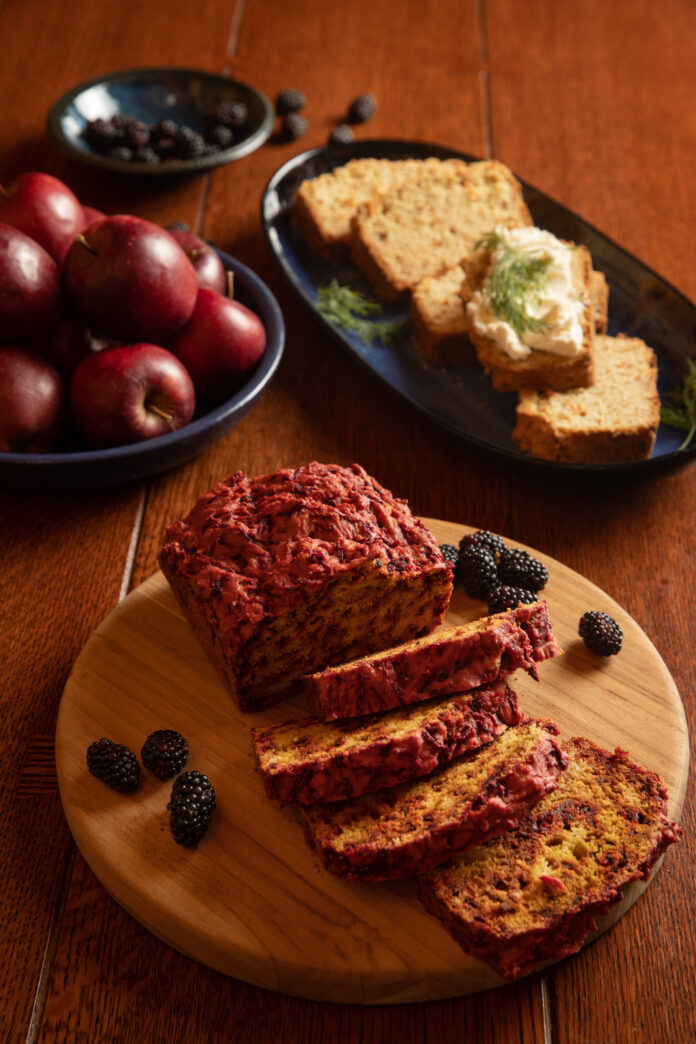
Alphabet Soup

0
very simple, healthy, and nutritious Alphabet Soup in a light green bowl. on the right sit sits a loaf of crusty bread and saltines. Alphabet Soup Recipe

Experience shows that the less stress you bring to the dinner table, the smoother the ride. Try this very simple, healthy, and nutritious Alphabet Soup. Serve with crusty bread and butter. Perhaps you garnish with a bit of popcorn to keep the kids interested. Hold a dinnertime spelling contest. Award the winner a tinfoil crown. Afterwards, freeze half the batch for a future fun dinner.

The History of Alphabet Soup 

Who had the brilliant idea to make soup in the shapes of alphabetical letters? The earliest version of it appeared in the 1870s and 1880s in both European and American stores. They’re a cute gimmick and can help kids learn to read. The H.J. Heinz Company, in our home city of Pittsburgh, sold “Alphabetti Spaghetti,” but discontinued it in 1990 due to declining sales.  However, you can still buy Alphabet Soup from brands like Amy’s and Campbell’s.   

Print
clock clock iconcutlery cutlery iconflag flag iconfolder folder iconinstagram instagram iconpinterest pinterest iconfacebook facebook iconprint print iconsquares squares iconheart heart iconheart solid heart solid icon
very simple, healthy, and nutritious Alphabet Soup in a light green bowl. on the right sit sits a loaf of crusty bread and saltines. Alphabet Soup Recipe

Alphabet Soup


  • Author: Alekka Sweeney

Ingredients

Scale
  • 1 tbsp olive oil
  • 3 garlic cloves, minced
  • 1 cup chopped yellow onion
  • 1 tbsp Italian seasoning
  • 3/4 tsp salt
  • 3/4 tsp dried thyme
  • 1/4 tsp fresh ground black pepper
  • 8 cups beef, chicken, or vegetable broth
  • 34 cups fresh or frozen veggies of choice
  • 1 medium potato, peeled & chopped
  • 1 bay leaf
  • 1 (6 oz) can tomato paste
  • 1 (14 oz) can diced tomatoes (do not drain)
  • 1 cup dry alphabet pasta


Instructions

  1. Heat the olive oil over medium heat in a 5 quart (or larger) pot or Dutch oven. Add the garlic, onion, Italian seasoning, salt, thyme, and pepper. Stir and cook for 5 minutes until the onion softens.
  2. Add broth, vegetables, potato, bay leaf, tomato paste, and diced tomatoes. Bring to a boil, then add uncooked pasta. Cover and simmer for 30 minutes. Remove bay leaf.
  3. Serve soup warm and top with fresh Parmesan cheese, if desired.
  4. Cover and store leftovers in the refrigerator for up to a week, or freeze for up to 3 months. When reheating, use medium heat. Feel free to add more broth if needed.

Recipe by Alekka Sweeney
Styling by Anna Franklin
Photography by Dave Bryce

Subscribe to TABLE Magazine’s print edition.

Where Does an Interior Designer Start in Her Own Kitchen Redesign?

0
a woman in a black long sleeve and jeans reaches into an open dishwasher

When interior designer April Spagnolo creates her own kitchen, where does she start?

Set in Stone

The starting point for this stunning redesign? The countertops. “Whenever I start a kitchen, I always go with the stone selection first,” says April Spagnolo, certified kitchen and bath designer and president of Evalia Design. “After you choose that, everything [else] falls into place.”

Spagnolo specified a beautiful, natural quartzite island counter, which grounded the space with a creamy base accented with greens and blues. From there, she began pulling in materials and finishes for the rest of the room. She believes “this is the best approach. It’s easy to change paint and cabinet colors, but once you fall in love with that stone, it’s kind of hard to change that. It’s the space’s unique art piece.”

April Spagnolo's kitchen redesign, green titles and a white stone countertop.

April Spagnolo's kitchen appliances set in brown cabinets.

The inspiration for this kitchen redesign started with the countertops. Everything else feel into place around them.

This is Spagnolo’s personal kitchen, and many of its components were once at home in the designer’s showroom. Spagnolo found she was visiting clients more than using the space, so she closed the display and repurposed the maple and cherry cabinets and hardware for real life use. The cabinet handles are a mix of metals: polished chrome, bronze, brass with mother of pearl inlay, copper with leather detailing.

An Unplanned Kitchen Redesign

“When my husband and I bought this house in 2016, we thought, ‘Oh, we don’t really need to update anything.’ [But] we’re both in the kitchen and bath industry, so we’ve pretty much gutted the entire house at this point,” she laughs. “We’ve made it our own, put our own aesthetic in it.”

The perimeter countertops are made from Lapitec, a sintered stone that’s equal parts durable and beautiful. It’s nonporous, scratch-resistant, and easy to clean.

April Spagnolo's Custom stone sink surrounded by green title.

The custom stone sink by Ultimate Granite features a unique, textured front apron and a Hansgrohe Axor faucet. “It’s a complex design in that everything is mitered,” says Spagnolo.

The metal hood is also custom and features zinc and copper detailing with a Best fan insert. The brass-accented range, from the JennAir Rise collection, complements the design perfectly. The appliances, including the refrigerator (which is hardware-free and simply opens when you knock on the door!), coffee machine, steam oven and dishwasher, are by Miele from Don’s Appliances.

The lagoon-colored backsplash is one of Spagnolo’s favorite details—handmade by Fireclay Tile with recycled clay. The 2-inch by 8-inch tiles adorn one wall to create a stunning focal point.

A Melody of Textures

April Spagnolo kitchen blends wood, title, metal, and stone

Wood, metal, and stone finishes blend harmoniously.

Pendant light fixtures from Shades of Light complete the island. Blinds from The Shade Store deliver an earthy accent to the room.

Though the footprint is small, Spagnolo prioritized function and maximized the space for storage, flow, and practicality. For example, peg-bottom drawer inserts are an easy hack any homeowner can try to add hidden organization and keep dishes and cookware from shifting around.

Peg-bottom drawers keep dishware in place

A final standout detail is the door to the garage—you’d never know that’s where it leads thanks to the addition of framing and magnetic chalkboard paint. Now, “it’s a personalized space instead of just a metal door at the end of the hallway.”

Considering a redesign of your own? Spagnolo recommends prioritizing function and getting clear on what you really like before making any decisions. “If you stay true to yourself and the aesthetic of your home, you never have to run into feeling too trendy.”

Appliances sourced from Don’s Appliances:
JennAir Rise 30” Gas Professional Range
Miele Knock 2 Open Dishwasher
Miele 30” Refrigerator
Miele CVA Coffee Maker
Miele DGC Steam Oven

Story by Nicole Barley / Styling by Keith Recker / Photography by Dave Bryce

A footer photo with a grey and white marble background, three TABLE Magazines and subscribe info and button

Subscribe to TABLE Magazine’s print edition.

Homemade Sweet Potato & Black Bean Empanadas

0
Five homemade Empanadas sit on green wax paper. the Empanada in the middle has half of it eaten. homemade Empanadas recipe

Are you one of those parents who finds lovingly made but nonetheless untouched brown-bag lunches spoiling under the kid’s seat in the car, or buried deep in a backpack? A lunch of homemade empanadas is much less likely to be rejected than a tired old PB & J. Lest you think it’s too hard to make, this version allows for store-bought pie crust, making the special treat easy-as-pie. Fix up a double batch and set aside a few for your own lunch!

Print
clock clock iconcutlery cutlery iconflag flag iconfolder folder iconinstagram instagram iconpinterest pinterest iconfacebook facebook iconprint print iconsquares squares iconheart heart iconheart solid heart solid icon
Five homemade Empanadas sit on green wax paper. the Empanada in the middle has half of it eaten. homemade Empanadas recipe

Homemade Sweet Potato & Black Bean Empanadas


  • Author: Alekka Sweeney
  • Yield: Makes 6

Description

Make this recipe simpler by using store-bought pie crust!


Ingredients

Scale

For the dough (store-bought pie crust works perfectly well):

  • 1 cup all-purpose flour
  • 1 cup whole wheat flour
  • ¼ tsp salt
  • 2 tbsp olive oil
  • 2 tbsp cold water
  • 1 tbsp cider vinegar
  • 1 large egg

For the filling:

  • 1 tbsp ground cumin
  • ½ poblano pepper, deseeded and cut into small dice
  • ½ cup sweet potatoes, peeled, cooked, mashed
  • ½ cup canned black beans, rinsed and drained
  • 2 tbsp green onions, thinly sliced.
  • 1 tbsp cilantro leaves chopped (you can swap out for parsley)
  • ½ tsp paprika
  • ¼ tsp salt
  • Cooking spray


Instructions

  1. Preheat oven to 400 degrees.
  2. Combine flours and ¼ teaspoon salt in a large bowl and stir with a whisk.
  3. In a separate bowl, combine oil, water, vinegar, and egg in a medium bowl. Gradually add oil mixture to flour mixture, stirring just until moist. Knead lightly until smooth.
  4. Shape dough into a ball, and wrap in plastic wrap. Chill for 1 hour.
  5. Combine cumin, poblano, sweet potatoes, beans, onions, herbs, paprika, and salt in a large bowl; mash with a fork until almost smooth.
  6. Divide dough into 6 equal portions, shaping each into a ball. Roll each dough portion into a (5-inch) circle on a lightly floured surface.
  7. Working with one circle of dough at a time, spoon 3 tablespoons of filling into center of each circle. Moisten edges of dough with water; fold dough over filling. Press edges together to seal.
  8. Place empanadas on a large baking sheet coated with cooking spray. Cut 3 diagonal slits across top of each empanada and lightly spray with cooking spray.
  9. Bake at 400 degrees for 16 minutes or until lightly browned. Let cool for 5 minutes after baking.

Recipe by Alekka Sweeney
Story by Keith Recker
Styling by Anna Franklin
Photography by Dave Bryce

Subscribe to TABLE Magazine’s print edition.

Chef Rafael Vencio Brings Filipino Flavors to Life at Amboy Urban Farm

0
A colorful collection of fruit, veggies, and flowers in wooden boxes from AmBoy Urban Collective.

In a quarter-acre plot off PA-837, a garden hangs in all stages of life. With some plants just germinating as others go to seed, things are constantly changing at Amboy Urban Farm in the St. Clair neighborhood of Pittsburgh. At the center of it all is farmer and chef Rafael Vencio, who, much like the farm he has spent the last three years cultivating, is going through a transformation.

Vencio was 20 years into an illustrious career cooking professionally when the COVID-19 pandemic hit, and he invested everything he had into starting a farm, where he focuses on growing flavors of home, the Philippines. A quarter acre might not seem like enough space to grow a nation’s worth of fruits and vegetables, but Vencio makes it work.

A bottle gourd, or upo in Tagalog from Amboy Urban Farm

A bottle gourd, or upo in Tagalog

Home is Where the Farm Is

In a city where Vencio is homesick for dishes like lechón (spit-roasted pig stuffed with lemongrass and calamansi leaves) and sapin sapin (a layered dessert made from glutinous rice and coconut milk, flavored with ube and jackfruit), growing even a few crops reminiscent of his childhood might have sufficed. But at Amboy, Vencio has managed to grow well over a dozen ingredients that speak to the foods he often ate growing up in Quezon City. With frilled sigarilyas (wing beans) in one row and the ever-vining alugbati (Malabar spinach) in another, Vencio has created his own archipelago in the city of bridges.

A box of fresh ampalayas, known as bitter melons in English. A bit of eggplant and a tomato are nestled in there as well. from Amboy Urban Farm

A box of fresh ampalayas, known as bitter melons in English. A bit of eggplant and a tomato are nestled in there as well.

Vencio’s first education in agriculture came years before his foray in urban farming. While Vencio describes himself as a city kid at heart, he loved escapes to the rural countryside on his grandparent’s farm in the rolling hills of Palayan in Nueva Ecija. For lunch, his grandmother would stuff a chicken with sour shoots from her tamarind tree and young Vencio’s mouth watered waiting for that first bite of his favorite homegrown dish. Little did he know that when his grandmother placed the bowl of crispy, roast chicken and fluffy white rice before him, she was serving him a steamy bowl of his future.

Farm Meets Table

He doesn’t grow any tamarind at Amboy (yet), but as Vencio emerges from a morning of harvest, carrying baskets full of upo (bottle gourd) and pechay (bok choy), he not only deepens his love of farming, but feels more fulfilled in his culinary pursuits. Between trellising cucumber plants and coming up with solutions for pests and leaky irrigation, Vencio still finds time to cook for special engagements, with an end goal of more permanently merging his culinary and farming skills by opening a brick-and-mortar, “Fillipinx,” farm-to-table restaurant in Pittsburgh.

An Uphill Battle

While he heads towards this vision, Vencio has already accomplished so much. Not only did starting a farm require Vencio to navigate through steep learning curves and financial hills, Vencio also had personal battles to overcome.

a man standing in a garden and fresh flower in a basket

(Left) Vencio at his farm. (Right) A collection of fresh flowers.

“I didn’t see myself when I tried picturing a ‘farmer,’” Vencio admits as he bundles Hakurei turnips for tomorrow’s CSA customers. While “sustainable agriculture” has been shaped by farming practices of Black, Indigenous, and People of Color, it is a predominately white space in the US. Vencio, a queer, Asian American immigrant, has had to forge his way into the narrative. Despite feeling both too much and not enough to be a farmer, Vencio took the plunge.

Always Be My Ampalaya

Now, a few seasons in, Vencio has never felt more fulfilled in his day-to-day. Of course, like the unrelenting groundhog, determined to break through the fences of Amboy to steal a juicy tomato, echoes of imposter syndrome undoubtedly still find their way into the farmer’s conscious. But, overwhelmed by the support he has received from customers and fellow BIPOC and queer farmers, Vencio is proud to report that at this point in his journey, he is able to focus more on another tune while at work: bees buzzing from the fruits of his labor and Mariah Carey’s “Always Be My Baby” playing from the speaker clipped to the belt loop of his Bermuda shorts.

Beautifully glossy Iroquois beans still in the pod.

Beautifully glossy Iroquois beans still in the pod.

“You’ll always be a part of me,” Vencio sings along as he fills a basket of ampalaya (bitter melon). He holds one up like a microphone, “… and I’m a part of you indefinitely,” he continues. He’s not just singing love songs to vegetables; he’s singing to his home, near and far.

Story by Nina Katz / Photography by Laura Petrilla

Cook like Chef Rafael Vencio:

Grilled-Steamed Water Spinach with Filipino Pork Adobo Sauce

Beans and Greens

Lumpia with Bottle Gourd and Carrots

Egyptian Spinach Spanakopita

Pinakbet

A footer photo with a black background and subscribe info and button


Subscribe to TABLE Magazine’s print edition.

Egyptian Spinach Spanakopita

0
A flat-lay image of spinach pies and spring roll appetizers .

Egyptian spinach is a Middle Eastern leafy green high in vitamin and mineral content. It is also the star of this delectable spanakopita recipe. Spanakopita is a traditional Greek dish with spinach and feta cheese wrapped in phyllo pastry. It is typically served as an appetizer or a main dish and the spinach and cheese filling is seasoned with herbs and spices, giving it a delicious flavor and aroma. Try making them as an appetizer before diving into a pot of Middle Eastern stew or as the best handhelds to bring to a potluck.

What is Egyptian Spinach?

Egyptian spinach, also known as Egyptian Mallow, is a leafy-type of super-green with a mild, slightly sweet flavor. You’ll often find it within Middle Eastern and North African cuisine. While it shares a similar name with spinach, it’s not as closely related as one may think. Instead, it’s more related okra and even cotton. Egyptian spinach is a versatile ingredient that can be used in salads, soups, and stews. Plus, since it’s packed with vitamins and minerals, even more so than spinach, it’s great to substitute in any recipe you normally make with spinach.

Print

clock clock iconcutlery cutlery iconflag flag iconfolder folder iconinstagram instagram iconpinterest pinterest iconfacebook facebook iconprint print iconsquares squares iconheart heart iconheart solid heart solid icon
A flat-lay image of spinach pies and spring roll appetizers .

Egyptian Spinach Spanakopita


  • Author: Rafe Vencio
  • Yield: Serves 2-4 1x

Description

Bite into this crispy shell full of Egyptian spinach, feta cheese, and spices.


Ingredients

Scale
  • 1 tbsp garlic, minced
  • 4 tbsp olive oil
  • 1/2 cup red onion
  • 1 lb fresh Egyptian spinach leaves, roughly chopped
  • 8 oz fresh feta (goat milk if available)
  • 2 tbsp za’atar spice blend
  • 1 egg, lightly beaten
  • 1 package phyllo sheets
  • 1 cup melted butter
  • Sesame seeds for garnish, optional


Instructions

  1. For the filling, sauté garlic in olive oil until lightly browned and add onions after. Cook until translucent for about 4-5 minutes. Set aside and let cool.
  2. In a bowl, combine spinach mixture with feta cheese and za’atar spice. Mix thoroughly and taste to adjust seasoning with salt and pepper. Add beaten egg and mix until combined.
  3. Preheat oven to 350 degrees.
  4. Lay out a phyllo sheet with the long end facing you and brush with melted butter. Add another layer and brush again with melted butter. Divide into 3 even wide strips and cut along vertically. Repeat for the remaining phyllo sheets adjusting to the quantity of filling.
  5. Place about a tablespoon or less of filling at the end of a strip. Fold over into a triangle shape covering the filling with enough borders of the phyllo sheet. Repeat folding over until the end of the sheet and brush with melted butter at the end to help keep slightly sealed.
  6. Place spanakopita on a sheet tray lined with parchment paper. Put the last folded side at the bottom to keep it sealed while baking. Sprinkle with sesame seeds and bake in the oven for 18-20 minutes or until deep golden brown. Serve while still hot. The filling can be made ahead and stored in the refrigerator for up to 5 days.

Recipe by Rafe Vencio
Photography by Laura Petrilla

Subscribe to TABLE Magazine’s print edition.

Grilled-Steamed Water Spinach with Filipino Pork Adobo Sauce

0
A plate of grilled water spinach and pork adobo garnished with fresh flowers and greens.

This Grilled-Steamed Water Spinach with Filipino Pork Adobo Sauce is truly a way to choose your own adventure in a recipe. It’s make with comforting pork adobo and nutrient-full water spinach. You can make your own choice to serve it hot or cold, depending on the season. Plus, if you’re not a fan of pork or are abstaining from it, you can use shrimp instead as your protein. Needless to say, once you figure out how you like to make and serve this recipe, you’ll be making it for weeknight dinners more often.

What is Water Spinach?

Water spinach, which also goes by the names kangkong or morning glory, is a leafy green vegetable that is commonly in Asian cuisine. It thrives in water and is also signified by its long, thin stems and broad, arrow-shaped leaves that are slightly crunchy and have a mild, slightly sweet flavor. A popular ingredient in stir-fries, soups, and salads, and is often cooked with garlic, ginger, and other spices for added flavor, it is also packed with vitamins, minerals, and antioxidants, making it a healthy choice for any diet.

Print

clock clock iconcutlery cutlery iconflag flag iconfolder folder iconinstagram instagram iconpinterest pinterest iconfacebook facebook iconprint print iconsquares squares iconheart heart iconheart solid heart solid icon
A plate of grilled water spinach and pork adobo garnished with fresh flowers and greens.

Grilled-Steamed Water Spinach with Filipino Pork Adobo Sauce


  • Author: Rafe Vencio
  • Yield: Serves 2-4 1x

Description

A flavorful dish served hot or cold and made with the winter green, water spinach.


Ingredients

Scale
  • 1 bunch (approximately 1/2 lb) water spinach, washed and trimmed
  • 1/2 lb pork belly or shoulder, cut into 1-inch pieces, marinated with adobo
  • 2 cups adobo marinade (Mama Sita’s brand or any equivalent)
  • 1 cup pork/chicken/vegetable broth or water
  • 1/4 cup brown sugar
  • 1/4 or less cornstarch slurry
  • 1/2 cup crispy garlic for garnish
  • Scallions for garnish


Instructions

  1. Keep water spinach in a bundle and blanch or steam for about 4-5 minutes until slightly tender but still green in color.
  2. Sear pork until evenly browned and add marinade and liquid. Bring to a boil and drop to a simmer. Place a lid slightly cracked and braise until pork is tender, about 15-20 minutes.
  3. Add brown sugar and dissolve. Thicken sauce with slurry, adding gradually until desired consistency. Adjust for seasoning and preference.
  4. Pour sauce over the water spinach and garnish with crispy garlic and shallots. Serve hot immediately and with a side of white rice.

Recipe by Rafe Vencio
Photography by Laura Petrilla

Subscribe to TABLE Magazine‘s print edition.
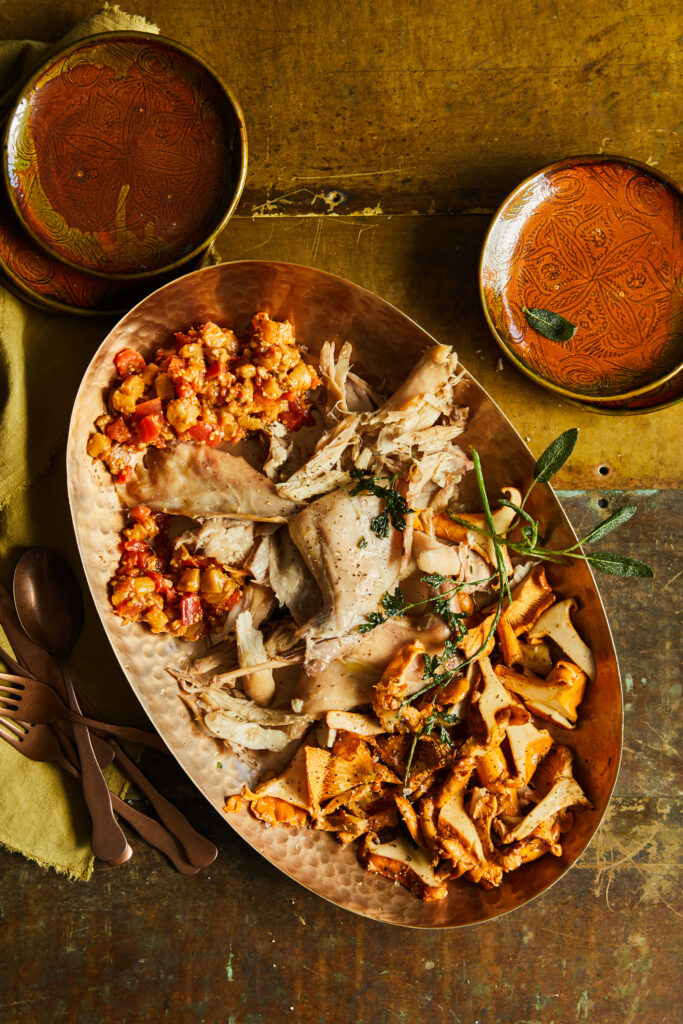
Polenta with Brown Butter-Balsamic Mushrooms

0
Polenta with Brown Butter-Balsamic Mushrooms served in three dishes

Polenta, a humble staple of the northern Italian kitchen, is essentially porridge made with cornmeal. You can use any cornmeal, but tradition requires meal milled from otto filet corn. There are still polentas made from this flavorful and colorful original, but “polenta” on the label is no guarantee. Artisanal polentas made in the United States are often grown with strains derived from otto filet, but these are often coarsely ground and will take longer to cook. Whichever you choose, it is wise to avoid the instant polenta that will save you time, but at the cost of flavor and texture.

Tips for This Polenta Recipe 

Make a basic polenta recipe once for practice, and then go back again and again to experiment and play. Traditionally topped with shavings of Parmigiano-Reggiano or your favorite sauce, a bowl of polenta also welcomes sausage, roasted veggies, shrimp, brown butter – you name it.

Your choices should please the eyes as well as the taste buds. A painterly approach to polenta can lead to flowers, faces, or perhaps a sun. If you go this route, as pictured here, pour a layer of polenta into the ovenproof serving container of your choice, brush it with a bit of olive oil and decorate with bits of finely sliced vegetables and herbs. Put it under the broiler just long enough to achieve a touch of gold on the veggies, but no longer. Try this recipe for Polenta with Brown Butter-Balsamic Mushrooms and Goat Cheese Topping. You won’t regret it.

Print
clock clock iconcutlery cutlery iconflag flag iconfolder folder iconinstagram instagram iconpinterest pinterest iconfacebook facebook iconprint print iconsquares squares iconheart heart iconheart solid heart solid icon
Polenta with Brown Butter-Balsamic Mushrooms served in three dishes

Polenta with Brown Butter-Balsamic Mushrooms


  • Author: Stephanie Sullivan

Description

A delicious polenta that’s as beautiful to look at as it is to eat.


Ingredients

Scale

For the polenta:

  • 6 cups chicken stock or water
  • 2 cups cornmeal, medium or coarse
  • 4 tbsp butter
  • 2 tsp salt
  • 3/4 cup shaved Parmigiano

For the topping:

  • 8 oz goat cheese
  • 2/3 cup heavy cream or as needed
  • 2 garlic cloves, minced
  • 2 tbsp olive oil
  • 11/2 lb mushrooms white or cremini, stemmed and quartered
  • Salt and pepper to taste
  • 1/2 cup butter
  • 2 tbsp balsamic vinegar
  • Fresh chopped basil, oregano, or tarragon


Instructions

  1. Measure the stock or water into a large pot; whisk in the polenta, making sure that there are no lumps. Put the pot onto a medium-high element and whisk until it just comes to a boil. Reduce the heat to very low.
  2. Continue to whisk frequently until polenta just starts to bloom, that is, when it becomes a yellow liquid and not just corn floating in water. This can take up to 10 minutes for coarser grains. Cover with the lid just slightly ajar and cook until finished. The amount of time will depend on the grind of the polenta you use: very coarse can take over an hour; finer grind maybe 25 to 30 minutes. For all grinds, you will continue to whisk frequently until the polenta becomes too stiff to whisk. When this happens, change to a wooden spoon, making sure to whisk/stir the bottom of the pot to prevent sticking. Taste for doneness when it thickens. You do not want the polenta to be al dente.
  3. When you reach this stage, stir in the butter and season with salt to taste. Top with shaved cheese and a drizzle of olive oil or any other topping you choose.

For the mushroom topping:


  1. Using a fork, mash the cheese and blend with enough cream to make a smooth spread.  Depending on the cheese that you use, this should take 2/3 cup of cream. It should be creamy and able to be dolloped but not runny. Set aside.
  2. In a large sauté pan over medium heat, sauté minced garlic in olive oil about a minute.  Immediately add mushrooms to the pan, then season with salt and pepper. Sauté mushrooms until soft and their liquid has cooked off, stirring often. Turn off heat and leave pan on burner to keep mushrooms warm.
  3. While mushrooms sauté, make brown butter vinaigrette. Melt butter in a small pan over low heat until it turns a deep brown color, about 3 to 5 minutes. Remove butter from heat and cool slightly, about 2 minutes. Put 4 tablespoons of the brown butter in a glass container and add balsamic vinegar. Season to taste with salt and pepper. Pour the vinaigrette over mushrooms and toss.
  4. To serve, put the basic polenta (no toppings) in a bowl, top with mushrooms, and then top the mushrooms with dollops of the creamy goat cheese. Add chopped herbs if desired.

Notes

  • Do not use corn flour when making polenta.
  • Most recipes direct you to bring the water to a boil and then add the polenta. Adding it first and whisking as it heats ensures that there will be no lumps..

Story and Recipe by Stephanie Sullivan
Photography by Andrew Burkle
Food Styling by Clare Vredevoogd Production by Burklehagan

Subscribe to TABLE Magazine’s print edition

Create a free account, or log in.

Gain access to read this content, plus limited free content.

Yes! I would like to receive new content and updates.

Table Magazine wants to know your location.

TABLE Magazine operates regional sites - Knowing your location helps us route you to the appropriate site for the best experience.