Home Blog Page 206

Kosher Cocktail

0
Two cocktails, bright ref in color sit in wine glasses and are garnished with lemon round, pomegranate arils, and mint leaves

Look no further for a delectable and invigorating cocktail recipe compliant with kosher regulations. From Rosh Hashanah and Yom Kippur to Sukkot and Chanukah and finally into Passover, the holiday season is upon us and an ideal time to pour a few libations in celebration. (Although we won’t judge if you imbibe in this kosher cocktail all other times of the year.)

What Makes Food Kosher?

Kosher is a term used to describe food that adheres to Jewish dietary rules. In addition to which animals can be eaten, there are rules for how the animal is slaughtered and how the meat should be prepared.

Kosher laws prohibit the mixing of meat and dairy products in a meal. The process of certifying food as kosher involves inspections of the ingredients, production facilities, and equipment to ensure they meet strict standards. The aim of kosher laws is to promote a healthy and ethical lifestyle while maintaining a connection to Jewish traditions.

What Makes a Drink Kosher?

For a drink to be kosher, any alcohol used must be produced from kosher ingredients, and any additives or flavorings used cannot contain non-kosher ingredients. Additionally, the production facilities and equipment used to create the drink must be inspected to ensure they meet kosher standards. Overall, the same principles and processes that apply to certifying food as kosher also apply to certifying drinks as kosher. A note: Not all bourbon is kosher. You can kind a list of kosher bourbons online, however.

Print
clock clock iconcutlery cutlery iconflag flag iconfolder folder iconinstagram instagram iconpinterest pinterest iconfacebook facebook iconprint print iconsquares squares iconheart heart iconheart solid heart solid icon
Two cocktails, bright ref in color sit in wine glasses and are garnished with lemon round, pomegranate arils, and mint leaves

Kosher Cocktail


  • Author: Judah Cowen

Description

A recipe everyone can enjoy.


Ingredients

Scale

For the Cocktail

  • 3 oz fresh lemon juice
  • 3 oz pomegranate juice
  • 1 oz mint simple syrup (recipe below)
  • 2 oz bourbon

For the Simple Syrup

  • 1 cup water
  • 1 cup sugar
  • 1.5 cups chopped fresh mint


Instructions

For the Cocktail

  1. Combine all liquid ingredients into a cocktail shaker with ice. Shake vigorously for 2 minutes until chilly cold. Pour into martini glass. Garnish your kosher cocktail with the rind of the lemon and pomegranate arils.

For the Simple Syrup

  1. Mix water and sugar together in pot on medium heat, simmer until sugar is dissolved, remove from heat, and add mint leaves.
  2. Let seep for a minimum of 15 minutes.

Recipe by Judah Cowen, Elegant Edge Catering Company
Photography and Styling by Keith Recker

Subscribe to TABLE Magazine’s print edition.
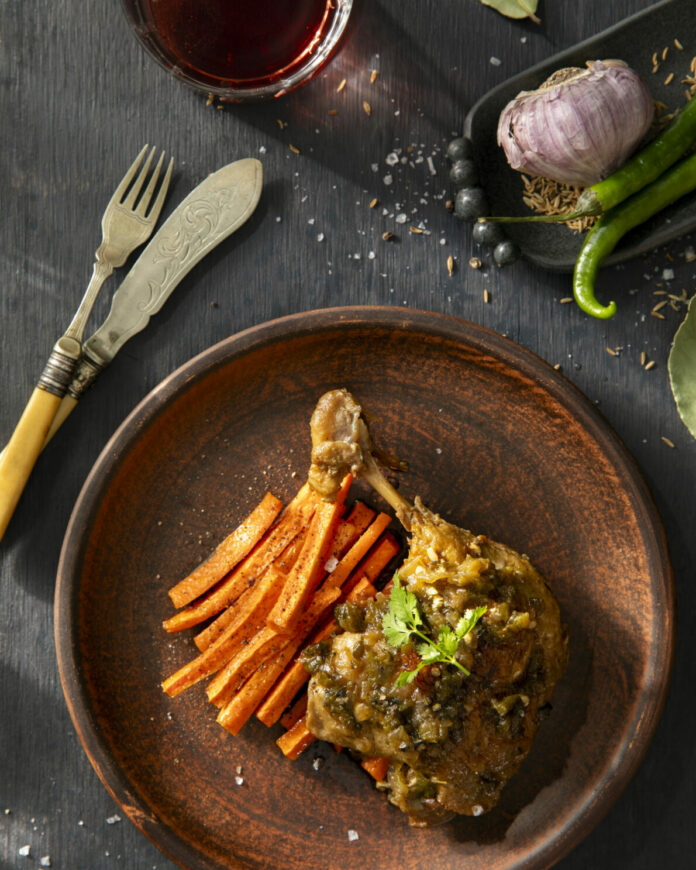
7 Questions with Canadian Photographer Donna Griffith

0
Food styled by Sasha Seymour

In interviews with five photographers from the United States and Canada, Mark Oppenheimer explores an essential element of 21st-century visual culture: the food photo. Whether taken by a professional with an expensive lens and a support team, or by a passionate amateur wielding a smartphone, images of food abound in our world. Settle in for a good read about what motivates the pros, and what they think makes their work not just good, but deliciously transformative.

Donna Griffith

Donna Griffith is an award-winning Canadian photographer known for capturing the beauty and essence of interior design, architecture, and food. Working with top designers, architects, and chefs, her images have been featured in House & Home, Style at Home, Canadian Living, and more.

An aerial shot of a plate of Linguini mussels

How do you feel about the Instagramification of food photography?

I feel like there are too many images in the world right now. Everybody is out there with a camera photographing their meals–it lessens their specialness.

How do you approach a food shot differently than a portrait?

Food doesn’t talk back. When you’re working with food, you pretty much control everything, although there will be times some food doesn’t want to behave and things melt or wilt.

What gives a shot honesty and authenticity?

I like to show that even if there’s not a hand or a person in the shot, there is a human being there. And that’s why a bit of mess, a bit of crumbs, makes it much more appetizing; it looks real. It is a little tricky to achieve because you can’t just make a mess. It has to be constructed, carefully placed, and styled.

Even if they aren’t visible, what is the “people” part of the food shot?

I hope all of my shots create that warmth of having a meal with friends or family. Sharing food is a connecting factor for our well-being and how we show love. That is how I would prefer my work to be seen.

How have the little failures or defeats you’ve experienced shaped you?

They have made me challenge myself, to experiment a little more, to take a few more creative risks. The little failures teach you that anything can fail. Even if you’ve got everything laid out just so, it could fail. So, you need to step beyond that.

An aerial shot of a color plate of carrot sprouts

Describe the practice you turn to when a shot is proving difficult?

I have a button pinned on my bulletin board by my desk that says “PLAY.” If I’m stuck on something, I just look at the button to remind myself to loosen up and be playful.

What do you think is the relationship between the food you shoot and the food we eat?

What I shoot is usually a little elevated from the everyday, though I prefer to shoot food that is delicious and attainable and doable for the average person. We try to present it as something you can do at home for yourself.

Story by Mark Oppenheimer / Photography by Donna Griffith

A footer photo with a black background and subscribe info and button

Subscribe to TABLE Magazine’s print edition.
The Work of Pittsburgh-based Artist Clayton Merrell Breathes Harmony and Chaos

0

Painter Clayton Merrell combines the physical and the metaphysical in paintings that are contemplative and complex.

The Work of Pittsburgh-based Artist Clayton Merrell Breathes Harmony and Chaos

This Carnegie Mellon University professor of art has been creating since the late 1980s. He grew up outside of Pittsburgh, left for about 10 years, and has had his own studio since returning in 2000.

on the left, a work station for an artist. on the right, tons of paint tubes with a pair of hands overtop

Clayton Merrell by Laura Petrilla

Merrell makes landscape paintings that encompass both the beauty and tragedy of the natural world. “I see my work as an attempt to create something like an honest contemporary landscape idiom,” he says. “Instead of simplistic picturesque tableaus of natural harmony, my work presents viewers with a world in which that harmony is undermined by conflict, order is complicated by chaos, and the delicate fabric of the natural world is stretched to the breaking point.” He wants to make a painting that conveys how beautiful our world is—and how broken. “I want them to be the same painting,” he says.

a hand paints a yellow sun

Merrell previously designed the terrazzo floor for the Pittsburgh Airport airside terminal. Subsequently, he completed the design for a terrazzo floor in the Teresa Heinz Rotunda in CMU’s Heinz College.

“The design will create the illusion that the floor is an evening sky with time-lapse star paths arcing across it,” he explains.

on the left, hands mix paints. on the right, a man, Clayton Merrell, paints a yellow landscape on a wall

He loves the sense of freedom and open-ended possibility experienced every time he starts a new painting. “I love that the results of that solitary work turn into heartfelt human interaction when other people want to spend time with those paintings,” he adds.

Merrell is represented by Concept Art Gallery in Regent Square. His work can be purchased online through Singulart and Saatchi Art.

Story by Corinne Whiting / Photography by Laura Petrilla


Subscribe to TABLE Magazine’s print edition.

Punch Drunk Negroni

0
A cocktail orange in color sits in a rocks glass, garnished by a strawberry. Punch Drunk Negroni Cocktail Recipe

 Heads up! Take it easy on this Negroni recipe, or you may end up like the cocktail’s name: punch drunk. Traditionally speaking, the Negroni has equal parts Campari, gin, and sweet red vermouth and is always garnished with an orange wheel. This recipe calls for all the ingredients of a classic Negroni, but a fruity simple syrup and a bit of brut champagne make the Punch Drunk cocktail all too easy to drink. Don’t say we didn’t warn you… 

Which Kind of Vermouth Should You Use For Your Negroni Cocktail? 

For a Negroni cocktail, you want a well-balanced vermouth that is neither too soft nor too robust. The Goldilocks “just right” of vermouths, if you will. Some brands to consider are Cinzano Rosso, Hotel Starlino, or Cocchi Vermouth di Torino, or what we used in the Punch Drunk Negroni, Carpano Antica Formula. We felt this would pair best with the strawberry rhubarb simple syrup as a red vermouth with a richness and depth of character that stands up well to other ingredients. The champagne top means you need something that won’t get watered down, so a strong vermouth is a must. 


Print
clock clock iconcutlery cutlery iconflag flag iconfolder folder iconinstagram instagram iconpinterest pinterest iconfacebook facebook iconprint print iconsquares squares iconheart heart iconheart solid heart solid icon
A cocktail orange in color sits in a rocks glass, garnished by a strawberry. Punch Drunk Negroni Cocktail Recipe

Punch Drunk Negroni


  • Author: Dan Ball

Description

A fruity variation on this classic drink.


Ingredients

Scale
  • 1 oz. Tanqueray
  • 1 oz. Campari
  • 1 oz. Antica Vermouth
  • 1/2 oz. Strawberry/rhubarb/ginger simple syrup
  • Top with 1/2 oz of brut champagne


Instructions

  1. Add the gin, Campari, vermouth, and simple syrup to a mixing glass filled with ice and stir until well-chilled.
  2. Strain Negroni into a rock glass over a large ice cube and top with champagne.

Recipe by Dan Ball, Hyeholde Mixologist
Photography by Dave Bryce

Subscribe to TABLE Magazine‘s print edition.

Coo Coo for Coconuts Negroni

0
A cocktail red in color sits on a wooden board that is slightly burnt with smoke pouring out. Coo Coo for Coconuts Negroni

There’s no doubt you’ll go coo coo for this coconut Negroni. Tequila is swapped in for the usual gin, and a creamy banana sherry plus pineapple-infused Campari bring the tropical vibes right into your home. Summer may be coming to an end, but that doesn’t mean the taste of warmer weather has to stop with it.

How to Infuse Campari with Pineapple for a Coconut Negroni

A good place to start is with just a single cup of pineapple cup to one cup of Campari. If you’re just making one cocktail, no need to make batch proportions of infused liquor. Chop up your pineapple into chunks, combine pineapple and Campari in a large mixing glass or measuring cup, cover with plastic wrap and let infuse in the refrigerator for 24 hours. You’ll want to strain out the fruits so you have just the liquor left over. 

Print
clock clock iconcutlery cutlery iconflag flag iconfolder folder iconinstagram instagram iconpinterest pinterest iconfacebook facebook iconprint print iconsquares squares iconheart heart iconheart solid heart solid icon
A cocktail red in color sits on a wooden board that is slightly burnt with smoke pouring out. Coo Coo for Coconuts Negroni

Coo Coo for Coconuts Negroni


  • Author: Rachel Sinagra

Description

A tropical take on a Negroni.


Ingredients

Scale
  • 1.25 oz Coconut Wash Anejo Tequila
  • .75 oz pineapple-infused Campari
  • 1 oz banana-infused cream sherry
  • 2 dashes orange bitters
  • 4 dashes tiki bitters


Instructions

  1. Add the tequila, Campari, sherry, and bitters to a mixing glass filled with ice and stir until well-chilled.
  2. Strain Negroni into a rock glass over a large ice cube.

Recipe by Rachel Sinagra, Fig & Ash Mixologist
Story by Keith Recker
Photography by Dave Bryce

Subscribe to TABLE Magazine’s print edition.

Magrouni White Negroni

0
A pale yellow cocktail in a wine glass garnished with basil

Based on a white Negroni, this cocktail recipe from Pittsburgh jazz bar Con Alma gets its name from jazz trumpeter Erik Truffaz’s song of the same name. Featuring Thai basil & Jalapeño infused Jin JiJi as its main ingredient, Con Alma Mixologist Hannah McKee, says of Magrouni, “It has a very cool Indian sound to it, and since this riff features an Indian dry gin, it seemed like a good fit.”

What is a White Negroni? 

Traditionally speaking, the Negroni is made with equal parts Campari, gin, and sweet red vermouth and always garnished with an orange wheel. A white Negroni typically has gin, Lillet Blanc, and Suze, an Alpine French liqueur that gives the drink its yellow color instead of the traditional orange-red hue. There are many variations, though, as some bartenders use Luxardo Bitter Bianco, Cocchi Americano, Salers, or other gentian liqueurs. Hannah’s take on it uses an infused Jin JiJi, giving this a spicier, dryer flavor than the ordinary white Negroni. Rather than Suze, she also used Chiot Montamaro, another Alpine digestivo that’s less bitter than many other amari.

Print

clock clock iconcutlery cutlery iconflag flag iconfolder folder iconinstagram instagram iconpinterest pinterest iconfacebook facebook iconprint print iconsquares squares iconheart heart iconheart solid heart solid icon
A pale yellow cocktail in a wine glass garnished with basil

Magrouni White Negroni


  • Author: Hannah McKee

Description

A new take on a Negroni.


Ingredients

Scale
  • 1 oz Thai basil & Jalapeno infused Jin JiJi
  • .5 oz Lillet Blanc
  • .5 Bordigo Chiot Montamaro bitters


Instructions

  1. Add the infused Jin JiJi, Lillet Blanc, and bitters to a mixing glass filled with ice and stir until well-chilled.
  2. Strain into a wine glass over a large ice cube.


Recipe by Hannah McKee, Con Alma Mixologist
Photography by Dave Bryce
Produced by Star Laliberte

Subscribe to TABLE Magazine’s print edition.

Papà ‘Groni: A Negroni with Flare

0
Two dark red Negroni cocktails in tall glasses garnished with rosemary and blackberry

A traditional Negroni gets turned on its head in this cocktail recipe from Mixologist Sarah Cascone. Notes of cinnamon, toffee, and caramel dance with citrus and fruit flavors for a refreshing drink, perfect for easing you from summer into fall. Mix up a batch and share with friends around a fire.

Traditionally speaking, the Negroni is made with equal parts Campari, gin, and sweet red vermouth and always garnished with an orange wheel.

What is Cynar in Our Papà ‘Groni Cocktail?

You may not have heard of Cynar before but it is simply another aperitif liqueur from the people who make Campari. The difference is, Cynar is actually a blend of spices and herbs with the defining characteristic of artichoke. It’s a pungent, distinct taste that uses botanicals to add a floral sweet note. You’ll also find flavors of dark chocolate, walnut, and allspice underneath its initial punch.

Print
clock clock iconcutlery cutlery iconflag flag iconfolder folder iconinstagram instagram iconpinterest pinterest iconfacebook facebook iconprint print iconsquares squares iconheart heart iconheart solid heart solid icon
Two dark red Negroni cocktails in tall glasses garnished with rosemary and blackberry

Papà ‘Groni: A Negroni with Flare


  • Author: Sarah Cascone

Description

It’s really the Cynar that gives this negroni a bit of flare.


Ingredients

Scale
  • 1 oz Cynar
  • 1 oz Bombay Sapphire Gin
  • 1 oz blackberry-infused Campari (recipe below)
  • 1/2 oz citrus simple syrup
  • Garnished with torched rosemary sprig and 2 Campari-soaked blackberries

For the blackberry-infused Campari:

  • 1 cup blackberries
  • 1 1/2 cup Campari


Instructions

  1. Add the Cynar, gin, Campai, and citrus simple syrup to a mixing glass filled with ice and stir until well-chilled.
  2. Strain into a glass over ice. Garnish with torched rosemary sprig and Campari-soaked blackberries

For the blackberry-infused Campari:

  1. Let sit in glass jar such as a mason jar, sealed, in the fridge for at least 72 hours before using.

Recipe by Sarah Cascone
Story by Keith Recker
Photography by Dave Bryce
Produced by Star Laliberte

Subscribe to TABLE Magazine’s print edition.

Cherry Tart Negroni

0
A dark blue and black background with a red, Cherry Tart Negroni cocktail with a square ice cube, garnished with a cherry wrapped in orange peel on a pick.

The Cherry Tart Negroni, by Tyler Lewis at Pittsburgh’s Jackworth Ginger Beer, is a vibrant version of the traditional Negroni recipe. It uses tart cherry juice and cherry bitters for all those fans of pucker-faces out there. The result is a burst of sweet and sour that then comes alive on your tastebuds.

Traditionally speaking, the Negroni recipe starts with equal parts Campari, gin, and sweet red vermouth, and then always garnished with an orange wheel. But, we’re taking some liberties here with new additions and substitutions, so stick along for the ride and end up with a unique, new cocktail recipe.

What are Bada Bing Cherries?

Bada Bing Cherries are a variety of cherry from Tillen Farms that are known for concentrated sweetness and vibrant flavor. They are burgundy in color and nearly twice the size of maraschinos. Bada Bing Cherries are usually only available for a short growing season, but you can find them online year-round. These tasty beauties are perfect for adding a touch of glamour to cocktails, snacking straight from the jar, and can be a. great addition for using in a variety of other recipes.

Print
clock clock iconcutlery cutlery iconflag flag iconfolder folder iconinstagram instagram iconpinterest pinterest iconfacebook facebook iconprint print iconsquares squares iconheart heart iconheart solid heart solid icon
A dark blue and black background with a red, Cherry Tart Negroni cocktail with a square ice cube, garnished with a cherry wrapped in orange peel on a pick.

Cherry Tart Negroni


  • Author: Tyler Lewis

Description

Cherries may just become the Negroni’s new best friend.


Ingredients

Scale
  • 1 oz gin
  • 1 oz Campari
  • 1 oz Carpano Antiqua Formula
  • .75 oz Bada Bing cherry juice
  • 2 dashes cherry bitters
  • Garnish with orange and Bada Bing cherry


Instructions

  1. Add the gin, Campari, Carpano, cherry juice, and bitters to a mixing glass filled with ice and stir until well-chilled.
  2. Strain into a rock glass over a large ice cube.
  3. Garnish with orange peel and cherry on a pick.

Recipe by Tyler Lewis
Story by Star Laliberte
Photography by Dave Bryce
Produced by Star Laliberte

Subscribe to TABLE Magazine’s print edition.

Blood Moon Negroni

0
A hand comes from the right of the frame and holds a Blood Moon Negroni Cocktail, red in color. Garnished with a dried blood orange wheel. Blood Moon Negroni Cocktail Recipe

Any drink that asks us to rinse our glass with moonshine deserves respect. After completing this intriguing step, the rest looks mostly familiar to a negroni cocktail recipe: gin, Campari, and sweet vermouth take the lead. However, a Pinot noir reduction, made by gently simmering red wine and sugar until syrupy, adds a little symphony of unexpected flavor notes to this cocktail, even as it intensifies its red color. Let your nose do some of the work here: the bouquet is worth a moment of appreciation.

Traditionally speaking, the Negroni uses equal parts Campari, gin, and sweet red vermouth and always comes with an orange wheel garnish.

What Does Rinsing a Glass with Moonshine Do?

Rinsing a glass with moonshine is a technique in some cocktail recipes to add a subtle flavor and complex aroma to the drink. It is similar to rinsing a glass with absinthe in a sazerac cocktail. In the Blood Moon Negroni, the moonshine is swirled around the glass to coat the inside, then the excess is discarded. This leaves a trace of the moonshine’s flavor and aroma, which can enhance the overall drinking experience especially with simple cocktails. However, moonshine is one you want to use sparingly thanks to its high-proof alcohol.

Print
clock clock iconcutlery cutlery iconflag flag iconfolder folder iconinstagram instagram iconpinterest pinterest iconfacebook facebook iconprint print iconsquares squares iconheart heart iconheart solid heart solid icon
A hand comes from the right of the frame and holds a Blood Moon Negroni Cocktail, red in color. Garnished with a dried blood orange wheel. Blood Moon Negroni Cocktail Recipe

Blood Moon Negroni


  • Author: Dan Ball

Description

Moonshine and a negroni? It’s a better pairing than you may think.


Ingredients

Scale


Instructions

  1. Rinse the glass with moonshine.
  2. Shake the remaining ingredients with ice.
  3. Pour over a round cube in a double old-fashioned glass.
  4. Garnish Negroni cocktail with a blood orange wheel, dried or fresh.

Recipe by Dan Ball, Hyeholde Mixologist
Story by Keith Recker
Photography by Dave Bryce
Produced by Star Laliberte

Subscribe to TABLE Magazine’s print edition.
The Beauty School Dropout: A Negroni Twist

0
A red cocktail in a rocks glass sits next to two frozen red fruit cubes. The Beauty School Dropout Negroni Cocktail Recipe

In this fun twist on a Negroni cocktail, the herbal notes of chamomile-infused Bluecoat Gin join with the sweetness of strawberry-infused Aperol and the light, floral delicacy of Lillet Rosé. The special touch here: homemade strawberry juice ice cubes, which lend a fresh, sweet-and-tart brightness to this extremely sippable (and nicely pink) drink. Rizzo and the rest of the Pink Ladies from Grease would approve.

Traditionally speaking, the Negroni uses equal parts Campari, gin, and sweet red vermouth and always comes with an orange wheel garnish.

How to Infuse Spirits

For chamomile gin in this Negroni Twist cocktail recipe, start with a good quality gin and add dried chamomile flowers to the bottle. The ratio depends on your taste, but we recommend using about a tablespoon of dried flowers per bottle. You’re going to want to let it steep for a few days. Taste it once in a while: chamomile can become bitter with over-steeping.

The strawberry Aperol, is slightly trickier due to the water content of the fruit. But, you can macerate fresh strawberries with a bit of sugar for a few hours to draw out their juices and make it easier to infuse. Simply add the macerated mixture to your Aperol and let it infuse for a few days, once again tasting regularly. Strain both infusions when you’re done. You can also save the extra infusions in your fridge in a tightly sealed bottle.

Print
clock clock iconcutlery cutlery iconflag flag iconfolder folder iconinstagram instagram iconpinterest pinterest iconfacebook facebook iconprint print iconsquares squares iconheart heart iconheart solid heart solid icon
A red cocktail in a rocks glass sits next to two frozen red fruit cubes. The Beauty School Dropout Negroni Cocktail Recipe

The Beauty School Dropout: A Negroni Twist


  • Author: Rachel Sinagra

Description

It’s the infused spirits that bring this twist on a negroni to life.


Ingredients

Scale
  • 1 punnett (small basket or container) of fresh strawberries
  • 1 ¼ oz chamomile-infused Bluecoat Gin
  • 1 oz strawberry-infused Aperol
  • ¼ oz Lillet Rosé


Instructions

  1. Purée a punnett of fresh strawberries and freeze the results in an ice cube tray.
  2. Shake the other ingredients in a cocktail shaker with ice.
  3. Put a strawberry ice cube or two in a double old-fashioned glass and pour the mixture to the brim.

Recipe by Rachel Sinagra, Fig & Ash Mixologist
Story by Keith Recker
Photography by Dave Bryce
Produced by Star Laliberte

Subscribe to TABLE Magazine’s print edition.

Create a free account, or log in.

Gain access to read this content, plus limited free content.

Yes! I would like to receive new content and updates.

Table Magazine wants to know your location.

TABLE Magazine operates regional sites - Knowing your location helps us route you to the appropriate site for the best experience.