Home Blog Page 138

Sheet Pan Scallops and Corn Supper

0
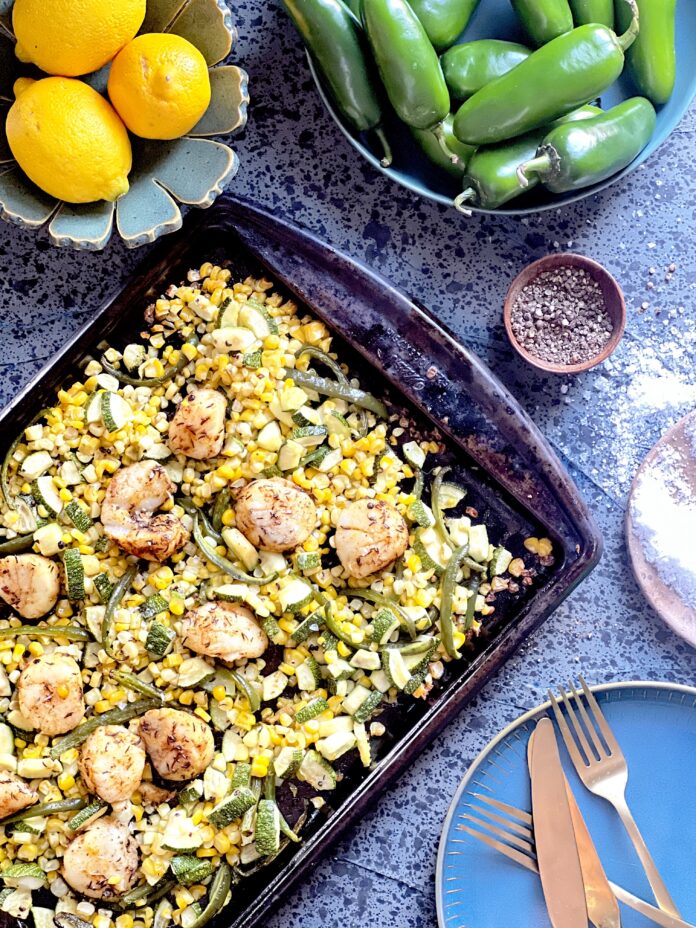
A sheet pan filled with Summer Scallops and Corn. To the side sits bowls of peppers, lemon, and salt. Scallops recipe

Sheet Pan Scallops and Corn Supper means, fresh, farmstand corn. A quick trip to the fishmonger. Juicy jalapeños. Three simple primary ingredients make, after a short time in the oven, a great one-pan supper. The natural sweetness of the corn and scallops plays off of the spicy jalapeños in a beautiful way. You can make this easy recipe with friends, leaving plenty of time for happy chitchats and a glass of wine.

Tips for Mastering Sheet Pan Cooking

We know you probably just throw your ingredients on the pan and shove it into the oven but taking a moment to master sheet pan cooking can make a big difference in your dinners. First, don’t overcrowd the pan. You want to give ingredients enough space to roast and caramelize rather than steam, so you can get those crispy textures. Second, cut your ingredients into uniform, smaller sizes so they cook evenly. Whenever you’re working with dense vegetables like squash, those cuts should be smaller than quick-cooking ones like corn. One last tip to get that extra crispiness is to preheat the sheet pan itself in the oven before adding ingredients to it.

Print
clock clock iconcutlery cutlery iconflag flag iconfolder folder iconinstagram instagram iconpinterest pinterest iconfacebook facebook iconprint print iconsquares squares iconheart heart iconheart solid heart solid icon
A sheet pan filled with Summer Scallops and Corn. To the side sits bowls of peppers, lemon, and salt. Scallops recipe

Sheet Pan Scallops and Corn Supper


  • Author: Keith Recker

Description

There’s nothing as blissful as an easy, one sheet pan dinner.


Ingredients

Scale
  • 1 lb (approximately) fresh sea scallops
  • 5 ears of corn, shucked, kernels removed from cob
  • 4 jalapeños, tops, veins and seeds removed, diced
  • 1 cup zucchini or summer squash (diced, remove seeds before chopping)
  • 2 tsp cumin seeds (preferably black cumin, but regular cumin will be fine)
  • 1/2 tsp salt
  • 1 tsp black pepper
  • 1 tsp ground chile, mild
  • 1/4 cup olive oil


Instructions

  1. Preheat oven to 350 degrees.
  2. In a bowl, combine all ingredients (except scallops). Stir til ingredients are evenly coated in oil and seasonings. Place on sheet pan and roast in oven for 25 minutes or until squash is tender.
  3. Lay the scallops on top, one at a time, giving space and air to each. Return to oven for 10 min or until scallops are just barely done in the middle.
  4. Eat while piping hot. Have a glass of prosecco alongside.

Recipe, Photography, and Styling by Keith Recker
Story by Jordan Snowden

Subscribe to TABLE Magazine’s print edition.

Food Insecurity Becomes a Growing Challenge for College Students

0
A group of college students sit and eat at Chatham University

As a college student, I didn’t think of campus life and food insecurity as going hand in hand. But this changed when I was in my first semester of graduate school, I attended a dinner party at the home of another student. It was a beautiful and lively dinner party where everyone contributed something. As students of food, we went around the table to say where we had sourced the meal.

College Students Face Food Insecurity 

On a table brimming with dishes, one might not expect to hear that much of the meal was free. The bread and citrus had come from the local food bank, some crackers and cheese were destined to be discarded from someone’s workplace. As we went around the table I marveled at the ingenuity of my peers. Lastly, as the main dish was presented, our host declared: “and the scallops are stolen.”

I was completely taken aback. Stolen? Why would they be stolen? How does one get stolen scallops? I had not faced food insecurity thus far in my life. I was at a loss for what it looked like or how different people coped with the prevalent issue. Further, I had not assumed that my peers would be facing food insecurity. It didn’t cross my mind that other students on my campus, especially undergraduates, might be food insecure.

Yet, as I read, researched, and stressed my way through my first year of grad school, the topic continued to emerge. College students face specific challenges when it comes to acquiring healthy balanced meals or even just enough food to fill their stomachs.

What is Food Insecurity? 

Food insecurity is an issue many Americans face. It means they do not have consistent access to healthy, safe, and culturally appropriate foods to meet nutritional needs due to lack of money and other resources.

While the percentage of households in the United States facing food insecurity sits around 12.8%, the percentage of college students facing food insecurity is much higher. The United States Government Accountability Office has confirmed that food insecurity among college students is around 30%.

Many universities report student populations with up to 40% facing some form of food insecurity. While it is understood that most college students make little money for themselves and are living on a budget, most people assume college students’ access to food to be handled by their university. This allows many students to fall through the gaps of acquiring sufficient nutrient dense food, which leads to lower academic performance and risk of diet related health issues.

No Way to Measure Food Insecurity

The United States government has yet to determine a reliable way to measure food insecurity among college students. The Food Security Survey Model (FSSM) is designed to measure household food security. This can make some questions confusing for college students who are transient in their living situation, not in a “household.”

Many universities have taken measures to mitigate food insecurity on their campuses. The methods are as varied as the challenges students face with different levels of success. I took a look at what universities around the country are doing to alleviate food insecurity on their campuses.

Just getting a program off the ground is the first step to addressing this issue. As universities have developed programs and implemented them on campus, many also utilize surveys, focus groups, and graduation data to determine whether their efforts are making a difference.

Why Are College Students Food Insecure? 

An article published by the American Journal of Public Health (AJPH) cites five reasons that college students are food insecure. In total, the authors say these factors contribute to the “new economics of college.” The five reasons are:

There’s a Change in Student Populations at the University Level

College was once only for the elites. But now, more low income people have the opportunity to attend college due to federal student loans. While this is on the whole a good thing, it means more people from food-insecure backgrounds are now in an environment where they often have little support.

College is Becoming a Lot More Expensive

Between 1989 and 2016, the price of a 4-year degree has doubled. Since 1980, the average cost for a 4-year college degree has increased 168%. This is according to a report from Georgetown University Center on Education and the Workforce.

The Pell Grant Program Has Gotten Weaker

Pell Grants are a federal subsidy for low income college students. However, as the number of low income students increased, the amount of Pell Grant money available has actually gone down. They now cover less than a fourth of a full year of college tuition, and that’s not even accounting for living expenses.

It is Now Harder to Pay for College by Working

As the value of minimum wage has gone down, it’s gotten harder for anyone to cover tuition just by working. No one can cover a five or six-figure tuition with a part time job. If you do have to work to afford school, you have to work nearly full-time.

Colleges Have Less Federal Money to Go Around

The amount of state funding available for education has decreased dramatically. This means that there’s less money available from universities to help students in financial need.

What Can Colleges Do to Fight Food Insecurity? 

With these five factors in mind, there are things college students can do to combat food insecurity. One option potentially available to students to alleviate food insecurity is the Supplemental Nutritional Assistance Program (SNAP). This is the United States’ largest food benefit program. Some students do qualify for this benefit. Some students qualify based on income or immigration status. However, many are ineligible because they do not meet other criteria like meeting a 20 hour per week work requirement. Even when students are eligible, the daunting application process can be a deterrent.

Many universities have at least one dedicated faculty member to help walk students through the SNAP application process. However, this, along with programs that direct students to local food pantries, does little to address students’ needs if they do not have transportation off-campus.

State Funding for Colleges to Fight Food Insecurity

Universities all over the country have implemented various strategies to alleviate food insecurity on campus. The most popular approach is a campus food pantry with shelf-stable items that students can access for free. Other popular methods include donating unused meals from student meal plans to other students. Some places also create campus gardens, meal vouchers, emergency assistance funds, and scholarships.

In recognition of the difficulties university students face, Pennsylvania, West Virginia, California, New Jersey, Washington, Maryland, Massachusetts, Oklahoma, Louisiana, and Illinois have passed hunger-free campus initiatives.

These typically include a state-funded grant program. This money can be used to implement or build programs that other institutions have already developed. Or, colleges can use it to develop new methods of addressing food insecurity on college campuses.

Chatham University’s Strategy

One recipient of the PA Hunger-Free Campus grant for the 2023-2024 fiscal year is Chatham University, which has three campuses in the Pittsburgh area, and the grant money has been used to create or expand services already available at food pantries known as Essential Needs Pantries (ENP) for student use. The aim of Chatham’s ENPs is to stock shelf-stable items. The ENPs also offer students access to fresh produce and healthy frozen meals with the purchase of refrigerators and freezers.

Chatham’s Eden Hall campus boasts a productive student-led farm where fresh produce can be sourced. Some of this produce will be used in the Eden Hall teaching kitchen to create frozen meals that can be stored in the ENP freezers and be available for students to reheat in a dorm or apartment. This program is led by students who grow the produce, develop the recipes, and make meals for their fellow students. Chatham is also working to develop a program to coordinate transportation for students to get to a grocery store off campus. This is in recognition of the fact that for some students, the barrier to healthy foods is not money, but access to transportation.

Montgomery County Community College’s Strategy 

While not a recipient of a Hunger-Free Campus grant, Montgomery County Community College, also in Pennsylvania, has a unique approach to reducing food waste and food insecurity. AmeriCorps VISTA Fellow Jennifer Fanega began working as a Food Sustainability Fellow at MCC during fall of 2023 to create a Food Recovery Program.

Fanega has created a program where she re-uses food scraps or food that would be wasted from culinary classes. With this food, she creates meals for the student food pantry. Most of the meals Fanega creates are vegan, so they are accessible to as many students as possible. She  focuses on creating healthy meals with the scraps she receives. Thus far, the food recovery program has donated 937 meals to the student food pantry.

Missouri Southern State University’s Strategy

After realizing the prevalence of food insecurity among their students, professors at Missouri Southern State University launched a food pantry. They called it the Lion Co-op. Their co-op doesn’t only provide meals. It also has made an effort to create experiential learning with classes, internships, and research.

In doing this research, they came across an initiative from Temple University where students were provided money for groceries. Professors of the MSSU Lion Co-op then developed a new program: students can now receive a scholarship in the form of tokens which can be used at a local farmers market.

This program targets students in the later years of their college career. The thinking was that if they alleviate some of their food insecurity, it can then help them to graduate. As these students are a little older than their freshman and sophomore status peers, they may have more experience with grocery shopping and preparing food on their own. The program has only been available to students for two years, so it is difficult to judge success thus far, but data shows a clear increase in token use as the program has progressed.

How Can We Help? 

While it can be difficult and time-consuming for universities to develop these programs and determine their success rate, it is an important step in working to alleviate food insecurity on college campuses. Hopefully as institutions continue to collect data on their methods, they can be refined to address the needs of their students.

While these programs are important, they often serve as a band-aid to more systemic issues. Efforts to truly alleviate food insecurity on college campuses would focus the five factors that contribute to the “new economics of college.” If colleges were better suited to accommodate the needs of low income students, it would help every student thrive.

Story by Kirsten Chervenak 

Subscribe to TABLE Magazine‘s print edition.
Easy, Refreshing Summer Pasta Salad

0
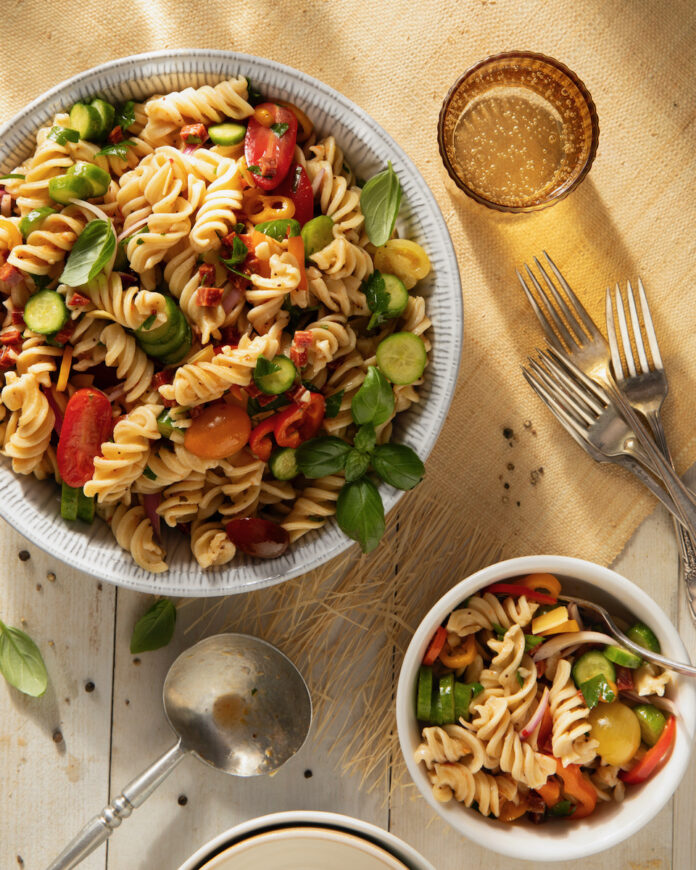
A summer pasta salad using local ingredients on a white background

This Summer Pasta Salad will help you beat the heat with a light, refreshing meal. This is a great example of how simple ingredients you can get at any grocery store (or farm stand) can give you a fine-dining type experience in your own home. The secret to a great summer salad is letting it chill in the fridge after you cook and assemble the dish. 

Pasta Salad Ingredient Options

We’ve used St. Malachi cheese as our flavor filler. It’s an Alpine-style cow’s milk cheese with a firm washed rind. But, if you can’t order this specific cheese, you can look for Gruyere, Emmenthaler, Comte, or any other Alpine-style cheese.

And though we love the handmade fusilli we used for this summer salad, feel free to use pasta straight out of the box from your local grocery store. You can also experiment with farfalle or other shapes if the spirals aren’t your vibe. For another pasta salad recipe, check out our Easy Italian Rice Salad.

Print

clock clock iconcutlery cutlery iconflag flag iconfolder folder iconinstagram instagram iconpinterest pinterest iconfacebook facebook iconprint print iconsquares squares iconheart heart iconheart solid heart solid icon
A summer pasta salad using local ingredients on a white background

Easy, Refreshing Summer Pasta Salad


  • Author: Anna Franklin

Description

A refreshing and delicious picnic meal.


Ingredients

Scale
  • 1 lb Fusilli pasta
  • 1 cup diced pepperoni
  • 1 cup cherry tomatoes
  • 1 cup St. Malachi cheese, diced
  • 1 cup cucumbers 
  • 1 cup red wine vinaigrette
  • Fresh basil leaves for garnish
  • Salt and Pepper to taste


Instructions

  1. Cook pasta following the package directions and cool completely. 
  2. Combine remaining ingredients into a large bowl and toss with vinaigrette.
  3. Season with salt and pepper to taste.
  4. Chill for at least 1 hour before serving.

Recipe by Anna Franklin
Photography by Dave Bryce

Subscribe to TABLE Magazine‘s print edition.

Easy Ozette Potatoes Recipe with Corbaci Peppers and Sausage

0
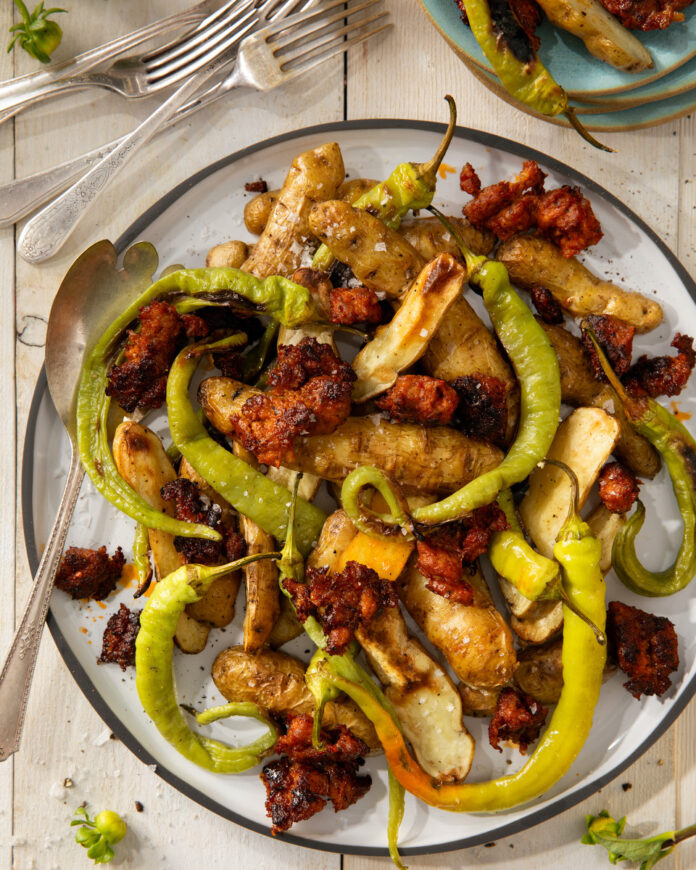
A plate of ozettes, Corbaci peppers, and sausage on a white background

Elevate your culinary repertoire with this flavorful Ozette Potatoes Recipe with Corbaci Peppers and Sausage. Our easy roasted ozette recipe is a must-try for anyone eager to explore new and exciting ingredients. Follow our step-by-step guide to bring this extraordinary dish to life and impress your family and friends with a meal that’s as delicious as it is memorable. This enticing, easy recipe blends the nutty richness of ozette potatoes with the spicy kick of corbaci peppers, creating a perfect harmony of flavors ideal for both casual gatherings and special occasions.

What are Ozettes?

The Ozette, or the Makah Ozette or Anna Cheeka’s Ozette is the oldest variety of potato from the Pacific Northwest region. This potato, of the petite heirloom fingerling type, comes from the Makah tribe native to Washington. The culinary world began to “rediscover” it in the late 1980s. Ozettes are now as popular as ever, for good reason. 

What are Corbaci Peppers?

The Corbaci Pepper is a long 10-inch fruit that is curved and twisted, very slender, like a Turkish scimitar. This rare heirloom from Turkey has a very rich flavor, perfect for pickling or frying. 

Print

clock clock iconcutlery cutlery iconflag flag iconfolder folder iconinstagram instagram iconpinterest pinterest iconfacebook facebook iconprint print iconsquares squares iconheart heart iconheart solid heart solid icon
A plate of ozettes, Corbaci peppers, and sausage on a white background

Easy Ozette Potatoes Recipe with Corbaci Peppers and Sausage


  • Author: Anna Franklin

Description

A delightful and shareable dish.


Ingredients

Scale
  • 1 lb sweet Italian sausage
  • 2 lb Ozette Potatoes
  • 1 lb Corbaci Peppers
  • 3 tbsp butter
  • Salt and pepper to taste


Instructions

  1. Place the ozette potatoes on a baking sheet and drizzle with olive oil and season with salt and pepper. Roast the potatoes at 400 degrees until fork tender.
  2. While the potatoes are roasting, In a large cast iron skillet, add 1 tablespoon of olive oil and cook sausage until brown and crispy. Add the Corbaci peppers and sauté until tender. Season with Salt and pepper.
  3. Remove the potatoes from the oven and place in the skillet with the sausage and peppers. Top with a few pads of cold butter and fresh herbs before serving.

Recipe and Styling by Anna Franklin
Photography by Dave Bryce

Subscribe to TABLE Magazine‘s print edition.

Green Cherry Tomatoes with Remoulade, Southern Fried Style

0
A plate of Southern-fried green cherry tomatoes, paired with remoulade

Fried cherry tomatoes offer a tangy twist on traditional tomatoes. When paired with a zesty, spicy remoulade with Southern-inspired flavors, they create a dish that’s both refreshing and packed with flavor. Perfect as an appetizer, side dish, or a unique snack, this recipe showcases the versatility of green cherry tomatoes and elevates them with a bold, spicy kick.

Where to Find Green Cherry Tomatoes

Because green cherry tomatoes are a specialty item, they’re most easily found at farmer’s markets or Community Supported Agriculture (CSA) markets. While supermarkets veer towards the classic red, there’s nothing wrong with a green tomato. The flavor is zestier and slightly tangy.

Print
clock clock iconcutlery cutlery iconflag flag iconfolder folder iconinstagram instagram iconpinterest pinterest iconfacebook facebook iconprint print iconsquares squares iconheart heart iconheart solid heart solid icon
A plate of Southern-fried green cherry tomatoes, paired with remoulade

Green Cherry Tomatoes with Remoulade, Southern Fried Style


  • Author: Anna Franklin

Description

Crispy cherry green tomatoes with a spicy remoulade.


Ingredients

Scale
  • 1 cup all-purpose flour
  • 2 large eggs
  • 2 tbsp water
  • 1 cup yellow cornmeal
  • Sea salt and ground black pepper to taste
  • 2 lb green cherry tomatoes
  • 1 cup canola oil for frying, or as needed

For the remoulade:

  • 1 cup mayonnaise
  • 1 tbsp Louisiana style hot sauce
  • 1 tbsp chopped parsley
  • 1 tsp Creole mustard or use spicy brown mustard
  • 1 tsp prepared horseradish
  • 1 tsp Worcestershire sauce
  • 1 tsp pickle juice
  • 1 jalapeno pepper minced
  • 1 small shallot minced
  • 2 cloves garlic minced
  • Juice from half a lemon
  • 1 tsp Creole seasoning blend
  • Salt and pepper to taste


Instructions

  1. Whisk together all of the remoulade ingredients in a small bowl. Alternatively, you can process them together in a blender or food processor to achieve a smoother remoulade sauce.
  2. Refrigerate for at least 1 hour to let the flavors mingle before serving.
  3. Line a baking sheet with waxed paper to begin preparing the tomatoes.
  4. Place flour into a shallow bowl. Whisk eggs and water together in a second shallow bowl. Whisk cornmeal, salt, and pepper together in a third shallow bowl.
  5. Dip tomatoes into flour, then dip into egg mixture. Press tomatoes into cornmeal mixture, then shake off excess and place onto the prepared baking sheet. Repeat with remaining tomatoes, arranging them in a single layer on the baking sheet.
  6. Heat 1/4 inch canola oil in a large skillet over medium heat until shimmering. Working in batches, fry tomatoes in hot oil until golden and crisp, 3 to 4 minutes per side. Drain on paper towel-lined plates. Season with salt.

Recipe and Styling by Anna Franklin
Photography by Dave Bryce

Subscribe to TABLE Magazine‘s print edition.
Summer Tomato Salad with Fried Buffalo Cheese Curds

0
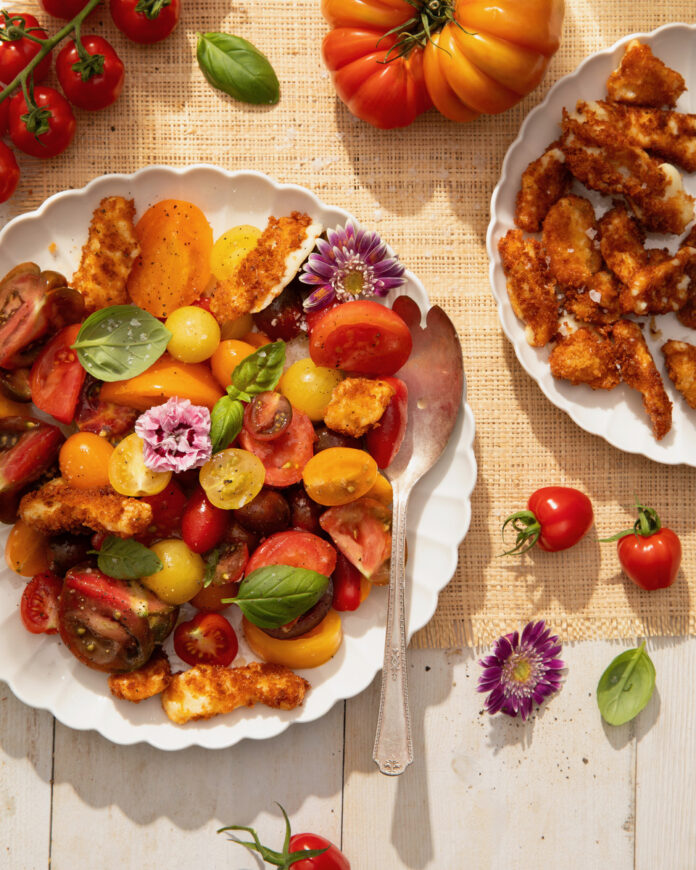
A plate of cherry tomatoes and fried cheese curds, topped with flowers

Nothing completes a salad like adding some fried cheese such as in our Summer Tomato Salad. For this recipe, we combine some of the best seasonal ingredients with Panko-breaded cheese curds. Finish off tomato season with a bang by making this salad that has something for both the health nut and the cheese-lover in you. For another way to pair tomato and cheese, check out our Heirloom Tomato Galette.

Frying Cheese Curds?

You might wonder how one fries cheese, something with a less than fry-worthy texture. But this is actually a fairly common practice in America’s dairy capital, Wisconsin. Using the curds, the moist pieces of curdled milk, means you have a bit more of a shape for something to fry than if you simply stuck a piece of Manchego in an air fryer. (This recipe is a great candidate for using an air fryer, if you have one).

Print
clock clock iconcutlery cutlery iconflag flag iconfolder folder iconinstagram instagram iconpinterest pinterest iconfacebook facebook iconprint print iconsquares squares iconheart heart iconheart solid heart solid icon
A plate of cherry tomatoes and fried cheese curds, topped with flowers

Summer Tomato Salad with Fried Buffalo Cheese Curds


  • Author: Anna Franklin

Description

That’s right, you’re allowed to have a cheesy fried treat every now and then!


Ingredients

Scale
  • 5 cups cherry tomatoes, cut in half lengthwise
  • 1/4 cup red onion, chopped
  • 810 fresh basil leaves, chopped
  • 1 tbsp extra virgin olive oil
  • 1 clove garlic, minced
  • Salt and fresh ground pepper to taste

For the fried buffalo cheese curds:

  • 1/2 cup all-purpose flour
  • 1/4 tsp salt
  • 2 eggs
  • 1 tbsp whole milk
  • 2 cups Panko breadcrumbs
  • 8 oz buffalo ranch cheese curds
  • Vegetable oil for frying


Instructions

  1. Combine flour and salt in a shallow bowl. Stir so the salt is incorporated evenly.
  2. Break eggs into a second shallow bowl with 1 tablespoon of milk. Beat the eggs.
  3. Place breadcrumbs into a third bowl.
  4. Coat the curds first with flour, then the egg, and finally the bread crumbs. It is very important to coat the cheese curds evenly and thoroughly.
  5. Place coated curds on a wire rack resting in a rimmed baking sheet. Freeze the cheese curds for 30 to 60 minutes.
  6. Set up another wire rack on a baking sheet or line a plate with paper towels.
  7. Pour enough oil into a large skillet or a pot to reach about 2 inches of oil.
  8. Heat the oil over medium-high heat. Use a thermometer to make sure the temperature is 375 degrees.
  9. Fry a few curds at a time, carefully drop a few in at a time. Do not crowd the skillet. Fry for about 1 minute, turning them once. Cook until they are golden brown.
  10. Remove the fried cheese curds with a slotted spoon and place them on a clean wire rack over a baking sheet to drain.
  11. For the accompanying summer tomato salad, in a large bowl combine the tomatoes, red onion, basil, olive oil, garlic and season liberally with salt and pepper.
  12. Let the tomato mixture sit room temperature for about 20 minutes to let the flavors blend (the juices from the tomatoes will release and create a kind of dressing). Toss well, serve, and enjoy!

Recipe and Styling by Anna Franklin
Photography by Dave Bryce

Subscribe to TABLE Magazine‘s print edition.

Eating Out for Weeknight Dinners: Are They Dead? Who Killed Them?

0
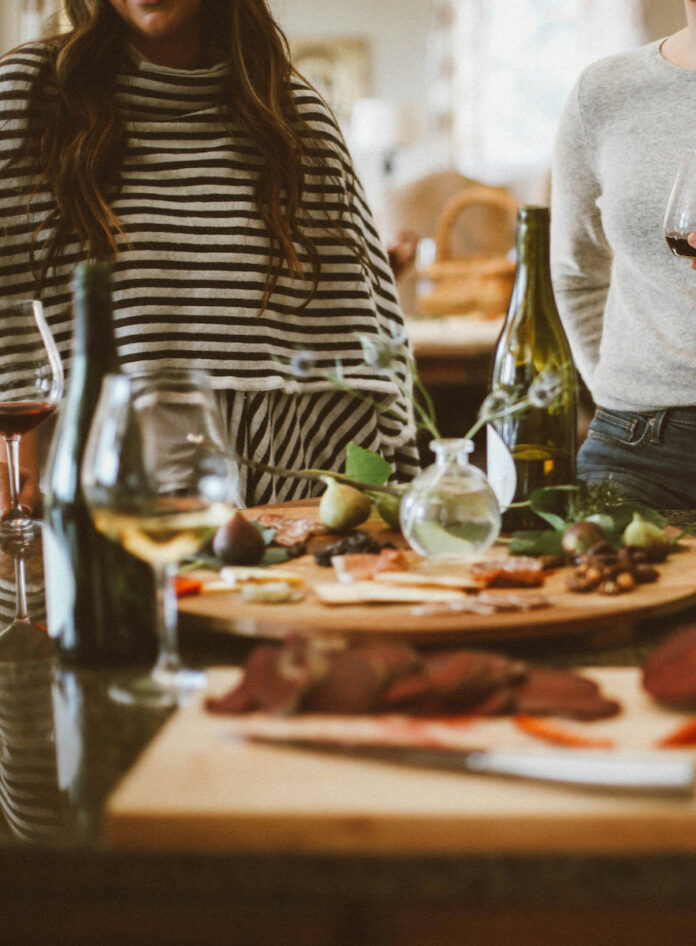
Two women enjoy a weeknight dinner of charcuterie and wine

Is eating out at a restaurant for a weeknight dinner still a thing in this economy?

I recently had a quick breakfast at what I thought was a good restaurant; the kind of place with a two-hour wait on a Sunday morning. With tax and tip, my (very mediocre) eggs, toast and hash browns with a cappuccino came to no less than $25. I probably should have expected that, but still, I walked away not quite feeling like the food was worth the price. I was reminded of just how hard it’s become to have any meal, let alone a weeknight dinner out with family, at an affordable price.

My experience was not a unique one. At some point in the last few years, most of us have had a moment of shock when the bill comes to the table after a meal at a mid-tier restaurant. What you thought was a decently priced dinner ends up costing $50 per person, perhaps. And yet, every time that happens, it is still a little bit shocking.

The fact that menu prices have been on the rise in recent years is no new news. But those heightened prices haven’t been around long enough for us to forget the days when things felt much more reasonable. It’s causing our decision-making around dining out, especially for those family weeknight dinners, to change, and perhaps making us miss out on some of the joys that come with it.

The Truth About Eating Out for a Weeknight Dinner 

Growing up in the 2000s, my family loved to eat out. My parents, brother and I would go out for dinner three or four times a week, excessive as that seems. And not to Olive Garden or McDonalds. We would go to a favorite local sushi restaurant. Or maybe the Thai place up the street, or a new American restaurant we liked for its elevated focus on fresh flavors. It was relatively healthy food, full-service, mid-priced. I remember vividly that dinner for four would usually come to less than $100.

These days, that dinner would probably push $200. And $200 for dinner on a random Wednesday night is suddenly a whole lot harder to justify. That change raises questions about what we lose out on when we substitute the weeknight dinner out for dinner in, and begs for an understanding of why we are needing to make that substitution at all.

The Eating Out Price Jump

As any good journalist does, I needed to see if my observation is backed up by fact, so I compared today’s menus to those from a few years ago at two representative restaurants: firstly, The Porch at Schenley. A mid-range restaurant centrally located in Pittsburgh, a mid-sized American city with a reputation for affordability, The Porch is a perfect example of the kind of place we would go for weeknight dinner after soccer practice. And at first glance, the price jump doesn’t seem extreme.

In 2018, the Porch Burger cost $16. Now, it costs $18. The veggie burger jumped from $9 to $13. The miso cod (now miso Chilean sea bass), from $23 to $28. And the pizza bianca, once $13, is now $16. An average $3 price bump on each dish doesn’t seem like it would make much of a difference. But the $60 for those four dishes now comes to $75. Think of the added tip and tax that comes with the $15 dollar difference, and suddenly it makes sense that restaurants feel more expensive. Because they are.

A couple of miles away in a residential area called Point Breeze, neighborhood bistro Point Brugge is another example of a similarly-tiered restaurant. Their prices rose more than The Porch’s between 2017 and now. Mac n’ cheese went from $9.50 to $15, and the chèvre chaud salad from $13 to $17. If the price difference is about $5 per dish, it is $20 more over four dishes, and you once again have to include tax and tip. Add drinks or appetizers and the divide grows even larger.

So, Why Are Restaurants so Expensive? 

These changes have happened — and been tracked — on a national scale as well. According to the National Restaurant Association, menu prices rose 4.1% between June 2023 and June 2024, outpacing general consumer prices, which rose 3%.

Now, I have the consumer’s point of view covered on this weeknight dinner debacle. Since it would not be fair if we didn’t hear from the other side of the coin, I spoke to Ben Fileccia, Senior Vice President of Strategy and Engagement at the Pennsylvania Restaurant and Lodging Association.

Fileccia has a two-pronged explanation for the price hike; even though many of us restaurant-goers whinge at seemingly overpriced food, it’s not as if they have suddenly gotten greedy and started pricing things higher just for the fun of it. Restaurants have always operated with a profit margin between 2 and 7%, Fileccia said. That hasn’t changed.

Inflation across most food categories has bitten into that margin. And restaurants have to deal with more than just the price of groceries: labor and utilities, too, cost more than ever before, plus food delivery apps can charge exorbitant fees.

But Fileccia says there is something else going on as well: restaurants are playing catch-up after keeping prices steady for many years pre-COVID.

“Probably for 20 years, salmon was on everybody’s menu for $18,” Fileccia said. “It was just the standard; salmon and chicken always around 18 bucks. And meanwhile, many restaurants were fearful of raising their prices even a little bit because of competition.”

The COVID Culprit 

When COVID hit, as a pricing shock and a supply shock and all the other kinds of shocks you can think of, it was an opportunity for restaurants to finally raise those prices to what they “should” have been if they were to track with inflation.

So, what feels to consumers like a random and frustrating price hike is for restaurants a way to get back to the profit margin they should be able to operate with. These decisions are never random, Fileccia remind us.

“If [owners and managers] raise [prices] too high, it’s going to discourage guests from coming to dine there,” Fileccia said. “And if they don’t raise it enough, their profit margins will drop below something that’s going to keep them in business. … So it’s this real balancing act.”

Ramifications Abound

The logic of necessity, however, doesn’t change the fact that for many consumers, restaurants simply feel overpriced, and they often act accordingly.

Every time we choose to go out for dinner, it is a trade-off: how much are we willing to pay for the convenience of not doing dishes, thinking about what to make, and buying groceries? How much cheaper would it be to dine in?

The answer to that question — the price gap between eating in and dining out — has been growing. Grocery prices rose 1.1% in the same time period that restaurant prices rose 4.1%, which forces consumers to change their trade-off calculus.

“Restaurants are where you celebrate birthdays and engagements and celebrate life, and come together as a family and come together as friends.” 

The $100 weeknight dinners three or four times a week that we had when I was growing up were certainly more expensive than eating at home would have been, but that decision was also a very purposeful one. Many of my friends with two working parents would have babysitters that would pick them up from school and make them dinner. My parents prioritized spending that money on dinners out, which allowed us to eat together every night as they didn’t have to spend time cooking — privileged as it is that it was even a choice they had the option to make. Some of my most formative memories are from those weeknight dinners out.

Fileccia spoke about the enduring place of restaurants as a venue for special occasions.

“Restaurants are where you celebrate birthdays and engagements and celebrate life, and come together as a family and come together as friends,” he said. “It’s always such a different and unique situation than dining at home.”

He’s entirely right. People will continue to go to out for special occasions. That, however, is not the ethos of weeknight dinners. Weeknight dinners are the laid-back, no-real-reason trips to a restaurant that might just be the casualty of menu price inflation.

Eating Out for Weeknight Dinner Persists… But With a Greater Cost

My mom, brother and I recently went out for a weeknight dinner. I had soup. My mom had salad. My brother had the smallest piece of salmon I’ve seen in my life — comically, on a large plate. We got one appetizer and a glass of wine. The food was all fine, but not great. The bill came, and the number printed on it was three digits.

My mom’s analysis? “Food’s…gotten smaller, less tasty and more overpriced.”

Inflation is hard on everyone. It’s not restaurants’ fault. But it’s also true that we know all of that, and still will not, for the foreseeable future, be going back to this once-common weeknight dinner spot.

“Fine” food would be fine for $20 each. But if dinner is going to cost $40 per person, the food had better be incredible. And if that’s not the case, we will probably be choosing to make dinner at home instead.

Story by Mitra Nourbahksh / Photo by Kelsey Chance

A footer photo with a black background and subscribe info and button

Subscribe to TABLE Magazine‘s print edition.
Peach Donuts…With Donut Peaches!

0
A set of peach donuts on a white background

Keep peach season (May through the end of September) going with these Peach Donuts… made with Donut Peaches. Whether you’re a donut aficionado or just in need of a fun and delicious treat, our recipe will have you craving more. We even use box cake mix so that your donut-making journey is a breeze no matter your baking expertise. Embrace the peachy perfection with a treat that’s as fun to make as it is to eat. 

What Are Donut Peaches?

A smaller, cuter alternative to your traditional peach, they’re called this because they have a round, flat shape with a “thumbprint”-esque middle. These fruits are the descendants of a wild peach in China called pan tao from over 150 years ago. Scientists made a hybrid of pan tao to last in long frosts which produced the bigger, sweeter type. This particular variety is low in acid and high in sugar, making them perfect for when you’re craving a sweet recipe. 

Print
clock clock iconcutlery cutlery iconflag flag iconfolder folder iconinstagram instagram iconpinterest pinterest iconfacebook facebook iconprint print iconsquares squares iconheart heart iconheart solid heart solid icon
A set of peach donuts on a white background

Peach Donuts…With Donut Peaches!


  • Author: Anna Franklin

Description

Give a little love to a peach variety you probably don’t have very often!


Ingredients

Scale
  • 1 box yellow or white cake mix
  • 2 large egg
  • ¼ cup vegetable oil
  • ¾ cup milk
  • 4 donut peaches, diced
  • 1 tbsp butter

For the glaze:

  • 1 tbsp unsalted butter melted
  • 1 ½ cups powdered sugar
  • 3 tbsp milk


Instructions

  1. Preheat oven to 350° F. Spray donut pan with non-stick cooking spray, set aside.
  2. In a large skillet, cook diced peaches in 1 tablespoon of butter until they are soft, set aside and cool.
  3. Whisk together dry cake mix, egg, vegetable oil, and water until combined.
  4. Pour batter into a large, gallon sized plastic bag and snip off small portion of one corner. Squeeze donut mix into prepared donut pan until cups are about 1/2 full. Top the batter of each baked good with some of the cooked peaches.
  5. Bake at 350° F for 12-14 minutes. Let donuts cool in pan for about 5-10 minutes then remove and let cool completely on wire rack.
  6. In a medium sized bowl, whisk together butter, powdered sugar, and milk until just combined.
  7. Dip the cooled donut about 1/2 way into the glaze then lift and turn sideways to let extra run off. Place back on wire cooling rack.
  8. Repeat with remaining donuts. Top with optional sprinkles and enjoy!

Other Donut Recipes to Try at Home

Recipe and Styling by Anna Franklin
Photography by Dave Bryce

Subscribe to TABLE Magazine‘s print edition.
Romanesco Recipe with Chorizo and Tomatillo Salsa

0
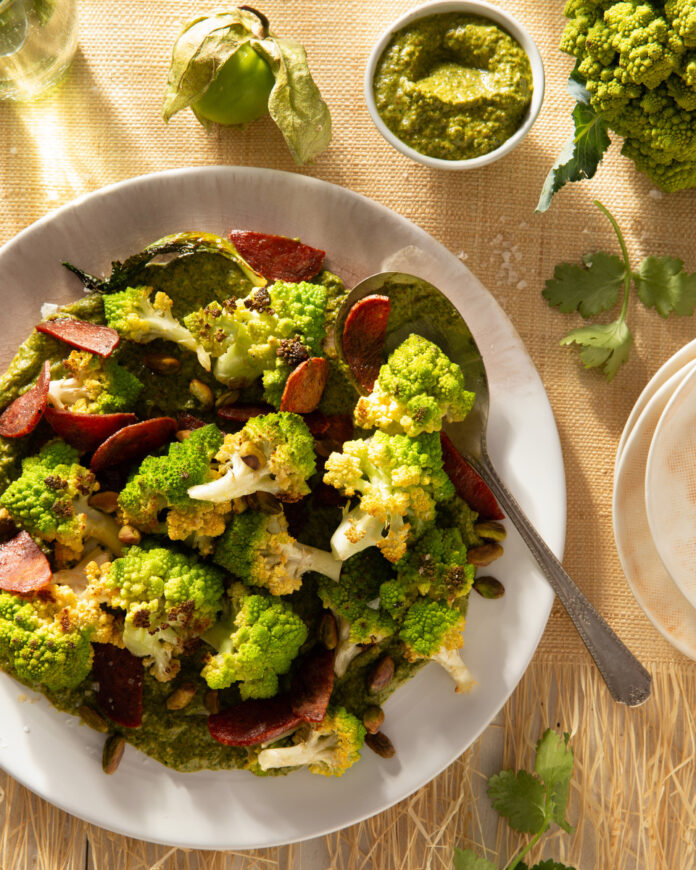
A plate of romanesco and chorizo on a tan table surrounded by spices

This irresistible Romanesco Recipe with Chorizo and Tomatillo Sauce makes for a great weeknight dinner or a winning side. Maybe you bought some Romanesco, enticed by its unique appearance and exotic name, but now find yourself wondering “What in the world do I actually do with this to make it taste good?” TABLE has your back. We’ve come up with a romanesco recipe featuring some Latin ingredients for a unique meal that will have you falling in love with tiny cauliflower.

What is Romanesco? 

The most common misconception about romanesco is that it’s a form of broccoli. It’s actually a very small cauliflower. What makes it special is its appearance. It naturally has a fractal-like pattern in its florets. Its nutritional profile is similar to that of broccoli, but it’s also a great source of Vitamin C and K. Consider swapping out plain old broccoli and cauliflower for an intriguing upgrade in your vegetable dishes’ presentation!

Romanesco with Chorizo Sauté and Tomatillo Salsa Recipe

Romanesco with Chorizo Sauté and Tomatillo Salsa Ingredients

  • 1 head Romanesco, cut into bite-sized pieces
  • 1 lb Spanish Style Chorizo, thinly sliced
  • 1 cup tomatillo salsa
  • 1 tbsp olive oil

For the Tomatillo Salsa:

  • 1 lb tomatillos, husked and rinsed
  • 2 jalapeños
  • ½ cup pepitas
  • ¼ cup chopped onion 
  • 1 garlic clove, minced
  • ½ cup coarsely chopped cilantro 
  • 1 cup salsa (We used Down The Hatch Salsa from Clarion River Organics)

Romanesco and Salsa Instructions

  1. To begin to make the salsa, heat broiler, positioning a rack at the highest setting under the heat.
  2. Cover a baking sheet with foil and place tomatillos on top, stem side down. Broil 2 to 5 minutes, until charred on one side.
  3. Turn tomatillos over and broil 2 to 5 minutes longer, until charred. Transfer tomatillos to a blender, tipping in any juice that may have accumulated on the foil.
  4. Add chiles, onions, garlic, cilantro, pepitas and 1 cup Down The Hatch Salsa to blender and blend to a coarse purée. Taste and adjust salt. Set aside for at least 30 minutes before serving, to allow the flavors to develop.
  5. To cook the romanesco, in a large  cast iron skillet add 1 tablespoon olive oil and sauté romanesco until tender and slightly browned.
  6. Add in sliced chorizo and continue to sauté until slightly crispy. Serve with tomatillo salsa and garnish with pepitas. 

Recipe and Styling by Anna Franklin / Photography by Dave Bryce

A footer photo with a black background and subscribe info and button

Subscribe to TABLE Magazine‘s print edition.
Weekday Breakfast Around the World

0
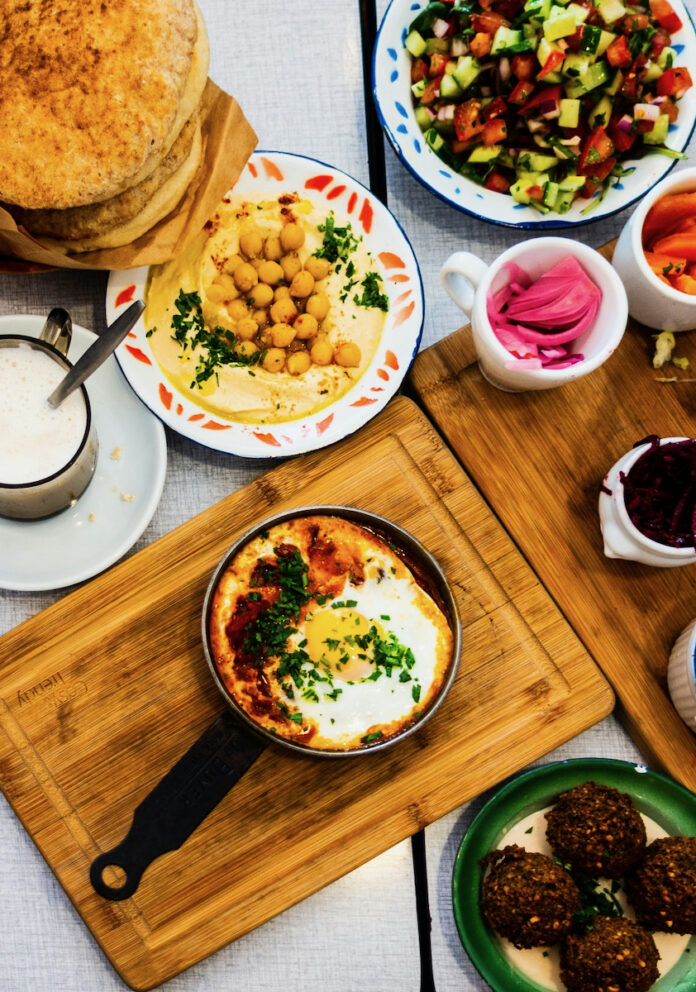
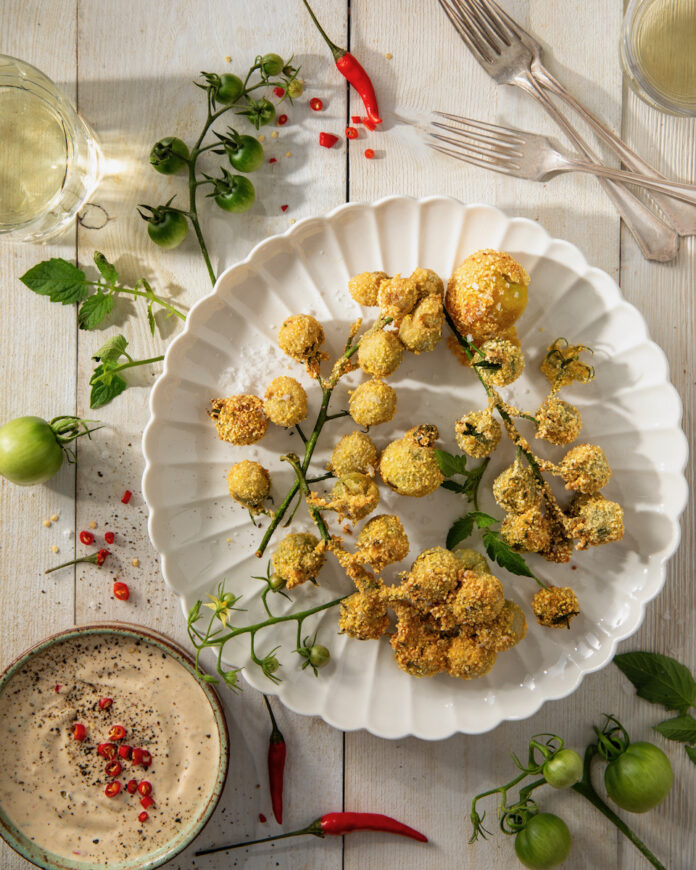
A weekday breakfast table spread of Middle Eastern plates

As back-to-school season draws near and the lazy breakfasts of summer begin to seem like a distant memory, draw inspiration from the morning repast of cultures around the world. This isn’t the elaborate weekend brunch. We chronicle here the weekday breakfast options of the world, because we may have our differences, but rushing mornings are a constant for many. Some of these breakfasts are more involved than others, but similar themes emerge: some kind of bread with some kind of topping, eggs of all variations, and porridge options galore.

A Tour of Breakfast Around the World

Bread Toppings: Denmark, Australia, and Norway

In the States we may be most likely to have our Wonder bread sliced, toasted, and buttered for weekday breakfast. Danish Smørrebrød, however, is a feast of toppings. A thickly buttered slice of seedy rye bread plays host to a pile of smoked fish, herbs and seasonal vegetables; smoked salmon with Crème Fraîche and lemon, perhaps. Or, sliced cucumber, hard-boiled egg and radish. In Copenhagen, I had that same rustic bread spread with butter and dipped in the golden crevasse of a soft-boiled egg, sprinkled with flaky sea salt.

The Australians top their white bread with butter and the mysterious Vegemite, creamy smashed avocado, sliced tomatoes and maybe a poached egg, served with a glass of Milo. In Spain, the warm, garlic-rubbed ciabatta plays host to salty grated tomato, glistening in a drizzle of spicy olive oil.

Norway prescribes whole grain bread, buttered with a thick slice of gouda or a smear of liver paté, alongside a glass of refrigerator-cold whole milk. In the Netherlands, chocolate sprinkles replaces gouda. (Be careful about revealing this one to sugar-fiending kids).

Toast: Great Britain, Singapore, and Morocco 

The Brits, when not having a full English breakfast, toast crumpets and smear them with salty, half melted butter and a drizzle of honey, which drips through the holes without reaching the plate below. In Iran, salty feta cheese pairs with sweet, sesame-flavored Halva, walnuts and a sprig of mint in a pillow of pita bread.

Jam and butter variations abound. In Singapore, golden-brown toast is spread with a rich, velvety coconut Kaya jam, made richer with pats of creamy butter and often served with soft-boiled eggs. Or, as in Turkey, top pita bread with sweet and sour cherry jam and a thick cut of salty feta cheese. Moroccans dip bread in an almond, argan oil and honey mixture or top it with goat cheese and jam, always served with a side of mint tea.

Egg-cellent Ideas: Venezuela, Turkey, Finland, Japan 

Eggs for a weekday breakfast is no new concept. But topping a soft-boiled egg with white pepper and sweet soy sauce, as they do in Singapore, probably is. The Japanese, on the other hand, set a glowing, raw yolk on steaming rice, which cooks slightly as its mixed. A drop of soy sauce and the addition of strongly fermented soybeans is served alongside miso soup, meant to be slurped right out of the bowl.

Finnish Munavoi, meanwhile, calls for the boiled eggs to be smashed, salted, mixed with butter and spread on toast in a quasi-egg sandwich.

Eggs cooked with tomatoes are a theme across cultures. For many Middle Eastern countries, that means poaching them in a thick, flavorful tomato sauce to make Shakshuka. Turkey scrambles eggs alongside tomatoes and bell peppers: Menemen. Venezuela’s version of the scramble is Perico (meaning parakeet). It is the same thing, minus the Turkish spices, and is served alongside arepas. Spanish Piperade adds a sharp shake of paprika to the mix.

Double the Egg Fun: Austria, France, and Thailand 

Austrian scrambled eggs add shallots, ham and the nutty flavor of toasted pumpkin seeds to a weekday breakfast. The Ashkenazi Passover classic matzo brei calls for the addition of matzo, crisped in butter and made sweet or savory to taste. Akuri, a Parsi scrambled egg dish, features the unmissable flavors of turmeric, cumin, garlic, cilantro and green chilies.

The French omelette is a joy of runny egg in a fluffy, perfectly salted exterior with a sprinkle of herbs. In Thailand, a tablespoon of cornstarch or rice flour makes their version of an omelette, Khai Jiao. This technique creates crispy edges. The additions of fish sauce and lime juice add delicious savory touches.

Eggs need not only be a stovetop endeavor for weekday breakfast. Shirred eggs are the almost soufflé-like, gently-cooked French specialty, baked with cream and topped with a sprinkle of chives. They are served alongside warm, crusty baguette used to mop up the pudding-like mixture. Or, get creative with toppings; add ribbons of creamy Boursin cheese or spinach and mushrooms.

Cereal: South Africa, Canada, Bulgaria, Sweden, Greece, and Taiwan 

And the porridge options abound for weekday breakfast. Classic Southern grits become the finer-milled, airer South African “miellepap”. They top it with warm milk and a sprinkle of brown sugar.

In Kenya, they serve Uji porridge made of sorghum or millet, a thick mixture. The Russians have aggressively savory buckwheat porridge, a taste that is delicious once acquired.

Moroccan Hrbil, which people often eat during Eid, is a wheat berry porridge topped with olive oil, honey and butter. A blend of all the grains, Canadians top Red River cereal with a drizzle of real maple syrup.

In Bulgarian Popara, chunks of yesterday’s bread come back to life with warm tea or milk, along with with fresh, farmer-style cheese, butter and sugar. For a syrniki, Ukrainians cook fresh farmer’s cheese into a pancake batter. Then, it goes into hot oil until it’s crispy on the outside and pillowy soft on the inside.

The Swedes top yogurt with nutty, oat-based muesli that bursts with shocks of dried fruit, while the Greeks add crunchy nuts and a drizzle of local honey to decadently thick yogurt. Taiwan serves warm, silky soy with a hint of tangy vinegar and served with lightly fried You Tiao.

Some of these weekday breakfast ideas may seem familiar. Some may be completely out of your comfort zone. But most of the ingredients are not hard to find, and the flavor combinations promise to impress. So, next time you’re at a loss for what to have for breakfast, refer back to this journey. See where it takes you. Maybe even make your own “something on toast” concoction.

Story by Mitra Nourbakhsh / Photo by Hari Kundanamar

A footer photo with a black background and subscribe info and button

Subscribe to TABLE Magazine‘s print edition.