Home Blog Page 112

Cookie-Jar Sugar Cookies

0
A close-up of rosemary decorated sugar cookies with green icing and powdered sugar.

Everyone needs to have a sugar cookie baking experience. The fun of mixing and rolling out the dough, selecting the perfect cookie cutter, and decorating them afterwards, all while getting flour everywhere. It’s a core childhood memory for many of us. Plus, the simple flavor of a sugar cookie is one almost no one can deny. They’re sugary sweet with a crunchy, crisp finish. These Cookie-Jar Sugar Cookies are those delectable bites you remember from your youth with a hint of orange and vanilla. Be sure to involve little hands in this process for family memory-making. Starting kids in baking early can lead them to life long passions and allows for recipes to pass down through generations.

An older pair of hands rolls out cookie dough while young hands play with a snowflake cookie cutter.

What is Shortening?

Shortening is a solid fat that bakers use to tenderize and add a rich flavor to different desserts. It is typically made from a blend of vegetable oils and hydrogenated fats. Shortening has a high melting point, which helps to create that flaky and tender texture in pastries and cookies that we all love. It also helps to prevent baked goods from becoming tough or dry.

Print
clock clock iconcutlery cutlery iconflag flag iconfolder folder iconinstagram instagram iconpinterest pinterest iconfacebook facebook iconprint print iconsquares squares iconheart heart iconheart solid heart solid icon
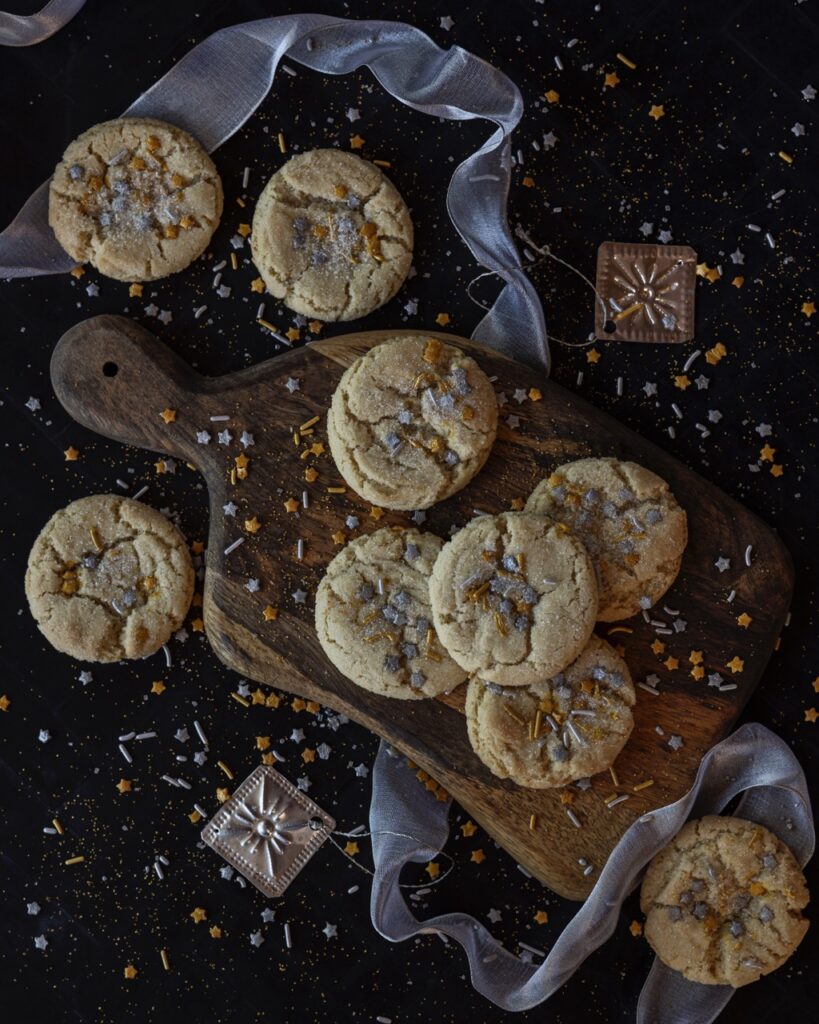
Rosemary shaped and decorated sugar cookies sit on a brown table sprinkled with powdered sugar.

Cookie-Jar Sugar Cookies


  • Author: Leah Hohman, Adapted from Better Homes and Gardens
  • Yield: 24 cookies 1x

Description

A simple sugar cookie is just what you need during the holidays.


Ingredients

Scale
  • 2/3 cup shortening
  • ¾ cup sugar
  • 1 egg
  • ½ tsp vanilla
  • ½ tsp grated orange peel
  • 2 cups sifted enriched flour
  • 1 ½ tsp baking powder
  • ¼ tsp salt
  • 4 tsp milk


Instructions

  1. Sift flour, baking powder and salt into a bowl. Stir to combine.
  2. In a large bowl, use a mixer to cream shortening and sugar.
  3. Add egg and beat until fluffy.
  4. Add vanilla and grated orange peel. Beat until blended.
  5. Add dry ingredients and milk. Beat until just combined.
  6. Divide dough in half. Wrap tightly and refrigerate for 1 hour.
  7. Preheat oven to 375 degrees.
  8. Remove one portion of dough from fridge and roll out to 1/8 thick.
  9. Cut into shapes.
  10. Place on greased or Silpat-covered cookie sheets.
  11. Sprinkle lightly with sugar.
  12. Bake for 12 minutes or until edges start to turn golden.
  13. Repeat with second portion of dough.

Recipe by Leah Hohman, Adapted from Better Homes and Gardens / Photography by Katie Long

Subscribe to TABLE‘s print edition

Gingerbread Cookies

0
A pile of gingerbread cookies decorated with white icing and red bulb sprinles.

Indulge in the warm and comforting aroma of freshly baked gingerbread cookies. These traditional treats are perfect for the holiday season, with their spicy flavor and festive shapes. Whether you prefer traditional gingerbread men or creative designs, these cookies are sure to delight your senses and bring a touch of holiday cheer to your home. You could even bake the dough in larger sheets to make your own gingerbread house from scratch. Just don’t forget the icing and gumdrops for decoration!

Two adults help a young boy roll out gingerbread dough with a rolling pin on a brown table coated in flour.

How to Bake Walls for a Gingerbread House

When baking gingerbread house walls (or even a roof), it’s essential to use a sturdy cookie cutter and to roll out the dough to a consistent thickness. You’ll want your walls to be about a 1/4-inch thick when rolling them out. When baking, cook until the edges are lightly browned, ensuring they are firm enough to hold their shape. Allow the walls to cool completely before assembling the gingerbread house to prevent them from crumbling. For extra support you can also consider using a toothpick or slender dowel rod to reinforce the corners.

Animal shaped gingerbread cookies decorated with powdered sugar sit on a brown table coated in powdered sugar.

Print
clock clock iconcutlery cutlery iconflag flag iconfolder folder iconinstagram instagram iconpinterest pinterest iconfacebook facebook iconprint print iconsquares squares iconheart heart iconheart solid heart solid icon
A pile of gingerbread cookies decorated with white icing and red bulb sprinles.

Gingerbread Cookies


  • Author: Leah Hohman, Adapted from Better Homes and Gardens
  • Yield: 30 cookies 1x

Description

Let your imagination run wild while shaping and decorating these Gingerbread Cookies.


Ingredients

Scale
  • ½ cup shortening
  • ½ cup sugar
  • ½ cup light molasses
  • ½ tbsp vinegar
  • 1 beaten egg
  • 3 cups sifted enriched flour
  • ½ tsp baking soda
  • ½ tsp cinnamon
  • ½ tsp ginger
  • ¼ tsp salt


Instructions

  1. In a bowl, sift together flour, baking soda, cinnamon, ginger and salt.
  2. In a saucepan, bring shortening, sugar, molasses, vinegar to a boil. Let cool.
  3. When cool, beat in one egg.
  4. Stir in dry ingredients and mix well. Turn dough out into airtight container and chill until firm.
  5. Preheat oven to 375 degrees.
  6. Roll out to desired thickness.
  7. Use the cookie cutter of your choice to create circles or other shapes.
  8. Place on greased or Silpat-covered cookie sheets.
  9. Bake 12 to 15 minutes.

Recipe by Leah Hohman, Adapted from Better Homes and Gardens / Photography by Katie Long

Subscribe to TABLE‘s print edition

French Meringue Cookies

0
A plate full of French meringue cookies in snowflake shapes and topped with cherries amongst a table full of cookies.

Create delicate French Meringue Cookies in the shape of festive snowflakes. These light and airy treats are a perfect combination of crisp meringue and a touch of vanilla or almond extract. The classic French technique of whipping egg whites with sugar until stiff peaks form creates a melt-in-your-mouth texture. While we opt for the snowflake shape, note that you can pipe the meringue into anything you prefer. To stick with the holiday theming try making ornaments, candy canes, and other picturesque ideas.

Snowflake meringue cookies with cherries on top sit in front of a window and beside a cup of tea.

Why Do You Have to Let Meringue Cookies Cool for So Long?

Meringue cookies require a lengthy cooling process (usually around 1 to 2 hours) to ensure a crisp and airy texture. After baking, the meringue will appear set, but it is still quite soft and moist inside. Allowing the cookies to cool in the oven with the door slightly ajar helps to gradually release the moisture and dry the cookies out. This prevents the meringue from becoming chewy or sticky instead of crunchy. Without this step you’ll miss out on the best part of our French Meringue Cookies, the texture.

Print
clock clock iconcutlery cutlery iconflag flag iconfolder folder iconinstagram instagram iconpinterest pinterest iconfacebook facebook iconprint print iconsquares squares iconheart heart iconheart solid heart solid icon
A pile of French meringue cookies sit on a brown table dusted in powdered sugar and topped with cherries.

French Meringue Cookies


  • Author: Leah Hohman, Adapted from Baker Street Society

Description

These light and airy cookies decorate the holiday table beautifully.


Ingredients

Scale
  • 3 large egg whites, room temp
  • 1/4 tsp cream of tartar
  • 200 g granulated sugar
  • 1/8 tsp salt
  • 1/2 tsp vanilla or 1/4 tsp almond extract


Instructions

  1. In a stand mixer, whip egg whites and cream of tartar in until foamy but not firm.
  2. Add sugar in six portions, waiting 15-20 seconds between each addition.
  3. Mix until stiff peaks form, about 5 minutes.
  4. Add vanilla or almond extract and salt and whip for just a few seconds more.
  5. Preheat oven to 200 degrees.
  6. Cut parchment paper to line cookie sheets.
  7. Using a star shaped cookie cutter, lightly trace stars into the parchment paper.
  8. Pipe meringues using the star shapes as a guide.
  9. Bake for 1 hour.
  10. Turn oven off, and allow meringues to cool in the oven for 1-2 more hours.
  11. Remove and let cool completely.
  12. Store in an airtight container for up to one week.

Recipe by Leah Hohman, Adapted from Baker Street Society / Photography by Katie Long

Subscribe to TABLE‘s print edition

White Christmas Coconut Pie

0
A pie with a creamy white coconut filling and toasted coconut top.

Bring a little of the winter season inside with the White Christmas Coconut Pie. This twist on a classic dessert features a flaky pie crust and a luscious coconut filling with a light and airy meringue. The combination of this creamy center along with a homemade whipped cream and toasted coconut on top creates a truly irresistible treat. Imagine eating a slice of this pie as you sit beside the fire and watch the snow fall down on Christmas Eve.

A pie with a white coconut filling and toasted coconut on top sits underneath a window that has a candle in it.

Is Meringue Hard to Make?

This pie recipe uses a homemade meringue recipe that folds into the coconut filling. Normally, meringue is thought of as hard to make. But, if you have patience and keep an eye on your mixing, it’ll turn out perfectly. For our meringue we use egg whites, cream of tartar, and sugar. These ingredients help speed up the process and create stiffer peaks that hold together better. Another tip we suggest is to start whipping the ingredients on low to gradually incorporate air before speeding up. With all these tips, you’ll be making a meringue worthy of praise in no time.

Print
clock clock iconcutlery cutlery iconflag flag iconfolder folder iconinstagram instagram iconpinterest pinterest iconfacebook facebook iconprint print iconsquares squares iconheart heart iconheart solid heart solid icon
A pie with a creamy white coconut filling and toasted coconut top.

White Christmas Coconut Pie


  • Author: The Gooderham Family Kitchen

Description

White as winter snow and packed with a coconut filling.


Ingredients

Scale
  • 1 tbsp gelatin
  • ¼ cup cold water
  • ½ cup sugar,
  • 4 tbsp all-purpose Flour
  • ½ tsp salt
  • 1 ½ cups milk
  • ¾ tsp vanilla
  • ¼ tsp almond extract
  • ½ cup whipping cream, whipped until stiff
  • 3 egg whites
  • ¼ tsp cream of tartar
  • ½ cup sugar
  • 1 cup moist shredded coconut, more for toasting
  • Store-bought pie crust


Instructions

For the Pastry Shell:

  1. Choose your favorite store-bought pie crust. Bake according to instructions and let cool.

For the Filling:

  1. In a clean bowl, whip together egg whites, cream of tartar, and sugar until stiff peaks form. Set aside in cool place.
  2. In another clean mixing bowl, whip cream until stiff and carefully fold into mixture. Refrigerate.
  3. Toast a few tablespoons of shredded coconut and set aside to cool.
  4. Soften 1 tbsp gelatin in ¼ cup cold water
  5. In a saucepan, stir together sugar, flour, salt, and milk.
  6. Stir over low heat until it boils for one minute.
  7. Remove from heat and add softened gelatin. Stir until dissolved.
  8. Let cool. When partially set, beat with a rotary beater until smooth.
  9. Add vanilla and almond extract and beat until just combined.
  10. Fold in 1 cup of moist shredded coconut.
  11. Carefully fold whipped cream into mixture.
  12. Carefully fold meringue into mixture.

To Assemble:

  1. Spoon mixture into pie shell.
  2. Chill about two hours until set and serve cold.
  3. Garnish with toasted coconut.

Recipe from the Gooderham Family Kitchen / Photography by Katie Long

Subscribe to TABLE‘s print edition

Must-See Shows at New York Museums This Fall

0
Three Alvin Ailey dancers in front of a work of art at the Whitney, a New York museum
Photo courtesy of the Whitney Museum of American Art

If you’re planning to be in Manhattan this autumn, there are several blockbuster shows at New York museums you should put on your list. And—even if you weren’t planning a trip—perhaps you’d like to reconsider!

Must-See Museum Shows in New York This Fall

Elizabeth Catlett: A Black Revolutionary Artist and All That It Implies / Brooklyn Museum 

Until January 19, 2025

The more than 200 works in this landmark show serves to celebrate the Black woman artist Elizabeth Catlett (1915-2012), who has previously not received the attention she deserves. Both prolific as an artist and deeply political, Catlett shined a light on racial violence and class inequality, often using her artworks as a record of and mouthpiece for her activism. Although she was born in the States, she moved to Mexico in the 40s, and used her work to show the world the plight of Black and Mexican women.

Steve McQueen / Dia Chelsea

Until January, 2025

Filmmaker Steve McQueen (12 Years a Slave, Occupied City, and Blitz) does more than simply make movies. He has, for over 30 years, explored the many possibilities of film and what it can achieve. The common theme is power relations, and he looks at what it means to live within and outside of (or even opposed to) hierarchical structures. The show at Dia Chelsea brings together three works about the African diaspora, including Sunshine State, which involves the artist’s father and an examination of racial stereotypes and identity.

Edges of Ailey / Whitney Museum of American Art

Until February 9, 2025

Choreographer Alvin Ailey’s full legacy—his life, his choreography, his influences—gets an extravagant treatment. The exhibition includes archival materials, artwork, live music and dance, photographs, and more. There is an immersive component on the fifth floor, and a series of performances in the theatre on the third floor. Rarely-displayed items include notebooks, performance footage, drawings, poems, programs, and interviews. (A montage of Ailey’s dances will also be shown on loop.) Artists whose work is included in the exhibition include Jean-Michel Basquiat, Faith Ringgold, Kara Walker, and Rashid Johnson.

Bella da Costa Greene: A Librarian’s Legacy / The Morgan Library

October 25, 2024-May 4, 2025

The Morgan Library and Museum, one of New York’s most fascinating repositories of historical artifacts, turns 100 in 2024. As part of its celebration, it is presenting an exhibition celebrating its first director, Belle da Costa Greene, who helped bring together the uncommonly great collection of books and manuscripts, first for the private library of the namesake (J. Pierpont Morgan), and transformed his holdings into a public institution in 1924. The exhibition follows Greene’s own story and her career, illustrated by rare books, medieval manuscripts, and related ephemera.

Story by Stephen Treffinger / Photo courtesy of the Whitney Museum of American Art

Subscribe to TABLE Magazine’s print edition.

Kimchi Fried Rice

0
Kimchi Fried Rice served in a round brown bowl alongside forks and spoons

When we asked for a Meatless Monday recipe to share with TABLE readers, our friends at Nak Won Garden, Yang-Suk Biondi and Christina Biondi, answered with this wonderful Kimchi Fried Rice. Their answer came with a proviso. “The great thing about this recipe is that you can add any meat that is leftover in your fridge. Bacon, ham or spam (yes spam) or generally any pork product are great additions to this dish.” But…it’s good with only veggies as described below, too!

Some Tips for Making Kimchi Fried Rice

You should be sure the kimchi is well-fermented so its flavor doesn’t get lost in the other ingredients. If you’re up for an extra challenge, making your own kimchi and fermenting it to your desired flavor is easier than you might think! But, if you are one of the people that rolls your eyes when you see what you think is an easy recipe adds five days for fermentation to the cook time, no sweat. Fried rice is a tried and true easy weeknight dinner, that’s also great because you can use leftovers for it. Freshly cooked rice can be too sticky. Day-old rice, which has dried out a bit, works best for frying.

Print
clock clock iconcutlery cutlery iconflag flag iconfolder folder iconinstagram instagram iconpinterest pinterest iconfacebook facebook iconprint print iconsquares squares iconheart heart iconheart solid heart solid icon
Kimchi Fried Rice served in a round brown bowl alongside forks and spoons

Kimchi Fried Rice


  • Author: Nak Won Garden

Description

An easy, fun Meatless Monday dish.


Ingredients

Scale
  • 2 cups of fermented kimchi with its juices, finely chopped
  • Vegetable bullion (or beef or chicken, if you choose)
  • 2 cloves of garlic puréed or finely chopped
  • ½ tsp of soy
  • 1 tsp of toasted sesame oil
  • 2 eggs fried or scrambled depending on preference
  • ¼ cup onion finely diced
  • ¼ cup of any veggies in your fridge finely diced
  • Scallion and toasted sesame for garnish to taste


Instructions

  1. In a non-stick skillet add kimchi, veggies,  onion and garlic on medium heat sauté until all ingredients are fragrant and onions are translucent.
  2. Add rice and seasonings (bullion, soy and sesame oil) and stir constantly with a spatula to break up the rice coat each grain with seasoning, and add salt to taste if needed.
  3. Create a well-add scrambled egg if desired and stir constantly until it is incorporated.
  4. Serve hot and add a fried egg if desired.
  5. Garnish sesame seeds and scallions to taste

Photography by Dave Bryce
Styling by Rafe Vencio
Napkins by Kim Seybert
Glasses by Esteban Prieto
Bowl by Alisher Rakhimov

Subscribe to TABLE Magazine’s print edition.

Maqluba (Makloubeh) with Lamb Meatballs

0
Maqluba (Makloubeh) with Lamb Meatballs served in a skillet, two plates, a fork & a spoon, and some herbs

Winter fare in the Middle East, like this maqluba, leans into meats infused with a rich array of spices. This recipe for Middle Eastern-style meatballs served with rice will delight your taste buds with the interplay of lamb, garlic, cinnamon, cardamom, and more. The dish is cooked in layers for a warm, earthy, comforting experience. Garnishes of yogurt, lime and cilantro put a bit of summer on your tongue, even as the deeply cooked spices warm your winter-weary bones. 

About Maqluba

The word maqluba means “upside down” in Arabic because of the technique of flipping the dish upside down onto a serving platter after cooking. This hearty dish is most popular in Palestine, Syria, Jordan, Lebanon, and Iraq. The very first time maqluba appeared was all the way back in the 13th century, in a cookbook entitled The Book of Dishes by a cookbook writer during the Abbasid Caliphate. The technique of the original recipe is still around today, and by making it, you make a piece of culinary history!

Print
clock clock iconcutlery cutlery iconflag flag iconfolder folder iconinstagram instagram iconpinterest pinterest iconfacebook facebook iconprint print iconsquares squares iconheart heart iconheart solid heart solid icon
Maqluba (Makloubeh) with Lamb Meatballs served in a skillet, two plates, a fork & a spoon, and some herbs

Maqluba (Makloubeh) with Lamb Meatballs


  • Author: Rafe Vencio

Description

A savory delicacy.


Ingredients

Scale

For the Lamb Meatballs:

  • 2 lb ground lamb
  • 1 whole egg, beaten
  • 1/4 cup panko or any breadcrumbs
  • 2 tbsp lamb seasoning or shawarma seasoning
  • 1 tsp kosher salt
  • Pinch fresh black pepper

For the Maqluba:

  • 34 tbsp oil + more for pan-frying
  • 1 medium eggplant, peeled and sliced into ½-inch half-mons
  • 1 small bag baby yellow potatoes peeled or unpeeled cut in half
  • 4 cloves fresh garlic, minced
  • 1 small shallot, minced
  • 1 tsp turmeric powder
  • 4 bay leaves, fresh or dried
  • 4 cinnamon sticks
  • 1 tbsp whole green cardamom pods
  • 2 cups basmati rice
  • 1 jar roasted red peppers, slice ½-inch
  • 3 cups vegetable or meat stock
  • 1/2 cup slivered almonds, toasted
  • Sour cream or yogurt, cilantro, and fresh lime wedges for garnish


Instructions

  1. Preheat oven to 375  degrees.
  2. Prepare the meatballs ahead by combining all ingredients and divide evenly into 4 balls; set aside or keep in the refrigerator overnight. 
  3. Heat the pan and sauté eggplant until browned on both sides; set aside. 
  4. Cook the potatoes next until they are evenly browned and set aside. Sear meatballs until lightly browned and set aside.
  5. Sauté the garlic until fragrant and lightly browned, about 2-3 minutes. Add the shallot and cook for an additional 2 minutes. Add whole spices and lightly toast with the basmati rice for about 3-4 minutes.
  6. Add all the roasted red peppers into the rice and place meatballs spaced evenly; add the stock and cook with the lid open or vented foil for 18 minutes. The dish can be turned out of the pan or served as is, finished with slivered almonds and garnishes. 

Story, Recipe, and Styling by Rafe Vencio / Photography by Dave Bryce

Subscribe to TABLE Magazine’s print edition.

Wintertime Rice and Beans

0
Wintertime Rice and Beans served in a steel bowl

A bowl of rice and beans is the center of many dinner tables around the world. The addition of warming Vindaloo curry powder and two kinds of beans, the classic black bean and one of our favorites, the adzuki bean, makes this particular bowl of rice and beans a flavorful addition to your table here at home.

What are Adzuki Beans? 

Adzuki beans are red beans commonly used in East Asian cuisine that have a sweet, nutty flavor and can be used in both savory and sweet dishes. You might recognize them from sweets like mochi or ice cream flavors at Japanese, Korean, and Chinese dessert places. But in this recipe, we use them in a rice and beans mixture for their nutrition value. One of the things people love about adzuki beans is that they can aid in weight loss due to the fact that they increase feelings of fullness.  They also can improve heart health, lower the risk of diabetes, and even may help lower cancer cells.

Print
clock clock iconcutlery cutlery iconflag flag iconfolder folder iconinstagram instagram iconpinterest pinterest iconfacebook facebook iconprint print iconsquares squares iconheart heart iconheart solid heart solid icon
Wintertime Rice and Beans served in a steel bowl

Wintertime Rice and Beans


  • Author: Rafe Vencio

Description

A perfect recipe for cold weather.


Ingredients

Scale
  • 1 cup dry white rice, cooked according to package directions
  • 1 can organic adzuki beans, drained
  • 1 can black beans, drained
  • 1 tbsp Vindaloo curry spice, found in specialty grocery stores
  • 4 pieces star anise, or close if using broken pieces
  • Pinch saffron
  • Dill or cilantro for garnish


Instructions

  1. Cook the rice according to package directions, adding all ingredients except beans to the water and stirring well to combine.
  2. After rice is cooked, mixed in the beans until well incorporated. Warm on low heat until beans are same temperature as rice. Garnish with dill or cilantro.

Recipe and Styling by Rafael Vencio
Photography by Dave Bryce

Subscribe to TABLE Magazine’s print edition.

Sautéed Endive with Appelstroop and Five Spices

0
Sautéed Endive with Appelstroop and Five Spices served in a white ceramic plate with small bowls on the side

You can cook with appelstroop, spread it on toast, or drizzle it on pancakes and desserts. The syrup has a very rich taste, not as sweet as you’d expect. Dutch locals know what to eat it with: a cheese sandwich, sausages, and as an ingredient in marinades, stews and desserts. Writer Marian Flint and recipe genius Ingmar Niezen bring us some fresh ideas for this very traditional syrup. Find a jar of real Dutch appelstroop online and try this delicious dish.

What is Appelstroop?

The Dutch province of Limburg is famous for its appelstroop, a dark brown syrup made of apples, pears, and nothing else. Though people often translate it as “apple butter,” its consistency bears no resemblance to American apple butter. The natural sugar from the fruit gives it a unique sweetness, and its fruity tang and liquid nature make it wonderful to cook with.

Print
clock clock iconcutlery cutlery iconflag flag iconfolder folder iconinstagram instagram iconpinterest pinterest iconfacebook facebook iconprint print iconsquares squares iconheart heart iconheart solid heart solid icon
Sautéed Endive with Appelstroop and Five Spices served in a white ceramic plate with small bowls on the side

Sautéed Endive with Appelstroop and Five Spices


  • Author: Ingmar Niezen

Description

A delightful Dutch recipe using appelstroop from Limburg province.


Ingredients

Scale
  • 2 oz lamb’s (mache) lettuce
  • 3 tbsp olive oil
  • 1 tbsp white wine vinegar
  • 1 tsp each: mustard seeds, caraway seeds, coriander seeds, fennel seeds, black pepper
  • 4 heads endive
  • 1 oz butter
  • 3 tbsp Apple Pear Syrup
  • 1 oz pistachio nuts, roasted and chopped


Instructions

  1. Wash and dry the lettuce. Mix the oil and vinegar with some pepper and salt. Set aside.
  2. Crush all the seeds in a mortar. Cut the endive lengthwise in 4 parts. Melt the butter in a large frying pan and sauté the endive on medium-high to high heat with the seeds for 4 to 5 minutes.
  3. When they are almost done, add the syrup and 2 tbsp water. Keep on sautéing and moving them around on a high heat so that it’s all covered with a shiny coating.
  4. Mix the lettuce with the dressing. Serve on a plate, adding the pistachio nuts and some extra syrup sauce that’s left in the pan.
  5. Goes well with (not so Dutch) cold sake.

Story and Prop Styling by Marian Flint / Photography by Maarten Vanderwal / Recipe and Food Styling by Ingmar Niezen

Subscribe to TABLE Magazine’s print edition.

Chicken in Mustard and Appelstroop

0
Chicken in Mustard and Appelstroop served in a skillet with a fork

At one time, every town in the Dutch and Belgian region of Limburg had its own master appelstroop-maker. Sometimes even more than one. Making the syrup was a way of preserving the fruit into a food that would sustain families through the long winter to come. This syrup-making tradition largely disappeared when factories took over and used sugar beets as their main resource. Fortunately, there are a few appelstroop makers left who still embrace the traditional way of cooking syrup. Buy your own online for this recipe and enjoy.

Why Pair Chicken, Mustard, and Appelstroop?

Pairing appelstroop with chicken and mustard creates a unique and satisfying contrast of flavors. The sweetness of the appelstroop complements the savory, rich taste of the chicken, while the mustard adds a tangy kick that enhances the overall dish. This combination can elevate the meal by balancing sweetness, acidity, and umami, making for a more complex and satisfying flavor profile.

Print
clock clock iconcutlery cutlery iconflag flag iconfolder folder iconinstagram instagram iconpinterest pinterest iconfacebook facebook iconprint print iconsquares squares iconheart heart iconheart solid heart solid icon
Chicken in Mustard and Appelstroop served in a skillet with a fork

Chicken in Mustard and Appelstroop


  • Author: Ingmar Niezen

Description

Appelstroop adds an extra bit of umami to this recipe.


Ingredients

Scale
  • 3 tbsp grainy mustard
  • 3 tbsp Apple Pear Syrup
  • 2 tbsp olive oil
  • 1 red chili pepper, diced
  • 2 tbsp sage, chopped
  • lb chicken parts
  • 2 red onions, cut lengthwise in eighths
  • 2 pears, peeled and cut lengthwise in eighths
  • 2 tbsp lemon juice


Instructions

  1. Preheat oven to 350 degrees. Mix mustard, syrup, chili pepper, half of the sage leaves and olive oil. Set aside.
  2. Place the chicken in a large baking dish and sprinkle with salt and pepper. Toss the onion and pear with the lemon juice and place with the chicken.
  3. Pour over the mixture and remaining sage leaves.
  4. Roast the chicken for about 50 minutes until golden brown and done.

Story and Prop Styling by Marian Flint / Photography by Maarten Vanderwal / Recipe and Food Styling by Ingmar Niezen

Subscribe to TABLE Magazine’s print edition.

Create a free account, or log in.

Gain access to read this content, plus limited free content.

Yes! I would like to receive new content and updates.

Table Magazine wants to know your location.

TABLE Magazine operates regional sites - Knowing your location helps us route you to the appropriate site for the best experience.