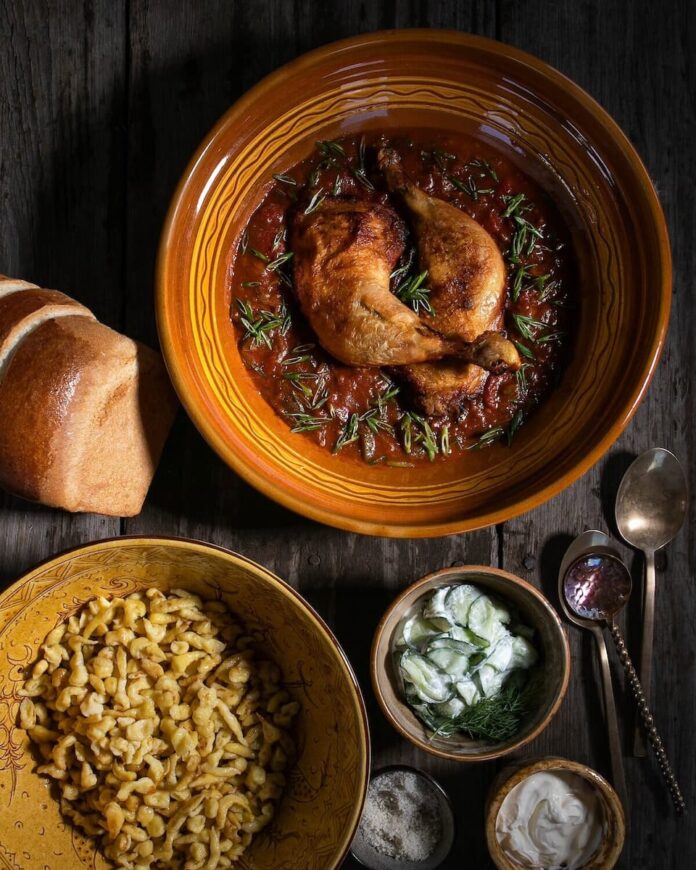
At one time, every town in the Dutch and Belgian region of Limburg had its own master appelstroop-maker. Sometimes even more than one. Making the syrup was a way of preserving the fruit into a food that would sustain families through the long winter to come. This syrup-making tradition largely disappeared when factories took over and used sugar beets as their main resource. Fortunately, there are a few appelstroop makers left who still embrace the traditional way of cooking syrup. Buy your own online for this recipe and enjoy.
Why Pair Chicken, Mustard, and Appelstroop?
Pairing appelstroop with chicken and mustard creates a unique and satisfying contrast of flavors. The sweetness of the appelstroop complements the savory, rich taste of the chicken, while the mustard adds a tangy kick that enhances the overall dish. This combination can elevate the meal by balancing sweetness, acidity, and umami, making for a more complex and satisfying flavor profile.
These Hermit Cups get their name from the spiral swirl of mascarpone icing on top of Lemon Curd Cookie Cups. They come in bite size shapes that mix components of sweet, sour, and a bit of cinnamon spice for the perfect taste in a cookie. The best part is the simple ingredients we use in these cookie cups means you can make this recipe throughout the whole year, not just during the holidays. You could even experiment with different types of curds like cherry or strawberry curd for the summertime.
Tips for Perfecting a Lemon Curd
To create a velvety smooth and tangy lemon curd you have to start with fresh, juicy lemons. Zest the lemons to capture their bright citrus flavor and then squeeze the juice to add acidity. For an extra burst of flavor you can even add a teaspoon of vanilla extract or a splash of orange liqueur to your lemon curd. When you go to cook the curd, make sure it’s over low heat. You’ll have to stir continuously until the mixture thickens and coats the back of a spoon. Lastly, let the curd cool slightly before transferring it to a jar and refrigerating, trust us you’ll want to keep the additional curd.
6 tbsp unsalted butter, softened, cut into small pieces
For the Mascarpone Icing:
2 cups heavy cream
1/4 cup confectioners’ sugar
8 oz mascarpone cheese, at room temperature
1 tbsp fresh lemon juice
Instructions
For the Cookie Cups:
With a stand mixer, cream together the brown sugar and butter until light and fluffy. Add the egg, scraping down the bowl every so often. Mix in the molasses.
Whisk together the flour, baking soda, ground ginger, cinnamon, cloves, and salt. With your mixer on low, add these dry ingredients into the butter mixture in thirds, scraping down the bowl in between each addition. Mix in the raisins and crystallized ginger until just combined. Cover the mixture with plastic wrap and put in the refrigerator.
The dough should chill for at least an hour, but you can also let it chill for up to 24 hours.
When you’re ready, preheat the oven to 375 degrees.
Grease a mini muffin pan, and measure out PRECISELY a 1 tablespoon ball of dough for each bin. This dough dries out and/or collapses very easily in the oven, so be careful to measure out the precise amount.
Press down in the center of each ball with your thumb, making a little cup with it. Do not push the sides all the way to the edge of the bin; just make a thumb-sized imprint in the center.
Bake in the center rack for 10 minutes. Again, be careful with how long you cook these, since you don’t want the dough to crisp too much.
Let the cups cool in the pan for a few minutes, then move them to a wire rack. While they’re still warm, poke the centers of the cups with a toothpick about four times each, and pour 1/2 teaspoon of rum into each cup.
Let cool completely on the racks, then cover and move the cups to the refrigerator.
For the Lemon Curd:
Fill the bottom of a double boiler with water and bring it to a boil. Reduce the heat to a simmer.
Whisk the yolks, sugar, lemon zest, lemon juice, and salt in the top of the boiler constantly as eggs cook. Whisk until curd thickens, about 10 minutes.
Remove the curd mixture from the heat and whisk in the cut butter until it is entirely incorporated.
Place the curd in a jar and cover it. Let cool completely in the refrigerator.
Directly before you’re ready to use it, press the curd through a fine mesh sieve.
For the Mascarpone Icing:
In a large, chilled mixer bowl, beat the heavy cream, powdered sugar, and lemon juice until you get soft peaks.
Add in the mascarpone cheese and mix until hard peaks.
To Assemble:
Place a small dollop of lemon curd in each of the cups. This curd recipe is precisely enough to fit every cup.
Pipe some mascarpone icing on top of each cup with the curd.
Dust the top with cinnamon.
Recipe by Alexander Murph / Styling by Julia Platt Leonard / Photography by Tira Howard
If you haven’t had Biscochitos, the state cookie of New Mexico, then you’ve been missing out on big flavor in a small, crunchy package. These cookies land somewhere between a shortbread and sugar cookie but with hints of anise and cinnamon. The use of lard in this recipe makes sure the texture of these cookies are buttery and crumbly. For our biscochitos, we use a scalloped cookie cutter to achieve a flower shape and a Zia stamp to decorate the tops. But, you can leave the cookie shape up to your creativity and go with something more classic like circles or stars.
Why Are We Using Wine in a Cookie Recipe?
You may be wondering, why on Earth would you use wine in a sweet cookie recipe? Sweet table wine is actually a popular ingredient in biscochitos because it adds a subtle sweetness and a touch of complexity to the flavor. The wine also helps to moisten the dough, resulting in a tender and crumbly texture that you won’t receive otherwise. The sweetness of the wine also complements the other ingredients in the biscochitos, such as sugar, anise, and cinnamon, creating a harmonious and satisfying flavor profile.
You cannot go wrong with these beautiful anise cookies.
Ingredients
Scale
For the Cookies:
6 cups all-purpose flour
1 tbsp baking powder
1 tsp salt
1 lb lard
1 ½ cups granulated sugar
2 tsp anise seeds
2 large eggs
½ cup sweet table wine
For the Topping:
¼ cup granulated sugar
1 tbsp ground cinnamon
Instructions
Sift flour, baking powder, and salt together in a medium bowl. In a stand mixer, cream together the lard, sugar, and anise seeds on medium speed. In a separate bowl, beat the eggs until light and fluffy. Add the eggs to the creamed mixture, followed by the wine. Beat in the flour mixture, in a couple of additions, until a stiff dough forms. If the dough won’t hold together, add a bit more wine.
Cover the dough and refrigerate it overnight.
Preheat the oven to 350 degrees. Cover a pair of baking sheets with parchment.
Remove the dough from the refrigerator and let stand until it is soft enough to roll. Divide the dough into quarters. Roll out each portion to about 1/16-1/8 inch in thickness. Cut with a 3-inch scalloped cookie cutter and place on baking sheets. Bake for 12-15 minutes, or until bottoms of cookies are golden brown.
Meanwhile, mix the sugar and cinnamon topping in a small bowl. Drop the warm cookies gently in the cinnamon sugar and set aside to cool.
Recipe by Celina Grife / Styling by Julia Platt Leonard / Photography by Tira Howard
When celebrating the holidays, peppermint is bound to pop-up, especially in cookies. Make the most of this staple ingredient with our Peppermint Crisp Sugar Cookies to celebrate the cold of the winter season in a joyful way. You’ll start with a sugar cookie base before adding in a crispy, peppermint candy filling. Just don’t forget to leave out a few of these delights beside a glass of cold milk for Santa Claus!
What is Turbinado Sugar?
You’re probably used to seeing granulated and brown sugar in recipes but turbinado sugar may be something new to you. Thankfully, this type of sugar is not as complicated as it sounds. Turbinado sugar is a type of raw sugar that has undergone a minimal refining process. Think Sugar in the Raw. It retains a golden color and a slightly grainy texture compared to refined white sugar. Its very subtle molasses flavor makes it a great ingredient in our Peppermint Crisp Sugar Cookies for its unique flavor and visual appeal. Though, you can also use it as a natural sweetener in drinks like tea and coffee, which is where you’ll probably see this sugar most.
These sugar cookies combine the best parts of winter in a bite-sized portion.
Ingredients
Scale
For the Cookies:
2 3/4 cups all-purpose flour
1 tsp baking powder
1/2 tsp kosher salt
1 cup unsalted butter, softened
1 1/4 cups granulated sugar
2 large eggs
1/2 tbsp fresh lemon juice
Tennis biscuits, about one 7 1/2 oz (200 g) box
Turbinado sugar
For the Peppermint Crisp Filling:
500 ml heavy cream
395 g dulce de leche
3 peppermint crisp candy bars, chopped fine
Additional peppermint crisp candy bars, chopped
Instructions
For the Cookies:
Sift together the flour, baking powder, and salt in a medium bowl.
Cream together the sugar and butter with a stand or handheld mixer until pale in color and light and fluffy. Beat in the eggs and the lemon juice.
Add the dry ingredients to the butter-sugar mixture slowly, continuing to beat, just until combined.
Scoop the dough into balls with a small ice cream scoop, and place on a tray or baking sheet. Refrigerate the balls of dough for at least 1 hour.
Preheat the oven to 325 degrees. Line a pair of baking sheets with parchment paper.
Arrange about 9 tennis biscuits, side-by-side on each baking sheet. Roll cookie dough balls in the turbinado sugar and top each tennis biscuit with a ball.
Bake for 15 to 16 minutes, rotating the baking sheets halfway through the baking time. Then let cookies cool to room temperature.
For the Peppermint Crisp Filling:
Whip the cream in a large mixing bowl until soft peaks form. Add the dulce de leche and beat it in. Fold in the candy bar pieces.
Spoon the filling into a piping bag fitted with a round tip. Pipe the filling in a circular pattern around the top of each cookie. Sprinkle with additional chopped candy bar pieces over the top of each and serve.
Blue Corn Macarons are elegant and a great choice for an edible gift to give to hostesses and families alike during the holidays. These little sandwich cookies have a light, airy cookie with a sweet vanilla bean ganache between them. You’ll notice these cookies have a bit of a blue hue due to the addition of blue cornmeal for a satisfying and sweet crunch. If you’ve always wanted to make macarons but were worried about the complicated process, we break down this recipe to ensure complete understanding for all levels of bakers. That way you can bask in your finish product while feeling like a successful baker.
What is Blue Cornmeal?
Blue cornmeal is a type of cornmeal made from blue corn, a variety of maize with a distinctive blue kernel. It is often used in traditional Mexican and Southwestern cuisine. Blue cornmeal has a slightly nutty flavor and a coarser texture than yellow cornmeal. It is a good source of fiber, protein, and essential nutrients. And yes, it will add a tint of blue to whatever you’re creating.
Who knew blue cornmeal in a cookie could be so good?
Ingredients
Scale
For the Macaronage:
130 g confectioners’ sugar
140 g finely ground almond flour
100 g of egg whites at room temperature
90 g granulated sugar
1/4 tsp cream of tartar
25 g finely ground blue cornmeal
For the Vanilla Bean Ganache:
200 g good quality white chocolate
100 ml heavy whipping cream, to be heated
190 ml heavy whipping cream, cold
1 tbsp vanilla bean paste (you can substitute vanilla extract but paste is best)
Instructions
For the Macaronage:
Sift confectioners’ sugar and almond flour together. Set aside.
Meanwhile, in a stand mixer, whip egg whites to just foamy. Add 1/2 of the granulated sugar and all the cream of tartar. Whip another minute, then add remaining sugar. Whip to soft peaks.
In a large mixing bowl, start to fold 1/2 of the dry sifted mixture to the meringue. Once incorporated, add the blue cornmeal. Fold until batter stretches easily into ribbons and can create a figure 8 without breaking. Don’t overmix or cookies will spread too much. Undermix and your cookies will crack.
Fill a piping bag with a round tip. Chainé recommends a large 2A. Arrange silicon baking mats on a pair of baking sheets. You can purchase Silpat mats with a classic macaron size template; this will help you create a consistent size. Pipe macarons onto baking mats.
Dry for 20 minutes. Meanwhile, preheat oven to 275 degrees.
Bake for 10 minutes, rotate pans from front to back and top to bottom baking racks, and bake a final 10 to 12 minutes. Cookies are done when you gently push a shell and it doesn’t move.
Allow macarons to cool fully before filling.
For the Vanilla Bean Ganache:
Heat chocolate and 100 ml of cream in a bain marie until melted and fully combined. Use a spatula, rather than a whisk here, to avoid incorporating air while mixing. Take the pan off the heat and mix in the cold cream and vanilla. Chill overnight.
Whip with a stand or handheld mixer until the ganache is stiff and pipeable. Spoon mixture into a piping bag with a round tip.
Fill half of the macarons and top with the remaining macarons. Store in an airtight container for up to 4 days.
Recipe by Chainé Peña / Styling by Julia Platt Leonard / Photography by Tira Howard
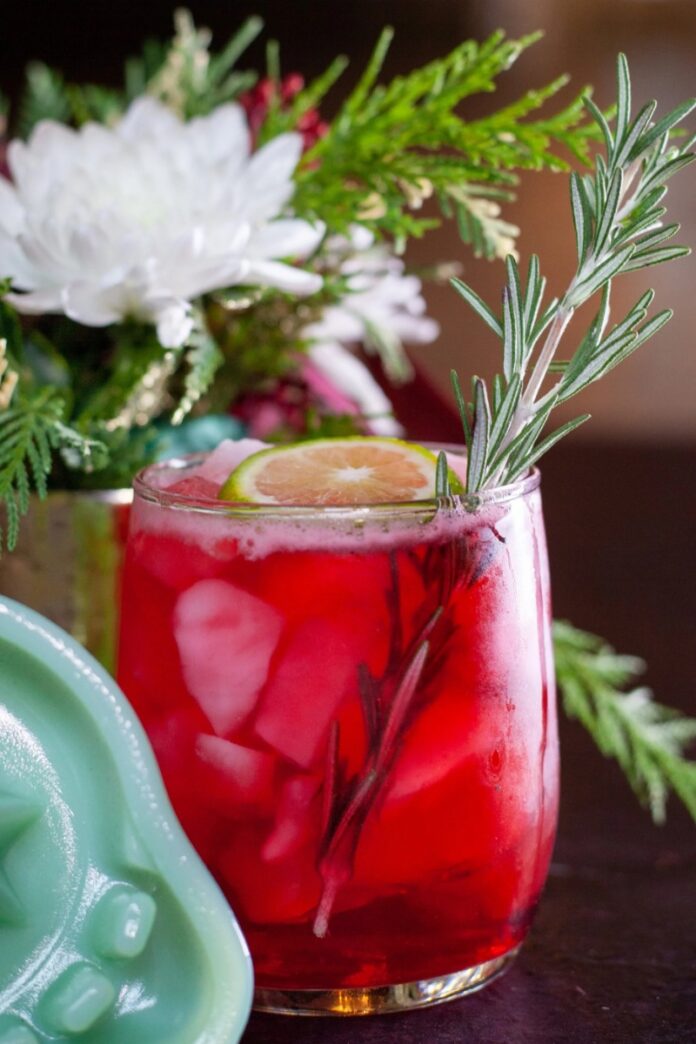
Developing a Thanksgiving menu can be stressful. Luckily, whipping up a Thanksgiving cocktail will make you look like a pro at your holiday table. This cocktail with sparkling apple cider, vodka, and thyme and apple garnish is almost too pretty to drink, but it’s easy to make and will have everybody asking whether you’re secretly a mixologist.
What Else Should You Have on Your Thanksgiving Menu?
There are a lot of ways to have a unique Thanksgiving menu, especially if you’re bored with the classics. My family has done an indigenous-inspired Thanksgiving menu to put another spin on the holiday. Also, because we care about our guests’ dietary needs or restrictions, we also have a Thanksgiving mocktail for guests who might not be drinking this season. You also may want to consider having a plant-based or gluten-free dish, as those dietary trends are on the rise. Also, try making batch cocktails if you have a big group!
In the province of Limburg, a dark syrup made from apples and pears sweetens the long winter days to come.
The Sweet Heritage of Limburg’s Appelstroop and its Apple Pear Syrup Counterpart
The Dutch province of Limburg is famous for its appelstroop, a dark brown syrup made of apples, pears and nothing else. You can cook with it, spread it on toast, or drizzle it on pancakes and desserts. At one time, every town in Limburg had its own master syrup-maker. Sometimes even more than one.
Making the syrup was a way of preserving the fruit into a food that would sustain families through the long winter to come. This syrup-making tradition largely disappeared when factories took over and used sugar beets as their main resource.
Fortunately, there are a few syrup makers left who still embrace the traditional way of cooking syrup. ‘It all comes down to the last hour,’ they say: ‘if you cook it too long, the syrup becomes too thick and not easily spreadable. If you stop too early, the syrup will remain too thin and watery.’
Only organic heirloom varieties are good enough for the syrup. The apples and pears go into a huge copper kettle, using precise proportions. Pears give the sweet accent; apples give a more acidic note. Heirloom apples and pears are less sweet and have a more pronounced taste than their supermarket counterparts.
Pears go in first, as apples tend to burn at the bottom of the kettle. Once you’ve had to clean a burnt copper kettle of this size, you’ll never make that mistake again.
Back to the fire pit after hours and hours of cooking, the fruit is ready to go into the giant press. This results in 80 gallons of juice that goes back into the kettle. The fire is on all day again to cook and reduce the juice. Near the end of the second day, the mixture has become much thicker.
From Orchard to Jar: A Two-Day Syrup Ritual
Now comes the moment of truth. The syrup maker determines when the syrup should stop cooking by dripping a small amount on a plate to check the consistency. A large lever quickly lifts the kettle off the fire, and the syrup pours into jars.
The syrup has a very rich taste, not as sweet as you’d expect. The locals know what to eat it with: a cheese sandwich, sausages, and as an ingredient in marinades, stews and desserts. Depending on the variety of apples and pears used, every batch tastes different.
Syrup makers all have their own signature syrup taste. Even without any additives the syrup remains delicious for many years, and can ripen further in the jars, just like a good wine.
The Slow Food movement established the Ark of Taste, an international collection of small-scale quality products that are rooted in culture, history, and tradition and that deserve to be preserved for future generations, just like the Limburg apples and pears syrup.
With this apple pear syrup recipe, you are able to elevate any additional treat with its sweet and savory combination.
New York is all about reinvention. Its neighborhoods rise and fall in popularity, only to be reborn as something else. In the process, historic buildings magnetize towards repurposing. They end up as condos or hotels. So it is with Nomad, the area to the north of Madison Square Park and home to Fifth Avenue Hotel.
Taking a Staycation at The Fifth Avenue Hotel
In what was originally the Second National Bank, a five-story Renaissance-style palazzo built in 1907 and designed by McKim, Mead, & White, the glitzy new Fifth Avenue Hotel bucks the trend of bland, blond and ivory luxury hotels. In interior designer Martin Brudnizki’s, spaces are luscious and lavish, filled with a confident meeting of texture, hue, and pattern. Rare is the surface that isn’t painted a rich color, inlaid, gilded, covered with exotic-patterned wallpaper, or decorated with an elaborately hand-knotted rug.
The 153 rooms manage that difficult balance between resembling something out of a Henry James novel and being modern and comfortable, while the public areas have that vibe that makes you feel as if you’ve arrived, although your destination is nothing like what you imagined.
The History of Nomad
The area has a history of attracting high society and creative types, as it does today. Located on what was formerly swampy hunting ground, Madison Square Park opened in 1847. And although the area had originally been filled with dark and narrow row houses, it was soon surrounded by mansions—including the residences of Teddy Roosevelt and Edith Wharton.
A luxury property, also called the Fifth Avenue Hotel, existed on the west side of the park from 1859 to 1908. (It was the first hotel in the US with elevators!). The hotel’s guests include the likes of Mark Twain and numerous presidents including Abraham Lincoln, but, it eventually closed and demolished, but a number of other hotels sprang up nearby.
The site of the current Fifth Avenue Hotel, a couple of blocks north, was originally the home of Mrs. Charlotte Goodridge, a prominent society figure during the Gilded Age, when the area was a hub for the literati—including Oscar Wilde and Charles Dickens. The current former bank building required a 10-year restoration, including the addition of modern amenities. A 24-story glass tower designed by Perkins Eastman and PBDW Architects was also added.
What Awaits Inside
As you enter the hotel, a dazzling mix of faceted mirrors, burled wood panels, and a huge tapestry by artist Pae White await—it takes your eyes a moment to adjust to it all. The restaurant, Café Carmellini, is a cozy yet opulent mix of dark wood, mustard-colored leather, and blue velvet, while it’s seemingly infinite lightbulbs in chandeliers, sconces, and table lamps fill the space with an inviting atmosphere that’s convivial yet intimate and sexy.
Afterwards, head to the dark and moody Portrait Bar for a destination-named cocktail, such as the “Oaxaca”, which contains Oaxacan gin, Empirical Ayuuk, Contratto aperitif, lime sherbet, hibiscus, and chocolate. If you can still walk, the journey to your room will take you through dimly-lit, rosy-colored corridors clad in a mix of striped and tropical papers with bordered blue carpets underfoot.
Restaurants Near Fifth Avenue Hotel
If you’re in the mood to actually leave the hotel, there are several exquisite restaurants nearby, including Eleven Madison Park (Michelin 3-star, plant-based), Scarpetta (refined Italian in a beautiful space), and Junoon (upscale, modern Indian). It’s always worth checking out if there is an art installation in Madison Square Park. (The original Shake Shake location is in the corner of the park in case you have a sudden craving for fries.) Although it isn’t nearby, the reopened Frick Collection, among the best museums in New York, is a must see for anyone coming to visit.
Story by Stephen Treffinger Hotel Photos by William Abranowicz Food Photos by Evan Sung
Purple potato pie is a twist on a sweet potato pie, with bright purple custard loaded with familiar fall spices and local honey. Purchase purple sweet potatoes or ube on Amazon or Etsy. You may also find these in the produce section of Asian grocery stores. Or, you can decide to head to your local farmers market where local vendors can sell sustainable produce. Chances are shopping at your local farmers market will increase the quality of your pie. Plus, get the homemade pie crust recipe from pastry chef Selina Progar here!
Chef Selina Progar, one of Pittsburgh’s finest pastry chefs, shared her favorite pie crust recipe and dishes deep about pie with TABLE readers.
Pie crust recipe aside, I was not always a “Pie Master.” About 10 years before I went to culinary school, my friend and I decided to make a pumpkin pie out of a real pumpkin and bake it inside a pumpkin. We looked through cookbooks to learn how to roast the pumpkin. That part went well, but we made a huge mess in the process of pureeing it because all we had was a hand mixer.
We added all of our ingredients (or thought we did) in unmeasured amounts, poured the totality back into the pumpkin, and put it in the oven to bake. Over three hours later, the pie was still fully liquid. I think we forgot the eggs, but I have no idea because we didn’t measure anything. We ended up just spooning it over ice cream and eating it out of a bowl.
I have since gotten a lot better at making pies and baking in general. It’s what I do for a living, and I love it. I’m happy to share my best pie crust recipe with you, as well as three delicious pie recipes.
6 Tips for the Making the Best Pie Crust Recipe
Roll it out ¼-inch thick.
Keep it cold, by taking it in and out of the fridge and working in small batches.
Use lots of flour and use 2 pastry brushes – one for flour dusting, one for egg wash.
Do not overwork the dough, and if you need to form the scraps back together, allow it to fully chill before reworking it.
Buy fun cookie cutters and pastry rollers.
Egg wash to help the dough stick to itself and create a glossy golden brown appearance.
Cut butter into small cubes, and place in the fridge for 30 minutes. Once the butter is cold, add to the flour and salt, and mix by hand or with the paddle attachment of a mixer in first speed.
Mix until the butter is incorporated, and about the size of peas. Add the cold water, and continue to mix just until together. Form into a square, and wrap in plastic wrap and chill for at least 4 hours, preferably overnight.
When rolling out, use plenty of flour, but keep a pastry brush handy to brush off excess.
Place ½ the dough on a floured table and using a rolling pin, roll in all directions evenly until it’s about a ¼ of an inch thick.
Lay down pie pan and cut a circle two inches larger than your pan.
Place this piece of dough in the bottom of your pie pan, then slightly pull the dough up the sides of your dish all the way to the edges.
Place back in fridge for 30 minutes.
Place desired filling in the pie.
How to Make a Lattice Top
Create a lattice using your remaining pie dough! Roll out the dough evenly. Using a pizza cutter, or a fluted pastry wheel cut 1-inch strips of dough, straight and neat. At this point you can cut and use strips or braid or twist for a more elaborate crust. Place the strips back in the fridge for 15 minutes. Dust off the excess flour.
Remove your pie crust recipe from the fridge, and fill with desired filling. Remove strips from fridge. Lay strips vertical over filling with 1 inch in between each piece. Fold back pieces 1, 3, 5, and 7 (if applicable). Lay one piece horizontally over pieces 2, 4, 6. Fold pieces 1, 3, 5, and 7 back over the horizontal piece. Fold back towards you pieces 2, 4, and 6. Lay a second horizontal piece over 1, 3, 5, and 7. Repeat until you have a fully weaved pie.
Crimp the edges and pinch off any excess dough. Brush the pie dough with egg wash to create a golden crust. Follow these steps, and my best pie crust recipe is sure to become yours, too.