Home Blog Page 236

A Summer Sunday in the South of France

0
A duck breast with veggies on an orange plate sits in the right side of the frame, a knife is angled in the top right, and veggies sit to the left. Secrets of A Summer Sunday in the South of France

A secret I’m bad at keeping is that I live in the south of France. In fact, I own some property there, in the department of the Gard, Provence’s across-the-Rhône (and much less sexy) neighbor. Surrounded by working vineyards, I spend several months every year in the modest house a melon farmer built, whose garden includes some iconic Provençal features: two towering cypresses, four mature olive trees, some tufts of lavender and rosemary.

I try to keep this ridiculous secret because I fear the misconceptions that come along with revealing it: that I’m fabulously wealthy (nope), that I’m perfectly fluent in French (ha), that I’ve got insider travel recs for Paris or Provence (sorry). Or worse, that a snazzy publication like TABLE Magazine will ask me to write about the cuisine of southern France, as if I am another wannabe Julia Child, joyfully banging pots in my farmhouse kitchen. 

The truth is I’m a reluctant recipe cook with no innate (or latent) culinary talents. What drew me and my husband to this little corner of the Hexagon is not the art of French cooking. It’s the art of French eating, which has more to do with how you spend your time at the table than how you assemble what’s on it. Simply put, we like the way time passes there, at the table and elsewhere (my husband is a poet and cyclist, two pursuits practiced in particularly French, meandering ways). Twenty-five years ago, when we first started visiting the Gard, we got hooked on French Time, and this addiction led to some crazy ideas, like buying a house in another country (and no one has enough time to hear about that folly). 

So to the extent that I am an expert at anything French, I can share with you some of what I’ve learned á table, specifically at tables in and around Laval St. Roman, Gard, population 202 (when we’re in town, according to our mayor). 

A meal in southern France is an extremely relaxed affair — for both hosts and guests. Some of this stems from the French two-tiered system of entertaining — l’apéritif and le diner. 

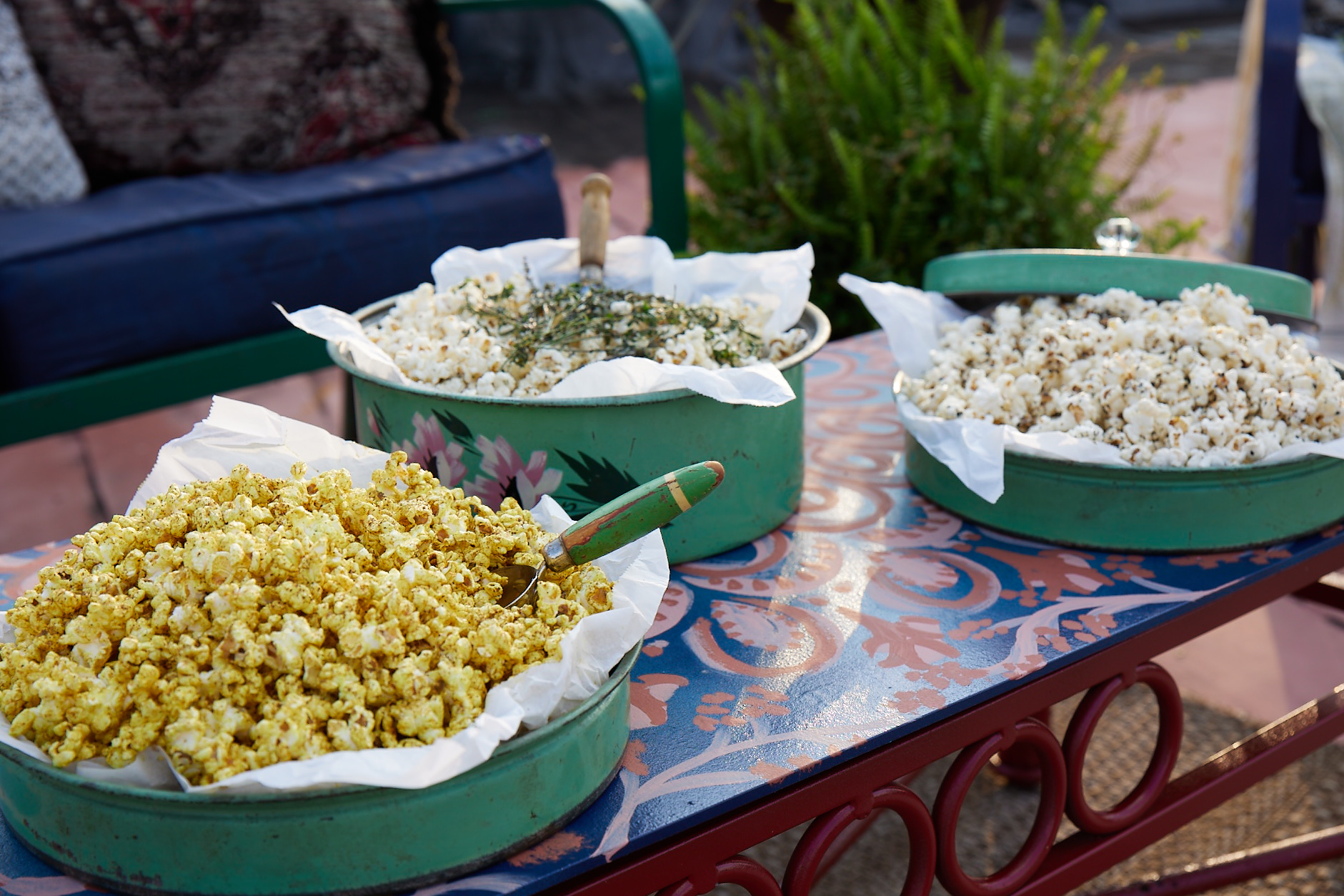
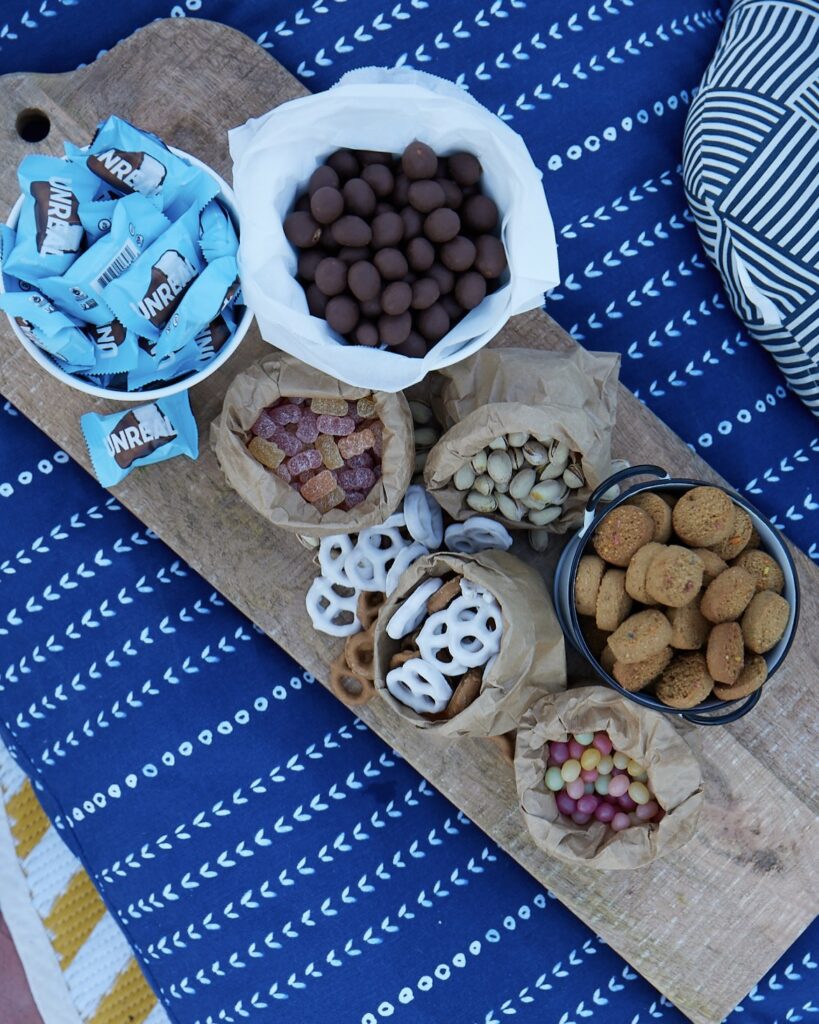
If you are merely an acquaintance, you will be invited for an apératif, or, more casually, an apéro, which is a drink (or two), accompanied by a few small bowls of snacks — nuts, olives, chips, a sliced-up salami. That’s it. To save time, your host might prepare one of the savory quick breads they call “cake” in France that have all the apéro snacks baked into them–olives, meat, a little cheese — then slice it into bite-sized morsels. 

As a guest at an apéro, you are expected after a decent interval of time, say two or three hours, to go home and make your own dinner. I love the apéro and have hosted many myself because, while convivial, there is zero pressure to impress. Getting further acquainted is the entire point. 

If you are an intimate — a family member or a very good friend — you may be invited for dinner. That distinction in itself makes the meal more relaxed; you are, in some way, already known to one another, and the point of the meal is to eat, bien sûr, but mostly to bask in that knowingness, particularly in fine summer weather.  

That is not to say that dinner is unregimented. Au contraire. The meal proceeds in a slow but very formulaic way. It will last, at minimum, six hours. There will be five courses, the order of which never varies. But no one will be stressed; the host or hostess, not to mention the guests, will not break a sweat, which is important in summer in one of the warmest regions of a rapidly warming earth.

Your host will tell you to come either at noon (á midi) or in the evening (le soir). If you’re invited at midi, it’s likely Sunday, a weekly repast that coalesces every French family but which actually starts at 12:30. If you’re invited for an evening dinner, say vendredi soir, you will be told if you press (Americans press; we crave a precise start time) to arrive at 7 pm, but if you do, your host will greet you at the door in a towel, perfectly at ease, having just emerged from the shower. 

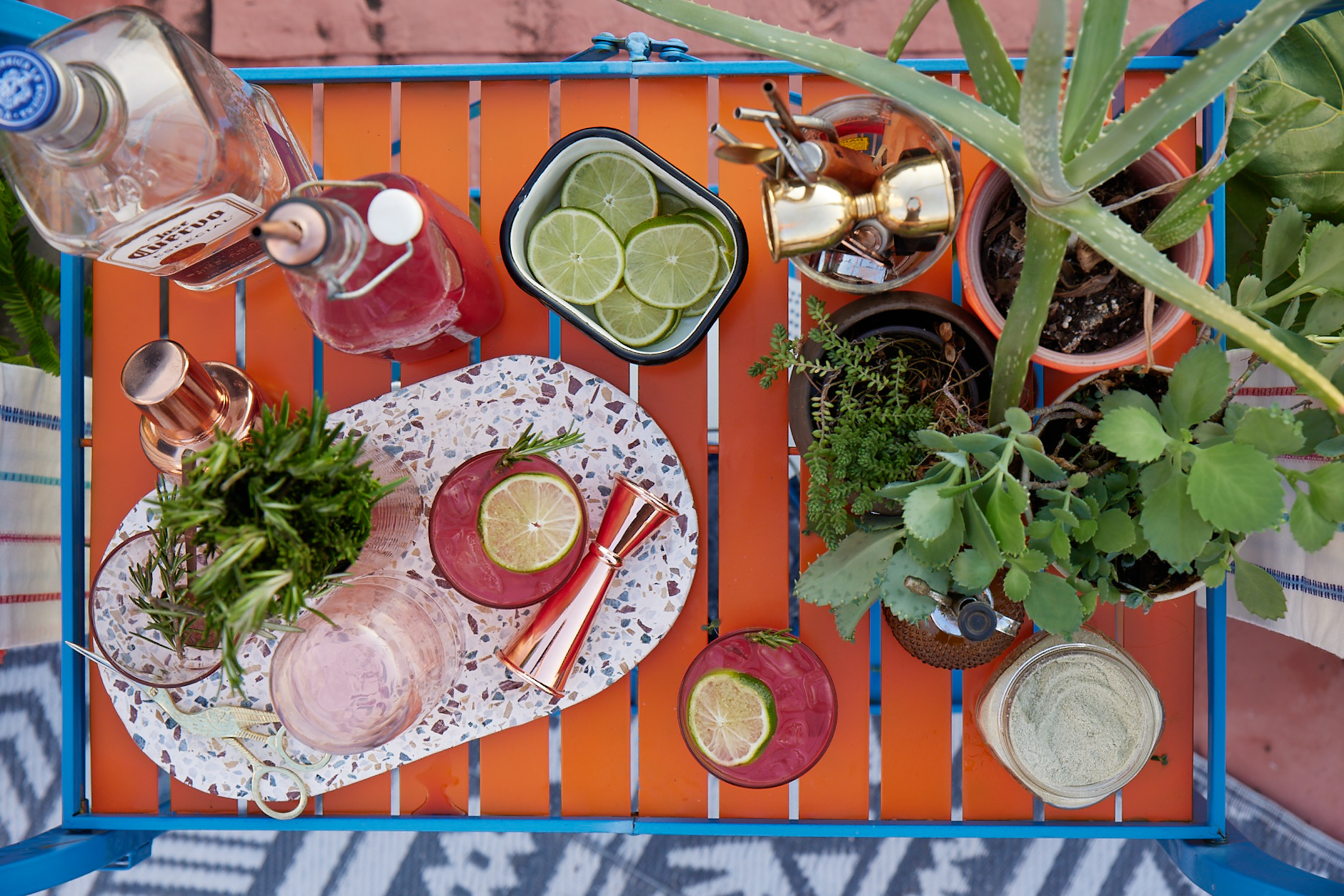
Let’s say it’s a summer Sunday, and you’ve been invited at midi. You and other guests start drifting into the coolest part of your host’s garden between 12:30 and 1 pm, talking of the weather (trop chaud!) while apéro snacks begin to appear around you on shaky tables. Accept a small café wine glass (big balloon glasses are for alcoholics and overpriced restaurants) and a pour from one of the bottles going around, which will be either rosé or white wine. 

The famous rosés of southern France were developed for this very occasion. I’m partial to the variety classified as gris, or grey–pale pink and bracing. The white wines of southern France are not so celebrated, but they are de rigueur at an apéro (no one would dare drink red wine before dinner). Again, light and sunny are key, so while you will never be offered a chewy chardonnay on a southern summer Sunday, you might discover a refreshing vermentino, viognier, or Côte du Rhône blanc. A local sparkling wine (champagne that cannot say its name) could also splash in your glass at this hour, even if there is no particular celebration. 

Regardless, your host will know or be related to a winemaker, and it is their wine that will be going round. You’ll talk about this, as well as the prospects for the upcoming grape harvest, in the same way one would chat about the Steelers regular season at a summer barbecue in Pittsburgh. If there is a grandfather present, he will demand a pastis, a crude southern French cocktail of anise liqueur like Ricard or Pernod and a generous amount of cold water. It’s reportedly restoring, especially in the heat, but women and young folk don’t drink it. 

Stroll around the garden and admire what’s growing, or crowing–many families keep chickens. There’s no rush; things are just getting started, friends still arriving, lawn chairs and garden benches coming together. (None of this happy chaos happens at the dinner table, which has long been set.) A leisurely apéro will also include olive tapenade or brandade de morue (salt cod purée), two savory Provençal staples of very high quality that can be purchased in jars to always have on hand and which the eldest child of the household will be assigned to deftly tartiner on toasts and hand around. There will also be some sort of spreadable meat, like duck or even wild boar paté, which, I kid you not, the kids orbiting the yard will parachute in for. 

Cubed cantaloupe on toothpicks, and, my favorite, dainty finger radishes radiating around a tub of flaky Camargue sea salt, are fresh features of every apéro. In addition to being slowly and judiciously nibbled, all of these items must be cheerfully evaluated — the ripeness of the cantaloupe, the organic status of the radishes, whose uncle shot the boar, etc. Conversation never lags because all news is local, and we share what’s vitally important to us with every sip and bite. 

If your hosts have really exerted themselves, they might pull from the fridge some chilled verrines (shot-glass appetizers), likely some gazpacho whipped up that morning in the robot, a souped-up food processor like a Thermomix that is a staple of every French kitchen. If you compliment the chef on these often beautifully presented hors d’oeuvres, she will modestly disclaim that the robot made them. 

Such languid, purposeful eating and drinking will go on and on, everyone warming up their appetites like elite athletes before a match. No one will look at their watches or phones. No one will ask when’s dinner? Importantly, no one will consume too much; pacing yourself through a day-long meal is an art all French people have mastered by the time they’re out of diapers and can properly be seated at the table. 

Finally, the griller of the family (a man, hélas) will head to the barbecue, often just a grate over stones built into the home’s summer kitchen. If there aren’t forest fire warnings (now a sad feature of a southern French summer), he will take the time to build a real blaze with kindling and wood charcoal. If there are fire restrictions, he’ll heat up a plancha, the long electric griddle that is summer’s new appliance. 

The meat, cutlets of something, lamb if the host is feeling flush, will have been marinating in oil and garden herbs, unless he’s cooking sausages; often there will be both. In fact, the most extraordinary effort your host will have made in order to pull off this day-long feast is a visit to their favorite boucher, or even two butchers — one for the lamb and another for the sausages (mild Toulouse and spicy Merguez). More likely, he’s made a trip to his own deep freezer in the garage, reliably packed with trustworthy meat. The provenance of this meat will be thoroughly discussed at dinner, unless it’s a supermarket, which would be unmentionable. 

When the meat is à point, you’ll be called to the table. By this time, some new potatoes or haricots verts or zucchini, depending on what’s abundant in the garden, will have been steamed, lightly oiled and simply seasoned, then plunked down in a bowl, along with a loaf of bread some cherí is asked to slice. This bread may have also been extracted from the freezer, depending on how far away one’s favorite boulanger happens to be. Indie, organic bakers have been popping up all over the south; most of our neighbors have a weekly standing order with one. Bread is still an obsession for all French people I know, but they’ve long given up the daily baguette tucked under the arm. 

It’s now nearly four o’clock. Red wine is poured, Côte du Rhône rouge, a somewhat rough and energetic blend that every vigneron for hundreds of kilometers makes a version of, whether or not they have the official appellation. This is the moment you’ve seen in the movies, when one and all lock eyes and clink glasses, expressing a heartfelt wish for a bon appétit, an appetite we have been carefully nursing since dawn. 

There will be plenty to eat and not too much. Everyone will chow down with relish, bread in hand, sopping up the meat juices; no one will take two chops. Children, ravenous from running around while the adults dallied at the apéro, comport themselves at table with the same gusto and restraint; they enjoy what’s on their plate and say so, imitating the adults around them merrily chatting about last summer’s courgettes and their hopes for this year’s aubergines. They’ll clean their plates, even the vegetables, then disappear to play until dessert, which they know is still hours away. 

The adults now take a pause, here at the meal’s fulcrum, during which we share a feeling of pleasant satiety, of a warm sacrament taken together. Satisfied silences waft up as we lean back in our chairs, stomachs out, vin rouge in our cheeks; the smokers slip back into the garden. Someone ritually asks the host to wait un petit moment to serve the salad. 

Which will come, fear not, but not until the esprit de corps of the table commands it. This salad — one of the glorious green Batavia or frisée or escarole heads that burst year-round from market stalls–will arrive lightly dressed with no adornment and breeze across the table like a second wind, restoring our energy and yes, our appetites. When I worked in a high-end French restaurant in college, I thought ordering salad after dinner was an affectation; it really bothered the line cooks who needed that petit moment to get the entrées out. But now I know the salad’s true function, and I look forward to the cleansing boost it delivers.

Of course, there will be cheese, and now that the heat of the day has crested, a plate is delivered by our hosts, along with a story about every selection on it. Readers of TABLE get lots of advice, I’m sure, on how to assemble a cheese plate — something gooey, something firm, something cow, something sheep, etc. But in the south of France, the formula seems to be: something very local, something from the region of your ancestral family, something you picked up on vacation (in France, naturally), and something your neighbor picked up on her vacation. It’s another conversation everyone can join, as we cut a tiny morsel of each wedge and wheel and taste them from our knife points. We are blessed in our part of the Gard to have two local goat farms run by young agriculture — Chevrerie de Carassoule and Chevrerie de Toulair. Though we each have our favorite, we encourage the chèvre from both. 

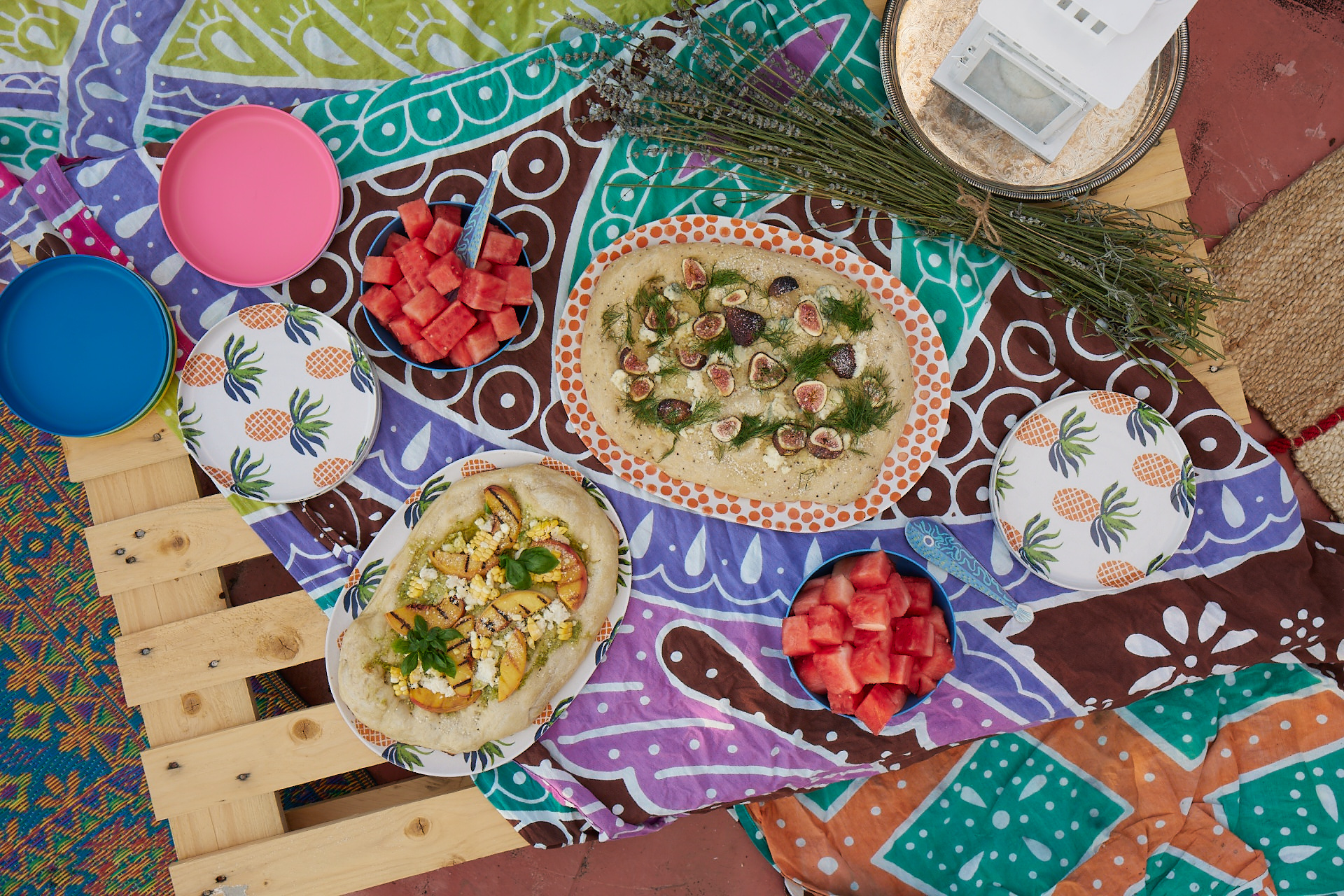
As the sunlight lengthens and cools, children drift back to the table and pester for un dessert before bedtime. You might think of French desserts as the impossibly beautiful and wildly complicated confections in the window of a pâtisserie. But French home cooks leave such travail to the professionals.* Particularly in the south, where fresh produce is so abundant, dessert is thought of simply as something to put fruit on. This could be a crust or a batter, une tarte or un clafouti. The simplest of cakes, like the delicious Fougasse d’Aigues Mortes I watched a frustrated eight-year-old whip up in one bowl while her parents were idling over cheese, will become a transporting finish to your meal, once piled with the last summer strawberries and dolloped with whipped cream (often from a can), and no one will have suffered for it. 

So now you know all my secrets: what I’ve learned from eating over many years with dear friends and neighbors in France. Being á table is not about suffering but sustenance; it’s not haute cuisine but deep connection, to where we are and who we’re with. These habits of mind and body are as natural as breathing to people in the Gard. We once crossed paths with some friends on a walk, followed them home, then watched in amazement as they calmly constructed a  five-course dinner from the dregs of their garden and the dusty corners of their pantry. 

The marathon Sunday meal I’ve just described, in fact, goes on, but having made my points, I will leave it here, as my husband and I generally do, making our clumsy apologies because we are sleepy and can’t possibly stay for coffee and the bottle of brandy someone is searching for in the buffet. It’s properly night and we left our house at noon. We are, nevertheless, kissed by all and forgiven–for our fading French and for our stubbornly American lack of both chill and stamina. Dormez bien, nos amis. A bientôt.

*An excellent new cookbook, Gâteau by Aleksandra Crapanzo, explores this phenomenon thoroughly and beautifully. 

Story by Kristin Kovacic / Photography by Tira Howard

Subscribe to TABLE Magazine‘s print edition.

8 Pittsburgh Tours to Expand Your Local Knowledge

0
Graffiti at Carrie Blast Furnaces, city tours, Pitsburgh tours
Photo courtesy of Lisa Cunningham

Even if you’ve lived in Pittsburgh your entire life, there’s always something new to be learned. With these city tours, plunge into local history when out-of-towners come to visit or if you’re looking to expand your knowledge of the City of Bridges. 

‘Burgh Bits and Bites Food Tours

Multiple Locations
Food-tasting tours of Pittsburgh’s historic neighborhoods, including an international food tour in the Strip District, an all-ages tour through Brookline, and more. 

Carrie Blast Furnace Heritage Tours

801 Carrie Furnace Boulevard, Rankin-Swissvale
Dive into Pittsburgh’s steel-industrial past with nonprofit heritage organization Rivers of Steel’s guided tour of the Carrie Blast Furnaces National Historic Landmark. Love art? Opt instead for the Arts & Grounds Tour, which includes a stop at the famous Carrie Deer, a massive sculpture made of tubing and metal. 

City Steps Walking Tour

Multiple Locations
Pittsburgh is famously known for its 700-plus sets of city-owned steps, the most public staircases in any US city. Join Laura Zurowski, aka Mis.Steps, and North Side-based cidery and bottle shop Threadbare Cider & Mead on this historical two-hour walking tour through city steps in two North Side neighborhoods. Bonus: each tour ends with a glass of cider! 

Pittsburgh History & Landmarks Foundation Tour

100 West Station Square Drive
This nonprofit historic preservation organization offers a variety of informative tours, including both self-guided and customized tours. Want to set out on your own? We recommend downloading the self-guided Bridges & River Shores Walking Tour available as a free PDF via their website. Interested in a more guided experience? Register for a Specialized Architectural Tour. 

Pittsburgh Cemetery Tours

Pittsburgh is home to multiple park-like cemeteries, which encourage residents to enjoy the grounds while paying respect to those who have made it their final resting place. We recommend taking a self-guided tour, with the help of a guided map available online, through the historic Allegheny Cemetery, featuring an array of tree-lined paths and wooded hillsides. Also worth a visit is the Homewood Cemetery, which offers seasonal guided tours led by historian Jennie Benford. 

Molly’s Trolleys 

2524 Penn Avenue
Hop on an iconic bright red vintage-style trolley for a public sightseeing tour through some of Pittsburgh’s most popular neighborhoods. Two 90-minute tours depart daily from the Strip District and include a ride on the Duquesne Incline. 

Doors Open

Multiple Locations
Since its launch in 2016, this nonprofit boasts an impressive 22,000+ visitors on its tours of local landmarks, historic buildings, and interesting spaces. Join Doors Open for tours of the Poale Zedeck Synagogue in Squirrel Hill, the historic Pittsburgh Stained Glass Studio in the West End, Millionaire’s Row in Shadyside, and more. 

Explorer Riverboat Tour

Rivers of Steel Dock
The Uniquely Pittsburgh Sightseeing Tour is another offering from nonprofit heritage organization Rivers of Steel. This 90-minute seasonal tour takes guests on board the Explorer riverboat, combining beautiful views of the Downtown skyline with unique stories of the region’s history. 

Story by Lisa Cunningham

Subscribe to TABLE Magazine’s print edition.
5 Places to Feel Like a Kid in Pittsburgh

0
A bowling ball flies down the bowling lane, places to feel like a kid
Photo by David Iannace

Kids aren’t the only ones that get to have fun. Tap into your inner child with these adult-friendly venues where you can feel like a kid.

Pins Mechanical Co.

407 Cinema Drive
Two words: adult slide. Yes, you read that right. In addition to two floors of foosball, pinball, duckpin bowling, ping pong, and bocce, Pins is home to two giant silver slides that will glide you right into nostalgia. 

Coop De Ville

2305 Smallman Street
Delectable fried-chicken dishes and Southern eats paired with entertaining activities, including duckpin bowling, arcade games, pinball, and more, make for a memorable night, regardless of age. But for those over 21, two different bar menus elevate an already amusing experience. 

Shorty’s Pins x Pints

The Waterfront and North Shore
Bocce courts, vintage arcade games, duckpin lanes, pinball machines, foosball tables, and shuffleboard tables: old-school recreation is the heart of Shorty’s Pins x Pints, promoting friendship and community among all who enter. 

Barcadia

25 Market Square
Above The Market Exchange lives this festive bar offering a mix of traditional arcade games and pinball. Sip on Barcadias handcrafted cocktails while chowing down on bites available from Slider Vibes. Oh, and theres a speakeasy located in the back, but maybe that was meant to be kept a secret …. 

Arsenal Bowl

212 44th Street
Dubbed Where old-school-bowling vibe meets nightclub atmosphere” by the New York Times, for those who would rather skip the duckpin bowling fad, Lawrencevilles Arsenal Bowl is the perfect spot to indulge in the timeless activity. For an even louder blast from the past, check their Wednesday Rock N’ Bowl or Thursday80s/90s night. 

Story by Jordan Snowden

Subscribe to TABLE Magazine’s print edition.

3 Pittsburgh Theater Companies Thinking Outside the Box

0
A dark theater with the curtains drawn, Pittsburgh theater companies
Photo by Liam McGarry

Janera Solomon, creative writer, cultural strategist, and former executive director of the Kelly Strayhorn Theater, suggests a selection of innovative Pittsburgh theater companies. 

City Theatre

One of the city’s smartest contemporary theater companies, City Theatre constantly surprises with engaging and diverse performances. Expect a season full of relevant plays focused on current issues, all performed in the theater’s beautiful South Side venue. 

Pittsburgh Playwrights

Led by founder Marc Clayton Southers, Pittsburgh Playwrights prides itself on its African American roots with a mission to produce Pittsburgh-themed plays and works by local racially- and culturally-diverse playwrights. This year, the company is celebrating its 20th anniversary, with a lineup including August Wilson’s Tony-nominated drama Joe Turner’s Come and Gone, which will be performed outdoors at the August Wilson House in the Hill District. 

Quantum Theatre

This progressive company, founded by Karla Boos in 1990, produces intimate and trailblazing theatrical performances in unexpected places. Recent offerings included an immersive theatrical experience in a Downtown church, an edgy contemporary take on Faust in Frick Building’s Tenant Innovation Center, and a Shakespearean tragedy on the site of Carrie Blast Furnaces National Historic Landmark. 

Story by Janera Solomon

Subscribe to TABLE Magazine’s print edition.

Pittsburgh on the Water

0
The Pittsburgh skyline during the day. You can see the beautiful blue pittsburgh rivers
Photo by Bridget Kay Winters

Pittsburgh is surrounded and intersected by bodies of water. It’s why we’re called the City of Bridges: so that we can get from point A to B without getting wet! Test the waters with recommendations from Riverlife president and CEO, Matthew Galluzzo that get you on or close to Pittsburgh rivers.

ArtWalk on the Allegheny

ArtWalk on the Allegheny, a project of Riverlife, the Pittsburgh Cultural Trust, and the Allegheny Regional Asset District, brings immersive artwork and engaging programming along two miles of riverfront trail on the Allegheny between Point State Park and the Strip District. Commissioned public artwork like Invisible Ecologies, an installation of industrial birdhouses by Future Green Studios, and Black Flowers, a mural by artist Camerin “Camo” Nesbit, are some of the pieces you’ll find along the way. 

Allegheny Landing Park & Public Dock

12 Federal Street
Riverlife led and recently completed construction of the public boat dock at Allegheny Landing. With its colorful public art and gorgeous skyline, it is the perfect location for photographers, picnickers, and boaters alike. Join the Tri-Anglers on Wednesdays for Venture Outdoors’ free lunchtime fishing program, where everything is provided for you to get some fresh air and catch bass, catfish, carp, and more. 

Gateway Clipper Fleet

350 W. Station Square Drive
Climb aboard the Good Ship Lollipop. There’s no better place to experience the city from the water than aboard one of the famous vessels of Pittsburgh’s Gateway Clipper Fleet. Tour guides are full of fun facts and information about Pittsburgh from the ground — or, rivers — up. 

Complete the Loop

West End Bridge to 31st Street Bridge
Ride, walk, or jog the Loop. As Riverlife continues to move forward with the Complete the Loop vision, there are a number of signature moments along the 15-mile, 1,055-acre network of riverfront trails, open spaces, and parks between the West End Bridge, the Hot Metal Bridge, and the 31st Street Bridge. Make sure to check out our riverfront gems: the Water Steps on the North Shore, the majestic fountain at Point State Park, and the South Shore Riverfront Park. 

Story by Matthew Galluzzo

Subscribe to TABLE Magazine’s print edition.
3 Must-Visit Pittsburgh Bookstores with Live Performances

0
Books like shelves ceiling to floor in a bookstore
Photo by Norbert Tóth

The bookstore experience is made even better with live performances. Stephanie Flom, executive director at Pittsburgh Arts & Lectures, and Heather McAdams Caldwell, content strategist at Littsburgh and publisher at Bridge & Tunnel Books, share three local bookstores to catch a show.

White Whale Bookstore

4754 Liberty Ave
Locally owned, neighborhood bookstore. Great selection of literary and local titles. Beautiful renovation/expansion provides quiet, professional space for readings, plus cappuccinos and Millie’s ice cream! 

City of Asylum

40 W. North Avenue
Knowledgeable staff, great selection of books, especially translations and children’s collections. It’s wonderful to support the important work of City of Asylum and the exiled writers they house in their residency program. Great performance space to hear from writers and listen to music. 

Penguin Bookshop 

417 Beaver Street, Sewickley
Penguin Bookshop hosts a can’t-miss writers’ series about twice a month with award-winning writers. The conversations are always fun and engaging. 

Story by Stephanie Flom and Heather McAdams Caldwell

Subscribe to TABLE Magazine’s print edition.
Get Outside with These 6 Close to Pittsburgh Destinations

0
a wooden pathway through grass, with a bright blue sky. outdoor destinations

Photographer Matt Dayak found it a challenge to narrow his favorite hikes down to a list of six. After reminding us that Frick and Schenley Parks are great options right in our backyards, he chose some destinations to consider next time you are looking to get outside. 

Bruceton Mills

WV, 80 minutes
Coopers Rock in West Virginia is more than just a spectacular scenic overlook with views of the Cheat River and Appalachian Mountains in every direction. With around 50 miles of trails there is plenty to explore. A good trail to start with would be Raven Rock trail. If you are into history, check out the Clay Furnace Trail to visit the Henry Clay Furnace built in 1834. 

McConnells Mill State Park

Portersville, 40 minutes
Flowing water always makes for better hiking in my opinion and McConnells Mill has a great deal of it. Probably my favorite route here, hiking along the Slippery Rock Creek Gorge, created by the draining of glacial lakes thousands of years ago, is absolutely enchanting on a beautiful day. It gets busy on the weekend here so go early. 

Forbes State Forest

Laurel Highlands, 75 minutes
There are so many options for hiking and things to see in Forbes State Forest. One of the coolest things there is Mt. Davis, the highest point in Pennsylvania at 3,213 feet. Be sure to climb the observation tower for the best views. The Laurel Highlands Trail runs right through Forbes, too, and with over 70 miles total you can make your own out and back with as much distance as you like. 

Monongahela National Forest 

Huttonsville, WV, 2 hours
This one takes a little bit of road trip but it is totally worth it because this forest makes up one of the most ecologically diverse areas in the United States. One hike can feel like three different areas of the country. If you like hiking with some elevation gain you will find it here, ranging from around 1,000 feet to almost 5,000 feet. With nearly one million acres of breathtaking scenery, you will not run out of new adventures in this vast forest. 

Wingfield Pines Conservation and Nature Preserve

Upper St. Clair, 25 minutes
This is a small 87-acre conservation area in the Pittsburgh suburbs. The best thing about Winfield Pines is the environmental work Allegheny Land Trust is doing to mitigate the damage done from mining the area. It has a cool wetland boardwalk that is great for bird watching and you might even spot a beaver or two. 

Cuyahoga Valley National Park

Ohio, 1 hour, 45 minutes
A lot of people don’t realize there is a national park less than two hours from Pittsburgh, and with nearly 100 waterfalls, it is a great spot for hiking. There are easy hikes that are very accessible for anyone not looking for anything too serious. A great place to start there would be The Ledges Trail as it weaves through massive moss-covered rock walls formed over 300 million years ago. 

Story and Photography by Matt Dayak

Subscribe to TABLE Magazine’s print edition.
Western Pennsylvania Attractions to See

0
Allegheny County Courthouse and Jail, one of Western Pennsylvania’s Best Attractions
Photo by Jimmy Woo

I’ve been all over the world, but some western Pennsylvania attractions rival what I’ve seen in foreign countries. When I first visited Pittsburgh, I had no clue that I’d become a travel writer. I was there for a pre-college academic program at Carnegie Mellon—nerd camp, as we called it—in architecture. But a few college-major changes and lucky career breaks later, I’ve spent decades traveling the world and writing about it for the likes of Forbes and Condé Nast Traveler. 

I’ve seen a lot, but I still think fondly of that summer in Pittsburgh. It was my first time outside the 20th-century cities of the West. Pittsburgh is a place with a history almost as long as that of the United States. It has solid foundations in culture and architecture, and a classic melting-pot heritage. And some of Western Pennsylvania’s best attractions stand up to the ones that I’ve traveled much farther to see. 

Western Pennsylvania’s Best Attractions

Fallingwater

1491 Mill Run Road, Laurel Highlands

Fallingwater is the most famous work by America’s most famous architect. Frank Lloyd Wright’s signature project was designed in 1935 for the Kaufmann family. It’s located in Pennsylvania’s Laurel Highlands, 70 miles from Pittsburgh. It’s hailed as an excellent example of organic architecture, a style meant to symbolize the harmony between people and nature—the boundary between indoors and out is a blurry one. Since it opened to the public in 1964, it has welcomed more than six million visitors, and in 2019 it was designated a UNESCO World Heritage List. 

Allegheny County Courthouse and Jail

436 Grant Street

Henry Hobson Richardson’s Allegheny County Courthouse and Jail has been called the best building of the 19th century. Richardson, who designed the building in 1883 but didn’t live to see its completion in 1888, is one of the greatest American architects in history. His final work is his masterpiece. Along with its impressive Renaissance and Romanesque architecture, the building is distinguished by its 229-foot-high tower, soaring arches and dignified columns, and picturesque, turreted rooflines. 

The Andy Warhol Museum

117 Sandusky Street

Spanning seven floors (plus an underground level), The Andy Warhol Museum showcases the Pittsburgh-born artist’s life story and explores his legacy through the largest collection of his work and archives in the world. Along with the permanent collection and rotating exhibitions, the museum has a robust events calendar. The museum hosts talks children’s workshops, music performances, and LGBTQ+ programming. Its latest project is the Pop District, a youth-led transformation of the city’s eastern North Shore through arts, creativity, and economic development. 

Phipps Conservatory and Botanical Gardens

1 Schenley Drive

Phipps Conservatory has been delighting visitors for more than a century with its 14-room glasshouse and 15 acres of gardens. Even before sustainability became a buzzword, the conservatory has lived up to its name, promoting practices that tread lightly on the environment. The Welcome Center is LEED-certified, and the Center for Sustainable Landscapes is considered one of the greenest buildings on Earth. It’s refreshing to visit a botanical garden that isn’t just a Victorian throwback but shows a way to a better future. 

Laurel Caverns

1065 Skyline Drive, Farmington

It’s not only the American West that has stunning caves and rock formations. Laurel Caverns in Farmington is Pennsylvania’s largest cave, with more than four miles of passages to explore. The limestone caves were likely formed before the building of the Pyramids, and arrowheads found near the entrance reveal that Native Americans used them. Spelunkers can sign up for caving excursions on weekends. 

Flight 93 National Memorial

6424 Lincoln Highway, Stoystown
While it’s not a fun attraction, the monument bears witness to a day that changed history forever and pays tribute to the 40 heroic passengers and crew who prevented an attack on the US Capitol. 

Story by Ann Abel

Subscribe to TABLE Magazine’s print edition.
Pittsburgh’s Best Bike Trails

0
Two bikers bike under a bridge and blue skies in Pittsburgh, Pittsburgh bike trails
Photo courtesy of BikePGH

Ready for a bit of exercise? Eric Boerer, Bike PGH’s advocacy director, suggests we explore the North Side and Mon Valley on two wheels with the Pittsburgh bike trails. 

North Side Tour 

One of my favorite bike rides, which can be done any time of day, is a sub-20-mile loop of the North Side that incorporates river trails, bike lanes, and park roads. It’s easily accessible from Downtown Pittsburgh, too. Cross the Sixth Street Bridge, head to the bike lanes around Allegheny Circle, then make your way to the East Street bike lanes, where the climb takes you close to Riverview Park. Once in the park, there’s a great road loop (with very few vehicles) around Riverview Park where I often take a few laps, being sure to check out the view from the Allegheny Observatory at some point. Once done, drop down to Woods Run and catch the Chateau Trail along the north bank of the Ohio River straight back to the Point. Not only is it a great, low-traffic bike ride, but it’s a stellar tour of Pittsburgh’s North Side neighborhoods. 

Mon Valley Tour

One of my favorite river trail rides involves exploring both banks of the Monongahela River, especially when I want to zone out, pedal for as long or short as I want, and not worry about cars. You can ride the Eliza Furnace Trail from Downtown to the Hot Metal Bridge. At the Hot Metal Bridge, on top of seeing one of the best views of Downtown, you can decide to ride into Hazelwood or cross the river to the South Side and connect to the Great Allegheny Passage, also known as the GAP Trail. While the GAP trail heads all the way to Cumberland, MD (and onward to DC via the C&O Canal Trail), you don’t need to ride that far to explore the historic business districts of the South Side and Homestead. It’s an easy ride back along the Mon through the South Side. The Smithfield Street Bridge will take you back to Downtown, where you can connect along a series of streets with bike lanes to relax next to the fountain at Point State Park. 

Story by Eric Boerer

Subscribe to TABLE Magazine’s print edition.
3 Places to Make You Laugh in Pittsburgh

0
A mic against a blurred background. Comedy Shows in Pittsburgh
Photo by Bogomil Mihaylov

Are you ready to laugh? We sure are, thanks to these comedic Pittsburgh locations.

Arcade Theater 

943 Liberty Avenue
For the past 10 years, Arcade has been a learning center and hub for Pittsburgh comedy, bringing together improv, standup, sketch, music, and more. It’s a comedy staple in the city of Pittsburgh. 

Kingfly Spirits

2613 Smallman Street
Not a traditional comedy theater, Kingfly offers its venue to a multitude of different local comedy producers helping to expose the local comedy scene to a whole new audience. Plus, they consistently bring in national headliner, Nick Colletti. 

brillobox 

4104 Penn Avenue
I’m completely biased on this pick because I curate the comedy night at brillobox. It’s my guarantee of seeing my favorite local and out-of-town comedians. This year, all shows are free but we are partnering with local nonprofits to collect much-needed items. Join us every second Tuesday of the month for a comedy show for a different cause! 

Story by Gab Bonesso, award-winning standup comedian and mental health public speaker.

Subscribe to TABLE Magazine’s print edition.
Create a free account, or log in.

Gain access to read this content, plus limited free content.

Yes! I would like to receive new content and updates.

Table Magazine wants to know your location.

TABLE Magazine operates regional sites - Knowing your location helps us route you to the appropriate site for the best experience.