Home Blog Page 146

Chef Paul Smith is West Virginia’s First James Beard Award Winner

0
Chef Paul Smith holds his James Beard Award
Paul Smith, 1010 Bridge, Charleston, WV

As we spoke on the phone, Chef Paul Smith’s sous chef came up to him and told him he had burned some brussel sprouts. “Just burn them some more and make some ash, we’ll use it on a steak,” Smith said. In our nearly forty minutes of conversation, Smith had touched on the fact that he makes it a priority to use every part of the ingredient. Smith is the real deal, walking the walk as much as he talks the talk at 1010 Bridge and its corresponding sports bar The Pitch in Charleston, WV, and at both the James Beard Awards or in his own kitchen.

This June, Smith was named Best Chef for the Southeast Region at the James Beard Awards in Chicago. He’s the first West Virginia chef to receive a James Beard Award. A banner on 1010 Bridge’s website announces BY GOLLY, He Won!!!!!). The awards ceremony was the first time his sous had flown on a plane. When they returned to the state, a hundred cheering people met them at the airport. “I had a little bit of imposter syndrome,” Smith remembered. “Being small-town, being from West Virginia, I wanted to make sure I represented West Virginia well. Other chefs are representing cities, I feel like I was representing my whole state.”

“We’ve never met a stranger.”

Smith has a star-studded work history as the Valedictorian of the Culinary Institute of America’s Greystone campus in Napa Valley and world-renowned hospitality venues like Biltmore Estates in Asheville, NC and the Windsor Club in Vero Beach, FL. But West Virginia is home to him, and after a whirlwind weekend he was right back in the kitchen. “I got back to town at 1:30, I was back in the restaurant by 1:35,” he said.

While in Chicago, he dined and his team dined at Alinea, where the chef gave them a personal welcome and one sommelier even noted that his father was a restauranteur in Morgantown. “He said ‘My dad’s from Morgantown and told me West Virginia loves Chef Paul, so you better treat him well,’” Smith recalled. “At 1010 Bridge, we want to emulate that level of hospitality. We want everyone who walks in to feel like the only person that matters in our restaurant. We’ve never met a stranger.”

“We’re at the starting line, not the finish.'”

The hospitality also extends inward to a close professional relationship among the restaurant’s team, a relationship Smith sees as of the utmost importance. “I’m conscious of how people treat my staff—we’re stewards of service, not servants,” he said. He’s only had to step into a situation like that once, though. Given the fanfare over his win, it’s clear how much guests appreciate his ability to go the extra mile. “One of my bartenders told me that ‘we’re at the starting line, not the finish, right now.’ And what comes next isn’t for the James Beard Awards, but for our guests.”

That attitude is built into his understanding of Appalachian culture, what he calls “innate Appalachian hospitality.” In his culinary training, Smith focused on Appalachian food history and the gatherings. Charleston was originally a salt mine town connected to Cincinnati’s meatpacking industry in the days when the Cincinnati was called “Porkopolis” for its dominance of the market. Though that industry eventually moved to Chicago, the J.Q. Dickinson Saltworks recently re-tapped its family well and is now offering excellent locally made salts again.

The coal boom, the next industry to take over Charleston, was the height of the pepperoni roll, which Smith’s grandfather brought with him as lunch to work in the coal mines. Though 1010 Bridge isn’t doing a fine-dining spin on a pepperoni roll, it carries with it the same spirit of ingenuity, grit, and gratitude for small things in life.

“People really needed to slow down.”

Smith poured over photos of towns like Thurmond, WV and Lost Creek at the height of that boom. The rail industry’s presence in the region meant access to new dishes. B&L Railroads shipped oysters in from the Chesapeake Bay. “Things became accessible because of the railroads,” Smith said. “In the photos I looked at i saw when the oysters would come in how excited people got. Everyone was eating fried oyster and oyster soup during the fall months.” He observed something in his research he wanted to bring into modern day dining: An appreciation for what you have that makes you slow down. “I saw around me that people really needed to slow down. Now, you can get oysters the next day if you want them. Some of the specialness of the meal is lost,” he noted.

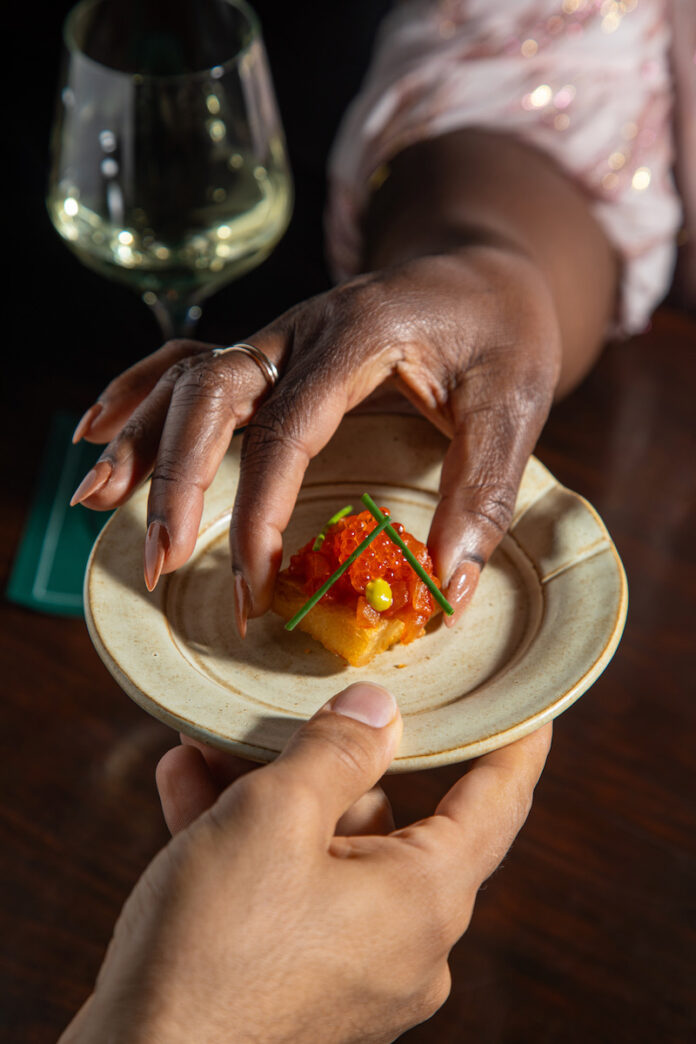
The interest in oysters shows up on the menu in the form of Smith’s Fried “Nashville Hot” oysters with toasted brioche, horseradish bread & butter pickles, and ramp-buttermilk. “I like to create a dish’s texture and flavor, but more than anything, I want to create the experience.” The dishes that most allow him to do that are often the ones that come from local history.

“I’m interested in what the cooks and the farmers ate, because those can showcase your talents more.” When you’re doing what you have to do to get by, it forces you to think on your feet and be inventive with your cooking. He grew up understanding the importance of using what you had because you had to. That meant using shoulder, loin, or shank of a meat, or short ribs, and growing your own food. “I have the choice now not to do those things. I can make a filet. But I don’t want that on the menu.”

“I’m just so happy to be giving West Virginia something to cheer for.”

When Anthony Bourdain visited West Virginia for Parts Unknown, he remarked that people know the state best for what’s been taken from it. Steel, coal, natural resources. “Now, hopefully people can come to West Virginia and take back memories and experiences,” Paul said. “I always hear people say they’ve driven through West Virginia, and I’m hoping that in the future, they know they have a reason to stop. I’m just so happy to be giving West Virginia something to cheer for.” Instead of what you can take from it, maybe it’s time to focus on what West Virginia can give.

Story by Emma Riva / Photo courtesy of the James Beard Foundation

A footer photo with a black background and subscribe info and button

Simple Double Chocolate Zucchini Bread

0
Chocolate bread on a white background

This Double Chocolate Zucchini Bread recipe is a fun way to add some vegetables into your dessert. The recipe is especially great for veggie-resistant kids. After this bread is baked, give a slice to your child and watch them indulge in the deliciousness with no clue about the nutritious ingredients inside. Summer is zucchini season, and if you’re not feeling the zucchini noodle craze, zucchini bread is a good way to use this savory vegetable. We’ve used espresso powder and a heaping helping of semi-sweet chocolate chips for beaucoup flavor.

How to Shred Zucchini

You don’t want to end up with clumps of zucchini mush in your zucchini bread batter, but you also don’t want it to totally purée: part of this recipe’s texture comes from the thickness of the batter. We grate by hand, the old fashioned way! You can use a food processor or a blender, but the aggressiveness of the blades takes away from the zucchini’s flavor. Plus, a box grater will preserve its integrity. Just make sure you’ve washed it first and cut off the ends to grate it most effectively.

Print
clock clock iconcutlery cutlery iconflag flag iconfolder folder iconinstagram instagram iconpinterest pinterest iconfacebook facebook iconprint print iconsquares squares iconheart heart iconheart solid heart solid icon
Chocolate bread on a white background

Simple Double Chocolate Zucchini Bread


  • Author: Anna Franklin

Description

A healthier take on a sweet treat.


Ingredients

Scale
  • 1 cup all-purpose flour
  • 1/4 cup cocoa powder
  • 3/4 tsp baking soda
  • 1/4 tsp baking powder
  • 1/4 tsp salt
  • 1/2 tsp espresso powder
  • 3/4 cup semi-sweet chocolate chips
  • 2 large eggs
  • 1/4 cup vegetable oil
  • 1/3 cup sour cream
  • 2/3 cup granulated sugar
  • 1 tsp pure vanilla extract
  • 1 1/2 cups shredded zucchini


Instructions

  1. Preheat oven to 350°F  (177°C). Grease a 8×4 inch loaf pan with nonstick spray. Set aside.
  2. In a large bowl, whisk the flour, cocoa powder, baking soda, baking powder, salt, and espresso powder together until combined. Mix in the chocolate chips. Set aside.
  3. In a medium bowl, whisk the eggs, oil, sour cream, granulated sugar, and vanilla together until combined.
  4. Slowly pour the wet ingredients into the dry ingredients and gently whisk to combine. Fold in the zucchini. The batter is very thick.
  5. Bake for 45–55 minutes. The bread is done when a toothpick inserted in the center comes out clean with only a few small moist crumbs. This should take roughly 55 minutes. All ovens vary, so begin checking around the 45-minute mark.
  6. Remove bread from the oven and allow the bread to cool in the pan set on a wire rack for 1 hour before serving.

Story by Emma Riva
Recipe and Styling by Anna Franklin
Photography by Dave Bryce

Subscribe to TABLE Magazine’s print edition.

Vandal, A Cocktail for The Bikeriders

0
Two Rocks glasses hold the orange Vandal Cocktail based on The Bikeriders with a sugar cube, cherry, and smoked cinnamon stick garnish. They sit on a green cloth.

The thrill of riding on a motorcycle through country roads takes liquid form in our Vandal Cocktail. This recipe is inspired by the film The Bikeriders, transporting you to the heart of 1960s motorcycle culture with a drink as bold and complex as the film itself. Our Vandal Cocktail is a smoky, citrusy concoction built around a base of Old Grand-Dad 114 bourbon. Cinnamon simple syrup adds a touch of warmth, while muddled orange juice and cherry bitters create a sweet and tart balance. Though, its the garnish that brings this rebellious cocktail to life. It’s topped with a luxurious Luxardo cherry and a torched cinnamon stick, adding a touch of smoky drama that embodies the spirit of the film.

What is The Bikeriders About?

Dive into the world of 1960s Midwestern motorcycle culture, following the rise and transformation of the Vandals Motorcycle Club. Seen through the eyes of its members and their families, The Bikeriders charts the club’s evolution from a local gathering place for outsiders into a potentially dangerous underworld. Witness the struggle between the founder’s original vision of camaraderie and the change to a more sinister path that threatens the core of the biker brotherhood. The story, starring Austin Butler, Tom Hardy, and Mike Faist, captures both the thrill of the open road and the potential darkness that can lurk beneath the surface, making our Vandal Cocktail the perfect accompaniment. The film releases in theaters on June 21, 2024.

Vandal, A Cocktail for The Bikeriders Recipe

Vandal Cocktail Ingredients

  • 2 oz Old Grand-Dad 114
  • 1 tsp cinnamon simple syrup (recipe below)
  • 4 dashes cherry bitters
  • 1 ½ tbsp fresh squeezed orange juice
  • Turbinado sugar cubes
  • Splash of soda water
  • 1 Luxardo Cherry
  • Smoked cinnamon stick

Cocktail Preparation Instructions

  1. In a Rocks glass, muddle together 1 turbinado sugar cube, orange juice, cinnamon simple syrup, cherry bitters, and soda water.
  2. Add in a large ice cube and pour in bourbon.
  3. Garnish with a cinnamon stick that you have torched one end, a luxardo cherry and an optional turbinado sugar cube.

Cinnamon Simple Syrup Recipe

Cinnamon Simple Syrup Ingredients

Simple Syrup Preparation Instructions

  1. In a small saucepan, bring the water and sugar to a boil, stirring until the sugar is dissolved.
  2. Reduce heat and add cinnamon sticks. Simmer for 10-15 minutes.
  3. Remove from heat. Allow the syrup to come to room temperature. Then pour into a container.
  4. Refrigerate. This Cinnamon Simple Syrup will last up to 2 weeks in the refrigerator or will last longer if you add a tablespoon of vodka or rum.

Story by Kylie Thomas / Recipe and Styling by Sarah Cascone / Photography by Dave Bryce

A footer photo with a black background and subscribe info and button

Subscribe to TABLE Magazine’s print edition.

Marc Newson Works: 84-24 New Design Book Release

0
The cover of Marc Newson Works: 84-24 sits face up showing a blue cover with a dark blue hourglass.

There are a lot of objects in our lives, or things we’ve seen online, that are the product of a particular designer’s imagination, but we might not know whose. Marc Newson has designed so many products—from mass-produced everyday items to airplanes, boats, and even a samurai sword—that it’s likely you’ve noticed one, or even have one in your home.

Two pages of Marc Newson Works 84-24 sits face up shows a silver chair across the two pages.

Lockheed lounge chair, aluminum/glass-reinforced plastic/metal, 1988. © Marc Newson

All About Marc Newson Works: 84-24

The new volume, Marc Newson Works: 84-24, is an encyclopedia of the Australian designer’s output. He has lived and worked in Sydney, Tokyo, Paris, and he currently resides in the UK where his company, Marc Newson Limited, has been based since 1997. His clients include Louis Vuitton, MontblancHermèsNike, and Dom Pérignon, to name only a very few.

A two page spread of Marc Newson Works 84-24 shows a black shelf and color panel shelf with paragraph descriptions.

Quobus Modular Shelving, various materials, 2015/2021. © Marc Newson

I’ve been fortunate enough to interview Newson several times, on topics ranging from a set of kitchenware for Tefal to that samurai sword, the latter by phone while he was walking on a beach in Greece, where he was on vacation with his family. (Sadly, my editor subsequently removed all mention of the sword and Newson from the article on Japanese Design.)

Story by Stephen Treffinger / Photography Courtesy of Marc Newson

A footer photo with a black background and subscribe info and button

Subscribe to TABLE Magazine’s print edition.

Five Questions With Designer Nathan Turner 

0
Nathan Turner sits on a white couch with his arms crossed in a blue cardigan and black glasses.

Designer, cookbook author, and entertainment expert Nathan Turner is debuting his first fabric line, inspired by his Northern California childhood. The look is relaxed but refined, with classic motifs like chintz, quilting, animal prints, and plaids seen in new ways through Turner’s lens. Each print comes in a range of subtle, slightly sun-bleached hues, from neutrals like taupe to soft blues, greens, and pink and gold tones that bring charm to any room.

I spoke with Nathan to get some insight into his process and how he looks at fabric, color, and pattern.

5 Questions With Designer Nathan Turner

How Did the Collection Come About?

Nathan Turner: I am the co-creative director and a partner at Wallshoppe. The founders are family friends and approached me with an idea for a direct-to-consumer wallpaper company, and I was in. From the beginning it was about creating fun, colorful prints in a very usable way.

Three textile groups by Nathan Turner in the colors blue on the left, green in the middle, and brown and blue on the right.

How Does Your California Background Inform Your Fabric Designs?

NT: My upbringing in California played a huge part in designing the fabric collection. It informs so much of my decorating and overall aesthetic. I love color and a relaxed sensibility. Stylish rooms cheerful colors and patterns that feel relaxed and liveable.

A white and green printed outfit of a jacket and pants sits behind a wood wall design by Nathan Turner.

What’s the Most Important Thing to Consider When Picking a Fabric?

NT: When choosing fabrics, it’s really important to consider the end use. Light airy linens with big patterns on curtains are great, while something with a little more heft like a texture or woven is great for a sofa. Most importantly when choosing color or pattern, pick what makes you happy…it’s an investment and something you’ll be looking at every day, so go with your gut. If you have an immediate positive reaction to something…go with it!

An interior by Nathan Turner with wood walls, a blue and white couch and other blue and white accessories like a small table and lamp.


How Do You Match the Print With the Project?

NT: I think I match the print to the person more than the project. I really tune into my clients’ likes and dislikes and the way they live. If they’re more adventurous, its bold colors and big patterns…if a little more subdued, maybe it’s a simple stripe. I really look at how my clients dress as well…if someone feels good in blue and they wear it a lot…they’ll certainly like living in it as well.

A room interior by Nathan Turner with a blue and green striped chair and ottoman in front of a similarly printed wall and curtain.

What’s Your Advice for Mixing Prints?

NT: I love mixing prints and patterns…for me the key is staying in the same color palette. If you do that you can pretty much layer a lot of prints in one room and it’s cohesive and not overbearing.

Story by Stephen Treffinger / Photos Courtesy of Nathan Turner

A footer photo with a black background and subscribe info and button

Subscribe to TABLE Magazine’s print edition.

Corn Ribs With Homemade BBQ Sauce

0
A bowl of corn ribs sits on a wooden table with a small container of homemade BBQ sauce in the center. Two glasses of beer sit in the top right corner and flowers are scattered throughout.

Grilling is getting an upgrade and the key ingredient is corn! We’re taking your summer cookouts to a whole new level with a recipe for Corn Ribs and Homemade BBQ Sauce. These succulent, tender Corn Ribs with a flavorfully seasoned rub are about to become the star of your next barbecue. We’ll show you the secret to perfectly cut corn ribs for maximum crunch and visual appeal. Then, we’ll whip up a Homemade BBQ Sauce from scratch, using pantry staples for a taste that’s smoky, sweet, and perfectly tangy. This dish is sure to be a crowd-pleaser, leaving everyone asking for seconds (or even thirds).

What are Corn Ribs?

Corn ribs are the vegetarian twist on barbecue that will elevate your spread. This trendy dish takes fresh ears of corn and transforms them into a hand-held side dish. The key to this new recipe lies in the cutting technique. The corn cobs are sliced vertically into thick “ribs” that expose the kernels. They’re then grilled or broiled, and enjoyed with a variety of dipping sauces. To create the best corn ribs, selecting the perfect corn is crucial. Look for ears with fresh, green husks that feel plump and tightly wrapped around the cob. You can also peek inside and ensure the kernels are bright yellow and evenly sized. You’ll want to avoid any ears with dry husks, soft kernels, or any signs of insect damage.

Print
clock clock iconcutlery cutlery iconflag flag iconfolder folder iconinstagram instagram iconpinterest pinterest iconfacebook facebook iconprint print iconsquares squares iconheart heart iconheart solid heart solid icon
A bowl of corn ribs sits on a wooden table with a small container of homemade BBQ sauce in the center. Two glasses of beer sit in the top right corner and flowers are scattered throughout.

Corn Ribs With Homemade BBQ Sauce


  • Author: Anna Franklin

Description

A finger-licking good way to enjoy corn off the cob.


Ingredients

Scale
  • 4 whole corn cobs
  • 3 tbsp extra virgin olive oil
  • 2 tbsp cilantro, roughly chopped
  • 1 1/2 tsp garlic powder
  • 2 1/2 tsp smoked paprika
  • 2 tsp salt
  • 2 tsp black pepper
  • 2 tbsp butter

For the homemade BBQ sauce:

  • 1 15-oz can tomato sauce
  • 1/2 cup apple cider vinegar
  • 1/3 cup honey
  • 1/4 cup tomato paste
  • 1/4 cup molasses
  • 3 tbsp Worcestershire
  • 2 tbsp liquid smoke
  • 1 tsp smoked paprika
  • 1 tsp garlic powder
  • 1/2 tsp freshly-ground black pepper
  • 1/2 tsp onion powder
  • 1/2 tsp fine sea salt


Instructions

  1. Using a sharp knife, cut off the base and then the pointy end of the corn. Stand the corn upright then cut the corn into half then half again to make quarters.
  2. Place corn in a large bowl then toss with olive oil. Then sprinkle with the garlic powder, paprika, sat and pepper, tossing in between, to coat as evenly as possible.
  3. Place corn on the grill kernel side down. Cook for 8 minutes or until you get charred spots.
  4. Transfer corn back into the bowl and after, toss with butter.
  5. Pile onto plate, sprinkle with parsley then grab and eat like ribs.

For the homemade BBQ sauce:

  1. Whisk all ingredients together in a medium saucepan.
  2. Simmer. Cook over medium-high heat until the sauce reaches a simmer.
  3. Reduce heat to medium-low and simmer (uncovered) for 10-15 minutes, or until the sauce has slightly thickened. Store in the refrigerator for up to 1 week.

Recipe and Styling by Anna Franklin
Story by Kylie Thomas
Photography by Dave Bryce

Subscribe to TABLE Magazine’s print edition.

Savory Zucchini Muffins

0
a tray of zucchini muffins sit on a table with a stick of butter nearby.

An easy zucchini recipe for the peak of zucchini season. Plus a savory version of a muffin! Have it as a dessert with a drizzle of honey or as a savory add-on to a brunch. You can substitute the chicken stuffing mix and chicken soup for vegan stuffing and veggie soup and add plant-based butter if you’re cooking for a vegan audience. This is a great side dish for a group gathering, or make it just for yourself and munch away on the leftovers. 

What Makes the Best Zucchini?

Whether you’re at a farmer’s market or a big box grocery store, there are a few things you can look for to make sure you’re getting the best zucchini. Check for firmness, because if the zucchini is soft, the fruit is past its prime. (Yes, zucchini is a fruit, not a vegetable!) Some of the woody stem should still be intact on top and the fruit should be a bright, vibrant green with few blemishes. 

Print
clock clock iconcutlery cutlery iconflag flag iconfolder folder iconinstagram instagram iconpinterest pinterest iconfacebook facebook iconprint print iconsquares squares iconheart heart iconheart solid heart solid icon
a tray of zucchini muffins sit on a table with a stick of butter nearby.

Savory Zucchini Muffins


  • Author: Anna Franklin

Description

A staple for your morning work or school commute.


Ingredients

Scale
  • 2 lb diced zucchini
  • 1 medium onion, chopped
  • 1 tbsp olive oil
  • 1 can condensed cream of chicken soup
  • 1/2 cup sour cream
  • 1 cup grated carrots
  • 1 package chicken-flavored dry bread stuffing mix
  • 1 stick unsalted butter, melted


Instructions

  1. Preheat oven to 350 degrees.
  2. Sauté diced zucchini and onion in 1 tablespoon of olive oil until softened.
  3. Combine condensed soup, sour cream, and carrots in a large bowl. Stir in zucchini and onion until well combined. Set aside.
  4. Combine stuffing and melted butter in a medium bowl. Place a spoonful of stuffing into each muffin tin and top with some of the zucchini mixture, then top with remaining stuffing.
  5. This can also be made in a 9 x13 casserole dish if you do not want to make individual servings.
  6. Bake in the preheated oven until stuffing is golden brown, 25 to 30 minutes.

Recipe by Anna Franklin
Photography by Dave Bryce

Subscribe to TABLE Magazine‘s print edition.

Thai-Inspired Zucchini Noodles

0
A plate of Thai inspired zucchini noodle stir fry

Some people love zucchini noodles, some people hate them. Maybe you cringe when you hear “zoodles.” But whether you think they’re a fad or a genius health hack, they’re a great creative use for one of summer’s best seasonal produce. We have a Thai-inspired version for if you want to try a different take on Pad Thai. Zucchini noodles soak up the flavor of whatever they’re in, so they pair well with this savory sauce. To get the stir fry going, heat 1½ tablespoons of oil in a large saucepan or wok over medium-high heat, and then you’re ready to go. 

How to Cut Zucchini Noodles

Zucchini noodle recipes often use a “spiralizer,” which you can get from OXO. It’s a good thing to have if you’re interested in varying the way you eat lots of vegetables, not just zucchini noodles. But if you don’t want to spend the money or need to make them in a pinch, a mandoline, potato peeler, julienne peeler, or box grater will also do. Take a look at some of the no-spiralizer methods. 

Print

clock clock iconcutlery cutlery iconflag flag iconfolder folder iconinstagram instagram iconpinterest pinterest iconfacebook facebook iconprint print iconsquares squares iconheart heart iconheart solid heart solid icon
A plate of Thai inspired zucchini noodle stir fry

Thai-Inspired Zucchini Noodles


  • Author: Anna Franklin

Ingredients

Scale

Stir Fry Ingredients

  • 1 red bell pepper thinly sliced
  • 2 cloves garlic, minced
  • 2 large zucchinis, cut into “noodles”
  • 2 green onions, chopped
  • 2 eggs
  • 1/4 cup cilantro leaves, chopped
  • 1/4 cup crushed peanuts
  • Lime wedges for garnish

For the Pad Thai sauce:

  • 3 tbsp fish sauce
  • 1 tbsp low-sodium soy sauce
  • 5 tbsp light brown sugar
  • 2 tbsp rice vinegar
  • 1 tbsp Tamarind Paste
  • 1 tbsp Sriracha hot sauce , or more, to taste
  • 2 tbsp creamy peanut butter


Instructions

Stir Fry Instructions 

  1. Add garlic and bell pepper. Cook until the peppers are soft and the garlic is slightly browned.
  2. Push everything to the side of the pan. Add a little more oil and add the beaten eggs. Scramble the eggs, breaking them into small pieces with a spatula as they cook.
  3. Make sauce by combining ingredients in a bowl. Set aside before stir frying.
  4. Add the zucchini noodles, sauce, peanuts to the pan (reserving some peanuts for topping at the end). Toss everything to combine.
  5. Garnish the top with green onions, extra peanuts, cilantro and lime wedges. Serve immediately!

Recipe and styling by Anna Franklin / Photography by Dave Bryce

Subscribe to TABLE Magazine‘s print edition.

Kale and Sweet Potato Soup with Pasta and Poached Eggs

0
A plate of kale and sweet potato soup with a poached egg

This kale sweet potato soup is ideal for gray and gloomy days—it’s the essence of relaxed cold weather cooking. Made with colorful vegetables, tiny pasta, and poached eggs, it’s comforting and will brighten your spirits in less than half an hour. The liquid egg yolk melts into the clear broth, making the soup almost creamy, while the pasta soaks up all the flavors, making it a little richer, more substantial.

Which Ingredients to Use for Your Kale Sweet Potato Soup 

I like to use fregula sarda, toasted pearl-shaped pasta from Sardinia, which is tender and silky, but orzo or pearl couscous work well, too. Kale and sweet potato are a beauti­ful duo for a winter soup, but feel free to use white potatoes, parsnip, squash, or canned beans. This recipe welcomes any vegetable that can add subtle sweetness with open arms. You can poach the eggs in the soup, but I prefer to cook them separately.

The vegetables need to cook for about twenty minutes, so check the cooking time of your pasta and add it to the soup early enough that the pasta and vegetables will be done at the same time.

Print

clock clock iconcutlery cutlery iconflag flag iconfolder folder iconinstagram instagram iconpinterest pinterest iconfacebook facebook iconprint print iconsquares squares iconheart heart iconheart solid heart solid icon
A plate of kale and sweet potato soup with a poached egg

Kale and Sweet Potato Soup with Pasta and Poached Eggs


  • Author: Meike Peters

Description

A hearty midday soup.


Ingredients

Scale
  • Olive oil, for sautéing and finishing
  • 1 small onion, cut in half
  • 1 large clove garlic, cut in half
  • 4 ounces (110 g) trimmed kale or cavolo nero leaves, cut into short strips
  • 9 ounces (250 g) peeled sweet potato, cut into small cubes
  • 2½ cups (600 ml) homemade or quality store-bought vegetable broth, hot
  • 6 medium sprigs fresh thyme
  • 2 small sprigs fresh rosemary
  • 2 small bay leaves
  • Fine sea salt
  • Finely ground pepper
  • 4 ounces (110 g) pearl-shaped pasta (fregula sarda, orzo pasta, or pearl couscous)
  • 2 to 3 large eggs


Instructions

For the soup:

  1. In a medium pot, heat a splash of olive oil over medium heat. Add the onion and garlic and sauté, stirring, for a few minutes or until golden and soft.
  2. Add the kale and sweet potato, stir, and cook for 1 minute, then add the hot broth, thyme, rosemary, and bay leaves.
  3. Season with salt and pepper and bring to a boil.
  4. Reduce the heat, cover, and simmer for 10 minutes.
  5. Remove and discard the thyme and rosemary and cook for 10 min­utes, adding and cooking the pasta, according to the package instructions, so that the pasta and vegetables will be done at the same time.
  6. When the pasta and vegetables are tender, remove and discard the onion, garlic, and bay leaves. Season to taste with salt and pepper, cover, and keep warm.

For the poached egg:

  1. Bring a small saucepan of salted water to a low simmer.
  2. Crack 1 egg into a small bowl.
  3. Hold a large spoon just over the surface of the water and gently pour the egg onto the spoon. Lower the spoon into the water and hold until the egg white starts to turn white, then use a tablespoon to gently scoop the egg off the large spoon.
  4. Poach the egg for 3 minutes. Using a slotted ladle or spoon, transfer the egg to a plate.
  5. Poach the remaining eggs the same way, adjusting the heat as needed to maintain a low simmer. You can poach 1 egg at a time or cook all of them together, watching the time for each individual egg.
  6. Divide the soup among bowls and place an egg in the middle of each bowl. Cut the tops of the eggs with a sharp knife and let the egg yolk run into the soup, then drizzle with a little olive oil and serve immediately.

From Noon: Simple Recipes for Scrumptious Midday Meals and More by Meike Peters, © 2023
Published by Chronicle Books
Photographs © Meike Peters

Subscribe to TABLE Magazine here

Ada’s Cold Beet Soup with Cucumber, Radishes, and Egg

0
A bowl of pink soup staged over a black background

Adrianna “Ada” Jackowska has the talent to make me smile even on my grumpiest days. So does her Polish cold beet soup. She is the first person who convinced me that cold soup can be great. The soup she grew up with is called chłodnik. It’s vibrantly pink, and so crisp, it tastes like biting into a vegetable garden—I find it more refreshing than a salad.

Traditionally in spring or early summer using baby beets and their tender greens, this soup combines grated raw cucumber and radishes and topped with fresh dill and chives. The vegetables are stirred into a chilled kefir-buttermilk-yogurt mixture and crowned by a soft-boiled egg. Perfect frugal simplicity. Some add crayfish, which I don’t think it needs.

Sticking to vegetables and making them shine without distraction is the pure beauty of this soup. And it’s quick to prepare: You cook the beets for five minutes and then mix it all together. Ada makes enough for six servings, as it stays fresh in the fridge for a few days, developing just the right depth and flavor on the third day, and is also perfect for inviting friends over.

Print
clock clock iconcutlery cutlery iconflag flag iconfolder folder iconinstagram instagram iconpinterest pinterest iconfacebook facebook iconprint print iconsquares squares iconheart heart iconheart solid heart solid icon
A bowl of pink soup staged over a black background

Ada’s Cold Beet Soup with Cucumber, Radishes, and Egg


  • Author: Meike Peters
  • Yield: Serves 6

Description

Try this new way of incorporating beets into your diet.


Ingredients

Scale

For the soup:

  • lb (680 g) baby beets with their greens (or regular beets plus 2 large chard leaves)
  • Fine sea salt
  • 1 tsp granulated sugar
  • ¾ cup plus 1 tbsp (200 ml) water
  • 11 oz (310 g) peeled kirby or Persian cucumbers, coarsely grated
  • 2 cups plus 1 tbsp (500 ml) buttermilk, cold
  • 12/3 cups (400 ml) kefir, cold
  • 1¼ cups (300 ml) full-fat plain yogurt, cold
  • 10 medium radishes, trimmed and coarsely grated
  • 2 tbsp freshly squeezed lemon juice, plus more to taste
  • 1 medium bunch fresh chives, chopped
  • 1 small bunch fresh dill, chopped, reserving a few fronds for the topping
  • Finely ground pepper

For the topping:

  • 3 to 6 large eggs
  • 18 thin cucumber slices
  • 6 radishes, thinly sliced
  • Freshly grated lemon zest (optional)


Instructions

  1. For the soup, peel the beets and cut into small cubes, then finely chop the beet stems and slice the leaves. Transfer the beets, stems, and leaves to a medium pot and stir in 1 teaspoon of salt, the sugar, and the water. Cover the pot and bring to a boil, then reduce the heat and simmer for 4 to 5 minutes or until al dente. Transfer the beets and cooking liquid to a medium bowl, let cool at room temperature for 10 minutes, and then chill in the fridge until cold.
  2. In a medium bowl, mix the cucumbers with a generous amount of salt and let sit for 15 minutes, then drain and squeeze the cucumber.
  3. For the topping, place the eggs in a pot, cover with cold water, and bring to a boil. Once the water is boiling, cook for 4 minutes for soft-boiled eggs. Drain the eggs and rinse with cold water. Peel the eggs, set aside, and cut in half lengthwise just before serving.
  4. In a large bowl, whisk together the buttermilk, kefir, and yogurt, then stir in the beets and their cooking liquid, the drained cucumbers, grated radishes, lemon juice, chives, and dill. Season to taste with salt, pepper, and additional lemon juice.
  5. Divide the cold soup among bowls, arrange a few cucumber and radish slices on top, and place a half or a whole egg in the middle. Sprinkle with a little lemon zest and dill and serve immediately. You can keep the soup in the fridge for up to 3 days.

From Noon: Simple Recipes for Scrumptious Midday Meals and More by Meike Peters, © 2023.
Published by Chronicle Books.
Photographs by © Meike Peters.

Subscribe to TABLE Magazine‘s print edition.

Create a free account, or log in.

Gain access to read this content, plus limited free content.

Yes! I would like to receive new content and updates.

Table Magazine wants to know your location.

TABLE Magazine operates regional sites - Knowing your location helps us route you to the appropriate site for the best experience.