Home Blog Page 106

Butternut Squash Lasagna

0
Butternut Squash Lasagna

Just south of Paso Robles, CA, Chef Rachel Taylor developed this Butternut Squash Lasagna at her former restaurant Dead Oak Brewrery. Her menus fuse together varying local ingredients seasoned with warm spices, butternut squash lasagna and decadent textures. This recipe is perfect for fall or winter, especially if you’re just tired of the same old red sauce and cheese. Butternut squash is delicious, healthy, and in season in the fall months. So, what are you waiting for? Try it in a lasagna.

What Drink Should You Pair with This Lasagna?

High-acidity red wines like Chianti Classico, Pinot Noir, Zinfandel, Dolcetto, Barbera, or Nero d’Avola can well with both a classic lasagna and its butternut squash counterpart. For a cocktail, whiskey is a good liquor to pair with a hearty dish like lasagna, because it will both complement the flavor and cleanse the palate from the richness of the dish. Consider a whiskey on the rocks or a cocktail with bourbon to bring out some of the earthiness of the butternut squash.


Print
clock clock iconcutlery cutlery iconflag flag iconfolder folder iconinstagram instagram iconpinterest pinterest iconfacebook facebook iconprint print iconsquares squares iconheart heart iconheart solid heart solid icon
Butternut Squash Lasagna

Butternut Squash Lasagna Recipe


  • Author: Natalya Sutmiller

Description

Gooey cheese and tender pasta perfectly combine with sweet butternut squash.


Ingredients

Scale
  • 2 garlic cloves, minced
  • 1 ½ lb ground beef
  • 1 lb ground pork
  • 2 cups butternut squash, diced and peeled
  • 1 tsp salt
  • 4 tbsp butter
  • 1/4 cup flour
  • 1 ½ cups milk
  • 1/2 cup cream
  • 1 tsp nutmeg
  • 1 tsp ground cinnamon
  • 2 tbsp fresh basil, finely chopped
  • 1 cup fresh shredded Parmesan
  • 13 oz no-precook lasagna sheets
  • 17 oz fresh mozzarella cheese, shredded
  • Salt and pepper, to taste


Instructions

  1. Heat oil in a large pot over medium heat; add garlic for one minute until fragrant, then add the ground beef and pork and cook while breaking it up until browned. Drain out any excess fat and set aside.
  2. Add chopped butternut squash to a large pot of water with the heat on high. When it comes to a boil, add a big pinch of salt and turn to medium heat; top the pot with a lid and let simmer for 12-15 minutes.
  3. In a large pot, melt butter over medium heat. Remove from heat, add the flour, and whisk until well blended. Place pot back onto the stove, reduce heat to low, and slowly whisk in one cup at a time of milk, cream, and spices until incorporated. Mix well after every addition so you don’t cause lumps to form.
  4. Once that is ready, add the creamy butternut squash mixture. It should be a creamy consistency, but you can add more milk if needed.
  5. Increase the heat to medium and cook the sauce until it thickens 5-7 minutes. Add Parmesan cheese, remove from heat, and stir until the cheese is melted.
    Preheat oven to 350 degrees.
  6. Spoon 1 cup of béchamel on the bottom of a 9 x 13 baking dish and then cover with lasagna sheets. Trim sheets if needed to fit the dish.
  7. Layer 1/3 of the meat, 1/3 of the mozzarella cheese, and 1 cup of bechamel, repeating layers 3 times. To top the lasagna, pour over the rest of the béchamel and shaved Parmesan cheese. Cover with foil.
  8. Bake for 35 minutes, uncover, and bake for another 10 minutes until golden and bubbling. Allow sitting for 10 minutes before serving. Garnish with basil and extra shaved Parmesan.

Story by Natalya Sutmiller
Photography by Hugo Martinez Visuals

Subscribe to TABLE Magazine’s print edition.

Celebrate with a Yule Margarita

0
A red Yule Margarita cocktail on ice, garnished with a lime slice and a rosemary sprig, with holiday decor in the background.

The holidays call for cocktails that feel both festive and refreshing, and the Yule Margarita delivers exactly that. Created by Aubrey Haliburtan of LoBar Cocktail Services, this holiday-ready margarita blends the smoky depth of mezcal with the brightness of citrus and the warming spice of hibiscus. It’s a seasonal twist on the classic margarita that’s perfect for Christmas parties, New Year’s celebrations, or cozy winter nights at home.

Aubrey Haliburtan Celebrates with a Yule Margarita Recipe

What makes this holiday margarita recipe stand out is the homemade spiced hibiscus syrup. Infused with hibiscus tea, cinnamon sticks, and allspice berries, the syrup adds a rich, floral sweetness and layers of spice that pair beautifully with tequila and mezcal. Finished with a clove-studded orange wedge, the Yule Margarita is as eye-catching as it is flavorful—a cocktail that looks just as good on the table as it tastes in the glass.

Whether you’re a fan of classic margaritas or looking for a new festive cocktail to impress your guests, this recipe is a must-try. It’s easy to make, full of holiday spirit, and versatile enough to serve as a cocktail or even a mocktail when paired with soda water and citrus. The Yule Margarita is proof that holiday drinks can be both elegant and fun, bringing a little extra cheer to every celebration.

Print
clock clock iconcutlery cutlery iconflag flag iconfolder folder iconinstagram instagram iconpinterest pinterest iconfacebook facebook iconprint print iconsquares squares iconheart heart iconheart solid heart solid icon
A red Yule Margarita cocktail on ice, garnished with a lime slice and a rosemary sprig, with holiday decor in the background.

Yule Margarita


  • Author: Aubrey Haliburtan

Description

This festive twist on a margarita blends silver tequila, mezcal, citrus, and a spiced hibiscus syrup for a bright yet warming holiday cocktail. Garnished with a clove‑studded orange wedge, it’s a seasonal sip that’s as beautiful as it is flavorful.


Ingredients

Scale
  • 1 oz silver tequila
  • ¾ oz mezcal
  • 1½ oz spiced hibiscus syrup
  • ½ oz lime juice
  • ½ oz lemon juice
  • Pinch of salt

For the spiced hibiscus syrup:

  • 2 cup hibiscus tea
  • 1 cup organic sugar
  • 2 cinnamon sticks
  • 2 tbsp allspice berries


Instructions

  1. Combine all ingredients in a shaker, strain over fresh ice, add a clove studded orange wedge.

For the spiced hibiscus syrup:

  1. Combine all ingredients into a pot.
  2. Simmer on low for an hour or until sugar is dissolved. Strain through cheesecloth and cool.
  3. This syrup also makes a great mocktail when combined with soda water and citrus!

Recipe by Aubrey Haliburtan

Subscribe to TABLE Magazine’s print edition.

Shake Up a Coquito, a Puerto Rican Christmas Cocktail

0
A chilled Coquito cocktail in a coupe glass, garnished with a star anise and cinnamon, for a Puerto Rican holiday drink.

The holidays in Puerto Rico wouldn’t be complete without a glass of coquito, the island’s beloved Christmas cocktail. Creamy, spiced, and full of festive cheer, this drink is often compared to eggnog—but with a tropical twist. Mixologist Randolf Boitel shares his special French Coquito recipe, a version that blends rich coconut crème, warm spices, and smooth Courvoisier VSOP for a truly unforgettable holiday drink. Perfect for carolers, revelers, and family gatherings, this recipe makes enough to share with a crowd.

Randolf Boitel Shakes Up a Coquito from Puerto Rico

What makes this Puerto Rican Christmas drink so special is its balance of flavors. The coconut crème and evaporated milk create a silky base, while cinnamon, cloves, and star anise bring warmth and spice. The addition of Caribbean rum and French cognac gives the coquito a bold, elegant finish that sets it apart from the traditional version. Served chilled in small glasses and garnished with a sprinkle of cinnamon, it’s a cocktail that feels both comforting and celebratory.

Whether you’re hosting a holiday party, looking for a festive cocktail to gift in bottles, or simply want to experience a taste of Puerto Rican tradition, this French Coquito recipe is the perfect choice. It’s rich, flavorful, and designed for sharing—making it a holiday staple you’ll want to enjoy year after year.

Print
clock clock iconcutlery cutlery iconflag flag iconfolder folder iconinstagram instagram iconpinterest pinterest iconfacebook facebook iconprint print iconsquares squares iconheart heart iconheart solid heart solid icon
A chilled Coquito cocktail in a coupe glass, garnished with a star anise and cinnamon, for a Puerto Rican holiday drink.

Shake Up a Coquito, a Puerto Rican Christmas Cocktail


  • Author: Randolf Boitel
  • Yield: Makes 25 Drinks 1x

Description

This Puerto Rican holiday classic blends evaporated milk, coconut crème, spices, and a generous pour of rum and French brandy for a rich, creamy drink meant for sharing. Served chilled and garnished with cinnamon and star anise, it’s a festive, crowd‑pleasing cocktail perfect for Christmas gatherings.


Ingredients

Scale


Instructions

  1. Mix the evaporated milk, coconut crème and half & half, plus all of the spices & simmer over low heat for about an hour.
  2. Remove from heat & strain, then allow to rest until cooled. When the mixture has cooled, add the spirits and then refrigerate for 24 hours.
  3. Serve a chilled 4 ounce pour in a Niquernera cocktail glass with no ice.
  4. Garnish with a sprinkling of cinnamon & a star anise, and enjoy.

Notes

This recipe will make about 25 drinks, so it’s perfect for sharing during the holidays!

Recipe by Randolf Boitel

Subscribe to TABLE Magazine’s print edition.

Chocolate Espresso Martini

0
A chocolate espresso martini staged on a black background with a dusting of espresso bean on the top

This recipe combines three of life’s greatest pleasures, chocolate, espresso, and vodka. All in one drink! Try a chocolate espresso martini as a way to feel fancy at the home bar. Or, try our other espresso martini recipes like the Whiskey Espresso Martini or the Toasted Marshmallow Espresso Martini.

Who Invented the Espresso Martini?

Like the telephone, the automobile, and the lightbulb, whenever a genius invention comes to light, multiple people claim they made it. The man behind the espresso martini is Dick Bradsell. A model approached him in the 1980s and asked for a drink that could serve as both a pick-me-up and a way to take the edge off. The rest was history. The espresso martini now embodies the classy, upbeat spirit of having a fun late night out. In a way, it’s a sort of bookend to the Aperol spritz, which is a lovely late afternoon start to ease into the evening. The chocolate espresso martini will be a new favorite at your bar.

Print

clock clock iconcutlery cutlery iconflag flag iconfolder folder iconinstagram instagram iconpinterest pinterest iconfacebook facebook iconprint print iconsquares squares iconheart heart iconheart solid heart solid icon
A chocolate espresso martini staged on a black background with a dusting of espresso bean on the top

Chocolate Espresso Martini


  • Author: Sarah Cascone

Description

Two of life’s greatest pleasures.


Ingredients

Scale
  • 2oz fresh brewed espresso (chilled)
  • 2oz Dirty Chocolate Cream Liqueur
  • 4oz Faber Vanilla Vodka
  • 2oz Tia Maria


Instructions

  1. Add ice to a cocktail shaker. Add all ingredients and shake vigorously until a frost forms. Strain pour into a chilled coupe glass.
  2. Garnish half of the cocktail with chocolate shavings.

Recipe by Sarah Cascone / Photography by Dave Bryce

Colorful Crostini Spreads to Brighten your Day

0
A pink bowl of beet and yogurt mousse with garnish on top of it

A great addition to any meal, easy and delicious, these spreads can be used as a dip for breadsticks or pita chips, or as a base for crostini, topped with roasted or sautéed vegetables, crunchy seeds and soft cheese. Either way, they are a feast for the eyes and a treat for the palate. For larger parties, go ahead and make all of them: the vibrant combination of colors will surely impress your guests.

Colorful Crostini Spreads to Brighten your Day

Cannellini Bean and Purple Cabbage Hummus

A plate of bright purple hummus topped with sesame seeds, spread on top of crostini

Ever wondered if hummus could be more colorful? With a dash of purple cabbage, ordinary hummus can become a beautiful shade of violet. Impress at any gathering with this statement side. Enjoy it with slices of baguette or your favorite crackers, or some toasted pita.

Sweet Pea Guacamole

A green paste of sweet peas surrounded by bread for dipping

Maybe you have a picky eater in your life who isn’t down with guacamole. For a slightly milder flavor that pairs better with crisp Mediterranean crostini, try this Sweet Pea Guacamole.

Red Beet and Greek Yogurt Spread

A pink bowl of beet and yogurt mousse with garnish on top of it

This beet and Greek yogurt spread is almost too beautiful to eat. The color is gorgeous, and the spread is even tastier than it looks. Dip your pita or fresh crudités and enjoy!

Squash and Roasted Garlic Hummus

A yellow bowl of hummus with two sides of vegetables in ramekins on a white background

Garlic and hummus are a classic combination. The squash adds some extra fall flavor and color, too. Try dipping some sweet potato chips, pita chips, or focaccia into this delectable spread.

Recipes and Photography by Sara Ghedina

Subscribe to TABLE Magazine’s print edition

This Year’s Hottest Holiday? Chrismukkah

0
A round blue platter with 5 potato latkes , two small bowls with sour cream and applesauce, 3 gold forks, and a smaller lighter blue plate with 3 smaller latkes, and a blue linen.

Christmas and Hanukkah are on the same day in 2024, so there’s extra reason to celebrate. If you’re an interfaith family, have both Jewish and Christian friends at your party, or just feel like exploring some new culinary traditions, consider Chrismukkah as a theme.

Calling Hanukkah “Jewish Christmas” is something of a misnomer—yes, it falls around the same time of year, and greeting card companies have decided it lines up with Christmas. In terms of calendar significance and stressful levels of meal prep with specific and mandatory dishes, Rosh Hashanah and Yom Kippur are closer to Christmas. Hanukkah was considered a minor holiday until the mid-19th century when rabbis began holding special holiday services for children to celebrate Hanukkah. Also, we have modern consumerism to thank for the idea of eight nights of gifts. This was never a Hanukkah tradition until the commercialization of Christmas in the early 20th century.

This year, you can celebrate unity and understanding with a combination holiday party or meal. Double the holidays, double the fun! As someone in a mixed-faith family, here are some ways to celebrate “Chrismukkah” to encourage people to learn more about each other’s traditions.

This Year’s Hottest Holiday? Chrismukkah. Try Out These Traditions. 

Make Latkes

Latkes have the potential to be a bridge between cultures, because everyone can agree on this savory, easy to make winter dish. Frankly, latkes totally win out over the candied yams and roasted potatoes you might find on a Christmas menu. Give a try to TABLE’s recipes for Gluten-Free Potato Latkes, Carrot and Beet Latkes, or Chef Joey Hilty’s Potato Rösti. To be honest, the best way forward for most Jewish recipes is to ask a friend what their go-to is. Better yet: ask their mother! Word of mouth is the name of the game to get that perfect latke recipe passed down from somebody’s bubbe from Poland.

Get Lit with Candles and Lights

Christmas lights and Hanukkah candles both offer an opportunity to decorate the home. The candle stand for Hanukkah has a special name, the Hanukkiah. A menorah is any eight-candle structure in Judaism, but the Hanukkiah is the specific one for the holiday. The winter can be a gloomy time, and both Jewish and Christian traditions recognize the need to have a little sparkle in your home décor on those dark nights.

Indulge in Fried Desserts

Hanukkah commemorates oil lasting eight nights, so we like to indulge in foods as full of oil as that lamp. That includes classic sufganiyot or Isfeng Andalusion Donuts. You could get creative with toppings or frosting to put your own spin on these desserts for your holiday gathering. Maybe add a bit of Hanukkah flair to a bouche de noel with a drizzle of honey, or add some cardamom to your mom’s sugar cookie recipe!

Have Fun with Cocktails and Drinks

Sometimes Manischewitz is unavoidable at a Jewish holiday table. But one of my missions in life is to inform people that they do not have to drink disgusting syrup in order to have kosher wine. The Levant is a wine-producing region, so you could try some wineries from the Holy Land like Recanati, whose Cabernet Sauvignon and Petit Syrah varietals are wonderful to serve at a meal. Barkan in the Galilee also has a nice Cabernet—you can splurge on their Alexander the Great 2017 vintage. Or, for a cocktail, try TABLE’S purple-hued Hanukkah 75, perfect for a toast no matter what holiday you’re celebrating.

Story by Emma Riva

Subscribe to TABLE Magazine’s print edition. 

The History of Eggnog

0
Two cups of eggnog garnished with cinnamon sticks sit on a brown plate

If you think about it, eggnog is kind of strange. The mixture of milk, cream, spices, often booze (and often a lot of it)—plus the namesake (raw) eggs—is definitely greater than the sum of its parts.

The History of Eggnog

Although (like nearly everything) its origins are up for debate, most agree it originated as a Medieval British drink called a “posset.” Posset is a mix of milk and ale, served hot. Later, add ins (by, some say, monks) included eggs and figs. Later on, somebody added sherry, which was an expensive and rare ingredient in Europe at the time, as were eggs and milk. Eggnog therefore became a drink used to toast to health and prosperity.

How did Eggnog Makes Its Way to America? 

How it became an American staple is also murky, but it is believed it arrived with the earliest settlers. Even the name is something of a mystery, with some saying it comes from “noggin” (or wooden cup). Another claims it comes from “nog”, strong beer in Old English. At some point (probably in the late 17th century) the term eggnog (with slight variations in spelling) became the norm.

In America, the alcohol switched to rum from the Caribbean, which was less expensive than other liquors at the time. Because milk and eggs were easy to come by, the rum-spiked mixture became popular for all classes of people. (Regional variations resulted in the swapping in of, for instance, whiskey in the South.)

Which U.S. President Indulged in Eggnog? 

George Washington himself was said to have his own particular brew that contained a hangover-inducing mix of sherry, rum, rye, and brandy. Some (including Washington) recommend aging the eggnog for a couple of days or even a couple of weeks in the refrigerator (okay, Washington just said a cool place) before serving.

Over time, eggnog became both warm and cold. It’s best fresh, of course, with whichever mix of alcohol—or use none—you prefer and at whichever temperature you enjoy.

You can even turn it into a dessert, as in our delicious Eggnog Pudding Shots.

Story by Stephen Treffinger / Photo by Tatiana Goskova 

Subscribe to TABLE Magazine’s print edition

Red Beet and Greek Yogurt Spread

0
A pink bowl of beet and yogurt mousse with garnish on top of it

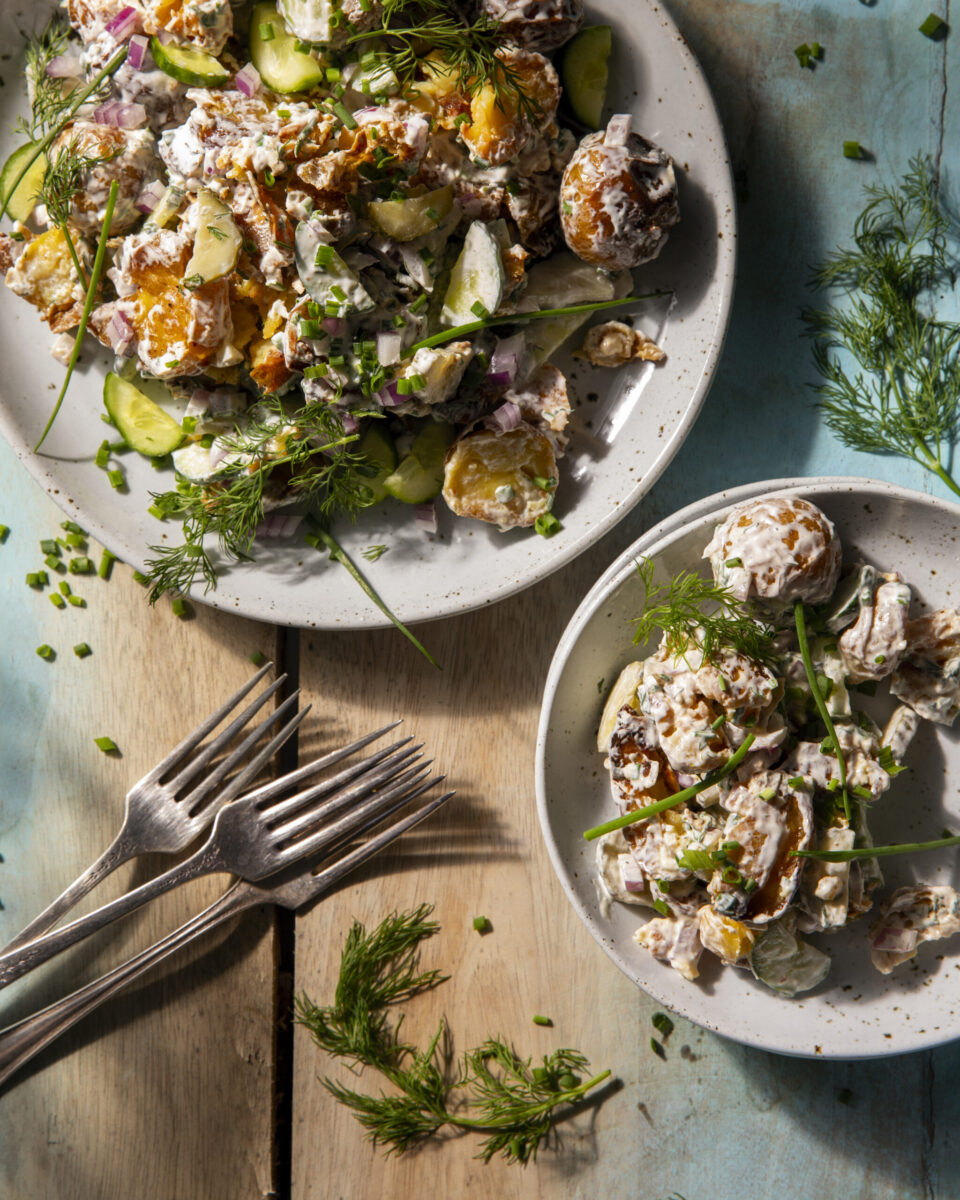
You can’t beat this red beet and Greek yogurt spread. This dip is a great option to bring to any gathering. The great thing about being the person that brings the dip is that you’re then an essential part of the snack spread. You can dip bread, pita chips, fresh vegetables, and more into it, or spread it on a piece of fresh baguette. 
Is Greek Yogurt Really Greek?

So…we hate to burst your bubble, but Greek yogurt is not Greek. “Greek” yogurt is made by straining regular yogurt to thicken it and remove whey. While this is the traditional way of making yogurt in the Middle East and Mediterranean. It’s called straggisto in Greece, but brands well-known in the West like Chobani are not even from Greece. Chobani is actually (gasp) Turkish. It’s not technically incorrect to call it Greek yogurt, but if you want to bring out a fun trivia fact at a party, this is a good one for the know-it-alls out there. Like French fries (not actually French) and French toast (also not technically French), the name stuck. Its origins might be debatable, but that doesn’t keep Greek yogurt from being delicious.

Print

clock clock iconcutlery cutlery iconflag flag iconfolder folder iconinstagram instagram iconpinterest pinterest iconfacebook facebook iconprint print iconsquares squares iconheart heart iconheart solid heart solid icon
A pink bowl of beet and yogurt mousse with garnish on top of it

Red Beet and Greek Yogurt Spread


  • Author: Sara Ghedina
  • Yield: Serves 6

Description
You can’t beat the beets.


Ingredients

Scale
  • 5 medium red beets, boiled or roasted
  • 1 1/4 cup Greek yogurt
  • 12 garlic cloves
  • 2 tbsp extra-virgin olive oil
  • 1 tbsp maple syrup
  • 1/2 tbsp lemon juice
  • 1/2 tsp red pepper flakes
  • 1/2 tsp sumac
  • salt and pepper to taste

To serve:

  • 1/2 tbsp sesame seeds
  • 2 tbsp roasted peanuts
  • 1 green onion
  • 2 tbsp crumbled feta or goat cheese


Instructions

  1. Peel and cut the beets. Place them in a blender along with yogurt, garlic clove, olive oil, maple syrup, lemon juice, red pepper flakes, sumac, salt and pepper. Blend until smooth. Taste and adjust the seasoning if needed.
  2. To serve, top the spread with sesame seeds and/or roasted peanuts, sliced green onion (green part only) and crumbled feta or goat cheese, then drizzle with some olive oil.

Recipe and Photography by Sara Ghedina 

Sweet Pea Guacamole

0
A green paste of sweet peas surrounded by bread for dipping

Don’t have avocados on hand? This guacamole, which uses sweet peas as an alternative to avocados, is great in a pinch. This sweet pea guacamole is perfect as a base for pizza in place of tomato sauce, or spread on toasted bread and topped with some roasted cherry tomatoes. Use it as a dip for chips and crduités if you need a break from guacamole at your snack table, or add it to a charcuterie board for a pop of color.

Sweet Peas vs. English Peas

Not all peas are equal. The “sweet pea” is actually a flowering plant that you can’t eat. Many peas are under the label of “sweet peas,” though, so when you buy a package of frozen peas for this recipe, you’re actually getting English peas. While you can also get snap peas and snow peas, English peas will be the easiest to blend into a paste to make this recipe. Check out some tips for how best to cook peas and get the most out of their flavor. You can add butter, garlic, and parm reggiano on top to give it a little bit extra. No reason that peas need to get the reputation as flavorless! There’s a lot you can do with them, including mix them into this colorful dip.

Print

clock clock iconcutlery cutlery iconflag flag iconfolder folder iconinstagram instagram iconpinterest pinterest iconfacebook facebook iconprint print iconsquares squares iconheart heart iconheart solid heart solid icon
A green paste of sweet peas surrounded by bread for dipping

Sweet Pea “Guacamole”


  • Author: Sara Ghedina
  • Yield: Serves 4-6 1x

Description

If you choose to skip the guac, try this!


Ingredients

Scale
  • 1 lb frozen sweet peas
  • 1 garlic clove
  • 3 tbsp olive oil
  • 2 tbsp lime juice
  • 1 jalapeño, cleaned and seeded
  • 1 small bunch cilantro
  • 1/4 tsp cumin powder
  • salt and pepper to taste
  • 1 shallot


Instructions

  1. Place frozen sweet peas in a blender along with the remaining ingredients except for the shallot. You can omit the garlic if you prefer a milder flavor. Blend until smooth. If needed, add 1-2 tbsp unsweetened soy milk to make it creamier and obtain the desired consistency.
  2. Mince the shallot and add it to the spread, mixing well by hand. Taste and adjust the seasoning, if needed.

Recipe and Photography by Sara Ghedina

Cannellini Bean and Purple Cabbage Hummus

0
A plate of bright purple hummus topped with sesame seeds, spread on top of crostini

Ever thought that hummus needed a little dash of color? Us too! Though ube is a popular shade of purple, an ube hummus might be a little bit of a stretch. This hummus uses purple cabbage to get its beautiful hue. We’ve also used cannellini beans to add extra protein and a deeper flavors than your typical hummus. Paprika and red pepper flakes give it a kick, too. This hors d’oeuvre will be a guaranteed conversation-starter at any party. It could also be a great vegan lunch item. We think it would also make a great spread over warm bread at the dinner table. Give it a try at your own table! 

Why is Purple Cabbage Purple? 

Purple cabbage gets its unique color from anthocyanin. Anthocyanin levels depend on the pH (acidity level) of the soil. The shade of purple can vary depending on the pH level of the soil where the cabbage is grown. In acidic soil, the leaves will be more reddish. Neutral soil will give you the delightful purple color. And more alkaline soil creates greener tones in the leaves, causing even a purple variety to go toward chartreuse. 

Print

clock clock iconcutlery cutlery iconflag flag iconfolder folder iconinstagram instagram iconpinterest pinterest iconfacebook facebook iconprint print iconsquares squares iconheart heart iconheart solid heart solid icon
A plate of bright purple hummus topped with sesame seeds, spread on top of crostini

Cannellini Bean and Purple Cabbage Hummus


  • Author: Sara Ghedina

Description

Ever thought that hummus needed a little dash of color? Us too!


Ingredients

Scale
  • 1 small purple cabbage
  • 1 red onion, thinly sliced
  • 2 garlic cloves
  • 4 tbsp extra-virgin olive oil
  • 1 tsp chili pepper flakes
  • 1/2 tsp cumin powder
  • 1/2 tsp paprika
  • salt and pepper to taste

For the hummus

  • 1 can cannellini beans, drained and rinsed (approx.1 1/2 cup)
  • 2 garlic cloves
  • 1 tbsp lemon juice
  • 3 tbsp thaini
  • 4 tbsp extra-virgin olive oil
  • 1/2 tsp cumin powder
  • 1/4 tsp paprika


Instructions

  1. Clean the cabbage, discarding the outer leaves if needed and removing the core. Cut it into thin strips. In a large pan, heat the olive oil with the chili flakes and the garlic cloves, cook for two minutes, then add the onion and cook at medium heat for about 5-8 minutes, until the onion is soft and translucent. Add the cabbage strips and season with cumin powder, paprika, salt and pepper. Add about 1 cup of water, cover and cook at medium heat for about 30 minutes or until the cabbage is soft, stirring often and adding more water if necessary. Remove from the heat and set aside to cool down.
  2. For the hummus, place the beans in a blender along with the remaining ingredients and about 1 cup of the sautéed cabbage. Blend until smooth. You may need to add more cabbage to get a more vibrant color. Add it a little bit at a time and blend to check the result. Taste and adjust the seasoning if needed.
  3. To serve, top the hummus with parsley leaves, sesame seeds and paprika, and drizzle with some more olive oil. Alternatively, use it as a spread for toasted bread, topped with whole cannellini beans and few tablespoons of the sautéed cabbage.

Recipe and Photography by Sara Ghedina

Create a free account, or log in.

Gain access to read this content, plus limited free content.

Yes! I would like to receive new content and updates.

Table Magazine wants to know your location.

TABLE Magazine operates regional sites - Knowing your location helps us route you to the appropriate site for the best experience.