Home Blog Page 55

Busy Bees in Mexico’s Yucatán Peninsula

0
A person in a black cap and brown apron grinds spices in a stone mortar and pestle on a wooden surface.

Earlier this year, TABLE Contributor Corinne Whiting left the chill and gloom of Western PA winter behind to discover sweet and educational chef-led adventures around Mexico’s Yucatán Peninsula. Famed chef Richard Sandoval showed her how he balances sustainability, hospitality, and deliciousness. His bees were the star of the show.

A table is laden with various dishes, including tacos, a salad with edible flowers, and colorful cocktails.

A sumptuous farm-to-table spread prepared by Chef Richard Sandoval.

How Bees Help Mexico’s Yucatán Peninsula Thrive

In February, I gleefully escaped more snow with an adventure to Mexico’s enchanting Yucatán Peninsula on a trip inspired by the sustainability efforts of Chef Richard Sandoval. For more than three decades, Sandoval has built a global empire of sorts, with his Mexican restaurants now spanning 60 locations across four continents. For Pittsburghers, the closest outposts can be found in D.C. and NYC.

Two men, both wearing white shirts, stand in a green, leafy outdoor area, engaged in conversation.

On the Yucatan peninsula, the citrus capital of Mexico, Chef Sandoval visits the orchards of Alma Finca orange liqueur.

The Importance of the Bee

Sandoval, a self-proclaimed introvert who loves playing tennis and increasingly craves quiet, has a kind presence and easy laugh. He’s admittedly growing weary from his constant globe-hopping and looks forward to passing along the baton to his two 20-something children (also on our group trip, a delightful addition). The team previously took an educational culinary adventure together to Oaxaca. This Yucatán excursion was inspired by an initiative Richard Sandoval Hospitality launched in 2022 to raise awareness about the vital role of bees in our food system and ecosystem.

A brown glass bottle labeled "ALMA FINCA" stands next to oranges on a concrete surface.

Alma Finca, the only Mexican orange liqueur made from fresh ingredients harvested from the Yucatan peninsula.

Through Viva Abejas (“Long Live Bees”), Sandoval has introduced bee-inspired menus at several restaurants for the past couple of springs. In early 2023, he released his first children’s book of the same name, with all proceeds benefiting the World Bee Project. All of this work intends to amplify the fact that every third bite of food we take depends on bees for pollination. (Of note: avocados as well as the agave plant, which feature frequently in Latin cuisine.)

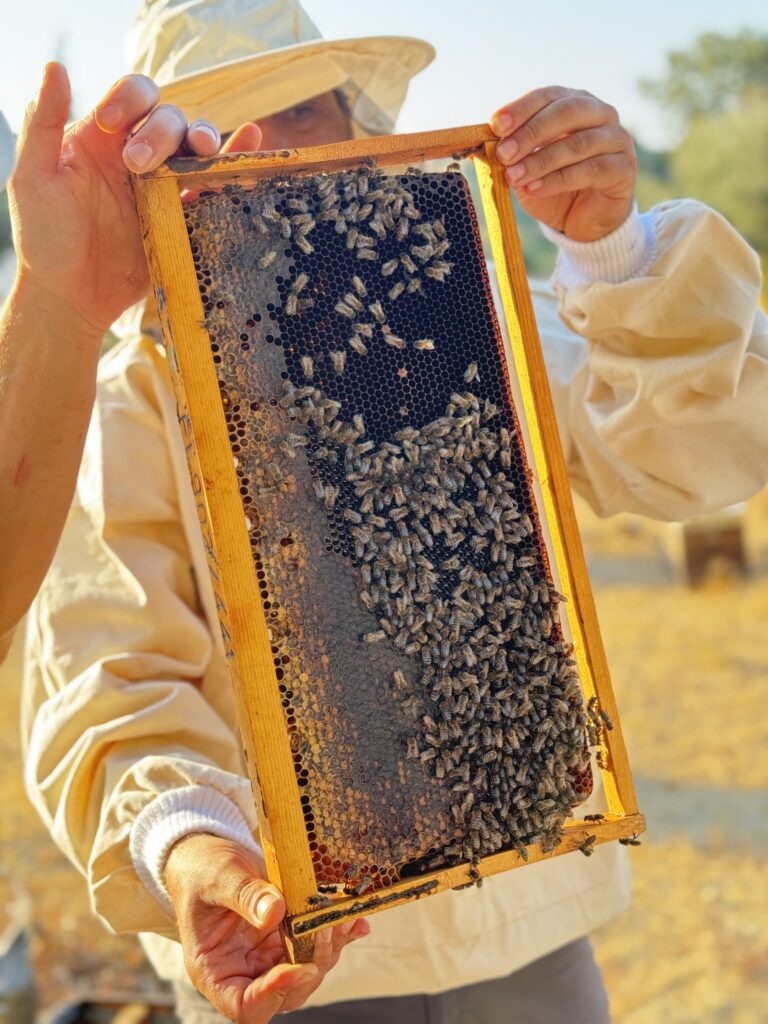
A person's hands are shown tending to a wooden beehive, with small bees flying around.

The team gets a hands-on lesson with local beekeepers.

Mérida’s Land of Bees

Our trip stations in Mérida, a colorful destination rich in Mayan and colonial heritage. We also got out to surrounding towns to learn about people and businesses with whom Sandoval collaborates — like Alma Finca orange liqueur, ideal for mixing into spicy mezcalritas and cosmopolitans. In a shaded patch of one of their orchards, we learned about the Alma Finca Project facilitated by Free Range Beehives, a Denver-based “corporate beekeeping” company that’s on a mission to support and enhance pollinator populations. Free Range also helped install bees here in November 2024, working with local Jose Cortes Larriva to care for the stingless Melipona bee species used for the project.

A clear glass filled with a pink-orange liquid and ice, garnished with a dried orange slice and a spiced rim.

A tasty cocktail with spiced rim made with Alma Finca.

During our grove visit, Emmaida Figueroa of Miel Nativa also shared about her business’s involvement and its commitment to the reproduction of these native bees. We learned that 90 percent of Melipona hives have been lost in the past 35 years (due to factors like deforestation, loss of forage, and pesticide use). Figueroa let us sample some of the goods sold at her downtown shop, including divinely thick Melipona honey, used by the Mayans for its medicinal superpowers since ancient times.

Staying Close to the Action

During our trip, hotel Fiesta Americana became our downtown Mérida HQ, conveniently situated at the crossroads of the capital’s main avenues — Paseo Montejo and Colón. (Those seeking a more intimate lodging experience might opt for nearby boutique options like Adora Hotel.) Our location made for easy strolls past exquisite architecture just as the city was swirling to life, to friendly breakfast spots like Justo Bread Studio and Fronto.

A group of six people, including a chef in a black cap and apron, are gathered around a table outdoors, observing as the chef prepares food.

The entire group enjoyed a hands-on cooking lesson in the home of a welcoming Maya-Yucatec family.

I enjoyed my most memorable desayuno, however, inside the tranquil, arched courtyard of Casa T’Hō, a design-fashion-art hub opened in 2017 by three passionate owners wanting to showcase local creative talent. In the center of this once-abandoned, early 19th century mansion, I leisurely enjoyed my migas con huevo and pineapple-tumeric-ginger juice before perusing on-site boutiques stocked with gorgeous Mexican goods.

A vibrant close-up of several ripe oranges hanging from a leafy green tree.

All ingredients were freshly harvested, including citrus, a prized ingredient across the Yucatán peninsula.

Immersion in the Communities

Every meal on this trip felt memorable, whether wandering the narrow food markets alongside Chef and our Eating with Carmen tour guide (think gorditas, salbutes, tamales and the freshest of juices), or while taking an at-home cooking class in the teeny town of Abala. Here a Maya-Yucatec family welcomed us in for a hands-on lesson about ingredients grown in their soil (like a nutritious, leafy vegetable called chaya) as well as culinary techniques passed down through the generations.

With a backyard rooster wandering nearby and a playful kitten underfoot, our gracious hostess casually concocted a multi-course lunch. She used her palate to taste along the way — a method Chef Sandoval prefers his team to use, too. (After all, a recipe is merely a guideline, he says.) Eventually, our group crammed around a large wooden table to devour an array of salads, warm tortillas, lemon soup with grilled tomatoes, onions, garlic and sweet pepper, plus pollo pibil — a Yucatán dish that’s slow-cooked in banana leaves and traditionally made with pork.

A woman wearing a traditional white dress with embroidered flowers holds a large bundle of red and light-colored fibers, standing in front of a stone archway.

A Mexican artist explained henequen, a native Yucatán plant used in textiles and handicrafts.

A Memorable Lesson on Community Sustainability

Back in Mérida, we feasted inside hip, vibey venues where DJs spun hypnotic beats on lounge-like patios and trees stretched skyward through dramatic dining rooms. We savored ceviche blanco, tacos de rib eye and pulpo a la parrilla at Arcano, a variety of barbequed meats at Anima (plus a surprising smoked watermelon favorite) and then a sensational beef carpaccio and tuna crudo at Ariadna. Enjoying local delicacies amongst a group of people so dedicated to their craft — in such a magic-dusted Mexican setting — was an experience I won’t soon forget. And I left with much more reverence, too, for the bees who play a part in it all.

Story by Corinne Whiting
Photography by Rodolfo Vallado

Subscribe to TABLE Magazine’s print edition.
Easy Pesto Pasta 

0
A plate full of Easy Pesto Pasta with sausage, lemon slices, and asparagus all in a green sauce.

A fulfilling and delicious weeknight dinner does not have to be overly complicated. In fact, sometimes simple and easy just tastes better for the pure fact that you’re not exhausted after making it. This vibrant dinner recipe highlights the bright, herbaceous goodness of pesto, enriched with savory Italian sausage, crisp asparagus, and toasted pine nuts. A squeeze of fresh lemon juice and a touch of heavy cream bring it all together for a satisfying meal that’s ready to go in a flash yet still incredibly tasty.

A small plate of Easy Pesto Pasta with basil, sausage, pesto sauce, and asparagus as a large plate of the dish sits in the background.

What is Pesto?

Bright green and all over Italian cuisine, pesto comes from the Liguria region of Italy. The freshness of pesto is one of its main appeals. Even premade pesto hangs onto that same attribute. To make pesto, mortar and pestle press together basil leaves, pine nuts, garlic, Parmesan cheese, sea salt, and extra virgin olive oil. As one it turns into a herbaceous, savory sauce. It’s what you’ll toss pasta in, spread onto flatbread pizzas, or even enjoy on top of a salad. We use it in this Easy Pesto Pasta recipe since it has such a big flavor in a tiny package.

Print
clock clock iconcutlery cutlery iconflag flag iconfolder folder iconinstagram instagram iconpinterest pinterest iconfacebook facebook iconprint print iconsquares squares iconheart heart iconheart solid heart solid icon
A small plate of Easy Pesto Pasta with basil, sausage, pesto sauce, and asparagus as a large plate of the dish sits in the background.

Easy Pesto Pasta 


  • Author: Anna Franklin

Description

Who knew you could upgrade store-bought pesto to chef-quality?


Ingredients

Scale
  • 1 lb loose Italian sausage
  • 2 tbsp pine nuts
  • 1 bunch asparagus chopped
  • 1 cup store bought pesto
  • 1/4 cup heavy cream
  • Juice of one lemon


Instructions

  1. In a large skillet, brown Italian sausage, use a spatula to break up the sausage into bite sized pieces.
  2. Once the sausage is browned, add pine nuts and cook for 1 minute, just until the pine nuts are toasty and fragrant.
  3. Add the chopped asparagus to the pan and cook for 2 minutes, or until the asparagus is bright green and tender.
  4. Add in 1 cup of store bought pesto, and heavy cream. Stir together until a thick sauce is formed. Add the juice of one lemon and serve over your favorite pasta.
  5. Garnish with Parmesan cheese and fresh basil leaves.

Recipe and Styling by Anna Franklin
Photography by Laura Petrilla

Subscribe to TABLE Magazine’s print edition.
Single Occupancy Cabins for the Ultimate Alone Time

0
A dark green hammock strung between trees in a forest. The person is holding a bright yellow book.
Kulnura, New South Wales, Australia. Photo by D'Arcy Bush for unyoked.co.

Are you craving a moment of silence? A chance to think your own thoughts? Being alone in the world by choice is increasingly popular. Take a solitary walk in the woods with TABLE’s Guest Editor, Stephen Treffinger to these single occupancy cabins.

Be One With Yourself at These Single Occupancy Cabins for Traveling Alone

If you find yourself wanting to spend more time alone, you are definitely not alone. Articles about being apart from other human beings — the causes, the how-tos, etc. — appear to be multiplying exponentially. Recently, The New York Times published an article about the difficulties of dining alone, Afar followed suit with one about the joys of taking a solo trip as an older adult, and Forbes discussed one of the world’s most remote luxury lodges.

A dark green Adirondack chair with a brown and gray blanket draped over it sits on a rocky ground in a sunlit forest.
A comfy Adirondack Chair at one of the famous Postcard Cabins, Photo on postcardcabins.com.

In February, the Atlantic published an extensive piece, The Anti-Social Century, examining the causes and effects of alone time and how it’s changing everything from personalities to perceptions of reality. The pandemic, of course, put people on the path, but many stayed there. Solo dining, for instance, has increased by 29 percent in the last two years. People are spending less time, in general, with other people.

The interior of a cozy wooden cabin features a bed with white and striped bedding, large windows looking out onto a dense forest
An invitation to sleep in at Cranborne Chase National Landscape, England. Photo by Tom Allport on unyoked.co.

For decades the automobile and the TV were to blame, allowing people to live further apart and to be entertained at home instead of going out in groups. Now it’s social media and smart phones, of course. Even teens are now spending far less time together than they did 40 years ago, girls even less time than boys.

A man wearing a brown knitted sweater and an orange beanie sits on a wooden bench, tying the laces of his hiking boots, with a large window looking out onto a landscape behind him.
Out the door at Cranborne Chase National Landscape. Photo by Miguel Sousa on unyoked.co.

On the downside, too much time spent solo can affect brain development in younger people. It can cause loneliness in anyone — very different from being alone, a real concern, especially in older individuals. On the upside, being without others allows you to develop your own interests, decompress from stress, and learn more about yourself without all the noise.

Where to Travel by Yourself

The illusion of being alone is fairly easy if you’re in the luxury market — think huts out on the water in Bora Bora, a private luxury treehouse in South Africa, an upscale tent in India. There are also remote places in countries where tourism is a click or two lower — Albania, Cambodia, and the Stans (aka the republics of Central Asia), to name a handful.

A modern black cabin with a large window is situated on a wooden deck in a forest.
Postcard Cabins at Starved Rock State Park, Ottawa, IL. Photo on postcardcabins.com.

But escaping needn’t be so complicated or so costly. There are companies that offer small, efficiently designed huts you can stay in by yourself (or with carefully selected others). Often in secluded wooded areas, they are nonetheless reachable without a helicopter or security detail.

An aerial shot shows a small, black cabin nestled in a clearing surrounded by lush green trees, with a picnic table and fire pit outside.
South Downs National Park, England. Photo by Will Darkin on unyoked.co.

Adventuring Into the Woods

Unyoked is a company that serves Australia, New Zealand, and the UK, offering over 100 cabins that are specifically designed to help people get out in nature more often, to slow down, and to immerse themselves somewhere unique and secluded. You can choose how far of a hike from your car you’d like and how isolated you’d like to be (called “spiciness levels”) and Unyoked offers research into how their particular experience works. There is a section about “The 3 Day Effect” which explains the cognitive and emotional benefits one can gain from 72 hours immersed in nature. Most cabins are large enough for two or more and would be quite roomy for one. There are often fire pits, picnic tables, and Adirondack chairs outside — and a shower. (No need to go feral and smelly just to get some me time.) Prices start at about $253/night.

A black cabin with large windows is nestled among green and yellow trees in a forest.
South Downs National Park, England. Photo by Matt Buckley on unyoked.co.

And although they don’t take quite as psychological an approach, Postcard Cabins has small units throughout the US. While some will be in a group with other cabins, some are more remote. The idea is that you can be alone if you want to, or you can socialize more if that’s your scene. Prices begin at about $99/night.

Story by Stephen Treffinger

Subscribe to TABLE Magazine’s print edition.
Taking a Viking Cruise Along Europe’s Coastlines

0
A stone bridge with an arched entryway leads to a large, rocky hill covered in green foliage.
A view of the coast of Dubrovnik, Croatia.

Frequent TABLE contributor and frequent traveler Stephen Treffinger boarded a Viking cruise ship for a weeklong sojourn to Venice, Croatia, Montenegro, and Greece. Along with our envy, he racked up some incredible memories of some of the world’s most beautiful coastlines.

A person holds a plate of small, fried, golden-brown spheres with a glass of amber liquid in the center.
Food tasting excursion near Kotor, Montenegro. Photo by Jessica Kelly.

Cruising Through Europe’s Coastlines with Viking

In centuries past (and in several Merchant Ivory films), the Grand Tour took Europeans on a multi-leg trip that typically included Italy, accompanied by a family member, governess, or tutor. Today, these journeys are usually undertaken on a cruise ship, with arguably less grandeur — but less luggage and more freedom.

An aerial view captures a large white cruise ship sailing on a blue sea next to a coastal town with red-roofed buildings.
The Viking Venus off the coast of Dubrovnik, Croatia. Photo courtesy of Viking. 

It was thus that I boarded a Viking ship in Italy for a week-long sojourn to Venice, Croatia, Montenegro, and Greece before flying home from Athens. I had done two prior sailings with Viking that took me to Egypt and Antarctica. Both had an intense focus, the former on history and archaeological sites, the latter on snow, penguins, and seals. Now, I was in for a more traditional trip, with a new city or even country each day.

Left: A fishing boat off of Mali Ston, Croatia. Right: The bell tower of the Cathedral of Saint Domnius in Split, Croatia. Photos by Jessica Kelly.

Exploration Through Viking Cruises

Before even stepping on board, I had picked a handful of excursions, mostly food-centric, that would take up the lion’s share of available time in any one place, and left other destinations free for roaming around. This seemed like a sensible approach, and proved to be an interesting way to keep things interesting.

A classic Venetian gondola with a gondolier in a striped shirt and hat is seen from above, moving through a narrow canal lined with historic buildings.
A gondola on the Rio de S. Lorenzo in Venice, Italy. Photo by Jessica Kelly.

Venice

Since I had been to Venice a couple of times before and had toured most of the major draws, I opted to get lost and avoid the crowded center, ducking into an alleyway and drifting, ignoring my phone, for hours. I began with coffee in a place that looked like it had never seen a tourist. Then onto a cicchetti joint for open-faced sandwiches (sardines, salt cod) and a glass of wine at 10 a.m. (When in Venice and all.) I eventually made my way to a favorite painting, Titian’s Assumption of the Virgin that I’d first seen in person over 30 years before, and stood before it, in awe, for a remarkably long time before catching the boat back.

Left: Pre-mussels grappa in Mali Ston, Croatia. Right: Mussels for lunch off the coast of Mali Ston, Croatia. Photos by Jessica Kelly.

Croatia

In Croatia, in addition to some informative olive oil and wine tasting, there was an excursion to Mali Ston, an area near Dubrovnik that produces some of the world’s finest oysters. We motored out to a dock in the middle of the growing beds and watched our host shuck dozens of them in rapid succession as we sipped herb-infused grappa. We were served a handful of the local treasures with bread and white wine. Absolute heaven. The fact that almost none of these gems ever make it out of Croatia only added to our delight. Gilding the lily, the team then plucked ropes of mussels out of the water, cooked and served them in a delicious broth.

A view of St. Mark's Square in Venice, Italy, on an overcast day, showing reflections of the buildings and clock tower in puddles on the square.
Afternoon flooding in St. Mark’s Square, Venice, Italy. Photo by Jessica Kelly.

Montenegro

It was raining when I disembarked in Kotor, Montenegro, where I had decided to again wander. Surrounded by fortresses, it’s an atmospheric place with stone paths and more than a few Catholic churches from its Venetian and Austrian rulers. It was far too slippery to hike up the long, steep stone staircase to St. John’s Fortress for the views. (I ran into some very fit guys from the ship who told me they had turned around-about because it was too perilous.)

A close-up view of grapevines with green and brown leaves, under a cloudy sky.

Top Left: The Old Fortress in Corfu, Greece. Top Right: Ruins in Olympia, Greece. Bottom: A vineyard in Olympia, Greece. Photos by Stephen Treffinger and Jessica Kelly.

Corfu

In Corfu, on an overcast day, I ducked into a particularly beautiful church and stood in back, taking in an Orthodox service with its long responsoria, a call and repeat between the priest and congregation, and could have stayed there for hours. The next day, it was more olive oil and more wine (the region is lousy with excellent examples of both). Thus fortified and fulfilled, I got back on the ship, which would depart in the middle of the night for Athens.

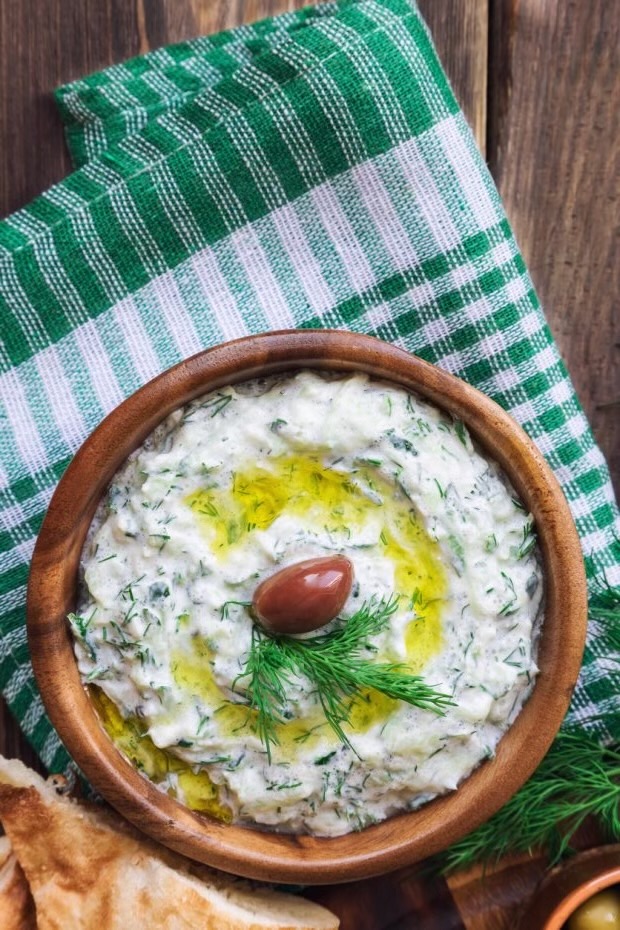
A person holds a white bowl filled with a creamy dish, possibly a dip or soup, garnished with dark olives and green leaves, with a drizzle of olive oil on top.
Cooking class in Corfu, Greece.

Upon returning, I headed to the spa for my now established routine (sauna/cold plunge/steam/cold plunge) then return to my room for a nap in the miraculously comfy bed. I would dress up a little (but not that much) before heading out for an aperitif and dinner at one of several restaurants (variety being the spice of cruise ships), leaving it to chance most nights but almost running into and dining with someone I had met along the way, sharing stories of our day’s adventures while sipping wine and eating remarkably good food before drifting to sleep, only to wake up in another new place.

An ancient stone archway opens to a long, unpaved pathway with stone walls on either side, leading to a bright landscape under a partly cloudy sky.
Ruins in Olympia, Greece.

Story by Stephen Treffinger

Photography Courtesy of Viking, Stephen Treffinger, and Jessica Kelly

Subscribe to TABLE Magazine’s print edition.
Cherry Galette

0
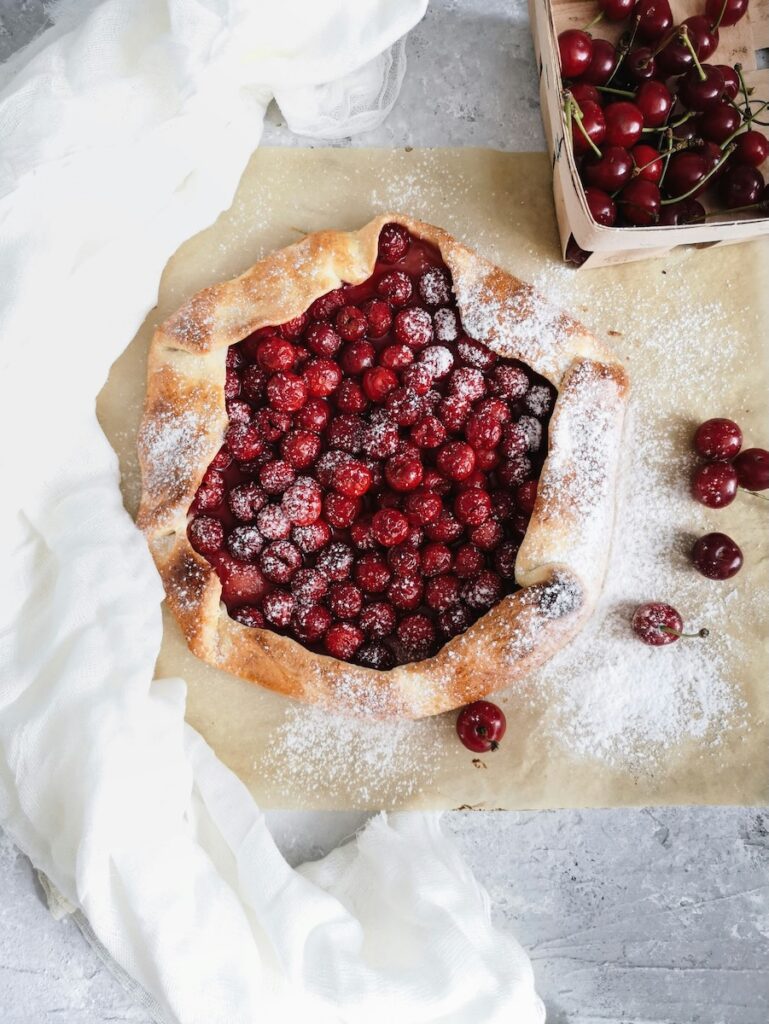
A Cherry Galette sits open faced on a countertop with powdered sugar and cherries everywhere.

Ah, cherries! Nothing says spring and summer quite like ’em. And while we may not be eager to fire up the oven in warmer weather, this Cherry Galette recipe is a sweet little number worth breaking a sweat for. Galettes are perfect for any day of the week; this one is no exception. Picture it: a flaky, buttery crust generously filled with fresh, juicy cherries. It’s a crowd-pleaser that’s as easy to make as it is impressive to serve. The sweet and tangy filling and its rustic appearance make this dessert the perfect addition to any summer gathering or a cozy night.

When is Best to Buy Fresh Cherries?

You’ll want to use fresh cherries from your local farmer or grocery store in order to have the most decadent Cherry Galette possible. Cherry season in the United States typically spans from May to July. Though peak availability often occurs in June. While you can sometimes find cherries outside this window due to global imports, fresh cherries from their natural season are generally the most flavorful and juicy. It is good to keep in mind though that different varieties have slightly different peak times. Sweet cherries like Bing and Rainier are best from late May through early July. But, tart cherries like Montmorency ripen later, usually from late June to early August.

Print
clock clock iconcutlery cutlery iconflag flag iconfolder folder iconinstagram instagram iconpinterest pinterest iconfacebook facebook iconprint print iconsquares squares iconheart heart iconheart solid heart solid icon
A Cherry Galette sits open faced on a countertop with powdered sugar and cherries everywhere.

Cherry Galette


  • Author: Gabe Gomez

Description

A homemade dough cradles sweet and tart cherries.


Ingredients

Scale
  • 12-inch pie dough (homemade)
  • 4 cups fresh cherries
  • 1/3 cup sugar
  • 2 tbsp all-purpose flour
  • 1 tbsp fresh lemon juice
  • Pinch of salt
  • 1 tsp finely grated lemon zest
  • 1/2 tsp pure vanilla extract

For the dough:

  • 1 1/4 cups of all-purpose flour
  • 1/4 tsp of salt
  • 1/2 cup of cold unsalted butter, grated
  • 1 beaten egg yolk


Instructions

  1. Heat the oven to 375 degrees. Line a baking sheet with parchment paper.
  2. In a large bowl, combine the cleaned and halved cherries, sugar, flour, fresh lemon juice, lemon zest, vanilla extract, salt. Mix gently. Set aside.
  3. Transfer the rolled-out dough to the prepared baking sheet. Spoon the cherry filling into the center of the dough, leaving a 2-inch border around the edge.
  4. Fold the edge of the dough up and over the filling, overlapping and creating pleats all the way around. Brush the dough with beaten egg yolk.
  5. Bake the galette at 375 degrees for 40-50 minutes or until the crust is golden brown and done on the bottom. Transfer the galette to a wire rack and cool slightly before slicing.

For the dough:

  1. Grate cold butter with a cheese grater, add ingredients to a mixing bowl, and combine. Add two tablespoons of ice water for the dough to gather up.
  2. Ball the dough, cover it in plastic wrap, and refrigerate. The dough can be made a day or two in advance.
  3. Roll out the chilled dough on a floured surface into a 12-inch round.

Recipe by Gabe Gomez
Photography Uliana Kopanytsiayvc

Subscribe to TABLE Magazine’s print edition.
Asparagus Tempura with King Crab Salad

0
Crispy and Delicious Asparagus Tempura on a grey platter with a king crab salad.

Life “on the mountain,” as Kristin Butterworth describes perching high up in the Alleghenies southeast of Pittsburgh, is sweetest in the summer. Lush green woods and meadows are almost all that the eye can see – except for the possible interruption of a patch of sky or a glittering stream far down in a valley. What does a resident of this earthly paradise do? Grow. Cook meals like this Asparagus Tempura. Eat. Relax. Sounds idyllic, doesn’t it?

About This Asparagus Tempura with King Crab Salad Recipe

Crispy Asparagus Tempura meets a delicate, fresh King Crab Salad in this elegant and flavorful dish. We coat tender asparagus spears in an airy batter and fry them to golden perfection. Then, we top this crispy treat with a King Crab Salad, brightened by lemon oil, preserved lemon, and fresh chives. This recipe is a delightful interplay of textures and tastes. It’s a sophisticated appetizer or light main course that beautifully marries summer with the indulgence of seafood.

Print
clock clock iconcutlery cutlery iconflag flag iconfolder folder iconinstagram instagram iconpinterest pinterest iconfacebook facebook iconprint print iconsquares squares iconheart heart iconheart solid heart solid icon
Crispy and Delicious Asparagus Tempura on a grey platter with a king crab salad.

Asparagus Tempura with King Crab Salad


  • Author: Kristin Butterworth
  • Yield: Serves 4-6 1x

Description

A tempura breading makes everything better.


Ingredients

Scale
  • Canola oil for frying
  • 18 medium asparagus stalks, trimmed
  • 1 1/4 cups all-purpose flour
  • 1/4 tsp baking powder
  • 1/4 tsp baking soda
  • 1 1/4 cups club soda
  • 1 tbsp olive oil

For the king crab salad: 

  • 1 cup picked king crab
  • 1 tsp lemon oil
  • ½ tsp preserved lemon
  • ½ tsp sliced chive
  • Salt & pepper as needed


Instructions

  1. In a large heavy saucepan, add enough canola oil to fill just over a third full. Clip a frying thermometer onto the pan and heat the oil over medium heat until oil reaches 375 degrees.
  2. While the oil is heating, in a medium bowl, whisk together the flour, baking powder and baking soda. Add the club soda and the olive oil.
  3. Dip the asparagus stalks into the batter, one or two at a time, then add to the hot oil and fry 3 or 4 stalks at a time for about 70 seconds, until golden brown, turning with tongs to promote even browning. Remove from oil and place on a wire rack placed over a baking sheet.

For the king crab salad:

  1. Combine all ingredients in a bowl and season as needed, serve chilled over the asparagus.

Recipe by Kristin Butterworth
Styling by Keith Recker

Photography by Dave Bryce
Platter by Billy Ritter

Subscribe to TABLE Magazine’s print edition.

Blackberry Cobbler

0
A Blackberry Cobbler with three scoops of vanilla ice cream in a white dish sit beside three golden spoons on a white marble counter.

Food blogger (and college student) Emily Rapp is the creative brains behind Baking with Lemon, and she’s sharing some of her delicious dessert recipes and baking tips with TABLE readers. Below, you’ll find her take on a warm, fruity Blackberry Cobbler.

A Note From Emily on Blackberry Cobbler

I am not sure how common this is, but as a child I hated fruit desserts. Can anyone relate? I would turn my nose up at any pie, any tart, any cobbler. If there wasn’t chocolate, I wasn’t interested. Oh, how naive I was. It honestly was not until high school that I started to enjoy berries. I always liked vegetables more than fruit.

But then I discovered strawberries and blueberries, and I have progressed since there. It was within the past year that I made my first pie, and I adored it. I can now happily announce that I love any and all fruit desserts. So, let me share this one with you: Blackberry Cobbler.

It is a childhood favorite of my dad’s, and it really has grown on me. The mixing of the warm fruit and ice cream is godly, and I will happily eat it any day.

Print
clock clock iconcutlery cutlery iconflag flag iconfolder folder iconinstagram instagram iconpinterest pinterest iconfacebook facebook iconprint print iconsquares squares iconheart heart iconheart solid heart solid icon
A Blackberry Cobbler with three scoops of vanilla ice cream in a white dish sit beside three golden spoons on a white marble counter.

Blackberry Cobbler


  • Author: Emily Rapp

Description

A dessert you can feel good about indulging in thanks to its fruity contents.


Ingredients

Scale
  • 1 cup all-purpose flour
  • 2 1/2 tsp baking powder
  • 3/4 tsp kosher salt
  • 3/4 cup milk (preferably whole)
  • 1/2 cup sour cream
  • 6 tbsp unsalted butter (melted)
  • 3 cups blackberries (fresh or frozen)
  • 3/4 cup granulated sugar


Instructions

  1. Preheat oven to 375°F and lightly grease your 8 x 8 inch pan.
  2. In a small saucepan over the stove or in a microwave, melt the butter. Set aside to cool.
  3. In a large bowl, add the flour, baking powder, and salt. Whisk to combine.
  4. Add the milk, sour cream, and the melted butter to the bowl, and whisk to combine. The consistency should be like cake batter.
  5. Pour this into the 8 x 8 inch pan and smooth out the top, making sure it is evenly in the pan.
  6. Pour the blackberries over the batter. They should cover almost every inch of the batter. Push some into the batter, just a bit.
  7. Sprinkle the sugar over top of the blackberries, making sure to evenly distribute it across the entire pan.
  8. Bake in the preheated oven for 50 minutes or until the fruit is bubbling and the top is slightly browned.
  9. Serve immediately with ice cream. Be careful not to burn your mouth!

Recipe and Photography by Emily Rapp

Subscribe to TABLE Magazine’s print edition.
Cucumber and Yogurt Soup

0
A bowl of green cucumber and yogurt soup with garnishes with seasonings and lemons surrounding the bowl.

Light, refreshing and quick to prepare, this Cucumber and Yogurt Soup is the ultimate summer recipe, perfect for those hot days when you don’t feel like turning on the stove. It whips up in a minute and just uses a few simple ingredients you can get from your local grocery store. For a vegan version, simply substitute the Greek yogurt with a plant-based alternative.

What are Greek Yogurt Alternatives?

Whether you’re looking to skip out on the Greek yogurt due to its dairy content or just simply because you don’t prefer it, there are alternatives to use in our Cucumber and Yogurt Soup recipe. For a dairy-free substitute, coconut milk yogurt sources naturally from coconuts and adds a rich, creamy consistency. Though, you may pick up a little taste of coconut in your finished product. Almond milk yogurt and soy yogurt are also non-dairy and gluten-free options. Each will add a textural and flavorful variety to your recipe. Though if you do not want to use yogurt, you can experiment with pureed silken tofu or blended cottage cheese. Each is creamy and their neutral base takes on the flavors of other ingredients.

Print
clock clock iconcutlery cutlery iconflag flag iconfolder folder iconinstagram instagram iconpinterest pinterest iconfacebook facebook iconprint print iconsquares squares iconheart heart iconheart solid heart solid icon
A bowl of green cucumber and yogurt soup with garnishes with seasonings and lemons surrounding the bowl.

Cucumber and Yogurt Soup


  • Author: Sara Ghedina
  • Yield: Serves 4

Description

Cooling cucumber and yogurt combine in a smooth, creamy gazpacho.


Ingredients

Scale
  • 1 lb cucumbers (some skin left, seeds removed)
  • 2 garlic cloves
  • 3/4 lb Greek yogurt
  • 2 tbsp lemon juice
  • 1/2 tsp ground cumin
  • 1015 basil leaves
  • 810 small mint leaves
  • 1 tbsp extra-virgin olive oil
  • 1/2 chili pepper (optional)
  • 1/2 cup to 1 cup water, depending on desired thickness
  • Salt and black pepper to taste

For serving:

  • 23 tbsp roasted walnuts (or other nuts), coarsely chopped
  • 1/2 cucumber, thinly sliced
  • 12 tbsp extra-virgin olive oil
  • Mint and/or basil leaves


Instructions

  1. Peel cucumbers and remove the seeds, but leave some of their peel on if you’re looking for a more rustic result.
  2. Place all the ingredients, except for the water, in a large blender. Blend until smooth, slowly adding the water until you get the desired consistency.
  3. Let the soup rest in the fridge for at least one hour to allow flavors to blend.
  4. Serve cold, pouring it in individual bowls and topping each one with more olive oil, a few cucumber’s slices, toasted walnuts and a couple of mint or basil leaves.

Recipe, Styling, and Photography by Sara Ghedina

Subscribe to TABLE Magazine’s print edition.
Easy Hot Honey Apple Galette 

0
An easy hot honey apple galette sits in a round shape on a white plate with the edges of the galette folded in.

If you’ve never made a galette, you’re missing out on one of the easiest recipes that makes edible elegance simple. Our Easy Hot Honey Apple Galette utilizes a frozen pie crust so you don’t have to spends hours laboring over the mixing bowl. Instead, focus on your apple filling that coats fresh slices in a gooey glaze of hot honey, cinnamon, sugar, nutmeg, cloves, and a touch of lemon juice for acidic balance. Maybe you’ll even serve your warm galette with scoops of vanilla ice cream on top.

What Kind of Apples Should I Use For This Galette?

There are a few different ways you could go with the flavor of your Hot Honey Apple Galette depending on the variety of apples you use. Granny Smith apples, the light green ones, are classically used in baking. They give off a bright, tangy acidity that goes will with sweet glazes like the one in our recipe. Plus, they tend to have a firm texture even after baking. Honeycrisp are going to be your sweeter choice in their short, red and slightly green stature. Or, if you perfer a sweet apple with a little more tenderness, go with a Golden Delicious. If it’s too hard to decide or you want to shake things up, try using 2 to 3 different apple varieties all mixed together.

Print
clock clock iconcutlery cutlery iconflag flag iconfolder folder iconinstagram instagram iconpinterest pinterest iconfacebook facebook iconprint print iconsquares squares iconheart heart iconheart solid heart solid icon
An easy hot honey apple galette sits in a round shape on a white plate with the edges of the galette folded in.

Easy Hot Honey Apple Galette 


  • Author: Keith Recker

Description

The simplicity of this recipe that drizzles a hot honey over warm apples and a crispy crust only increases its deliciousness.


Ingredients

Scale
  • 1 round frozen pie crust (I recommend Dufour)
  • 3 apples, peeled and sliced into 1/4-inch slices
  • 1/4 cup hot honey
  • 3 tbsp sugar (brown or white)
  • 2 tsp lemon juice (fresh is best)
  • 1 tsp cinnamon
  • ¼ tsp nutmeg or cloves (or both!)
  • Pinch of salt

For finishing: 

  • 1 egg
  • 1 ½ tbsp sugar (turbinado or demerara preferred but optional)
  • 3 tbsp heavy cream (optional)
  • ¼ cup hot honey


Instructions

  1. Defrost pie crust according to instructions on package.
  2. Line a baking sheet or pizza pan with parchment paper or a silicone baking mat. Preheat oven to 350.
  3. In a large mixing bowl, whisk together lemon, hot honey, cinnamon and nutmeg and salt until well combined. Peel and slice apples and add them to the bowl. Stir to coat.
  4. Center the pie crust on the prepared baking surface.
  5. Pretend there’s a compass on your pie crust and place one slice of apple at north, south, east, and west positions, about one inch in from the edge of the crust. Now add slices to create a tidy circle.
  6. Fill the empty center with slices.
  7. Drizzle any extra juices left in the bowl on top of the slices.
  8. Fold the edges of the crust up onto the outer ring of apple slices, crimping every 1.5 inches or so.
  9. In a small bowl, beat the egg. With a brush, wash the folded and crimped crust with egg. Sprinkle sugar on the crust…and on the apples, too.
  10. Place in oven and bake for approximately 35 minutes, until crust is golden and crisp.
  11. About 10 minutes before baking is complete, you drizzle 3 tbsp heavy cream over the apples and return galette to oven to bake.
  12. Remove from oven when done. Let cool to room temperature. Loosen galette from surface using a thin spatula. Slide it into a serving plate.
  13. Just before slicing and serving, drizzle ¼ cup hot honey all over the galette. You could add whipped cream or ice cream to each plate as you serve the galette. Enjoy!

Recipe and Styling by Keith Recker
Photography by Dave Bryce

Subscribe to TABLE Magazine’s print edition.
Easy Hot Honey Peach Galette

0
A round Easy Hot Honey Peach Galette sits on a blue plate with a pie spatula sitting beside it.

Transform summer’s sweetest, juiciest bounty into an easy-to-make dessert with this Hot Honey Peach Galette. Forget fussy pies that require tons of patience and handiwork. Instead, this rustic, free-form pastry celebrates creativity and the sun-ripened flavors of peaches. Plus, a drizzle of spicy hot honey only makes things more mouthwatering. It’s a simple yet elegant treat that brings together warm, sweet, and a subtle kick, making it the perfect dessert for any summer gathering.

When are Peaches in Season?

Summer is the time for peaches whenever these fuzzy bulbs of pink and orange ripen. You’ll find this juicy fruit from late May to early October but their peak is from July to August when they are at their most delicious. This all depends though on what region you are in. Those in a warmer region in the southern states may find their peaches harvest earlier, even in April. If you live in a northern state where the winter keeps things cool till practically June, your peak peach season will come later in the summer, sometimes lasting into September.

Print
clock clock iconcutlery cutlery iconflag flag iconfolder folder iconinstagram instagram iconpinterest pinterest iconfacebook facebook iconprint print iconsquares squares iconheart heart iconheart solid heart solid icon
A round Easy Hot Honey Peach Galette sits on a blue plate with a pie spatula sitting beside it.

Easy Hot Honey Peach Galette


  • Author: Keith Recker

Description

The naturally sweet nature of peaches makes a match with sticky and delectable hot honey.


Ingredients

Scale
  • 1 round frozen pie crust (I recommend Dufour)
  • 5 small peaches, peeled and sliced into 1/4-inch slices
  • 1/4 cup hot honey
  • 3 tbsp sugar (brown or white)
  • 2 tsp lemon juice (fresh is best)
  • 1 tsp ginger
  • ¼ tsp nutmeg
  • Pinch of salt
  • 2 tbsp cornstarch

For finishing:

  • 1 egg
  • 1 ½ tbsp sugar (turbinado or demerara preferred but optional)
  • ¼ cup hot honey


Instructions

  1. Defrost pie crust according to instructions on package.
  2. Line a baking sheet or pizza pan with parchment paper or a silicone baking mat. Preheat oven to 350.
  3. In a large mixing bowl, whisk together lemon, hot honey, ginger, nutmeg, salt, and cornstarch until well combined. Peel and slice peaches and add them to the bowl. Stir to coat.
  4. Center the pie crust on the prepared baking surface.
  5. Pretend there’s a compass on your pie crust and place one slice of peach at north, south, east, and west positions, about one inch in from the edge of the crust. Now add slices to create a tidy circle.
  6. Fill the empty center with slices.
  7. Drizzle any extra juices left in the bowl on top of the slices.
  8. Fold the edges of the crust up onto the outer ring of peach slices, crimping every 1.5 inches or so.
  9. In a small bowl, beat the egg. With a brush, wash the folded and crimped crust with egg. Sprinkle sugar on the crust…and on the peaches, too. You could add a sprinkle of nutmeg here, too.
  10. Place in oven and bake for approximately 35 minutes, until crust is golden and crisp.
  11. Remove from oven when done. Let cool to room temperature. Loosen galette from surface using a thin spatula. Slide it onto a serving plate.
  12. Just before slicing and serving, drizzle ¼ cup hot honey all over the galette. You could add whipped cream or ice cream to each plate as you serve the galette. Enjoy!

Recipe and Styling by Keith Recker
Photography by Dave Bryce

Subscribe to TABLE Magazine’s print edition.
Create a free account, or log in.

Gain access to read this content, plus limited free content.

Yes! I would like to receive new content and updates.

Table Magazine wants to know your location.
TABLE Magazine operates regional sites - Knowing your location helps us route you to the appropriate site for the best experience.