Home Blog Page 187

Homemade Italian Recipes by Victoria Sande

0
An older woman with short brownish-red hair sits at a brown kitchen table.

Victoria Sande instills a love of Italian food in the next generations of her family … and, thanks to the recipes included here, in all TABLE readers. Grazie, Victoria!

Parla come mangi, a well-known Italian saying meaning “speak as you eat,” suggests that people express themselves verbally with a simplicity that reflects Italian cooking.

Homemade Italian Recipes by Victoria Sande

Hugo’s Favorite Marinara Sauce

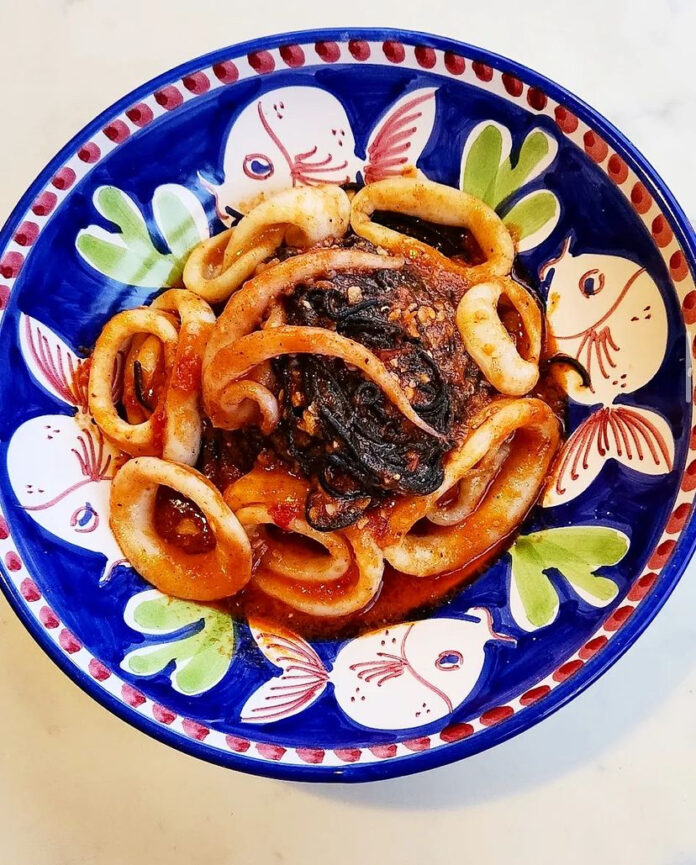
A dish of Hugo's Favorite Marinara Sauce pasta in a black bowl made by Victoria Sande.

Italian cooking is simple for Victoria Sande of Saxonburg, PA. She can’t believe anyone is intimidated by the thought of making homemade pasta; for her, pasta is like fast food.

Victoria’s daughter, Alice Barnett, has not so much learned but absorbed her mother’s recipes, for although Victoria treasures a decades-old, handwritten family cookbook, she never consults it. “I cook with a little bit of this, a little bit of that,” Victoria says. “I never follow recipes.”  

Pasta Fagioli

A black bowl filled with fresh Pasta Fagioli noodles and vegetables by Victoria Sande.

Alice’s young sons’ romance with the food that fueled their ancestors already has begun. Chad, 3 ½, and Gabriel, 1, love Nonna’s pasta sauces, as well as her milanesa, beef or veal breaded and fried in butter. It won’t be long before the boys are helping  hang homemade pasta to dry on racks, one of their mother’s earliest memories. 

Creamy Pesto Sauce

A dish of creamy pesto sauce pasta in a black bowl beside parmesan cheese made by Victoria Sande.

Victoria’s family roots are in Maierato, Italy, but she was born to immigrant parents in Montevideo, Uruguay. Forty-four percent of Uruguay’s 3 ½ million citizens descend from Italians who escaped politics and poverty during the diaspora that took place between 1820 and World War I, giving Uruguay one of the world’s highest Italian populations. Like many of her compatriots, Victoria’s  native language was Spanish, but at home her family spoke and ate only Italian.

Fettucine Alfredo

A black dish filled with Fettucine Aldredo made from the Homamde Italian Recipes of Victoria Sande.

Victoria learned English when she and her husband, Roberto, came to America as newlyweds. “We thought it would be exciting,” she says, her gentle accent reflecting her multicultural heritage. Alice and her brother, Eduardo, were born in the United States not far from Squirrel Hill, Pittsburgh, where Alice and her husband, Chad, are raising their family. 

Like many close Italian families, members of the Sande gang, including Eduardo’s wife, Susan, and their daughter, Elliana, 8, rarely miss Sunday “late lunch.” The women in the family enjoy cooking together and catching up. Susan, who is not Italian, earns praise for her contributions, perhaps proving Italian cooking really is not too difficult to master.

Sausage Sauce

A black bowl of pasta filled with Sausage Sauce made by Victoria Sande.

On Sunday, the appetizers might be Uruguayan cold pizza or bunuelos—deep-fried mounds of buttery dough filled with fresh basil and zucchini flowers. Milanese beef or veal is the  main course. But  Victoria’s signature pasta—tagliatelle with red sauce chock-full of meatballs and chunks of chuck roast simmered with the bone—comes  first.  

Making pasta from scratch is not only easy but economical, Alice says. Once, the family had a traumatic experience ordering a $28 Fettuccine Alfredo at Disney World. “Never again. I’m making my own,” declared Victoria, shocked at the price. Her “own” turned out to be a recipe shared by a former chef at Pittsburgh’s William Penn Hotel, where Roberto had worked as a waiter. It’s a perfect example of how traditional Italian recipes have thrived even as they have evolved in new eras and places.

White Sauce

Three mini black bowls filled with pasta coated in Victoria Sande's Homemade Italian Recipe White Sauce.

Victoria concedes that some—but not all—of her sauces pair well with dry, store-bought pasta. Still, she champions the traditional approach. “No one in my generation makes anything anymore,” she bemoans, recalling a recent trip to Uruguay where nary a homemade noodle appeared. And, she adds, “There’s no homemade bread in Italy.”

Spicy Chicken Sauce

A spicy chicken sauce pasta dish Italian Homemade Recipe by Victoria Sande in a dark bowl surrounded by ingredients.

Alice is proud of Victoria, who has shared beloved Italian recipes with several generations and countries. “My mom’s the star,” she says. “She’s sometimes at a loss for words, but she’s  never at a loss for recipes.”

Story by Susan Fleming Morgans
Styling by Anna Franklin
Photography by Dave Bryce

Subscribe to TABLE Magazine‘s print edition.
Italian White Sauce

0
Three mini black bowls filled with pasta coated in Victoria Sande's White Sauce.

Did someone say cream, butter, and cheese? That sounds like a great beginning thanks to Victoria Sande’s Italian White Sauce. Along with nutmeg, black pepper and a little cornstarch, pasta tossed in this sauce can be the foundation for roasted prawns or grilled vegetables. Let your culinary imagination wander.

Italian White Sauce vs. Italian Red Sauce

If you think of Italian-American cooking, you might first think of Marinara sauce or Bolognese. But white sauce can be as flavorful and rich as red sauce, without the acidity of tomatoes. It all depends on how you want your pasta to turn out. If you want a rich, creamy texture, white sauce will be better than red sauce. Cream based sauces make for the richest pastas, whereas red sauces are tangier and lean more on the flavor than the texture. 

Print
clock clock iconcutlery cutlery iconflag flag iconfolder folder iconinstagram instagram iconpinterest pinterest iconfacebook facebook iconprint print iconsquares squares iconheart heart iconheart solid heart solid icon
Three mini black bowls filled with pasta coated in Victoria Sande's White Sauce.

Italian White Sauce


  • Author: Victoria Sande

Description

Don’t let red sauce have all the fun.


Ingredients

Scale
  • ¼ cup cornstarch
  • 2 cups milk
  • ¼ tsp salt
  • ¼ cup Parmesan cheese
  • 2 tbsp butter
  • ¼ tsp ground black pepper
  • ¼ tsp nutmeg


Instructions

  1. Dissolve the cornstarch in cold milk. 
  2. Combine all ingredients in a saucepan over medium heat, stirring constantly. 
  3. Remove from heat once the White Sauce becomes thick and smooth.

Check out the rest of Victoria Sande’s pasta recipes!

Recipe by Victoria Sande
Styling by Anna Franklin
Photography by Dave Bryce

Subscribe to TABLE Magazine‘s print edition.
Italian Sausage Sauce

0
A black bowl of pasta filled with Sausage Sauce made by Victoria Sande.

Can only six ingredients make a truly memorable pasta? Absolutely with Victoria Sande’s Italian Sausage Sauce. Start with fresh Italian sausage from a local maker. We love Parma Sausage in the Strip District, a neighborhood of Pittsburgh known for its Italian grocery stores. The rest is so easy you’ll be making this dish as often as you can.

What Makes Italian Sausage Special? 

Italian sausage is different than the ordinary sausage you find at the grocery store because of its seasoning. Fennel, and sometimes additional anise, gives it its characteristic herbaceous taste combined with the rich body of the meat. Different regions of Italy may also incorporate their own spices into the unique Italian sausage technique. This Italian sausage sauce combines that fennel and meat flavor profile with rich, juicy tomatoes for a deeply satisfying sauce to combine with any pasta.

Print
clock clock iconcutlery cutlery iconflag flag iconfolder folder iconinstagram instagram iconpinterest pinterest iconfacebook facebook iconprint print iconsquares squares iconheart heart iconheart solid heart solid icon
A black bowl of pasta filled with Sausage Sauce made by Victoria Sande.

Italian Sausage Sauce


  • Author: Victoria Sande

Description

An easy, scrumptious meat sauce!


Ingredients

Scale
  • 3 medium onions, sliced
  • 3 bell peppers, cut into strips
  • 2 cans (28 oz each) crushed tomatoes
  • 3 tbsp olive oil
  • 1 ½ lb fresh Italian sausage links, sweet or hot
  • Salt to taste
  • 14 oz water


Instructions


  1. Place the onions and peppers in a medium pot with olive oil. Cook until soft, about 2 minutes. Add crushed tomatoes and cook an additional 5 minutes.
  2. Add Italian sausage links, salt, and water.
  3. Cook for 40 minutes on medium to low heat.

Check out the rest of Victoria Sande’s pasta recipes!

Recipe by Victoria Sande
Styling by Anna Franklin
Photography by Dave Bryce

Subscribe to TABLE Magazine‘s print edition.
Pasta Fagioli

0
A black bowl filled with fresh Pasta Fagioli noodles and vegetables by Victoria Sande.

The navy beans mixed with fresh vegetables in a Pasta Fagioli create an unforgettable taste. A kid-friendly classic beloved by pastaphiles of all ages, pasta with beans is great winter fare as well. It warms you up, and it sticks to the ribs.

History of Pasta Fagioli 

Pasta e fagioli dates back to ancient Rome, as many Italian cooking techniques do. People looking for hearty meals, like sailors or monks, often made themselves pasta and beans. Into the Medieval era, beans continued to be one of the most all-purpose of foods, that even the lowliest of peasants could make affordably. When Europe and America first interacted, one of the imports that became most popular from the New World was none other than beans. Europeans began to include American beans in their cooking, including in pasta fagioli. Then, the reverse happened. When Italian immigrants came to America, they brought the recipe back, and it’s become a staple of Italian-American cooking since.

Print
clock clock iconcutlery cutlery iconflag flag iconfolder folder iconinstagram instagram iconpinterest pinterest iconfacebook facebook iconprint print iconsquares squares iconheart heart iconheart solid heart solid icon
A black bowl filled with fresh Pasta Fagioli noodles and vegetables by Victoria Sande.

Pasta Fagioli


  • Author: Victoria Sande

Description

A delicious and kid-friendly meal.


Ingredients

Scale
  • 1 package (16 oz) dry navy beans
  • 12 cups water
  • 1 tbsp olive oil
  • 3 garlic cloves, minced
  • 1 medium onion, chopped
  • 2 celery stalks, chopped
  • 1 can (28 oz) crushed tomatoes
  • 1 tsp crushed red pepper flakes
  • Salt to taste
  • Pasta of choice


Instructions

  1. Day 1: Soak the beans overnight in water. 
  2. Day 2: Rinse the beans with fresh water. 
  3. In a large pot, cook the beans in water for 30 minutes.
  4. Meanwhile, in a skillet, heat the oil and sauté the garlic.
  5. Add onions and celery and cook until soft. 
  6. Add crushed tomatoes, pepper flakes, salt, and mix. 
  7. Add the contents of the skillet to the pot of beans and continue to cook until the beans are tender.
  8. Separately, cook pasta for 8-10 minutes or until al dente.

Check out the rest of Victoria Sande’s pasta recipes!

Recipe by Victoria Sande
Styling by Anna Franklin
Photography by Dave Bryce 

Subscribe to TABLE Magazine‘s print edition.
Fettuccine Alfredo

0
A black dish filled with Fettucine Aldredo made by Victoria Sande.

This Fettuccine Alfredo recipe was cribbed decades ago by a well-known chef with whom Victoria’s late husband once worked. It has stayed in her recipe file for one great reason: it is better than any other Fettuccine Alfredo recipe you’re likely to find. Why? Infusions of flavors like green onion and pepperoncino into the cream sauce elevate the dish well beyond the blandness usually associated with it.

History of Fettuccine Alfredo

This dish has a little bit of a bad reputation among pasta snobs. But it has an endearing backstory. Legend has it Roman restauranteur Alfredo di Lelio created a spin on the Italian tradition of pasta with butter and cheese to encourage his wife to eat after a difficult pregnancy. You can still eat his family restaurant, Alfredo Alla Scrofa, in Rome today

Print
clock clock iconcutlery cutlery iconflag flag iconfolder folder iconinstagram instagram iconpinterest pinterest iconfacebook facebook iconprint print iconsquares squares iconheart heart iconheart solid heart solid icon
A black dish filled with Fettucine Aldredo made by Victoria Sande.

Fettucine Alfredo


  • Author: Victoria Sande

Description

Not your run-of-the-mill fettucine Alfredo.


Ingredients

Scale
  • 2 tbsp butter
  • 4 scallions, finely chopped
  • ½ cup white wine
  • 3 garlic cloves, finely minced
  • Salt to taste
  • ¼ tsp ground black pepper
  • ¼ tsp nutmeg
  • 24 oz heavy cream
  • ¼ cup Parmesan cheese


Instructions

  1. In a medium skillet, melt the butter. 
  2. Add scallions and cook for 1 minute. 
  3. Add wine and heat through for 3 minutes.
  4. Then add the garlic and cook for 1 additional minute.
  5. Add salt, pepper, and nutmeg along with the heavy cream, stirring constantly for 3 minutes.
  6. Finally, add the parmesan cheese and stir for 1 minute. Cook pasta to al dente.

Check out the rest of Victoria Sande’s pasta recipes!

Recipe by Victoria Sande
Styling by Anna Franklin
Photography by Dave Bryce

Subscribe to TABLE Magazine‘s print edition.
Hugo’s Favorite Marinara Sauce

0
A dish of Hugo's Favorite Marinara Sauce pasta in a black bowl made by Victoria Sande.

Tasty and timeless, a good marinara sauce recipe should be part of every pasta lover’s repertoire. It’s a staple you’ll find in most pasta dishes featuring red sauce. Victoria Sande wrangles only seven ingredients into a delicious dish with Hugo’s Favorite Marinara Sauce. Soon, it’ll be your favorite, too!

About Marinara Sauce

If you know one sauce to make, marinara sauce is a good place to start. It’s the classic tomato sauce, something you can whip up quickly to entertain guests or for a hearty solo meal on a night in. You can use Victoria’s, or if you know an Italian, ask for their family recipe or favorite tips. Part of the beauty of regional cuisine is how it varies from person to person and tradition to tradition. But this sauce is such a staple that even if everyone has a way they like it, it’s fairly standard. Marinara means “sailor’s style,” and though the origins of that name are unclear, it first appeared in the 1600s in Lo Scalco alla Moderna (The Modern Steward) by Antonio Latini, who, fun fact, also allegedly invented the very first ice cream. We have a lot to thank Italy for!

Print
clock clock iconcutlery cutlery iconflag flag iconfolder folder iconinstagram instagram iconpinterest pinterest iconfacebook facebook iconprint print iconsquares squares iconheart heart iconheart solid heart solid icon
A dish of Hugo's Favorite Marinara Sauce pasta in a black bowl made by Victoria Sande.

Hugo’s Favorite Marinara Sauce


  • Author: Victoria Sande

Description

Soon, it’ll be your favorite, too!


Ingredients

Scale
  • 1 tbsp olive oil
  • 2 garlic cloves
  • 1 bell pepper, chopped
  • 1 medium onion, chopped
  • 2 can (28 oz each) crushed tomatoes
  • Salt to taste
  • 2 tbsp fresh basil, chopped


Instructions

  1. In a medium pot, heat the olive oil over medium heat. 
  2. Add garlic, pepper, and onions. Sauté until golden.
  3. Add crushed tomatoes, salt, and basil. Stir and reduce heat to low.
  4. Simmer for about 5 minutes.

Check out the rest of Victoria Sande’s pasta recipes!

Recipe by Victoria Sande
Styling by Anna Franklin
Photography by Dave Bryce

Subscribe to TABLE Magazine‘s print edition.
Creamy Pesto Sauce

0
A dish of creamy pesto sauce pasta in a black bowl beside parmesan cheese made by Victoria Sande.

Creamy and dreamy, this recipe for Creamy Pesto Sauce delights the palate. It’s a great first course for a seafood dinner or a meal in and of itself. You could even use the sauce as a dipper for different appetizers like baguette or focaccia. The possibilities are truly endless once you get the basics down. You’ll never want to buy pasta at the grocery store again once you know what you can do with just your own ingenuity. Pesto sauce is also highly adaptable, so season with whatever your favorite spices are!

History of Pesto

This creamy pesto sauce is a contemporary take on an ancient dish. Pesto means “paste” in Italian, and though we now have the advent of food processors and blenders, Italian peasants made it with simply a mortar and pestle out of available ingredients. It’s an example of the ingenuity of Italian cooking passed on through generations. Now, pesto is most commonly basil, but historically, pesto could be anything you could pound into a paste and combine with cheese and olive oil.

Print
clock clock iconcutlery cutlery iconflag flag iconfolder folder iconinstagram instagram iconpinterest pinterest iconfacebook facebook iconprint print iconsquares squares iconheart heart iconheart solid heart solid icon
A dish of creamy pesto sauce pasta in a black bowl beside parmesan cheese made by Victoria Sande.

Creamy Pesto Sauce


  • Author: Victoria Sande

Description

Creamy and dreamy.


Ingredients

Scale

For the pesto:

  • 2 cups basil leaves
  • 1 garlic clove
  • 1 tsp salt
  • ½ cup walnuts
  • 1 tsp ground black pepper
  • 2 tbsp olive oil
  • Juice from 1 lemon

For the Cream Sauce:

  • 3 tbsp butter
  • 2 cups milk
  • 1 tbsp cornstarch, dissolved in a small amount of milk
  • 1 cup Parmesan cheese
    Pasta of choice


Instructions

For the pesto: 

  1. Mix all the dry ingredients in a food processor until finely chopped. Add the olive oil and lemon juice while blending.

For the cream sauce: 

  1. Melt butter in a skillet.
  2. Add milk and milk-cornstarch mixture and stir until warm. 
  3. Add cheese, and once it is melted, add pesto.
  4. Stir and keep warm until the pasta has been cooked. Add pasta directly to the skillet to coat in sauce.

Check out the rest of Victoria Sande’s pasta recipes!

Recipe by Victoria Sande
Styling by Anna Franklin
Photography by Dave Bryce

Subscribe to TABLE Magazine‘s print edition.
Spicy Chicken Sauce

0
A spicy chicken sauce pasta dish homemade by Victoria Sande in a dark bowl surrounded by ingredients.

Don’t be chicken! Victoria Sande’s recipe for Spicy Chicken Sauce radiates a gentle heat that’s perfect for a family meal. It’s also simple to make, so don’t worry about stressing over this flavorful dish.

About Victoria Sande

Italian cooking, like this Spicy Chicken Sauce, is simple for home chef Victoria Sande of Saxonburg, PA. She can’t believe anyone is intimidated by the thought of making homemade pasta; for her, pasta is like fast food. She’s shared her traditional family recipes, passed down from generations, with TABLE Magazine readers to encourage them to try cooking at home. But if you don’t want to homemake the pasta like Victoria does, we recommend buying linguini for this spicy chicken sauce to really soak up the meaty flavors.

Print
clock clock iconcutlery cutlery iconflag flag iconfolder folder iconinstagram instagram iconpinterest pinterest iconfacebook facebook iconprint print iconsquares squares iconheart heart iconheart solid heart solid icon
A spicy chicken sauce pasta dish homemade by Victoria Sande in a dark bowl surrounded by ingredients.

Spicy Chicken Sauce


  • Author: Victoria Sande

Description

Don’t be a chicken!


Ingredients

Scale
  • 2 tbsp butter
  • 2 garlic cloves, finely chopped
  • 1 lb chicken breast, cut into bite-sized pieces
  • 1 medium bell pepper, finely chopped
  • ½ tbsp crushed pepper
  • 1 (10 oz) can condensed cream of mushroom or condensed cream of chicken soup
  • 1 small onion, finely chopped
  • 1 (8 oz) package sliced mushrooms
  • 2 cups milk
  • 1 (16 oz) can crushed tomatoes
  • 1 tbsp cornstarch
  • Salt to taste


Instructions

  1. Dissolve the butter in a skillet. Add the chopped garlic and chicken. Sauté until the chicken becomes golden brown. 
  2. Add the mushrooms, onions, bell pepper, and crushed tomatoes. Keep stirring until the vegetables are soft, then add the crushed pepper. 
  3. In a separate bowl, dissolve the can of soup with milk and whisk until incorporated. Add to the chicken mixture. 
  4. If the sauce is not thick enough, dissolve 1 tbsp of cornstarch with 1/3 cup of milk and add to the chicken mixture. 
  5. This sauce is best served on linguini noodles.

Check out the rest of Victoria Sande’s pasta recipes!

Recipe by Victoria Sande
Styling by Anna Franklin
Photography by Dave Bryce

Subscribe to TABLE Magazine‘s print edition.
Sheet Pan Roasted Carrots with Tahini Sauce

0
Sheet Pan roasted carrots served on a black tray with Tahini sauce

The virtues of the carrot? They’re a cold-weather staple, and easy to store. The downside? They can be a wee bit bland. This Sheet Pan Roasted Carrots with Tahini Sauce recipe starts off easy-peasy with a toss in oil, salt, and pepper prior to roasting. Next, whip up a delicious yogurt and tahini sauce. Prepare a bit of quinoa if you like, which would make the dish a wonderful main for vegetarians. Serve it up gorgeously with roasted pepitas, fresh parsley, and the wonderful smoky sour note of ground sumac. You might also add a few fresh red pomegranate seeds or a spritz of fresh lime juice and a sprinkle of zest.

Carrots and Tahini: Unlikely Friends

Carrots and hummus is a classic pairing, but if you want a lighter condiment with a more complex flavor profile, tahini is your best frend. Maybe you’ve heard the adage that you can put hot sauce on everything. Tahini is one of those condiments that can improve anything. Chef Eden Grinshpan, author of Tahini Baby, declared “Once you go tahini, you’ll never go back.” In this recipe, the softness of the roasted carrots pairs well with the smooth, creamy texture of tahini and yogurt.

Print
clock clock iconcutlery cutlery iconflag flag iconfolder folder iconinstagram instagram iconpinterest pinterest iconfacebook facebook iconprint print iconsquares squares iconheart heart iconheart solid heart solid icon
Sheet Pan roasted carrots served on a black tray with Tahini sauce

Pan-Roasted Carrots with Tahini Sauce


  • Author: Anna Franklin

Ingredients

Scale
  • 2 lb carrots
  • 2 tbsp olive oil
  • 1 tsp salt
  • ¼ tsp freshly cracked black pepper
  • 1 cup quinoa (optional)
  • 1 cup Greek yogurt
  • 1/2 cup tahini
  • 1 teaspoon salt
  • 1/2 cup pepitas, salted and roasted
  • 2 tbsp chopped fresh parsley
  • 1 tsp ground sumac
  • 1 tsp freshly ground pink peppercorns


Instructions

  1. Preheat oven to 425 degrees and line a baking sheet with parchment paper for easy cleanup.
  2. Toss carrots with oil, salt, and pepper.
  3. Pour onto prepared baking sheet. Arrange carrots in a single layer.
  4. Bake 18-20 minutes for baby or garden carrots, 25-30 minutes for larger store-bought carrots. Ensure carrots are tender when pierced with a fork.
  5. Optional: While the carrots are roasting, cook one cup of quinoa using the directions provided on the bag.
  6. Mix together yogurt, tahini and salt, set aside.
  7. When the carrots are fork-tender, serve them over an optional bed of warm quinoa. Garnish with parsley, a drizzle of tahini sauce, pepitas, a sprinkle of ground sumac and pink peppercorns. The adventuresome among us could add some fresh pomegranate or a spritz of fresh lime.


Story by Keith Recker / Recipe and Styling by Anna Franklin / Photography by Dave Bryce / With Support From Buy Fresh Buy Local Western PA

Subscribe to TABLE Magazine‘s print edition.

Crispy Butter Beans with Whipped Chevre

0
Crispy Butter Beans with Whipped Chèvre - a delectable side dish featuring Goat Rodeo’s fresh chèvre cheese

If your holiday meal includes ham, look no further for a simple but delicious side dish to add to the sideboard. This recipe is also a great addition to game-day snacks to be enjoyed with a cold beer. Quickly toss drained and dried beans in a mixture of cornstarch and seasonings and bake till crisp. The whipped chèvre brings in the naturally lemony notes of Goat Rodeo’s fresh chèvre cheese, as well as its delectable creaminess. You will be making this more than once, we promise.

Crispy Butter Beans with Whipped Chèvre Recipe

INGREDIENTS

For the beans:

2 cans butter beans
2 tbsp cornstarch
1 tsp paprika
2 tbsp olive oil
2 tbsp herbs, chopped (try thyme and rosemary, but any herbs work)
1 tsp onion powder
1 tsp garlic powder
Salt and pepper to taste

For the whipped chèvre:

4 – 6 oz Fresh chèvre cheese
1/4 cup Greek yogurt
1 tbsp olive oil
Paprika and black pepper to taste

INSTRUCTIONS

For the beans:

  1. Rinse and drain both cans of beans. Pat them dry making sure there is no excess liquid.
  2. Toss the beans in a bowl with cornstarch, herbs, and seasonings. Place on a parchment-lined baking sheet in an even layer.
  3. Drizzle with olive oil and bake at 400 degrees until the outer layer of the beans are brown and crunchy. Garnish with more freshly chopped herbs and serve with whipped feta dip.

For the whipped chèvre:

  1. In a food processor whip the chèvre and Greek yogurt until you get a smooth consistency.
  2. Add extra chèvre if it needs thickening. Drizzle with olive oil and sprinkle with paprika and black pepper.

Story by Keith Recker / Recipe and Styling by Anna Franklin / Photography by Dave Bryce / With Support From Buy Fresh Buy Local Western PA

A footer photo with a black background and subscribe info and button

Subscribe to TABLE Magazine‘s print edition.

Create a free account, or log in.

Gain access to read this content, plus limited free content.

Yes! I would like to receive new content and updates.

Table Magazine wants to know your location.

TABLE Magazine operates regional sites - Knowing your location helps us route you to the appropriate site for the best experience.