My family’s most recent Italian vacation fell in that sweet, quiet fortnight after Christmas. Our college-age daughter’s winter break is our cue to escape, and more often than not, Italy is where we land—for the art, the architecture, the food, and that easy Italian warmth. This trip was centered on Florence, with quick detours to Siena and Rome. Rome is the city I know best: I lived there for a couple of years in the late 1980s, broke and blissful, walking everywhere, ducking into as many churches as I could to see Caravaggios and Berninis and other masterpieces in the settings they were made for. Those years left me with a mental map of the city that still lives vividly in my mind.
Exploring Eating Europe’s Twilight Trastevere Food Tour
This time, Rome greeted us with a historic rainstorm and the national holiday of Epiphany on January 6—two forces that together nearly shut the city down. With only a brief stay planned, we refused to lose even an hour to the weather. We grabbed umbrellas and set out, rewarded with discoveries like the recently restored church of San Girolamo della Carità. Entirely rebuilt in the 17th century on the site where St. Jerome is said to have lived, it later sheltered Rome’s patron saint, Filippo Neri, in an adjacent monastery. Inside, theatrical Baroque design is fully on display: a French blue ceiling with instruments of the Passion, a lavish chapel dedicated to Neri, and the splendid sense of drama you get so often in Roman churches.
Crossing Into Trastevere for a Different Rome
After hours of churches and wandering about, though, we needed a different kind of sustenance. We had booked Eating Europe’s Twilight Trastevere tour, so at the appointed hour we crossed to the Isola Tiberina to meet our guide.
Riccardo, our guide, greeted our small group with the warmth of an old friend and the charm of the actor he is. He was funny, well informed, and generous with practical advice—an ideal mix of storytelling and helpfulness. Within minutes we knew each other’s names and countries and states: Australia, New York, North Carolina, Colorado. Then we headed south across the Tiber into Trastevere. The name literally means “across the Tiber.” Historically, the neighborhood has stood just outside Rome’s official power center. While the ancient seven hills may be filled with monuments, museums, and ministries, Trastevere has always been more working-class and residential, more about daily life than spectacle. Its pleasures are grounded in food, drink, and the social life of its mostly small, slightly crooked streets. It felt like the right place to taste Rome at twilight.
An Intro to Wine and Roman Cuisine
Our first stop, Spirito DiVino, sits on a quiet side street, its modest entrance belying a remarkable past. The building once housed an 11th-century synagogue destroyed in 1247; Riccardo pointed out traces of the earlier architecture as we entered. Instead of heading to a table in the dining room, we descended a steep staircase into the wine cellar and straight into antiquity: the masonry walls and arches of a first-century BCE Roman villa still support the structure above. Filled with mud over centuries and excavated in 1850, it famously yielded a Roman marble copy of a Greek bronze by Lysippus—now in the Capitoline Museums.
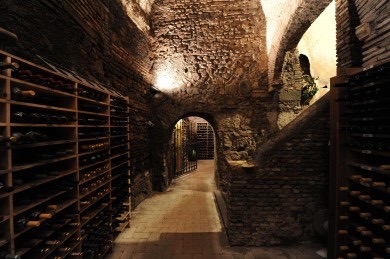
Upstairs in the dining room, the food at Spirito DiVino is as compelling as its setting. Chef/owner Eliana Catalani—formerly a virologist in Nobel laureate Rita Levi-Montalcini’s lab—is now devoted to the Slow Food movement and to exploring Roman flavors both ancient and modern. The kitchen offered us her Magro di Maglio di Marzio, inspired by a recipe from De Re Coquinaria (The Art of Cooking), the famed ancient cookbook attributed to Marcus Gavius Apicius. Whether or not Apicius himself compiled it, the book offers an extraordinary glimpse into Roman-era cooking, long before tomatoes, potatoes, chili peppers, squash, corn, chocolate, or vanilla arrived from the Americas. Instead, cooks created flavor from onions, leeks, garlic, fennel, celery, fresh herbs like dill, parsley, oregano, thyme, and rosemary, plus spices like cumin and coriander.
A Dish So Good You’ll Want to Make It at Home
Chef Catalani’s interpretation of Apicius’s porcellum oenococtum—suckling pig braised in wine with leeks, coriander, cumin, pepper, and vegetables—was astonishing. The flavors were layered and complex yet completely integrated. As we tasted, we fell into silent admiration. Paired with an Umbrian Sangiovese from Lungarotti, it was easily the best thing my family ate on the entire trip. I’m determined to reverse-engineer a home version, with a hunch that adding celery seed or lovage seed may be crucial. With help from Chef Catalani’s son, Romeo, who guided us to an online recipe, I will try to recreate the dish. I’m certain the written recipe doesn’t reveal all of her secrets, so several trials may be necessary.
Note: A few years ago, I managed to arrive at a successful version of an old Neapolitan recipe we enjoyed on a previous trip to southern Italy, Genovese Classico.
Aperitivo, Bakeries, and Old-School Roman Flavors
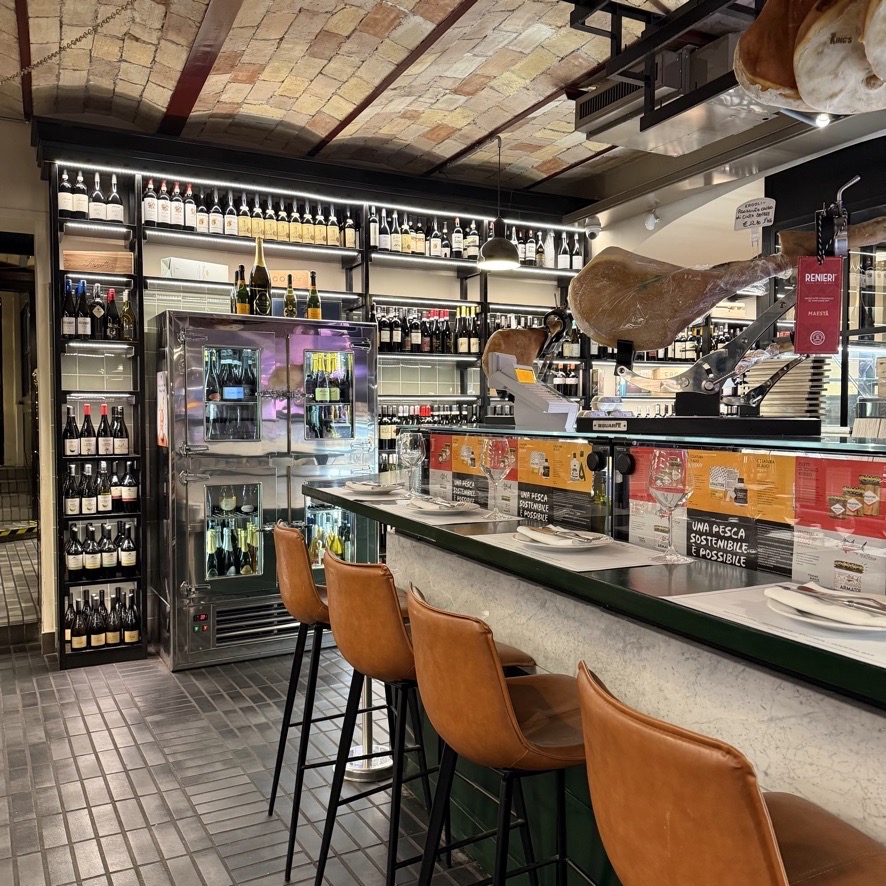
Riccardo subsequently led us to Ercoli, an eight-year-old Trastevere restaurant and food hall. It was originally founded in 1928 in the Borgo Pio neighborhood near the Vatican. Think of it as the Roman answer to Eataly, but without the theatrics or the hype—just luminous food and a lovely environment. The counters display cured meats, pristine cheeses (about 140 of them), shelves of wines from Italy and beyond, and pantry goods chosen for excellence and local provenance.
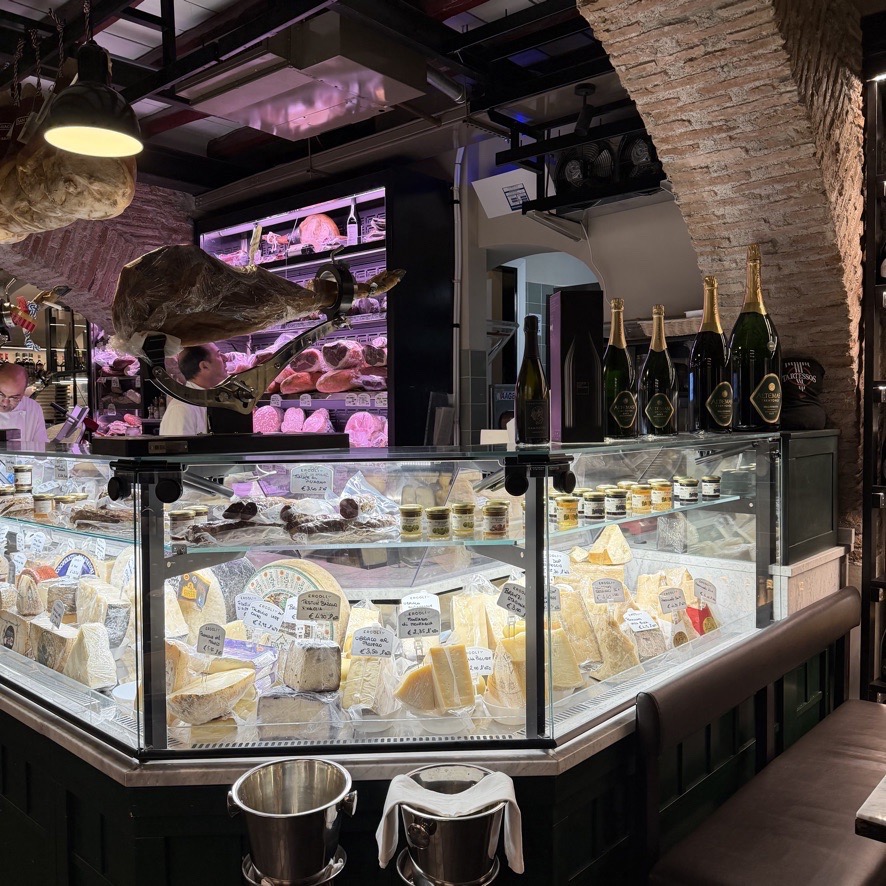
At a long communal table, Ercoli introduced us to the Select Spritz. Created in Venice in 1919 by the Pilla Brothers, this tasting of Select was a first for me, despite nearly four decades of Italian food obsessions. I always avoid Aperol—too sweet and rarely a good match for food—but Select is another proposition entirely: herbal, slightly bitter, with a subtle spicy edge that makes it a wonderfully food-friendly aperitivo.
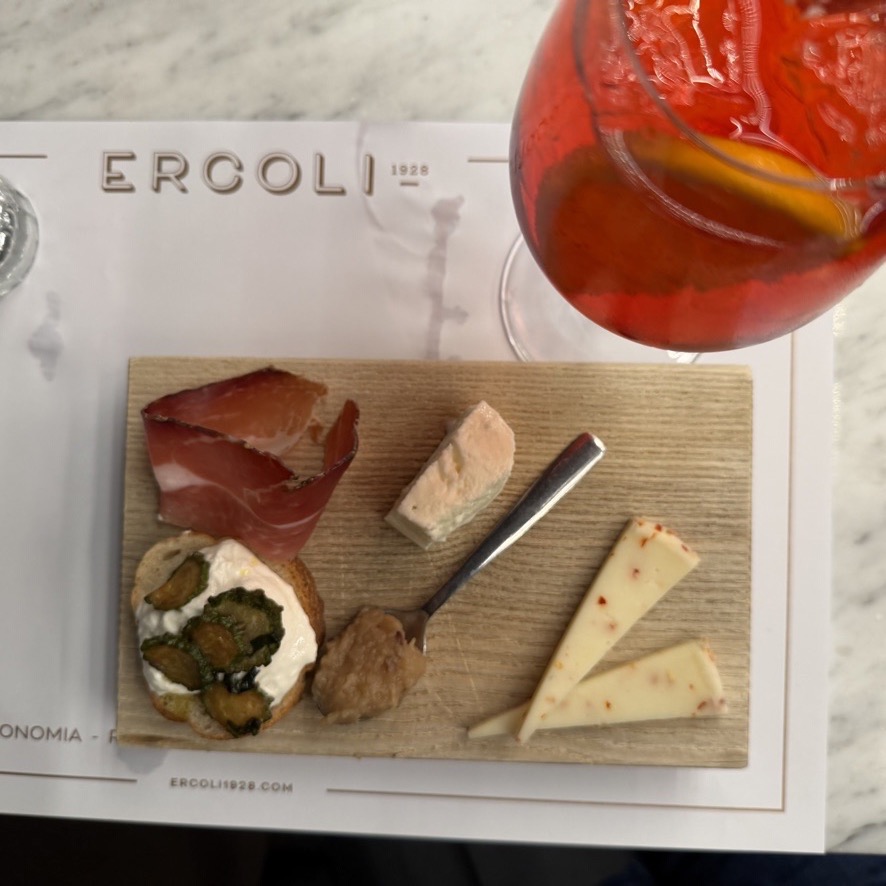
They poured the beverages to accompany a charcuterie plate made up of fior di latte mozzarella from Molise; bruschetta layered with burrata over a vivid spread of fried zucchini, oil, lemon, garlic, and mentuccia (Roman mint); and thin slices of speck from pork shoulder, lightly smoked and air-cured for 8–10 months. The spritz’s bitter-herbal notes cut beautifully through the mozzarella’s milky calm, echoed the green brightness of the mentuccia, and met the speck’s salt and smoke head-on. We could easily have settled in at Ercoli for the entire evening.
Family and Food Go Hand-in-Hand
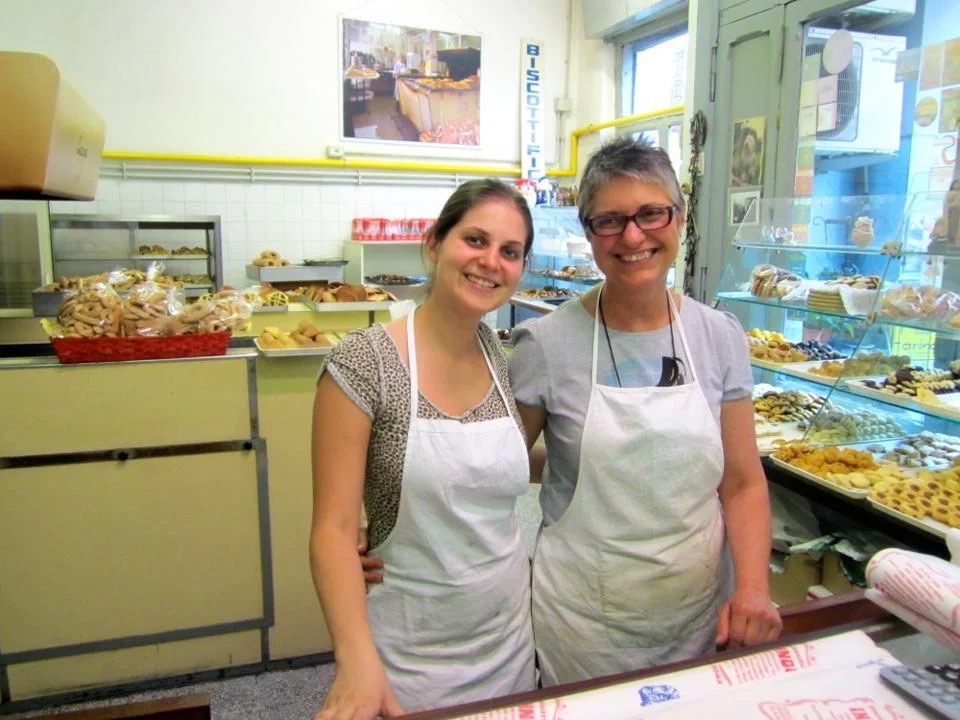
Instead, we followed Riccardo a short distance to Biscottificio Innocenti, family-run bakery without so much as a sign on the door. It doesn’t need one. Locals come out of long habit…perhaps even addiction! And the aroma attracts passersby, as well.
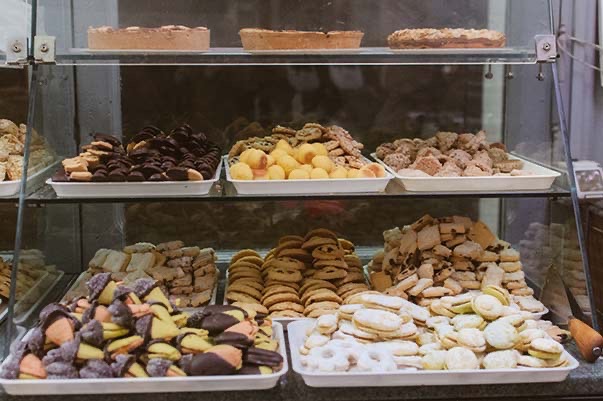
Inside, trays of just-baked cookies emerged from a long, antique oven. After a generous tasting, our entire group bought boxes “for later.” Kenny Dunn, owner of Eating Europe, spent some time with us here, adding friendly banter with the owner (and with us) to our visit.
From sweets we moved back to savory at La Norcineria di Iacozzilli, a 101-year-old butcher shop specializing in pork and cured meats. The third generation of the Iacozzilli family runs the counter now, sourcing meats, wines, and other specialties from family farms in Lazio, Marche, Abruzzo, and Molise. Here, Riccardo wanted us to taste a typical Roman porchetta. Made from a deboned suckling pig, seasoned with salt, pepper, lemon zest, and a paste of garlic, fennel, and herbs, then tightly rolled and roasted—traditionally on a spit over open flame—porchetta is a real treat.
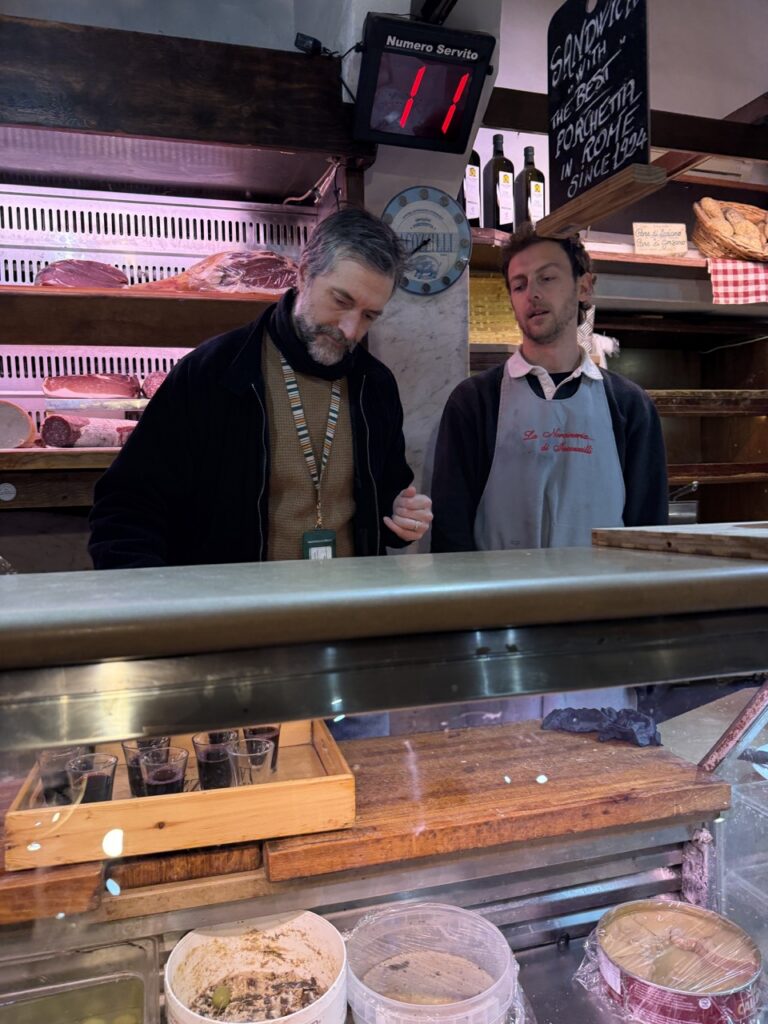
Iacozzilli’s version got the dish just right: deeply savory, with garlic and aromatics present but not aggressive, and enough fat to keep everything juicy. Thin slices were served atop pieces of homemade pane casereccio, the rustic Roman bread with a chewy caramelized crust and a moist, open crumb that drinks in juices. Iacozzilli’s pairs this with two wines from Ciù Ciù in Le Marche: Merlettaie, a white made from Pecorino grapes, and San Carro, a red blend of Sangiovese, Merlot, and Barbera. Both did their job well, letting the pork stay center stage.
Roman Street Food
Next came Supplì, devoted to classic Roman street foods. The name comes from Rome’s classic rice croquettes—or arancini elsewhere in Italy. Supplì’s counter is always full with just-fried morsels: arancini with molten mozzarella, meat ragù, or chicken livers; pasta al forno; lasagna; pizza al taglio; roasted vegetables and meats.
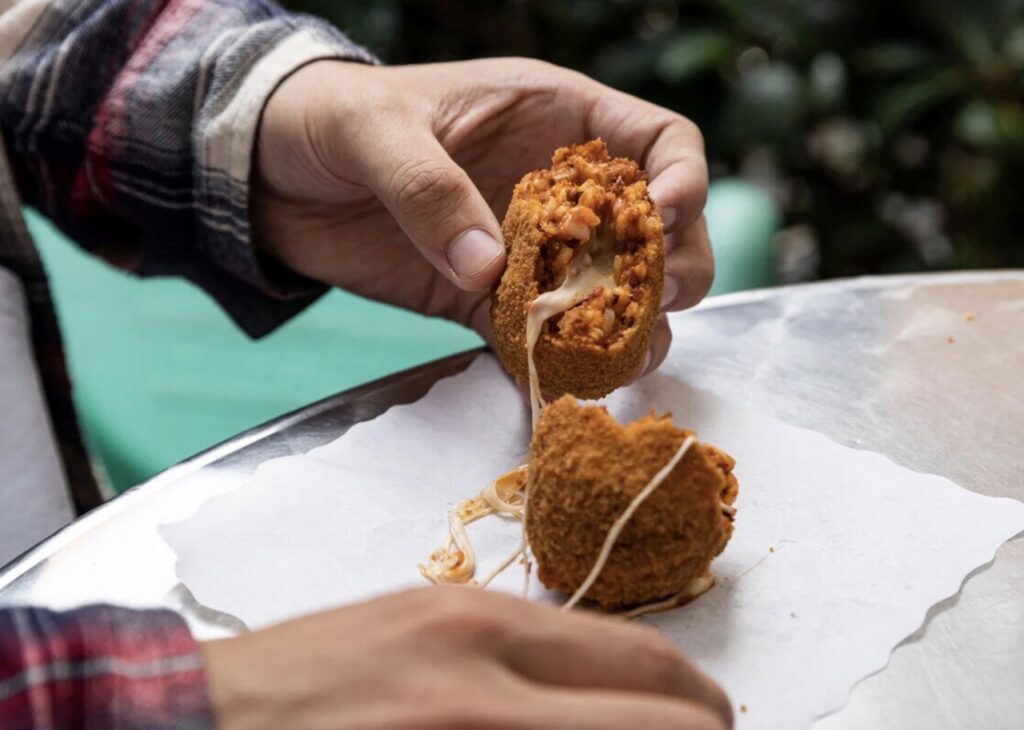
The pace is nonstop, with neighbors popping in and out, ferrying paper-wrapped foods home or eating standing up in the doorway. We did the latter, standing just outside with Cacio e Pepe supplì in hand. The crunchy crust gave way to rice filled with a dollop of peppery and gooey cheese—a fun, street-food riff on one of Rome’s most revered pasta sauces.
It was hard to believe that we still had two stops to go, but Riccardo advised us to rally because much-praised restaurant Rione 13 was preparing two pastas for us: Rigatoni alla Gricia and Penne all’Amatriciana.
Classic Pastas
These are two of the four most famous, and most beloved, pasta sauces of Rome. The others are Carbonara and Cacio e Pepe. Each of them turns humble pantry basics into culinary poetry. I would cancel absolutely any plans at any time to have one of these dishes prepared by a Roman nonna – without a recipe, in her everyday kitchen, cooking by instinct and tradition. Gricia is the simplest: guanciale, pecorino Romano cheese, and black pepper. Don’t be fooled by its rustic sincerity into thinking it’s some kind of compromise: it’s stunningly delicious.
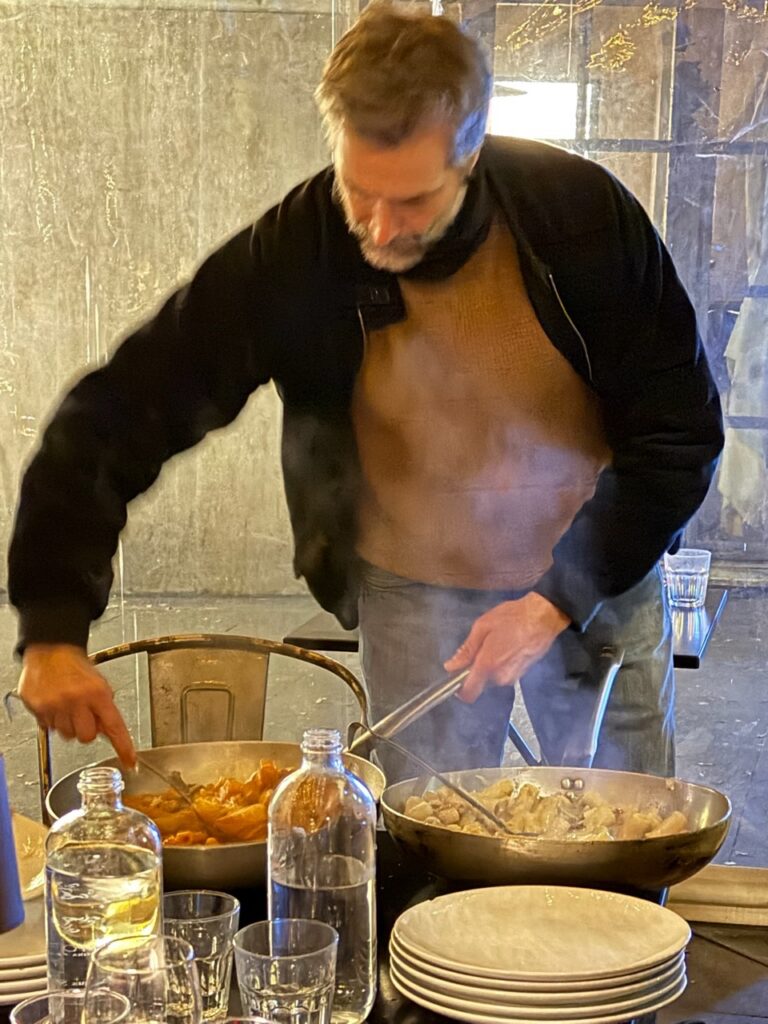
Carbonara builds on that base by adding egg yolks (or, in some family recipe books, whole eggs) and more pecorino Romano, to create a creamy, flavorful sauce. Amatriciana skips the eggs and adds traditional tomato sauce and a touch of pepperoncino. The acidity and spice lift the flavor so beautifully. (It’s my favorite.) Cacio e pepe skips the guanciale altogether, relying on black pepper, pecorino Romano, and pasta water (and a little skill) to arrive at a creamy, nuanced, and wholly satisfying sauce.
Rione 13 brought their gricia and amatriciana pastas to our table in enormous copper pentole (skillets) and Riccardo finished the sautéeing tableside. He kept the pasta al dente and served it up piping hot. The food was so delicious that, to be honest, I have no idea what wine we drank. It didn’t matter. We will certainly return here on a future trip.
Gelato and Goodbyes
We lingered here for what seemed like a very long time, enjoying each other’s company, and Riccardo’s story of life in Rome, as well as Genova, his city of birth, and Venice and Milan, where he has spent a lot of time. It was difficult to roust ourselves to move to the last stop for gelato, but we made it to Fatamorgana.
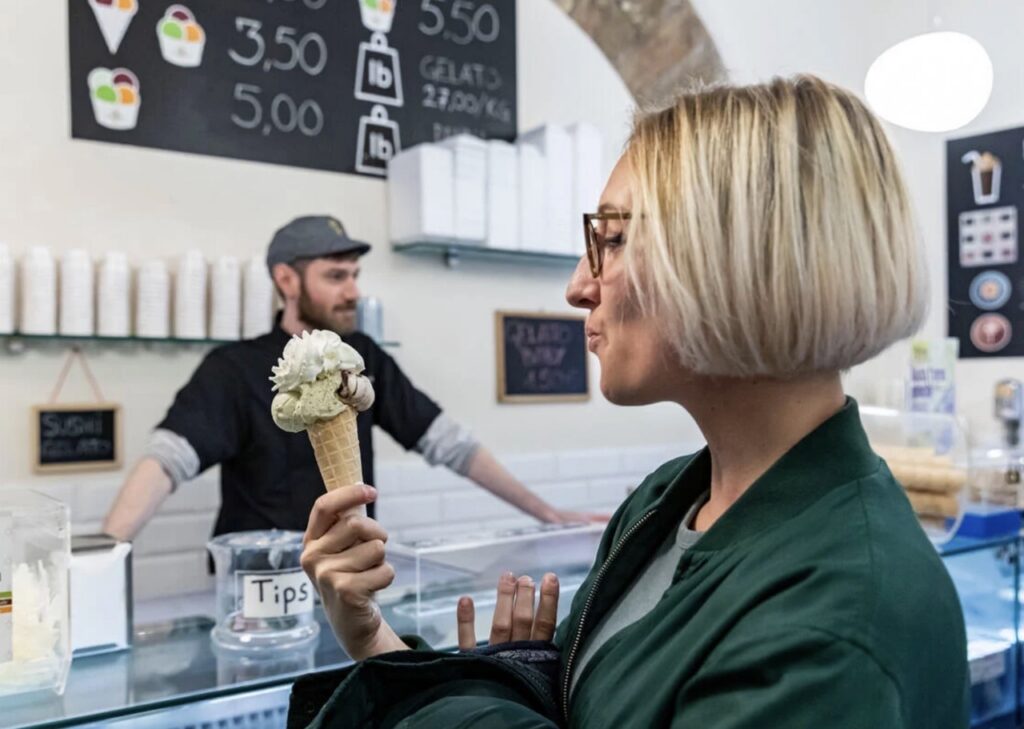
Known for its inventive, clean flavors, the shop felt like a palate cleanser in every sense. We gravitated toward fruit-forward scoops—bright, clear, and ideal after the deliciously rich food we had enjoyed. Standing there with gelato in hand, under damp winter skies in a neighborhood that has seen generations of Romans do exactly the same thing, we promised ourselves we’d be back—with emptier stomachs and even more time to wander.
Why Take Eating Europe’s Twilight Trastevere Food Tour
Eating Europe’s Twilight Trastevere tour is an elegant shortcut to exactly what most travelers are hoping for but rarely find on their own: real neighborhood places, dishes with a sense of history, and a guide who can connect the food on your plate to the city around you. We loved how this well-curated evening threads together ancient history, multigenerational shops, classic Roman cooking, with appropriate wine pairings throughout. If you’re planning a Roman itinerary heavy on museums and monuments and shops, I’d recommend that you hand over the reins to Eating Europe for an evening. Book in advance, especially in high tourist season. Arrive hungry and curious, and relax—bite by bite—into the sincere and earthy appeal of Trastevere.
Story by Keith Recker
Subscribe to TABLE Magazine’s print edition.