Kinilaw na Hipon is similar to Spanish Ceviche but with the Filipino addition of coconut milk that adds sweetness and balances the acidity ceviche depends on. Traditionally made with calamansi, a citrus endemic to the Philippines, a combination of lemons and limes works as a good substitute. Other types of fish like tuna work well with this recipe, but any fresh seafoods and shellfish can be used. Tapioca crackers are an excellent accompaniment to this dish, but you can also use tortilla chips or other crackers/chips of your preference.
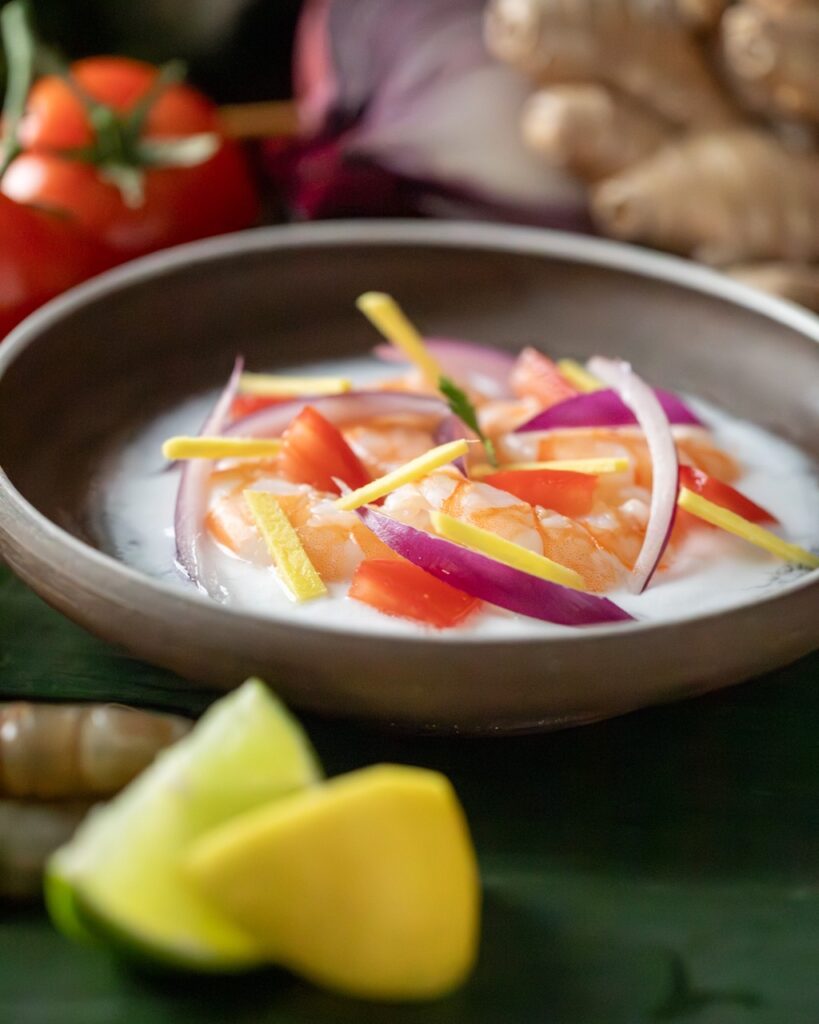
How Do We Prepare the Shrimp in Kinilaw na Hipon?
Kinilaw na hipon doesn’t use heat to cook the shrimp in this recipe. Instead, it relies on acid, usually from vinegar or citrus juice, to transform the meat. This process is called denaturation. When the shrimp meets an acidic ingredient, the proteins in the shrimp unravel and firm up. A similar process occurs when cooking with heat. As this happens, the shrimp changes from translucent gray to opaque and slightly pink, changing its texture. At the same time, the acid, along with the recipe’s seasonings, help establish a delicious flavor.
Print
Kinilaw na Hipon (Filipino Ceviche)
Description
Let these flavors transport you to the coastlines.
Ingredients
- 1 lb prawns or tiger shrimp, peeled & deveined
- 1 cup sugarcane vinegar or any white vinegar
- 2 tbsp shallots or red onions, minced
- 2 tbsp fresh ginger, minced
- 1 tbsp fresh garlic, minced
- 1 tsp small green chili, thinly sliced (optional)
- 1 tsp patis (fish sauce)
- 1/2 cup coconut milk
- 1/2 cup citrus juice (any ratio of either or both lemon and lime)
- 1/2 cup cucumber, peeled & seeded
- 1/2 cup Roma tomatoes, seeded and small diced
- Salt and ground white pepper to taste
- Cilantro for garnish
Instructions
- Split the shrimp in half lengthwise along the spine and cut into smaller pieces; the smaller the cut the faster the shrimp will cure and influence the texture.
- Combine all ingredients and let marinate for about 10 to 15 minutes to cure the shrimp to your preferred doneness; you can let it sit longer to allow the raw shrimp to fully cure.
Recipe and Styling by Rafe Vencio
Photography by Dave Bryce
Subscribe to TABLE Magazine’s print edition.